Χανιά, Κρήτη
note: Chania, the second largest town-city in Crete, is 'ch' as in loch.
video of where the last post left us, still in Ramadan, İstanbul Havalimanı:
Taxi from Heraklion (Ηράκλειο) airport, called Νίκος Καζαντζάκης, to Chania. Yes, Nikos Kazantzakis, known in the anglophone world for Zorba the Greek, 1946, and The Last Temptation of Christ, 1952, both adapted for film.
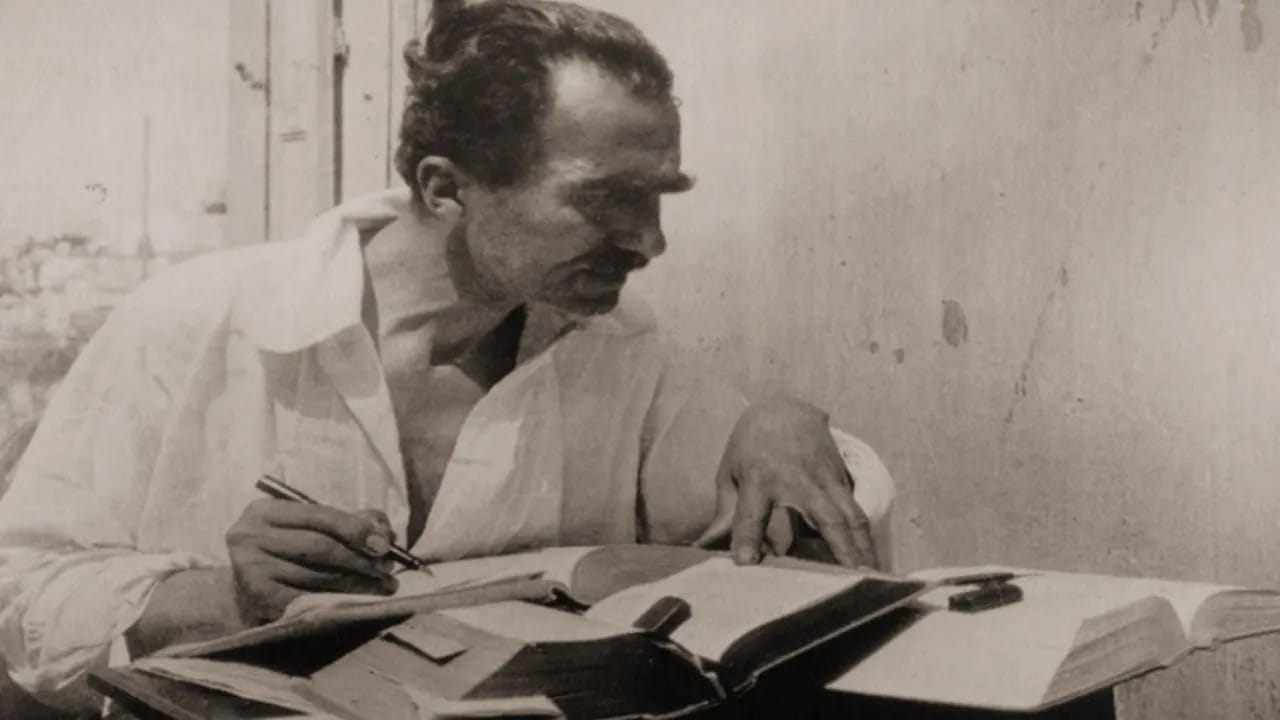
Kazantzakis, the great Greek novelist, is here pictured not looking like Heidegger as he does in some of his photos, but looking louche and hard at work. He was also renowned in the hellenophone world as a translator of Dante and of Goethe. He studied philosophy at the Collège de France, a unique institution for offering lectures open and free to all, where Bergson lectured twice a week between 1904 and 1921 as Chair of Modern Philosophy. Kazantzakis attended in 1908 after the publication of Creative Evolution, Bergson's most influential, under the influence of which Kazantzakis is said to have come, and popular book.
Kazantzakis was born in Heraklion in 1883 and died in Freiburg im Breisgau in 1957. He is buried in Heraklion. On his tomb is written:
Δεν ελπίζω τίποτα. Δε φοβούμαι τίποτα. Είμαι λέφτερος.
I hope for nothing. I fear nothing. I am free.
The taxi, for what felt like a 5-minute trip, cost us €30. Taxi driver drilled us on the basics and was in every respect wrong. There was an express to Chania. It did not stop. It was not a big place, despite his Where are you staying? Only appeased when I said the old town. Even then: It's a BIG place! And: You can, in fact we did, fly out of Chania. We had no need to return to Heraklion and avail ourselves of his services; so, to the bus. . . direct 2hr 45mins.
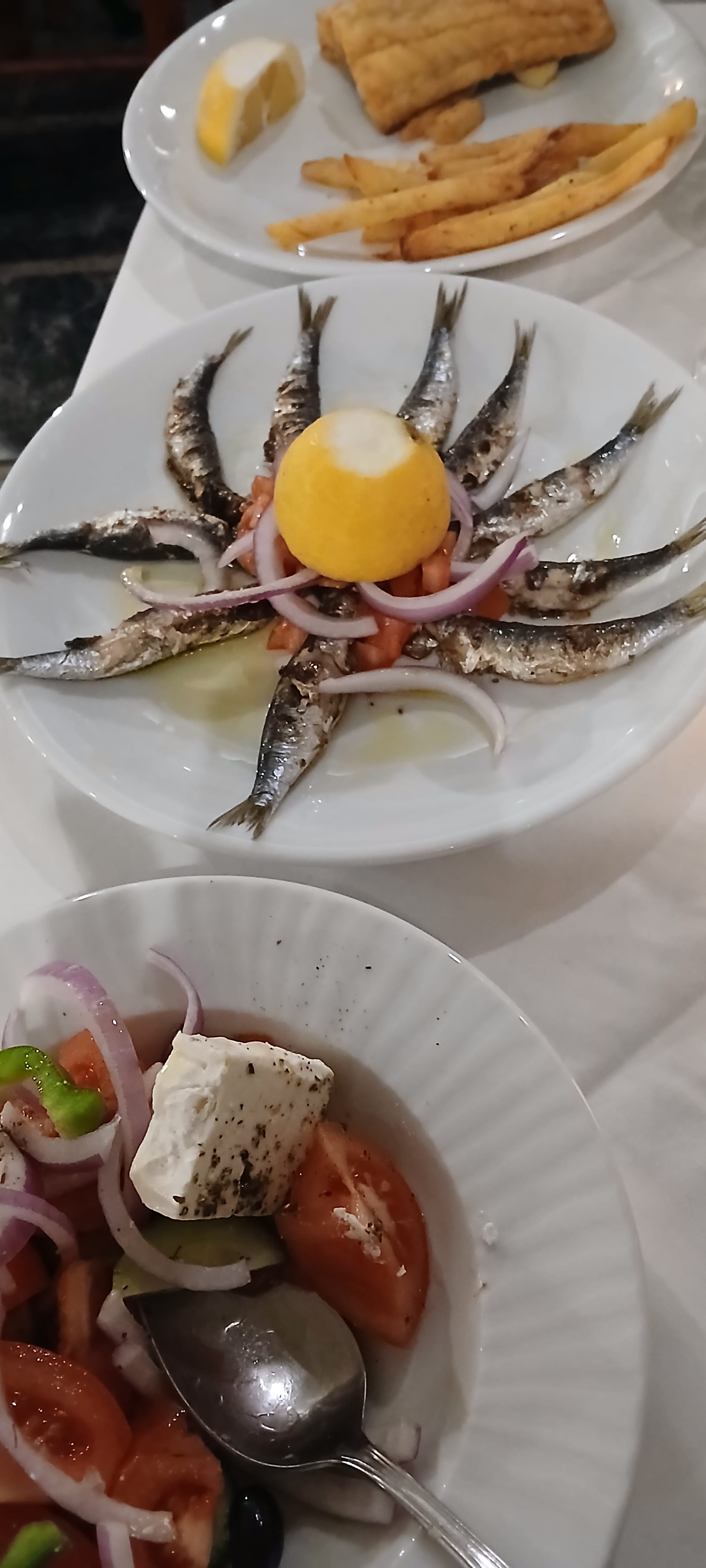
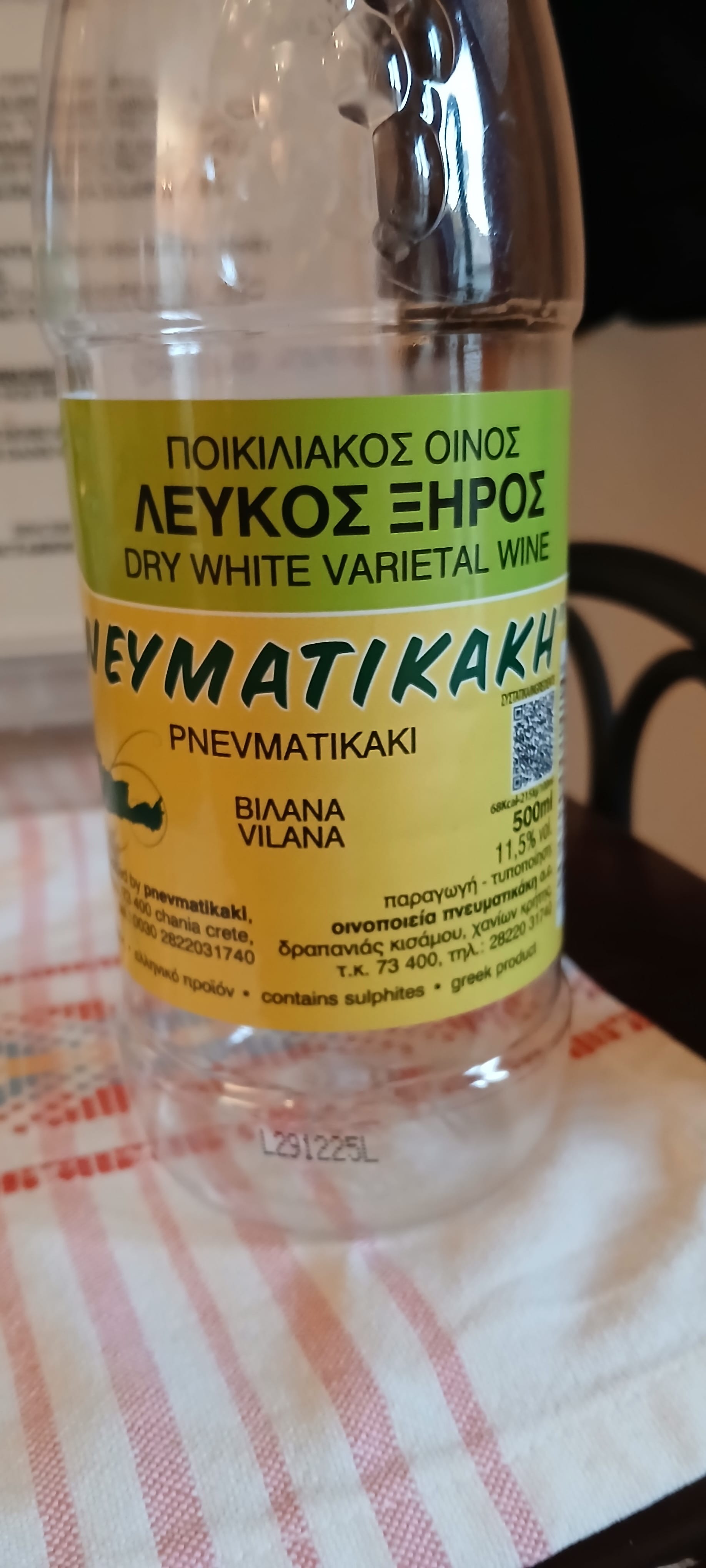
Our charming host recommended a fish place and a meat place. At a loss to find anywhere that appealed, we opted for fish and ordered eccentrically, for me, sardines and for Jo, cod and chips... salty salty. With a Greek salad so lacking in substance as to bring the combo to an acidic edge, unblunted by the retsina! and followed by a small bottle of raki which appeared courtesy of the house. Leo, said our host, ask for Leo. Leo came through. As soon as the first bottle of raki was empty, another appeared, but we demurred.
All through the night a hum, a low pitch hum, that, as soon as you hoped it had relented, returned, deeper, stuttered, deeply clanged through the entrails of the building.
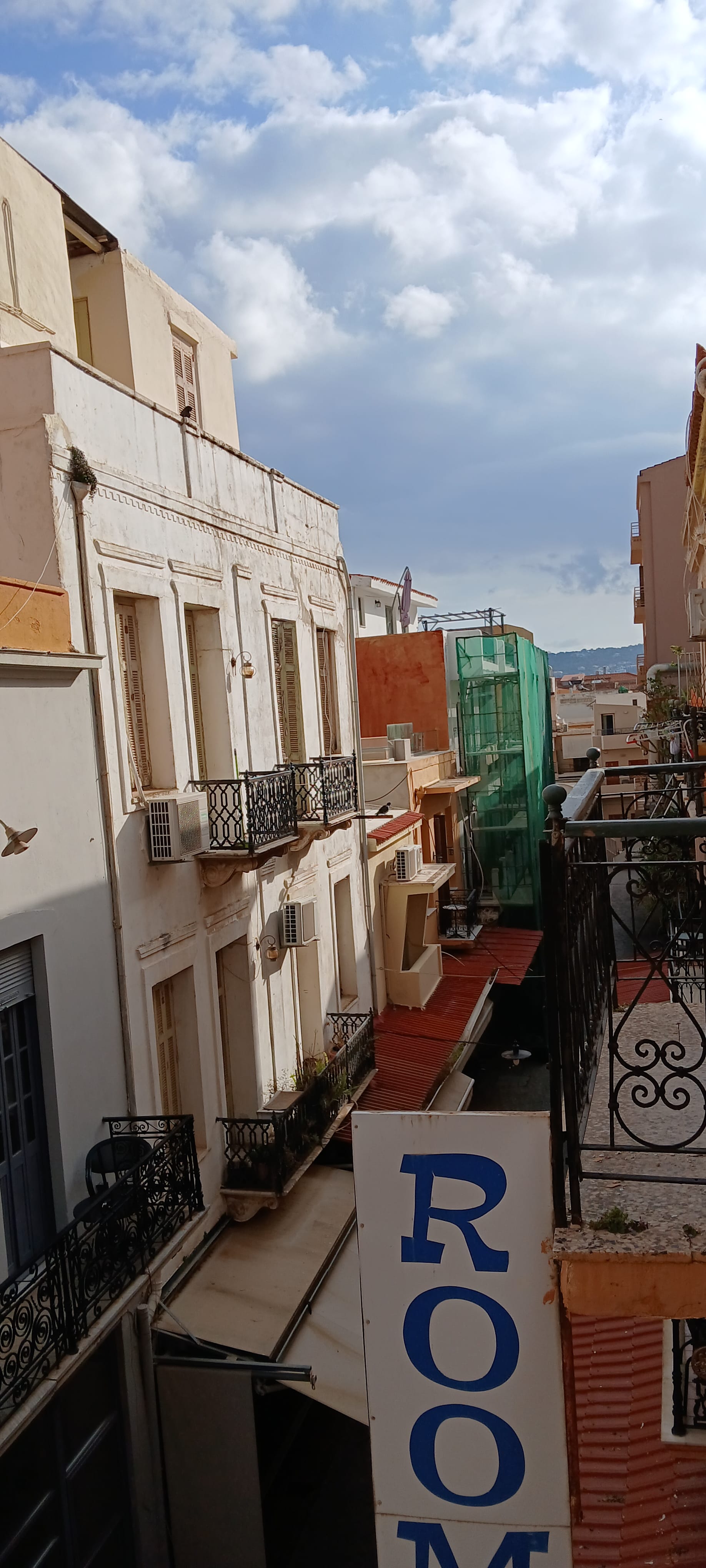
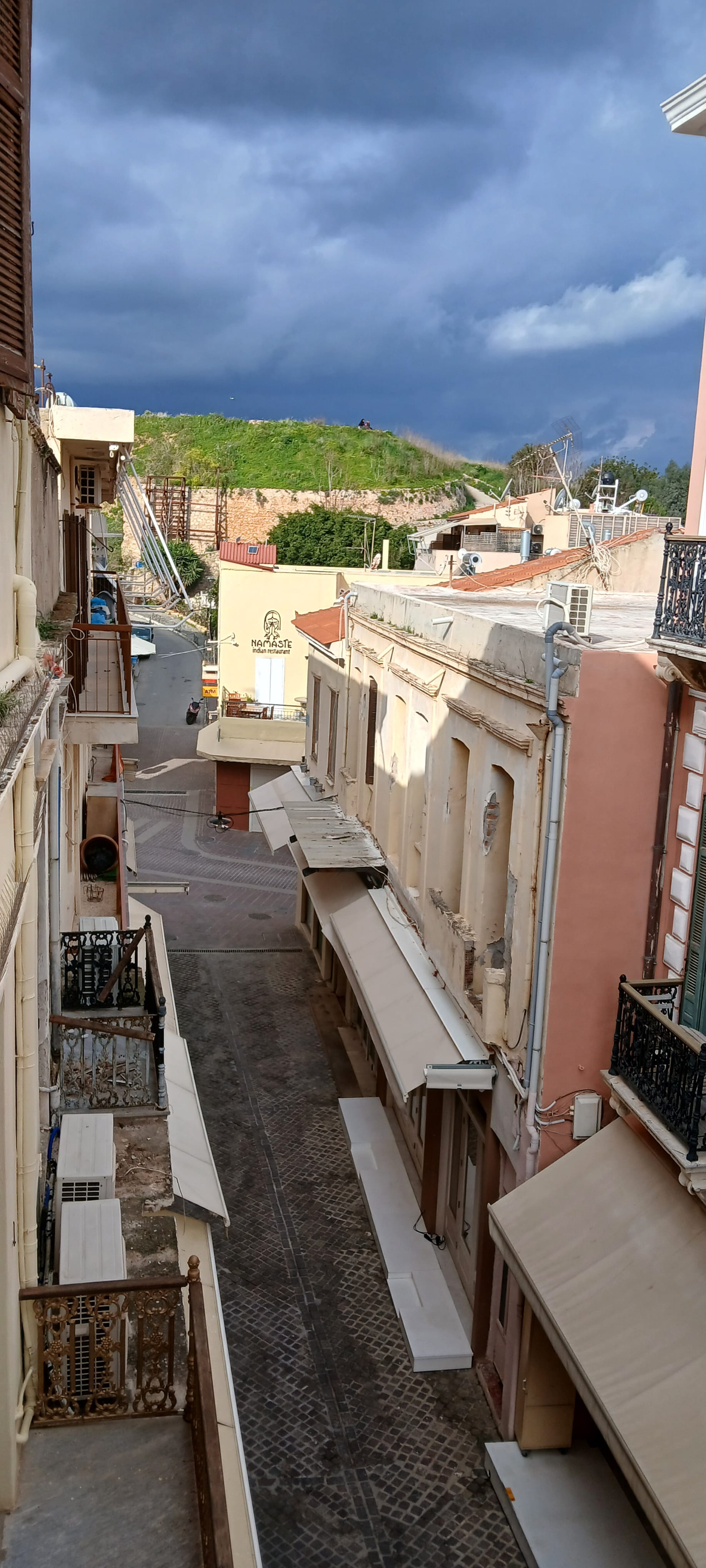
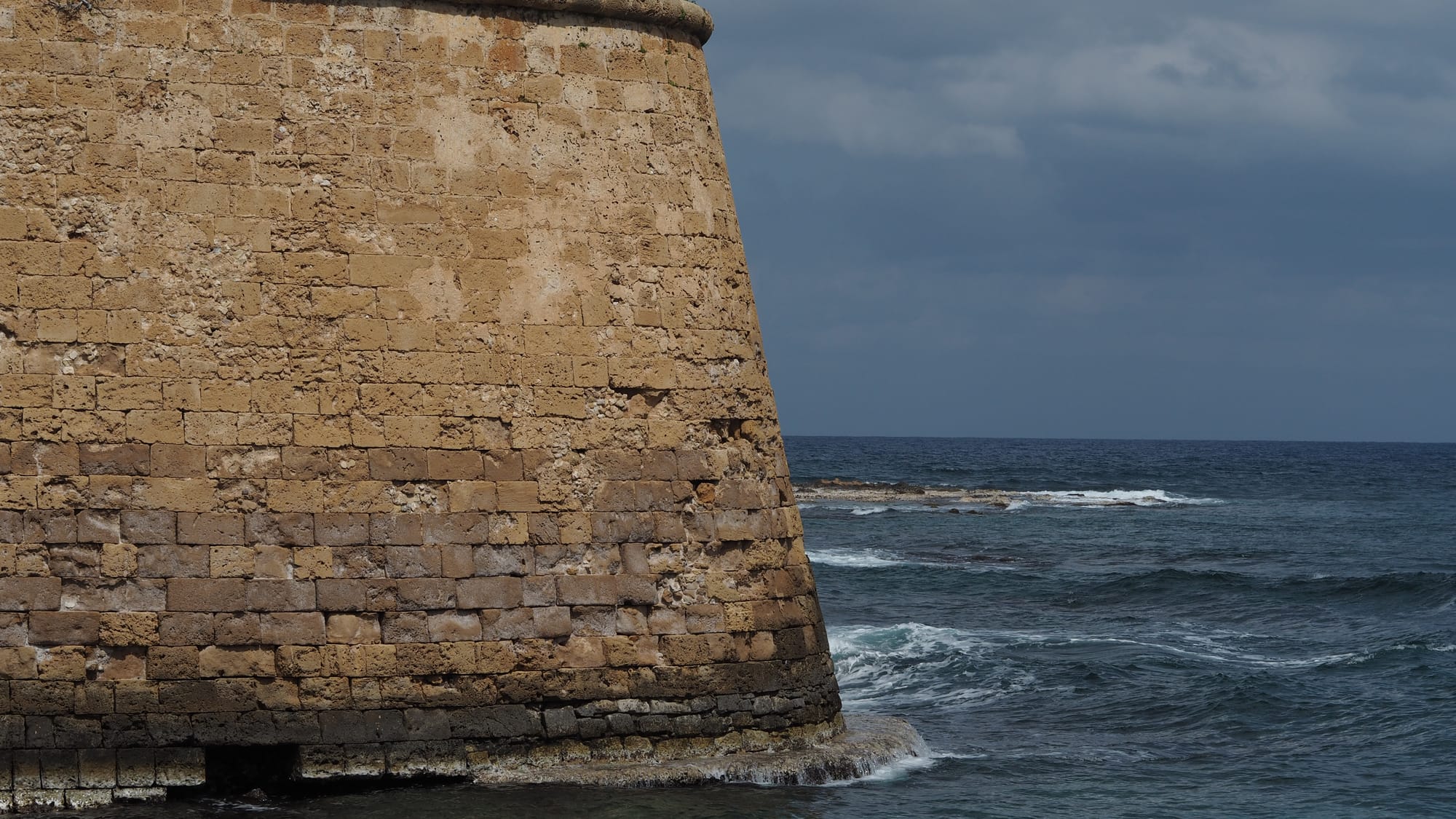
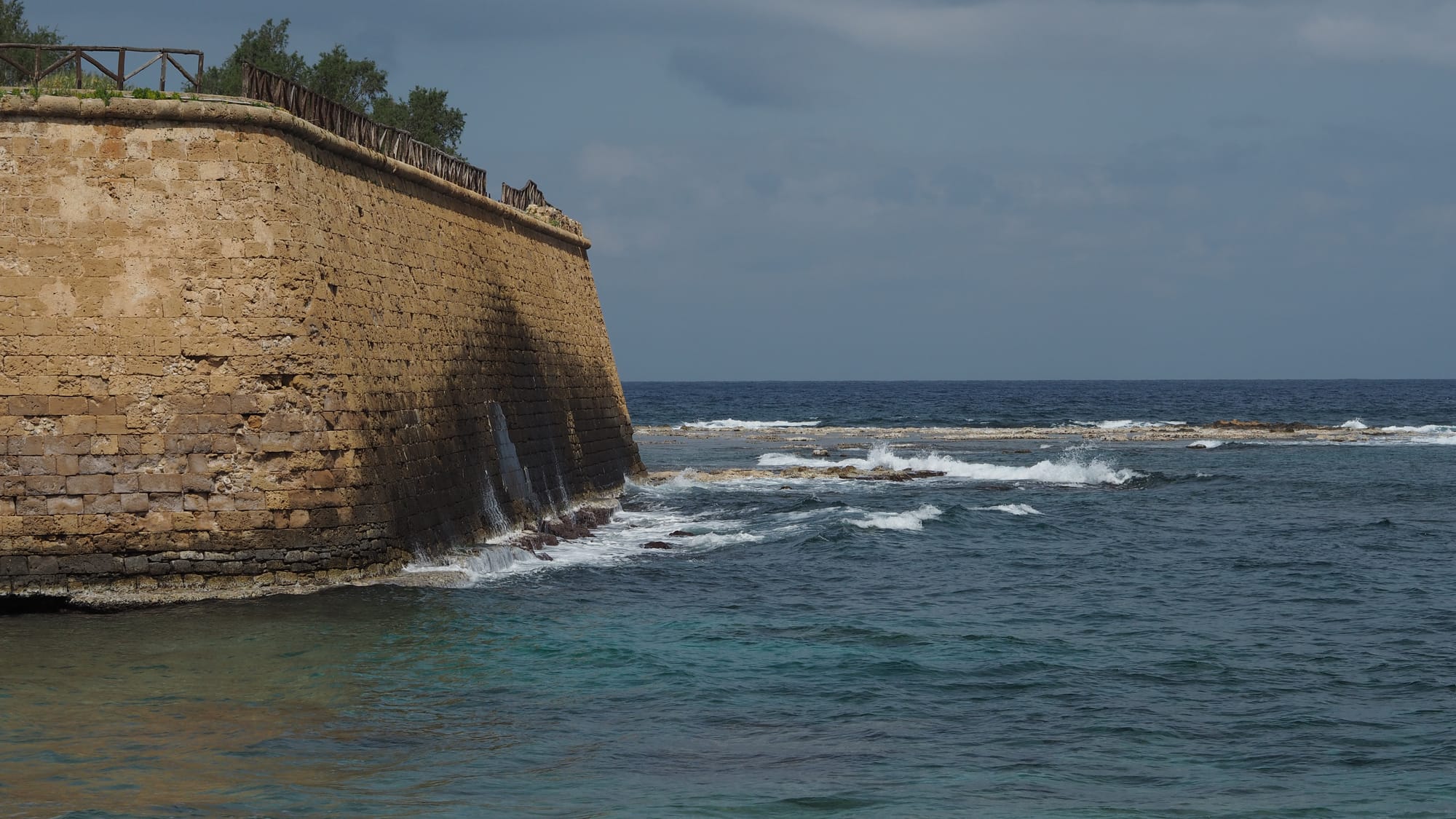
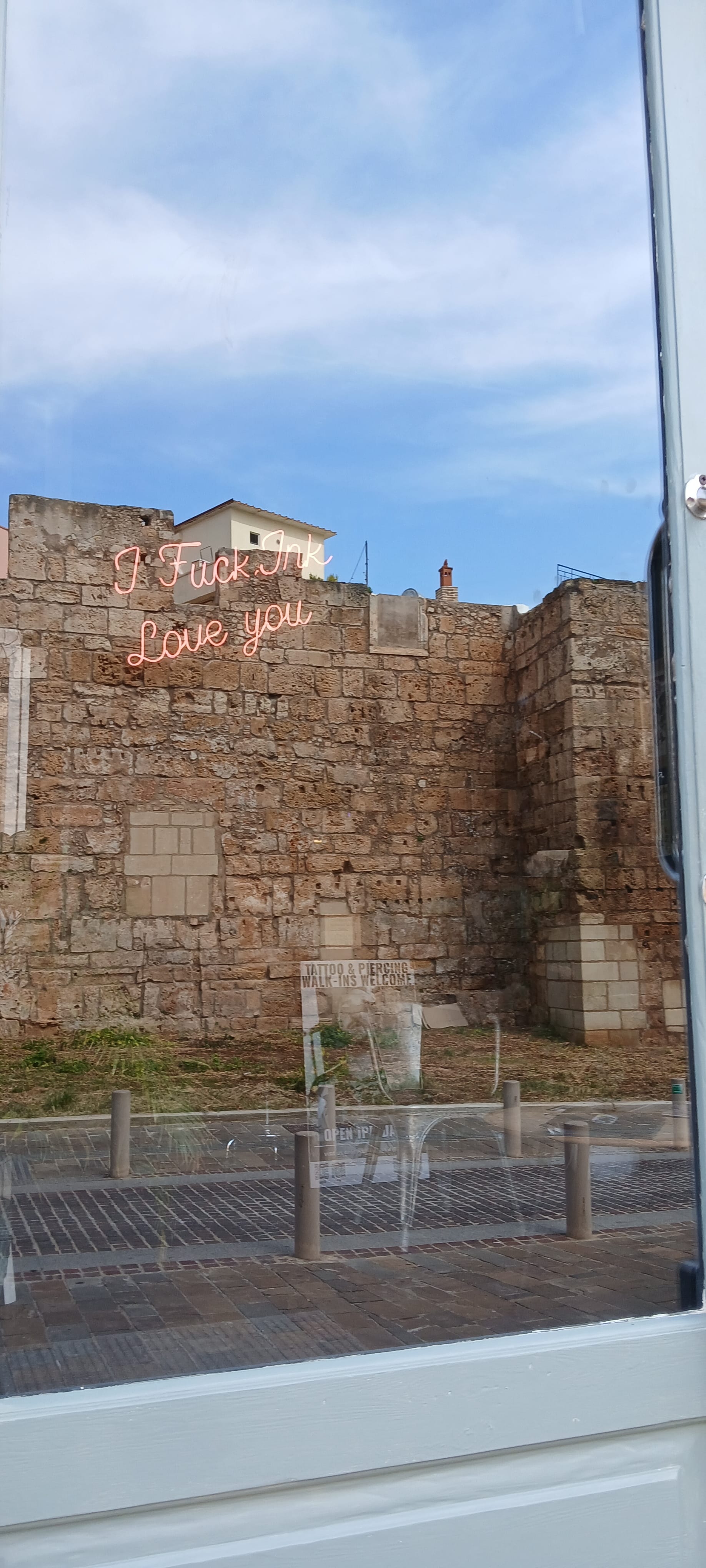
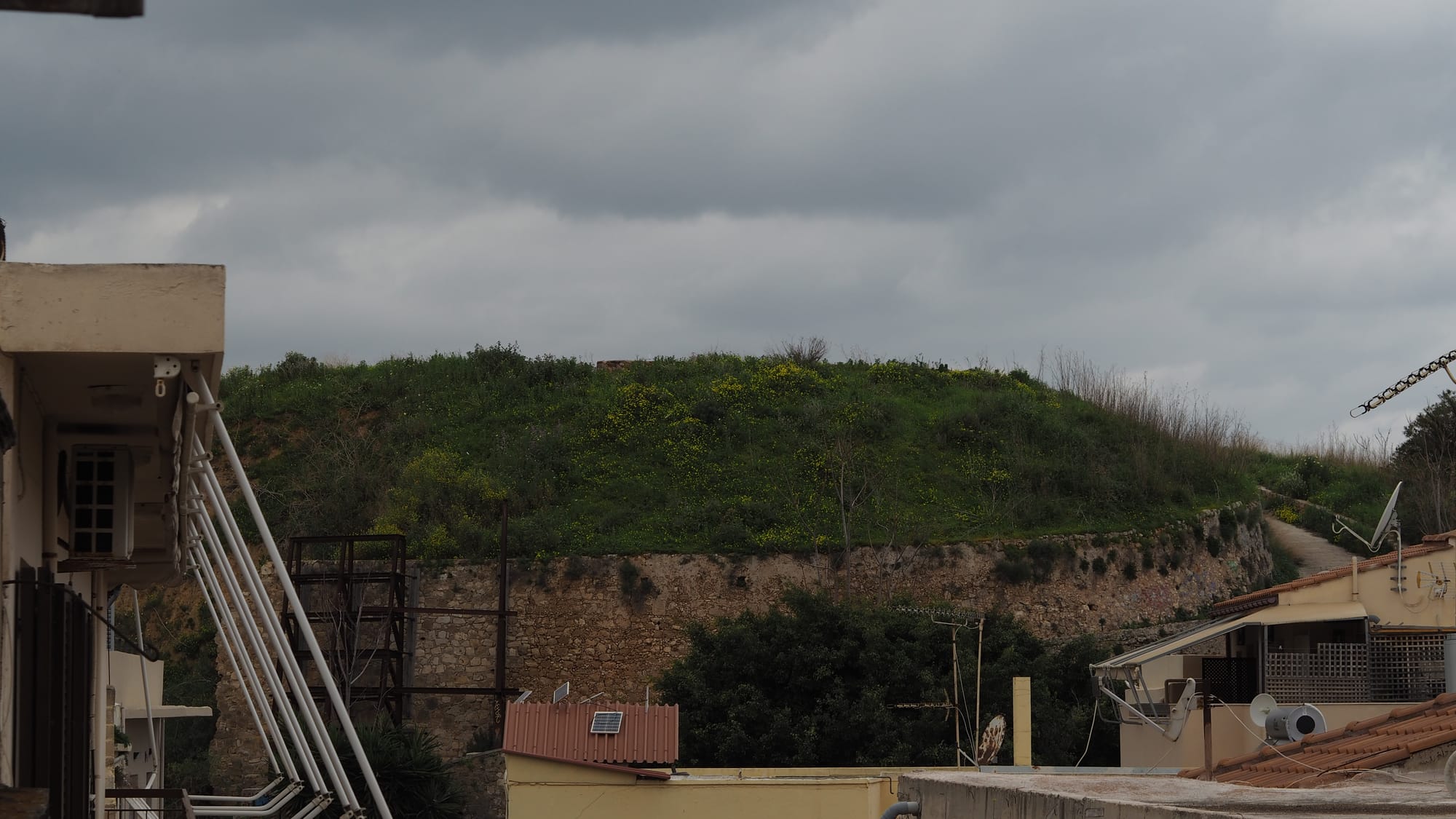
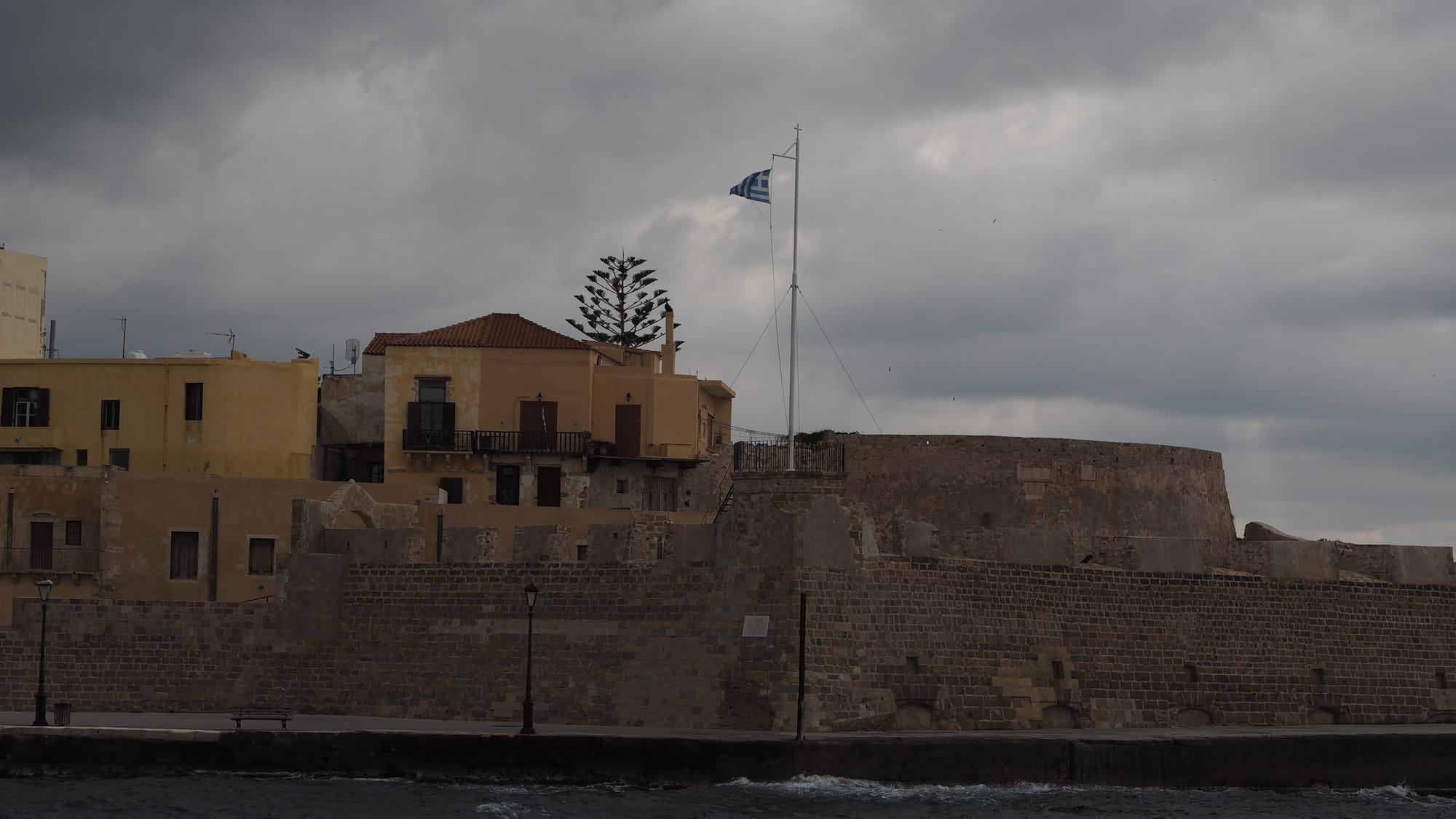
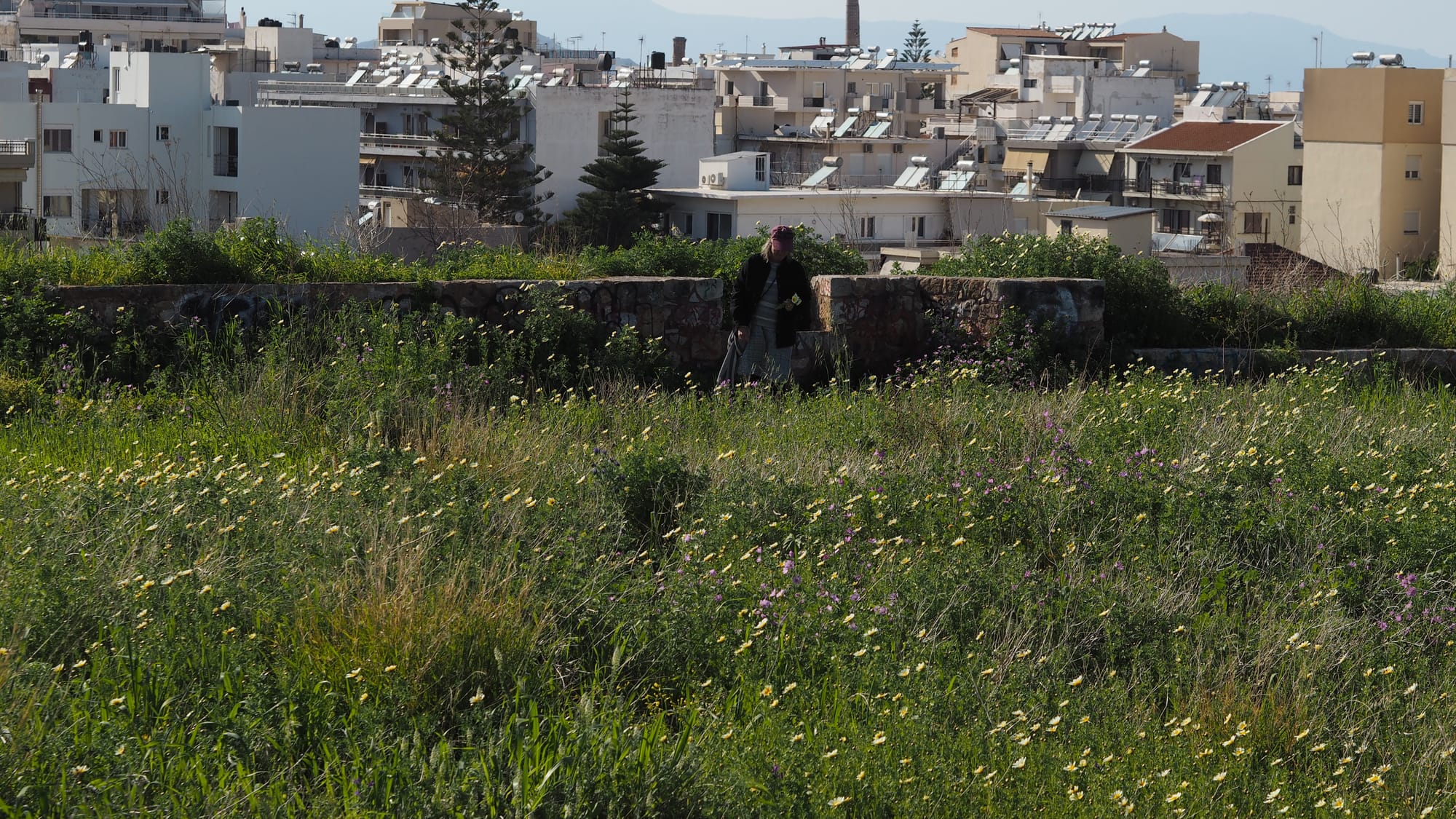
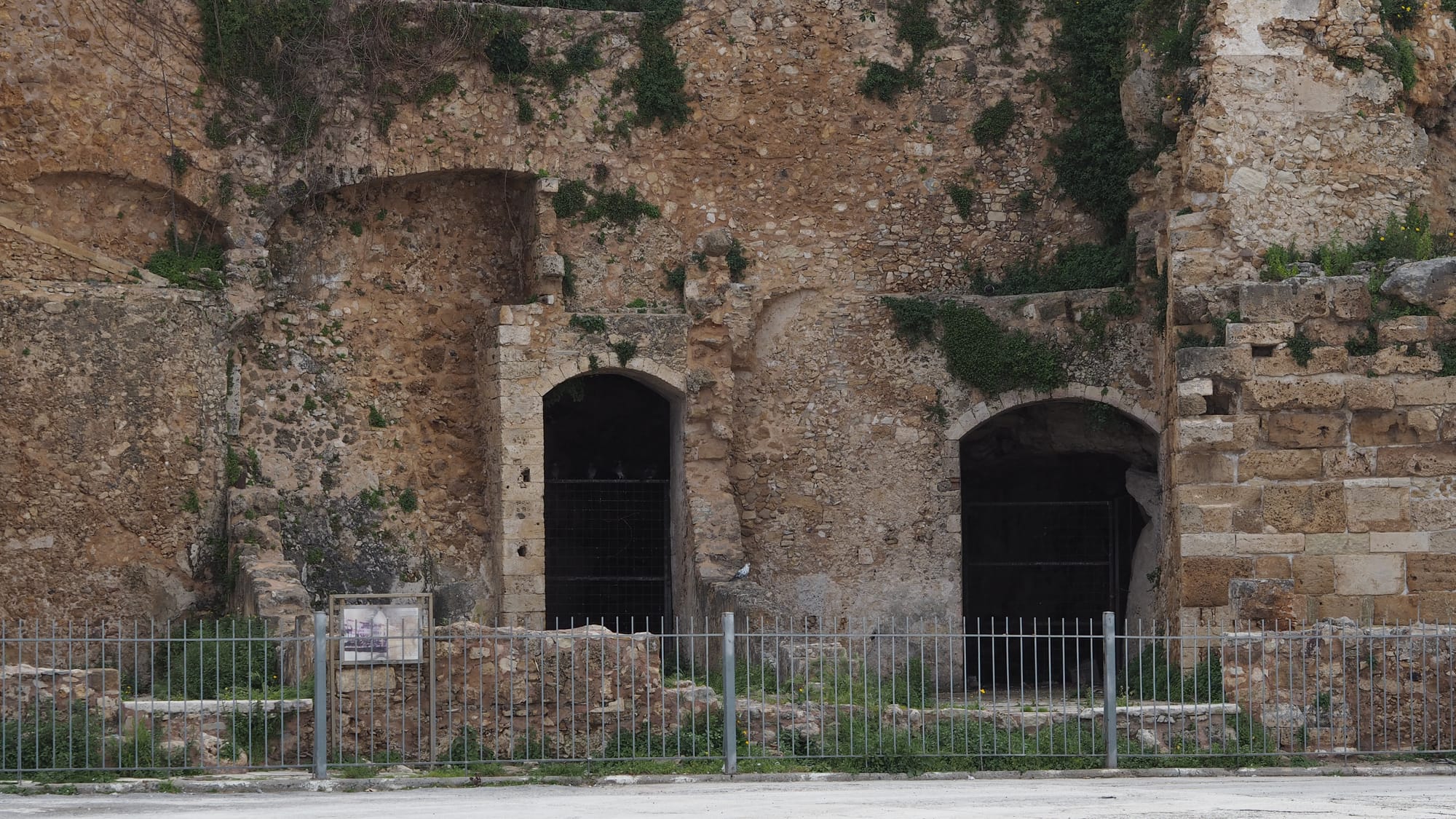
- the grassy knoll is part of a Byzantine fortification. This, in fact:
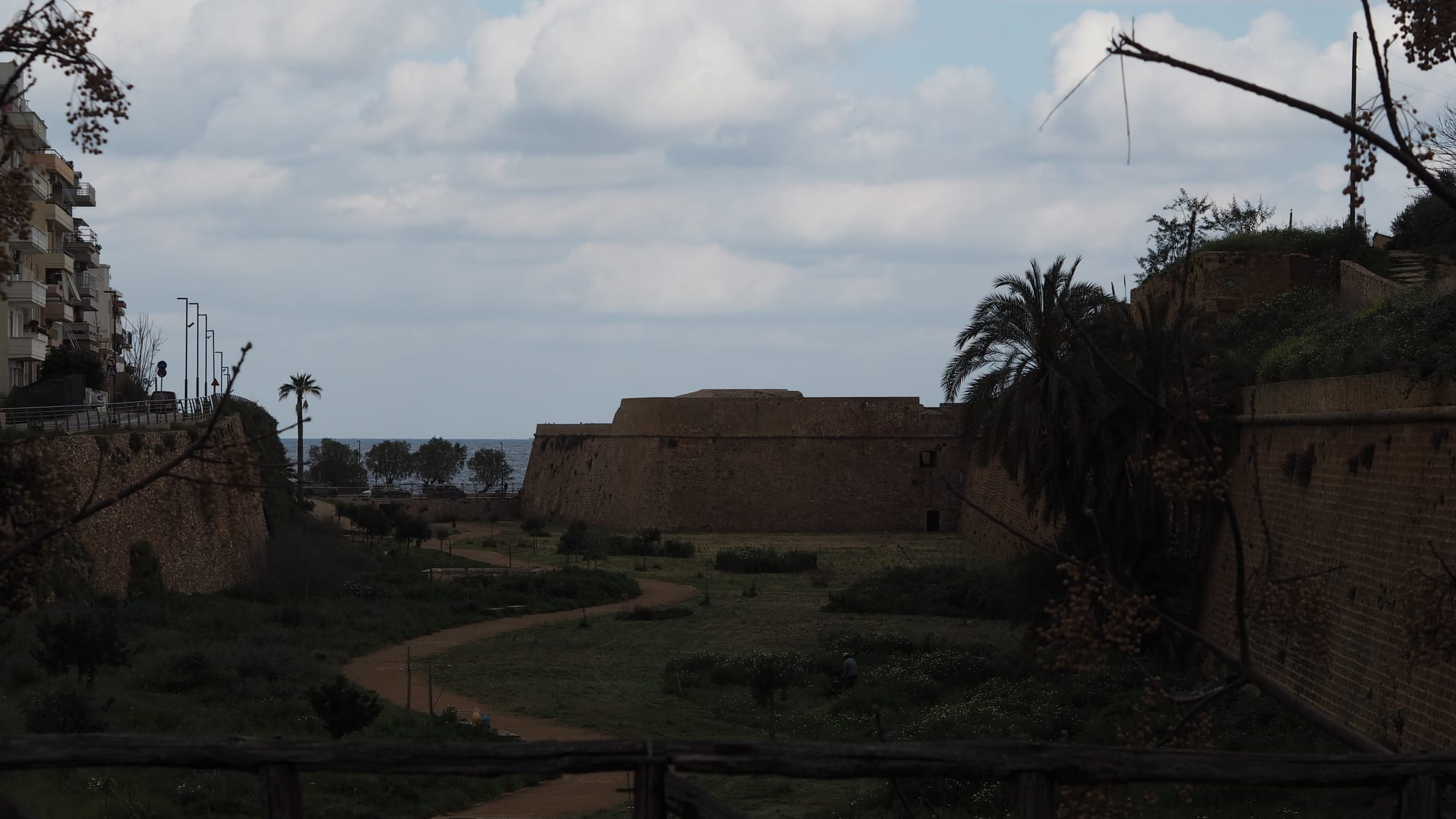
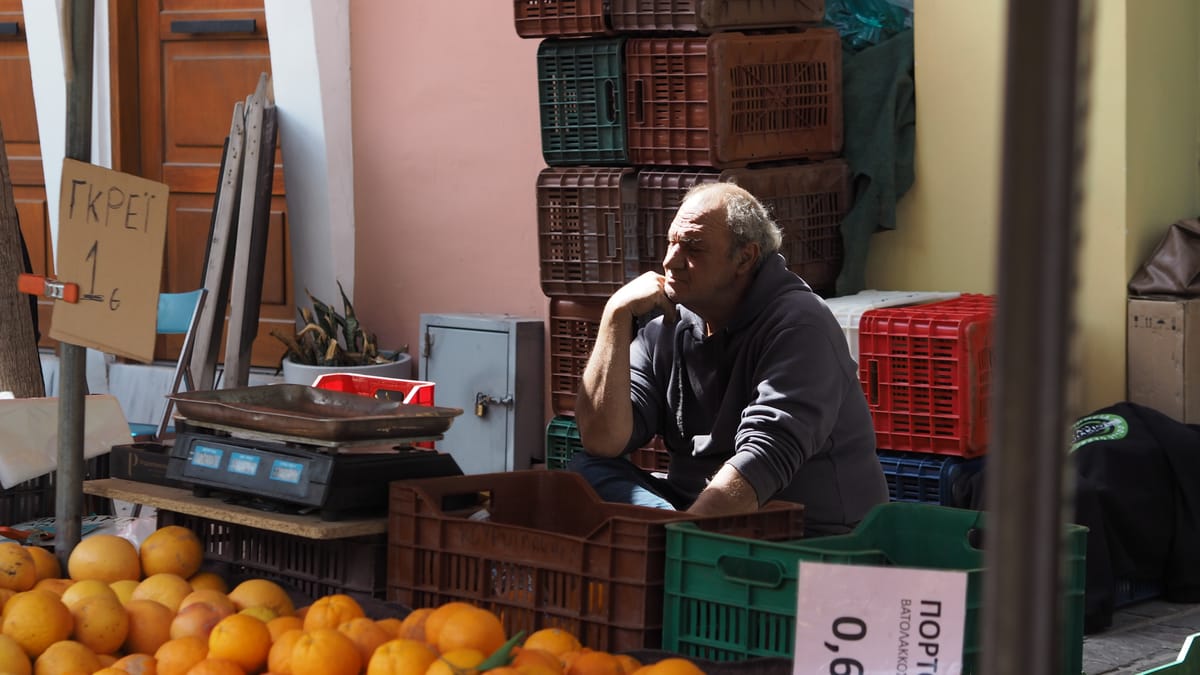
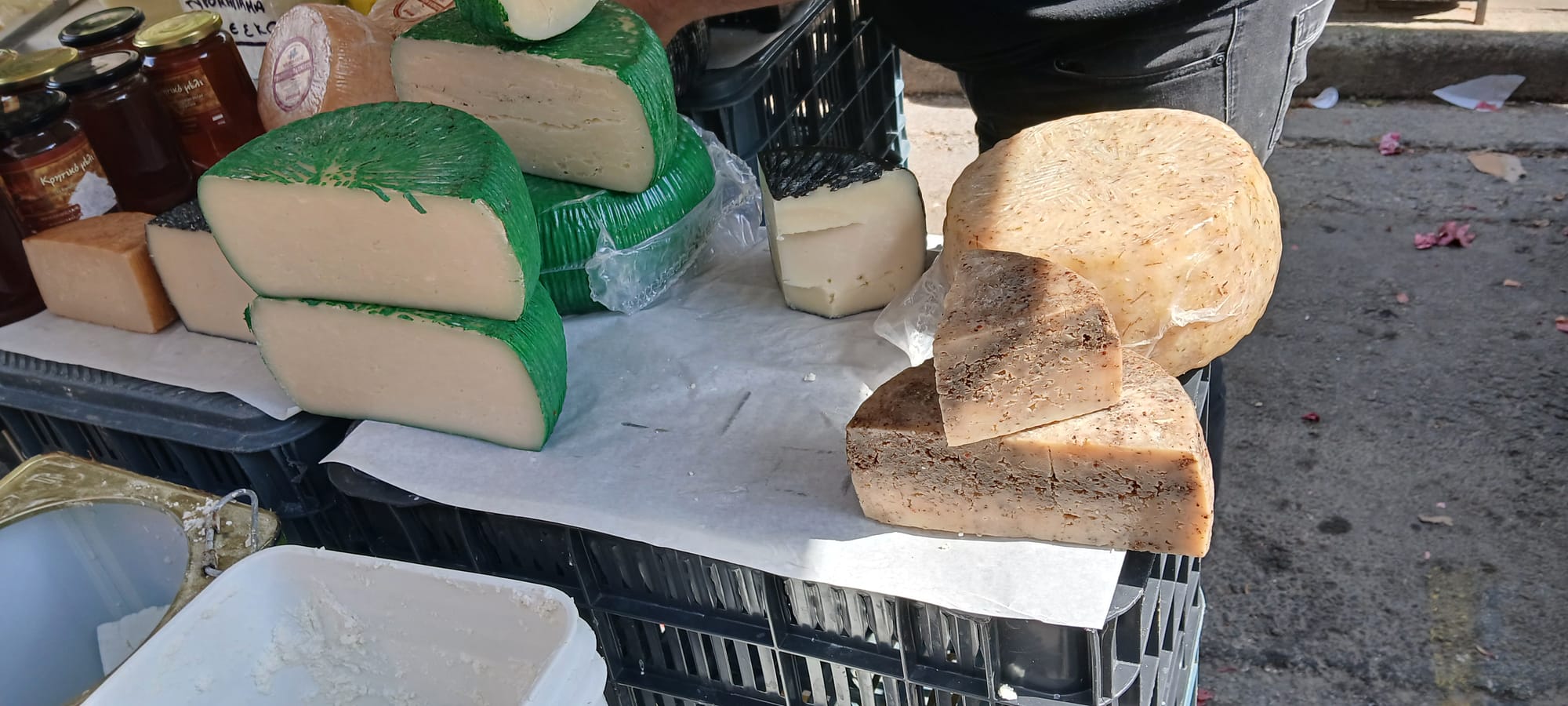
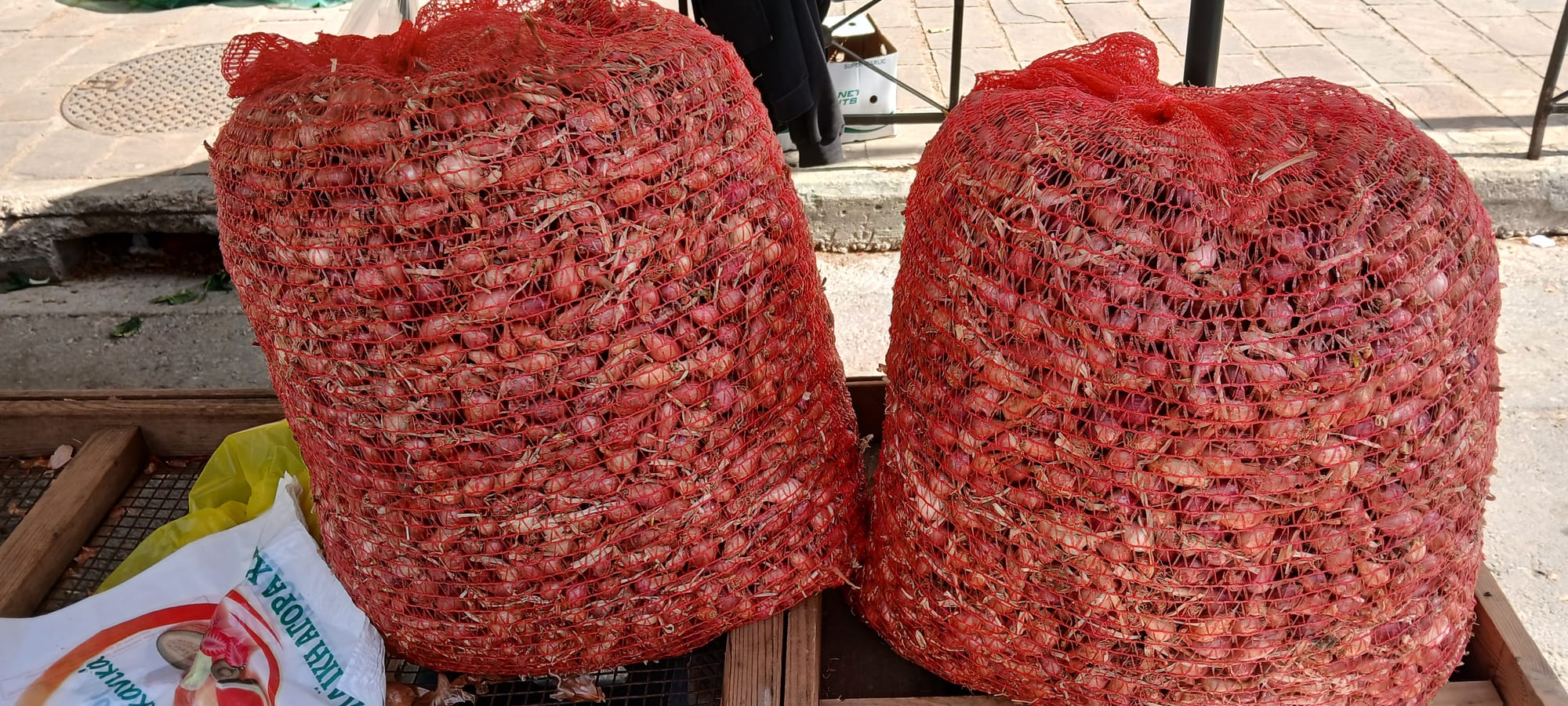
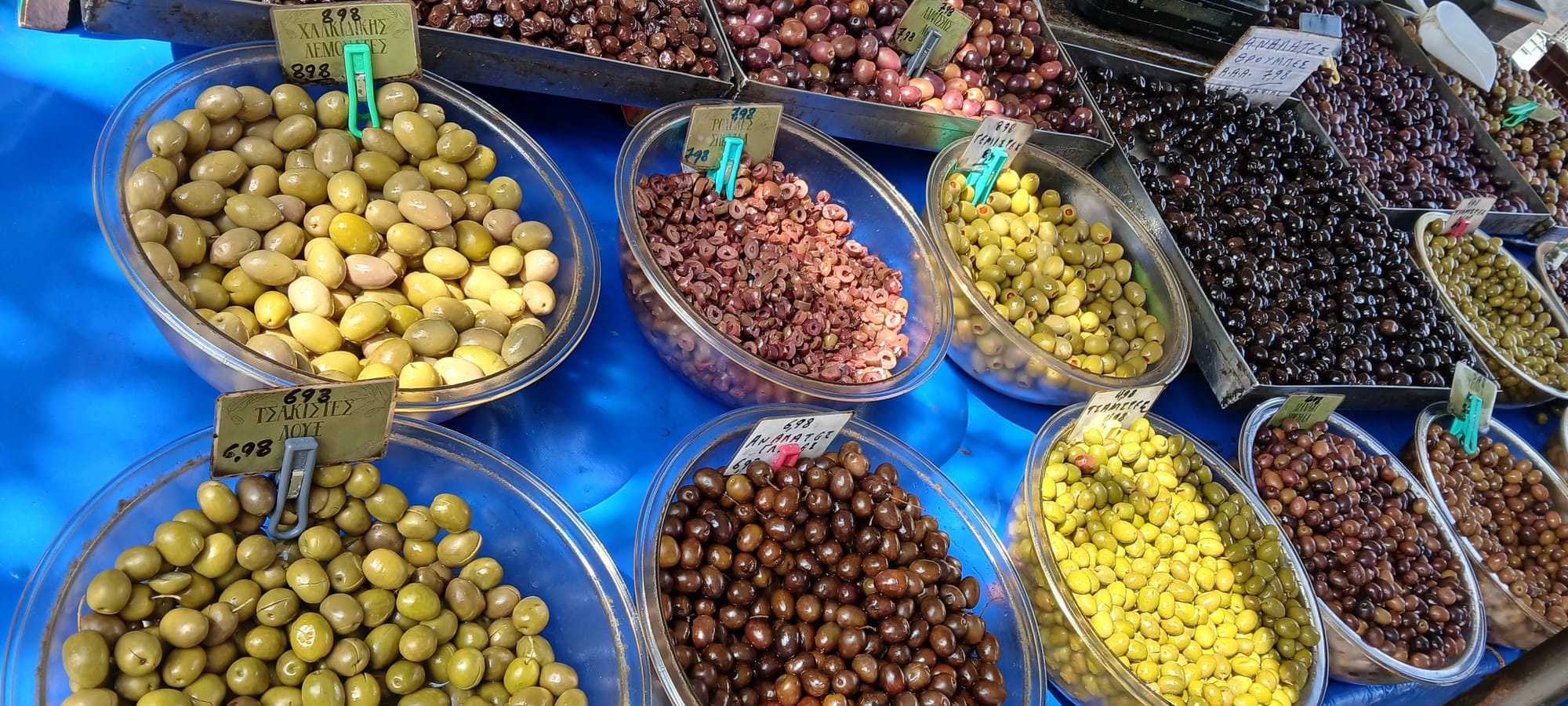
Today, a farmers' market:
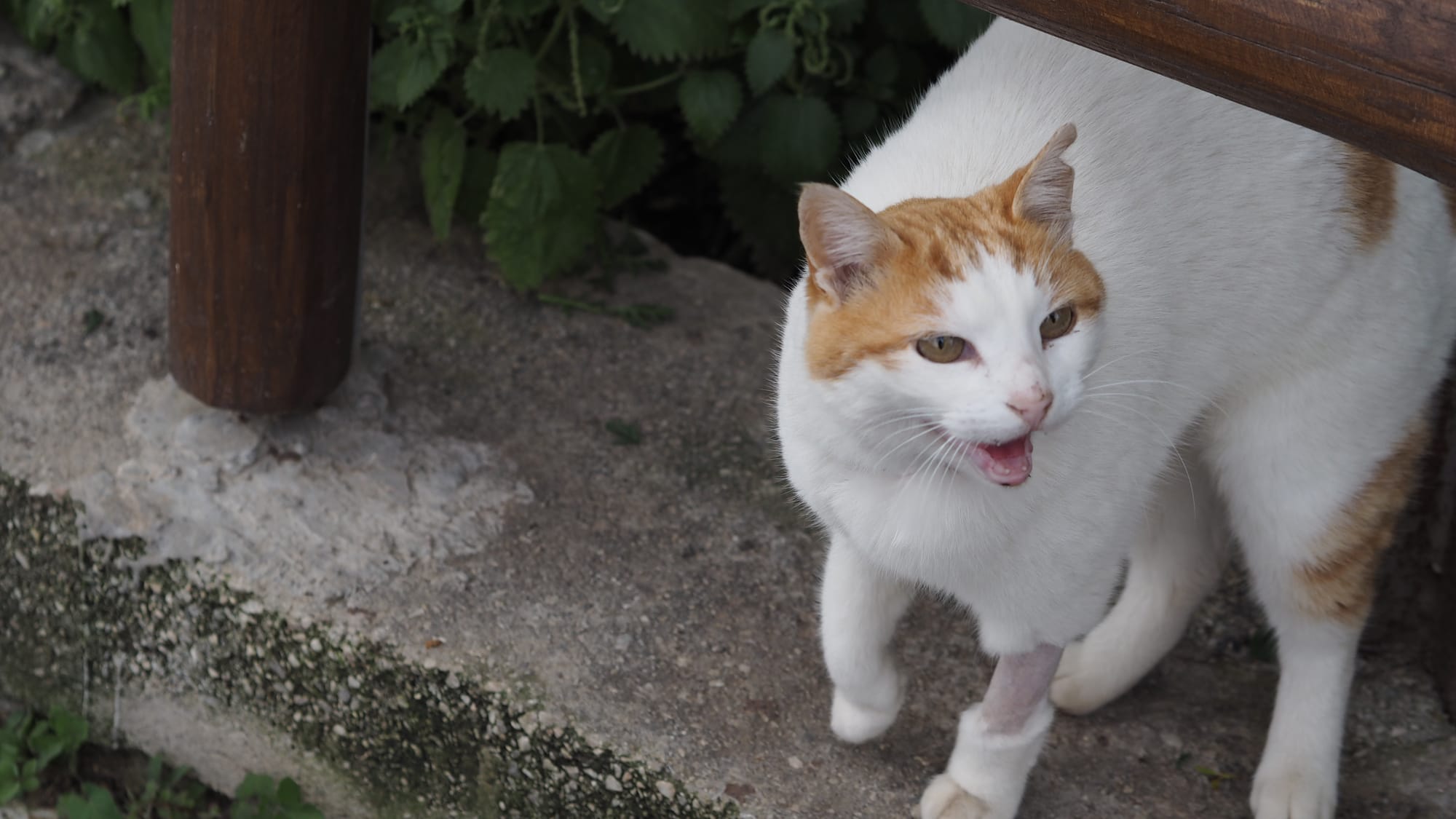
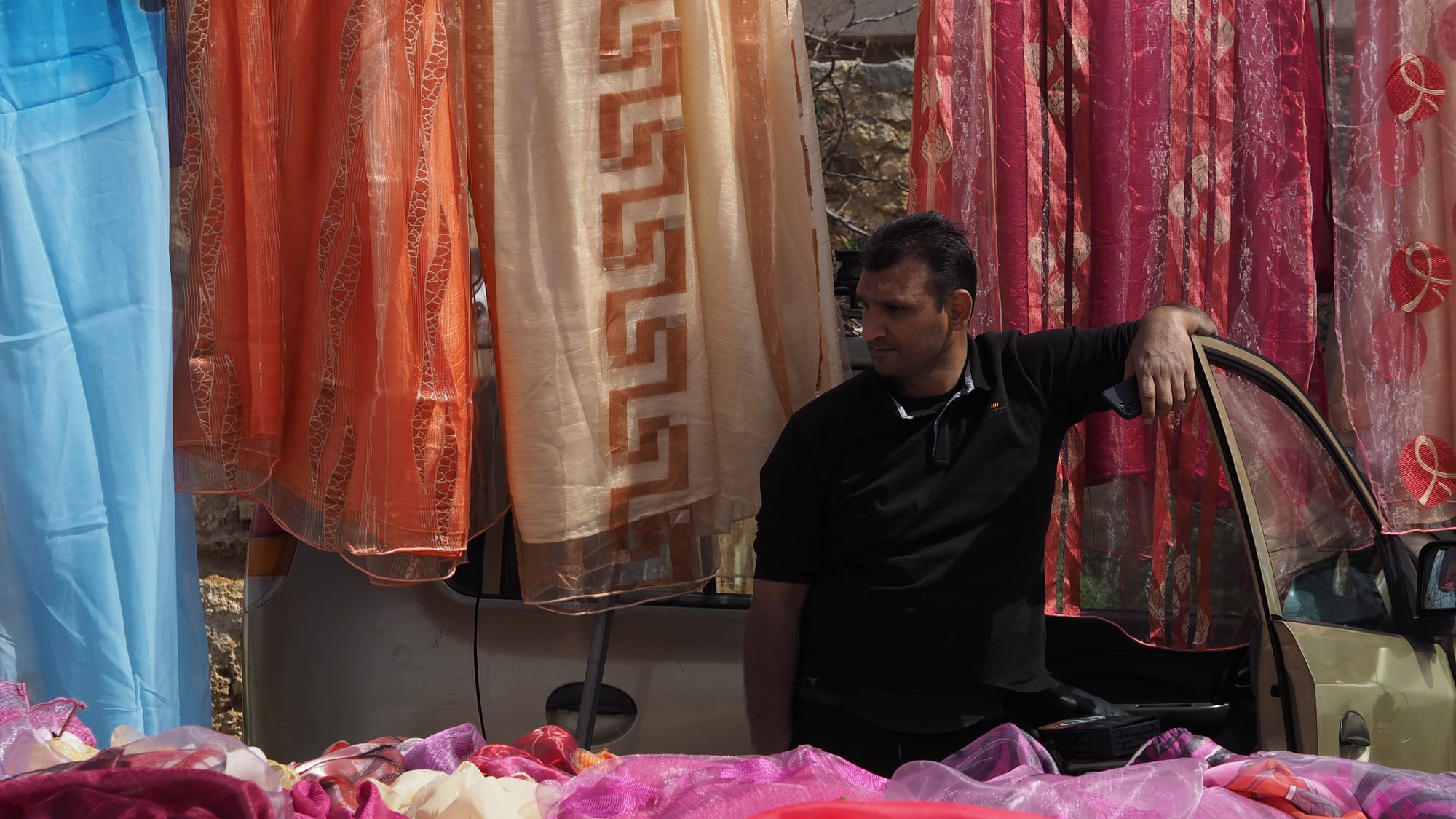
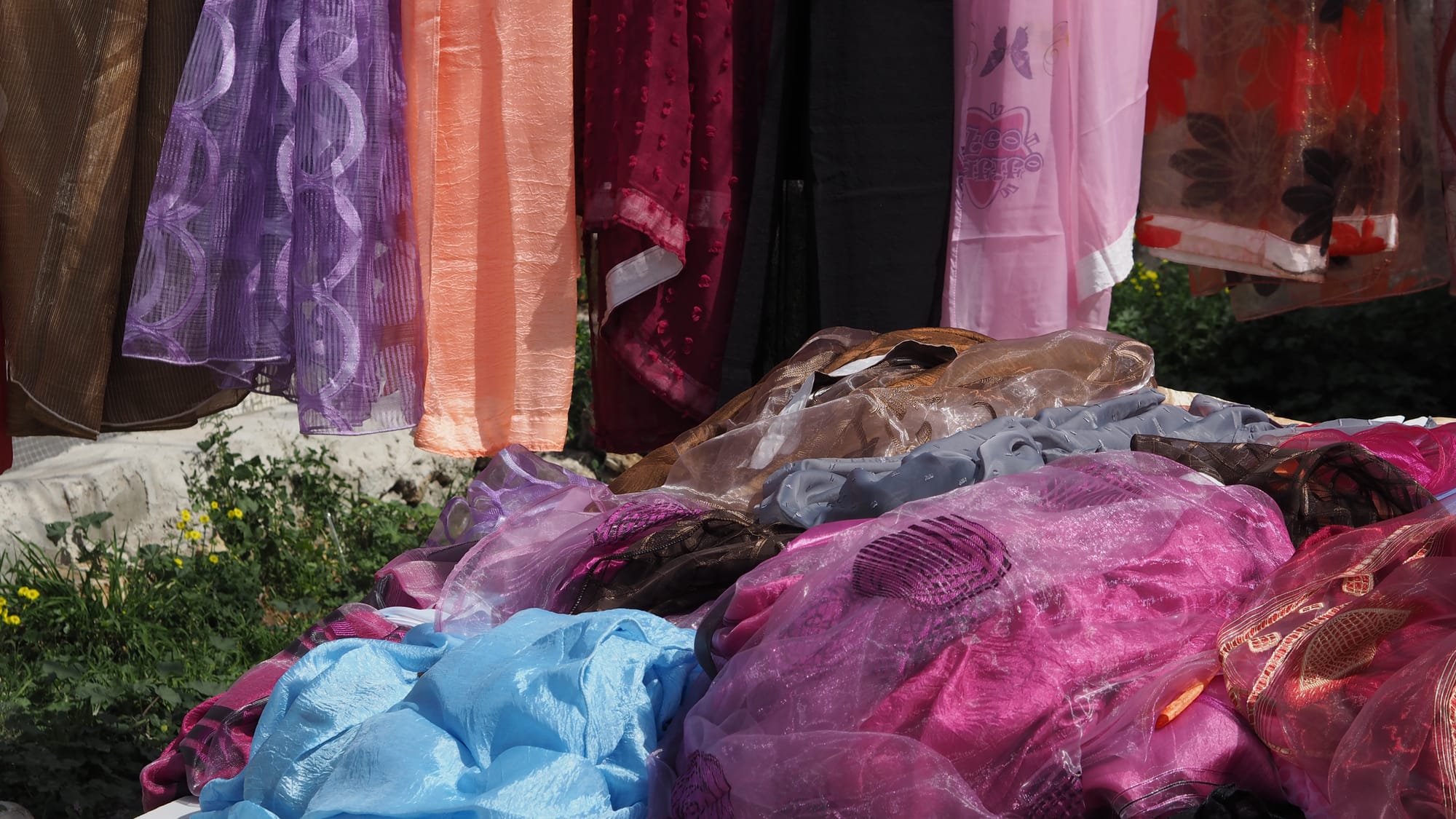
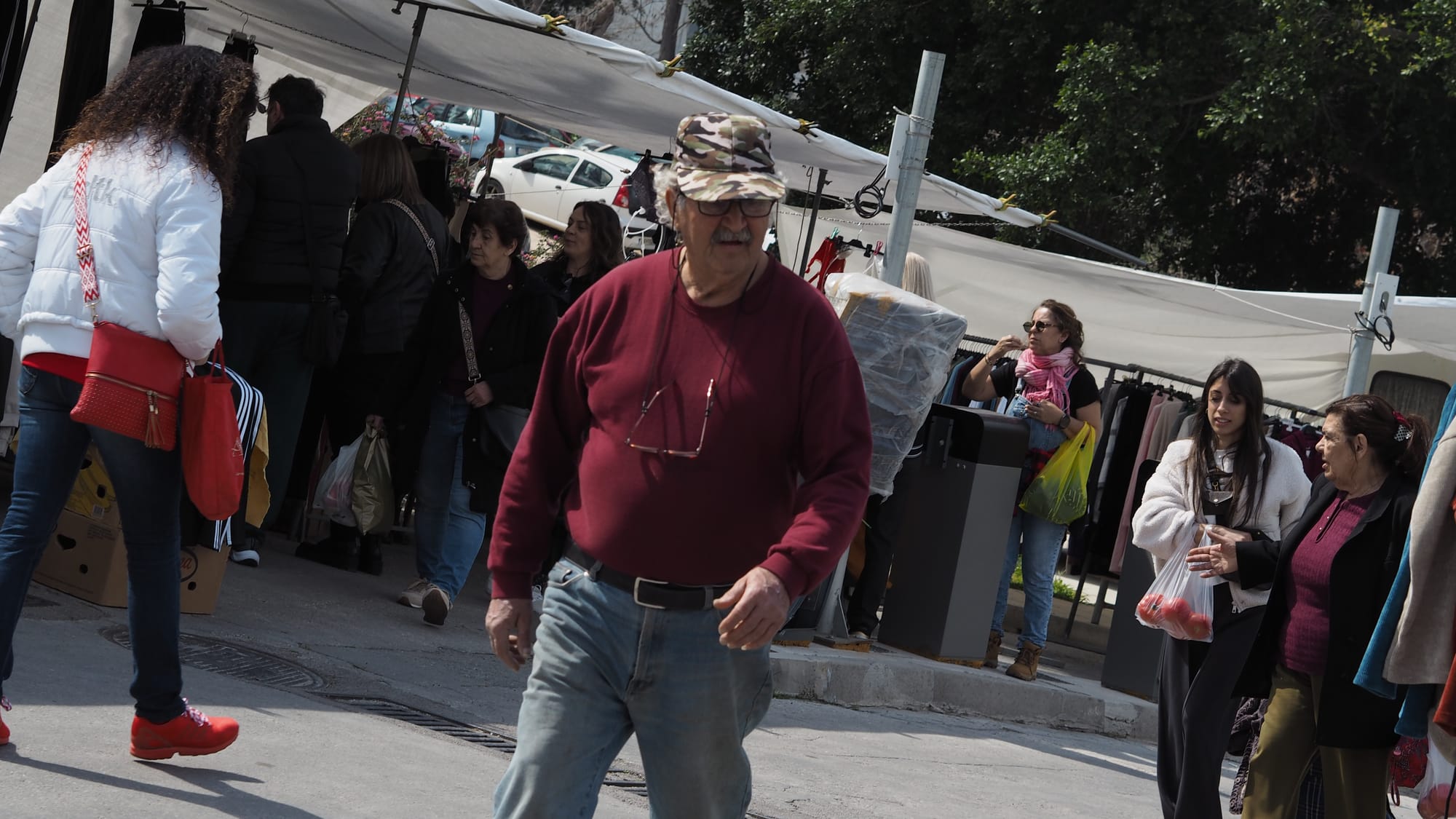
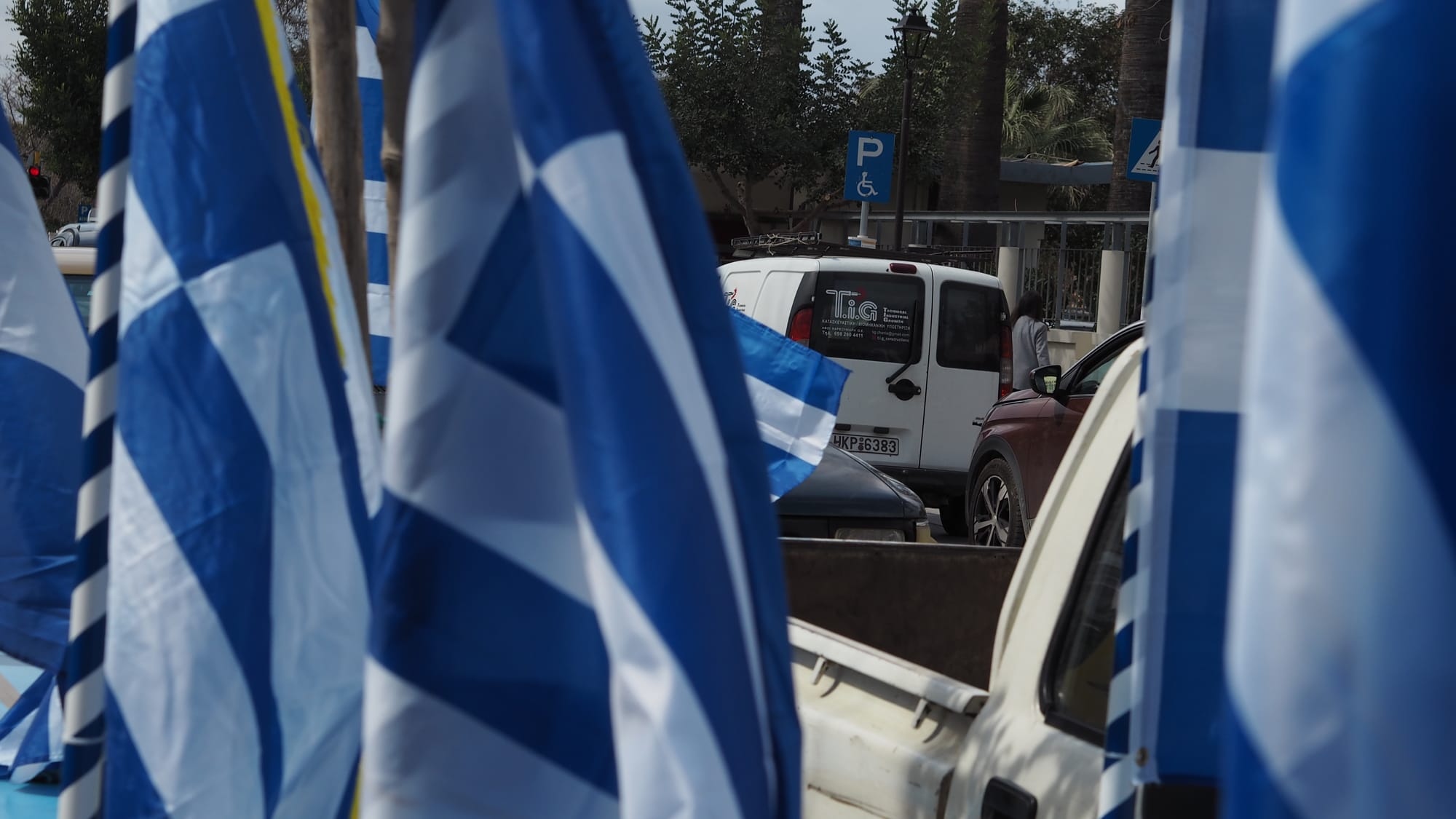
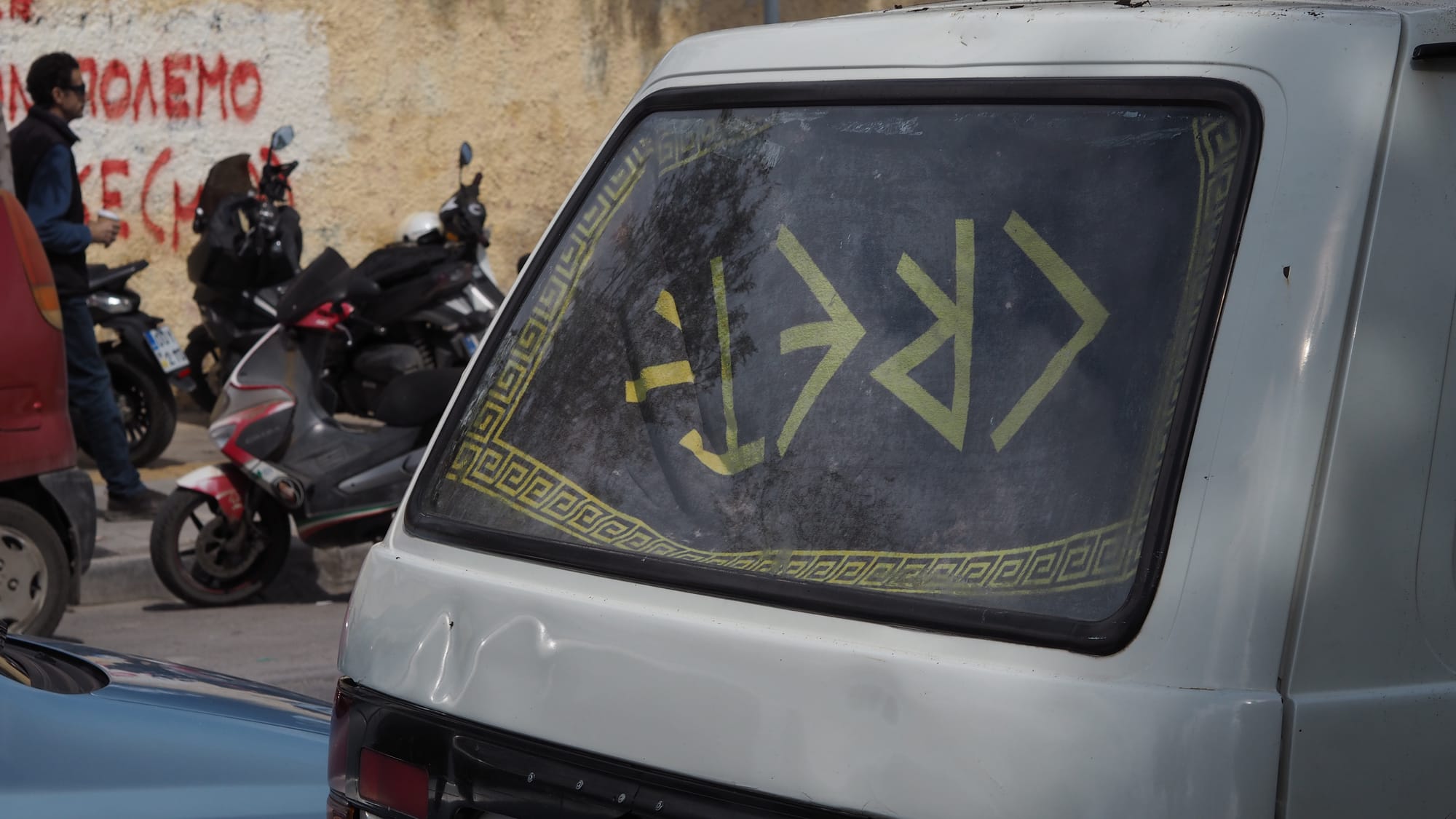
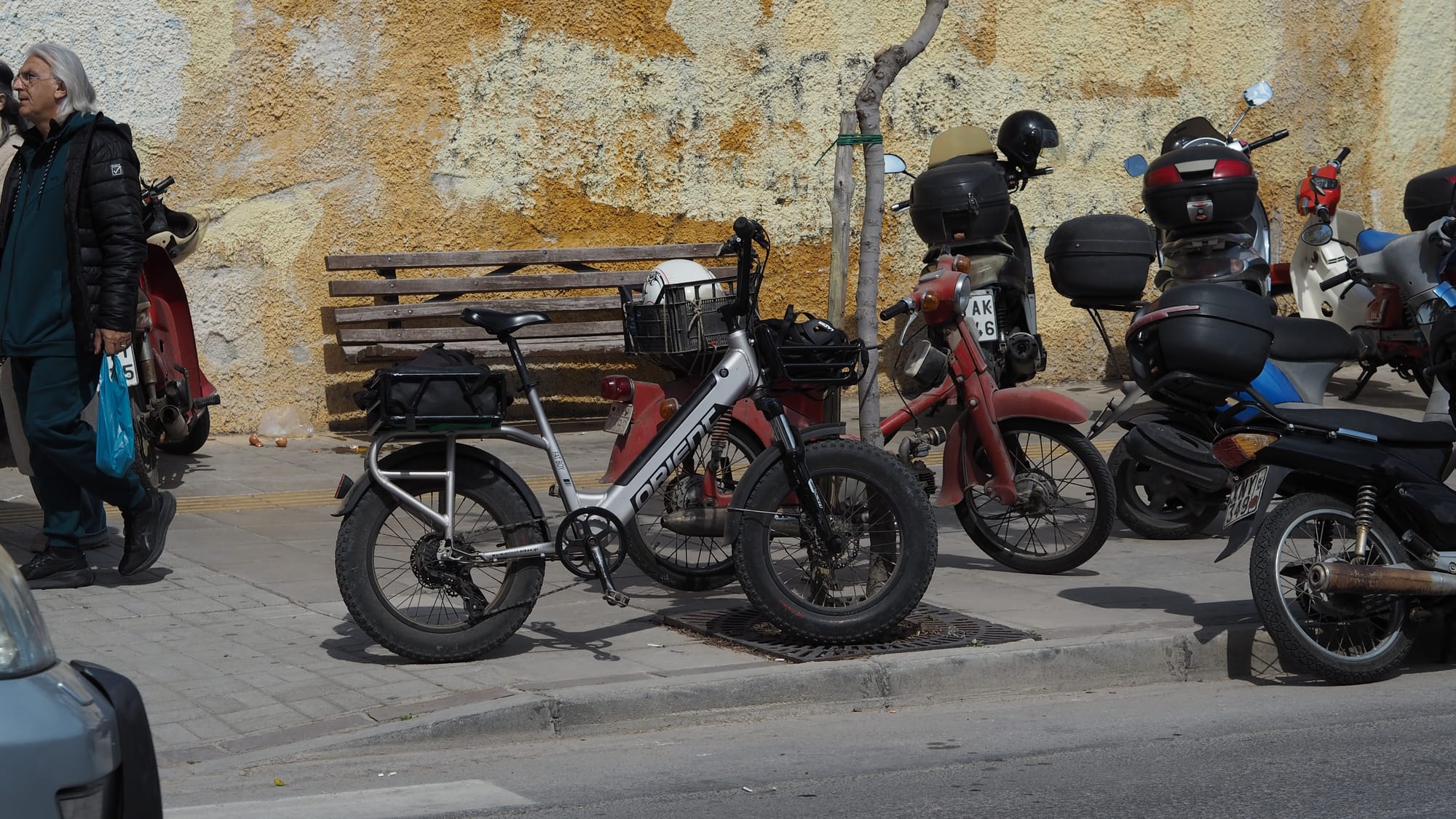
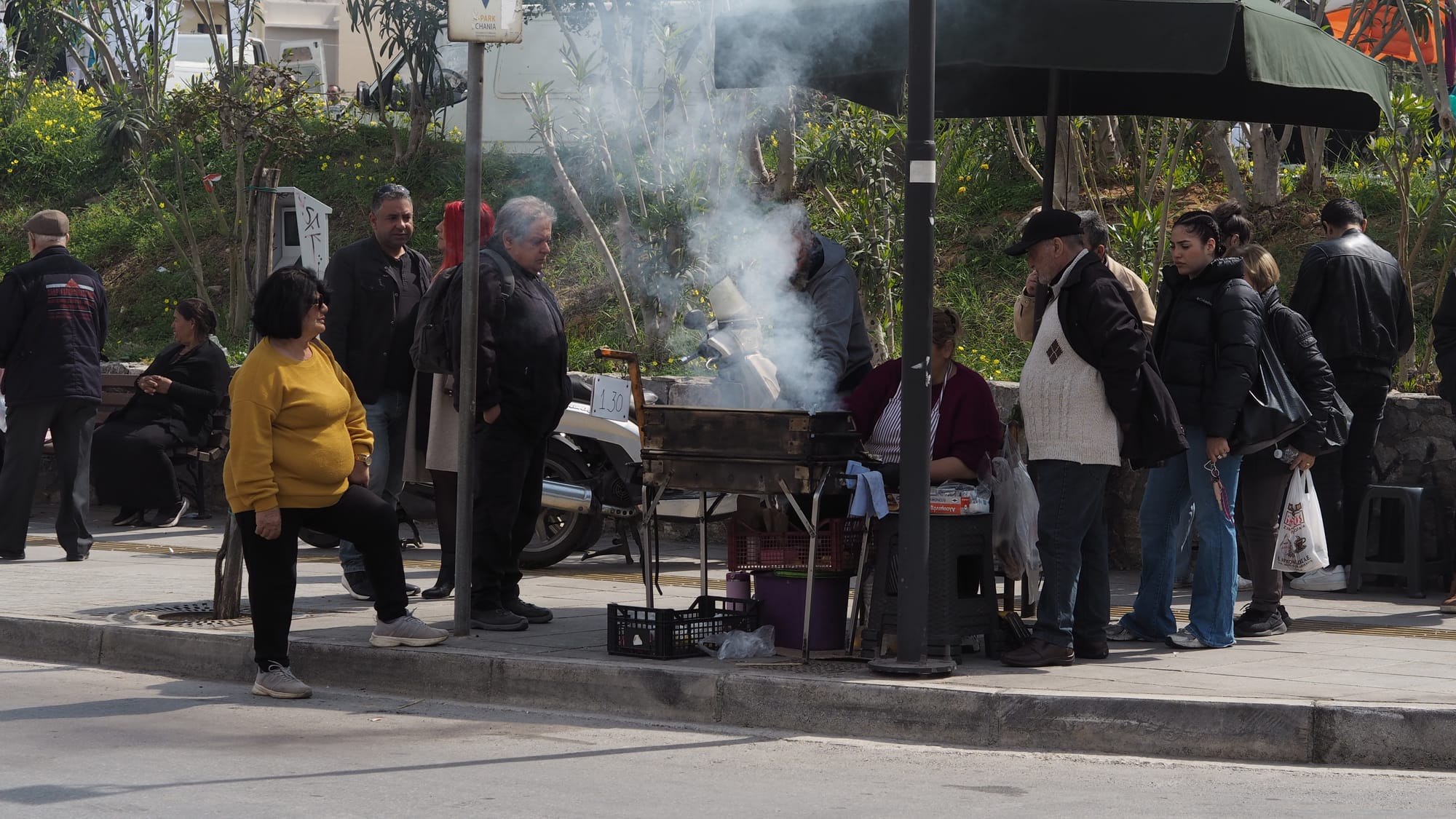
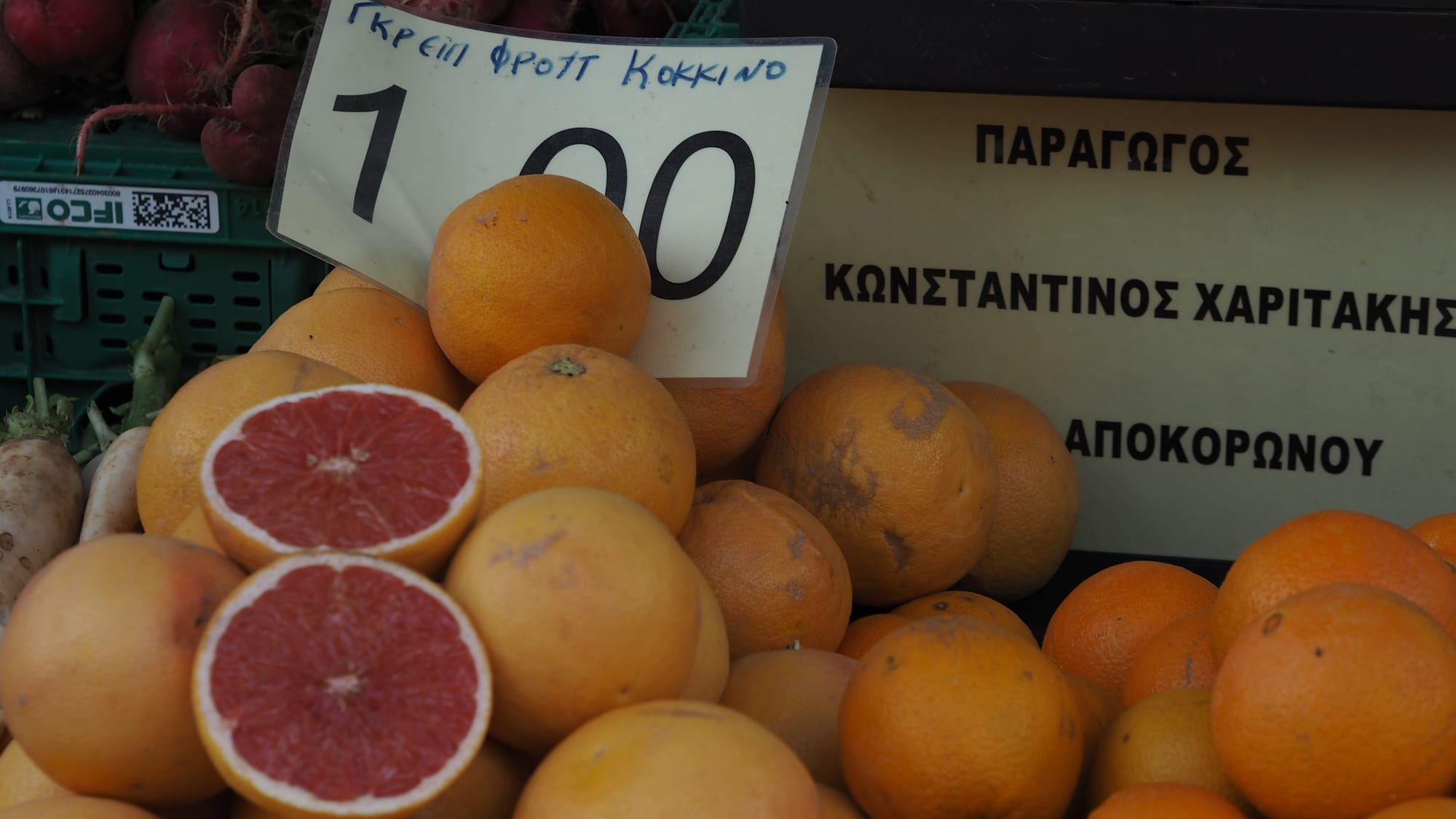
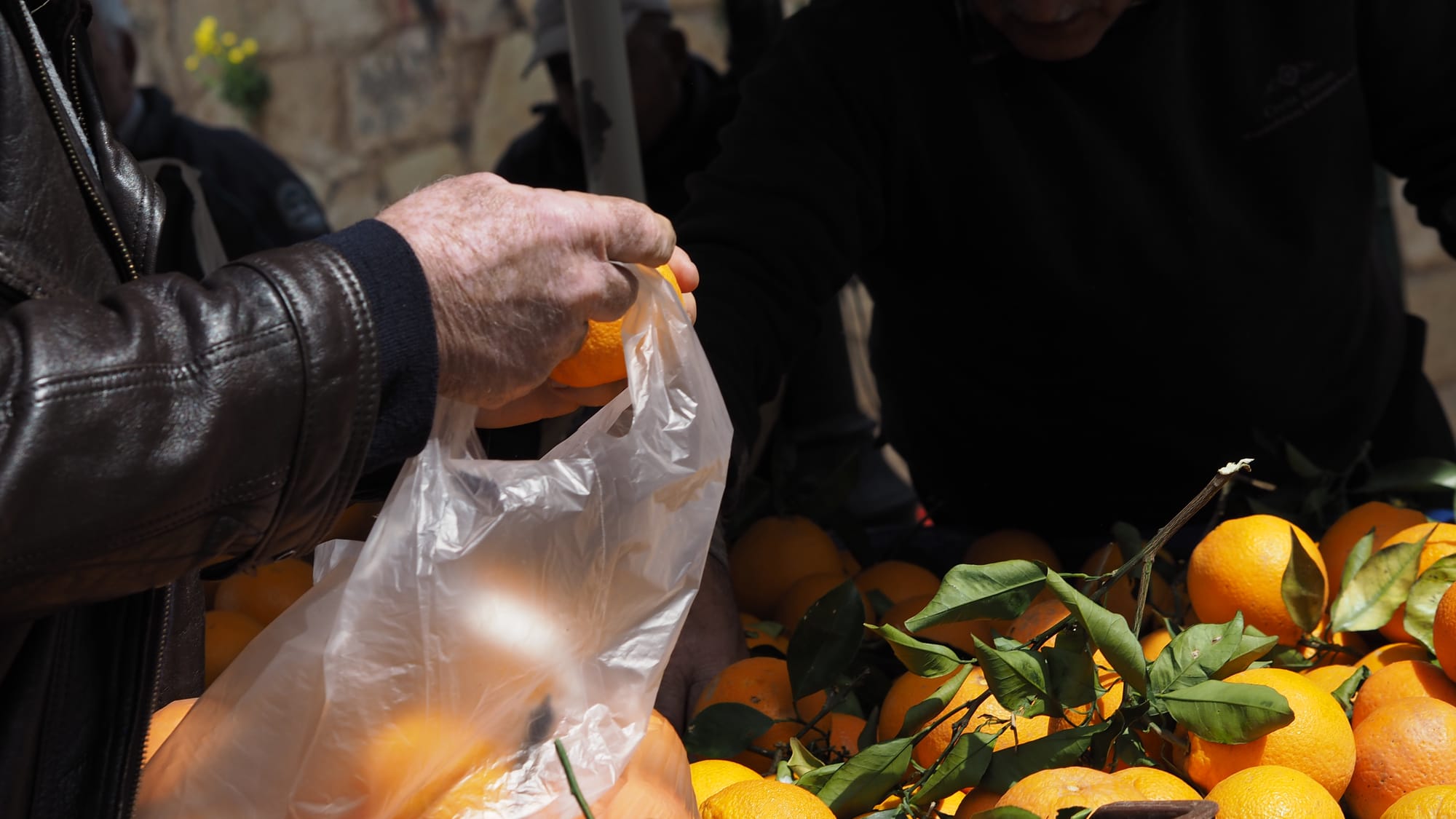
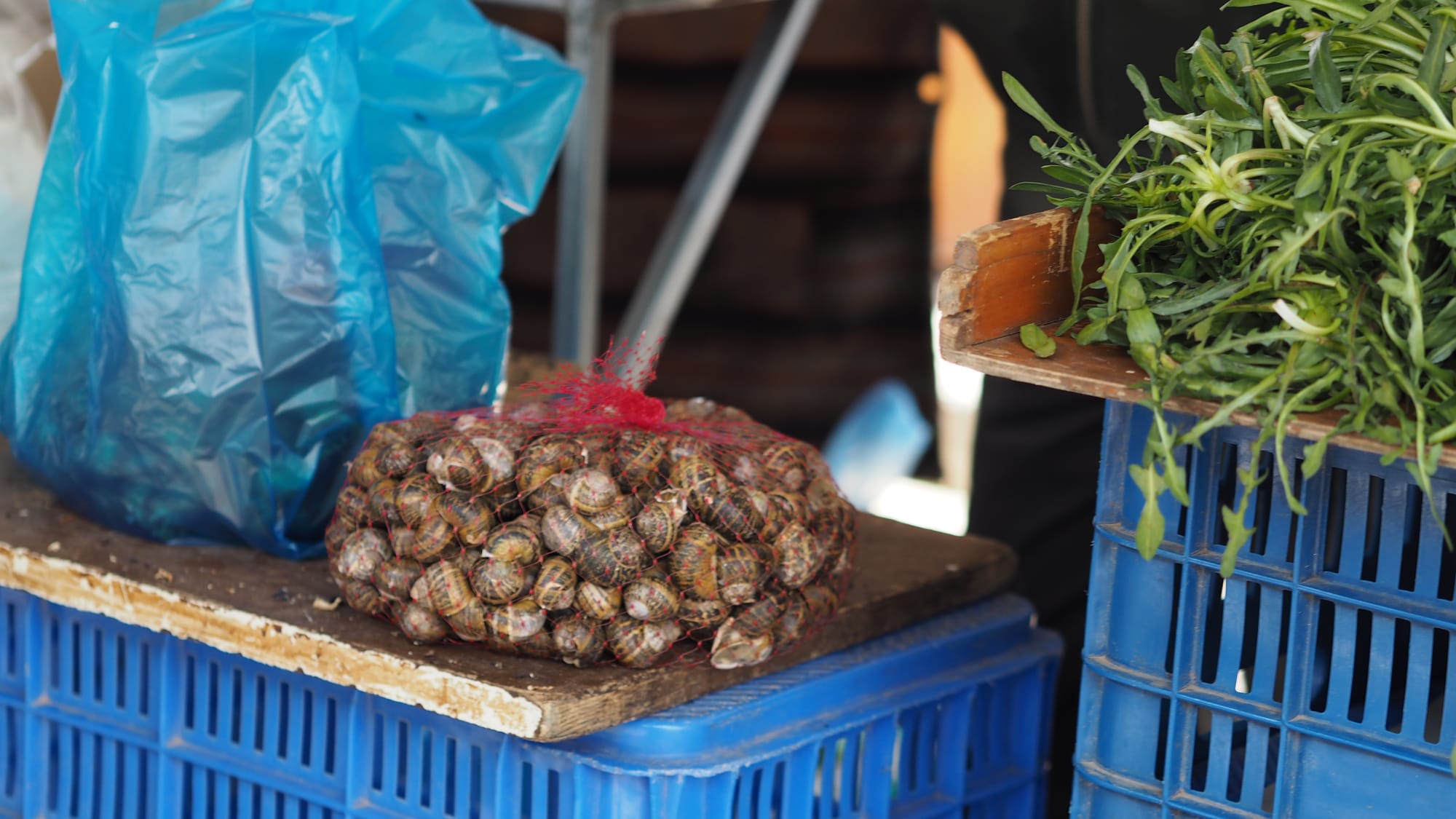
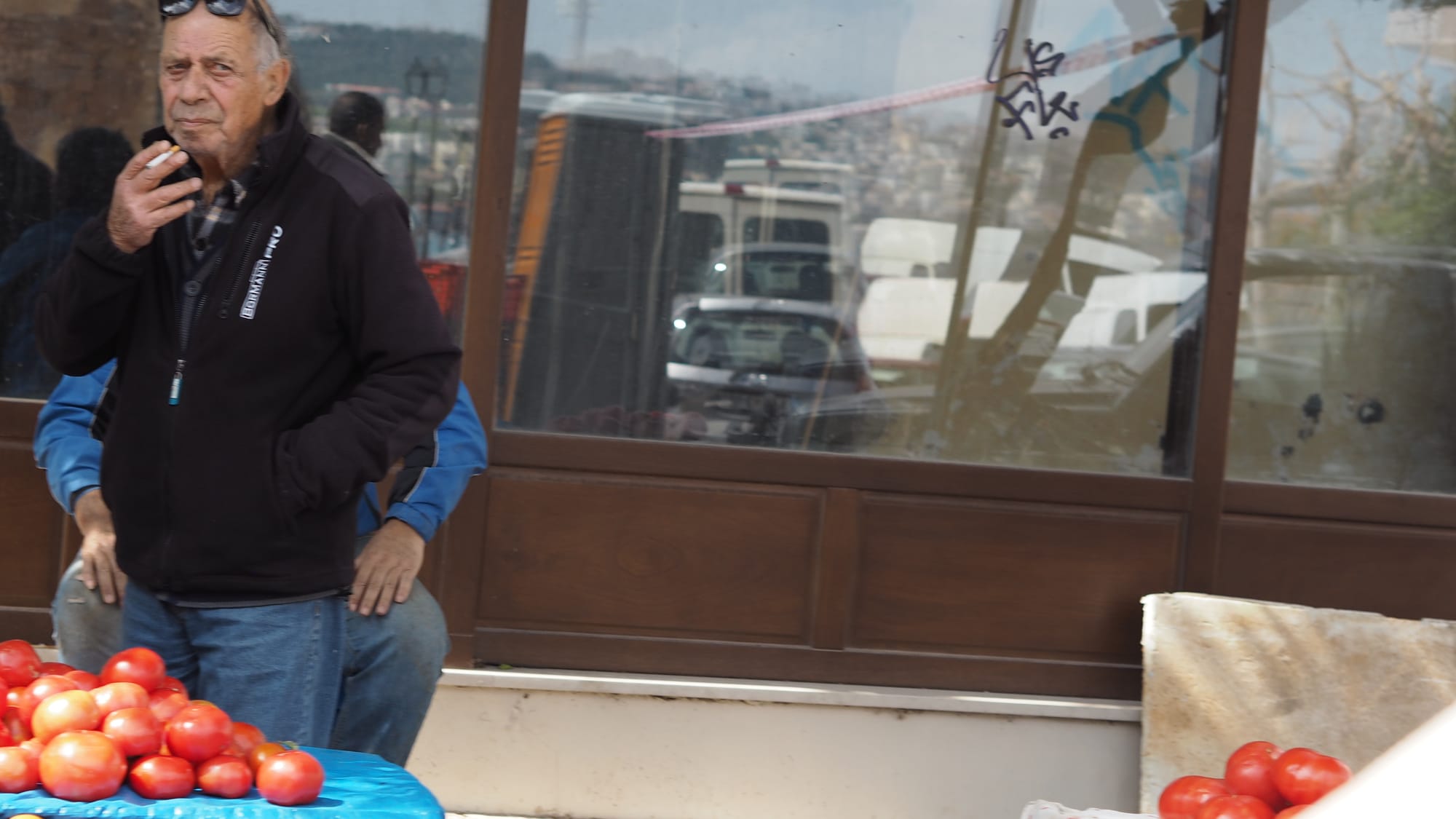
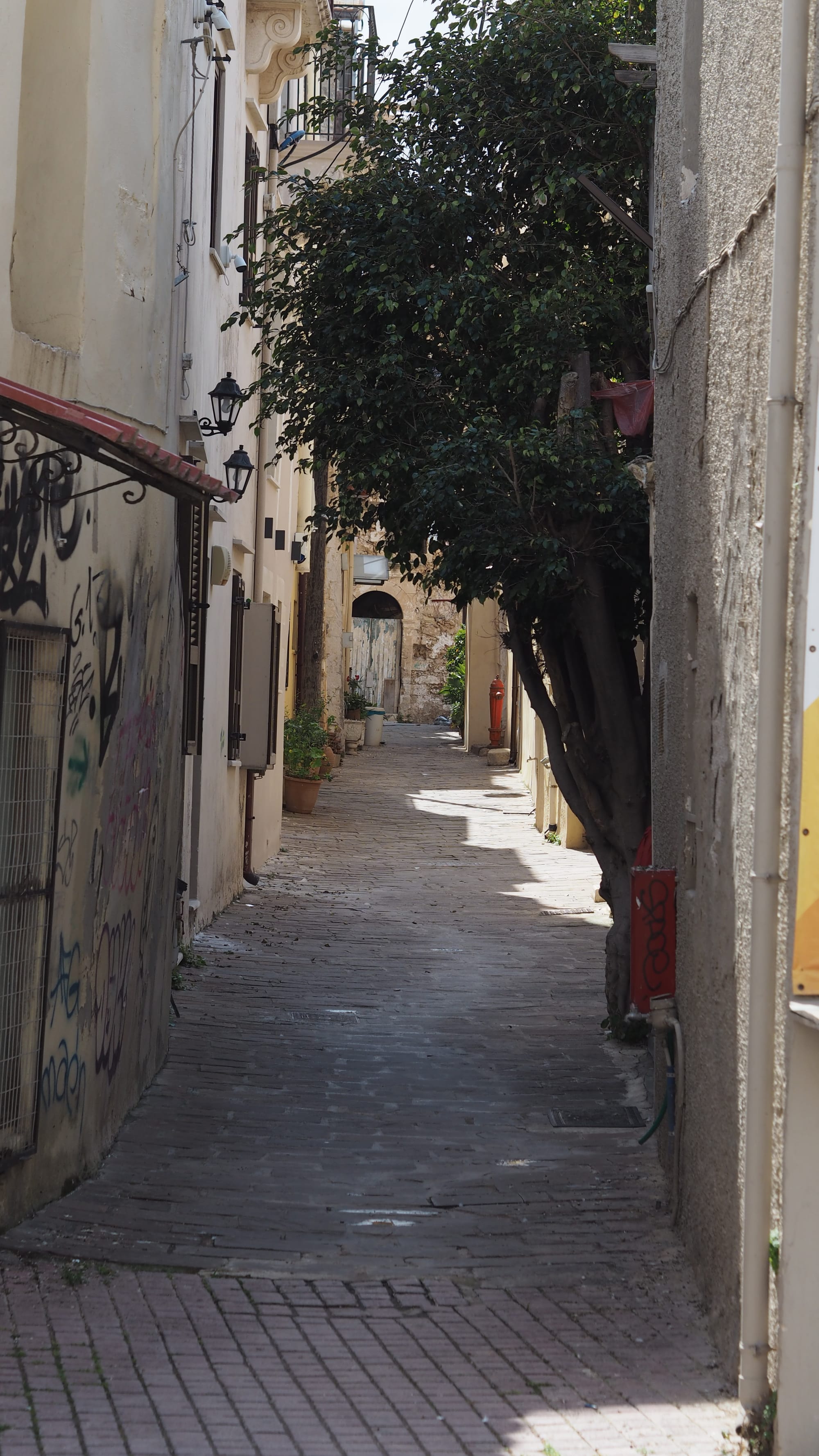
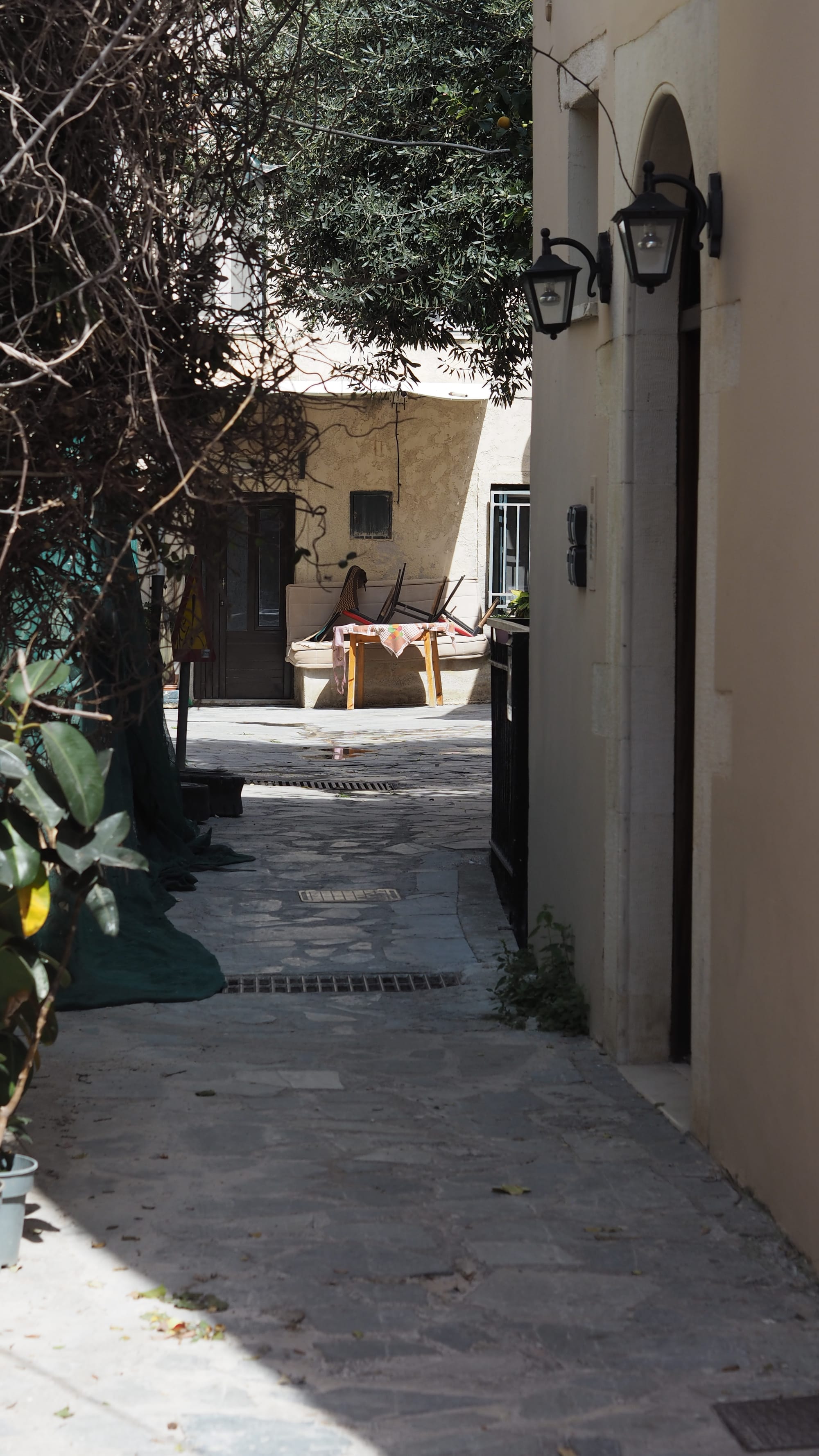
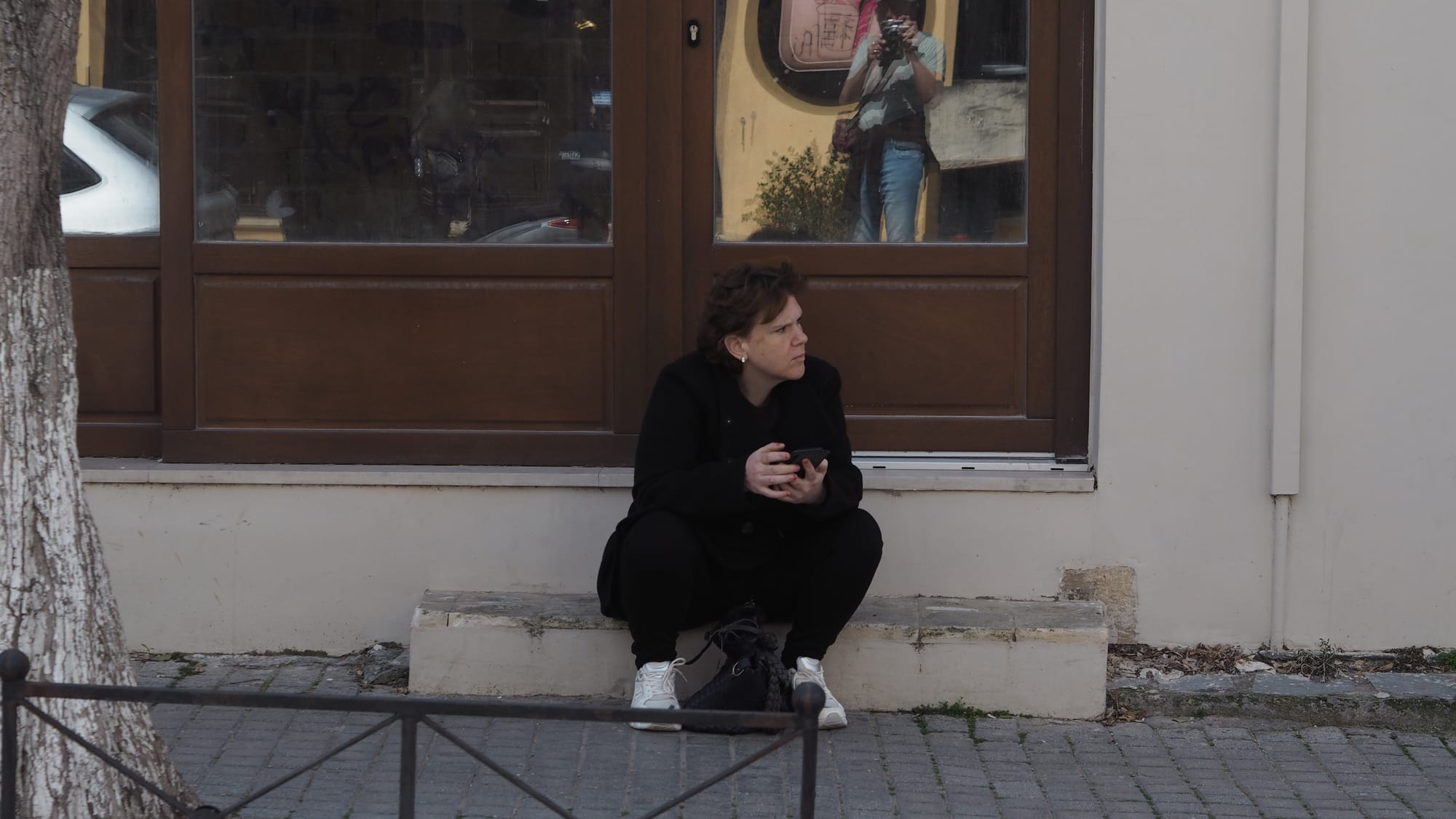
- yes, snails, χόχλιοι, a speciality of Crete we might have sampled the first night if we hadn't gone for seafood.
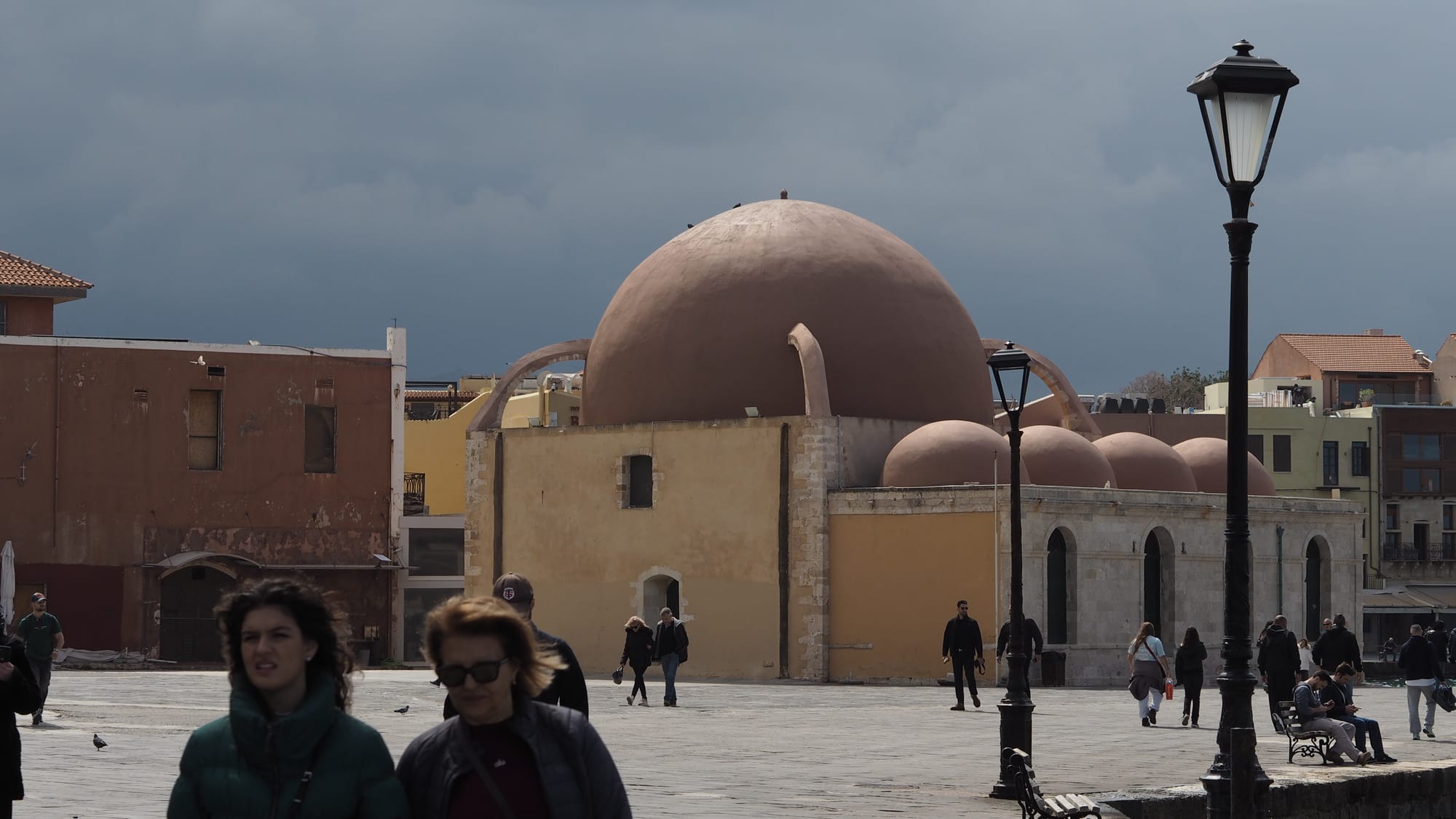
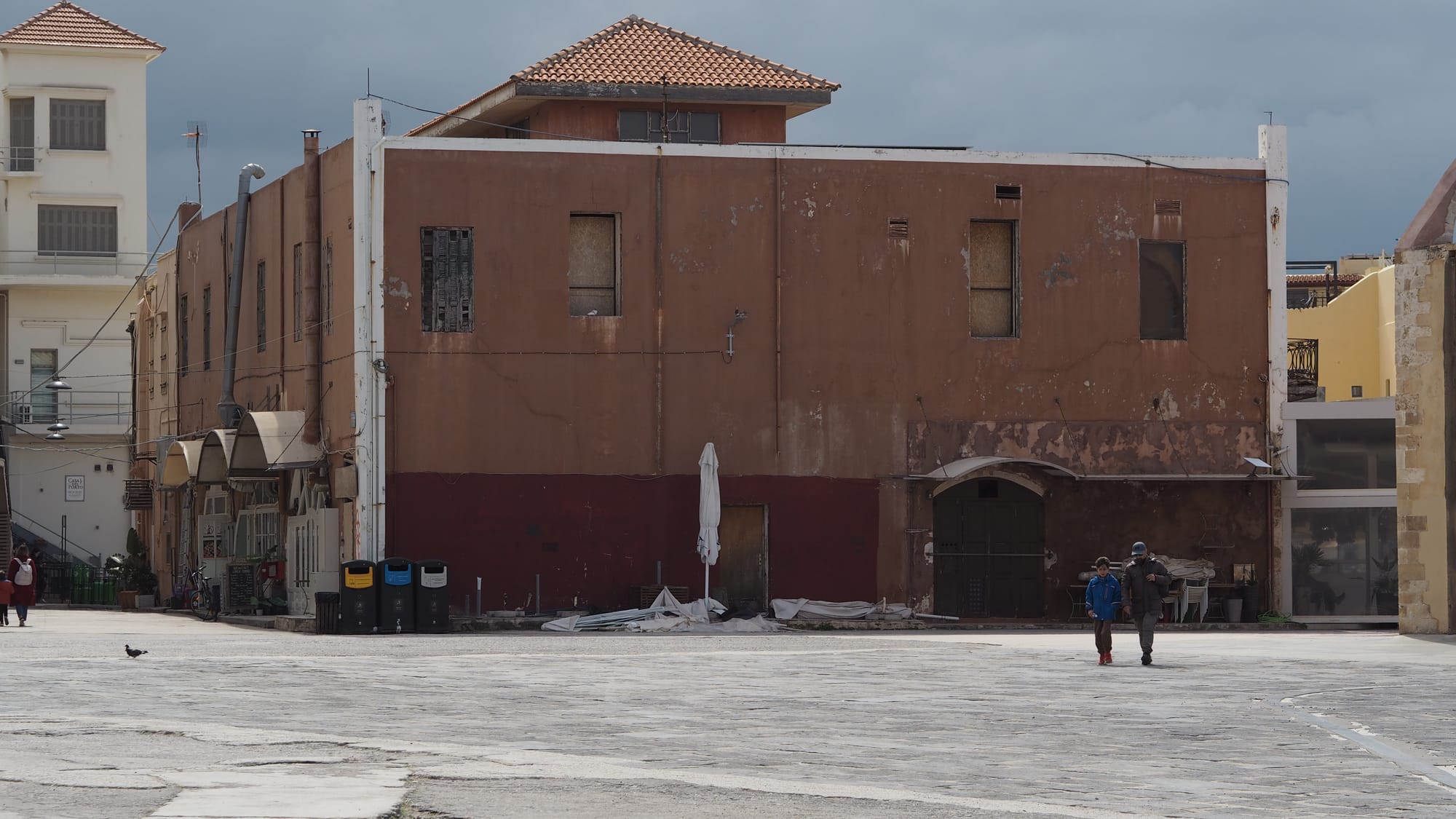
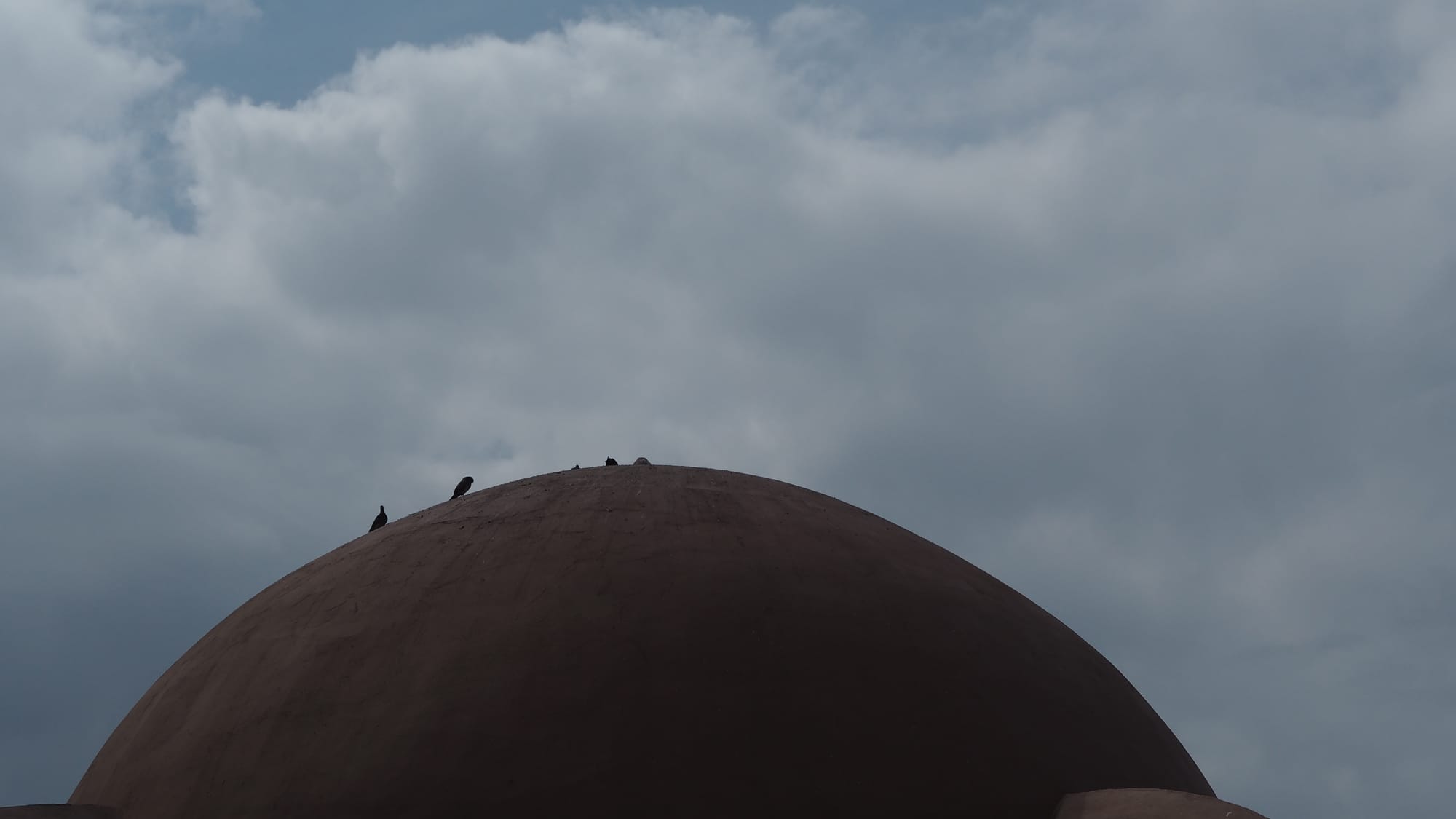
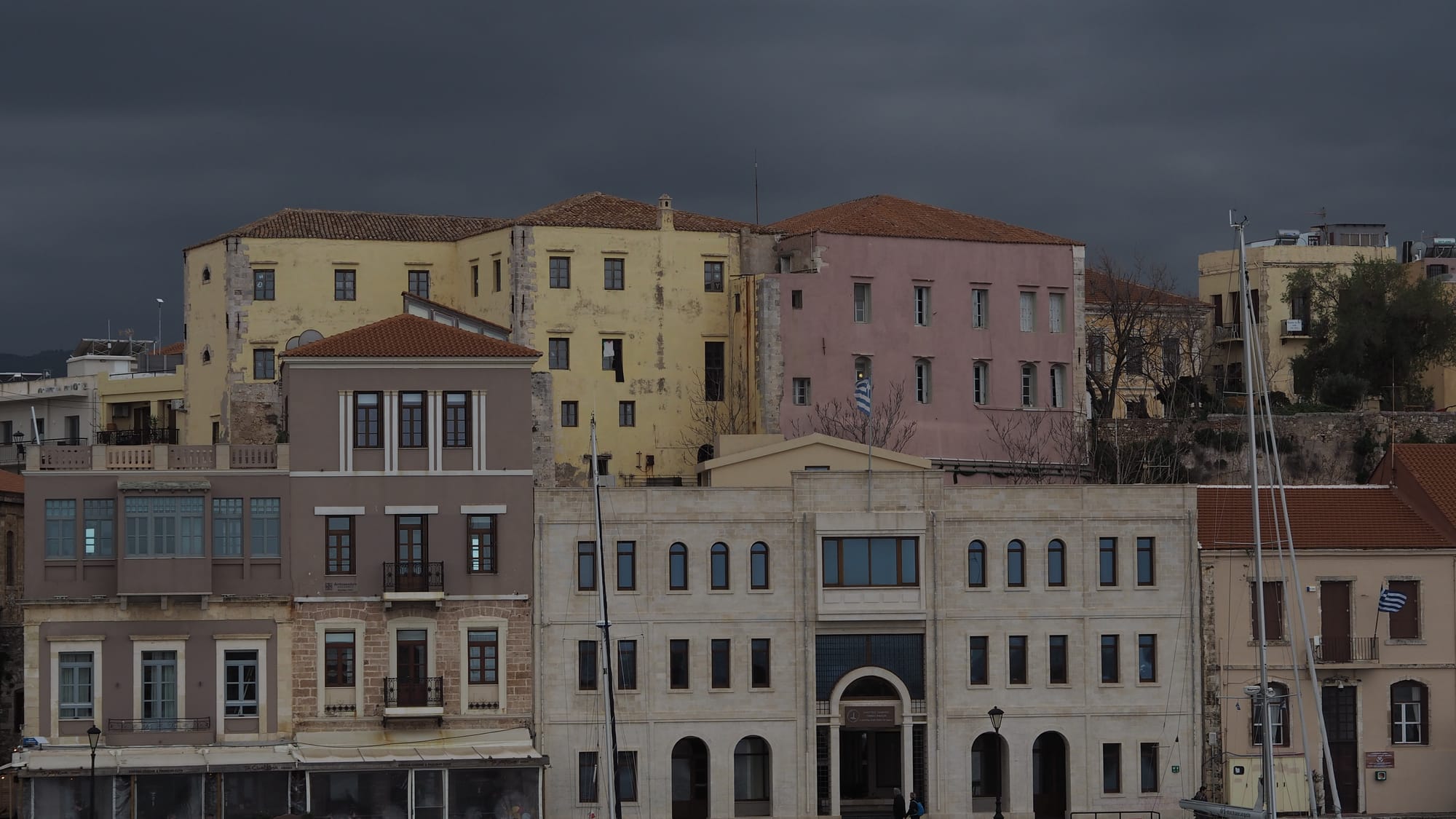
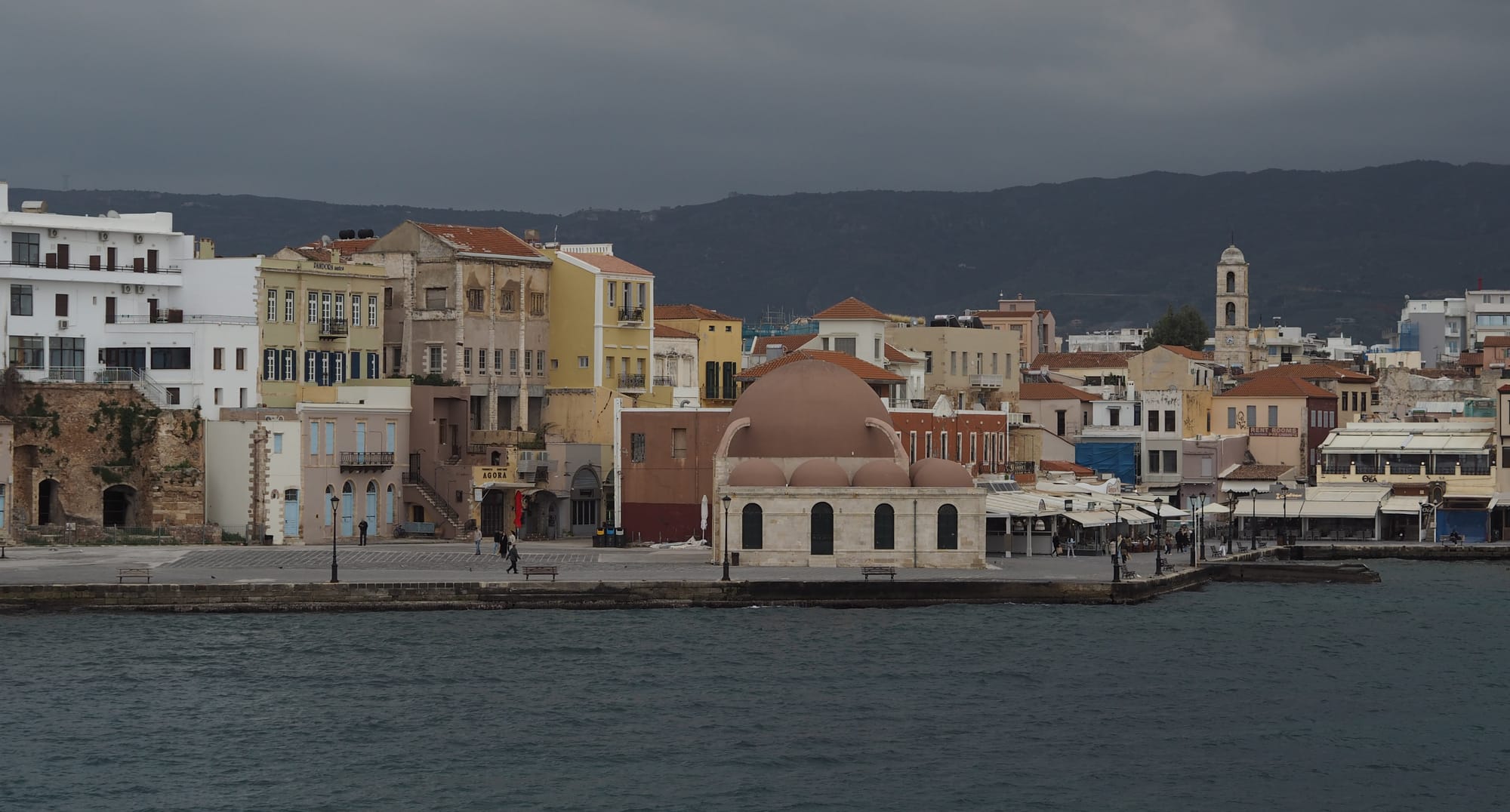
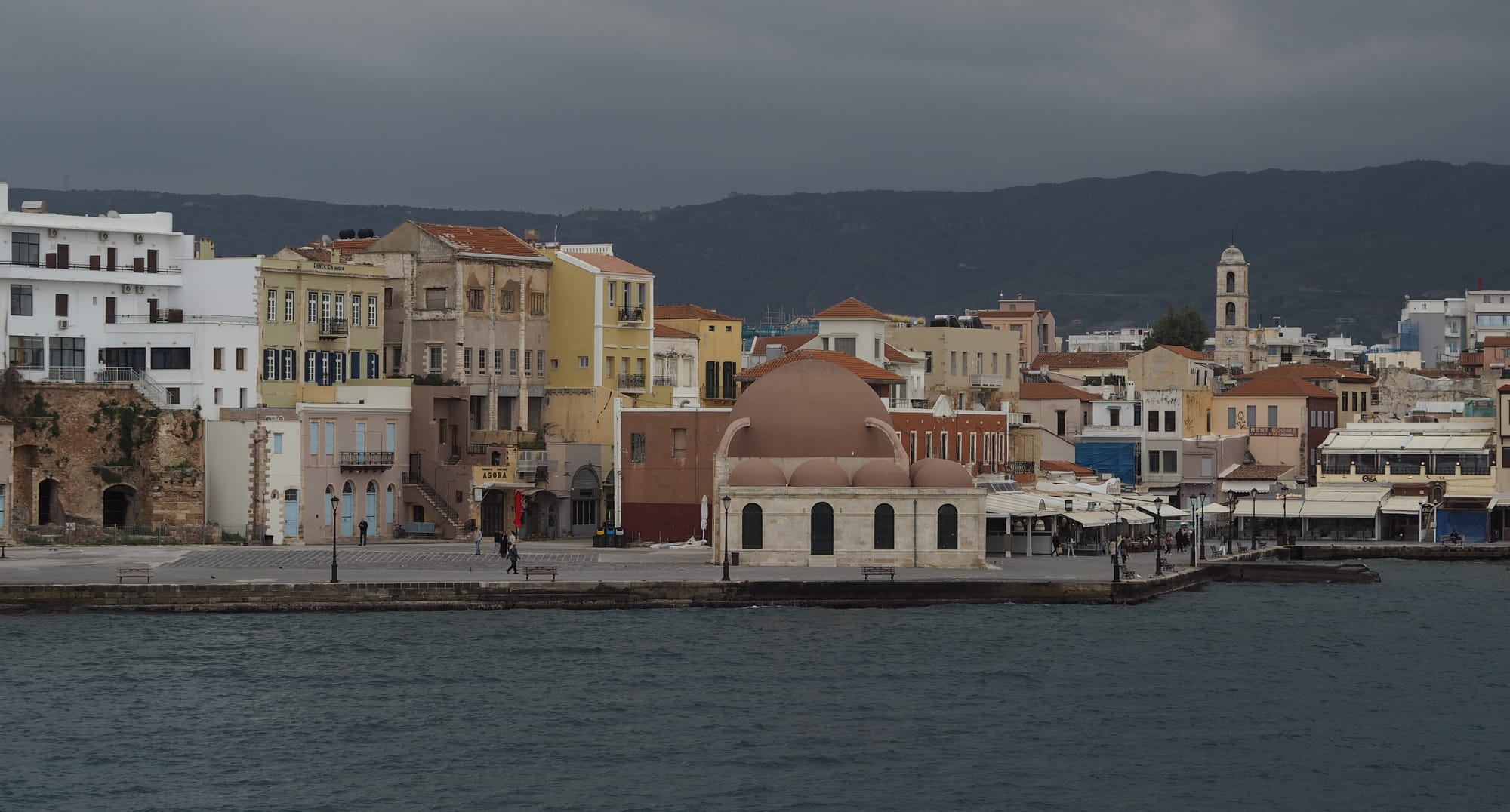
Check out the grotesquery of that mosque painted pink, decommissioned (I doubt a Greek Orthodox culture with a chip on its shoulder after the forced "population exchange" of 1923, not to speak of the Christian genocide (see here), would bother officially to deconsecrate) and minaret chopped off, a cultural venue of some description. Was not open while we were there. These couple of paragraphs contain more surprises than explanations:
In 825, a band of Saracen political exiles from the Western Caliphate of Spain, who had taken refuge in Egypt, conducted a successful raid on Crete and returned to Alexandria with cargoes of Christian captives and rich booty. The next year these pirates, having obtained permission from the Caliph Mamum to leave Egypt and win for themselves a permanent settlement within the Byzantine Empire, set sail in an expedition of 40 ships, again descended upon Crete, and conquered it from end to end. Two expeditions sent from Constantinople by the Emperor Michael the Amorian failed to regain the island, and though a third expedition dislodged the pirates from some small Aegean isles and dispersed their squadrons for a time, the Saracens remained in possession of Crete, where they constructed a gigantic fortress named Chandak from which Candia, the alternate modern name of Crete, takes its rise.
Crete now became an outpost of the Eastern Caliphate in its warfare with New Rome. For 135 years the island was ruled by Moslem corsair chiefs whose depredations spread misery and ruin over the islands and coasts of the Aegean and constituted a serious danger to the Byzantine Empire in its constantly recurring periods of civil strife. From its strategic position lying across the mouth of the Aegean, Crete also became in the hands of the Saracens a continual menace to Byzantine commerce with the West, in whose defense the utmost efforts of the Imperial fleet were necessary.
–source, pointing out the undoubted strategic importance of Crete, now as then.
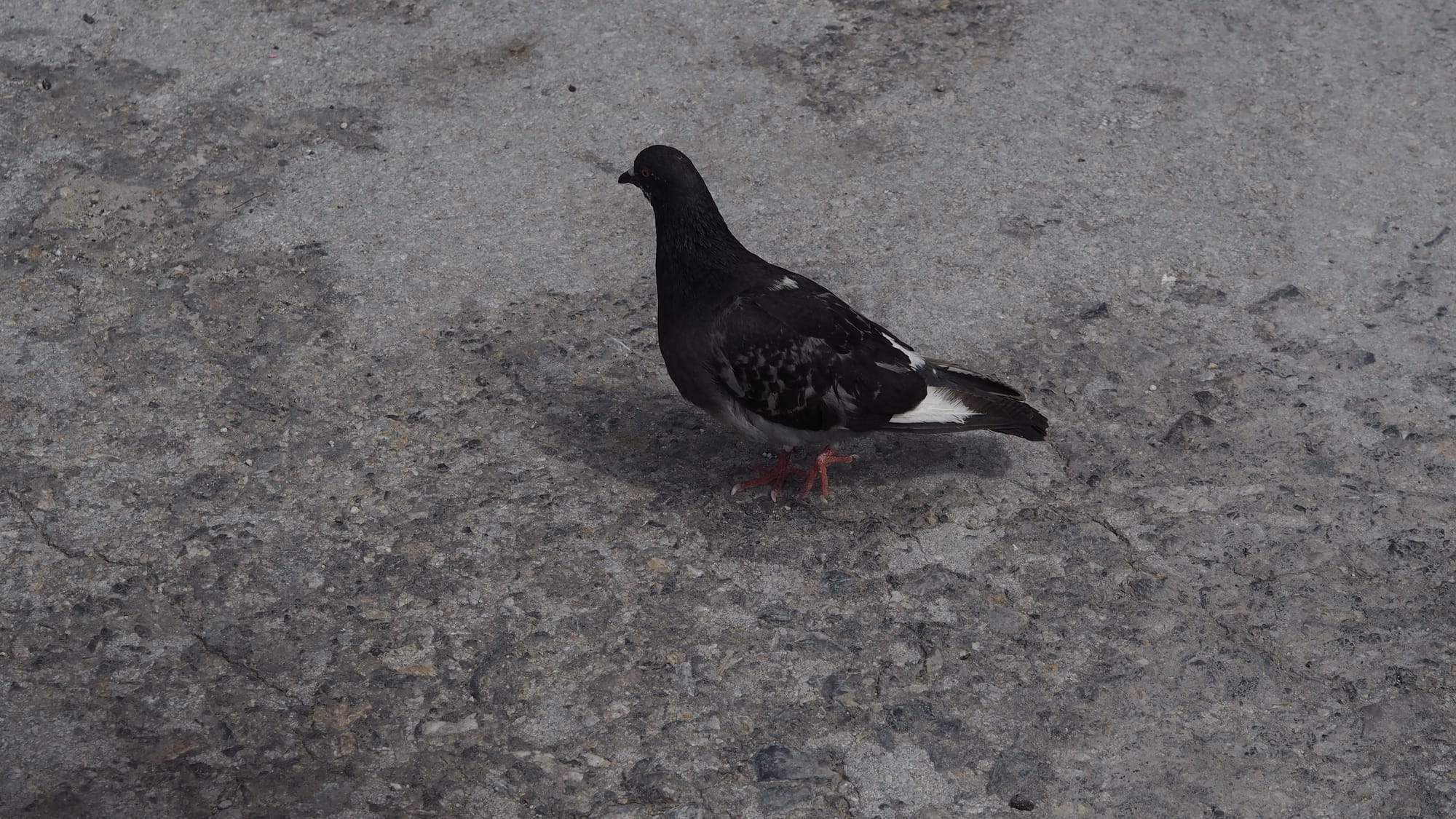
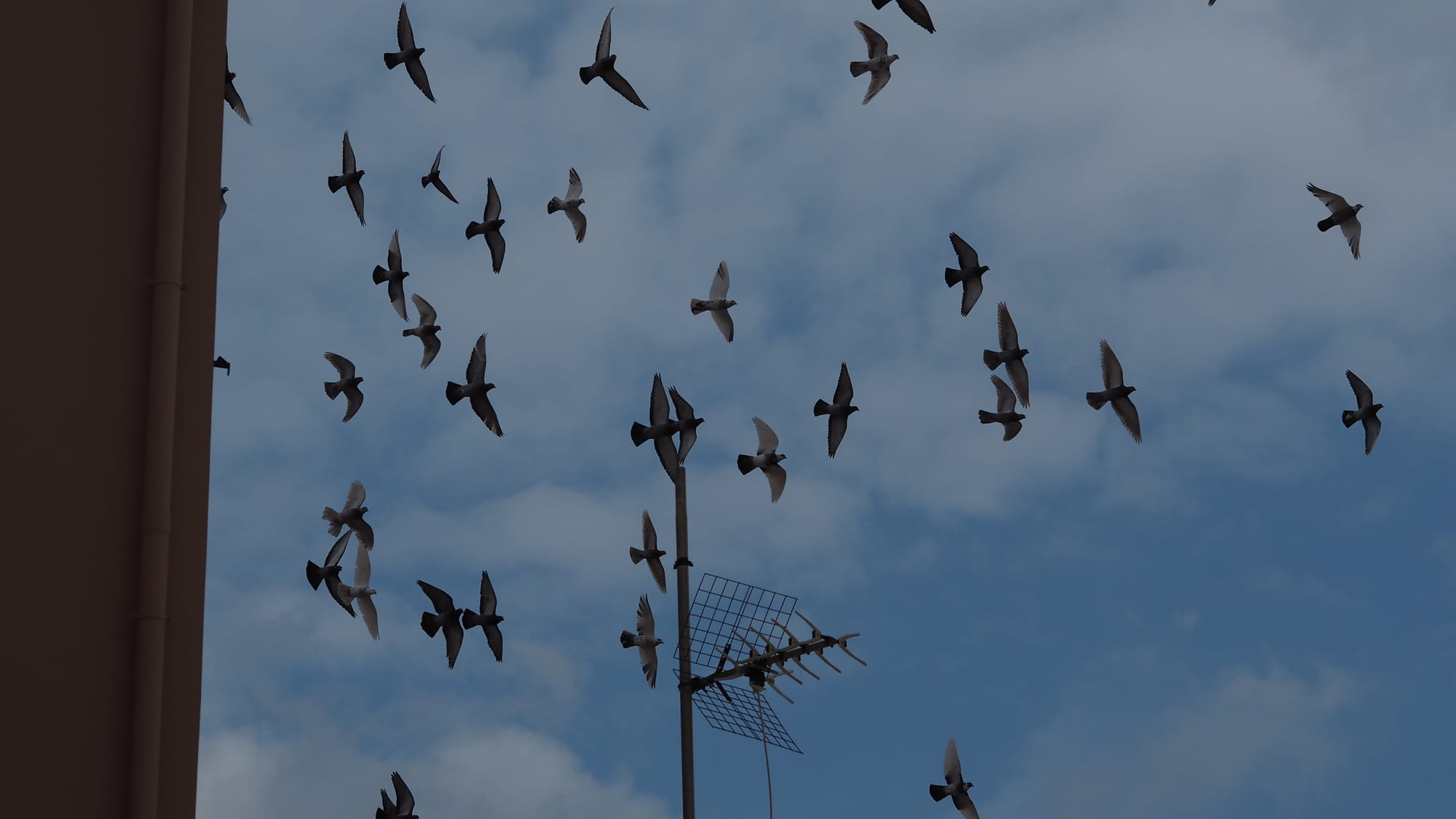
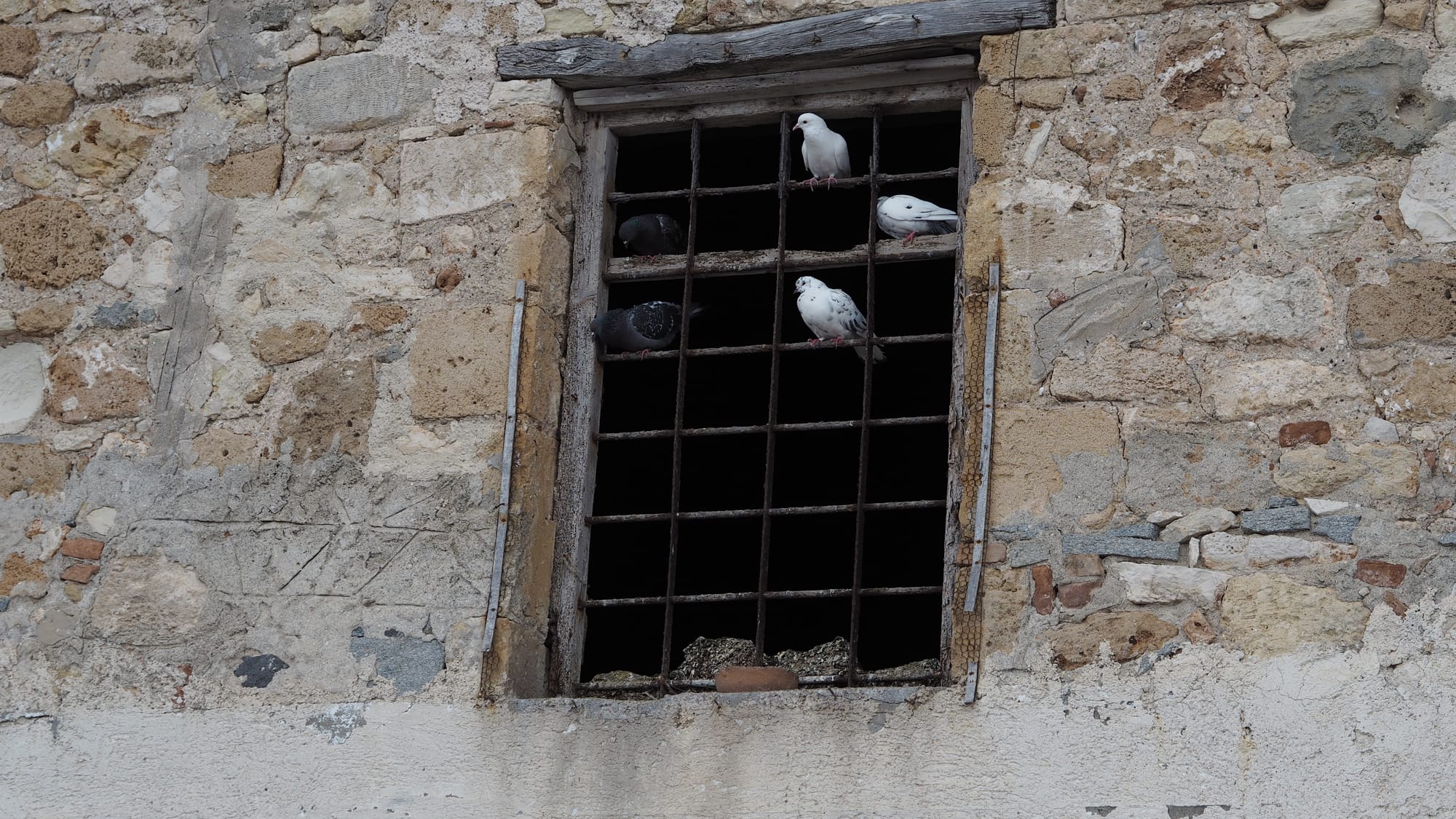
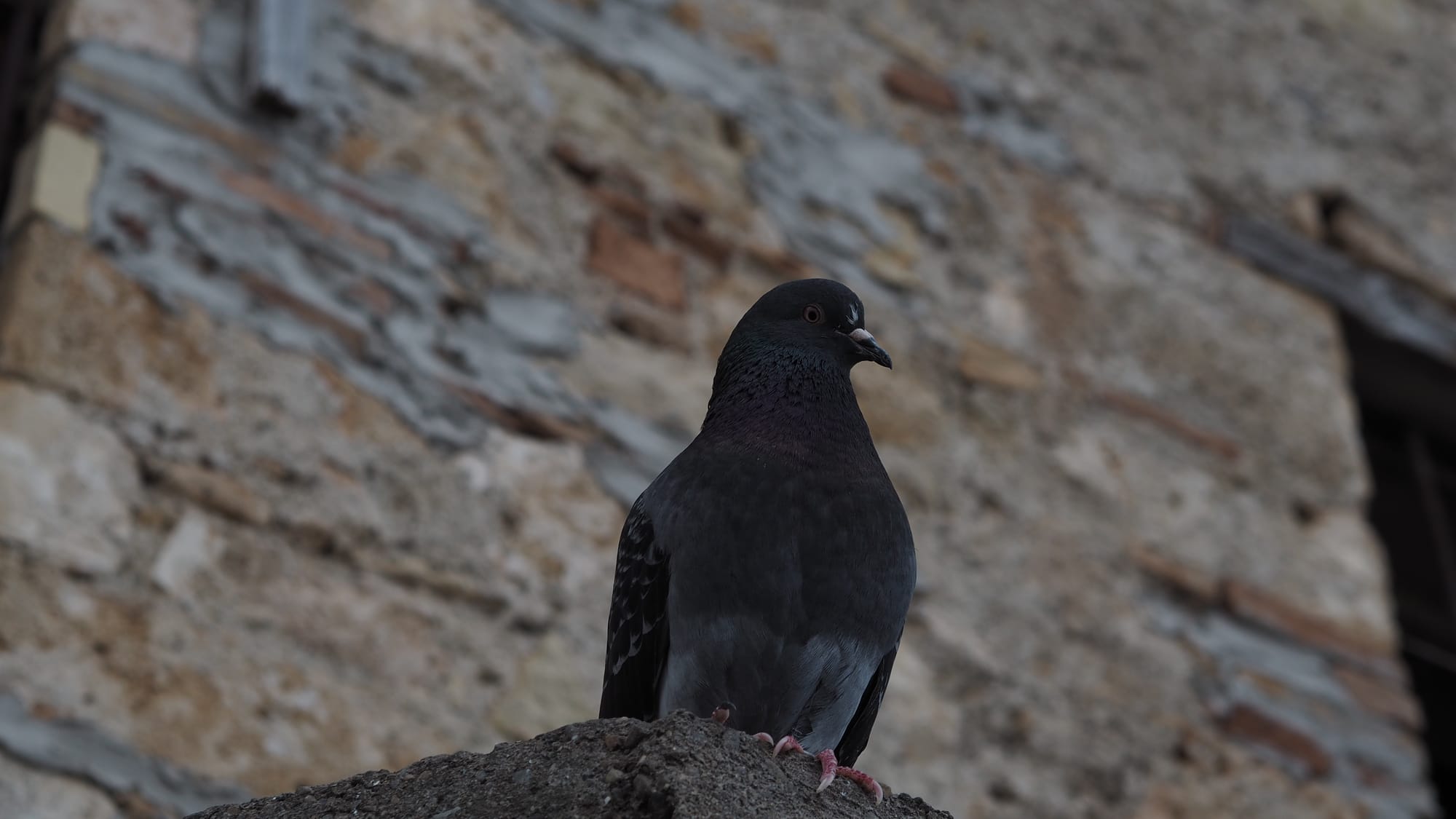
A note on the pigeon, witness to 10,000 years of co-design (sic), a joint evolution which began with cliff-dwelling humans and the domestication of the Rock Dove, columba livia, and continues. (Tonight we remember a member of that family hit by a car on Evripidou Street.)
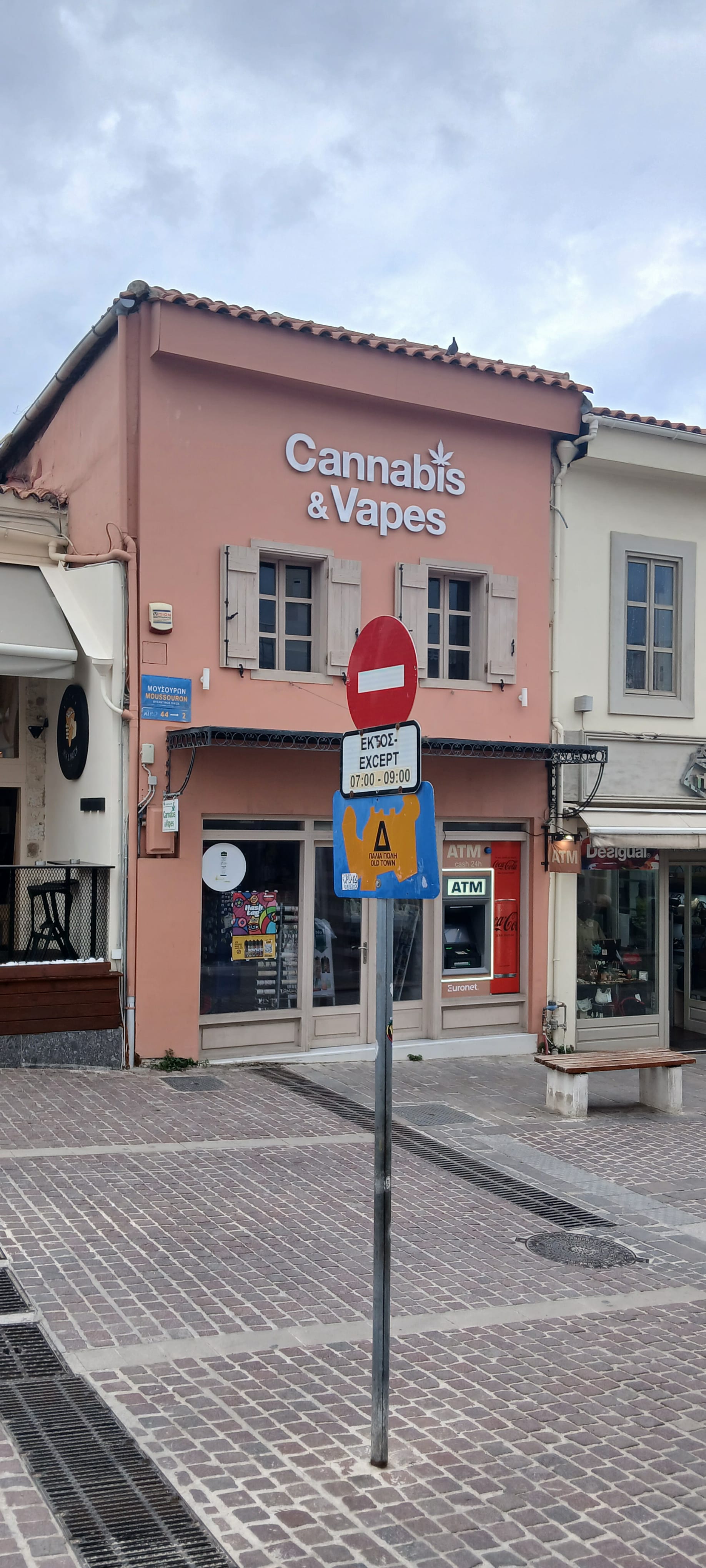
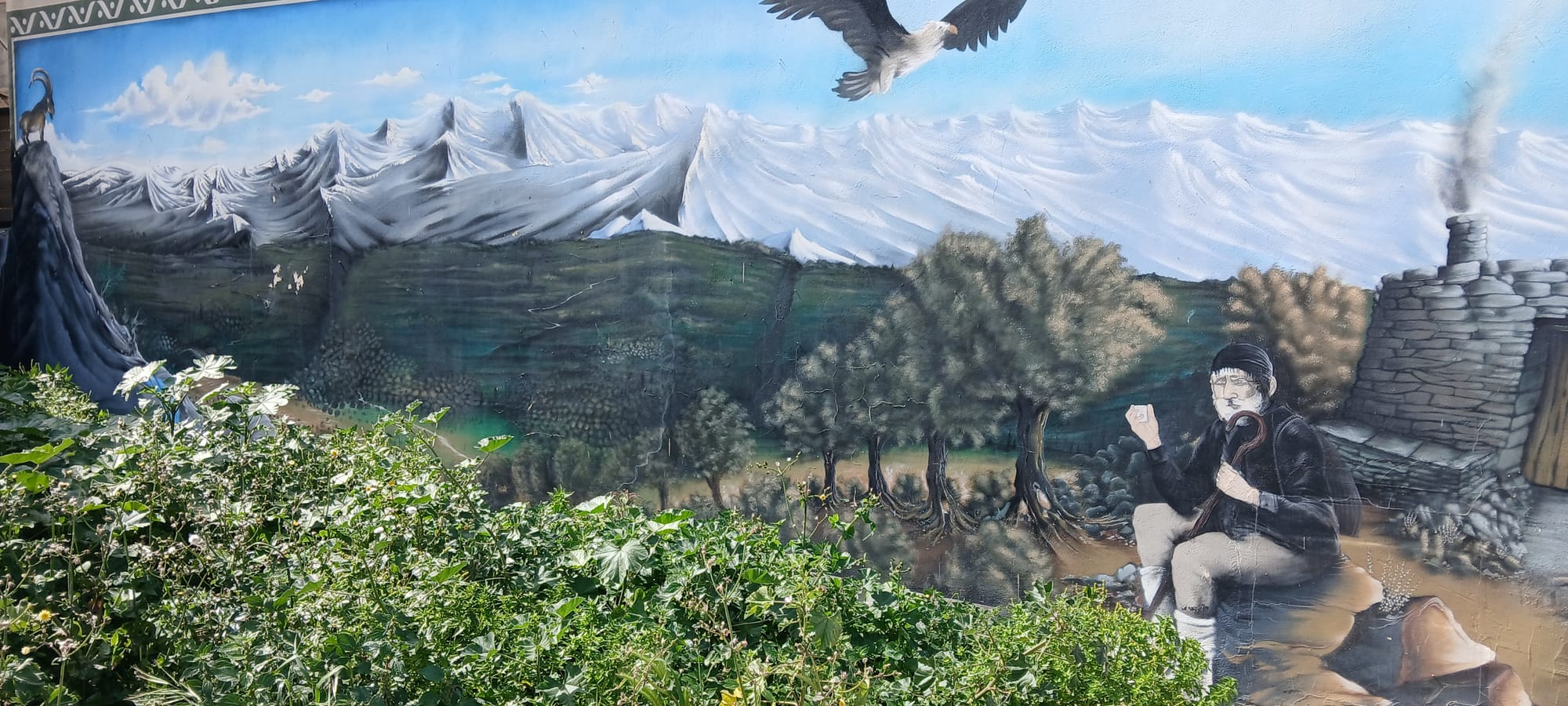
other cultural details:
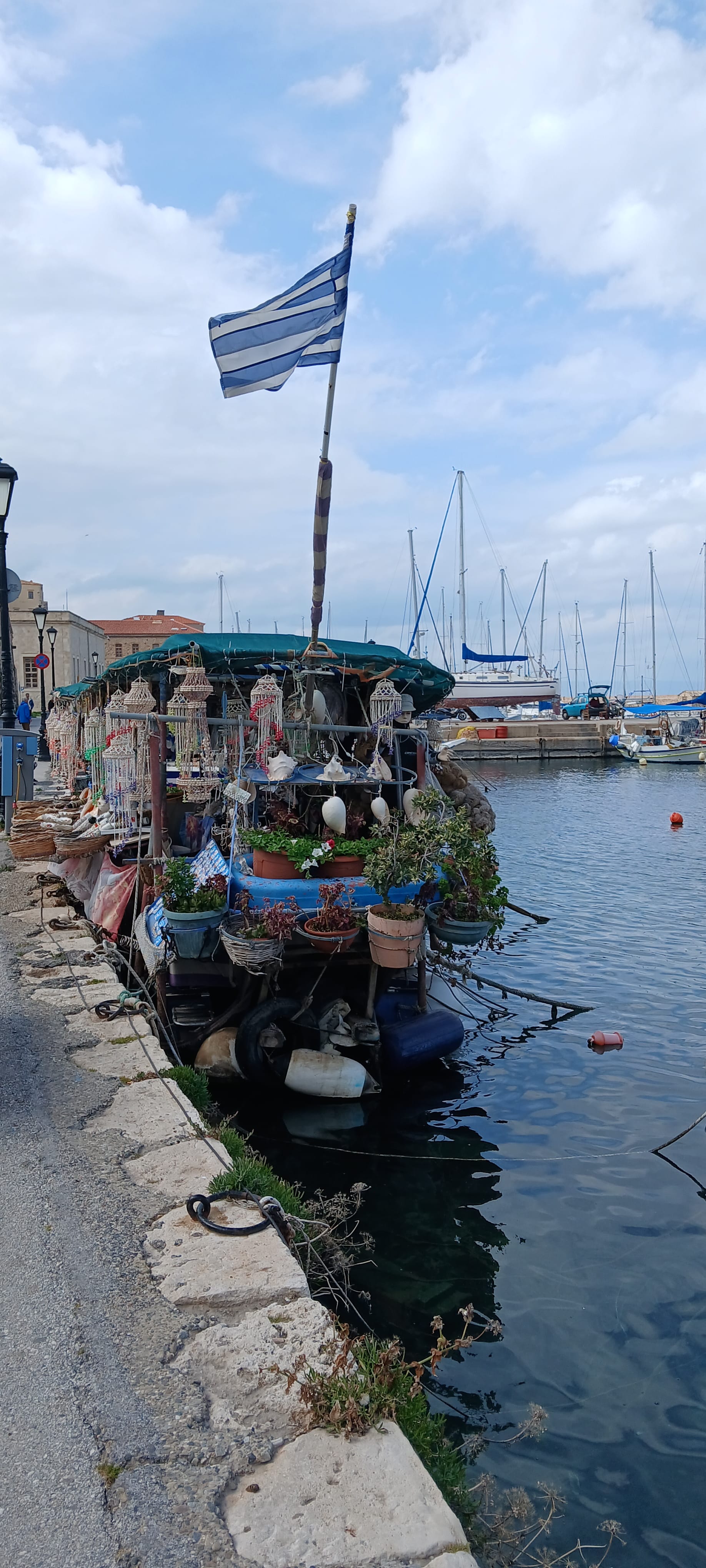
and because it's odd to be on more familiar territory with religious observance:
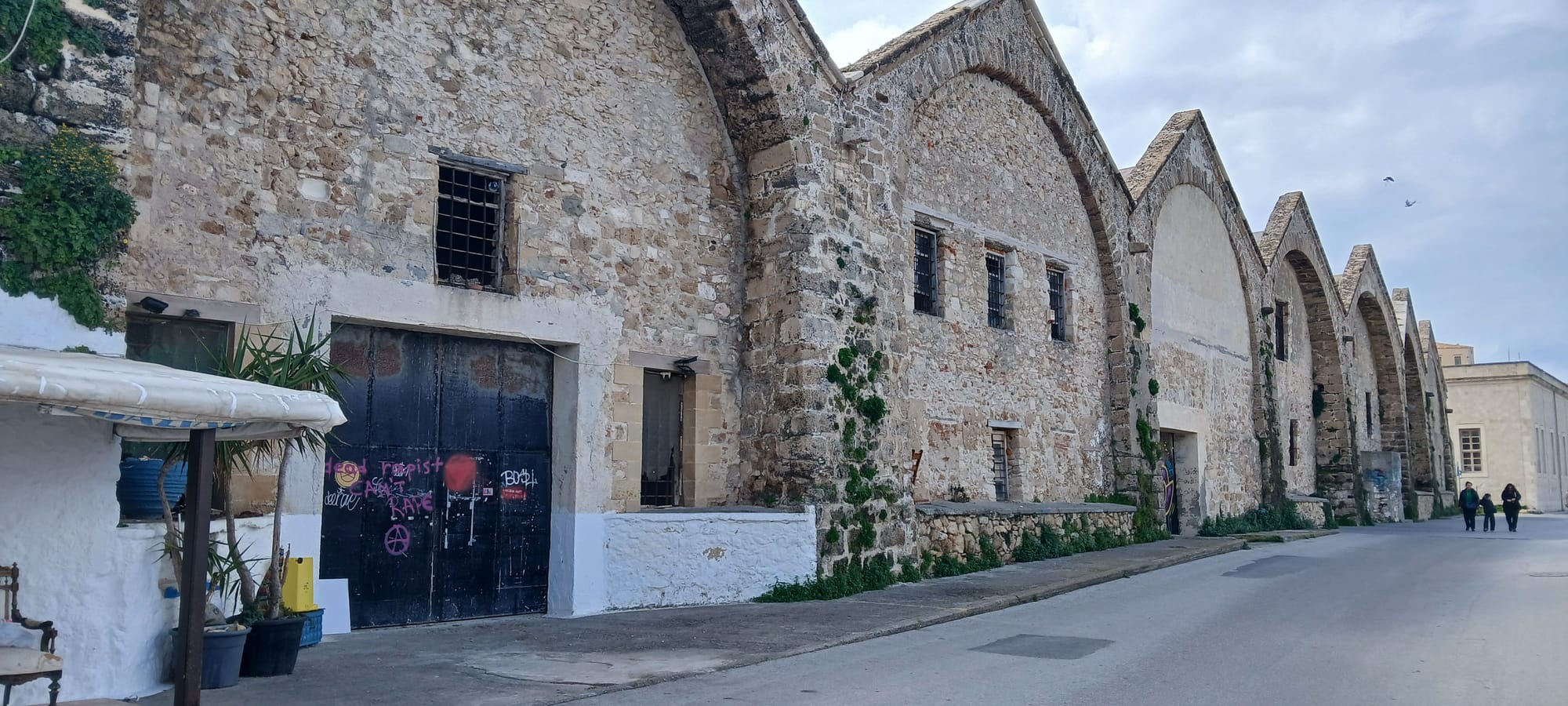
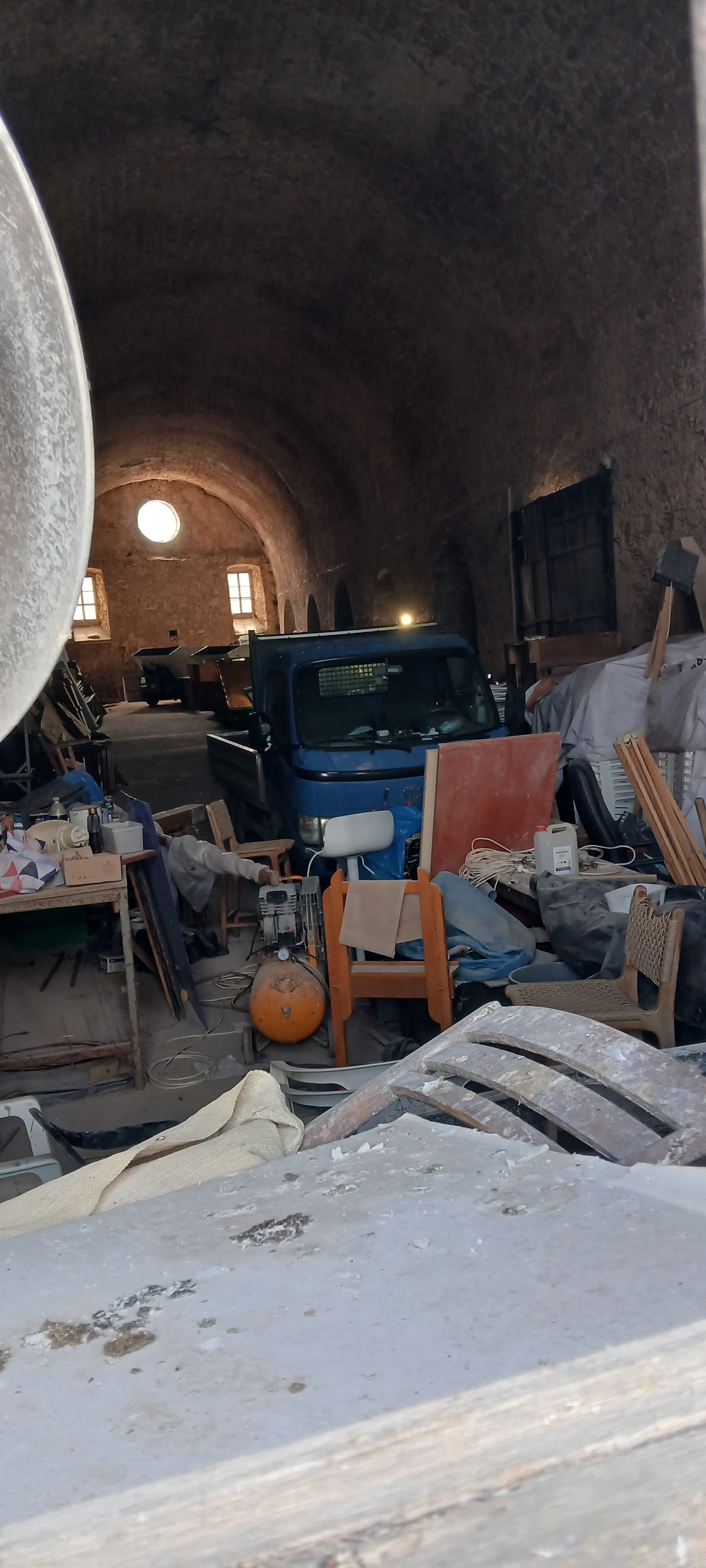
inside one and &tc:
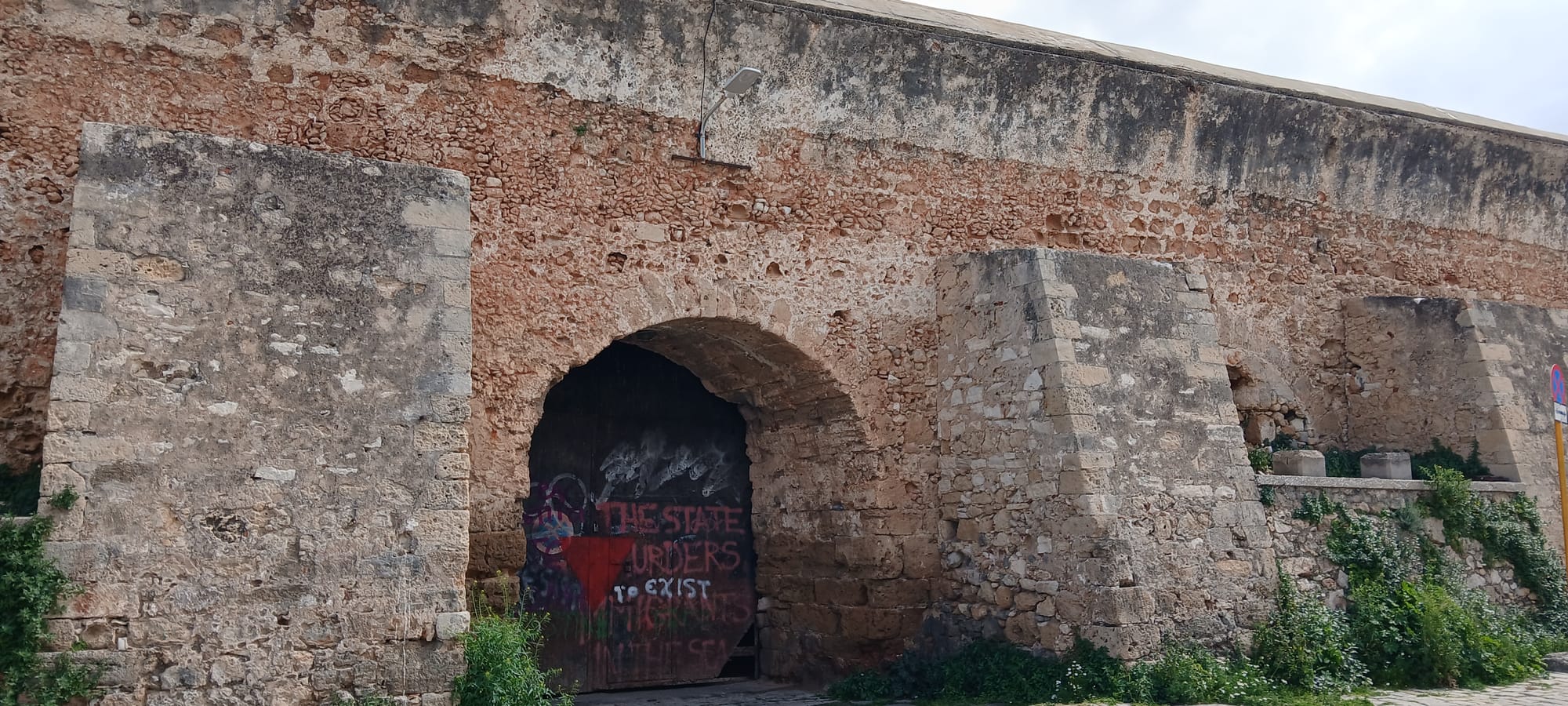
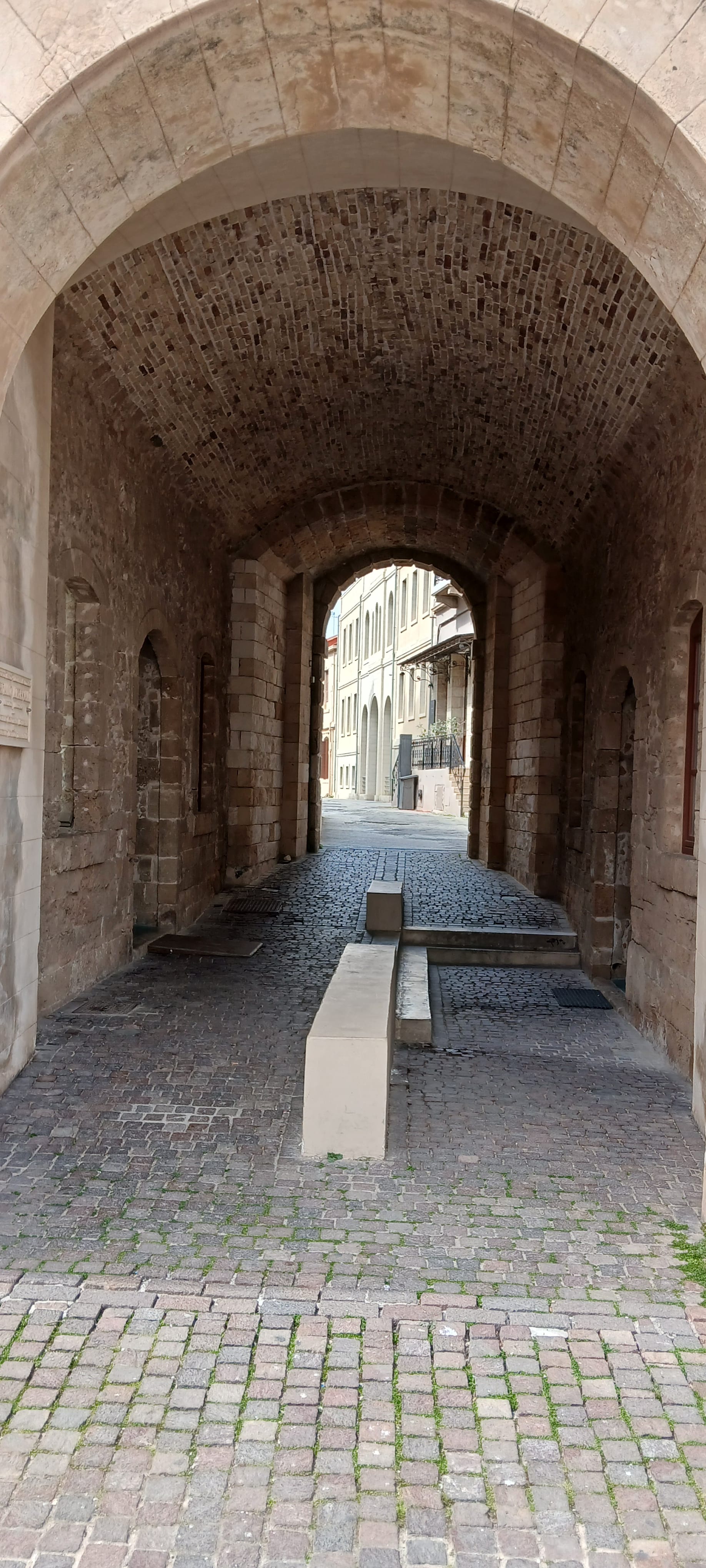
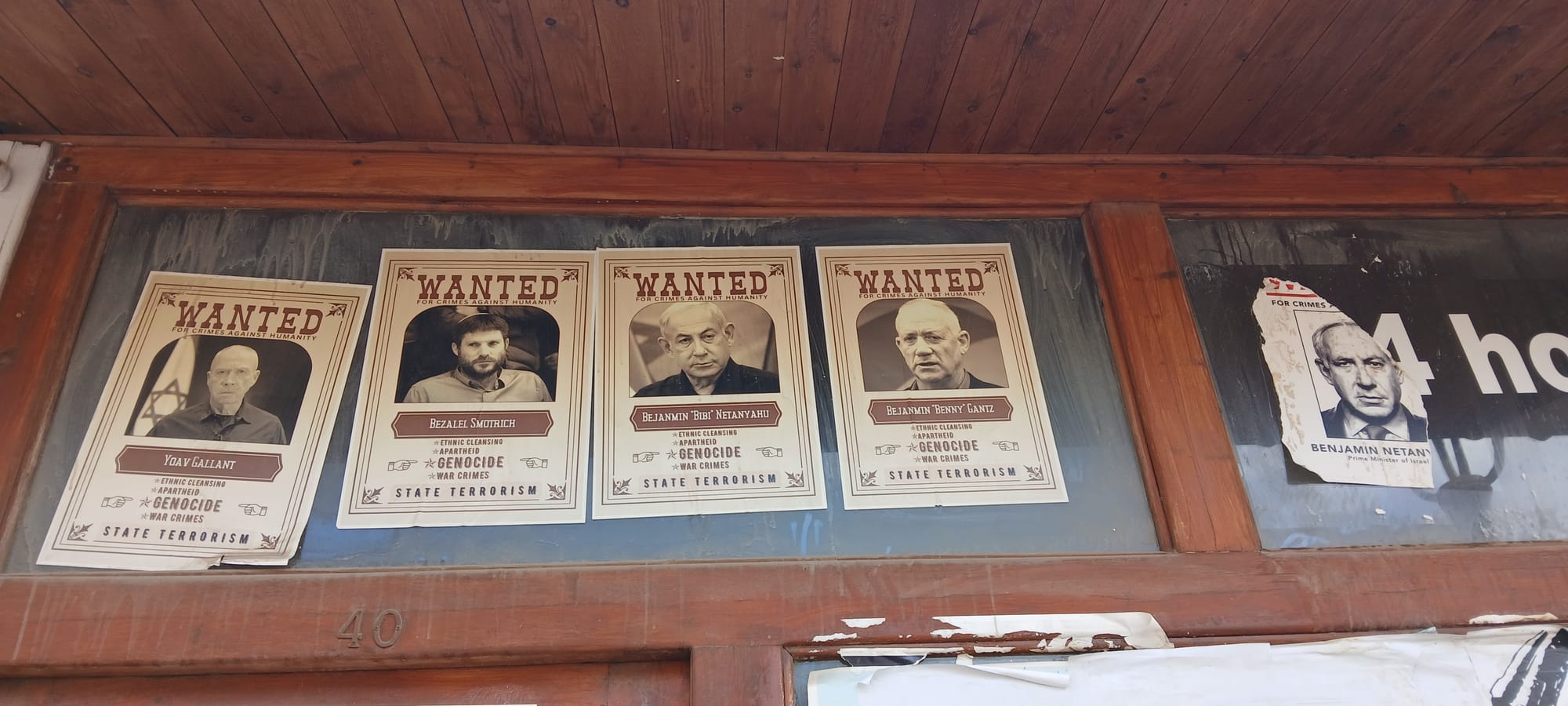
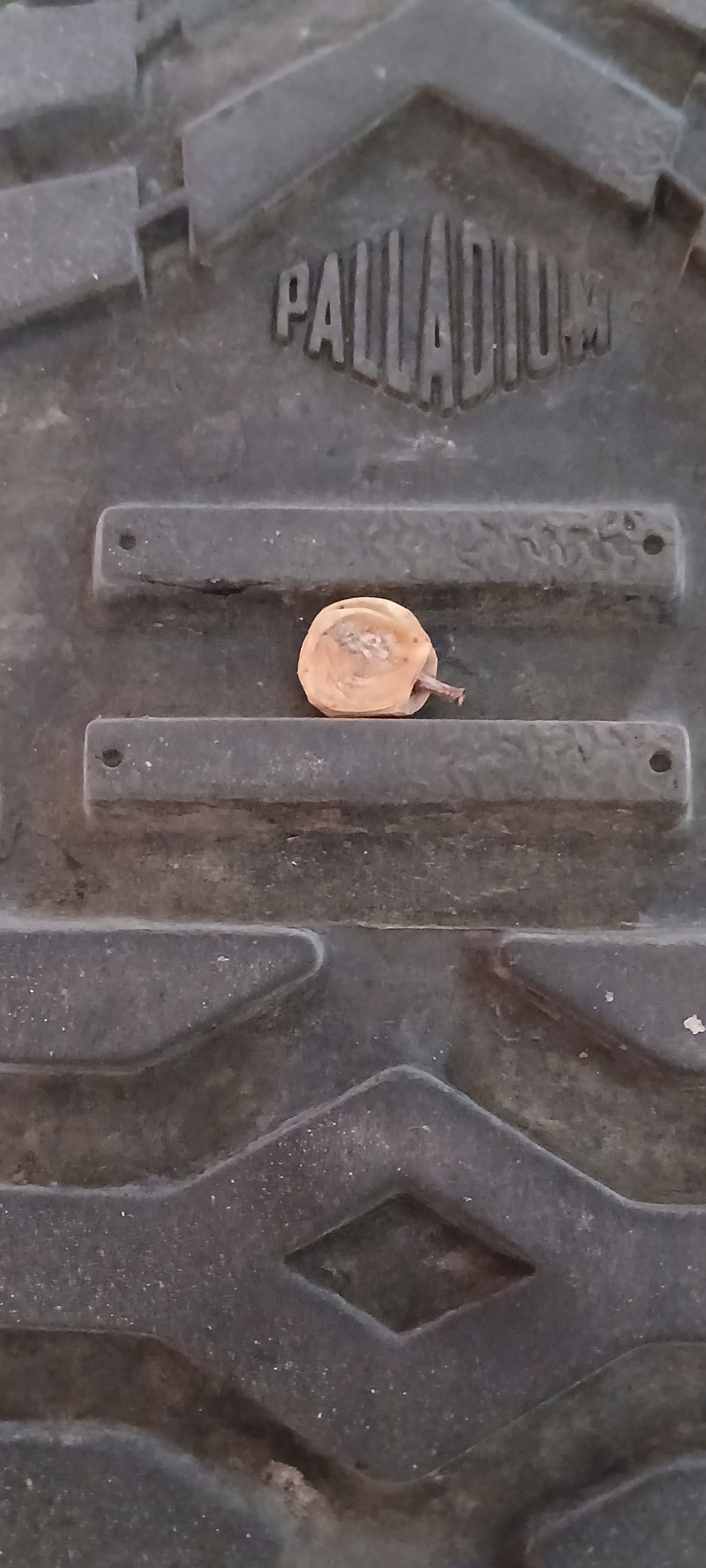
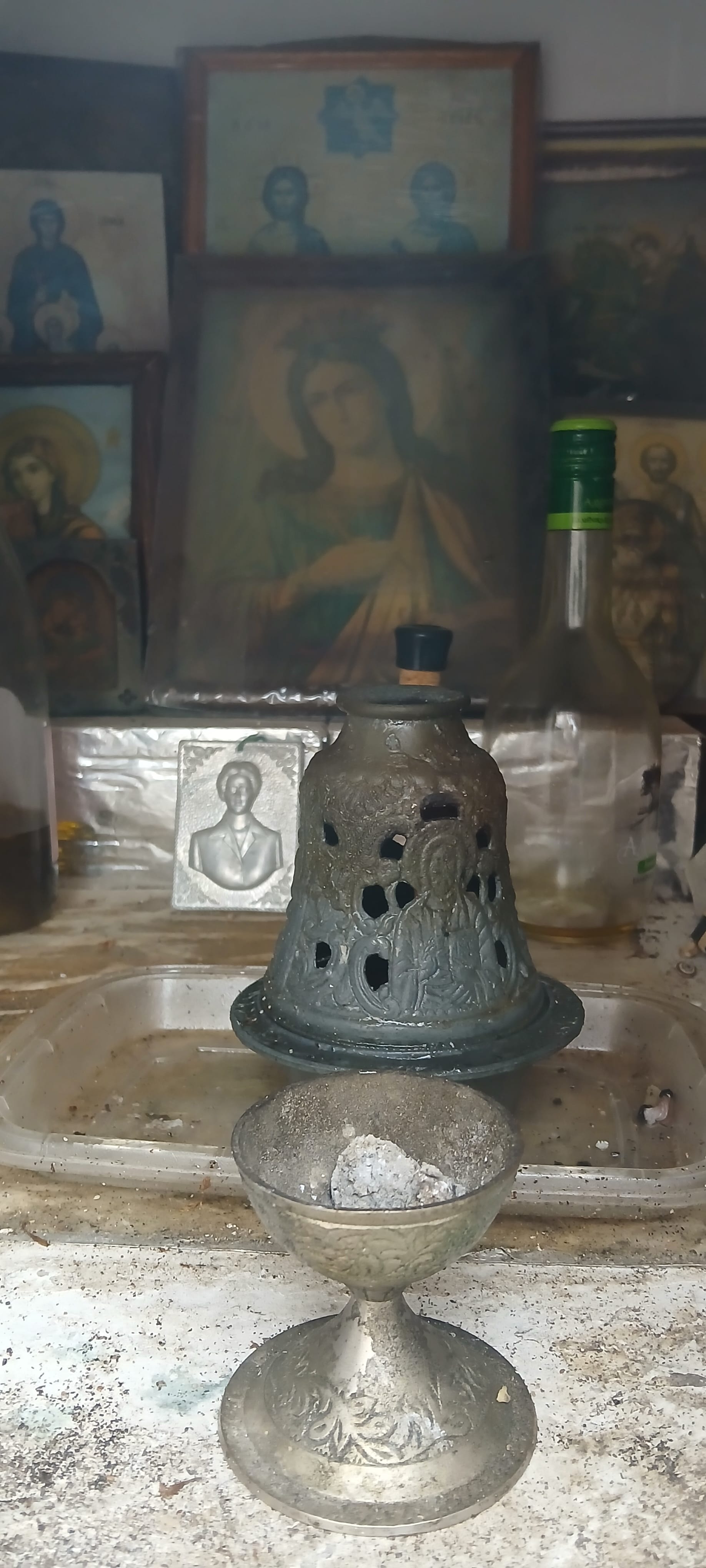
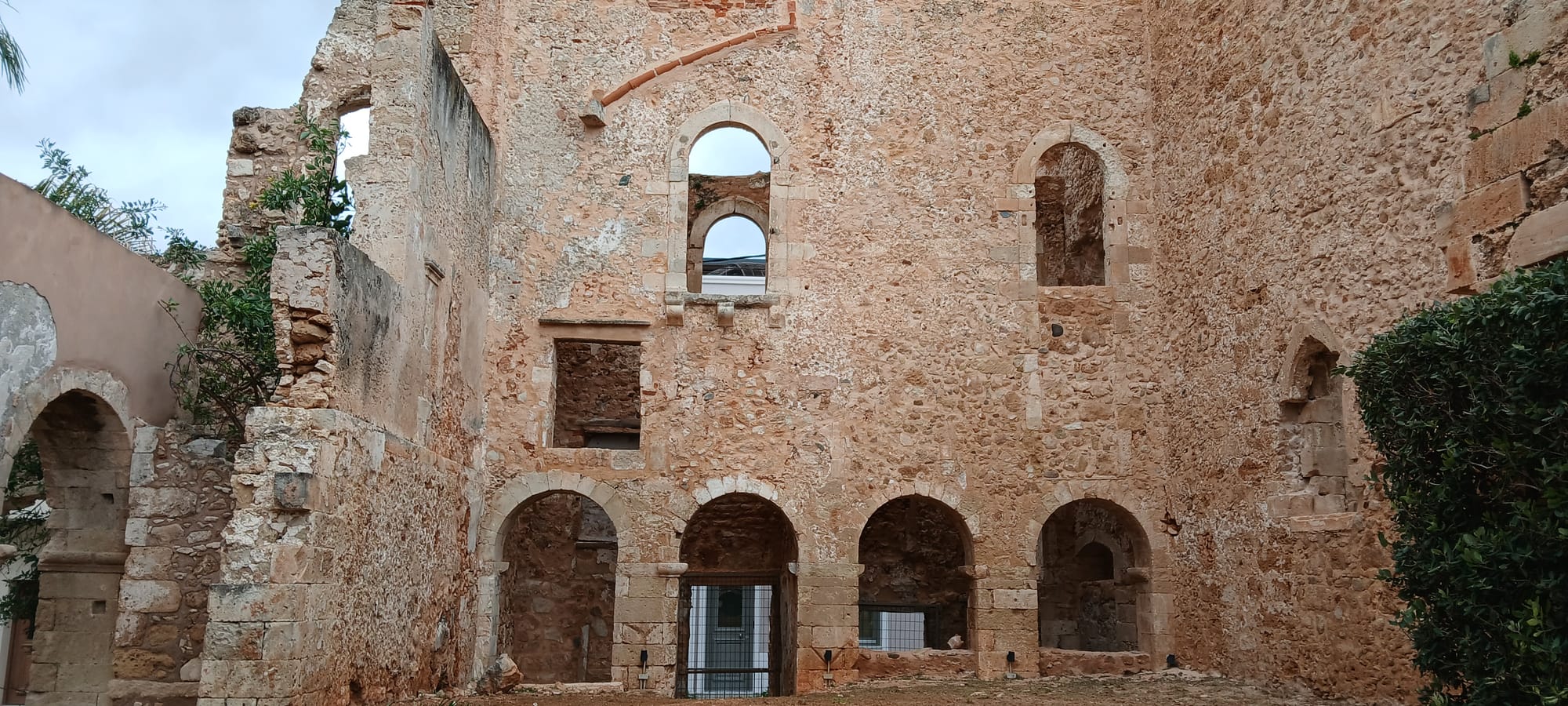
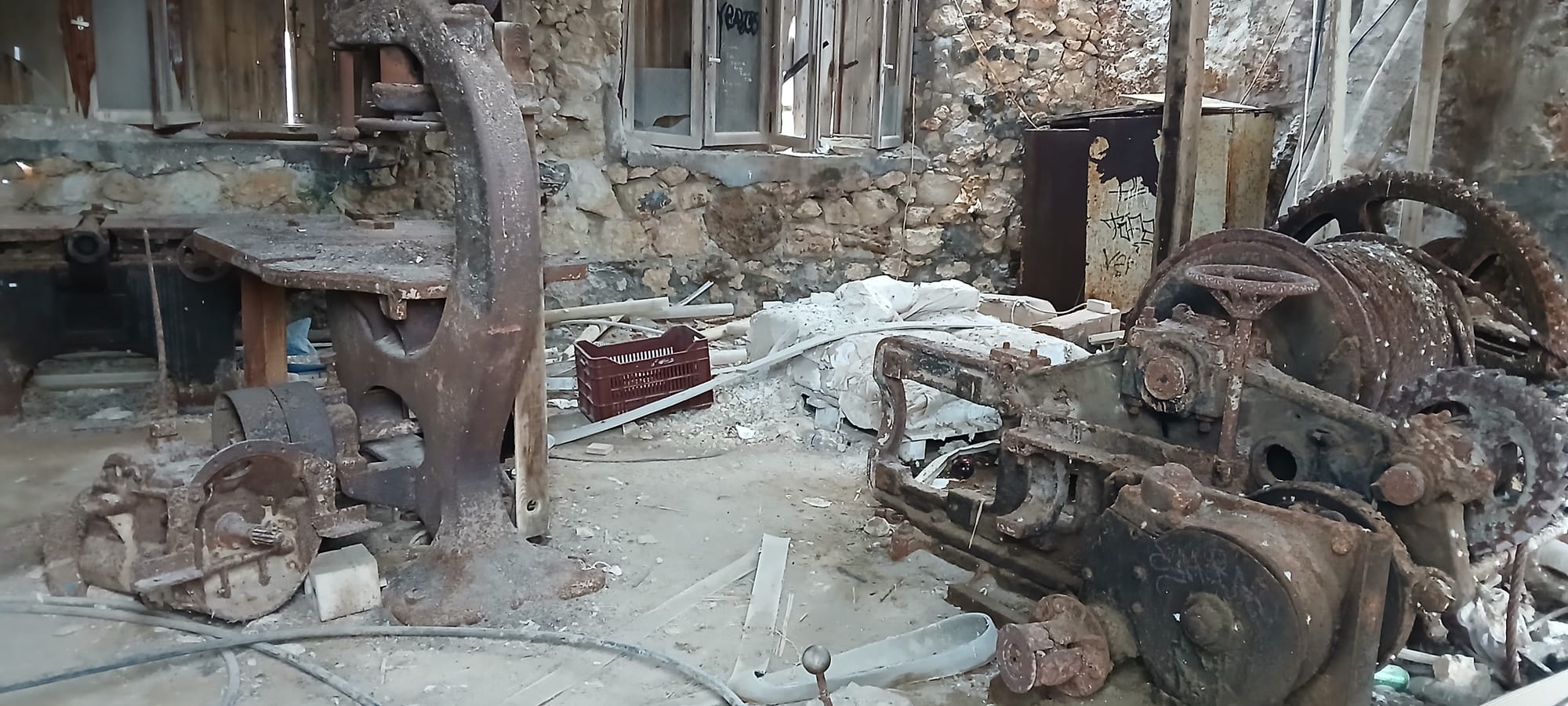
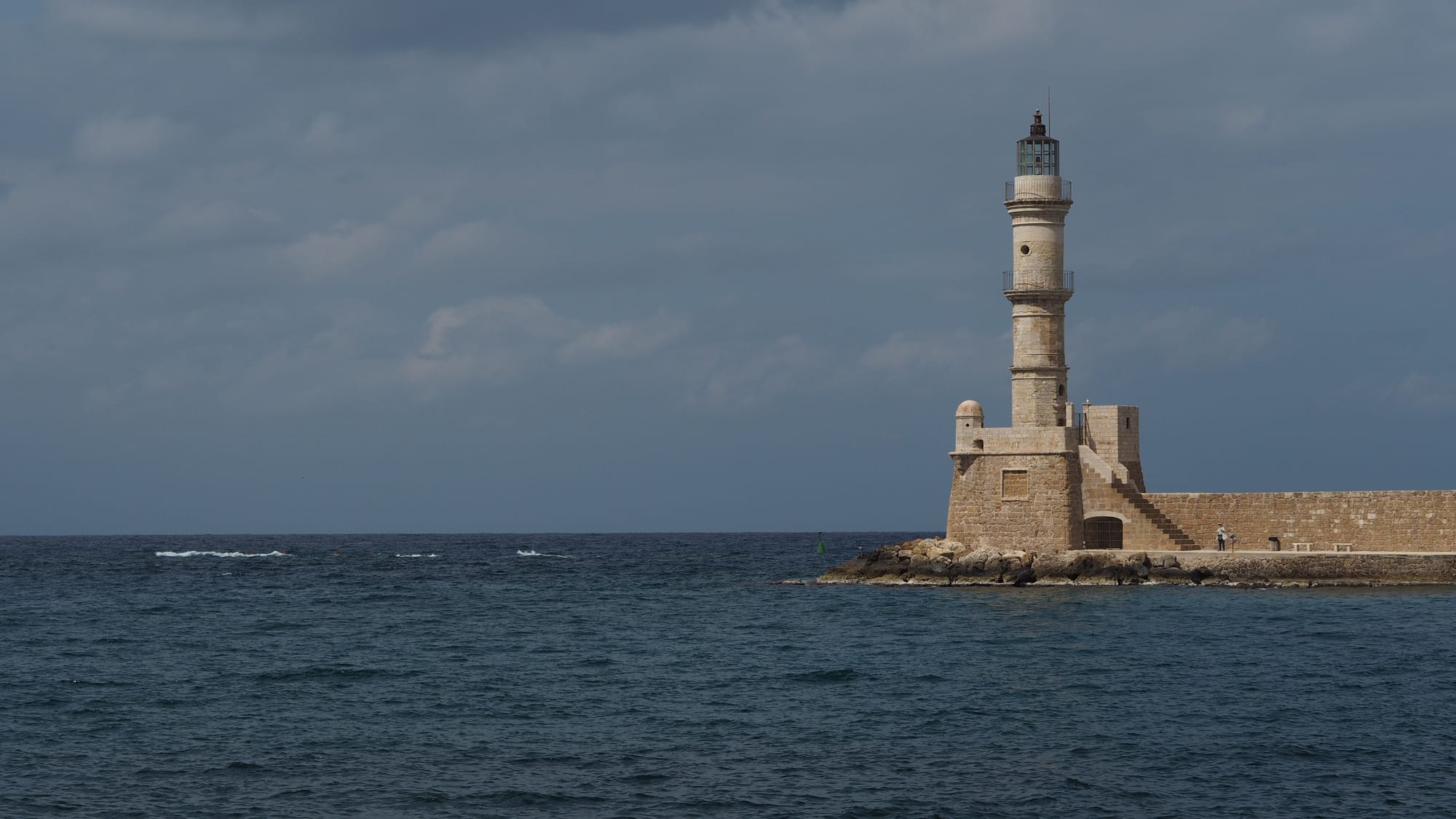
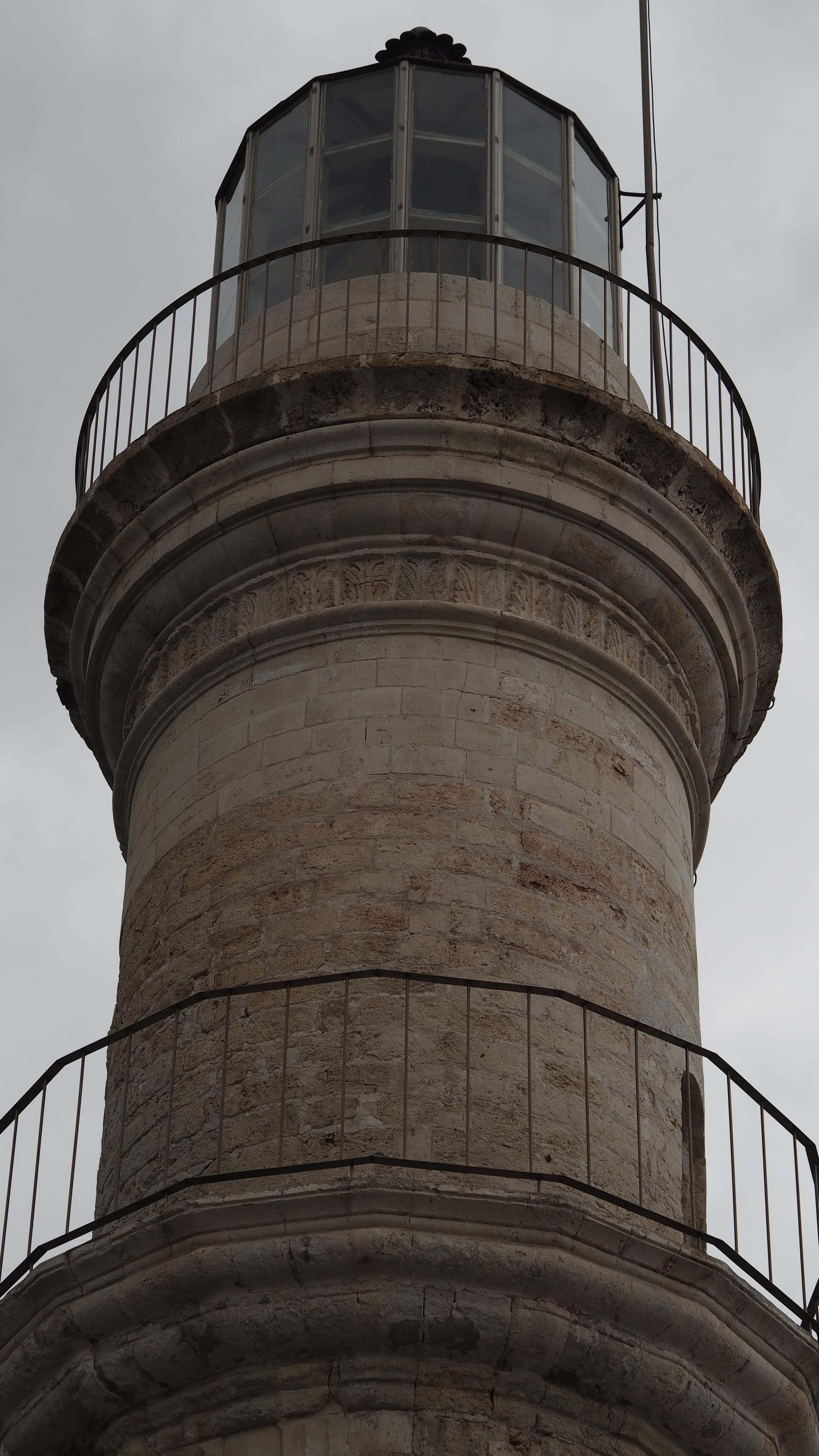
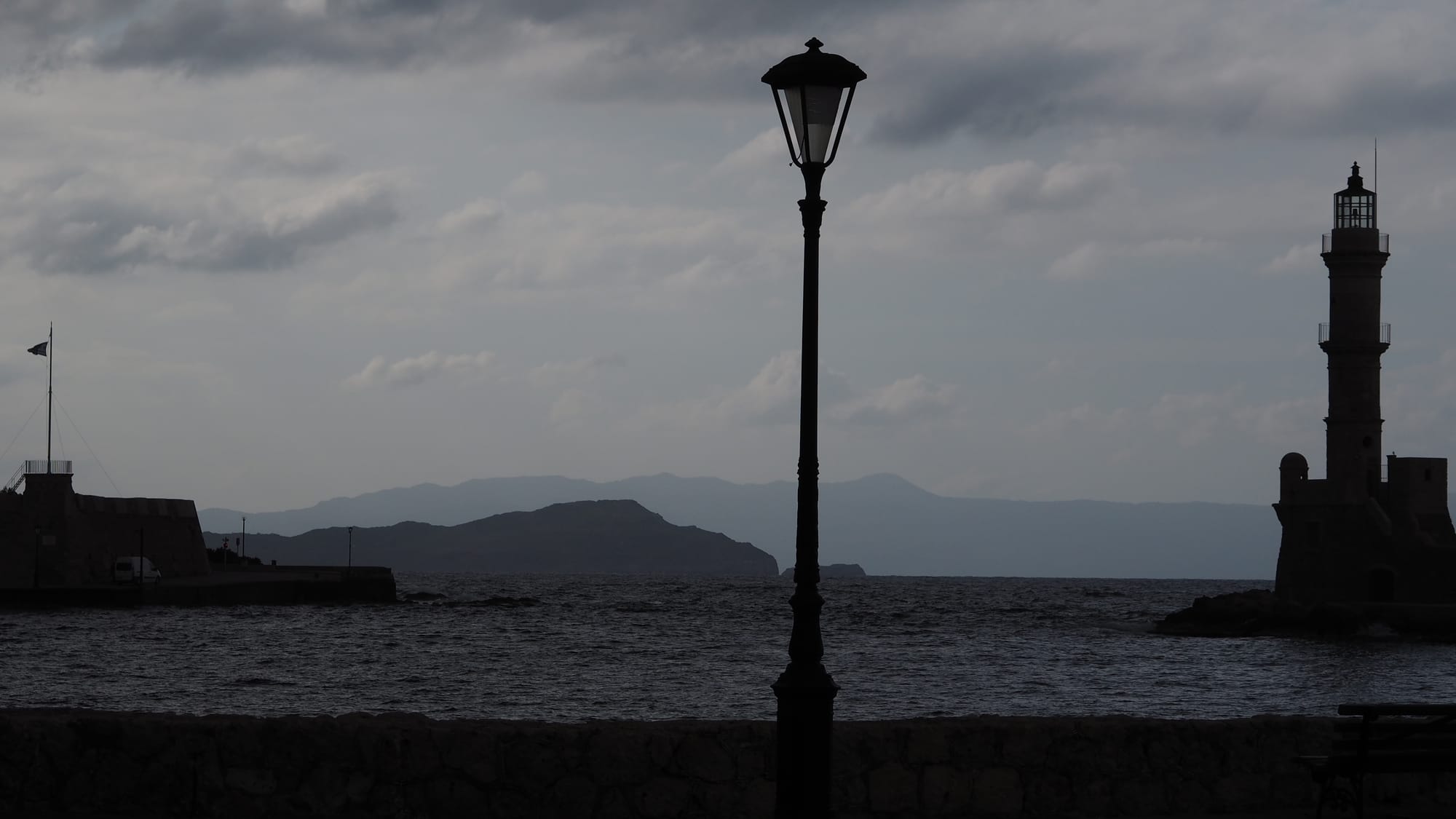
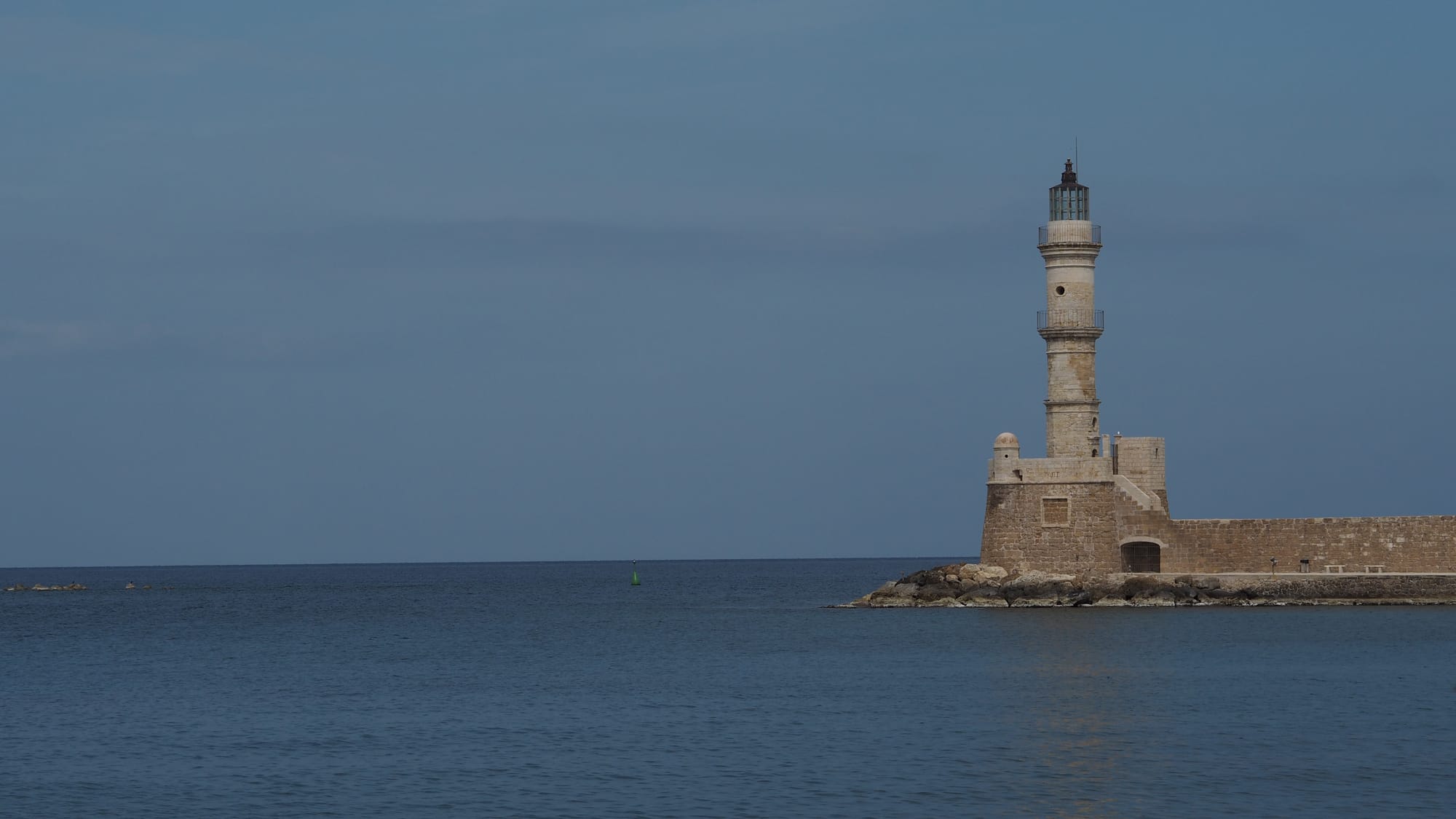
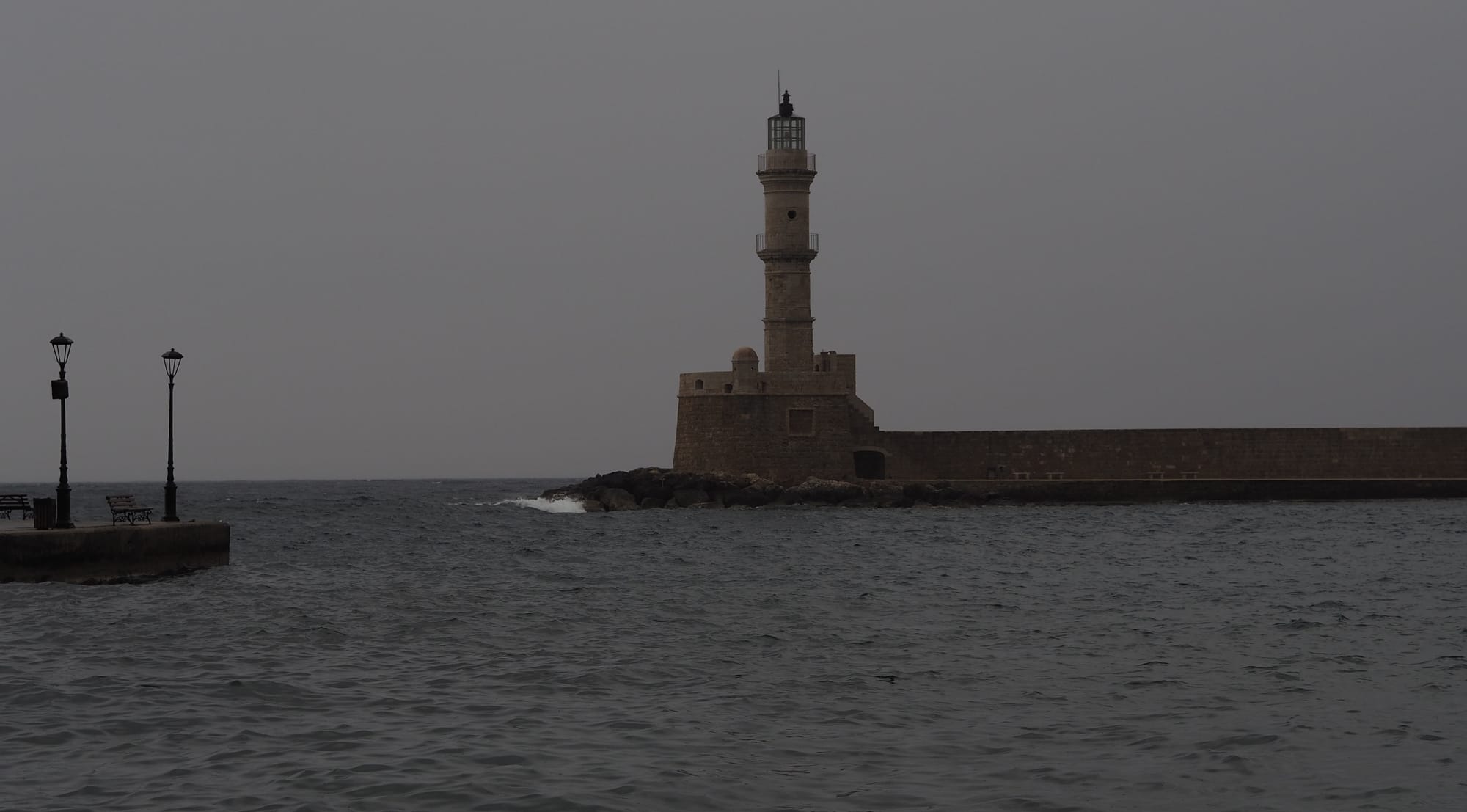
- the little beast is in the tread of my boot; the posters were beside the laundromat; the machines were in a shed out on the seawall towards the lighthouse,
this one:
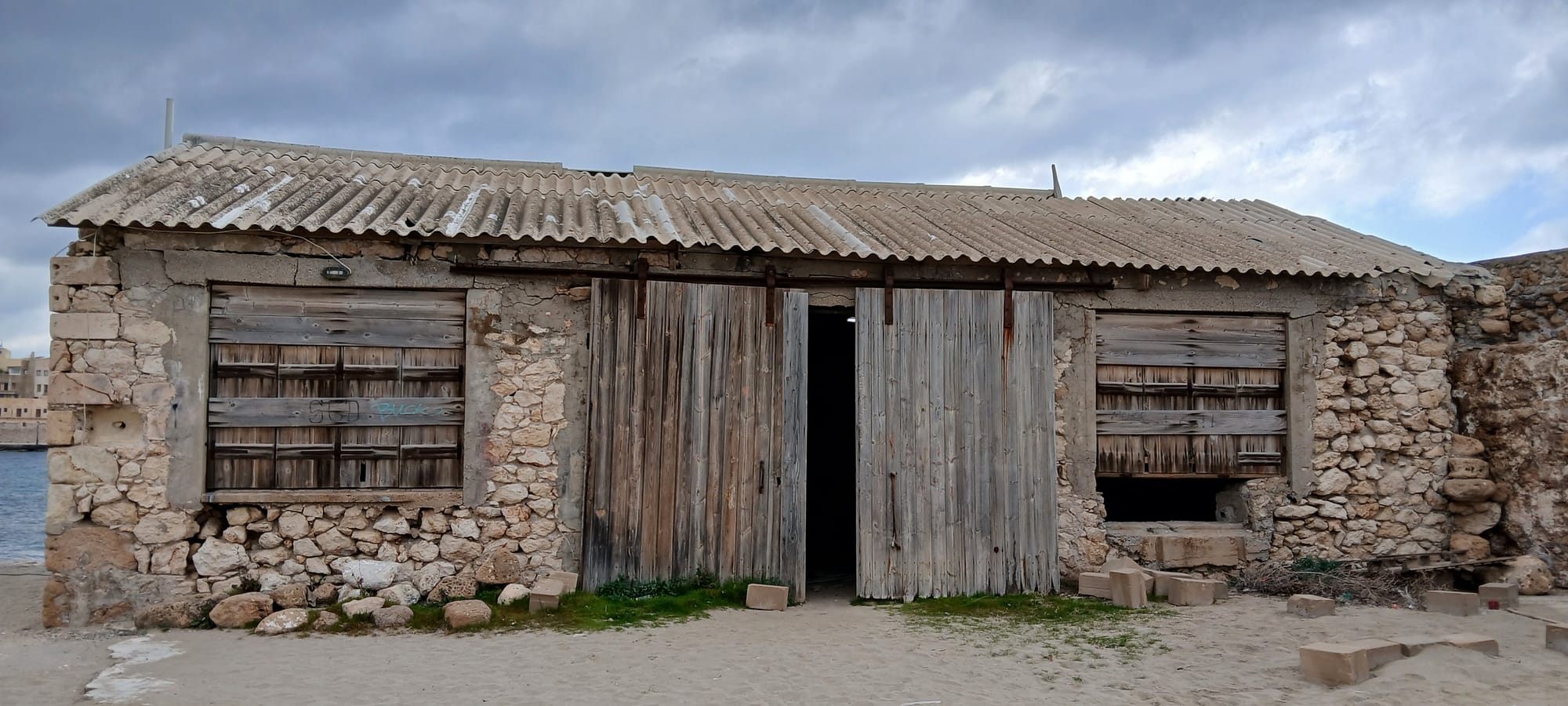
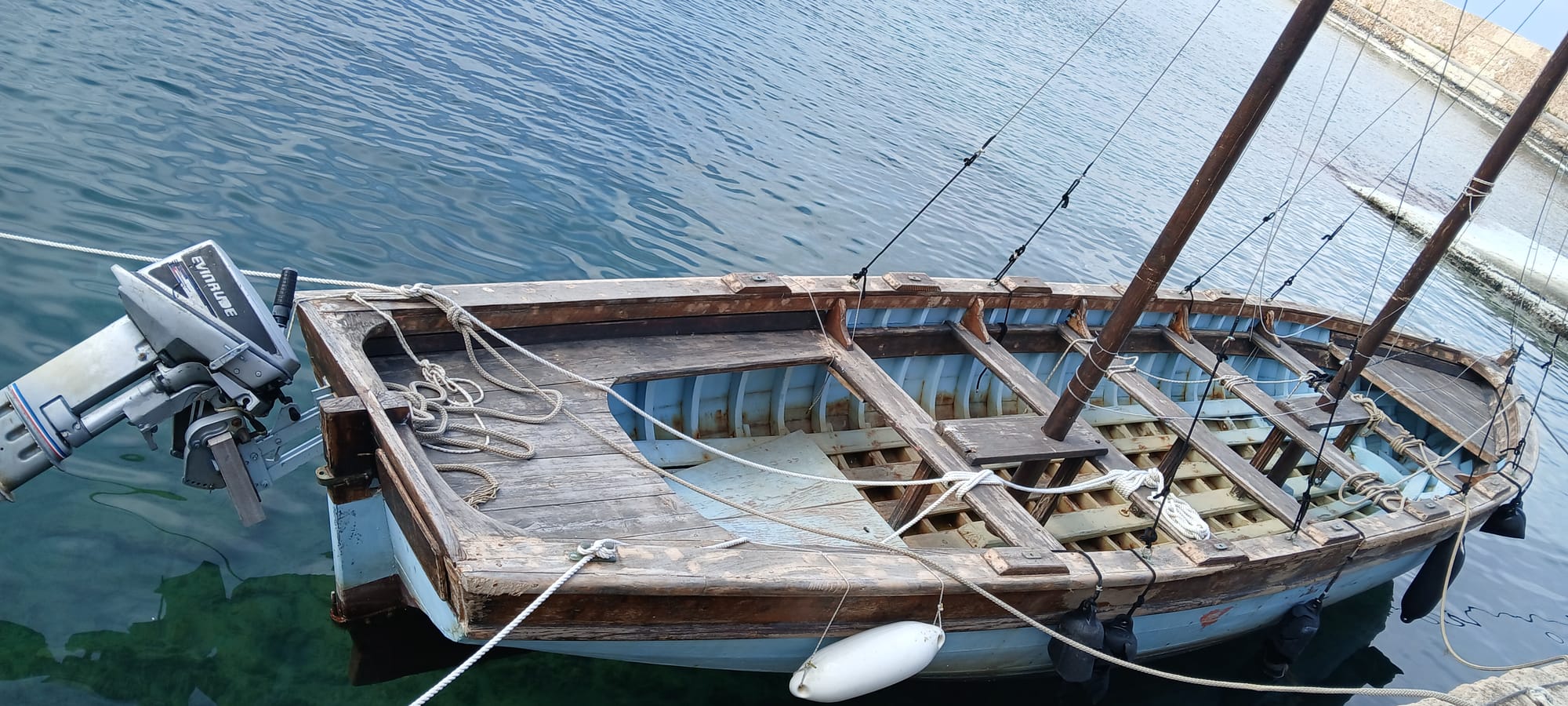
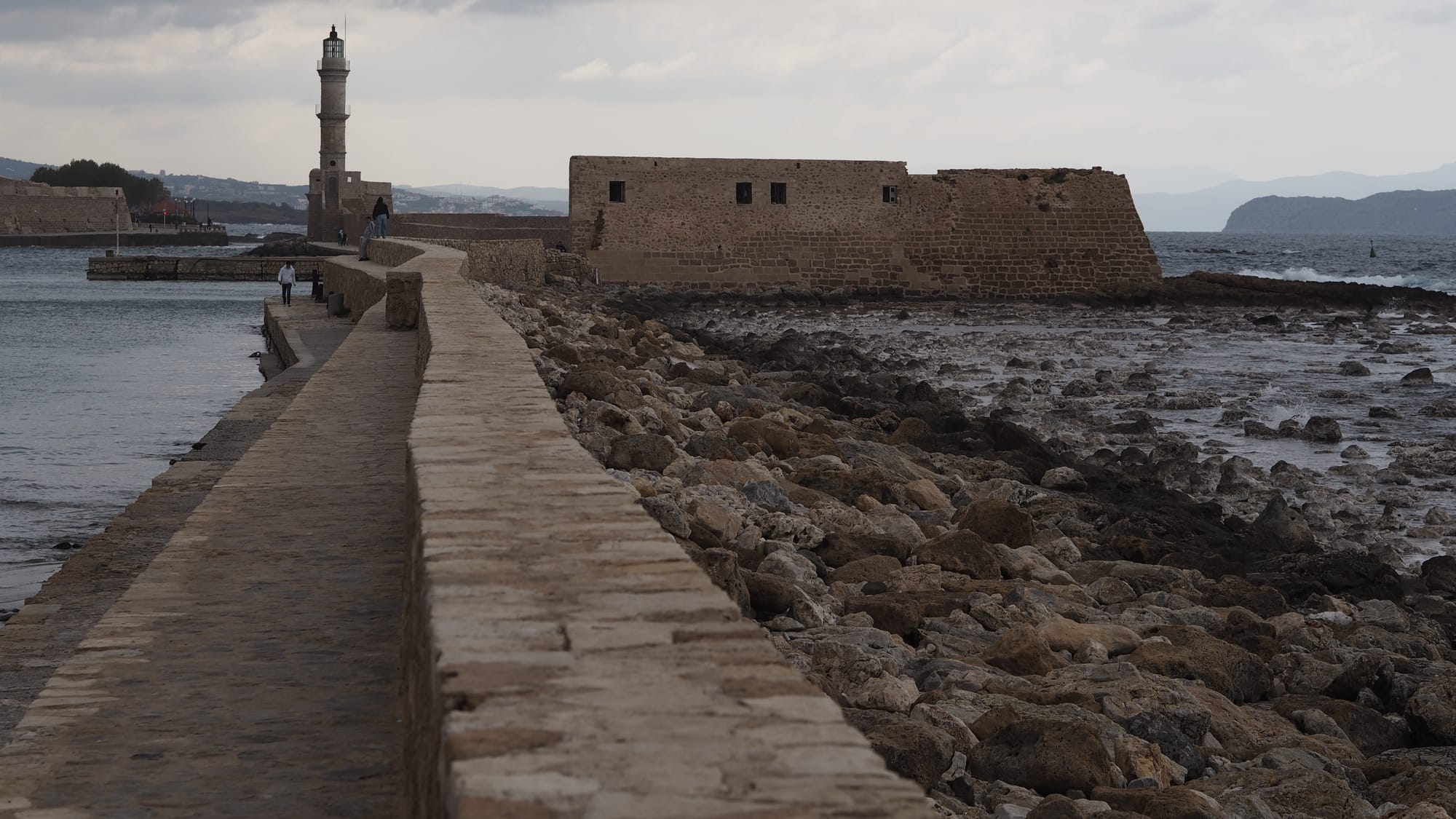
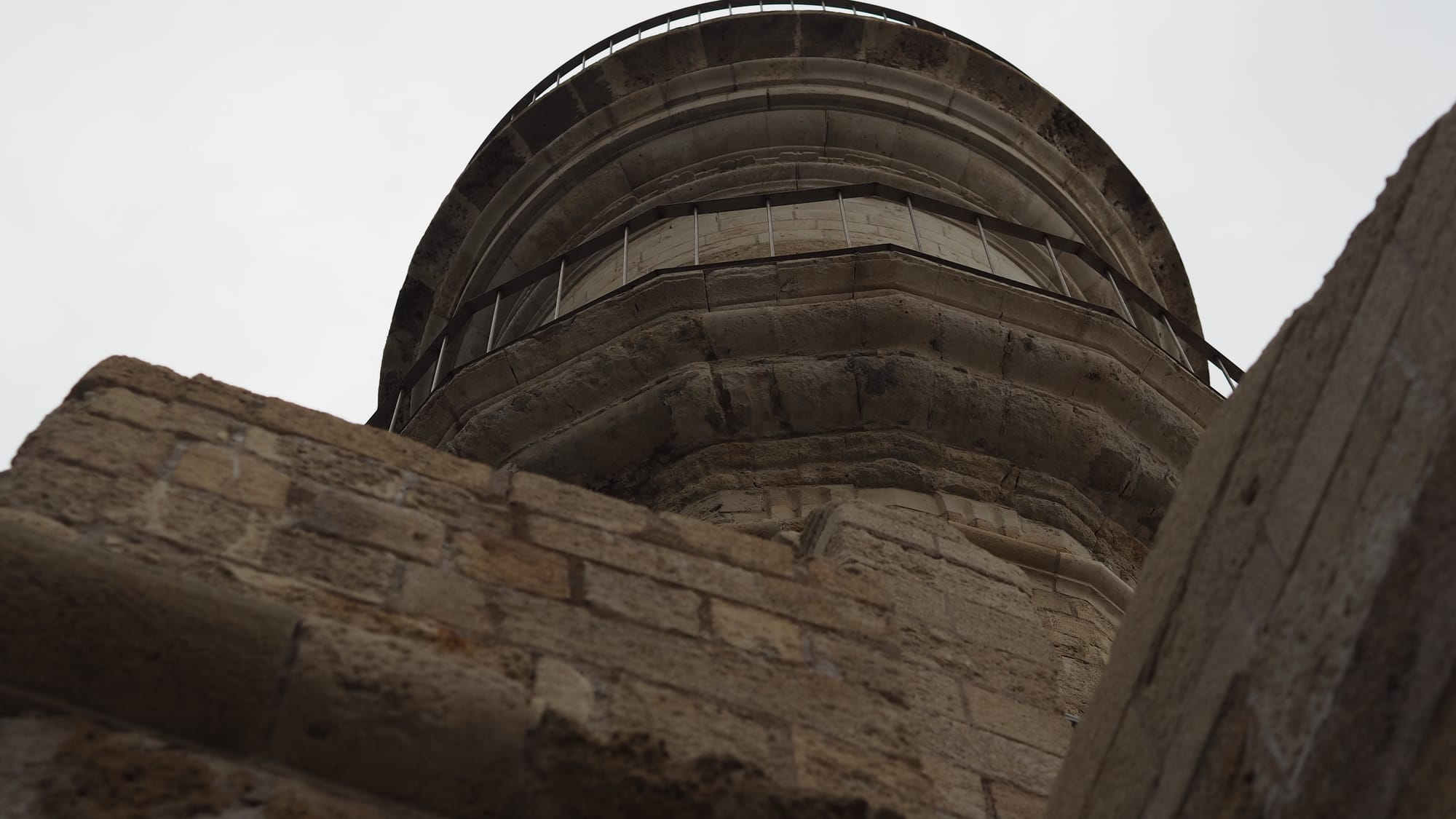
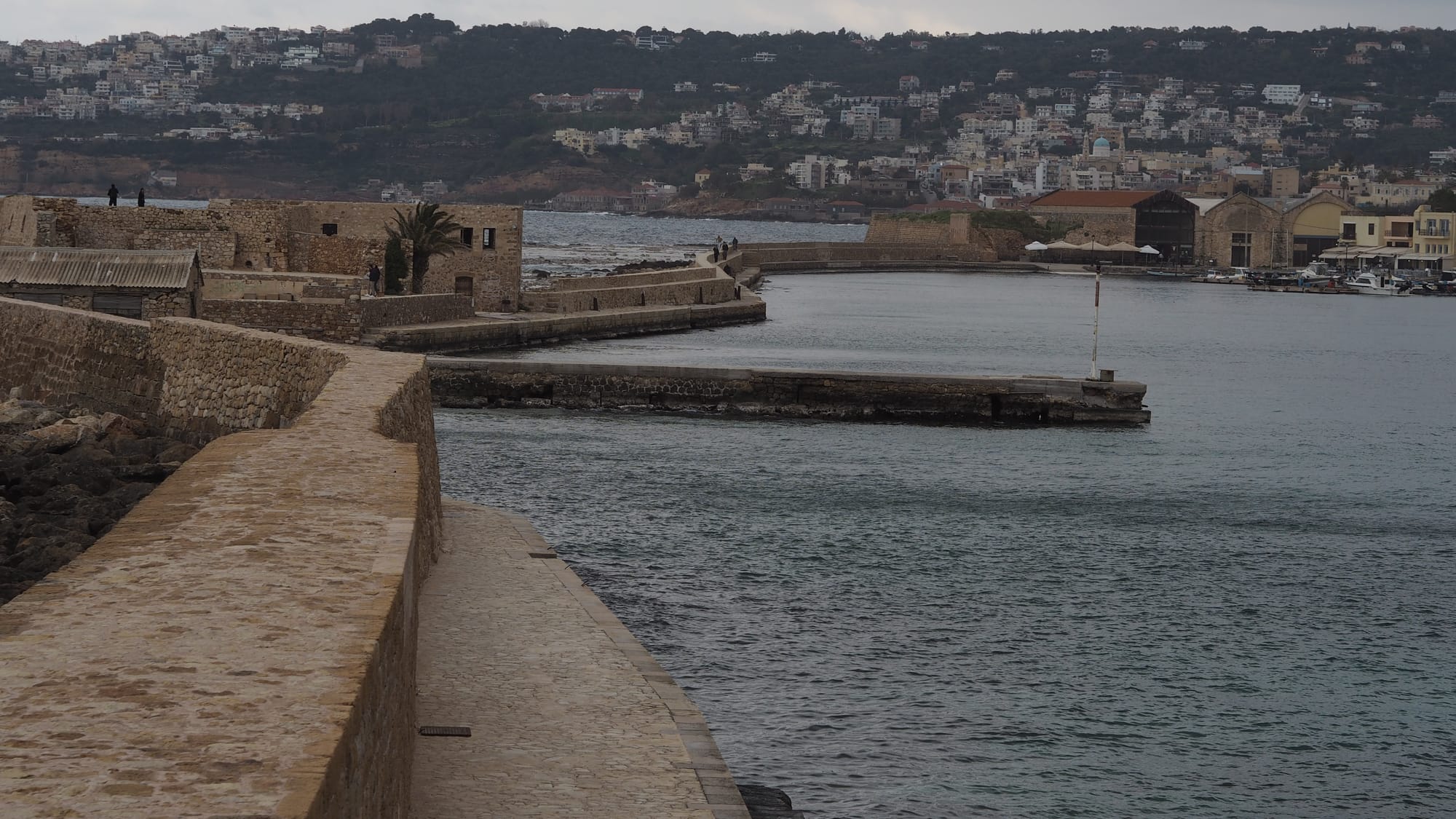
the seawall walk:
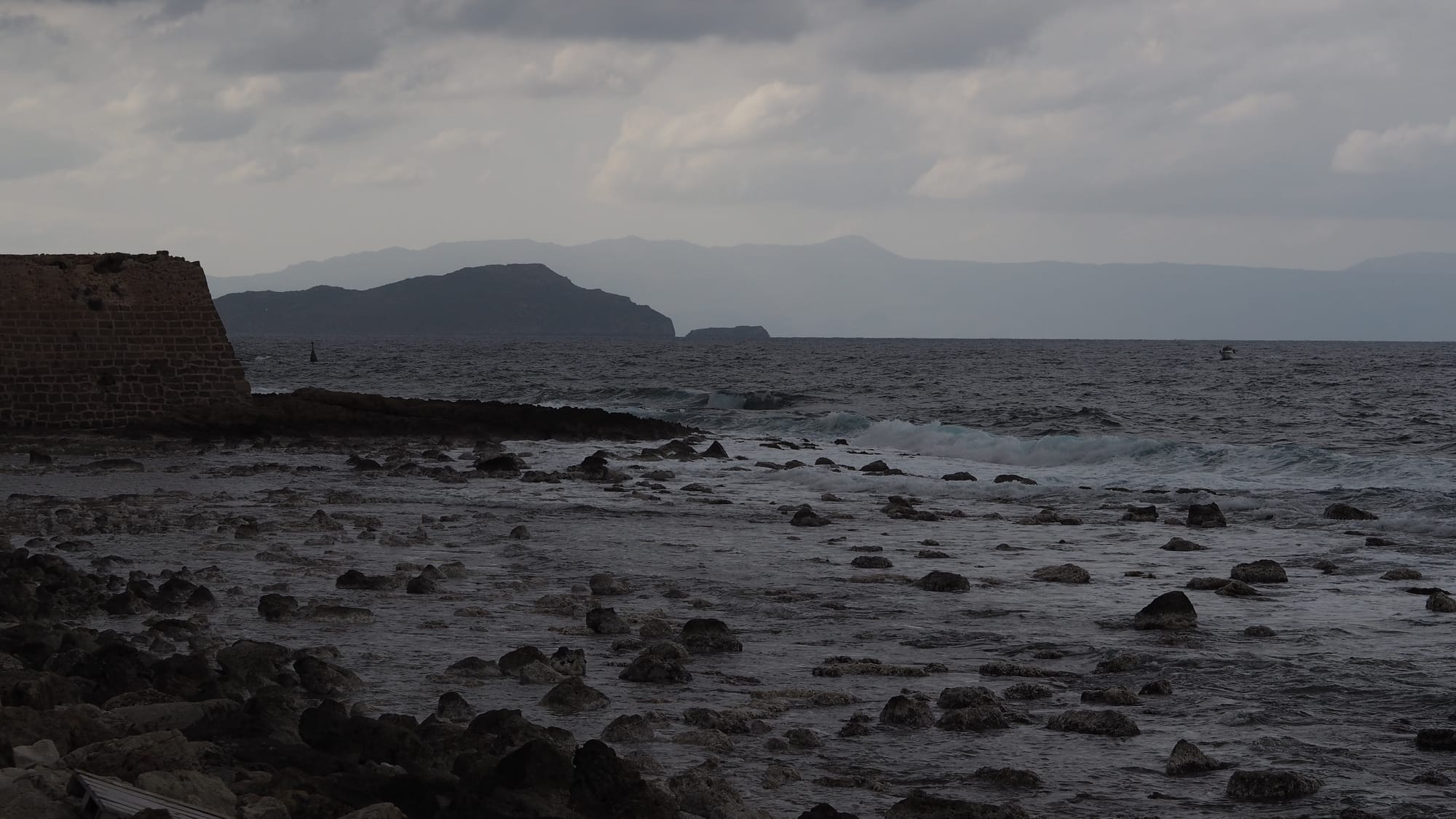
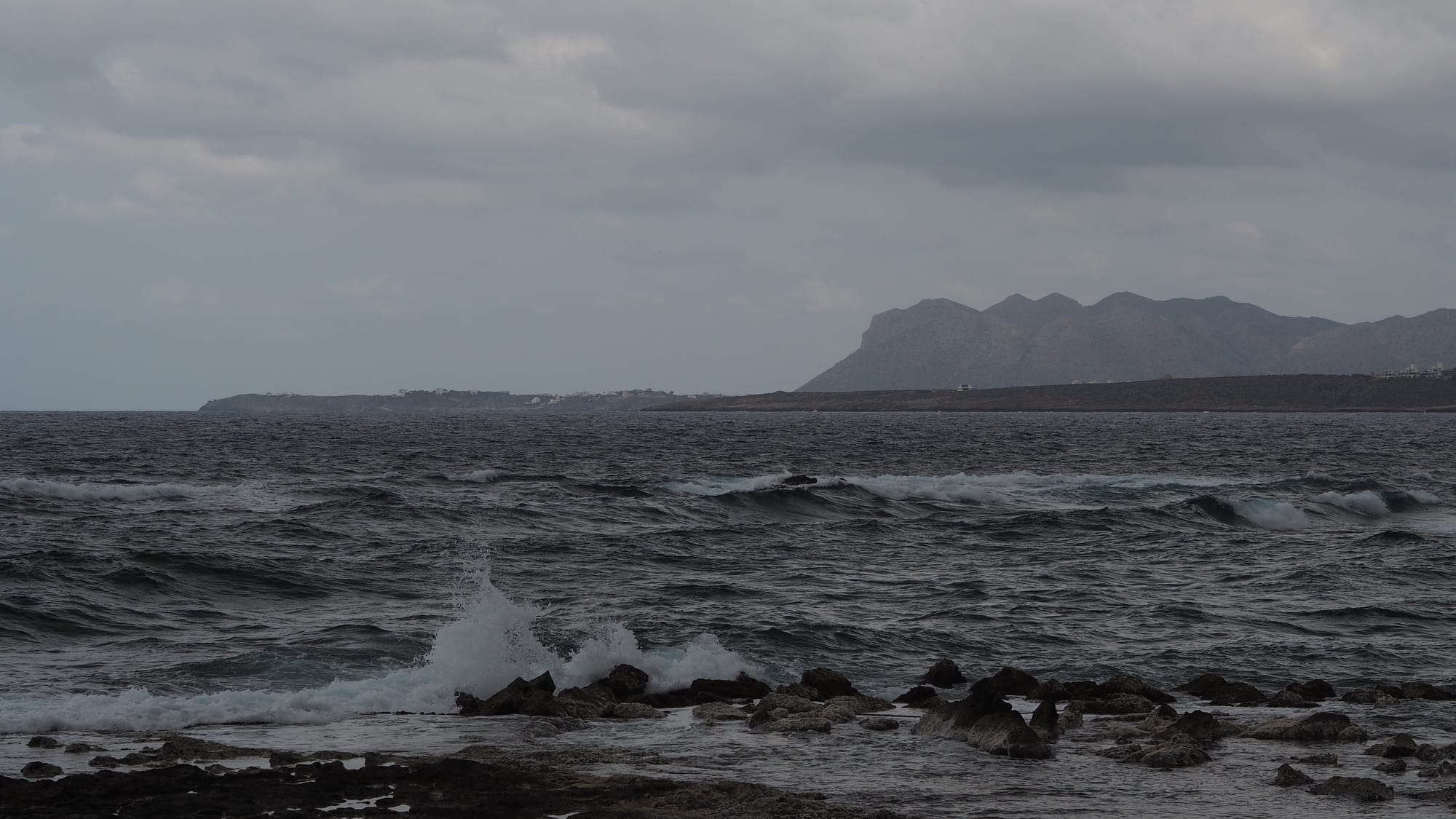
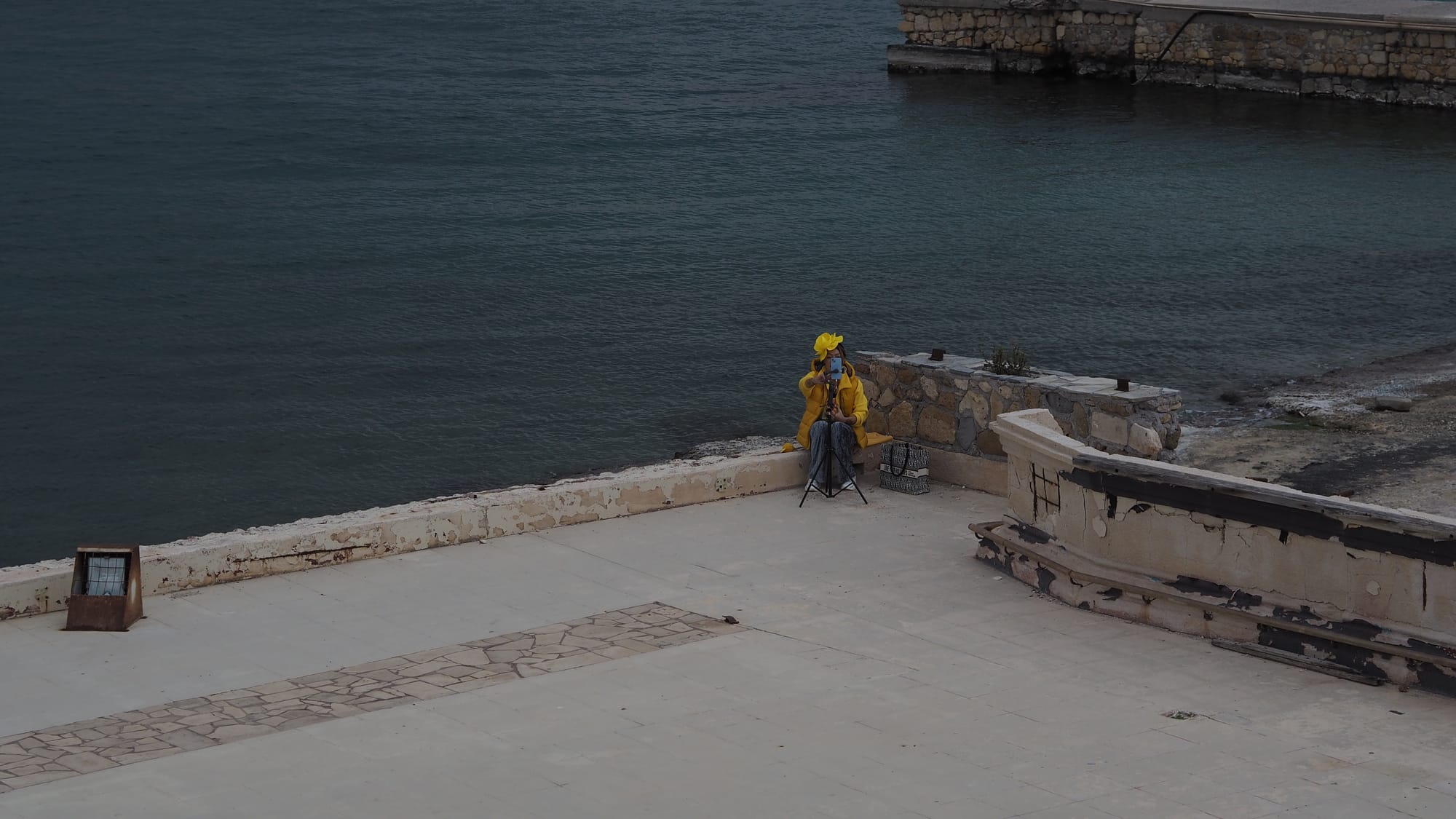
- lady in yellow is a Russian influencer, we suppose, one who got trapped into the yellow theme, we imagine, and now has to troll around the world with a ridiculous outfit ... all just to keep her following ... and her sponsorship deals. It was freezing cold and she was stuck for ages in front of a tripod-mounted phone. It's a thoroughly modern mode of crazy.
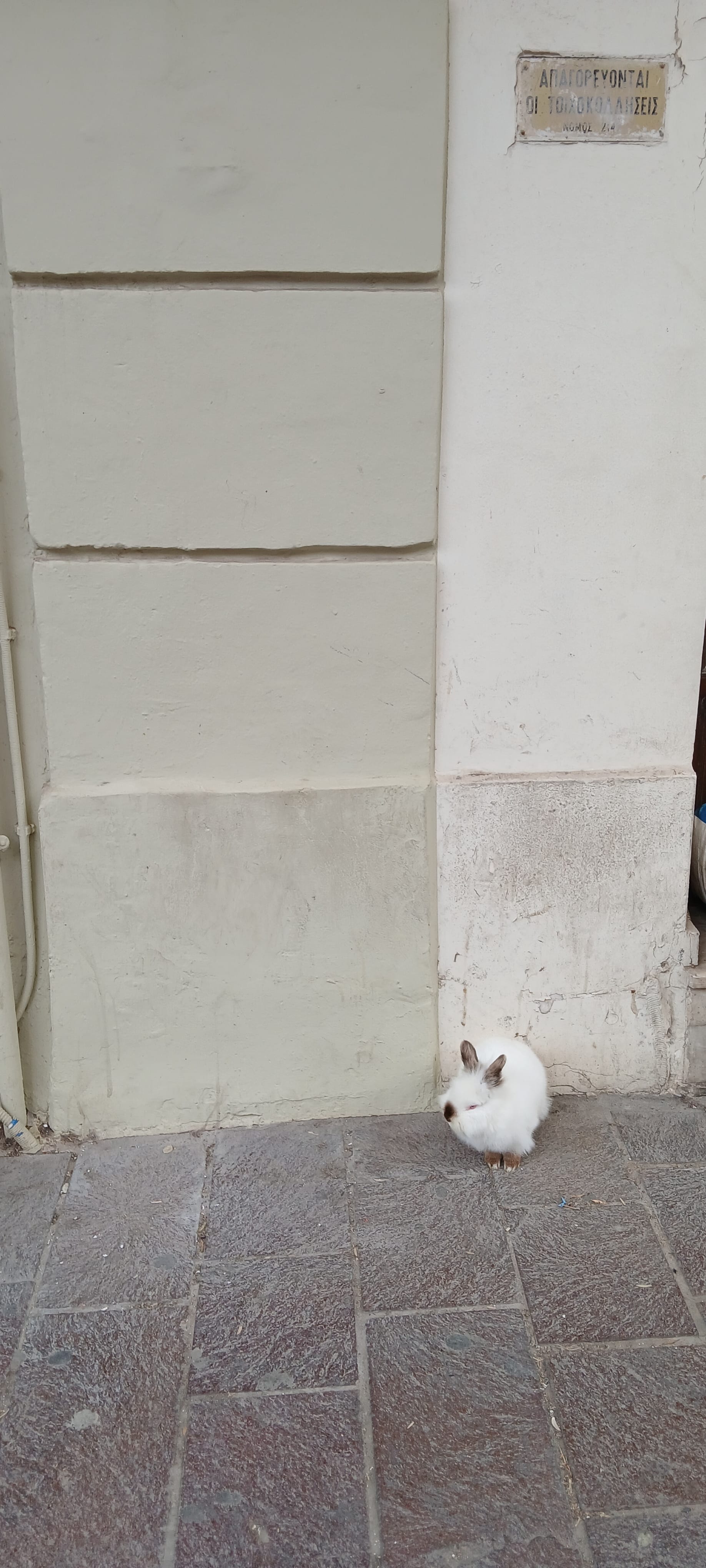
- the bunny (that's not a rabbit) lived with a guy who seemed to live on the street, the bunny as the gimmick to pull coin
ah here's the morning:
announcing a day in the sun.
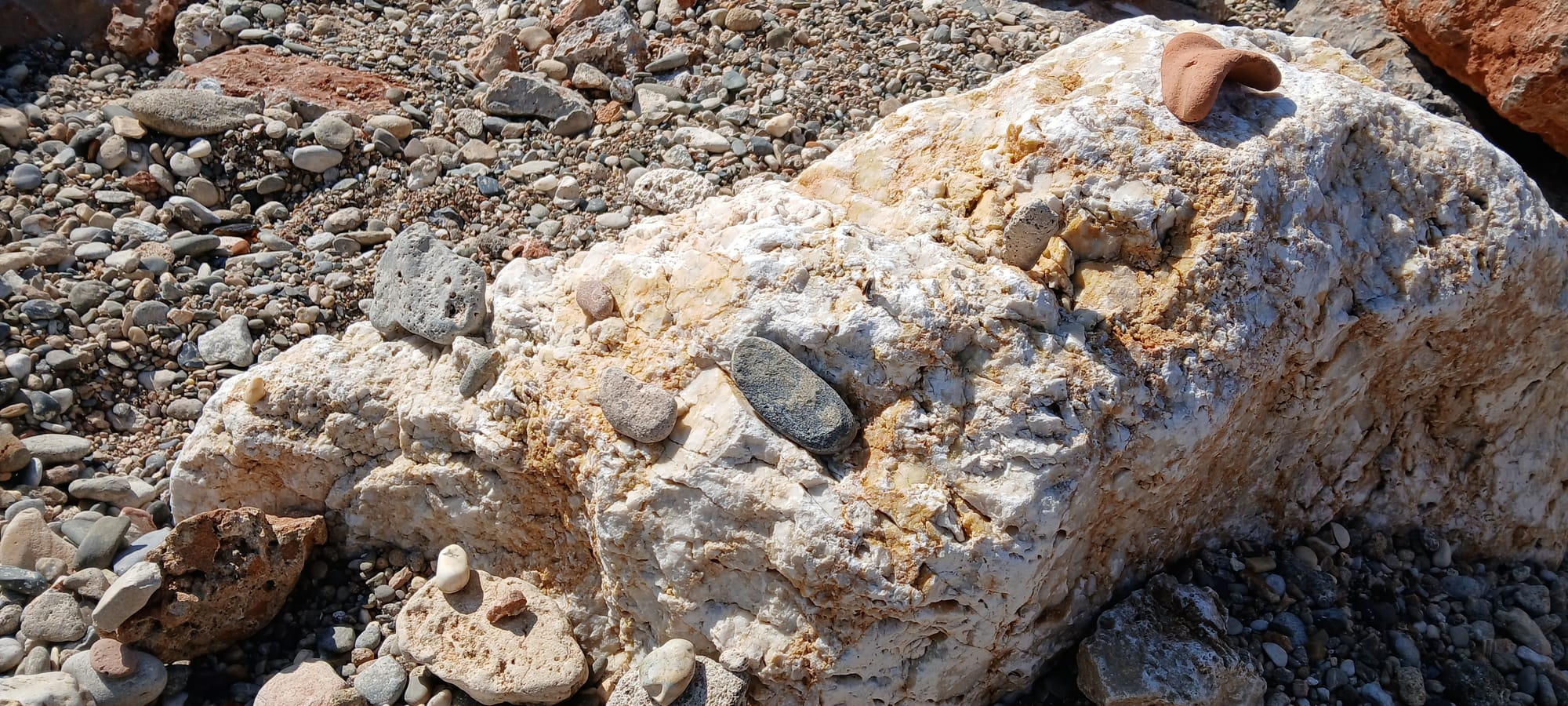
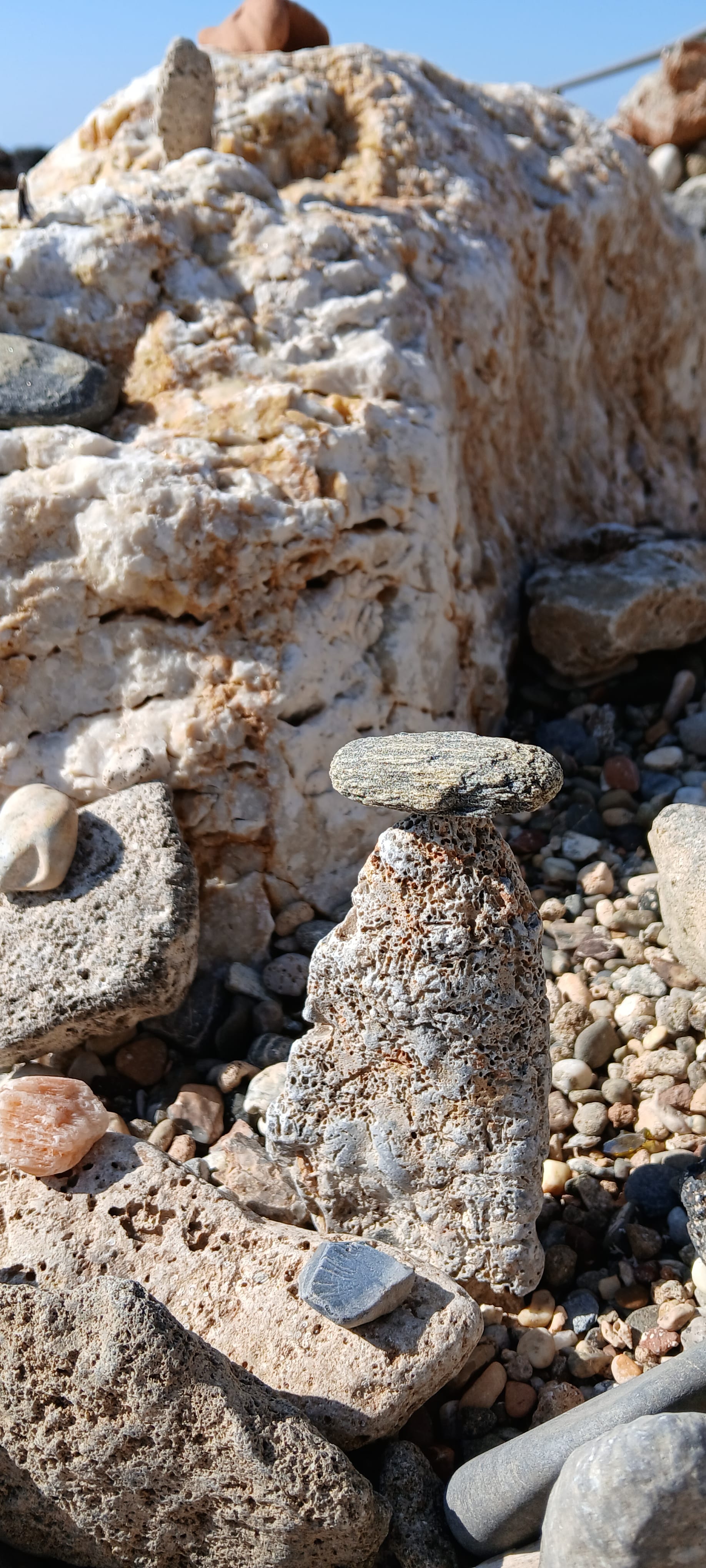
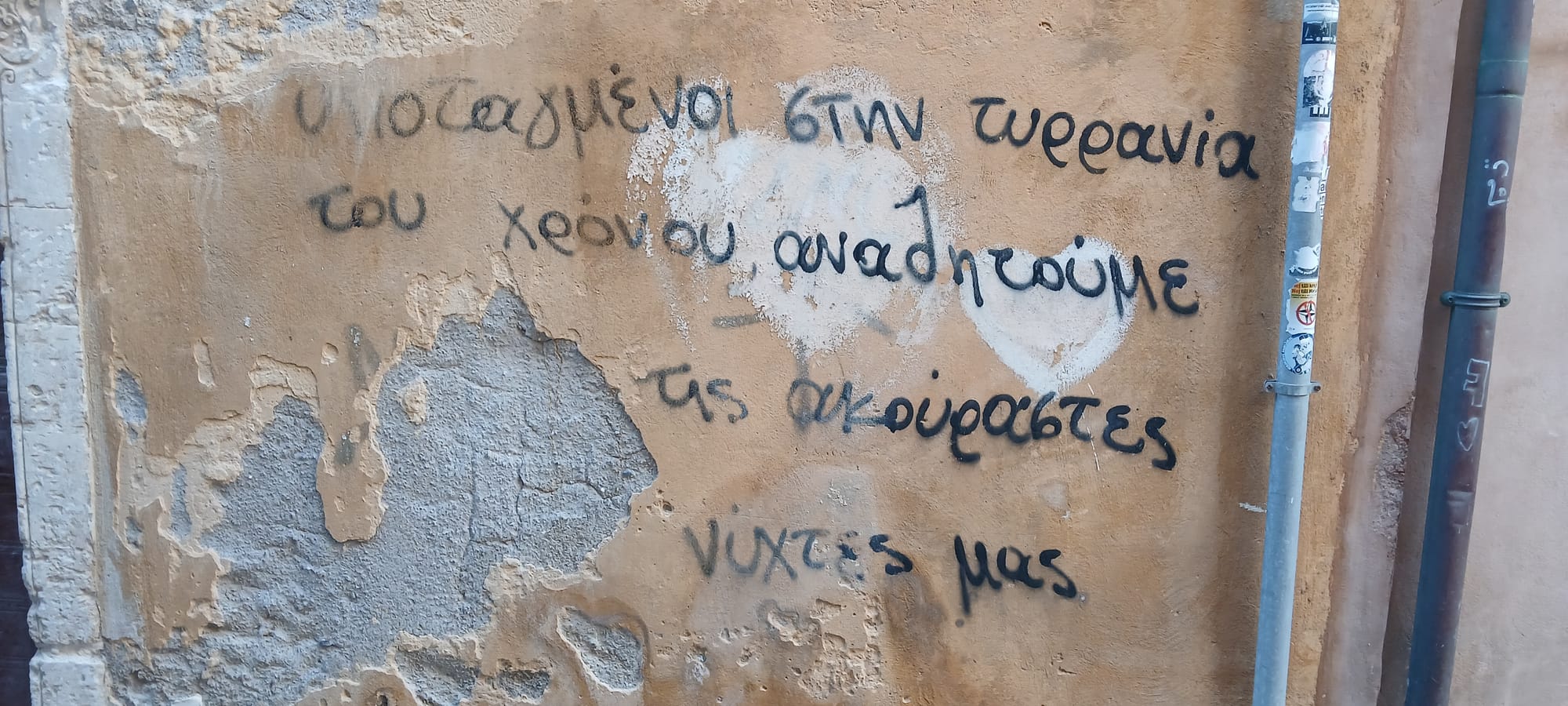
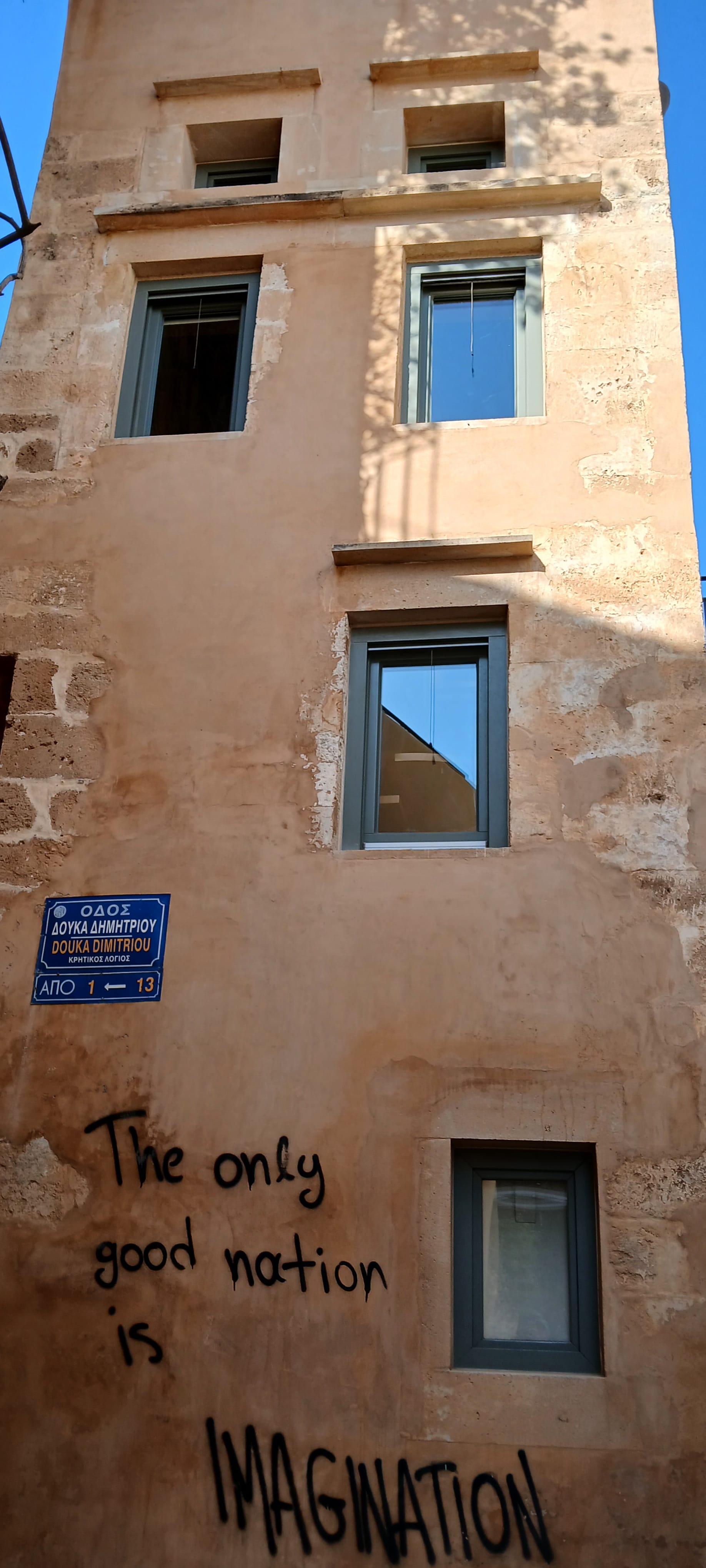
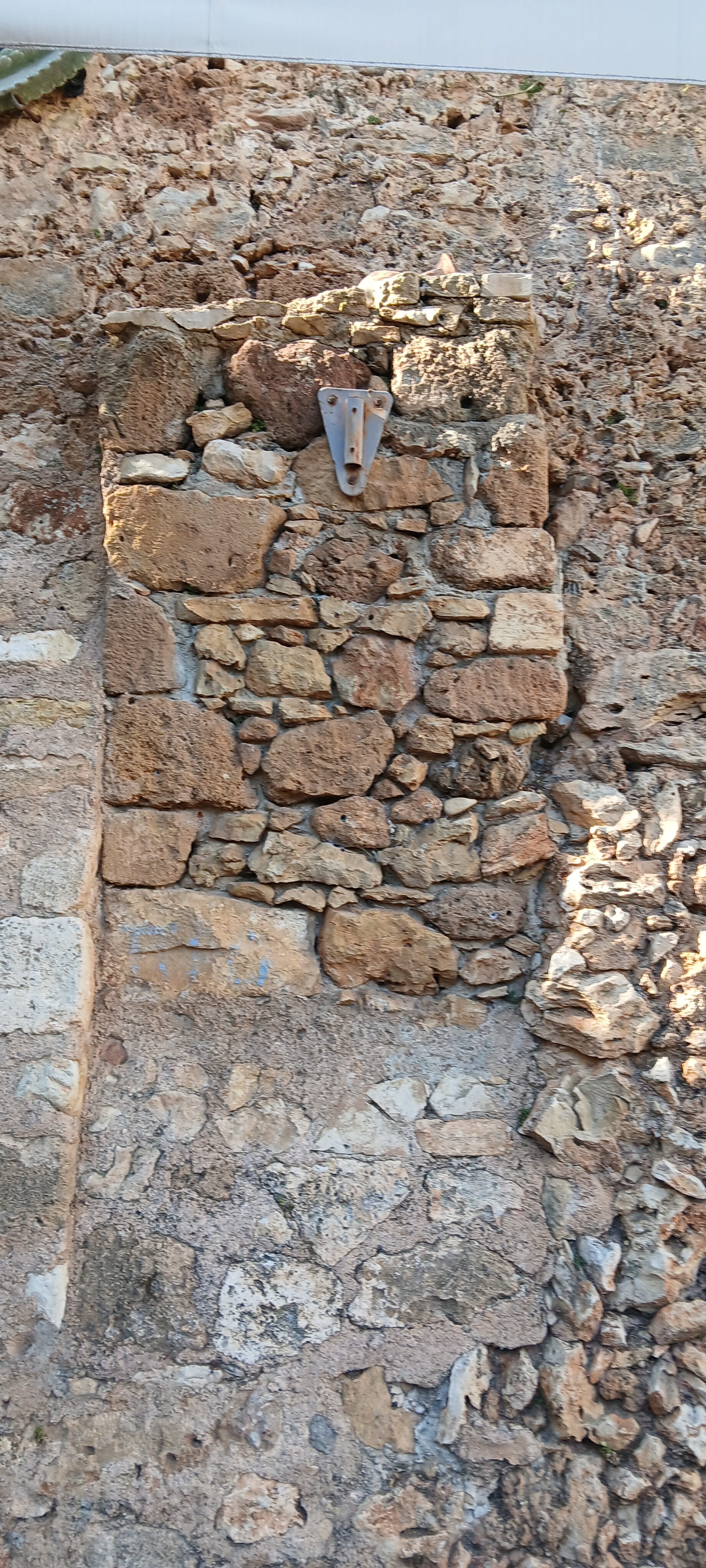

- and beside the cannabis vapes (low-THC, high-CBD) leaving nothing to the imagination a massive variety of sex toys, from the King Kong dong to pinkly realistic butt-cheeks, for him, for her, for them, available through vending machines 24/7, no proof of age required
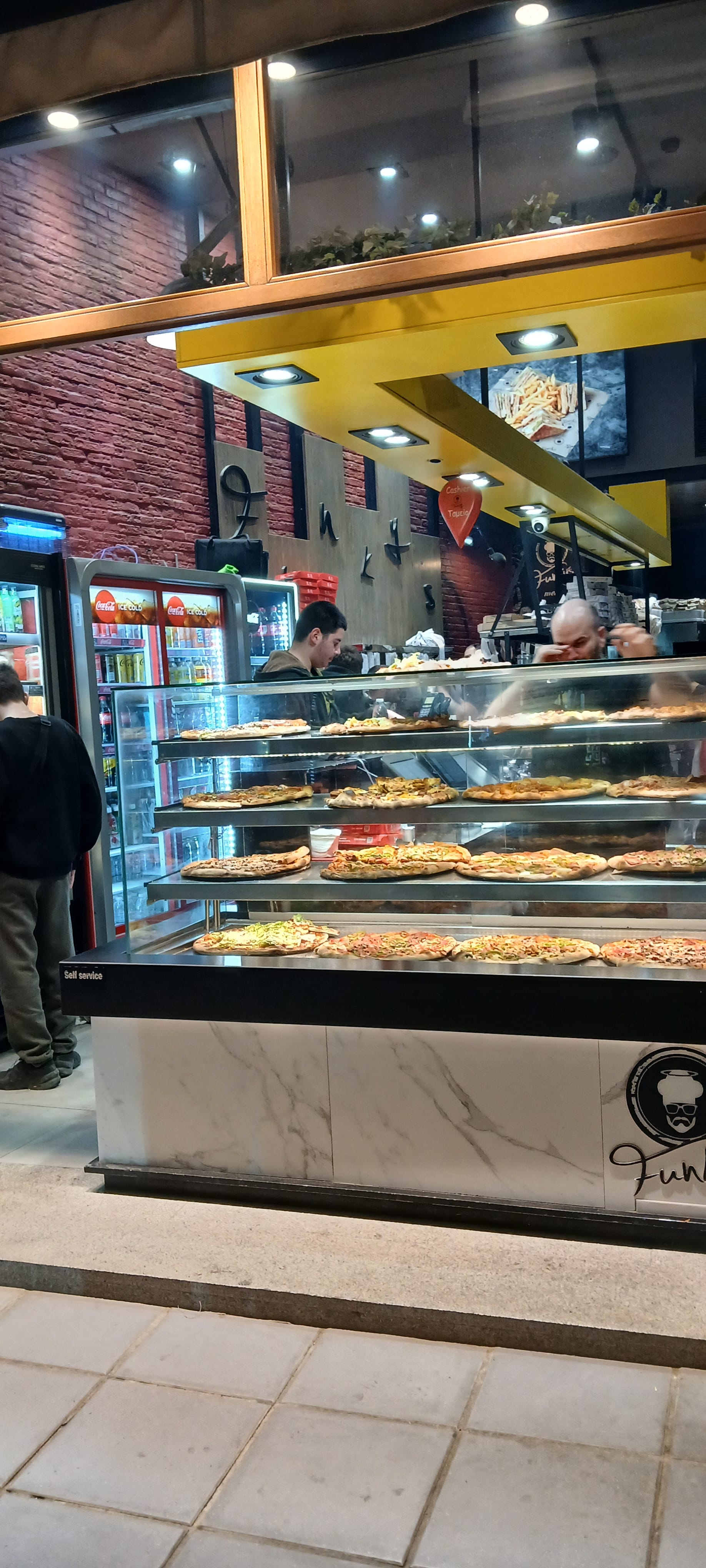
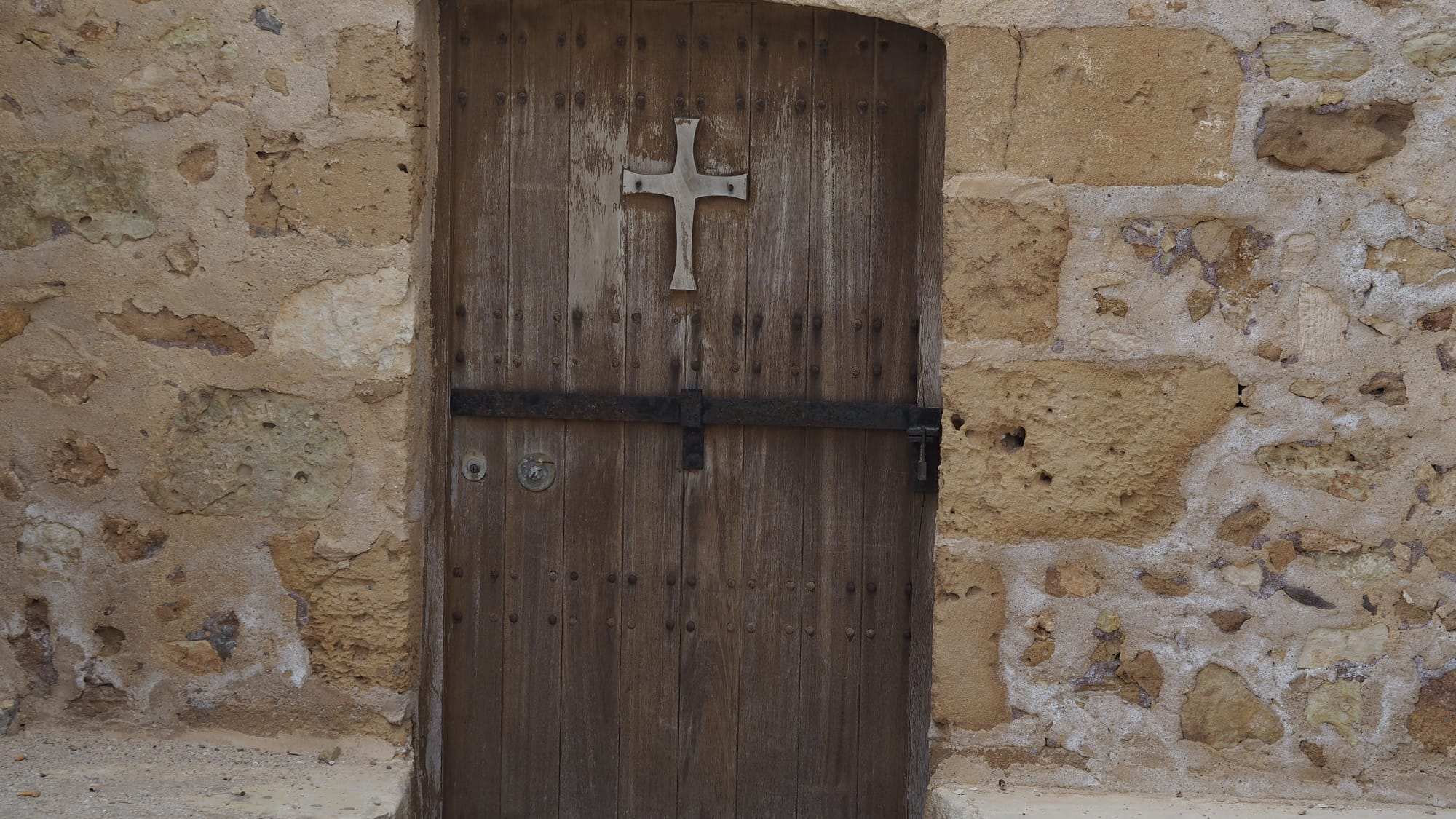
a door,
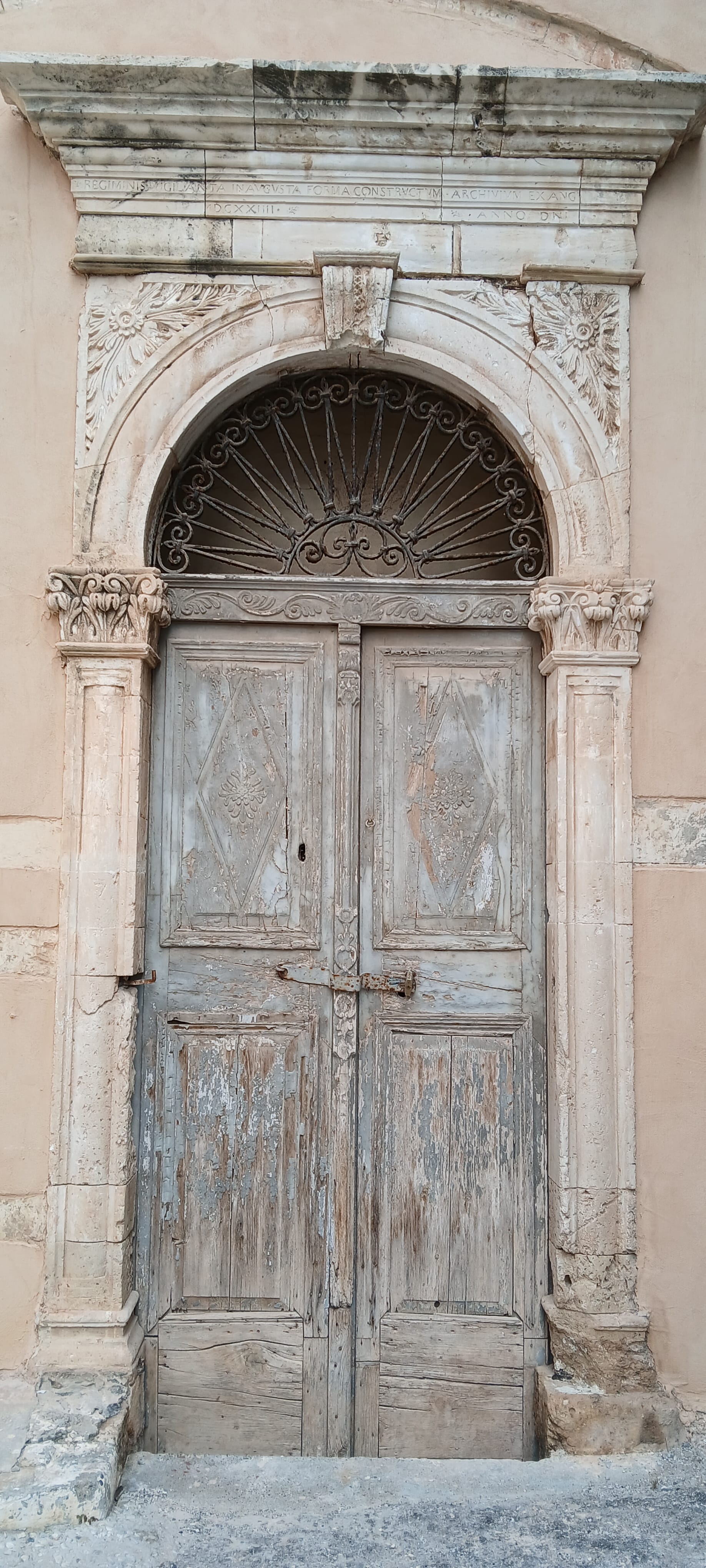
- we didn't know what was being rehearsed for until our final night...
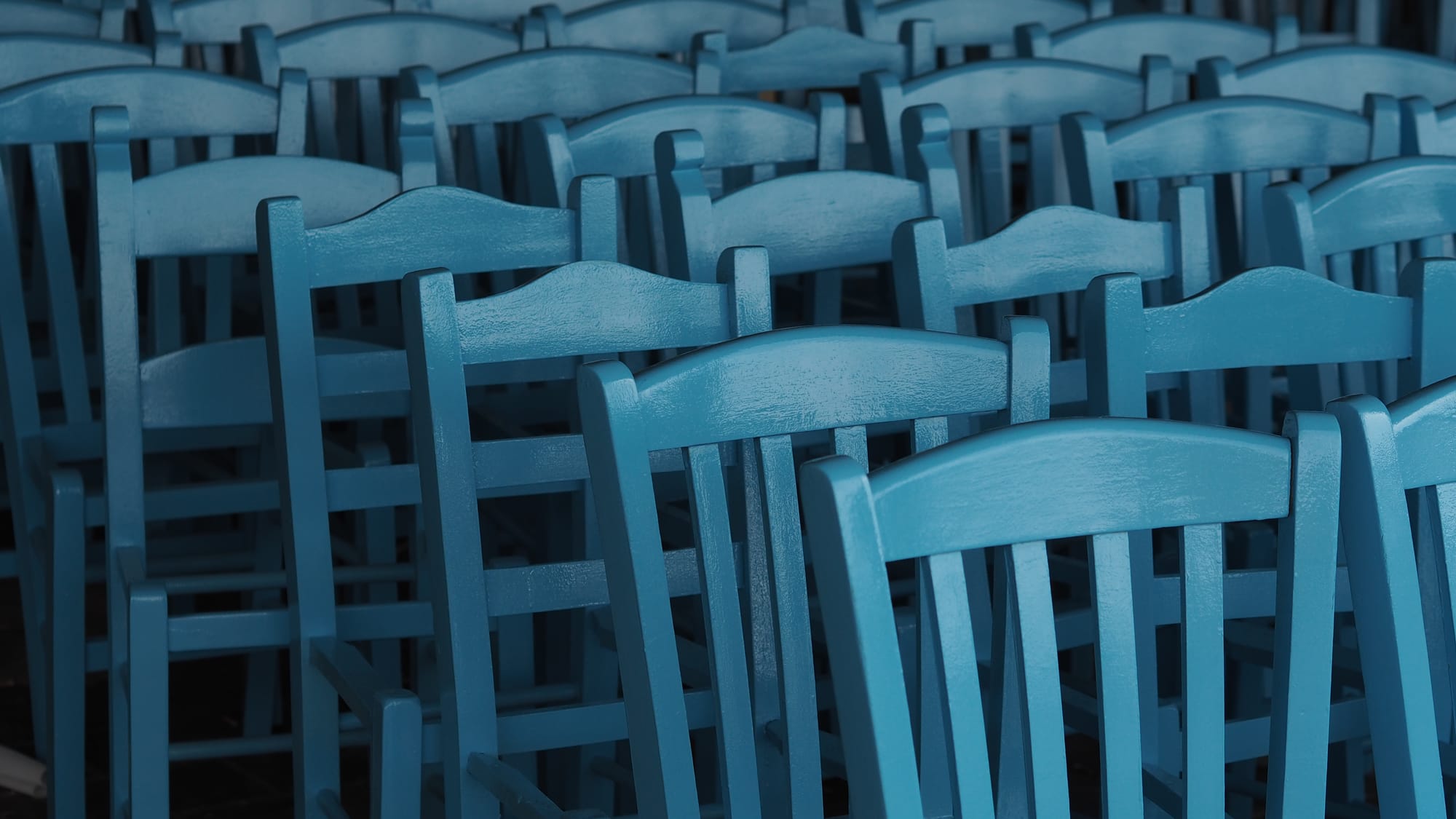
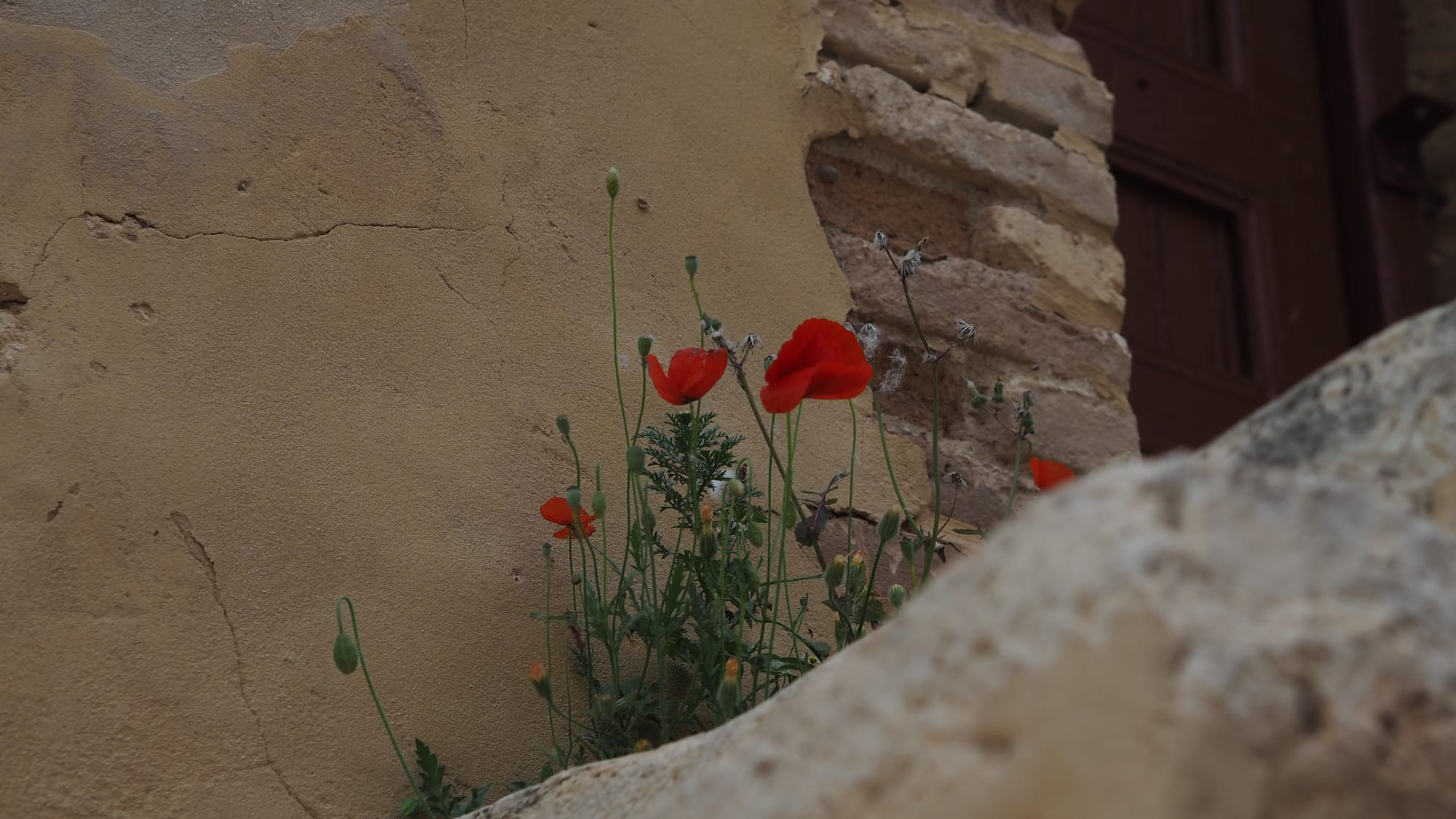
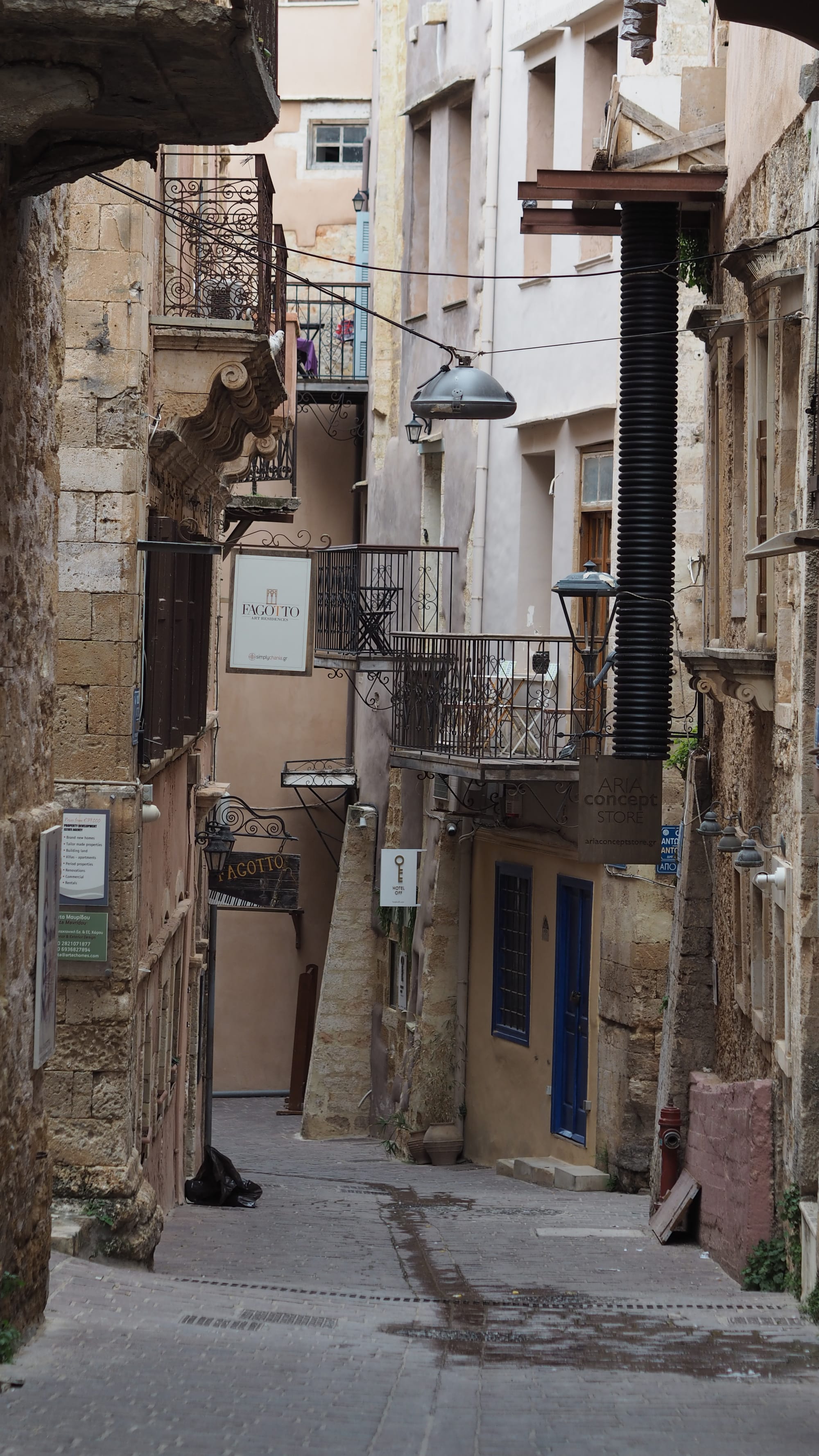
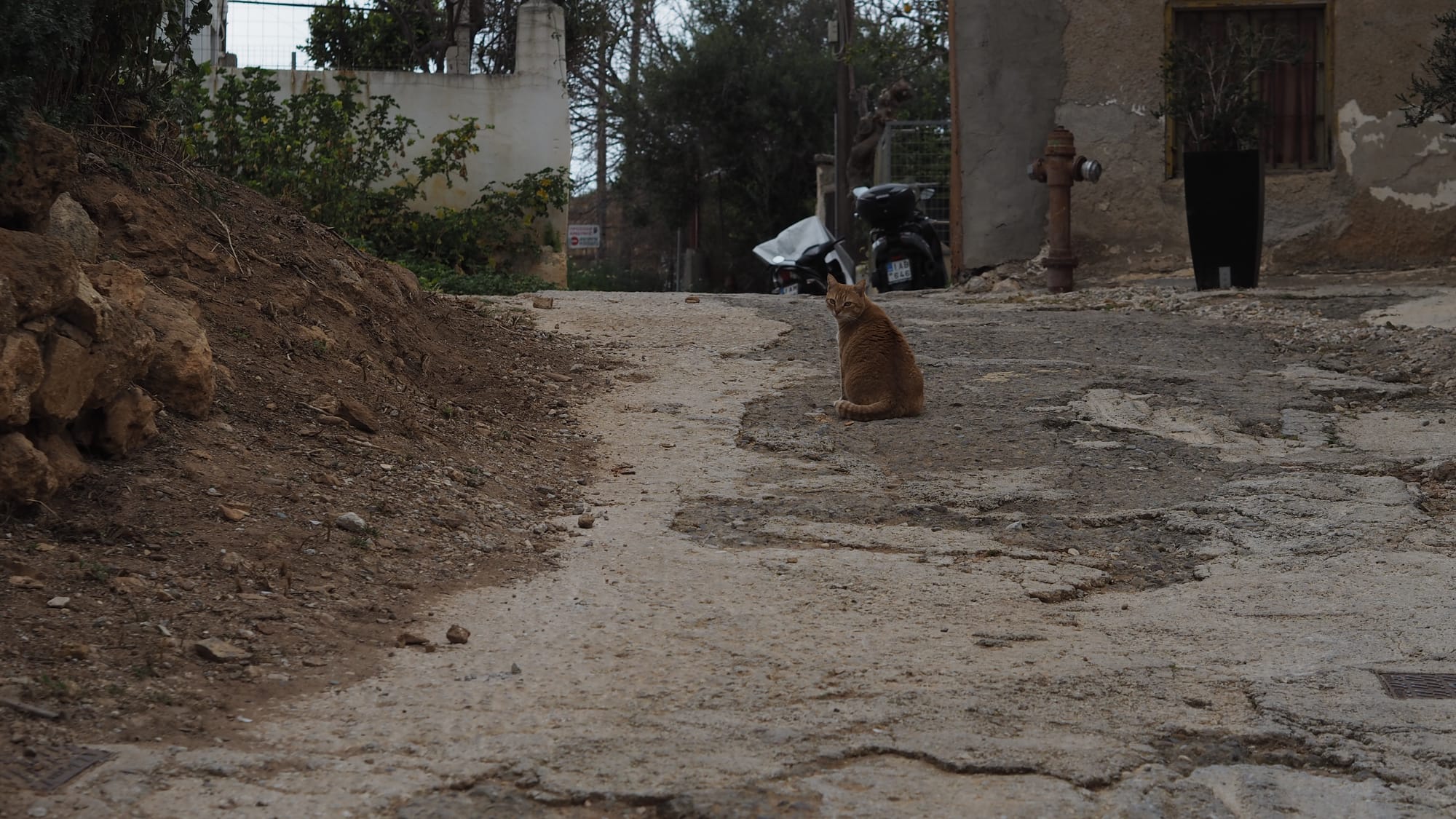
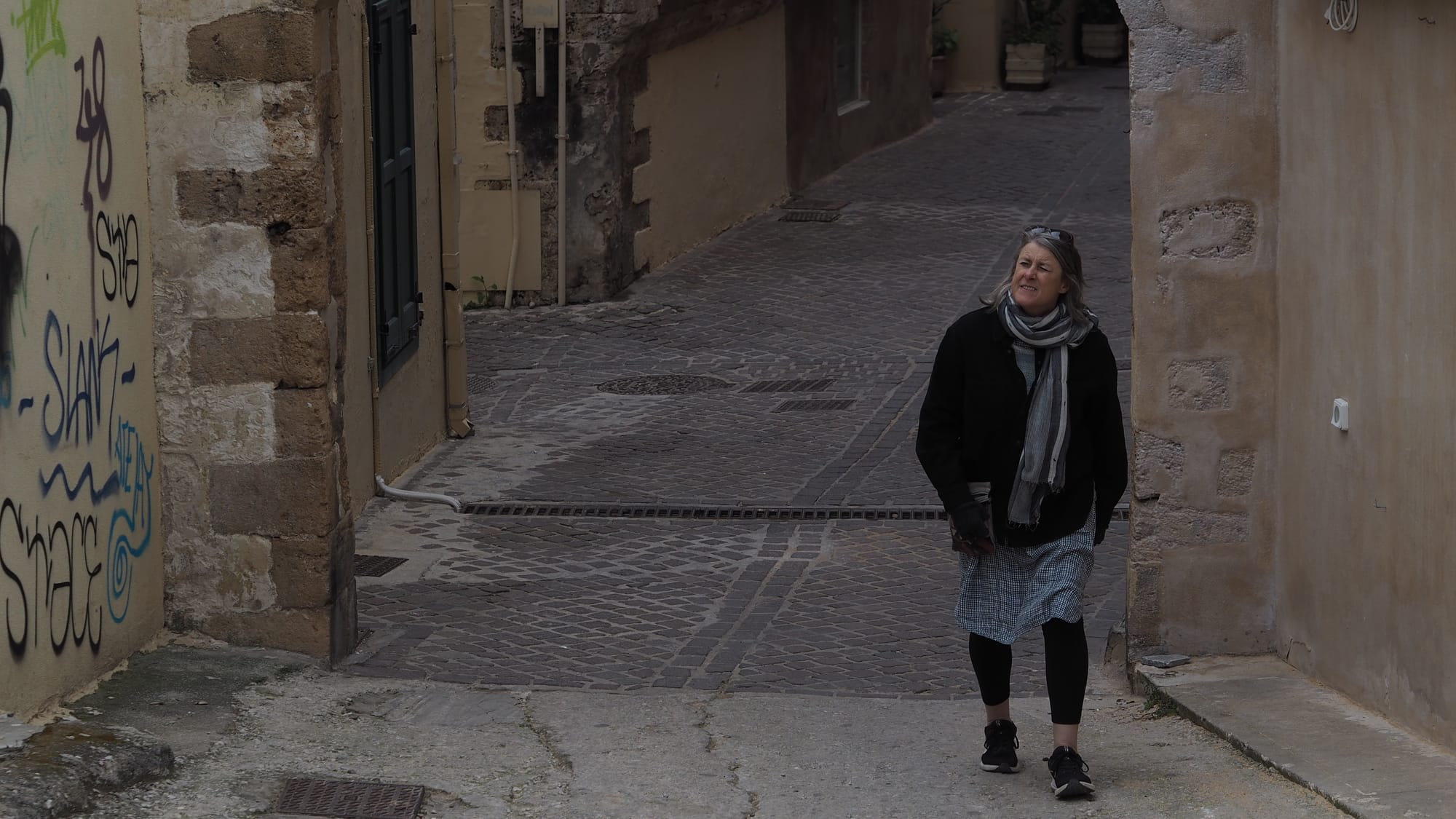
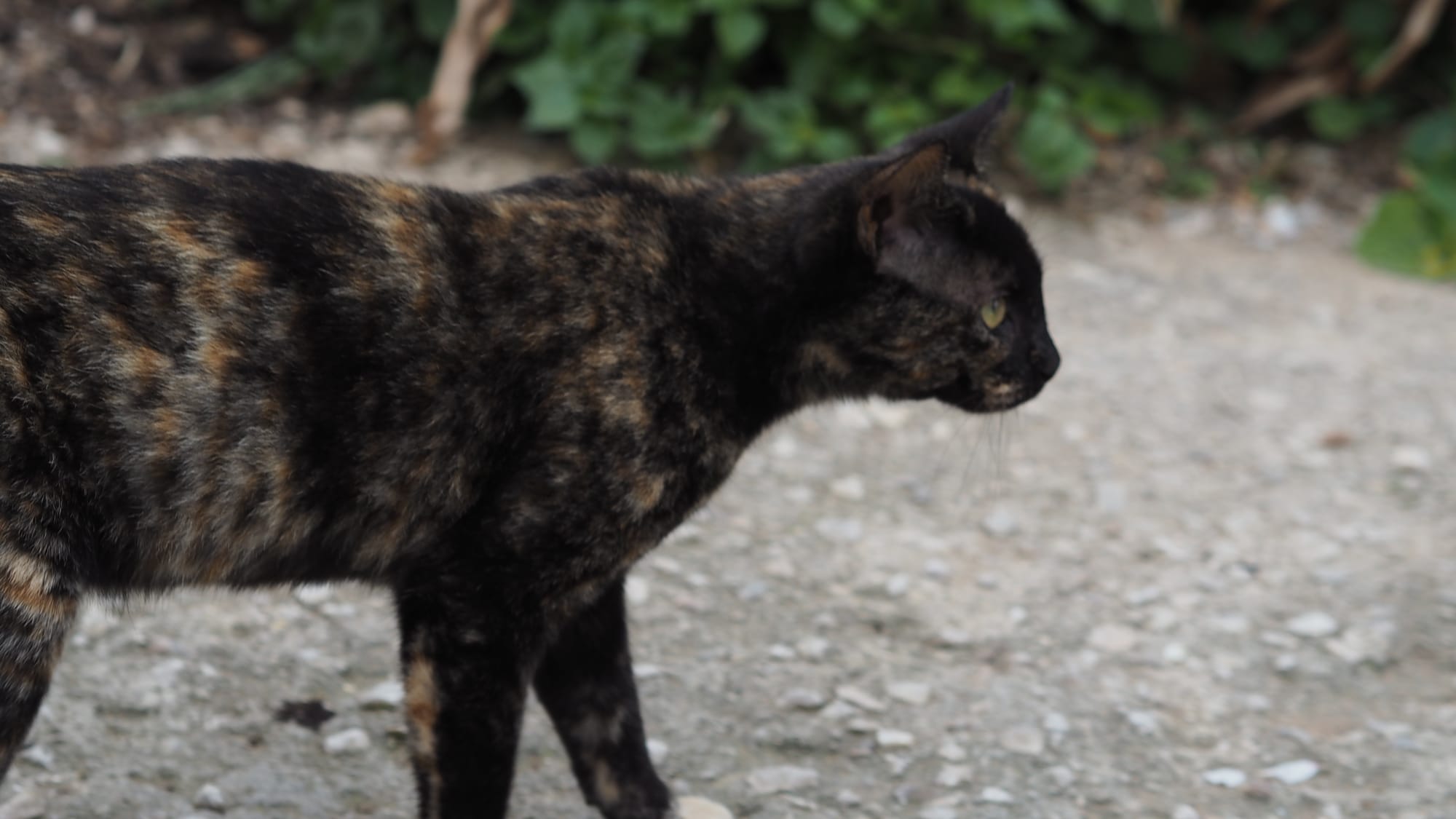
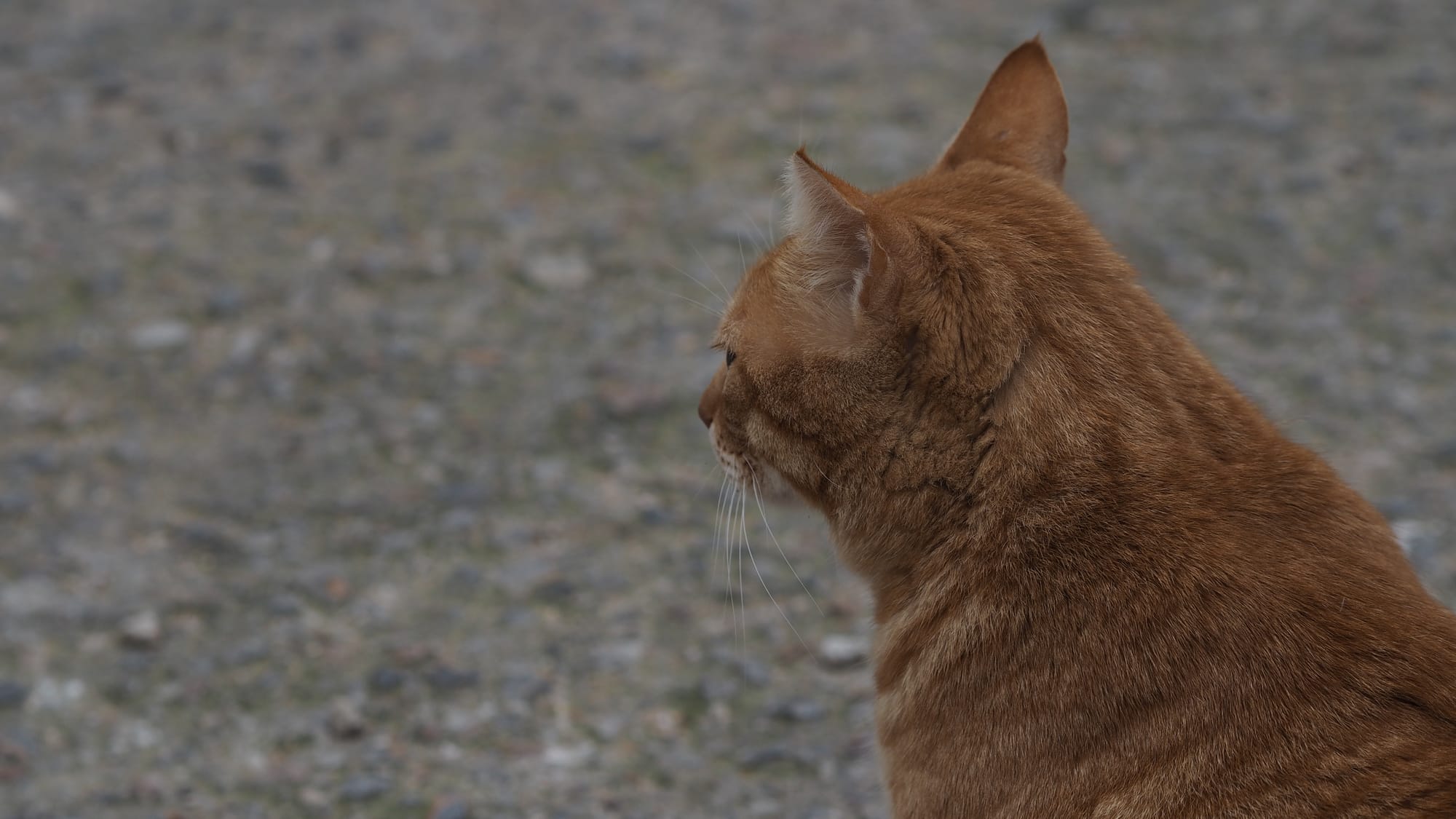
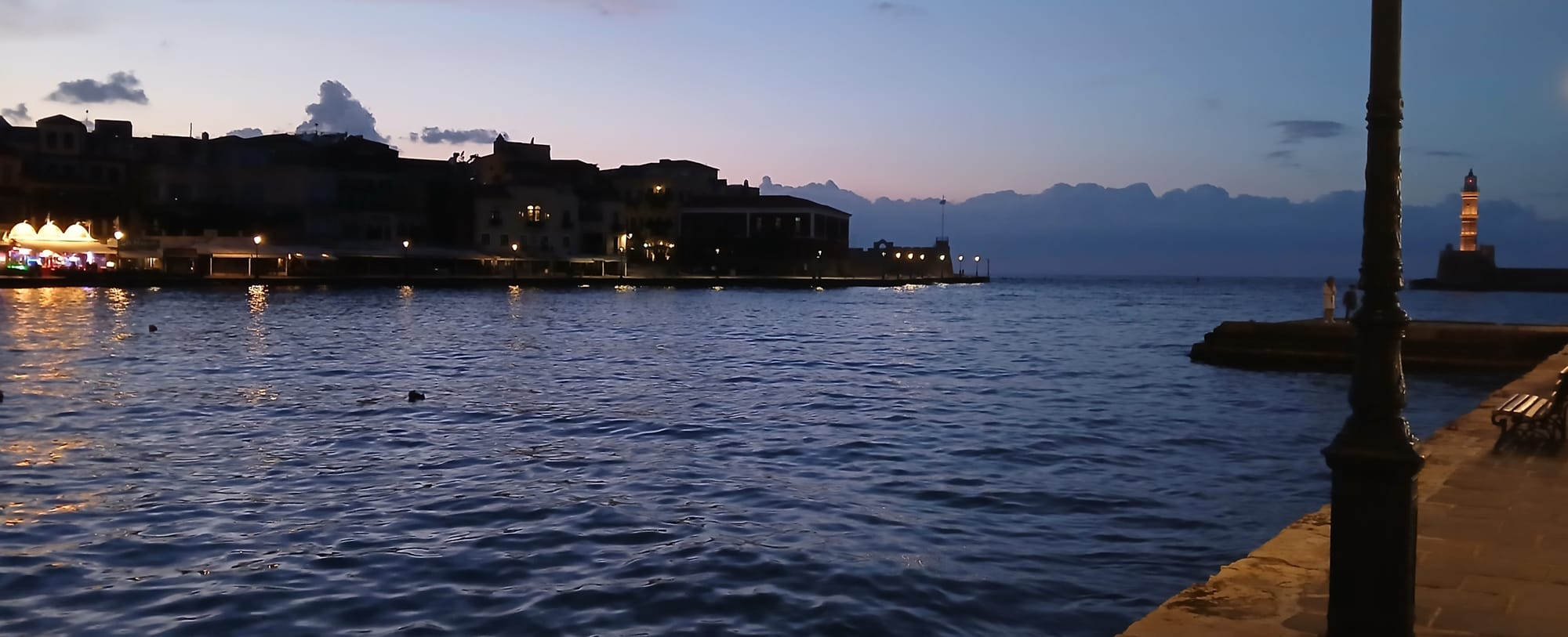
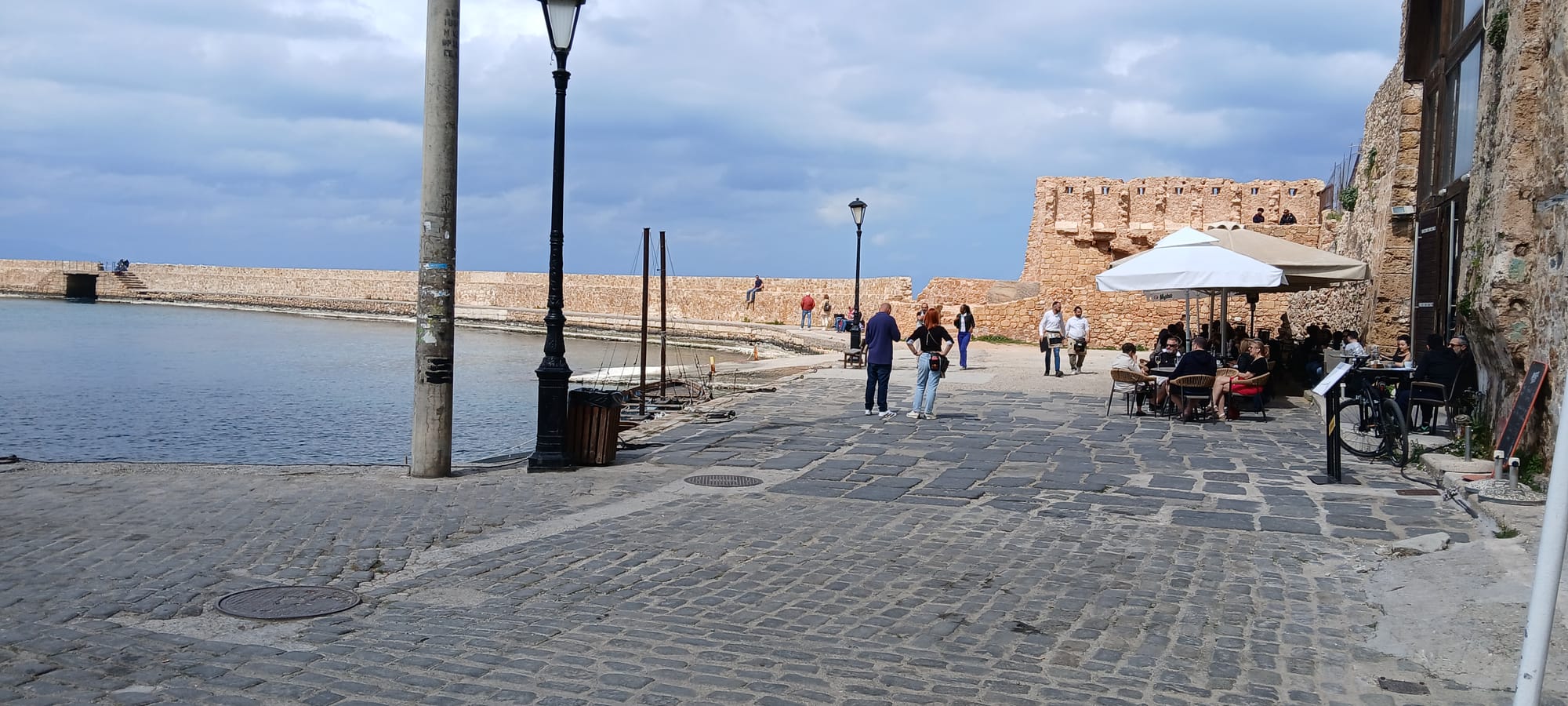
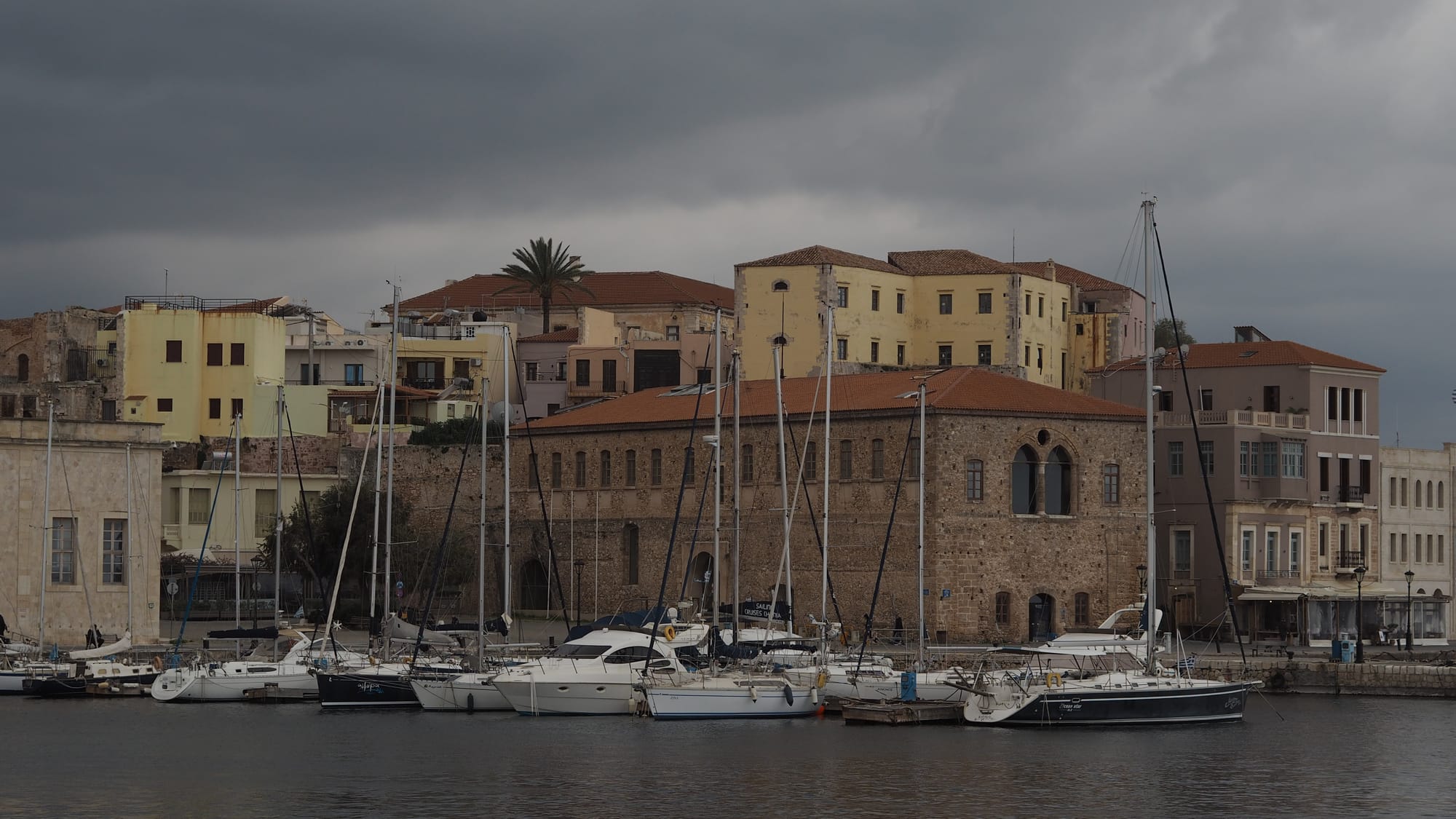
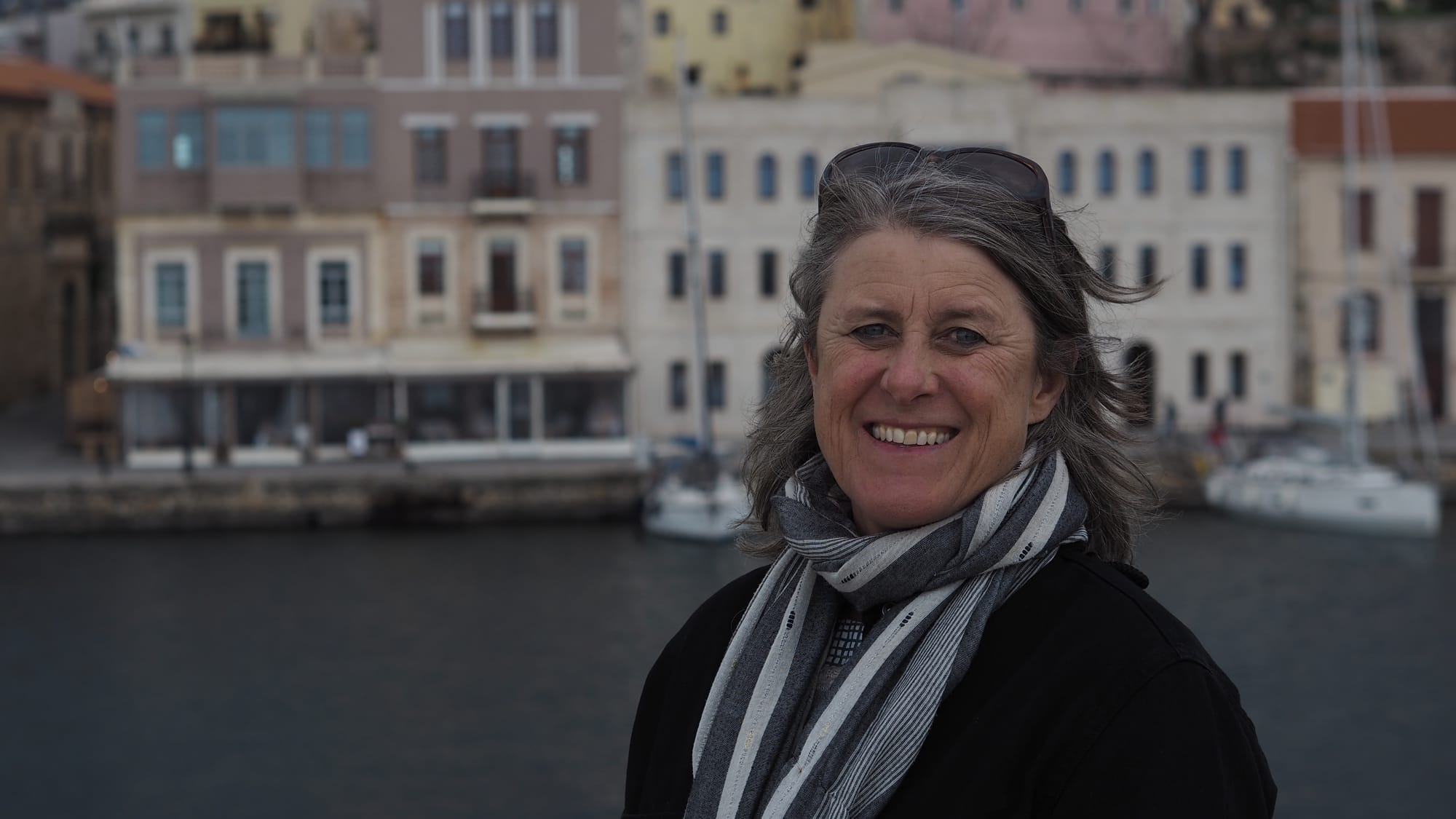
We had our routine together. Walk out into the old town. Around the Venetian port, East, to Καφέ Ντεμεκ, Café Ntemek, for coffee. People walking a variety of different-sized dogs, and people talking in a variety of different languages. The day pictured below, we had to wait before we took our place at one of the tables on the promenade. At the next table a very excitable French man, excited to be wearing shorts and a T, excited by the cuisines in a variety of different countries that he told of in great detail, along with details as to how well-connected his family was, excited enough to be chain-smoking, with an outdoor voice that echoed around the bay, conversing with two rather more taciturn and older French men as they drank their beers, one whose voice barely crept above a rasping whisper, due to a tracheotomy, the plastic fitting sticking out of his throat looked like a plumbing spigot. To the right, a pair of elegant young men all too aware they were, one of whom spoke excellent Greek ordering for both, and then conversing with the other, blond to his short black curls and unshaven stubble, in Italian that sometimes veered into English. The blond led the conversation, with opinions which the other languidly and periodically but forcefully refuted. The first came back with yet another opinion. As if anticipating rebuttal his voice rose and crested at a whine, the other cut it off short, the conversation having the shape of waves.
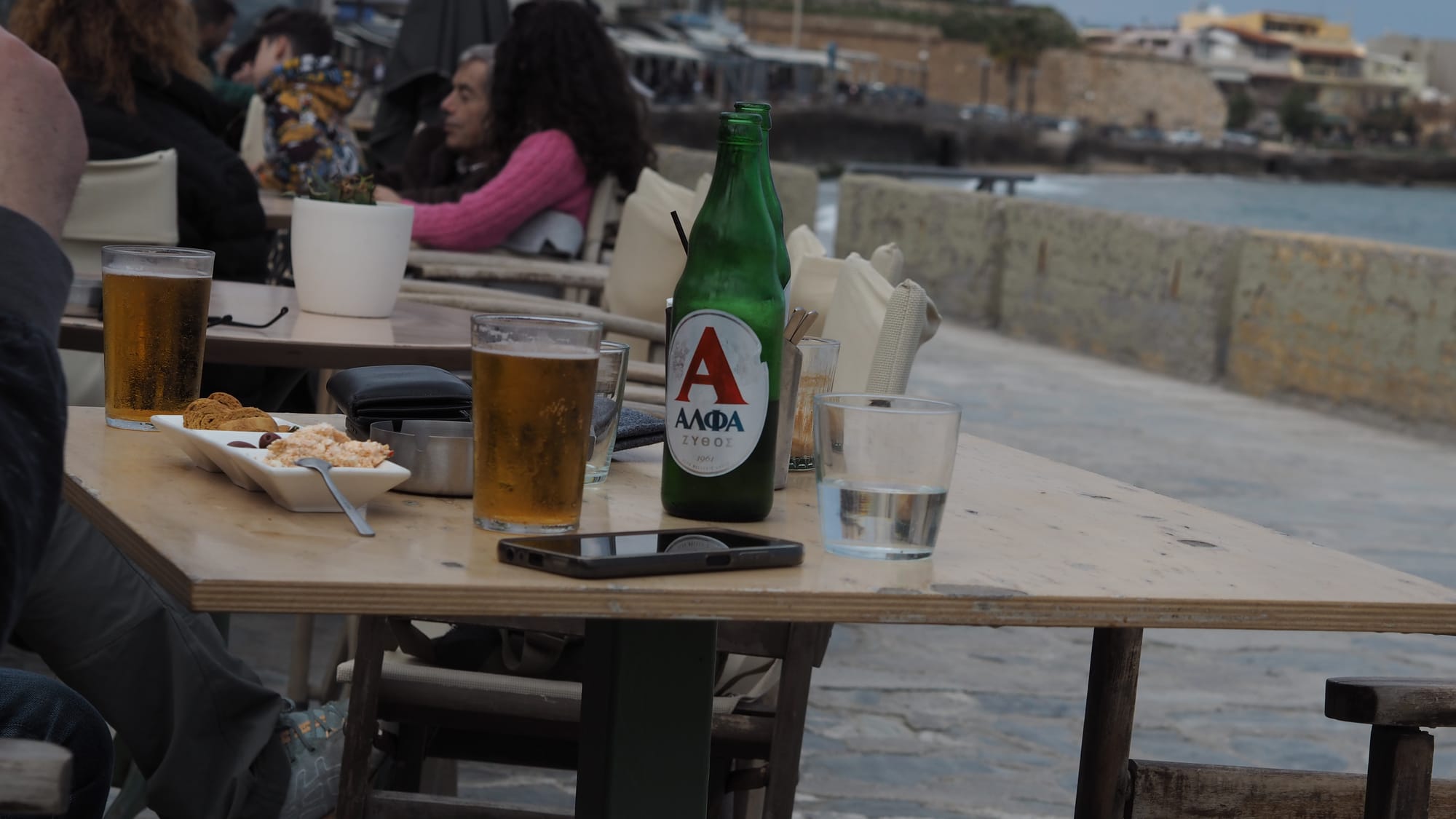
- at the French table, soon another two young men arrived, smoking resumed and the number of Alpha beers increased
We had missed the Byzantine museum, to the West of the Venetian port, the day before; today we caught it.
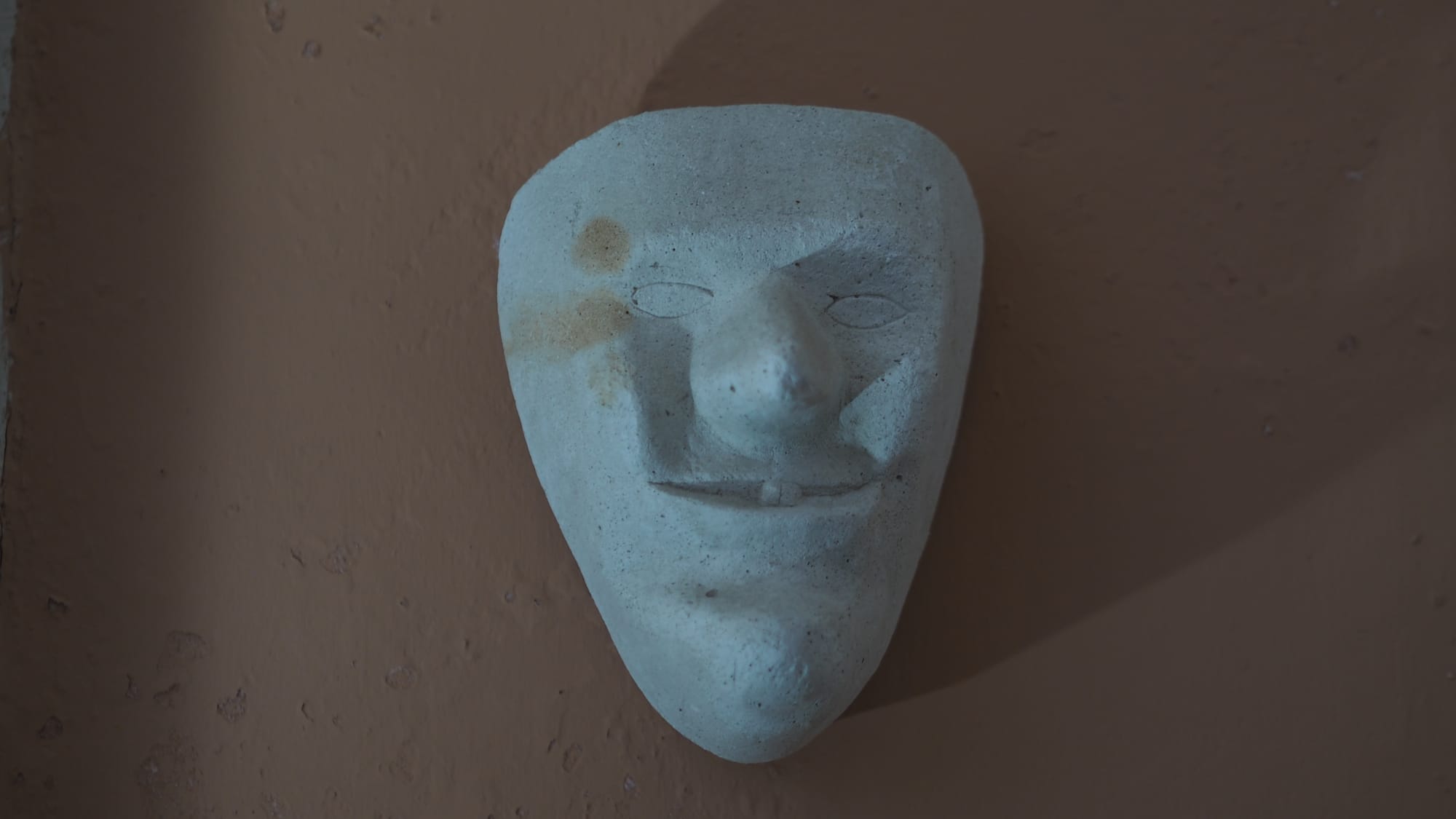
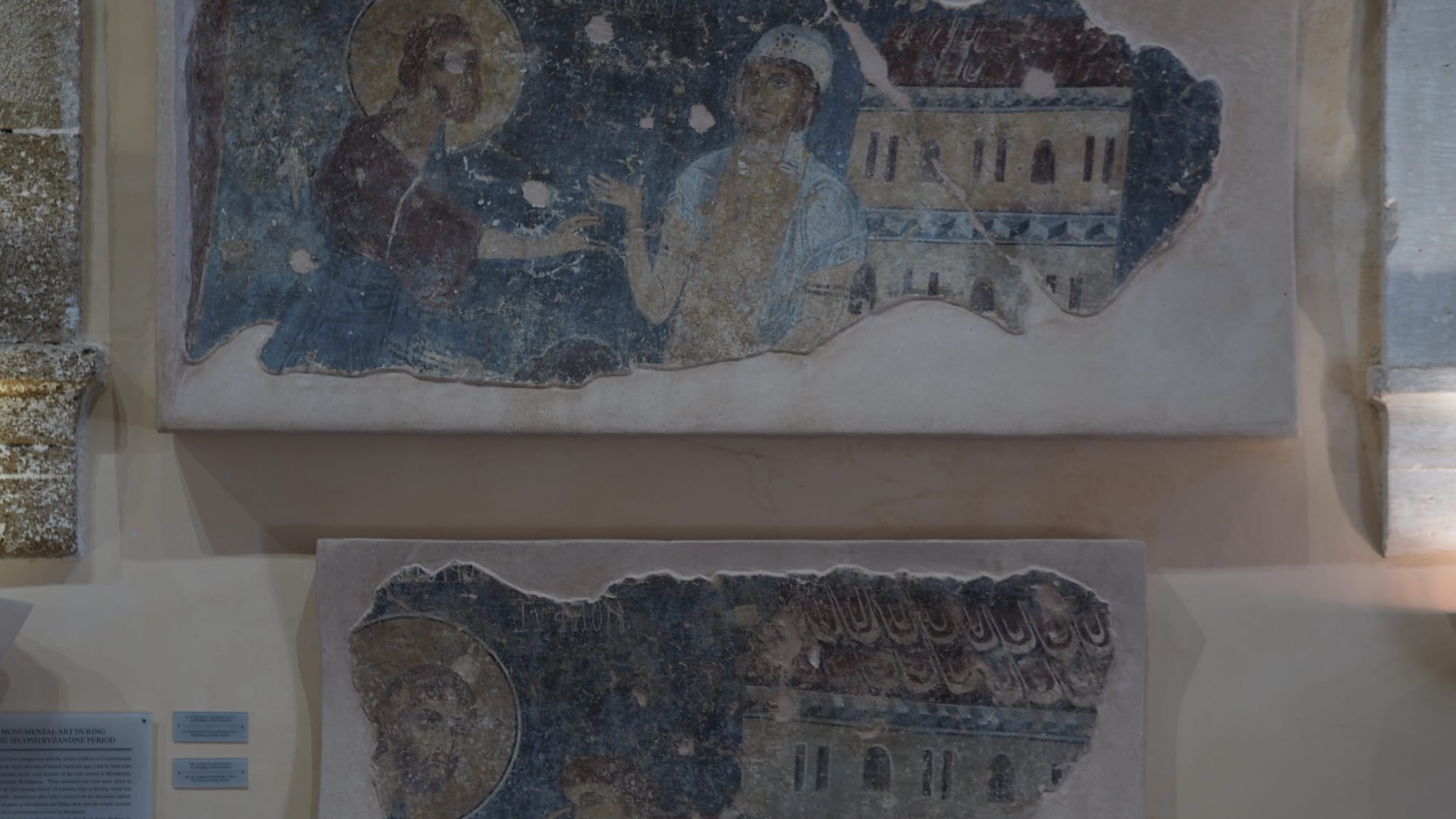
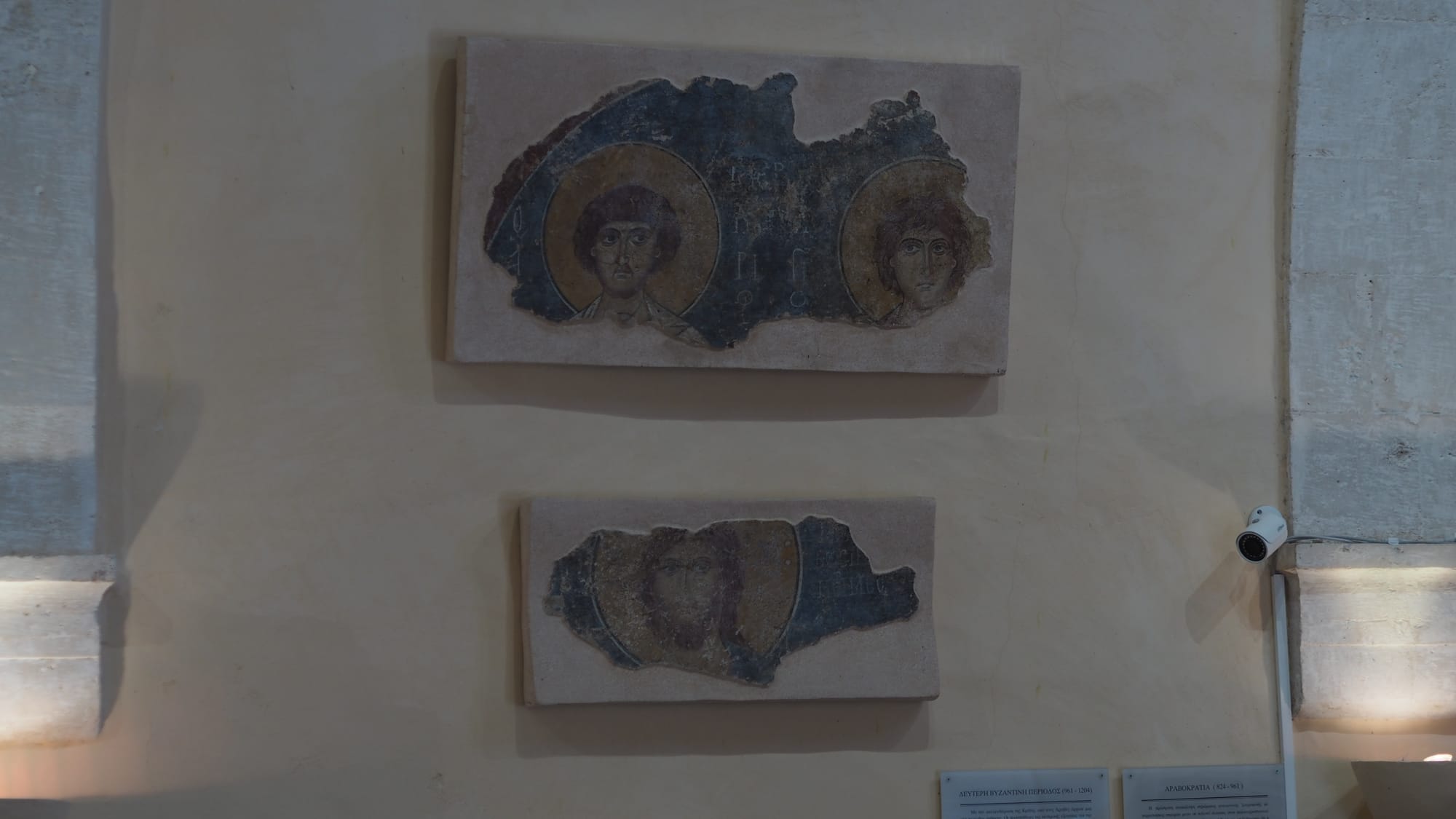
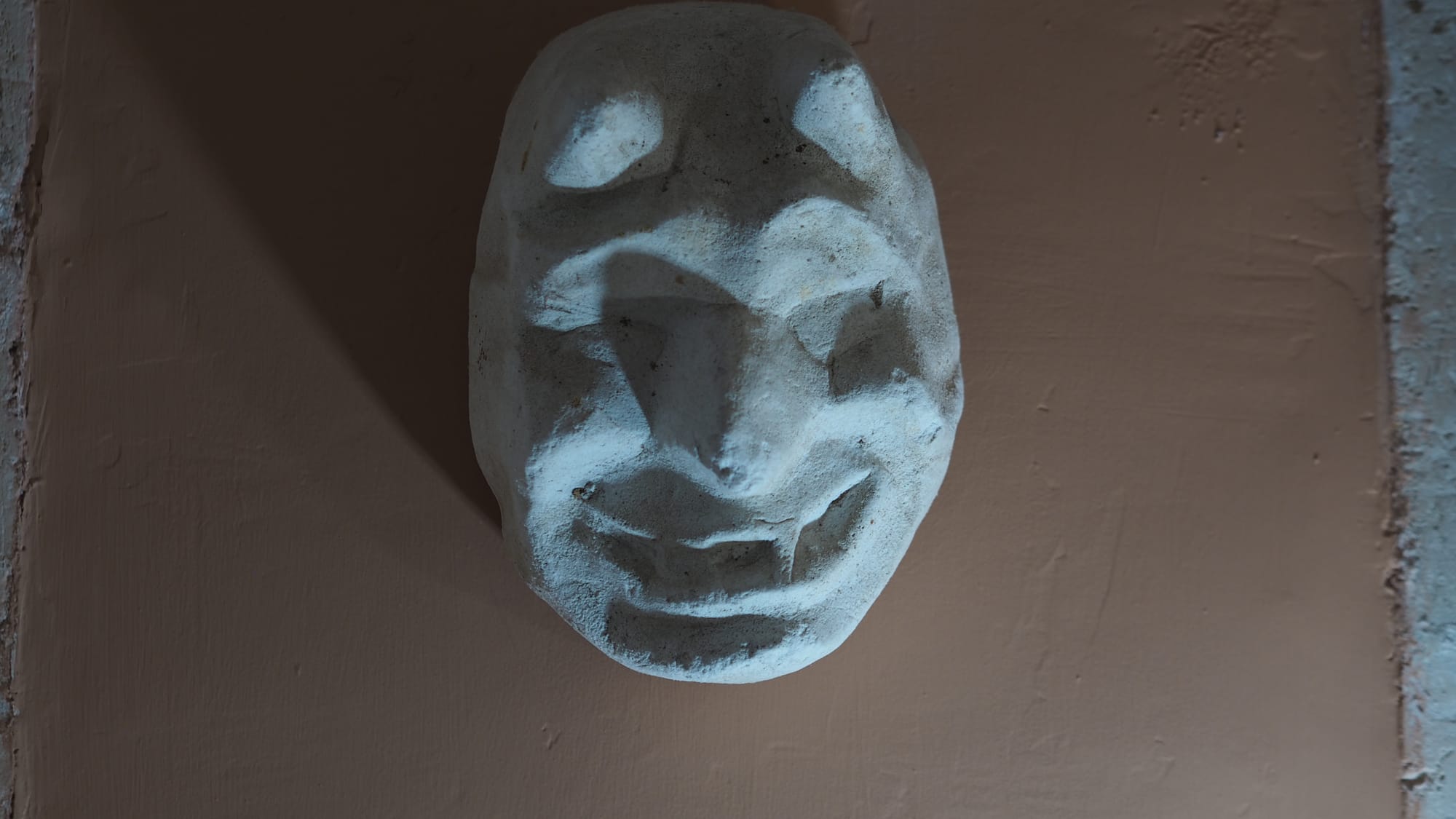
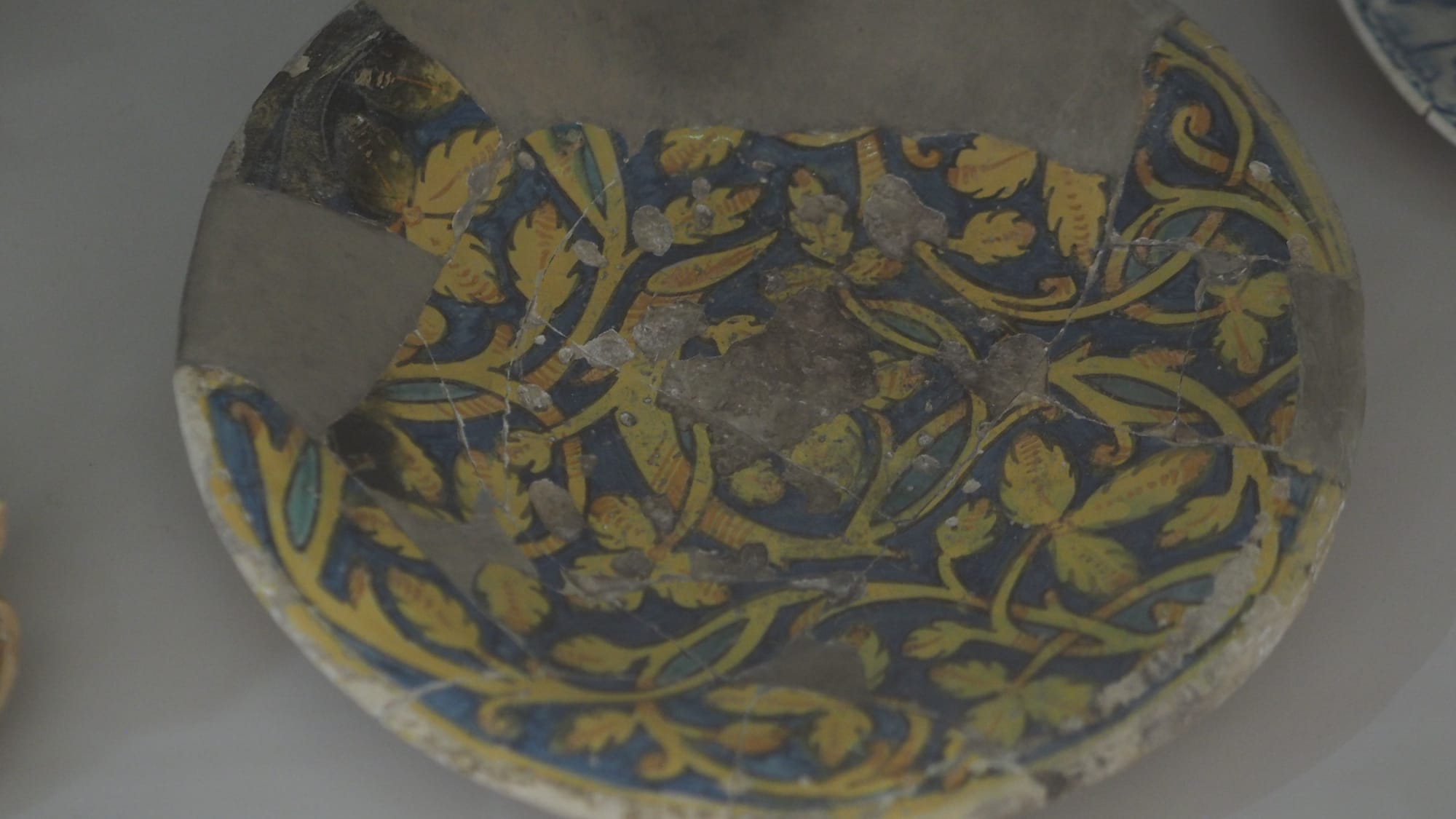
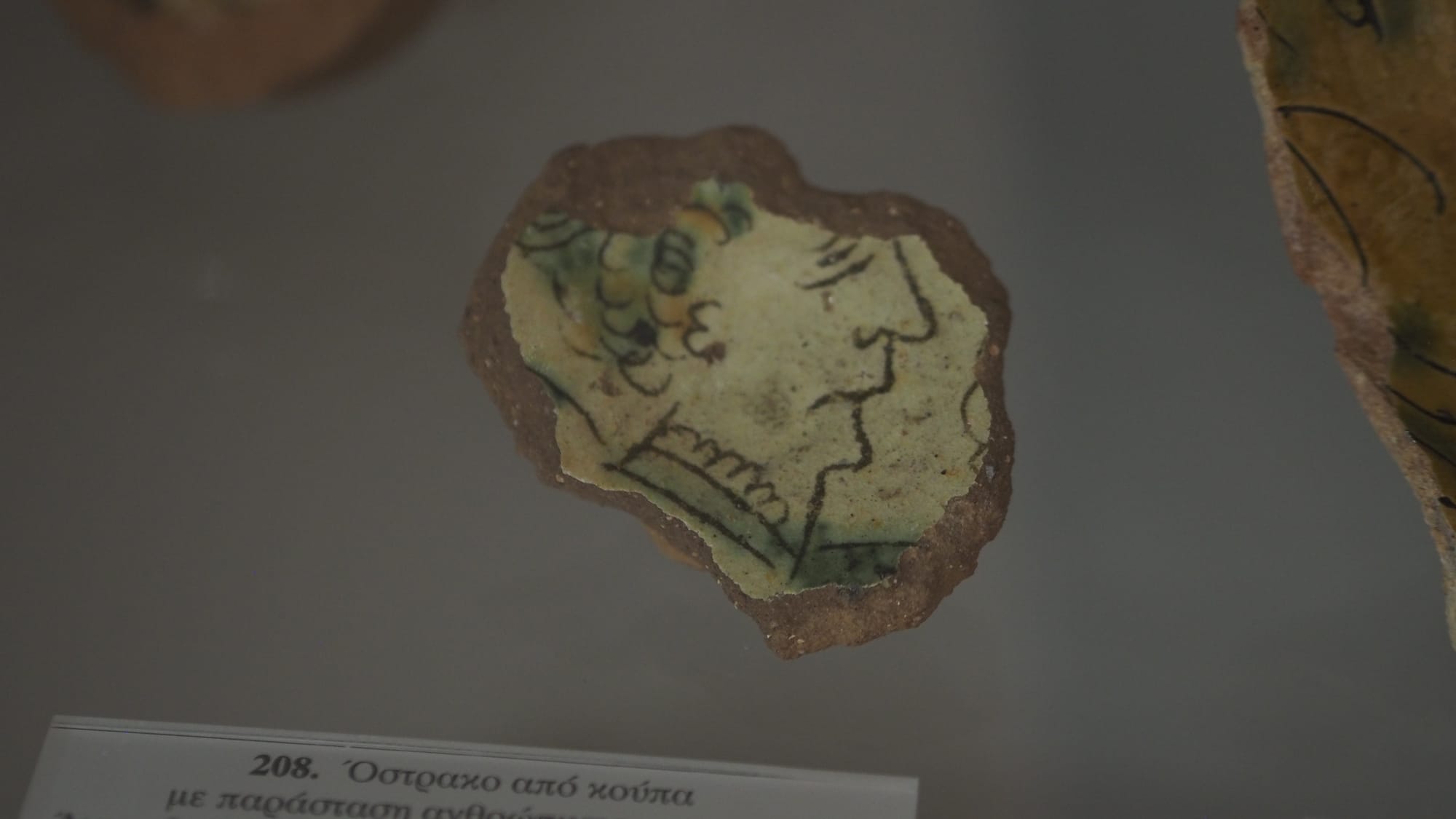
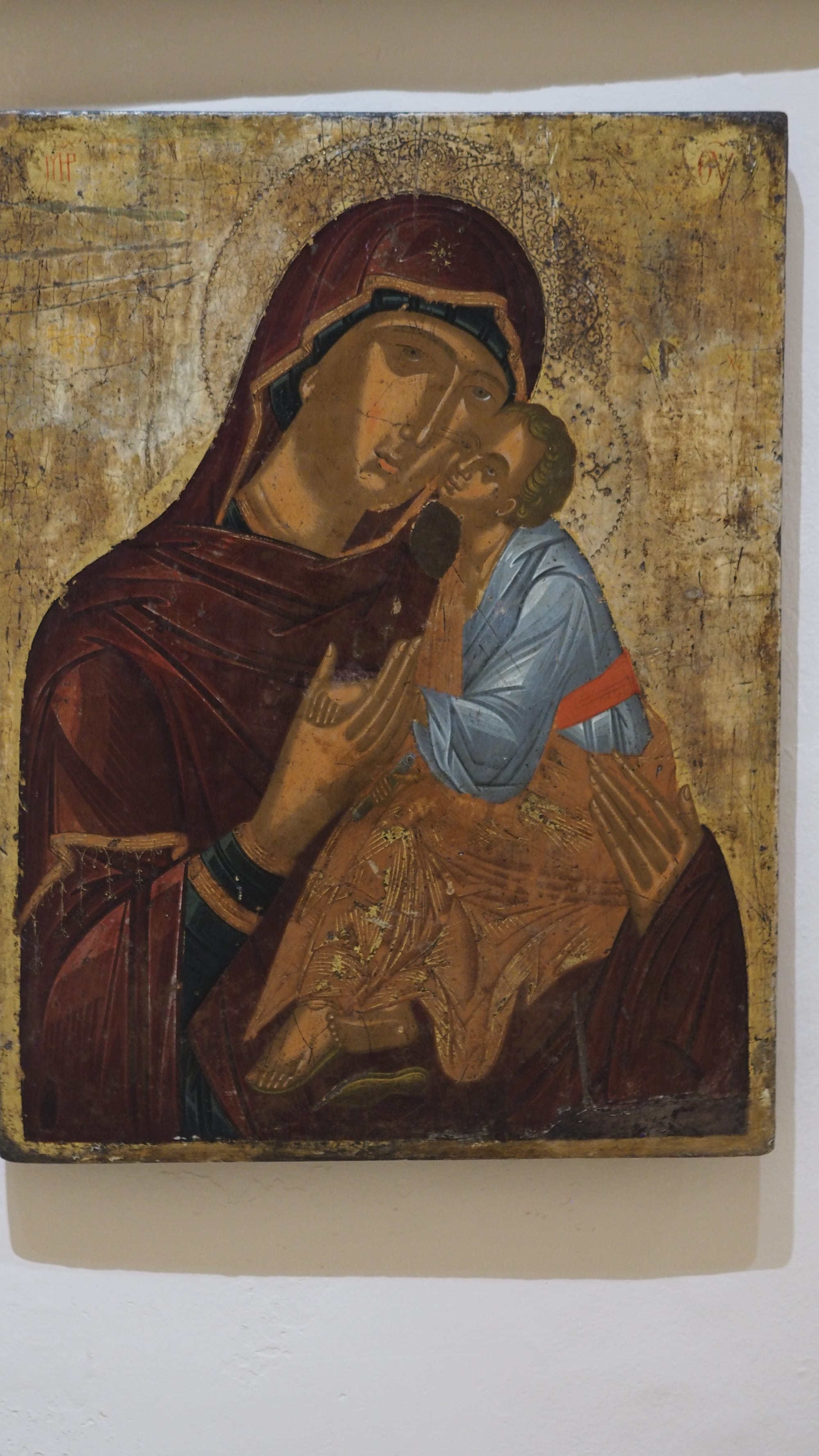
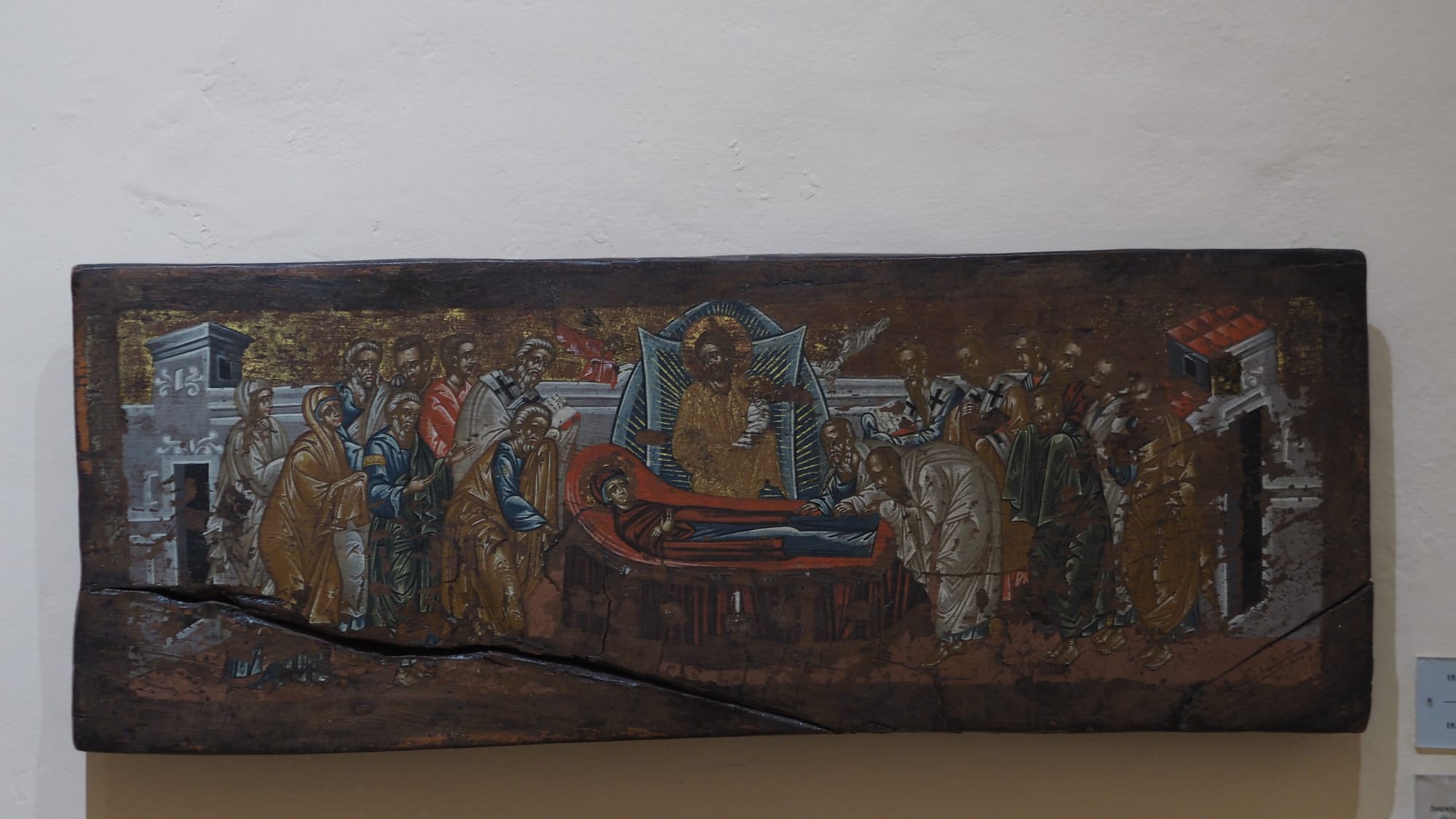
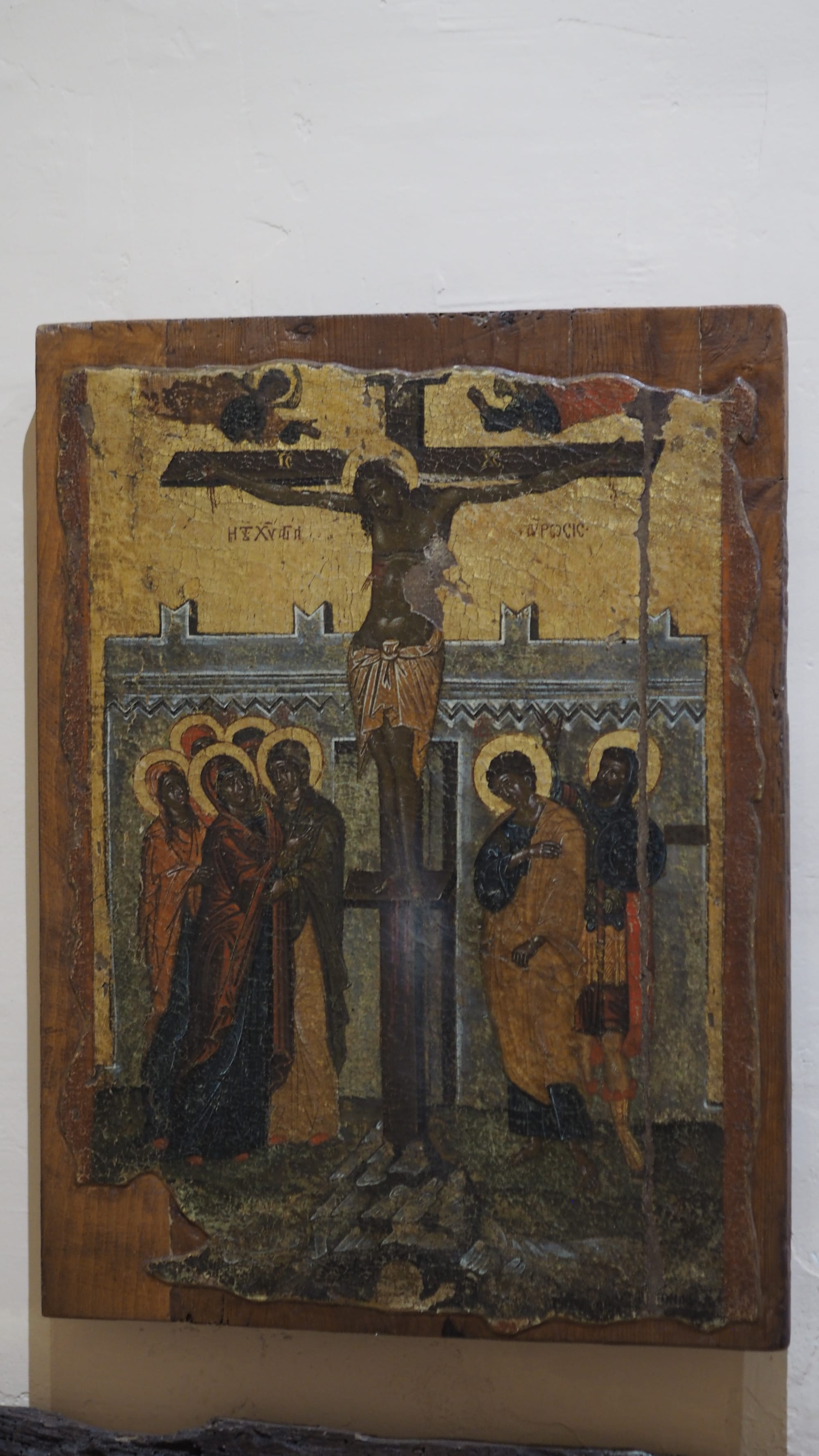
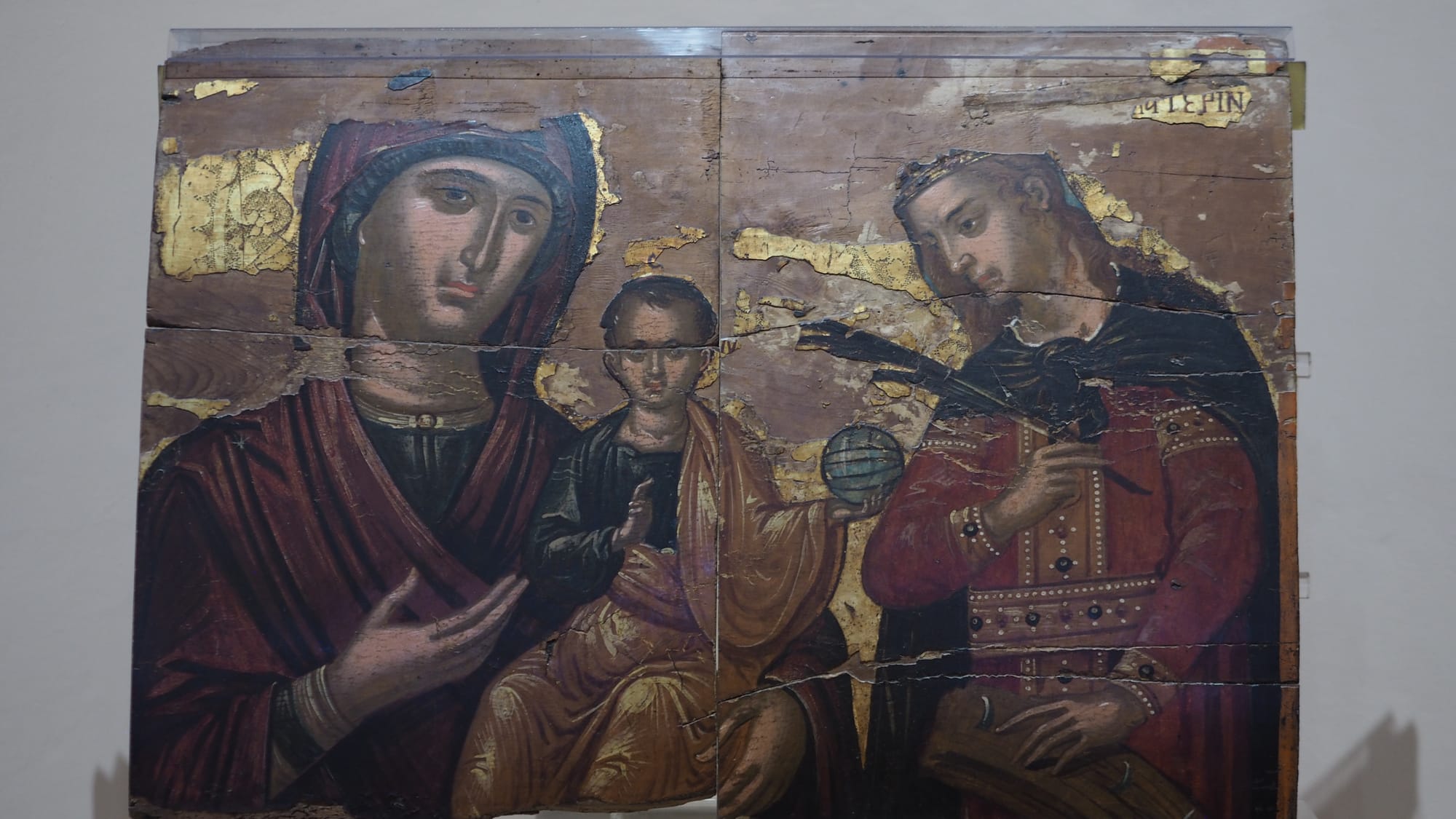
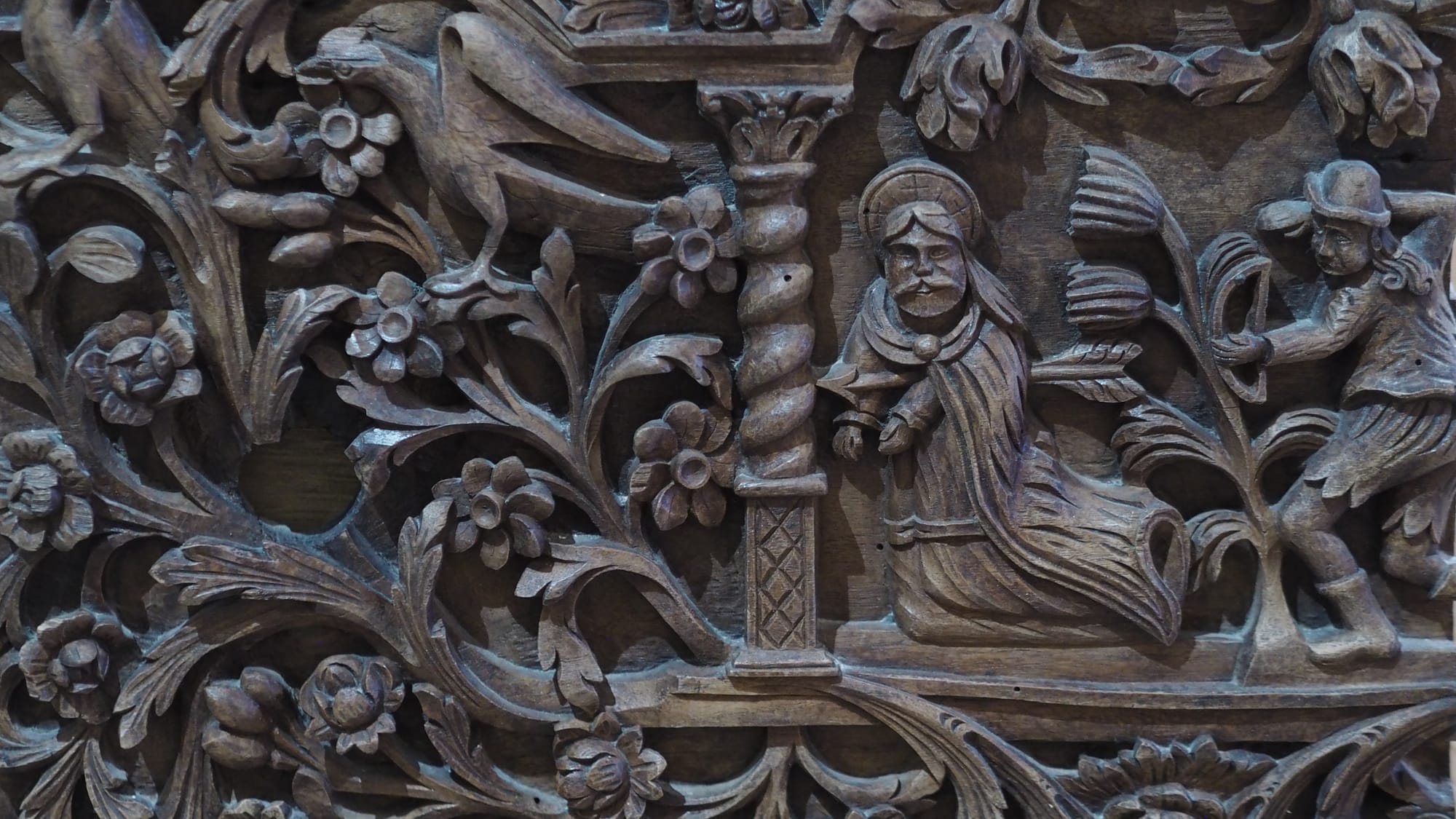
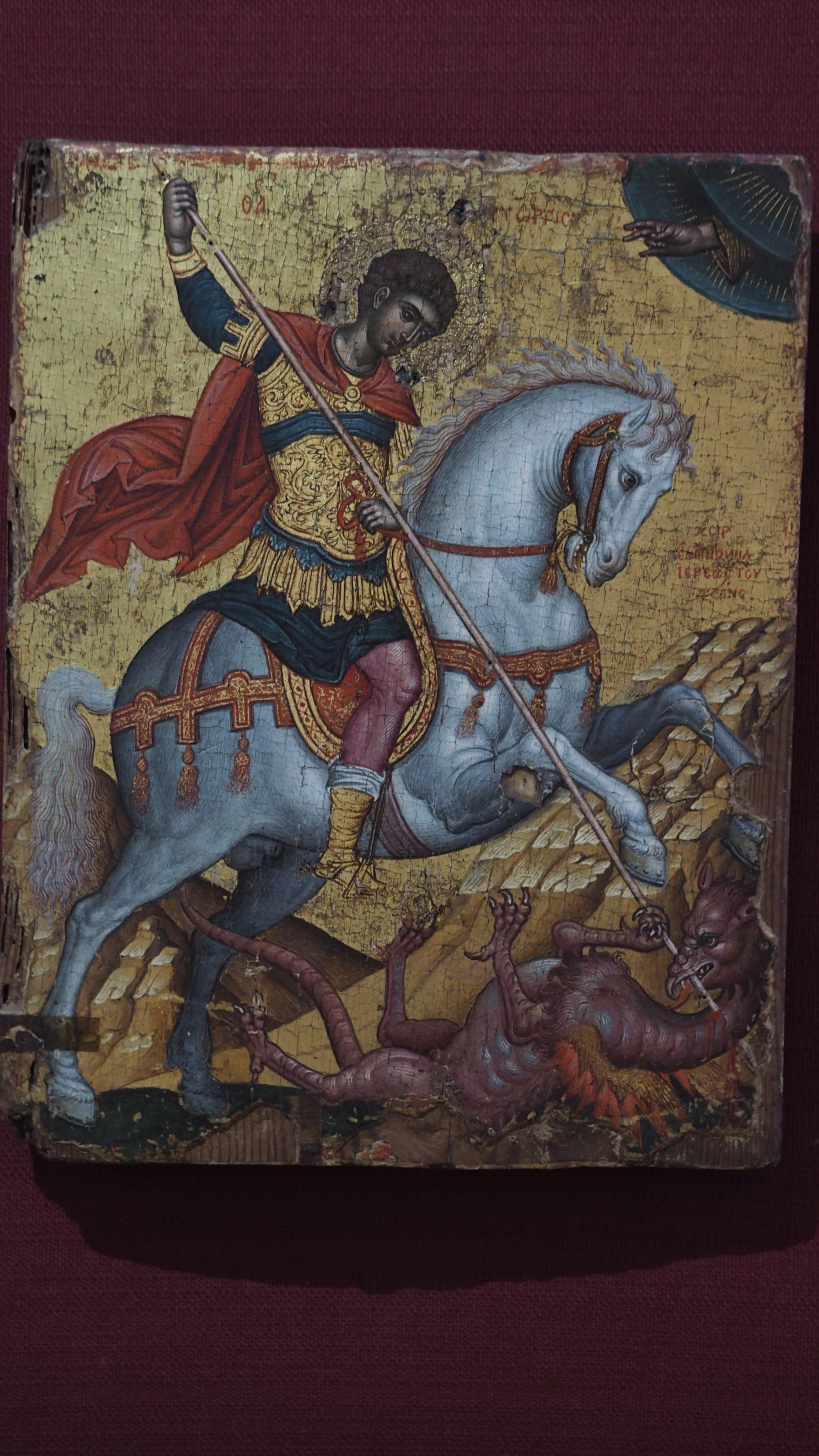
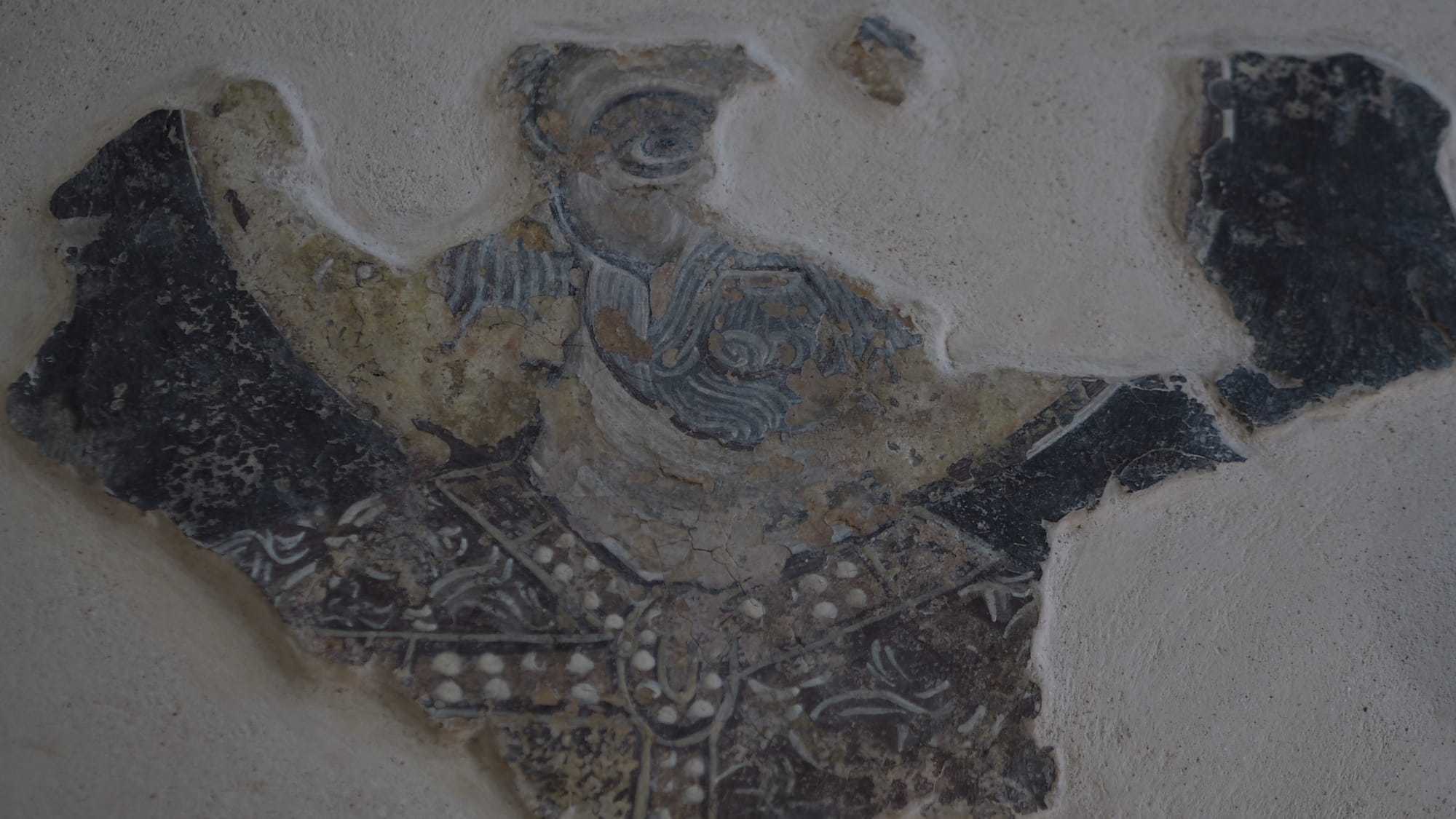
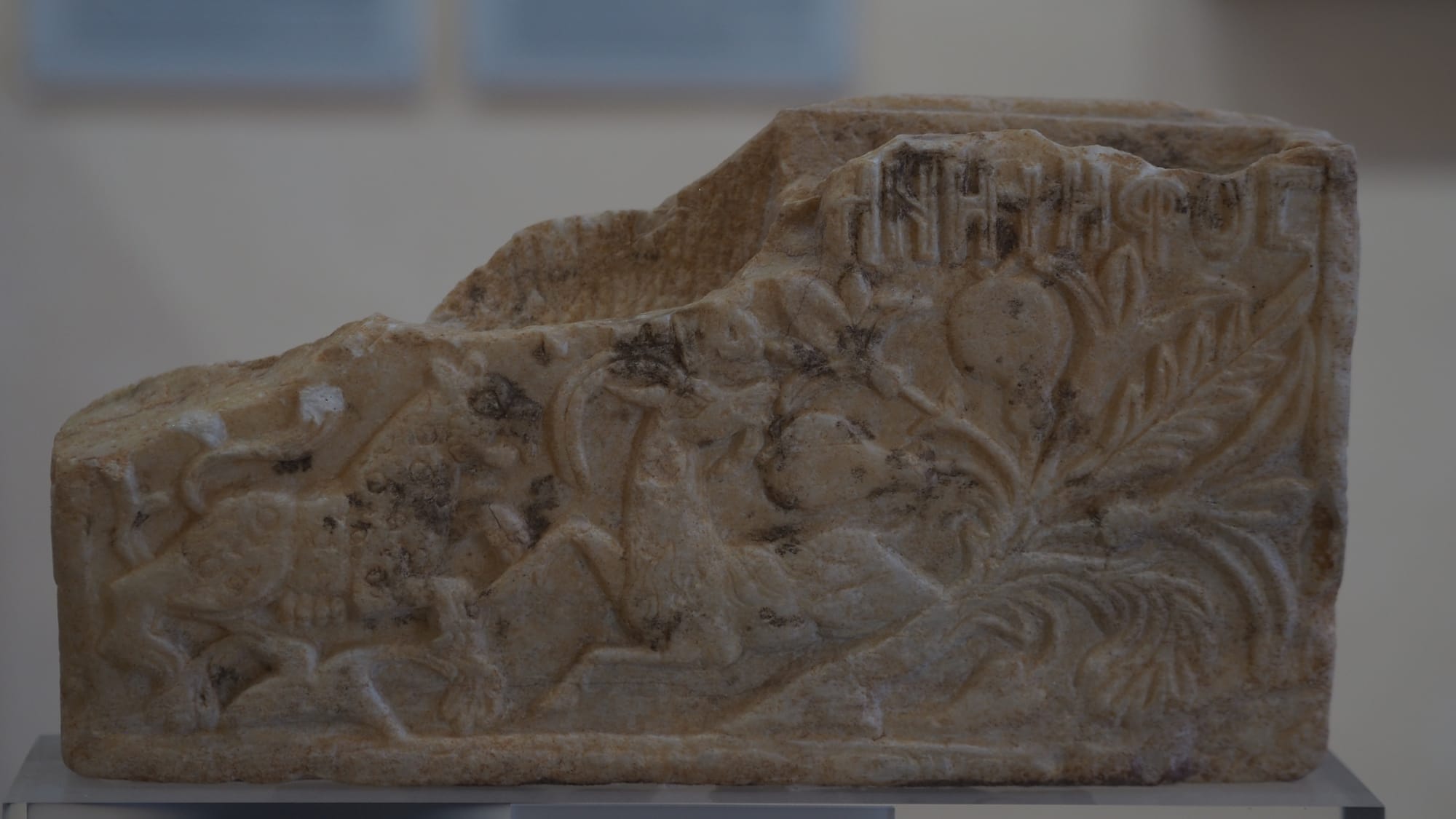
Unused to being familiar with the religious practices of the people and region. The Greek Orthodox Church is direct heir to the Eastern Roman tradition, that is, of Byzantine Christianity; and to look at it now enriched by this tradition... more than enriched, still breathing the same oxygen and incense, the painted places, the high-relief iconostasis and ornate raised pulpits halfway up the nave, prolong it unbroken. And in some ways the Catholic tradition of the Western Church, despite reaching those heights in the Italian renaissance, the Renascimento, which are more familiar, carries forward its Roman (with Greece as a colony of Rome) heritage less faithfully; it is more rarefied, precious, more defensive, defending today as much a brand as a religious-aesthetic tradition.
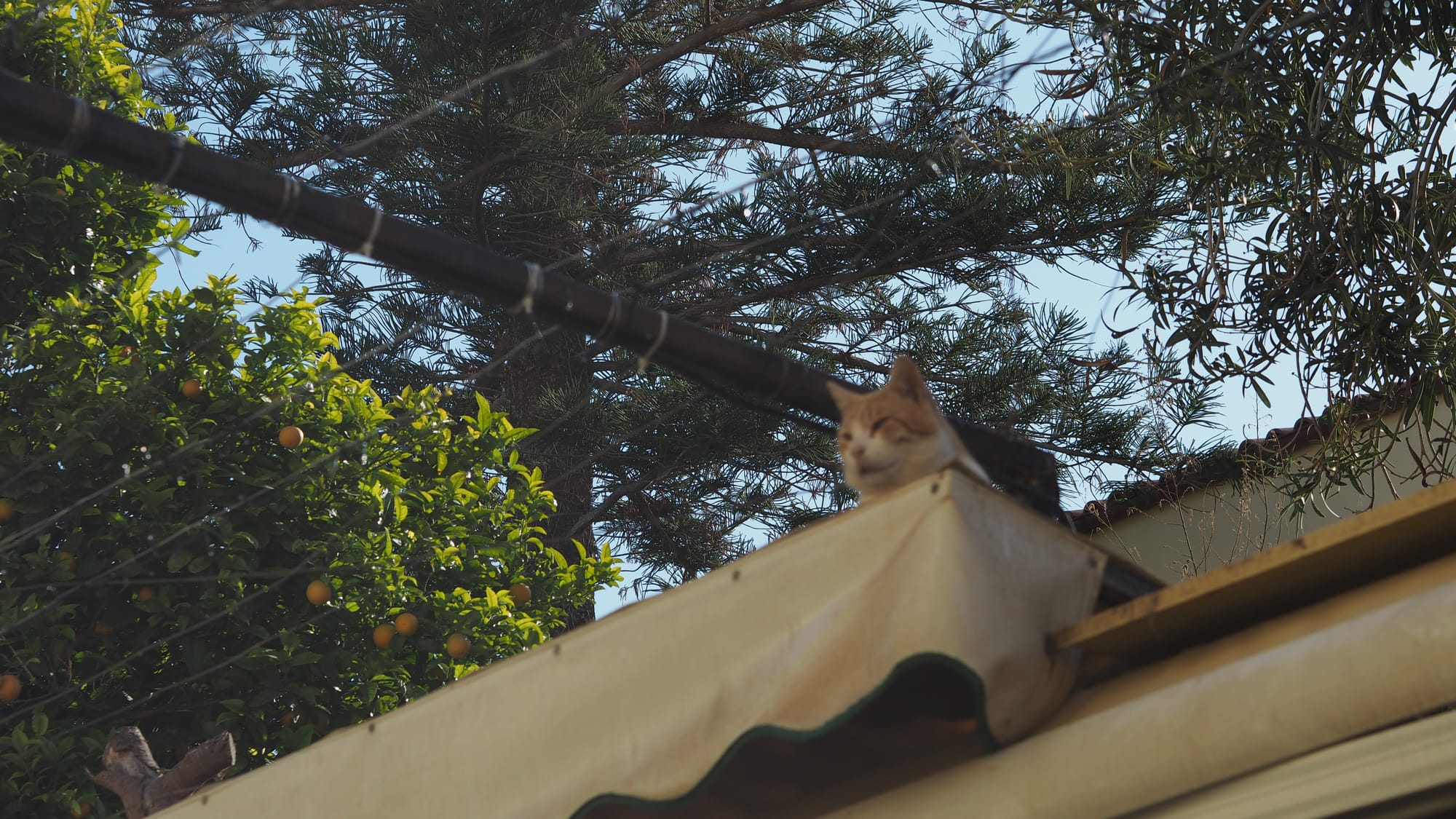
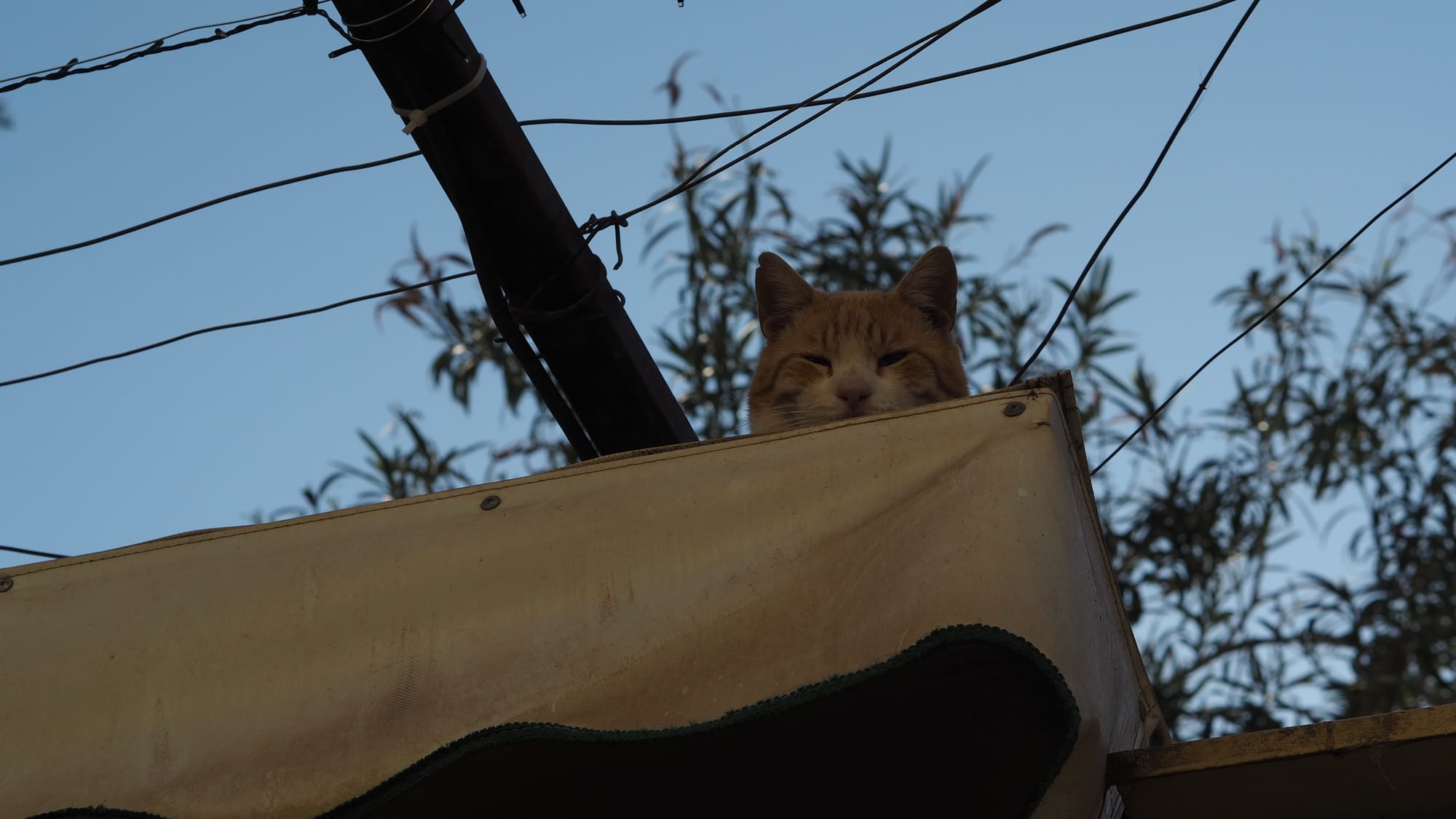
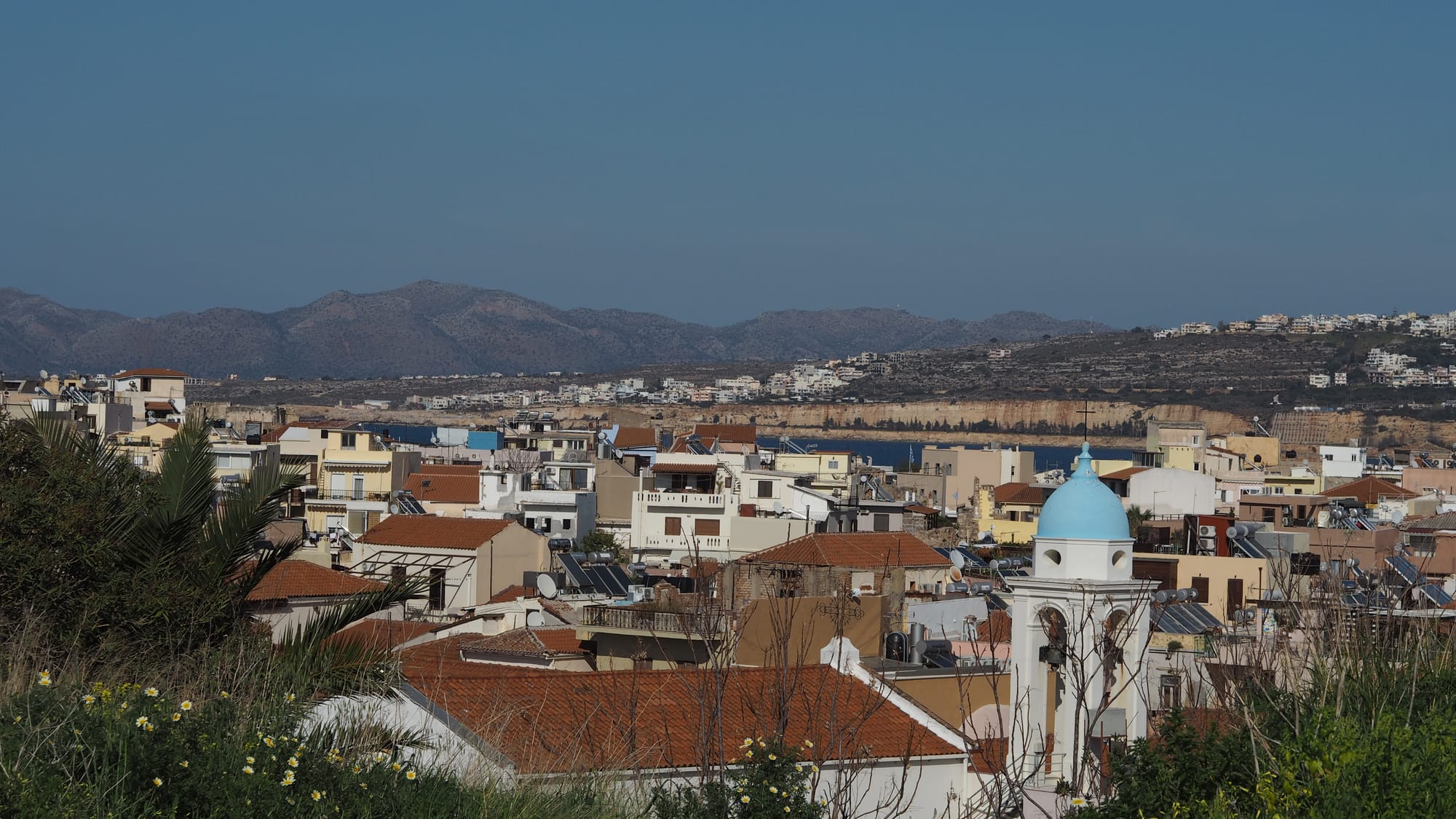
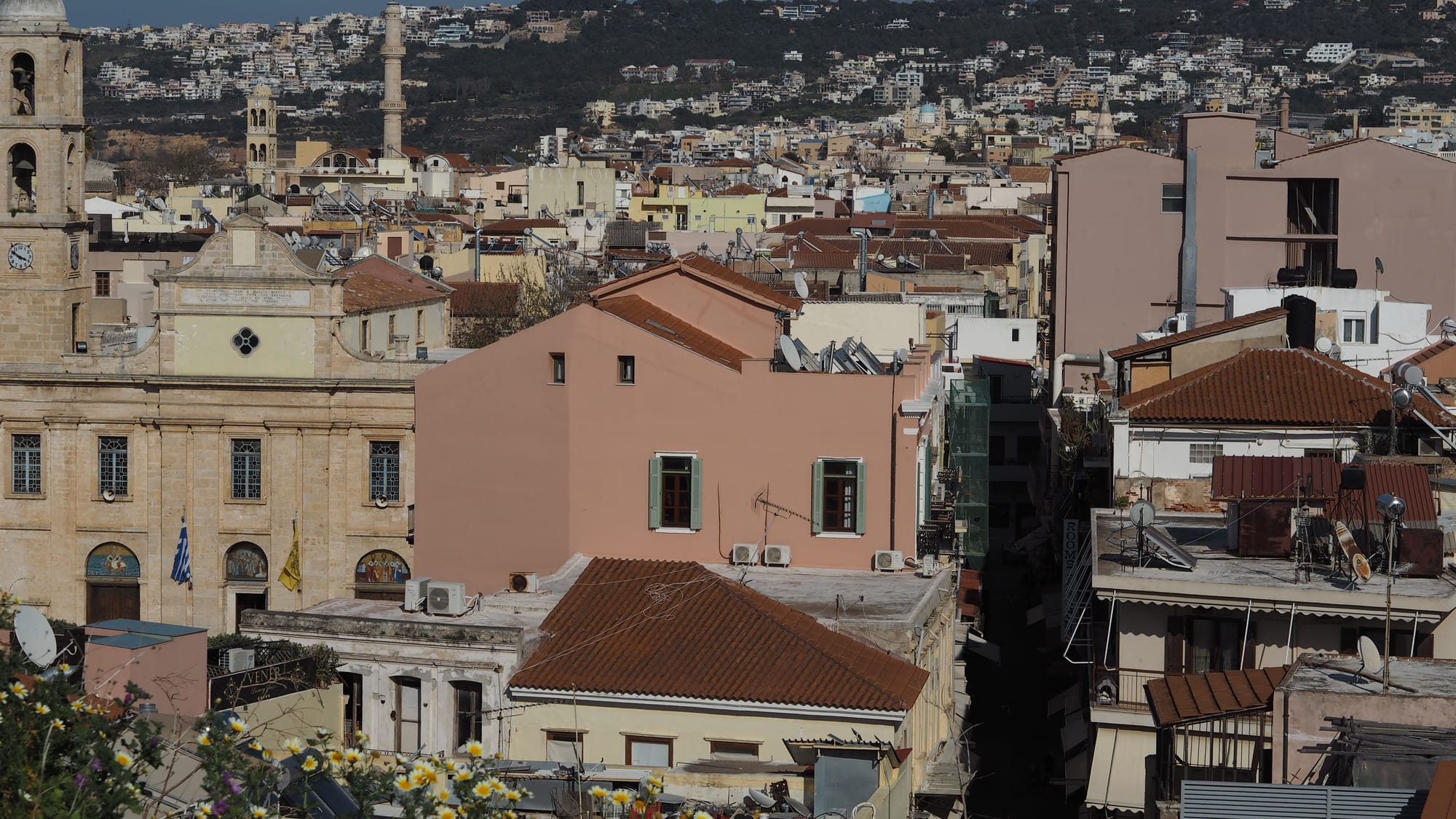
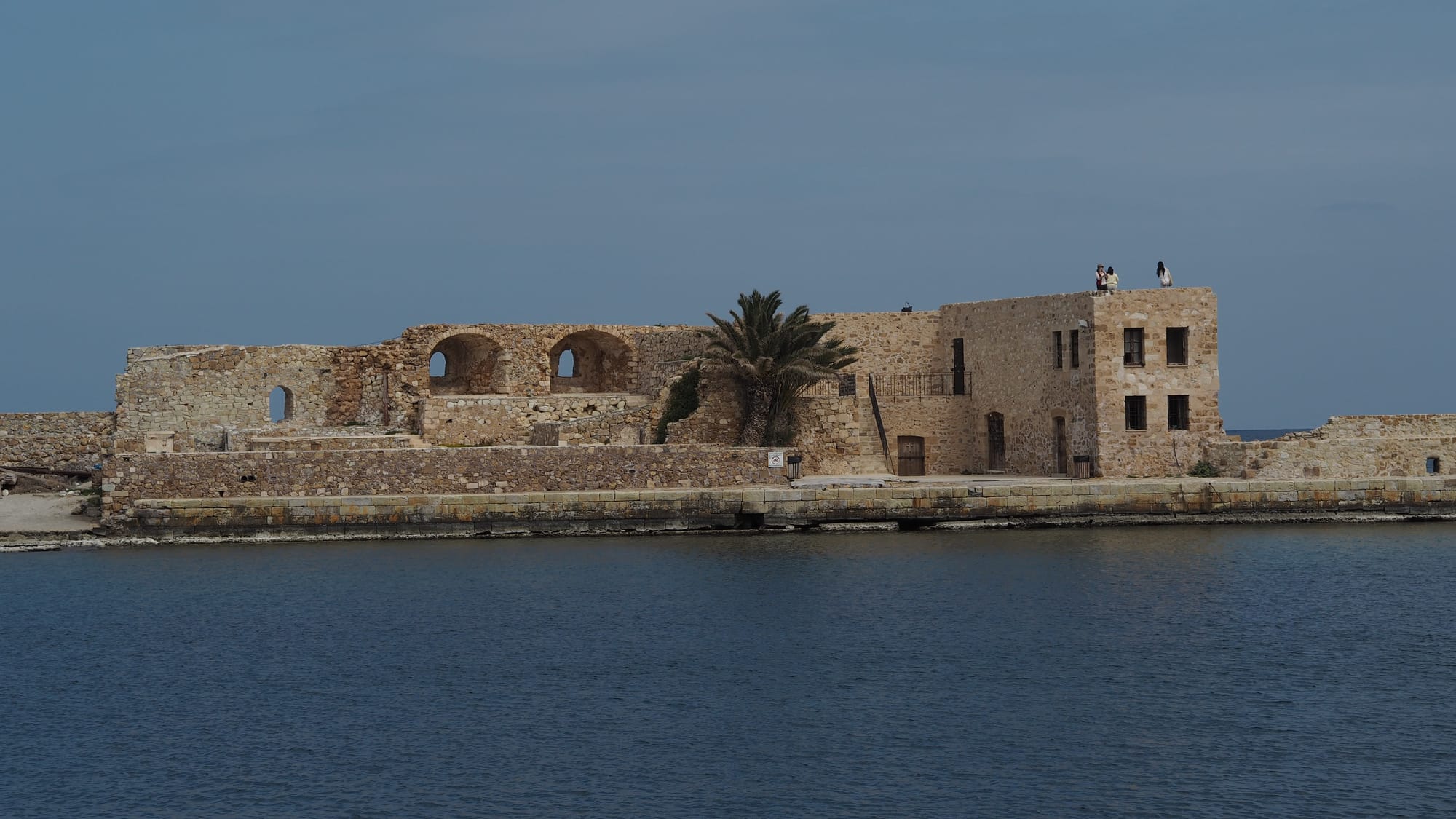
A beautiful day to walk past the kαφέ and continue... to Χαλέπα... rising the ridge going into it we met a solo mum from Kuwait. She'd been living in the UK, fallen in love with Chania with the produce of which she'd been making her product, whatever that was, we guessed limoncello, or variation thereof, and, running her business, selling it there, and with her son, because of, to some extent(?), had opted to move closer to the source. Settled now in Chaleppa, she recommended we visit,
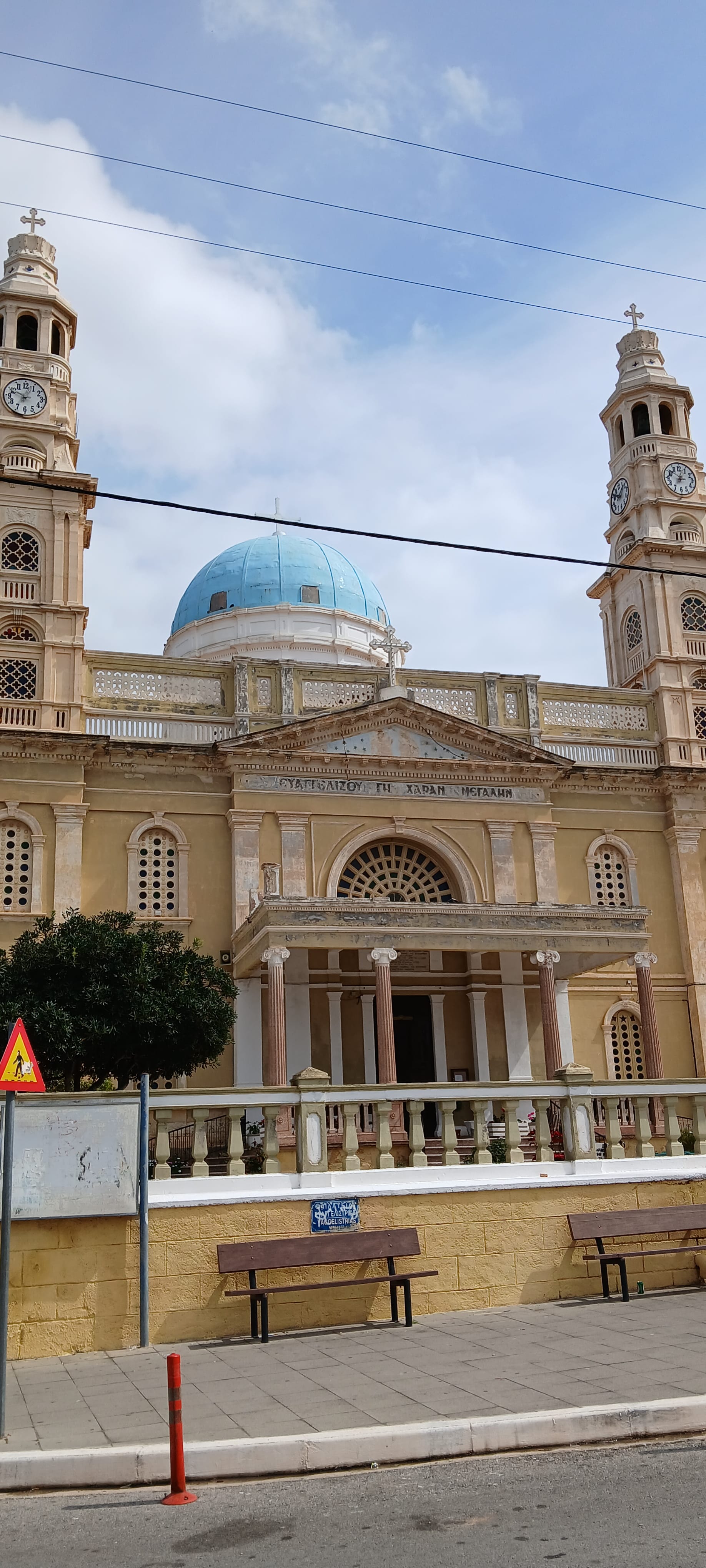
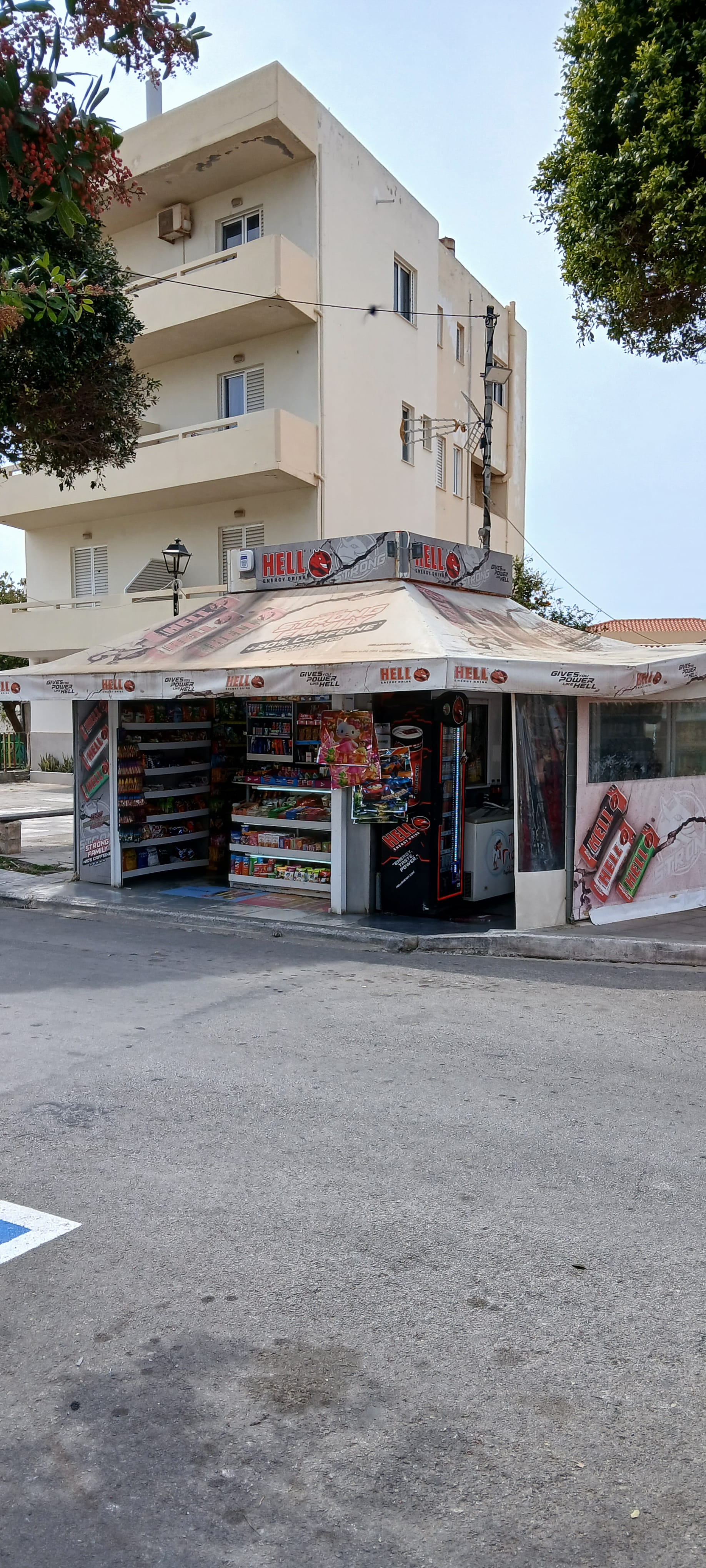
- the Evangelistria. It was shut. A man sitting under the portico asked if we wanted to look inside, opened the doors to us. A living beast of a thing, its interior I didn't feel out of respect and under his watchful eye I could photo. Opposite as you can see was hell. We met him again at the bakery and bought some cheese pie, for me, and a baked thing soaked in sugar syrup.
We found this place to eat, sheltered from the wind. We moved the pooh and stayed, and scared off the local dog-walker who clearly used it as a private dirt-box for her dog.
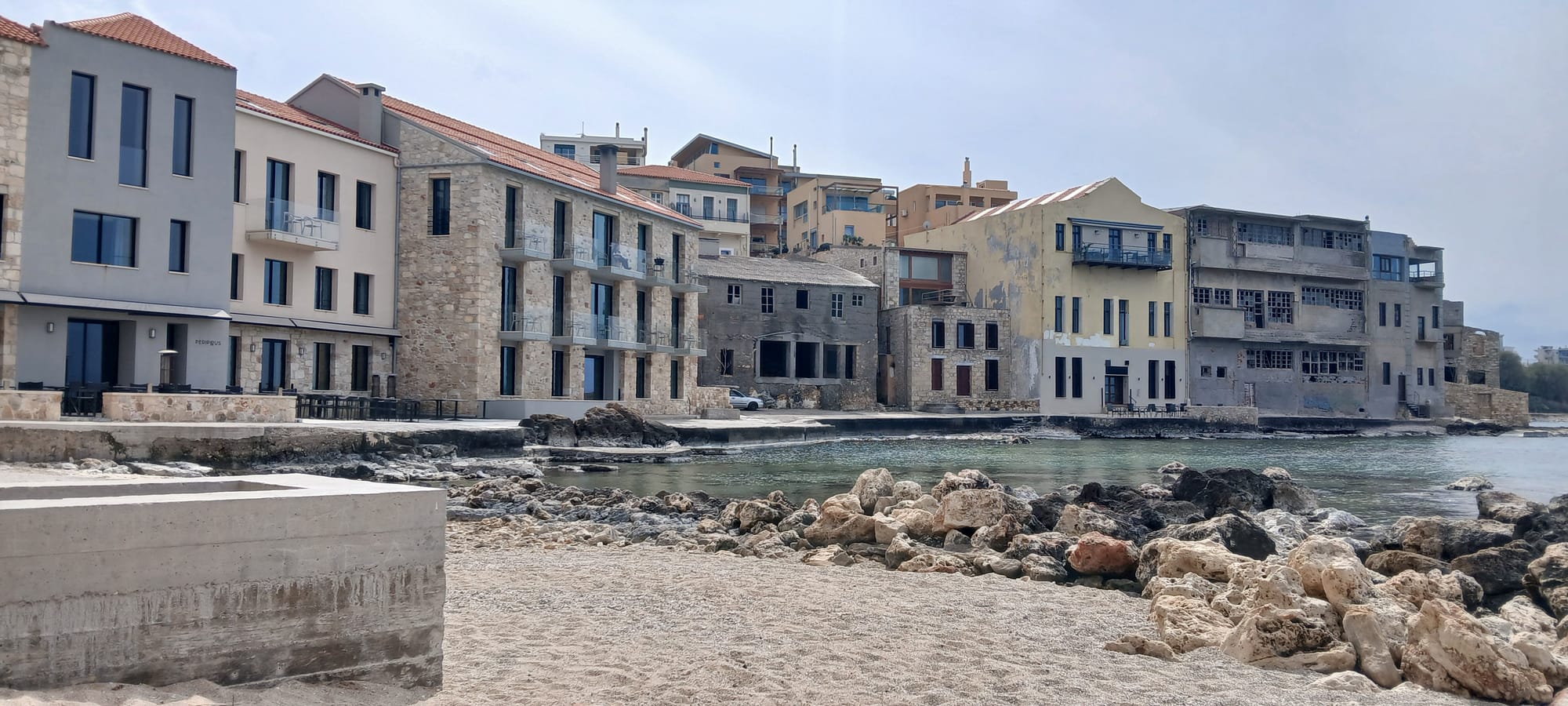
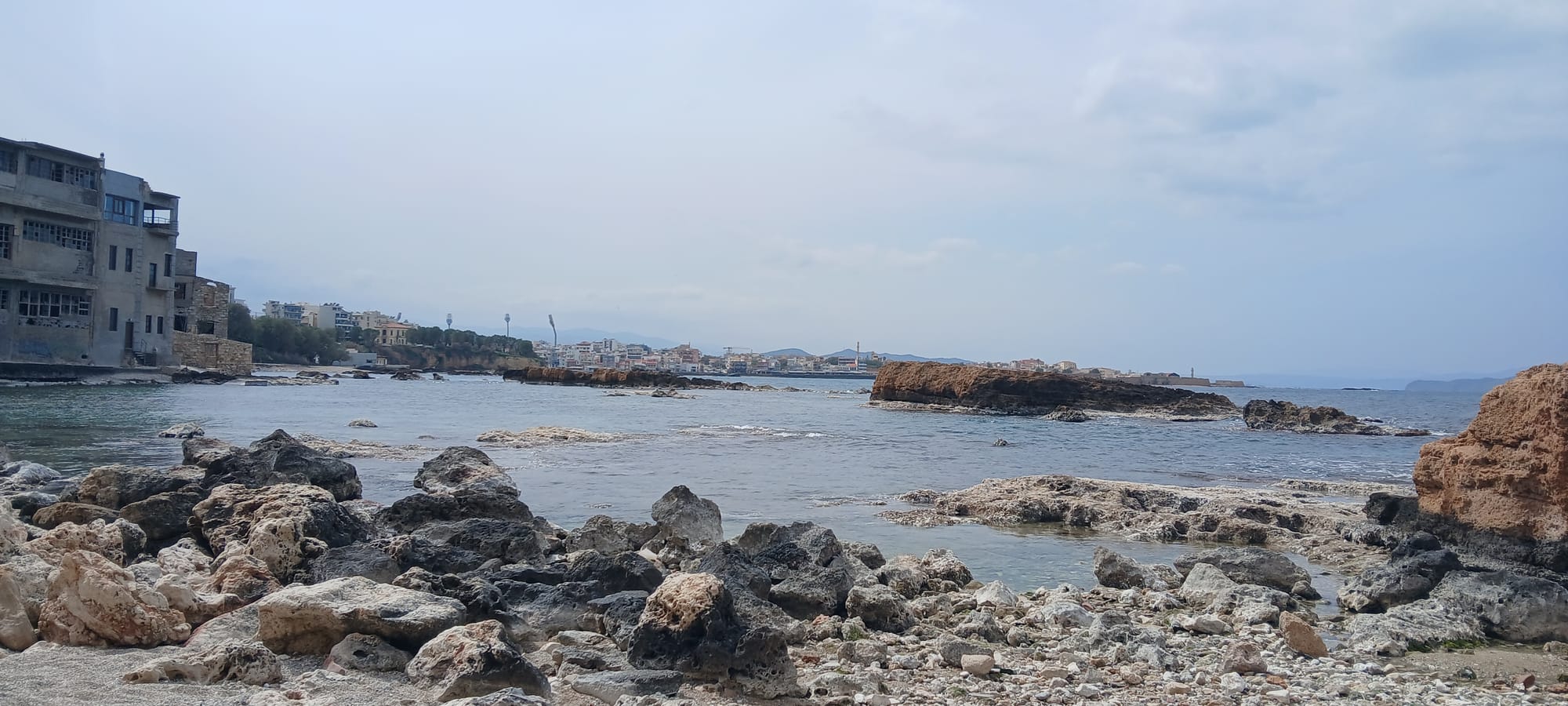
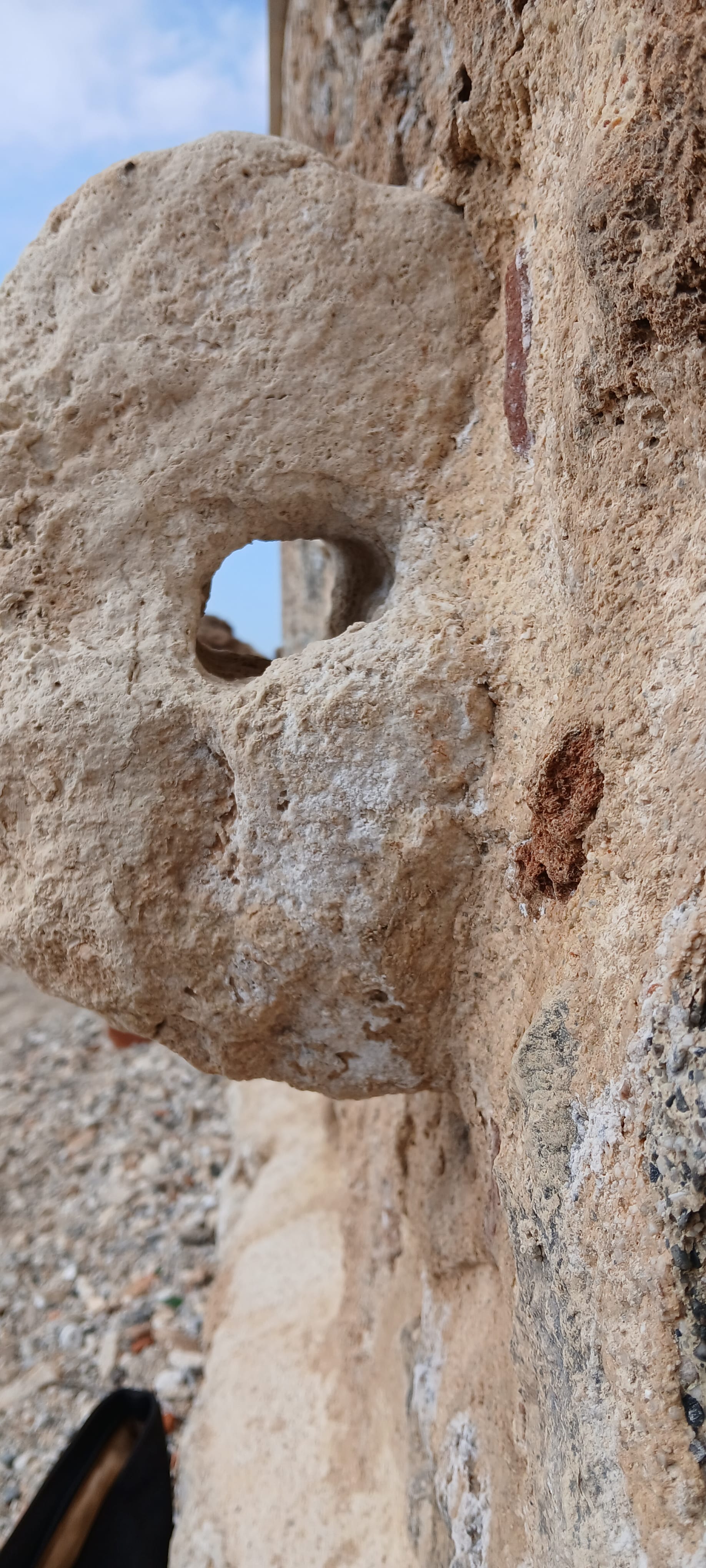
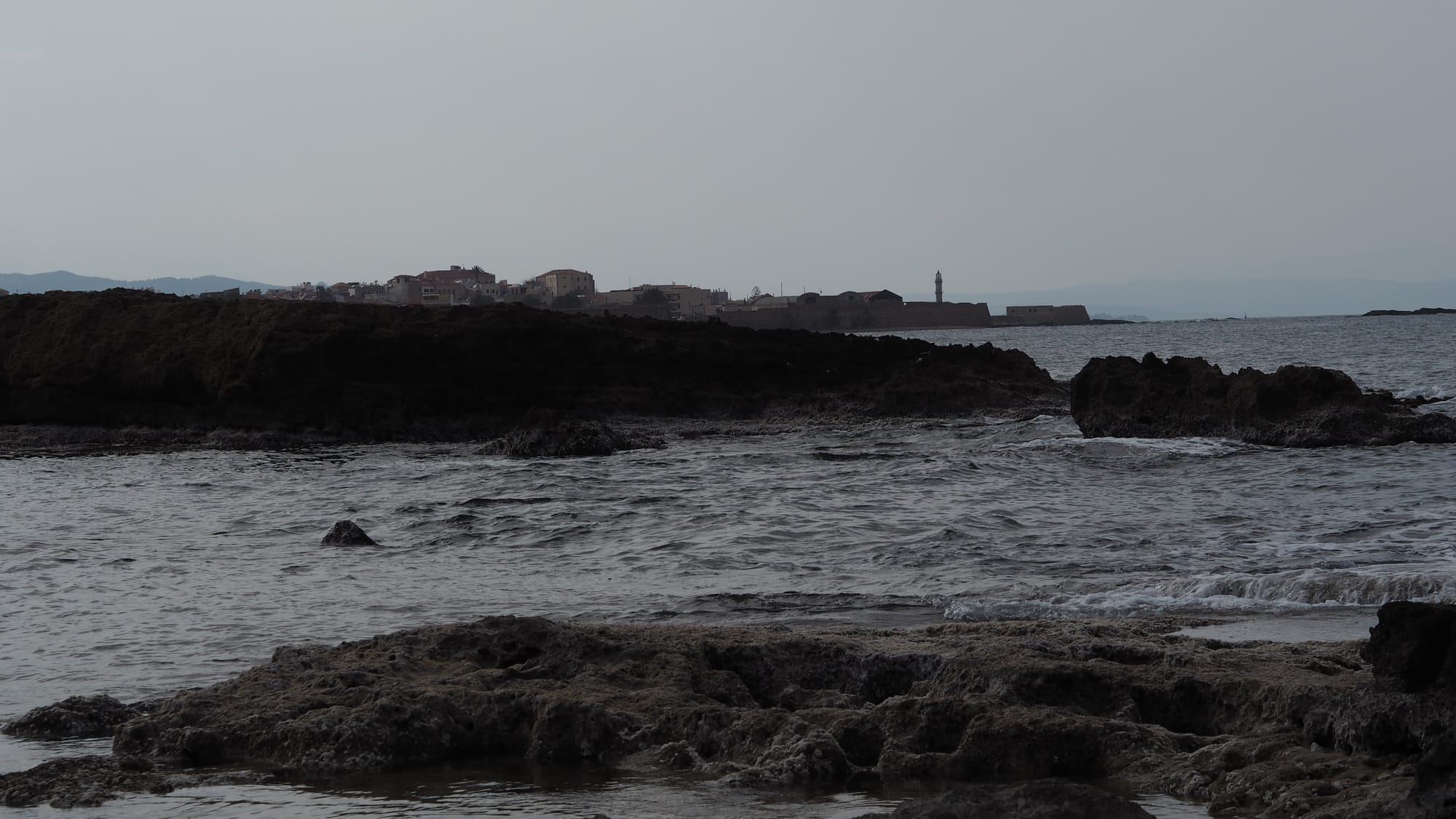
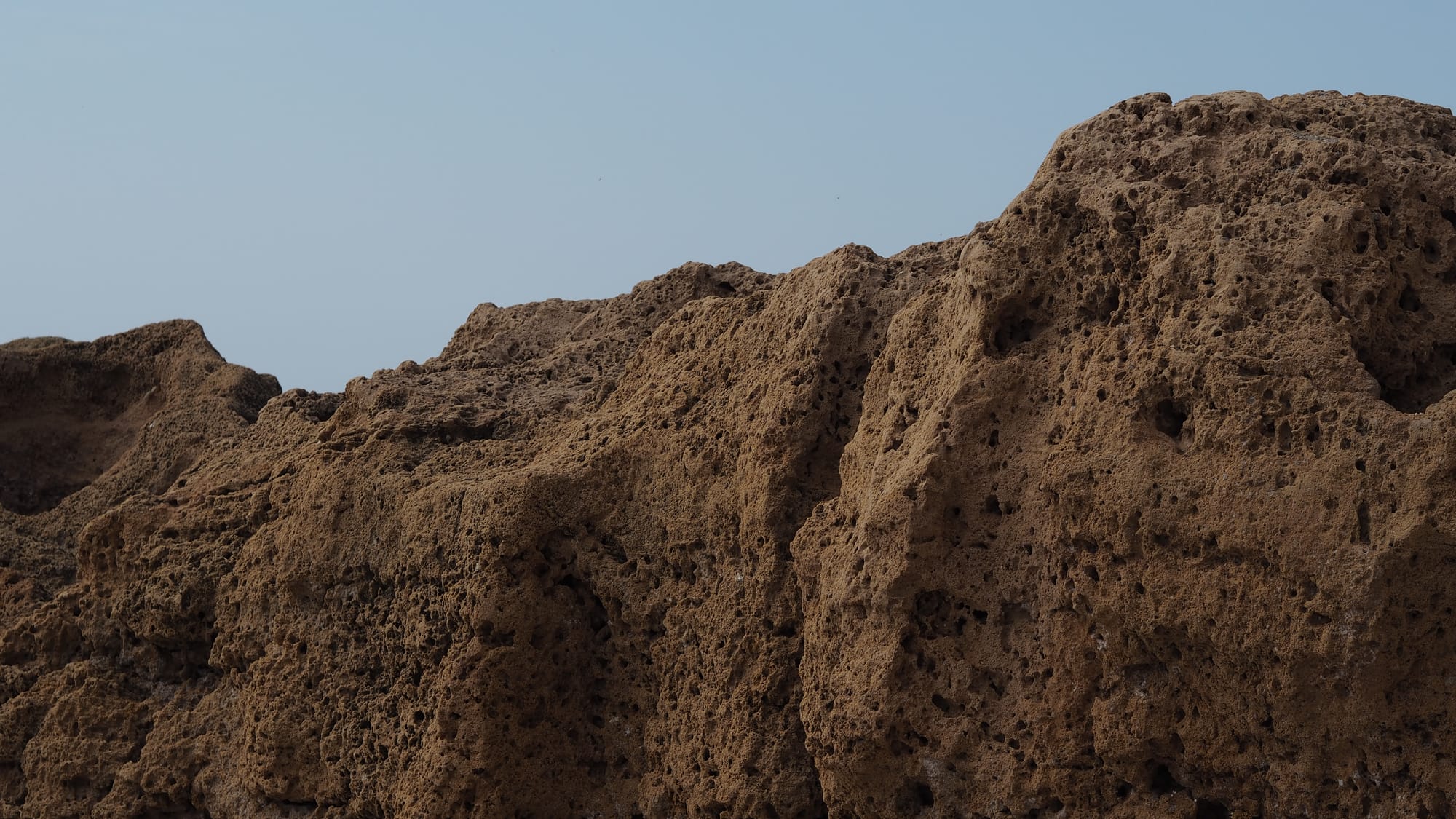
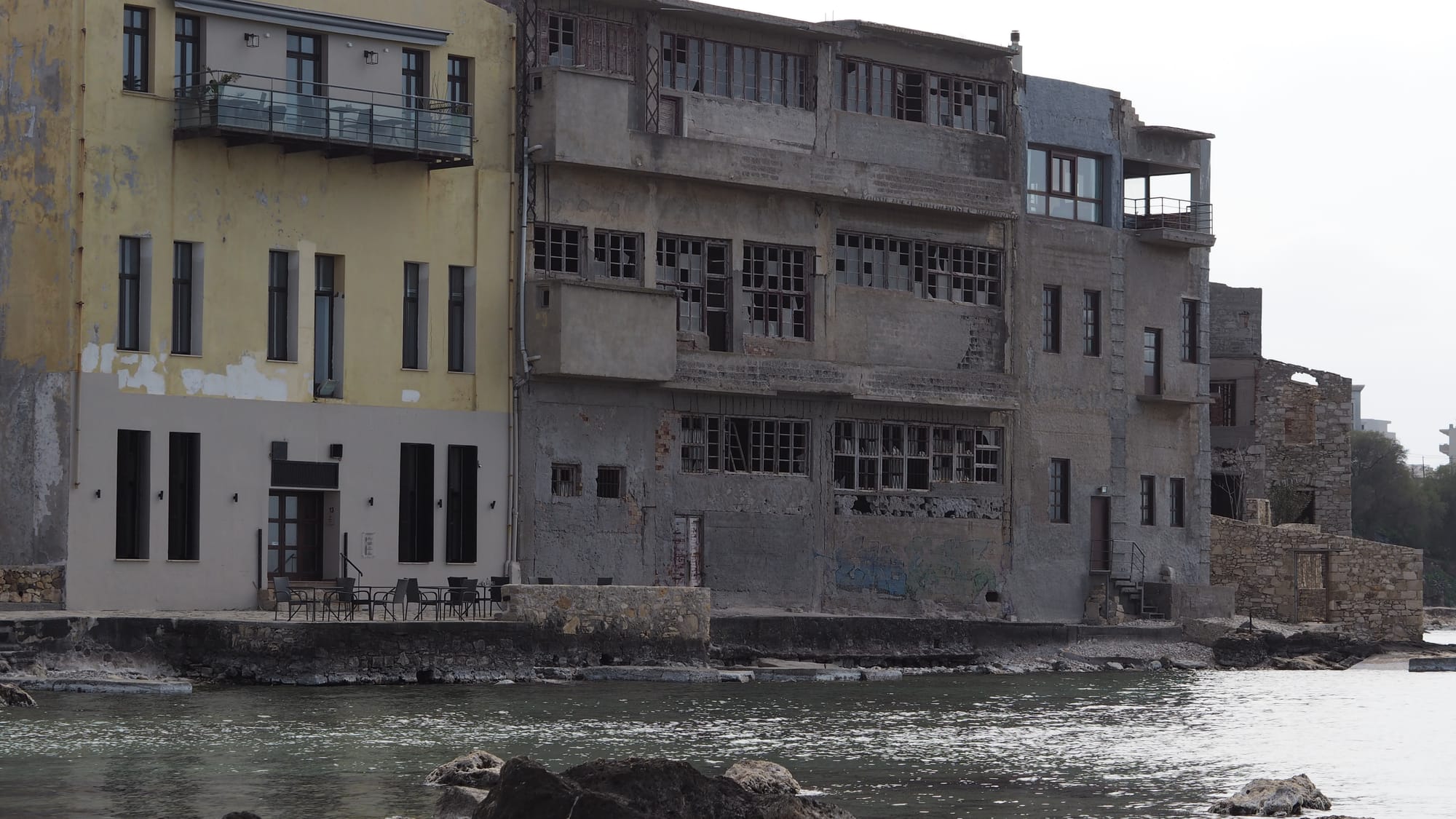
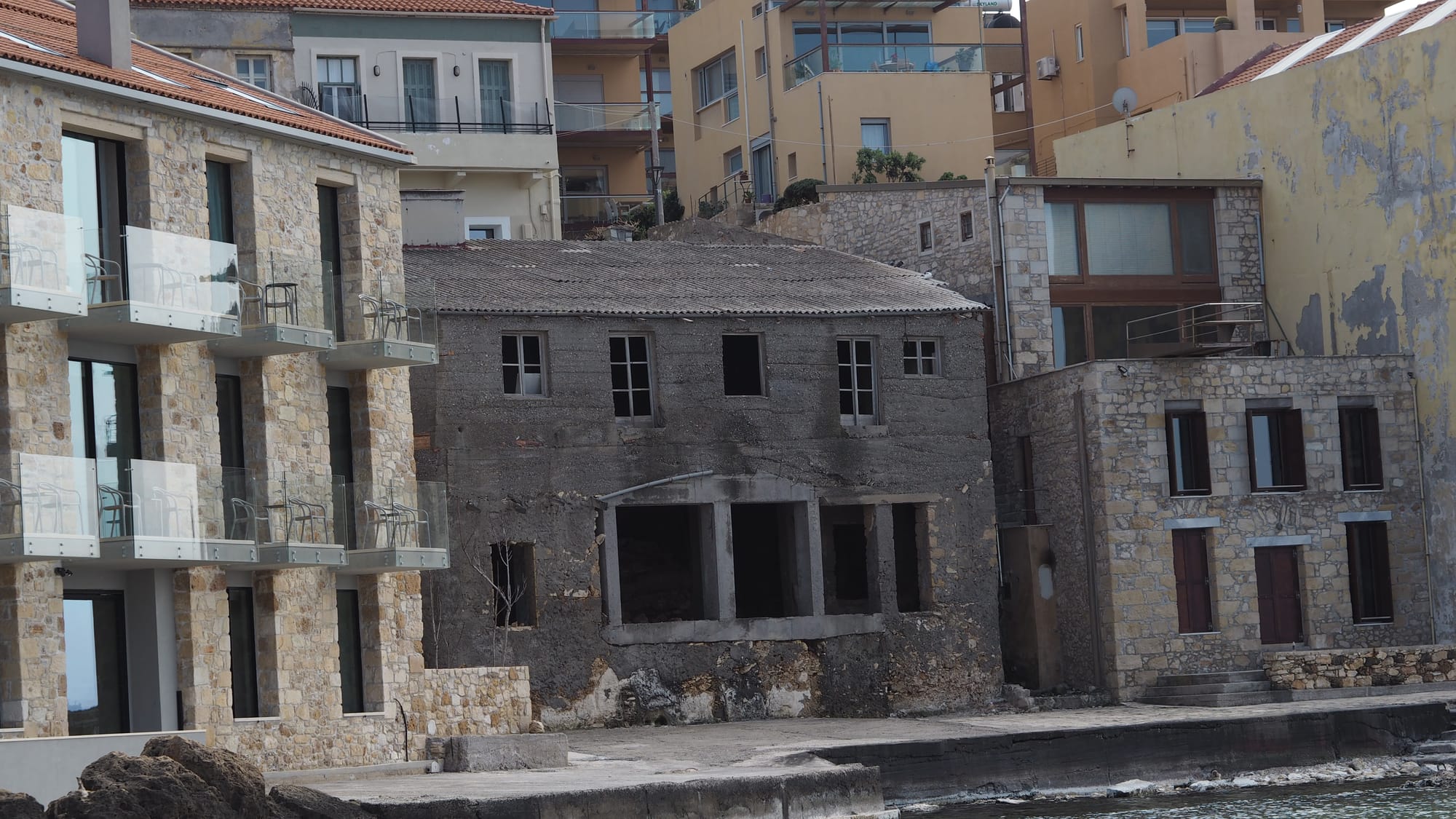
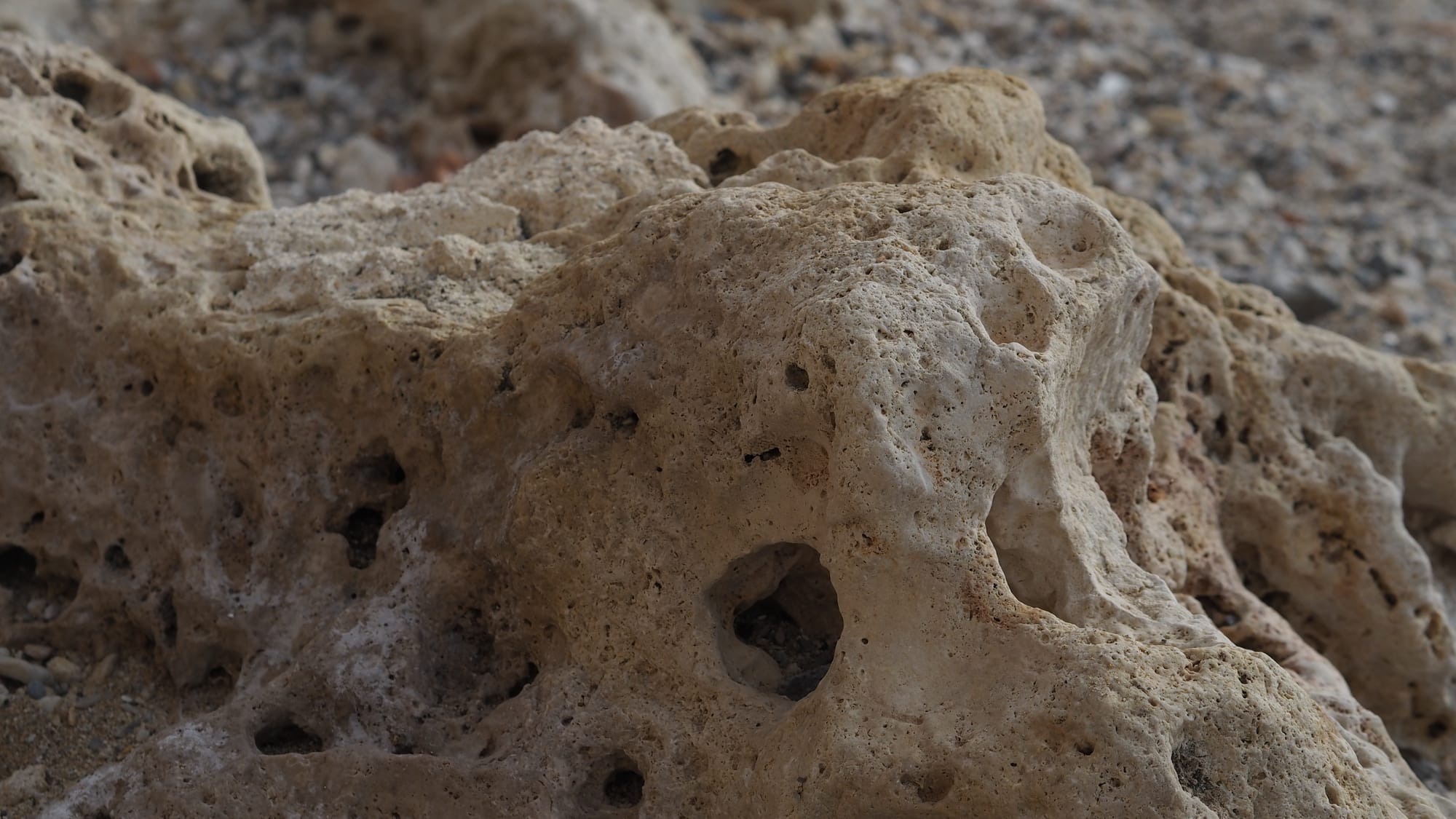
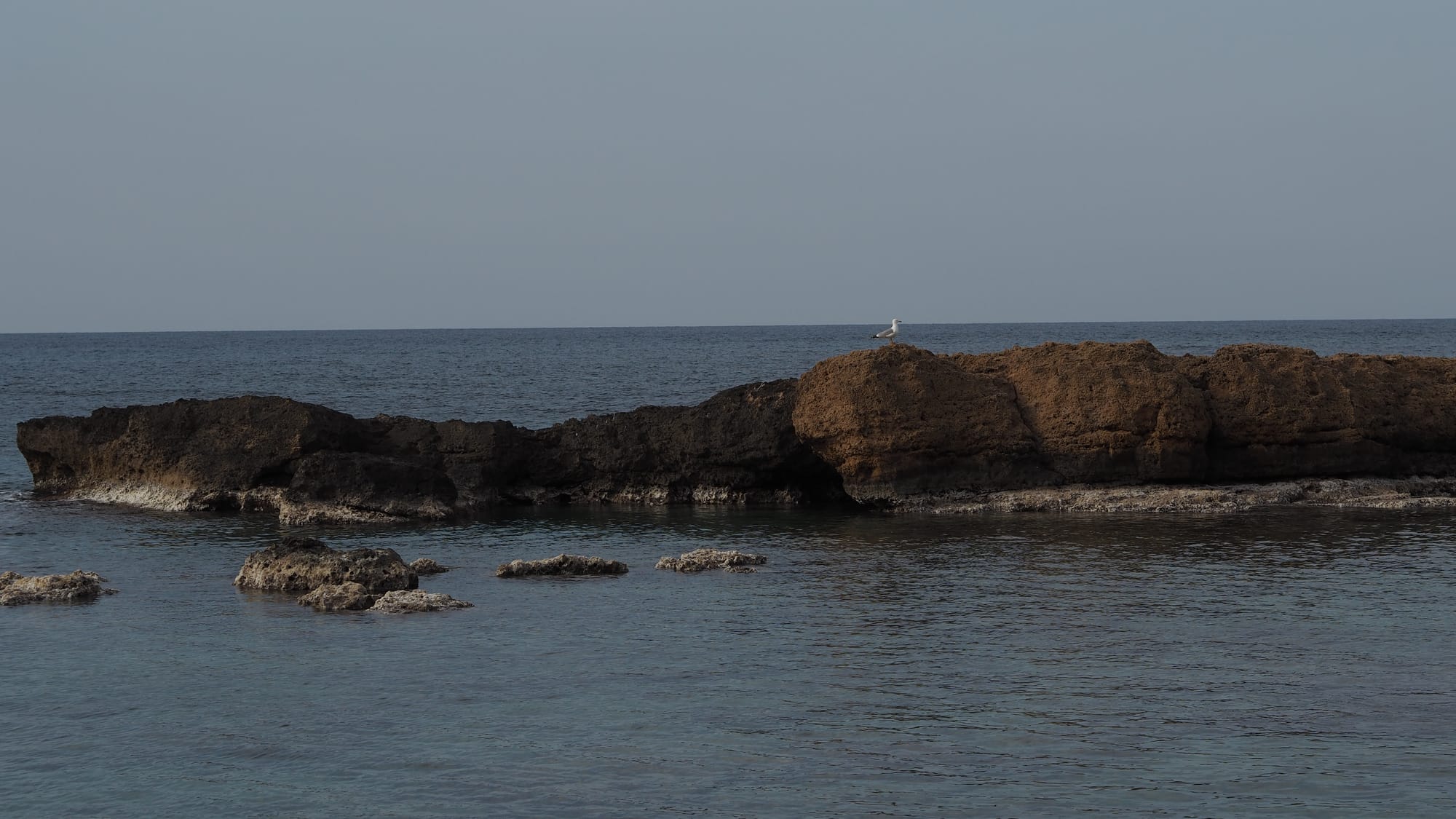
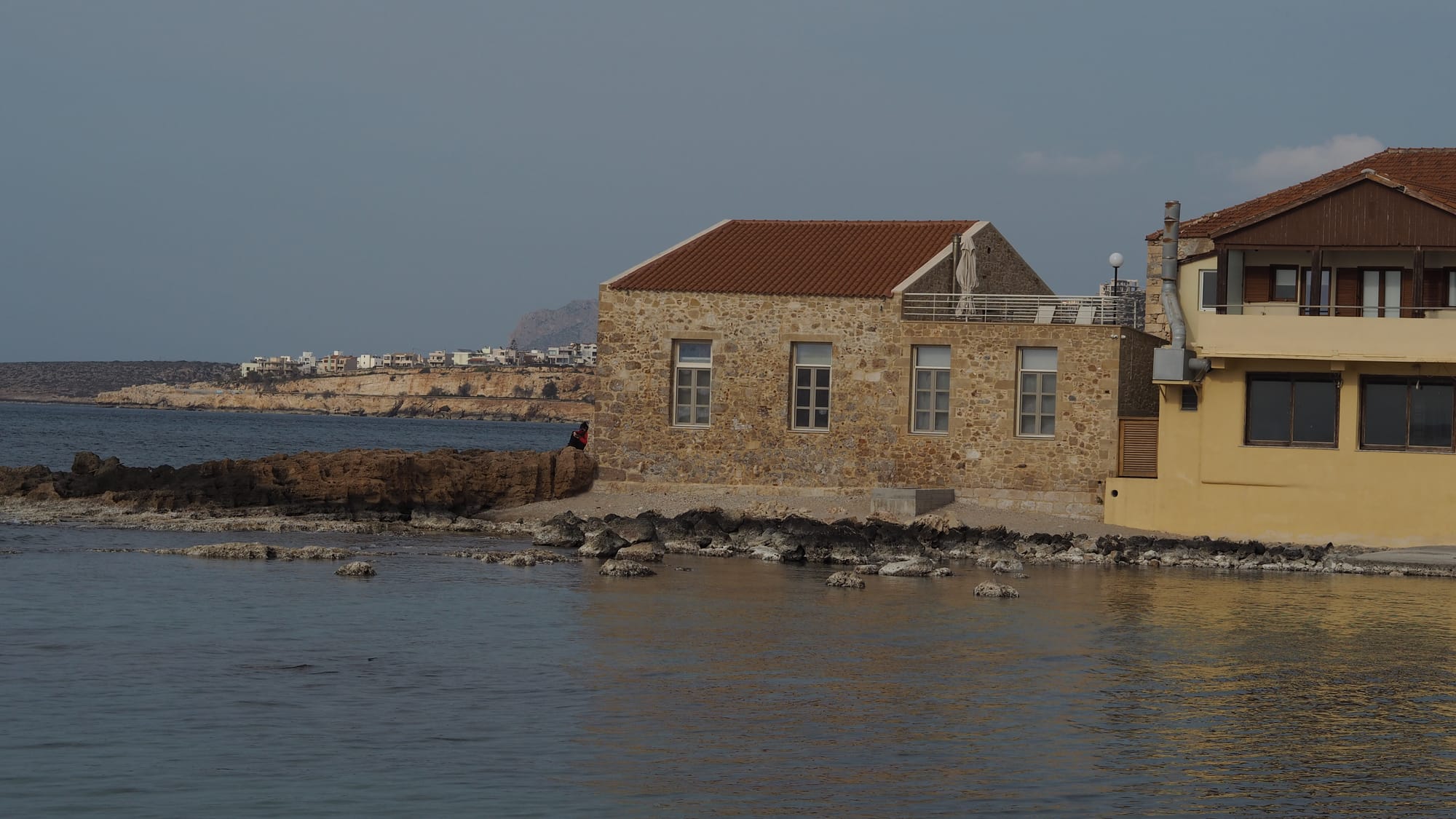
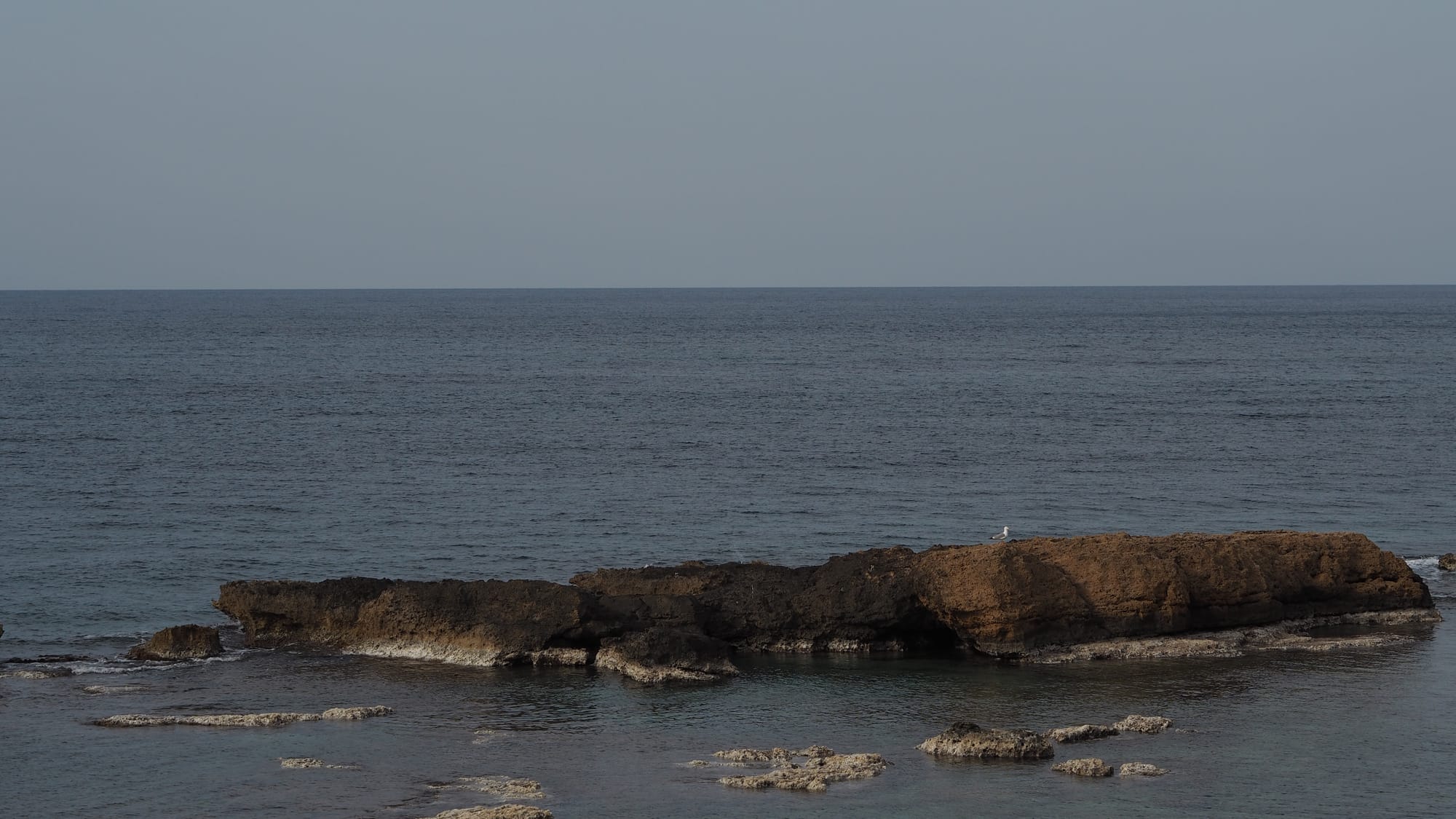
- that's it, looking back at it.
A rainy day. The Maritime Museum was shut.
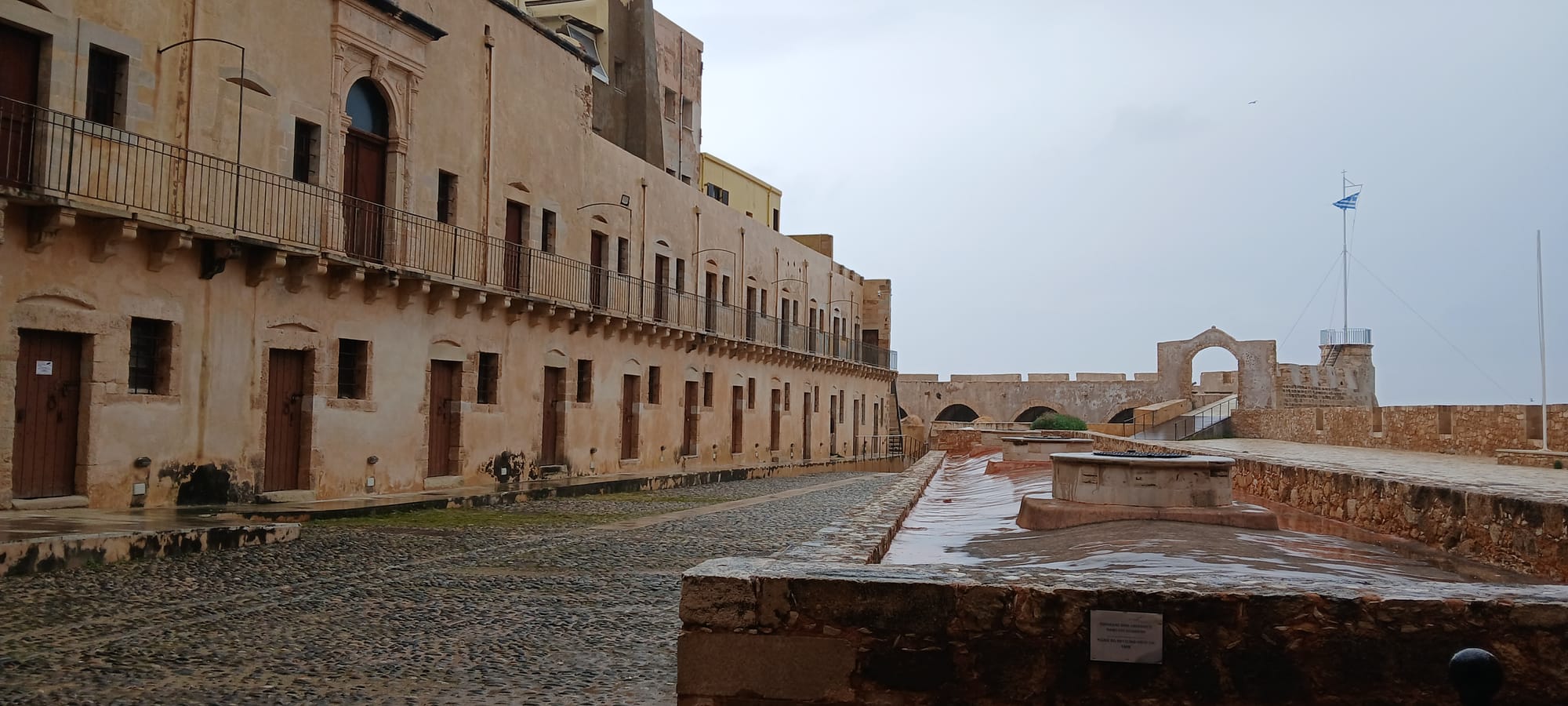
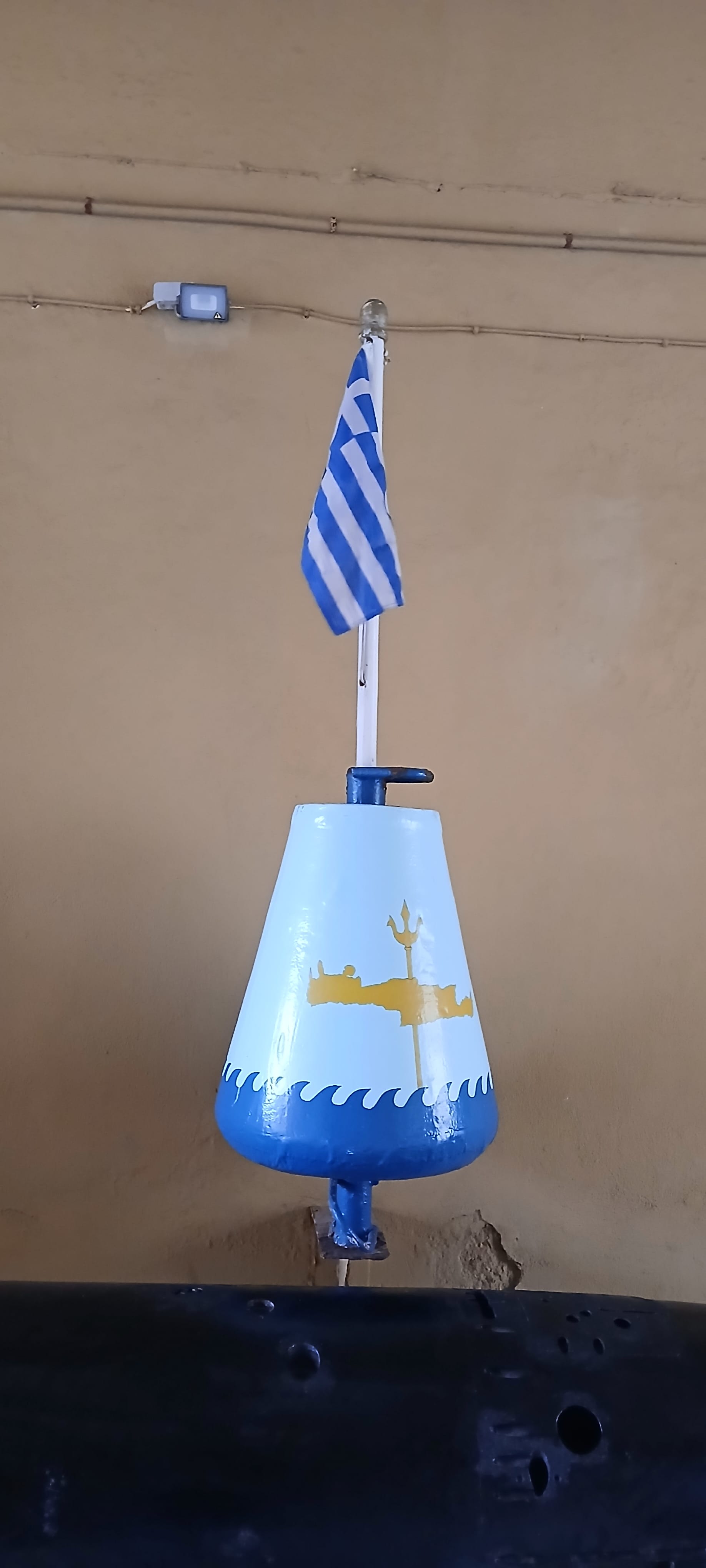
The Catholic church was however open.
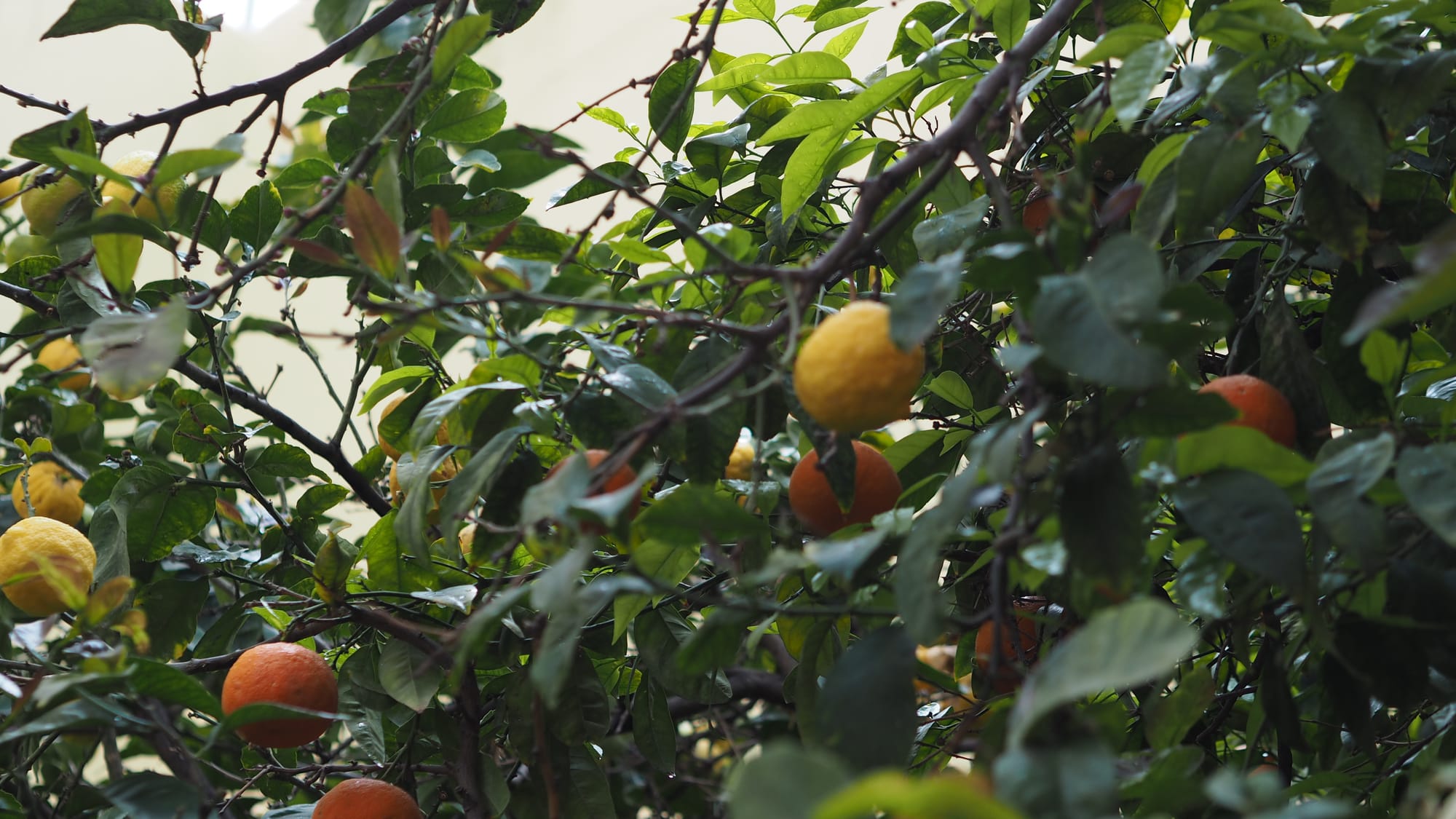
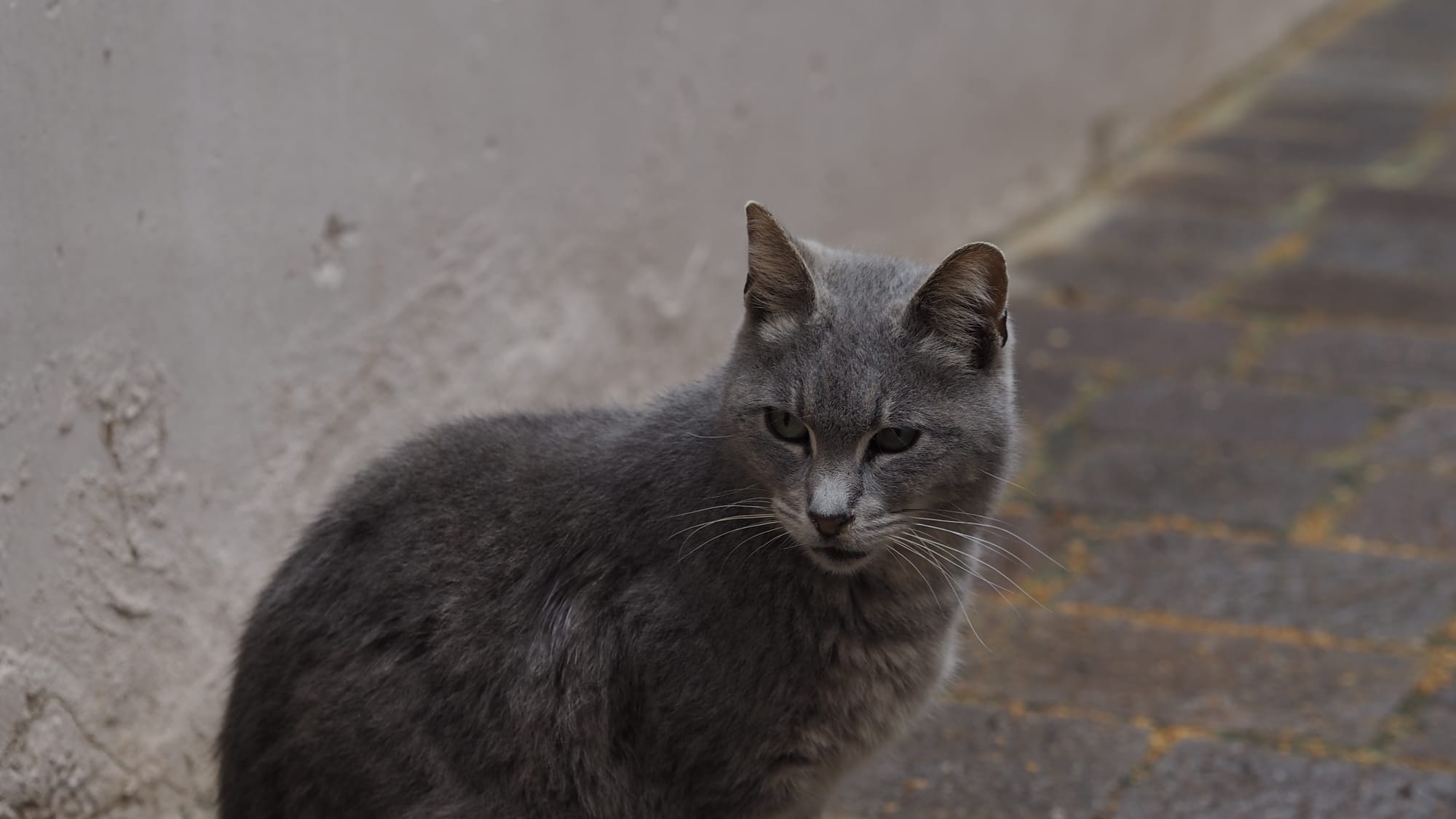
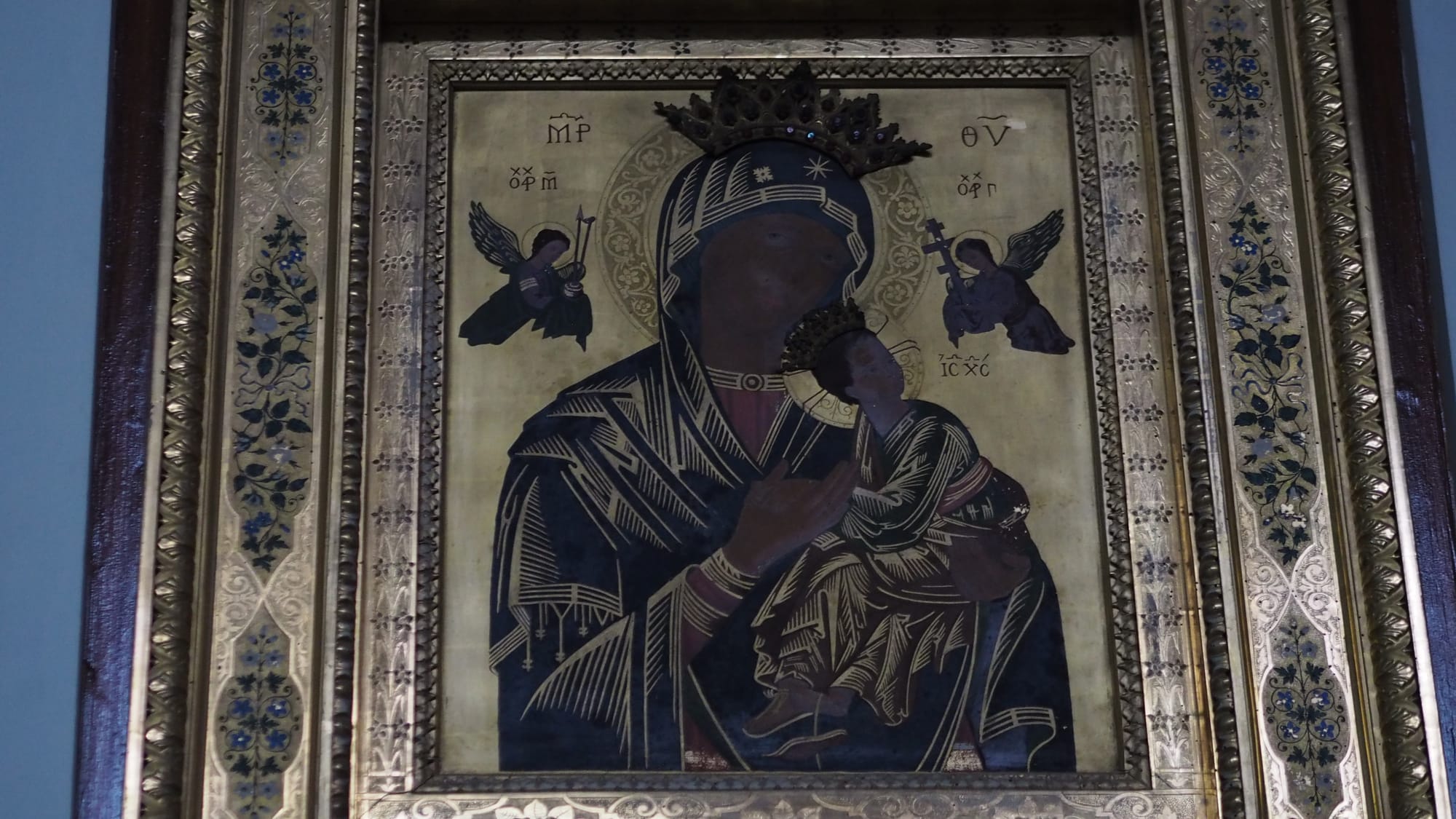
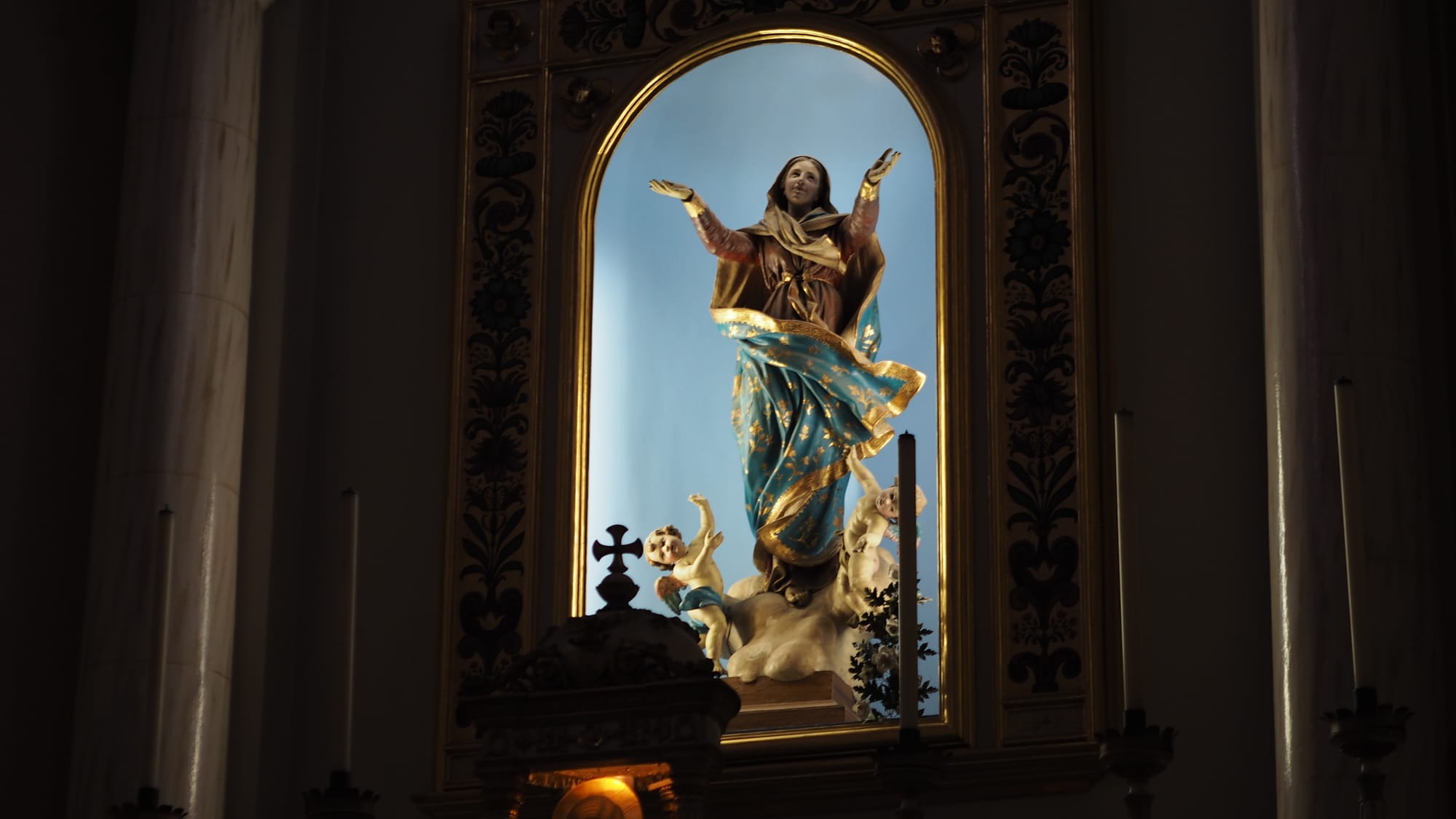
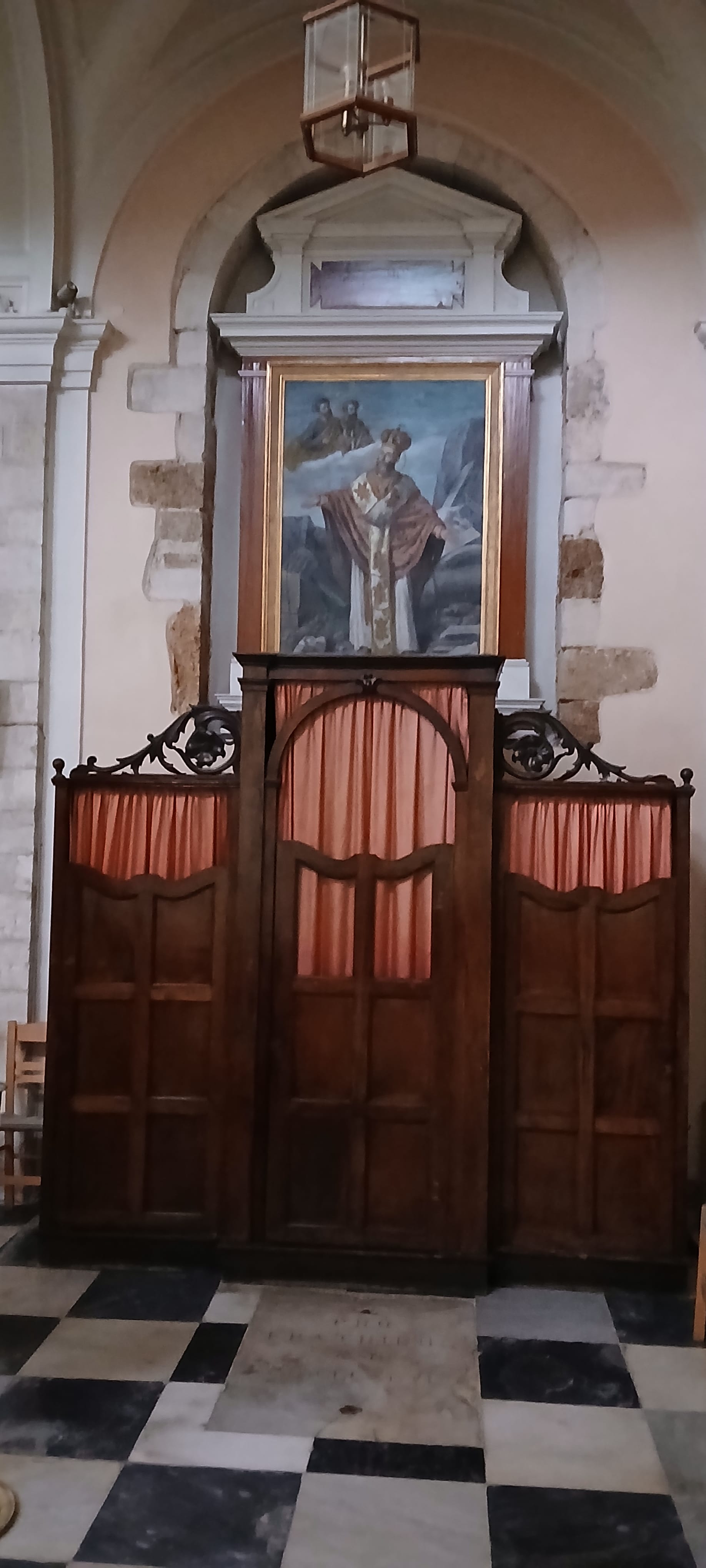
And the Folklore Museum, beside it.
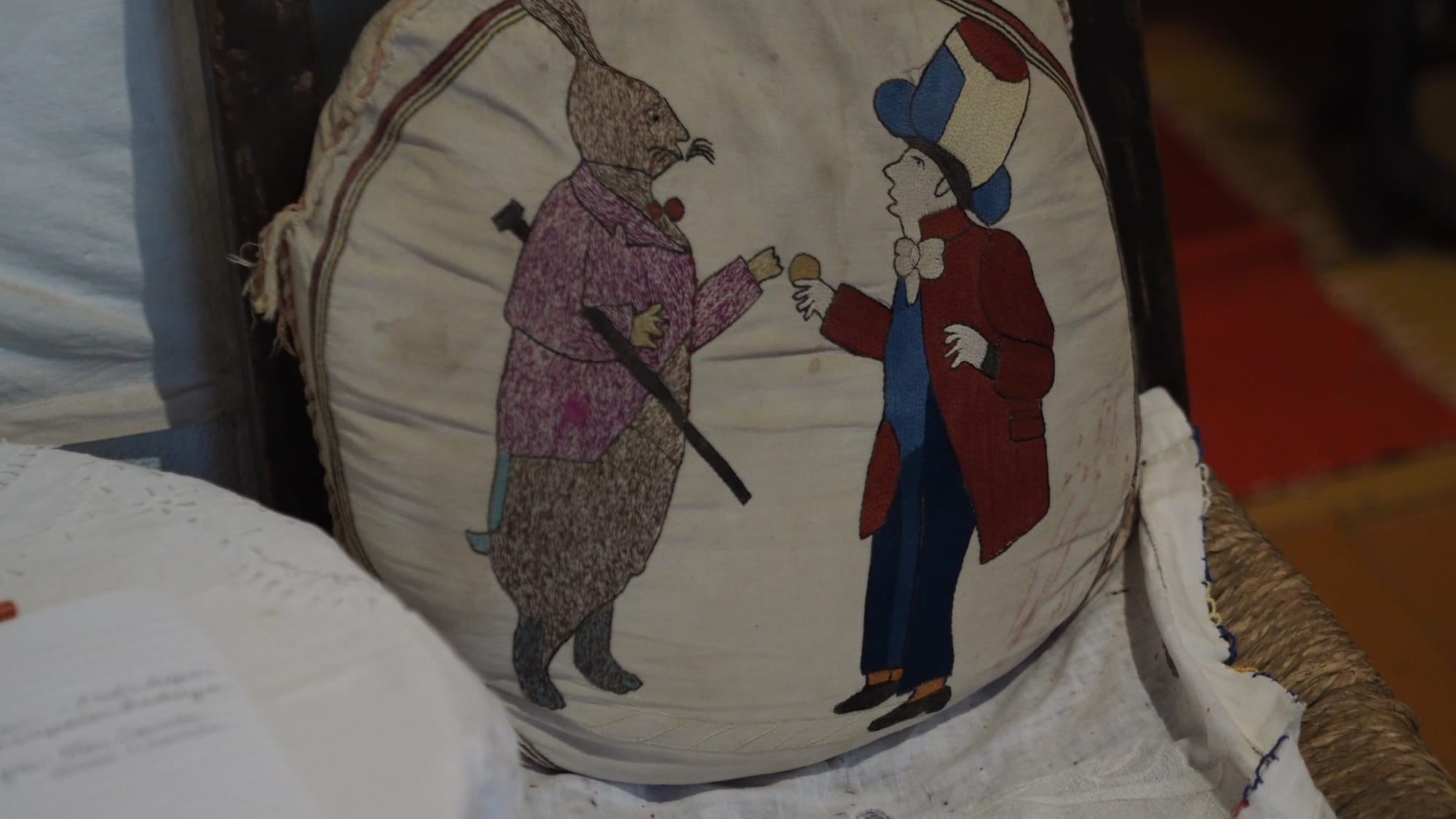
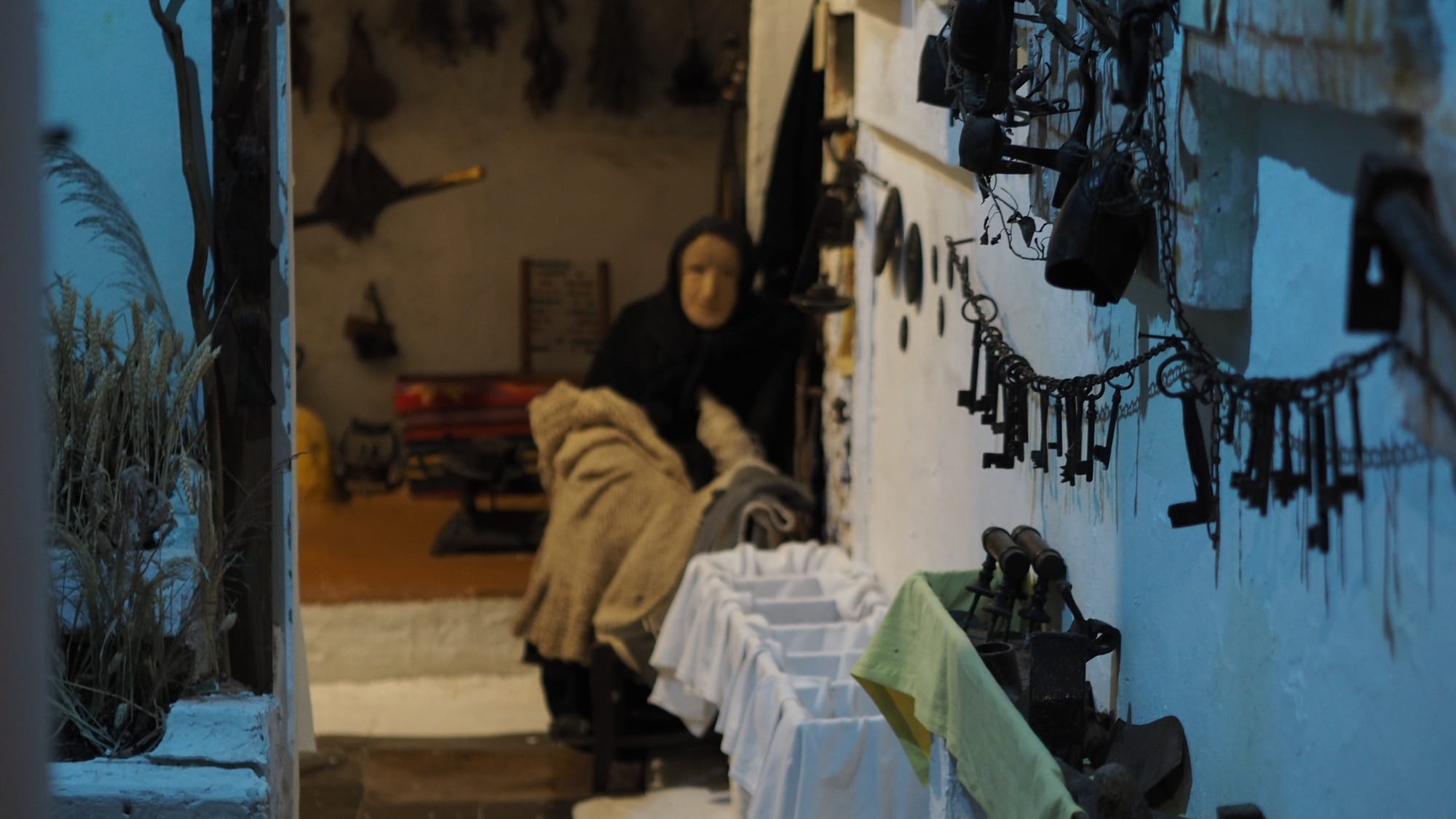
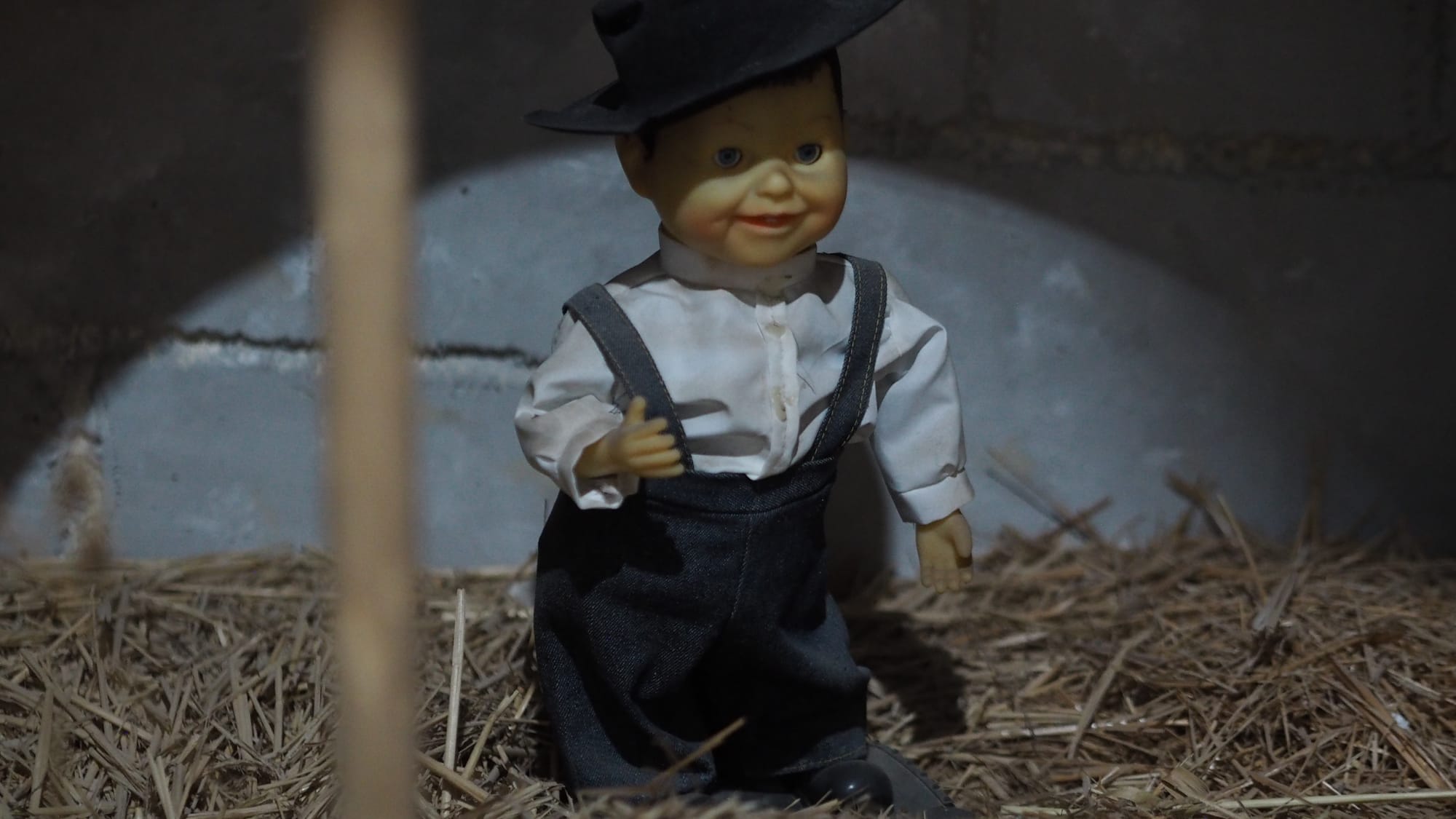
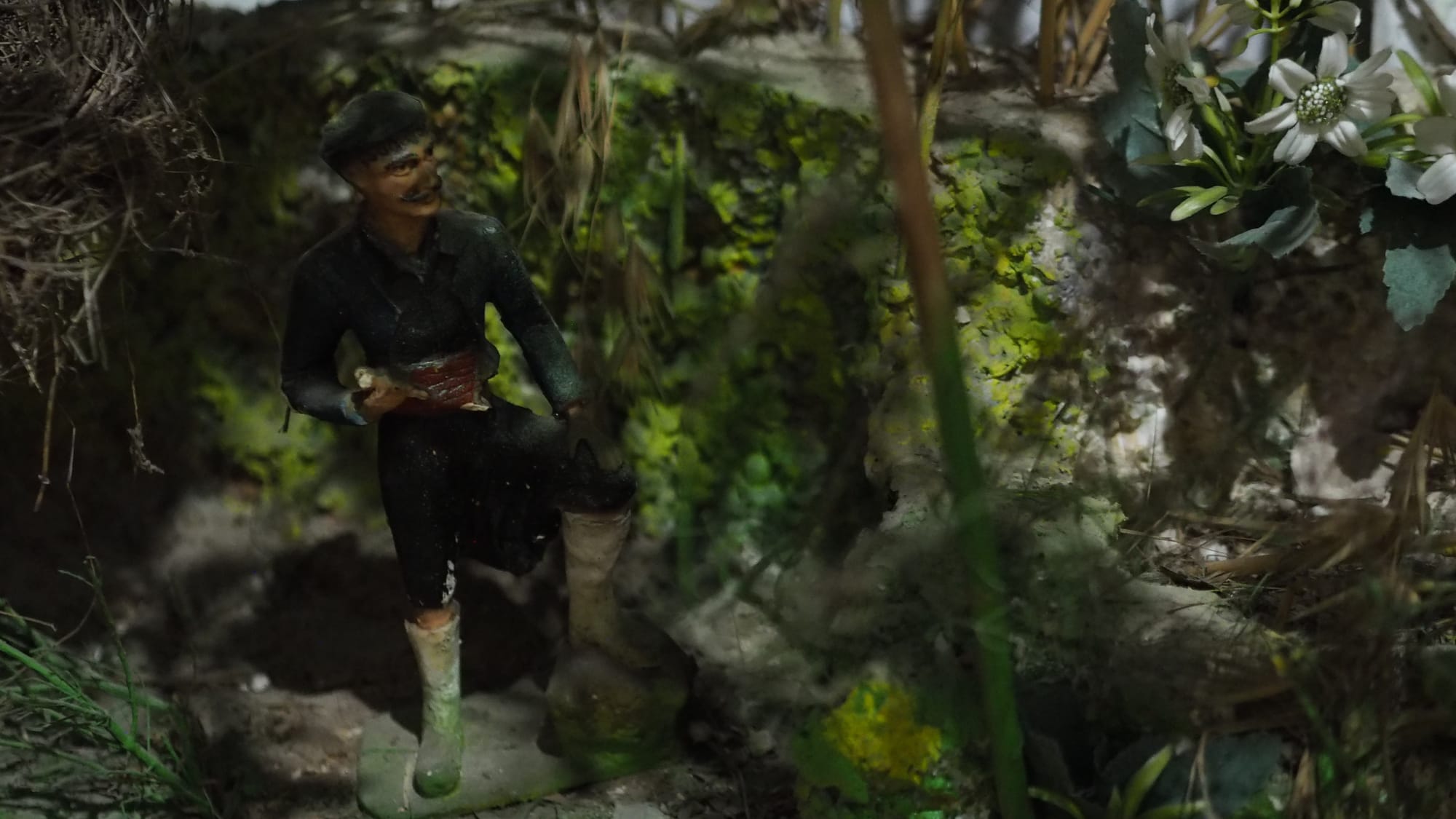
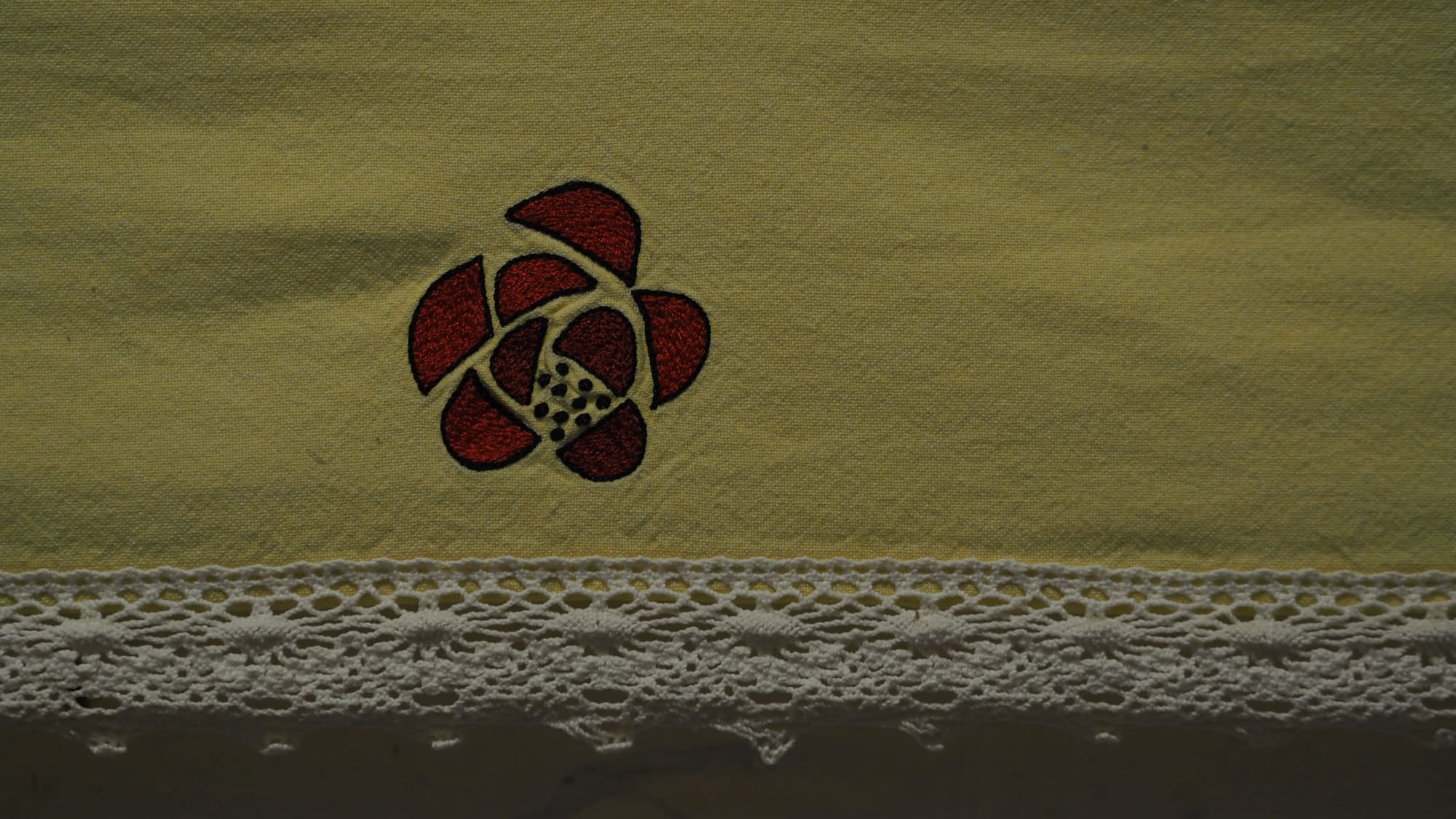
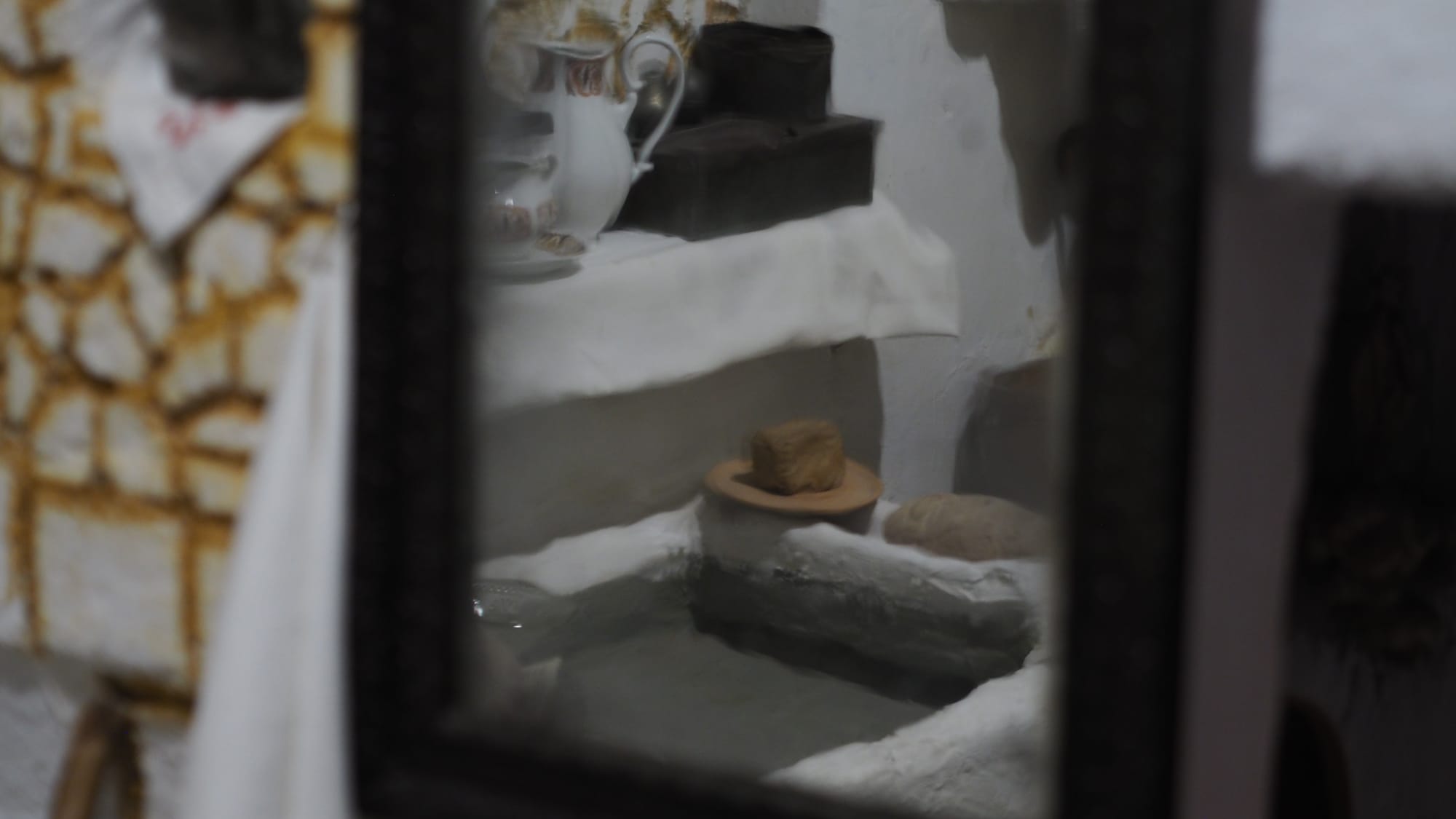
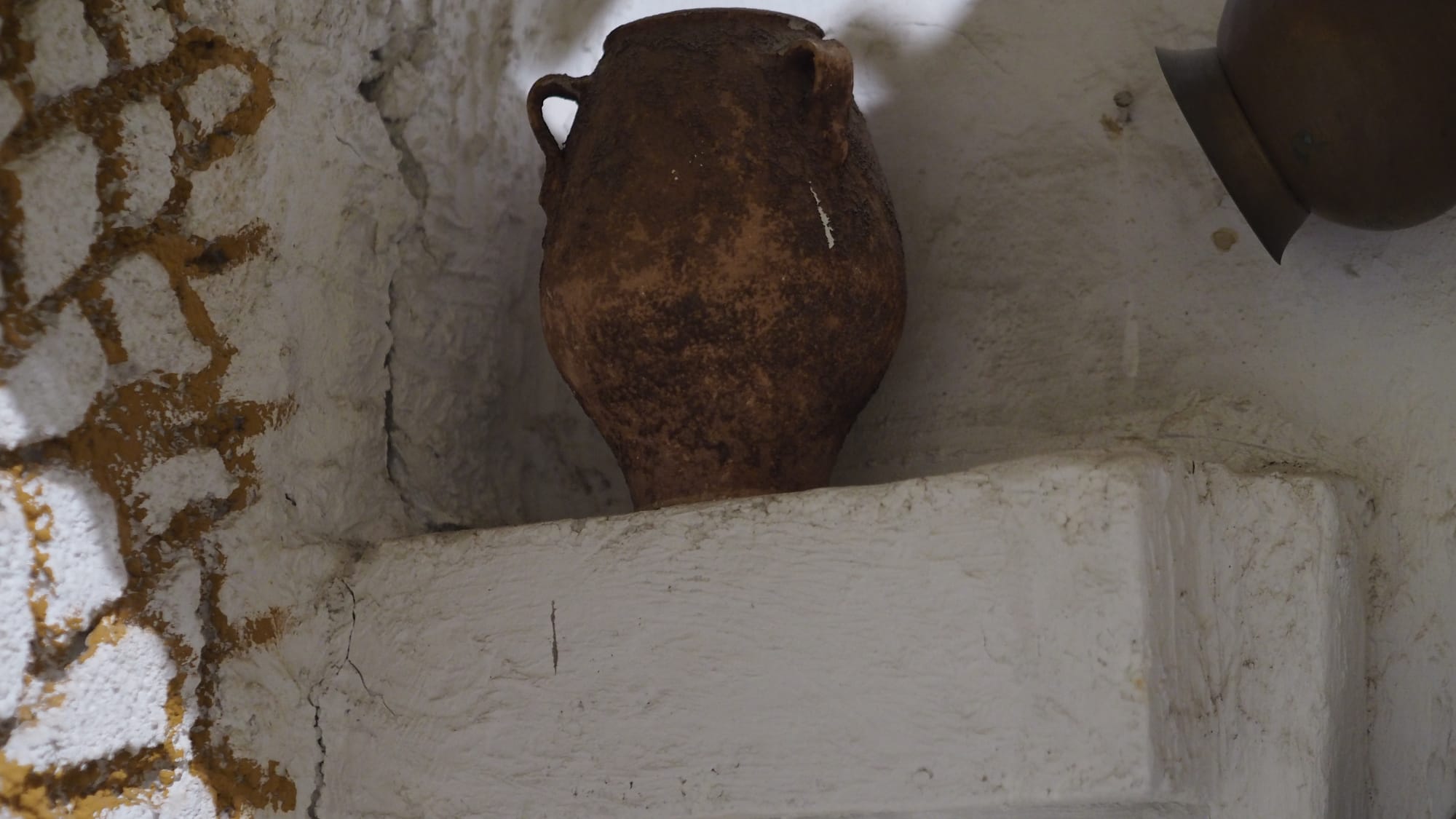
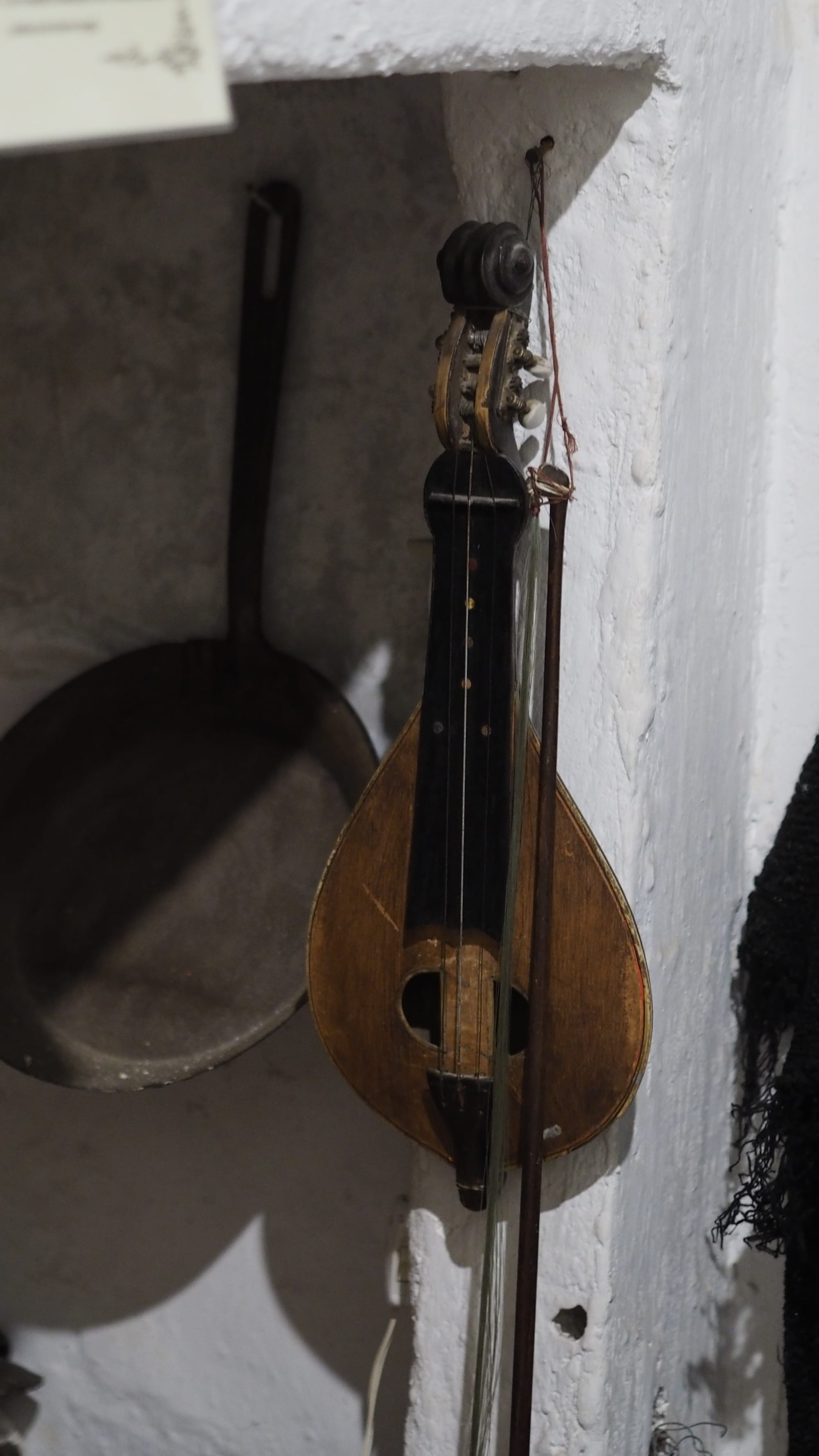
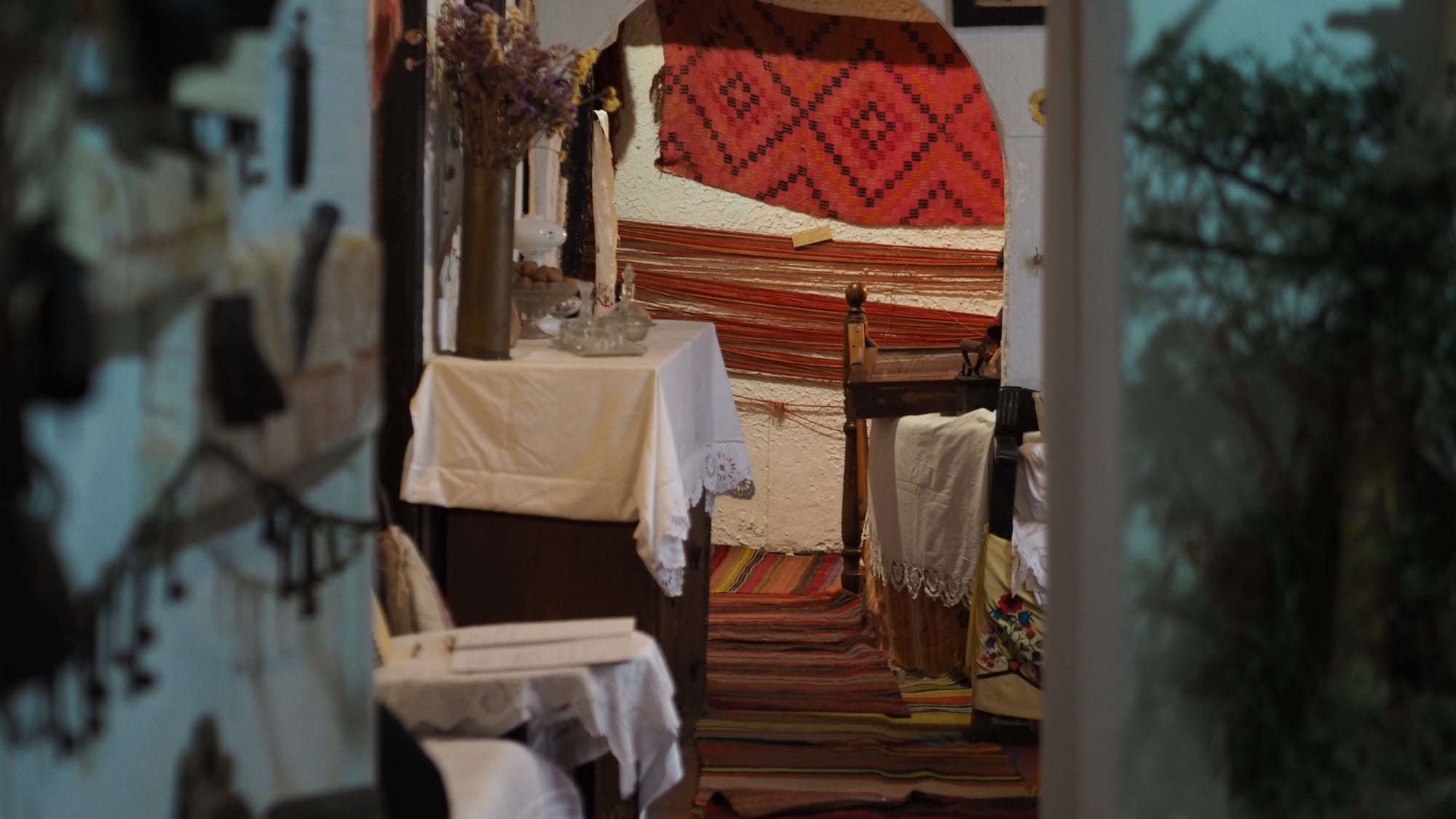
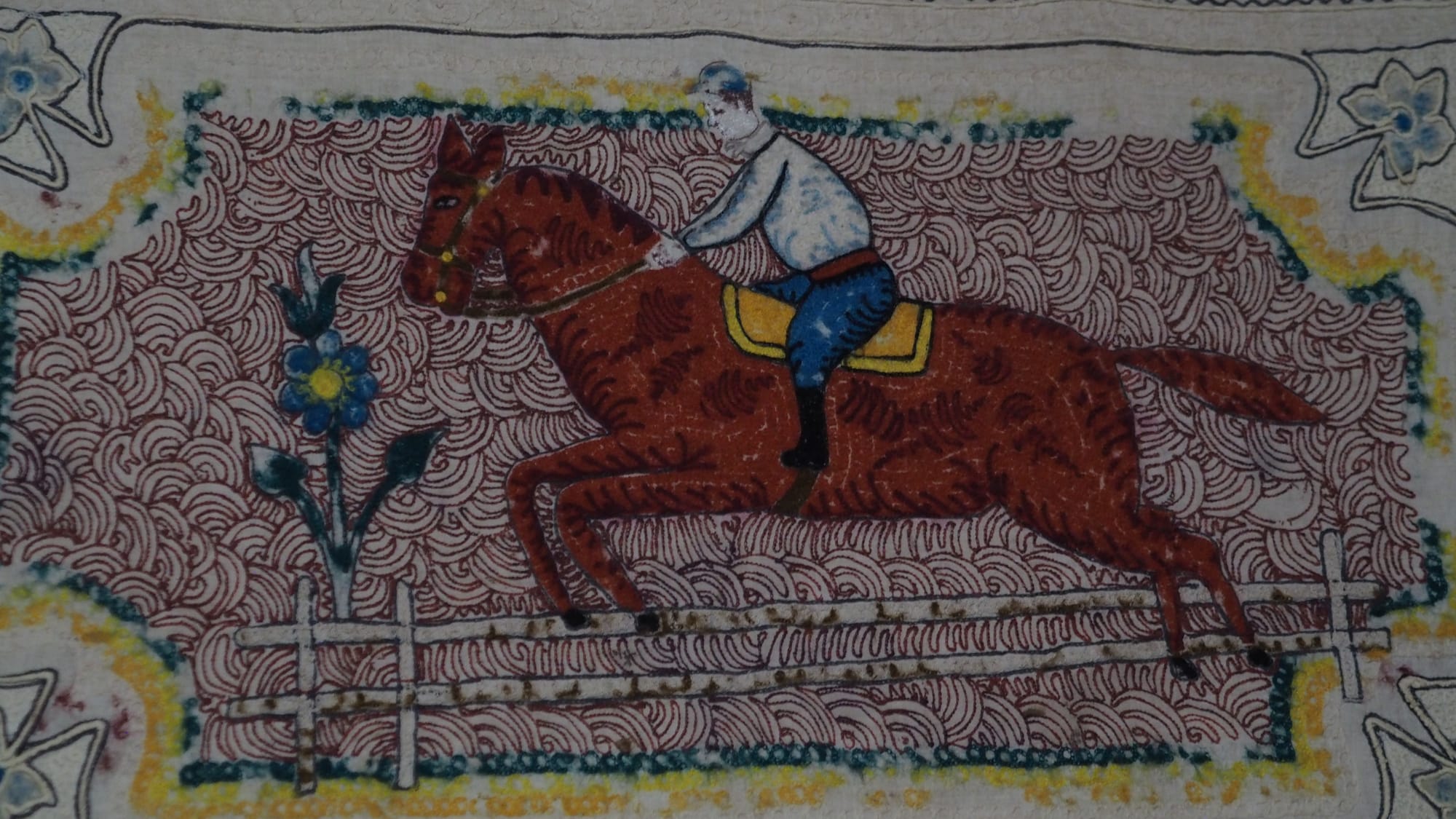
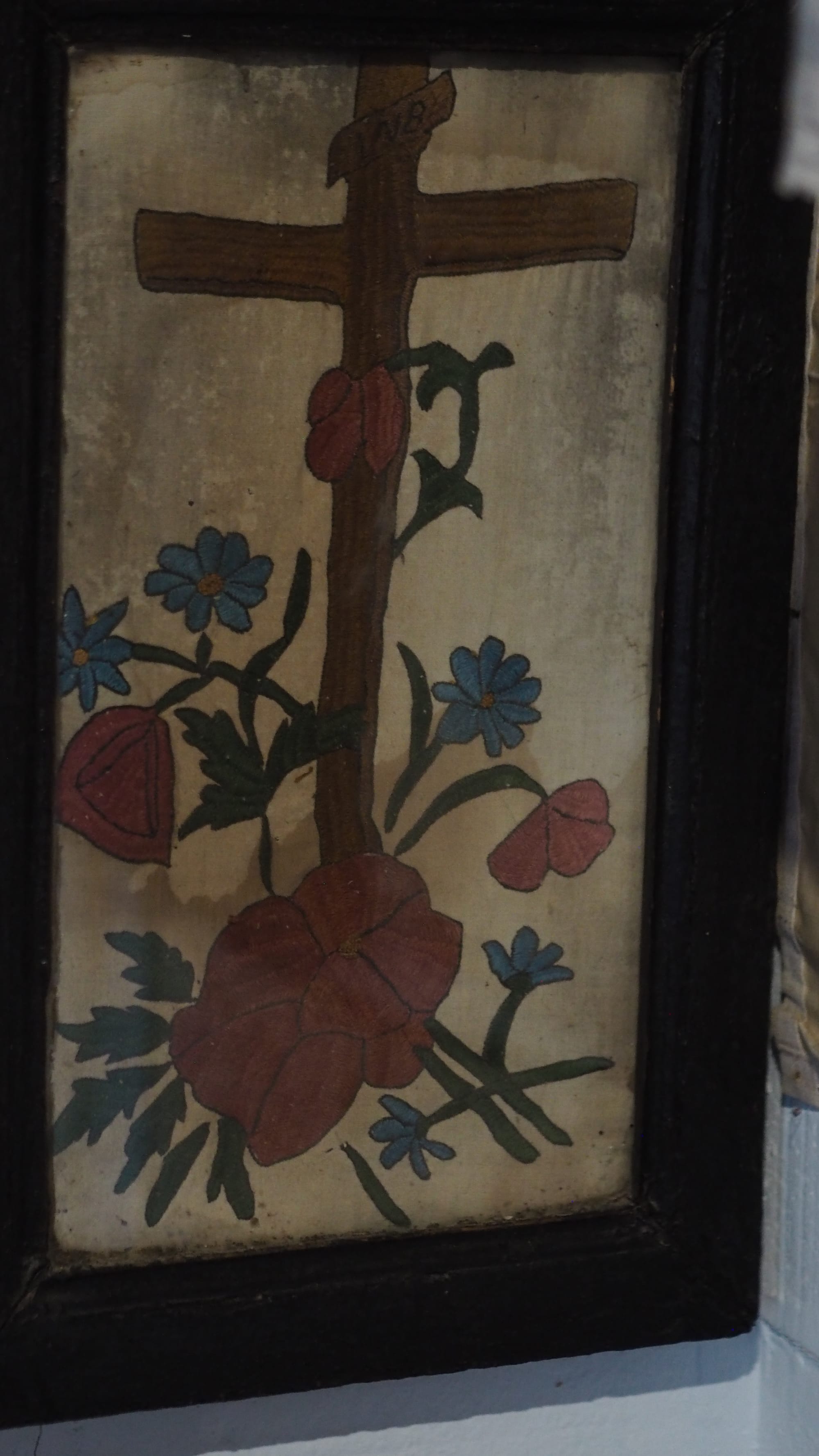
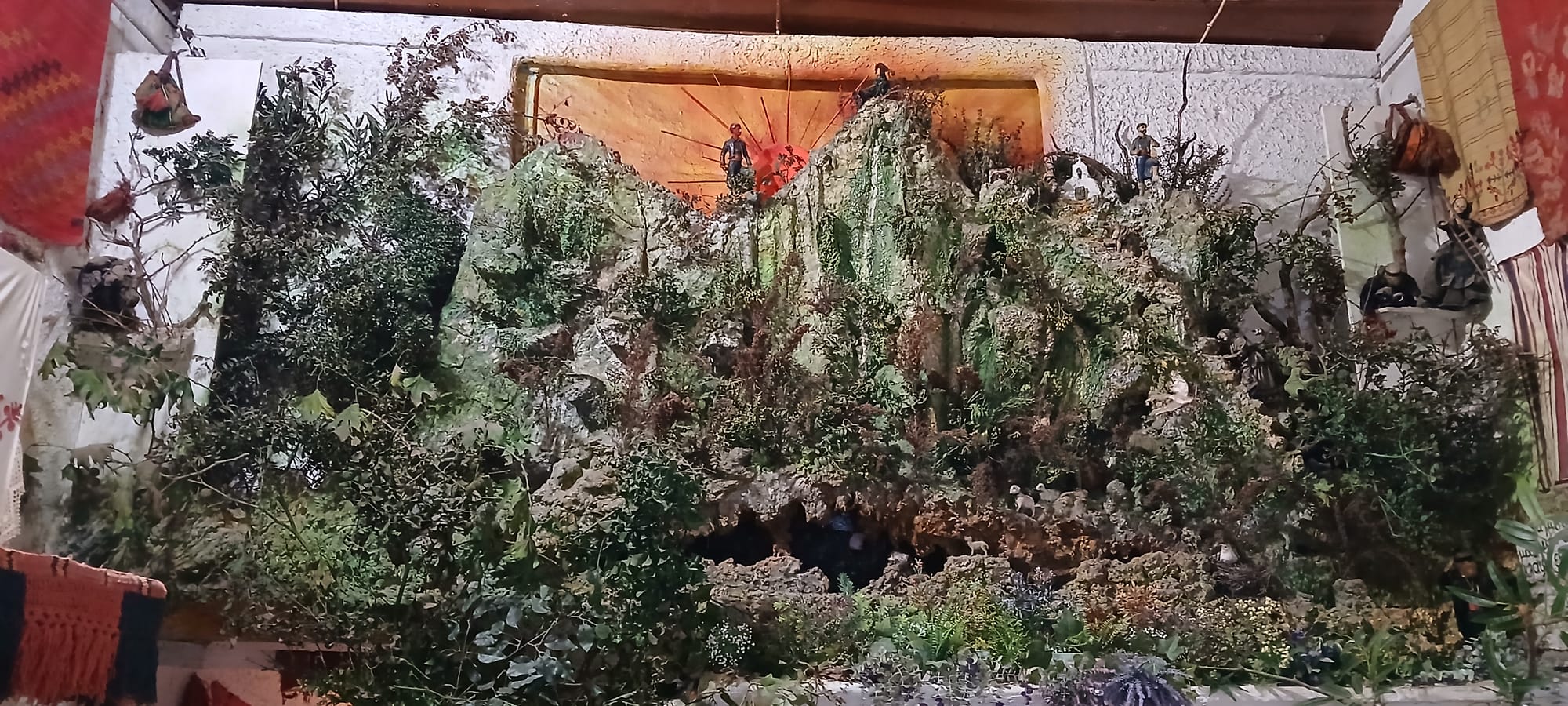
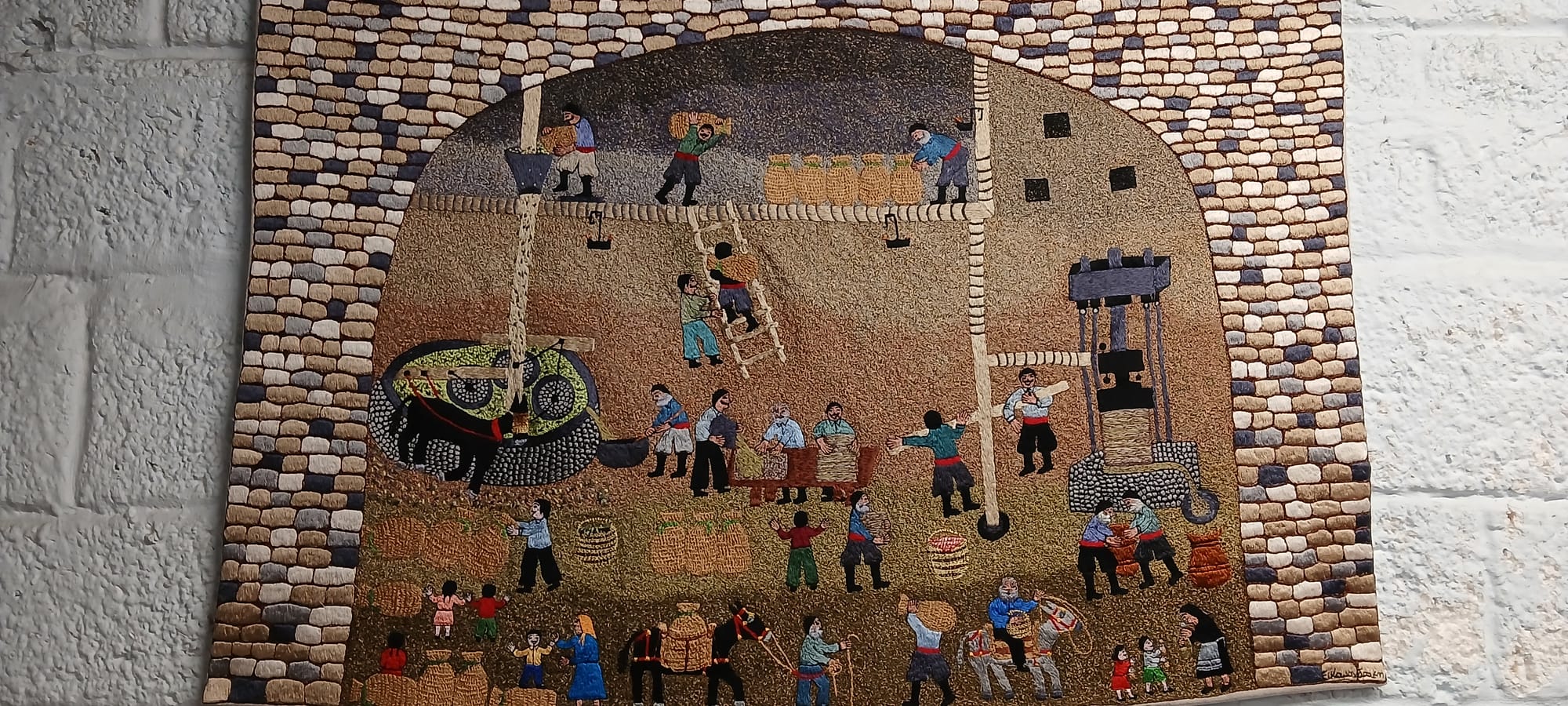
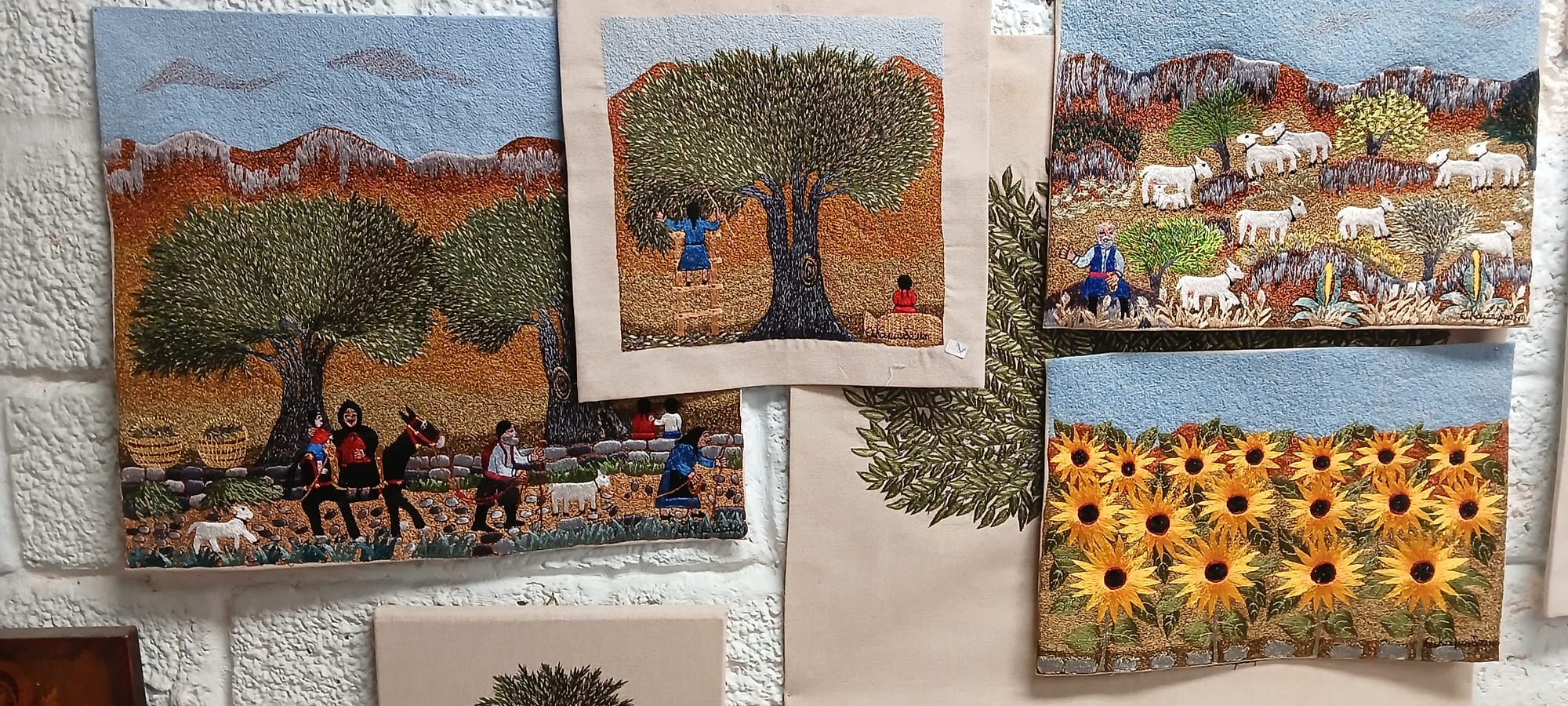
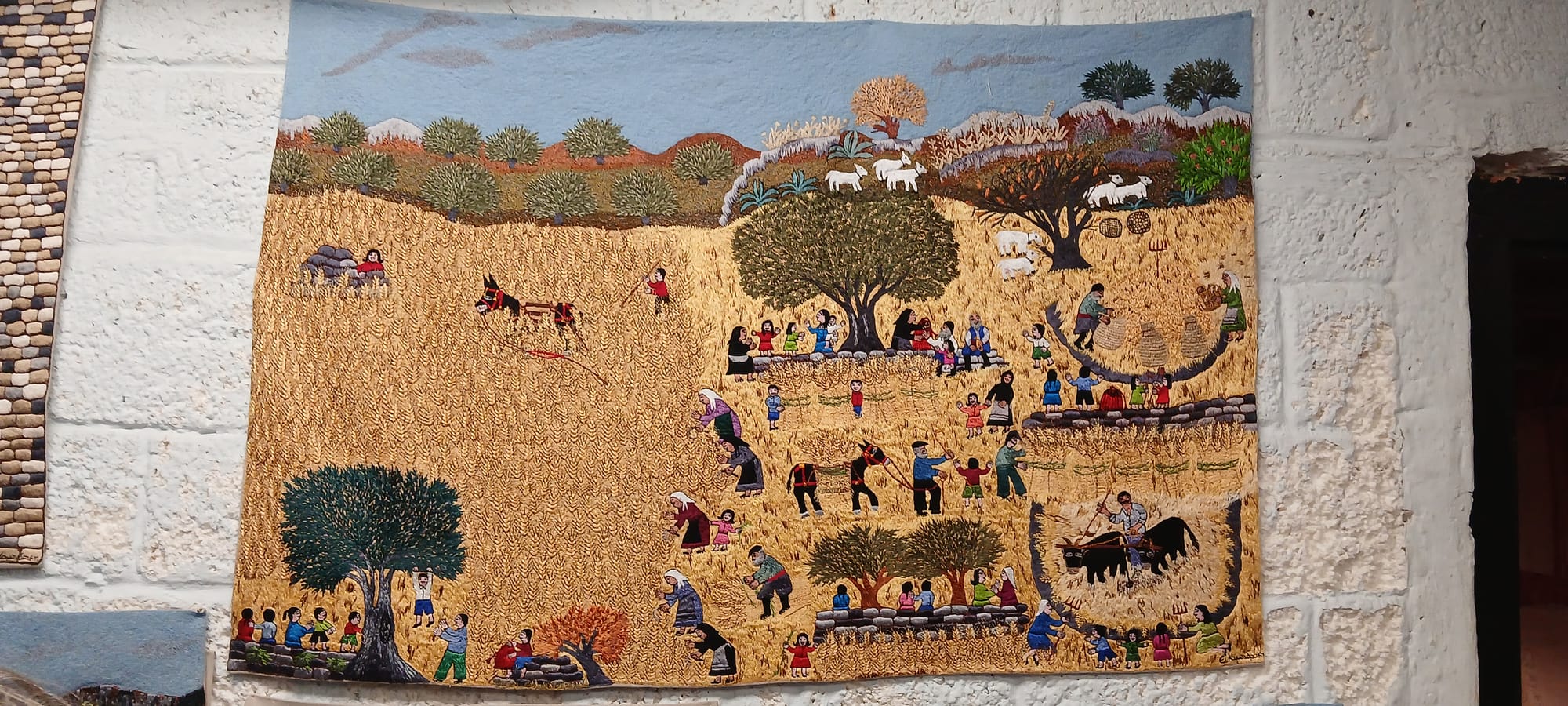
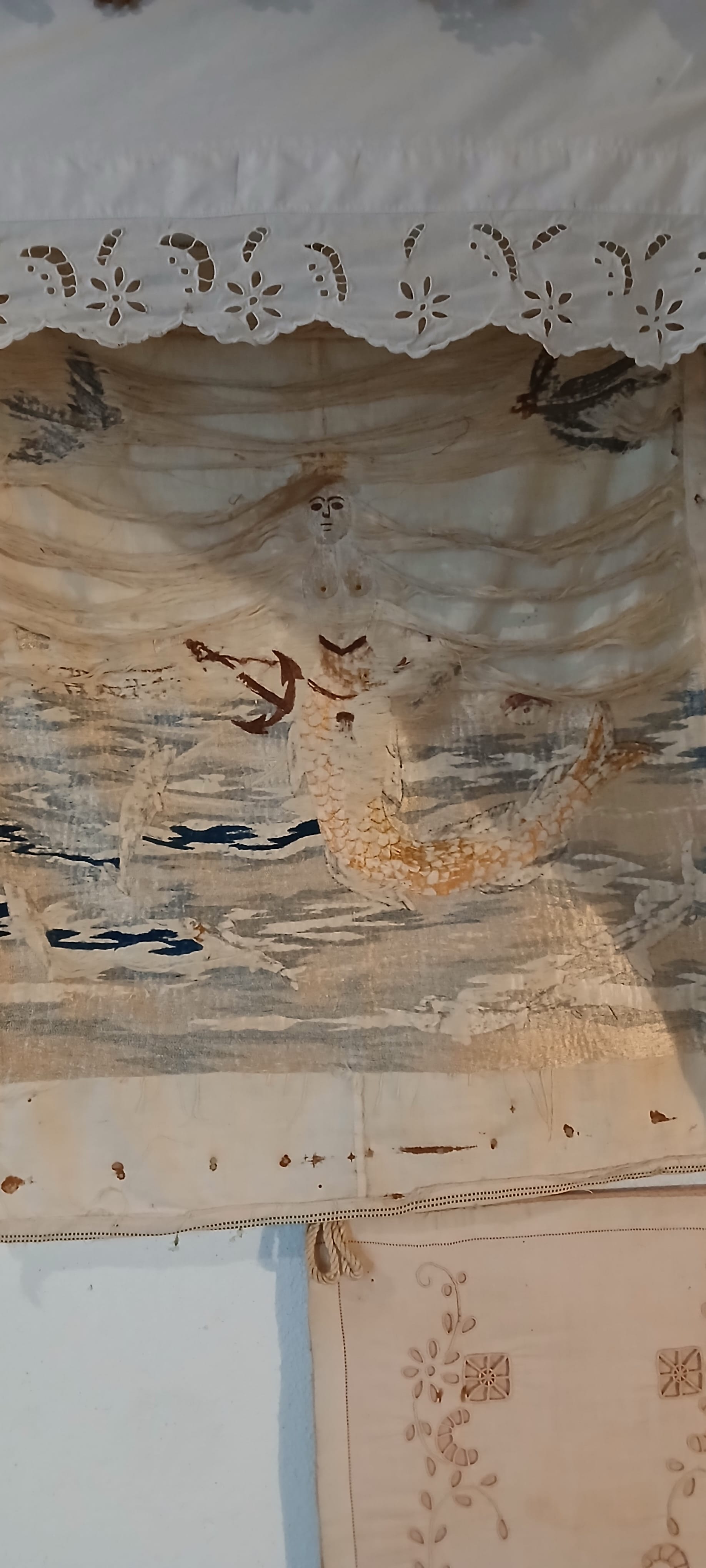
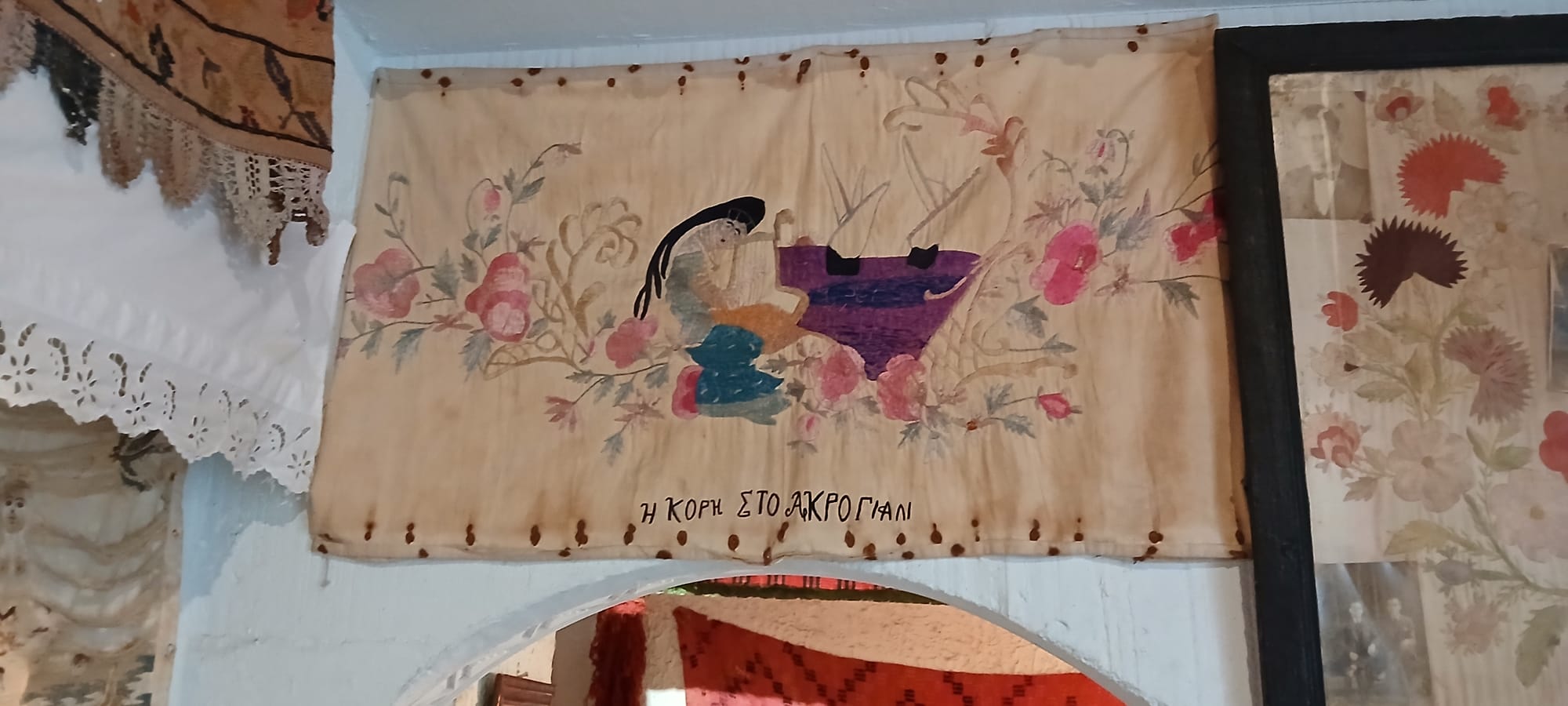
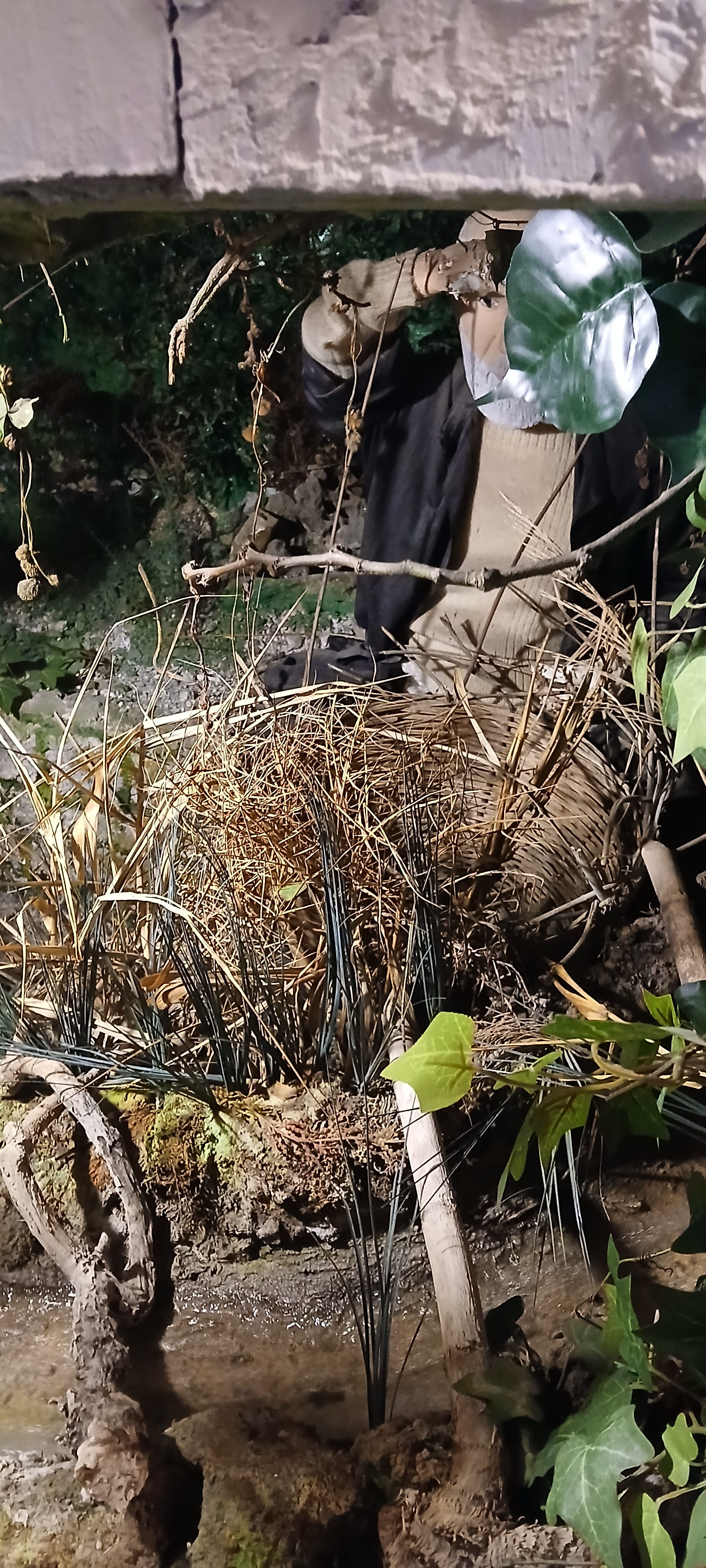
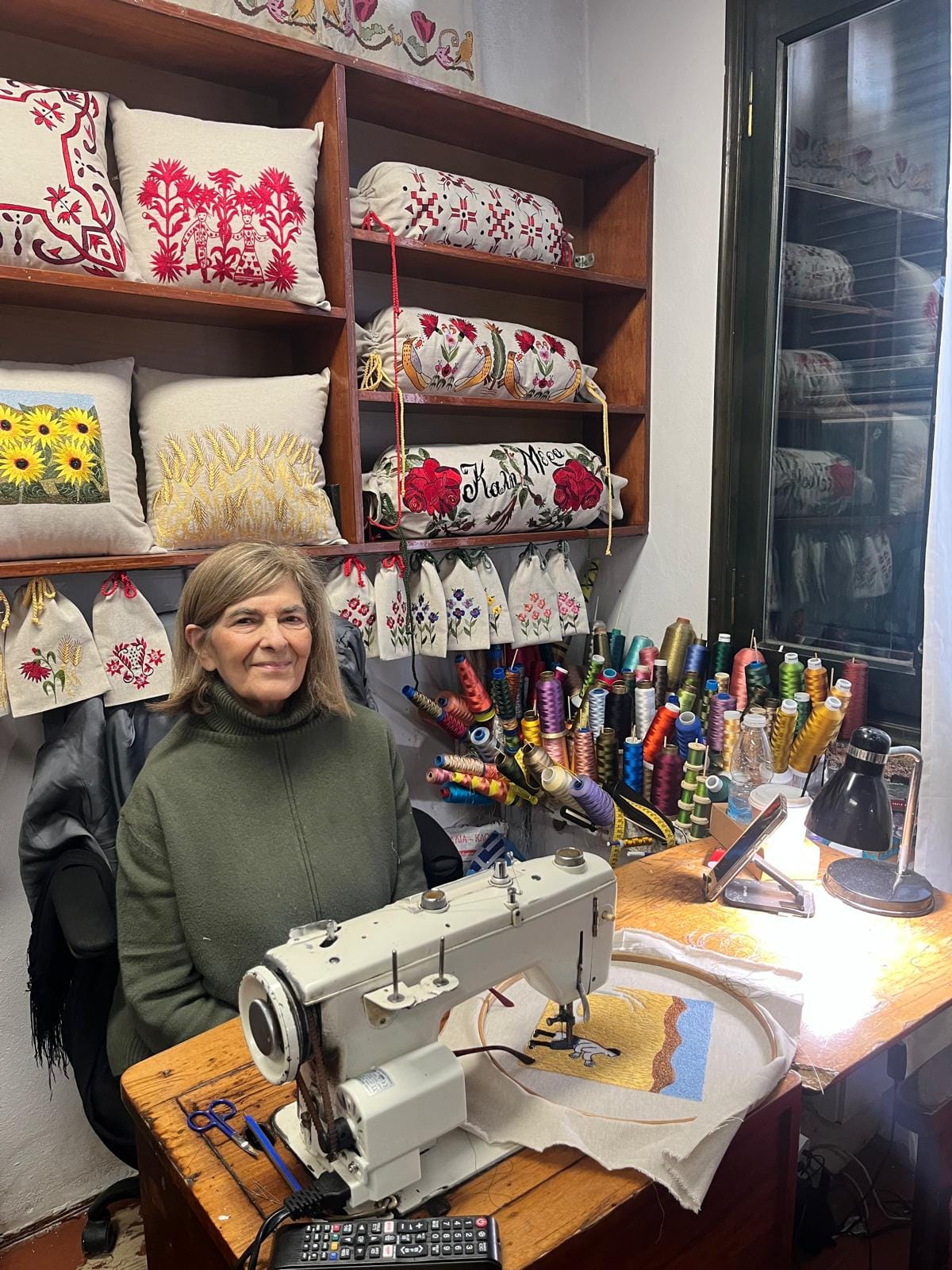
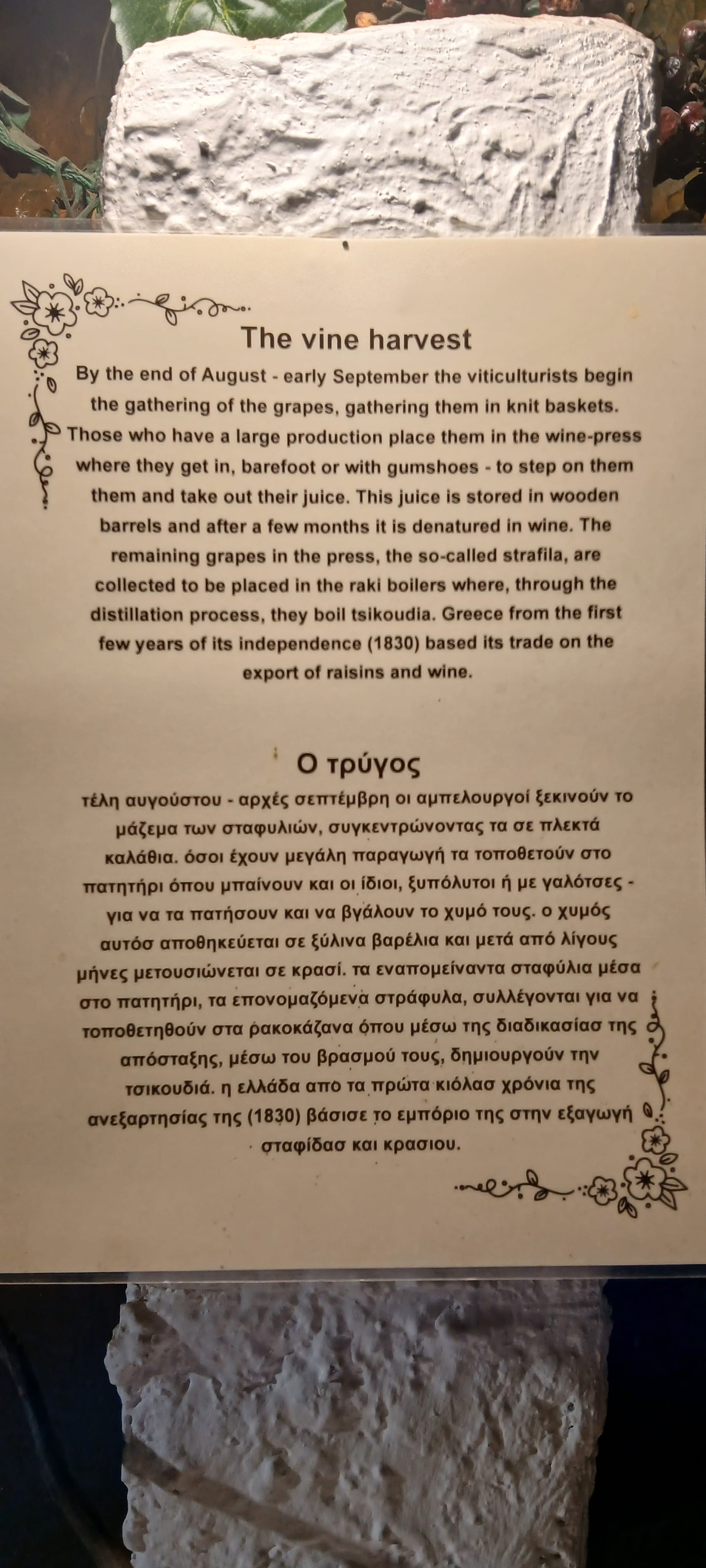
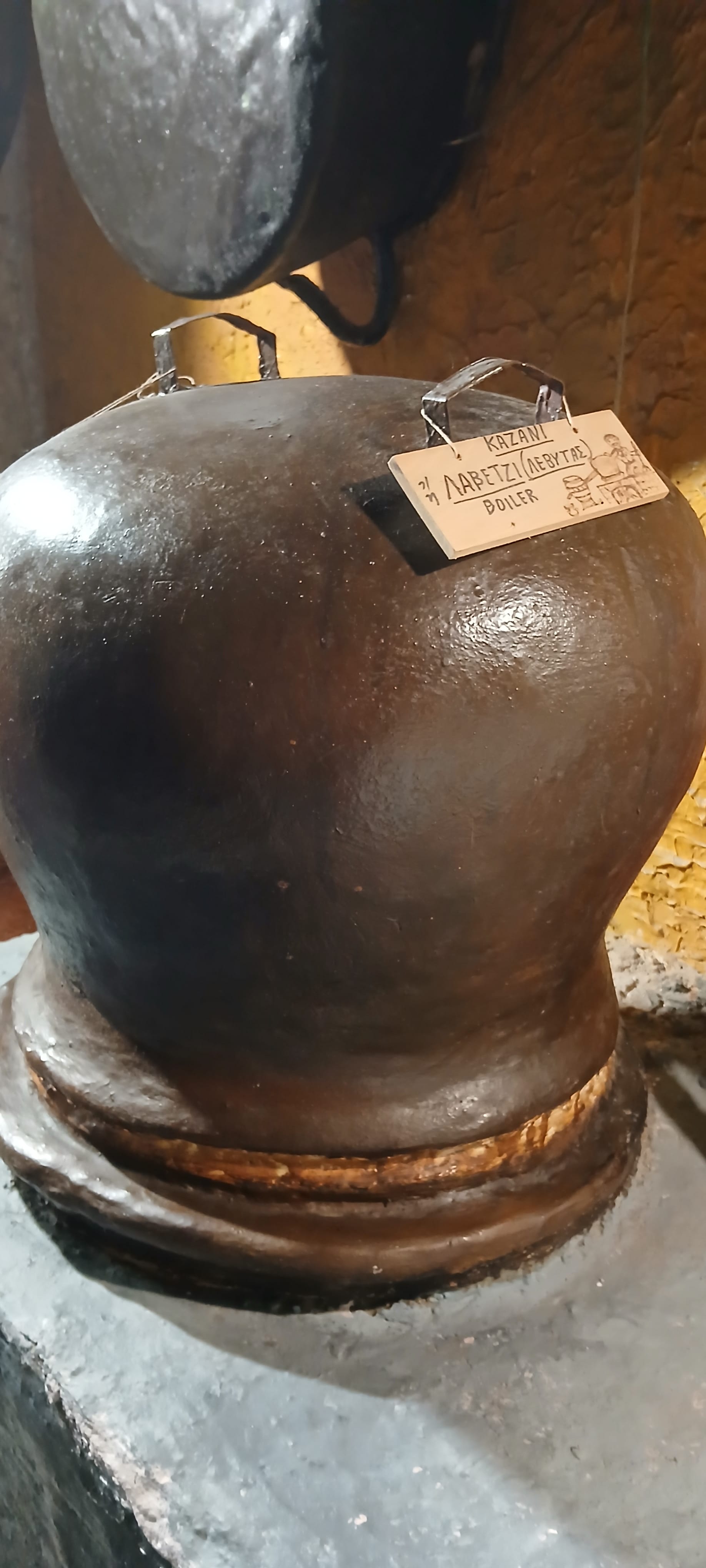
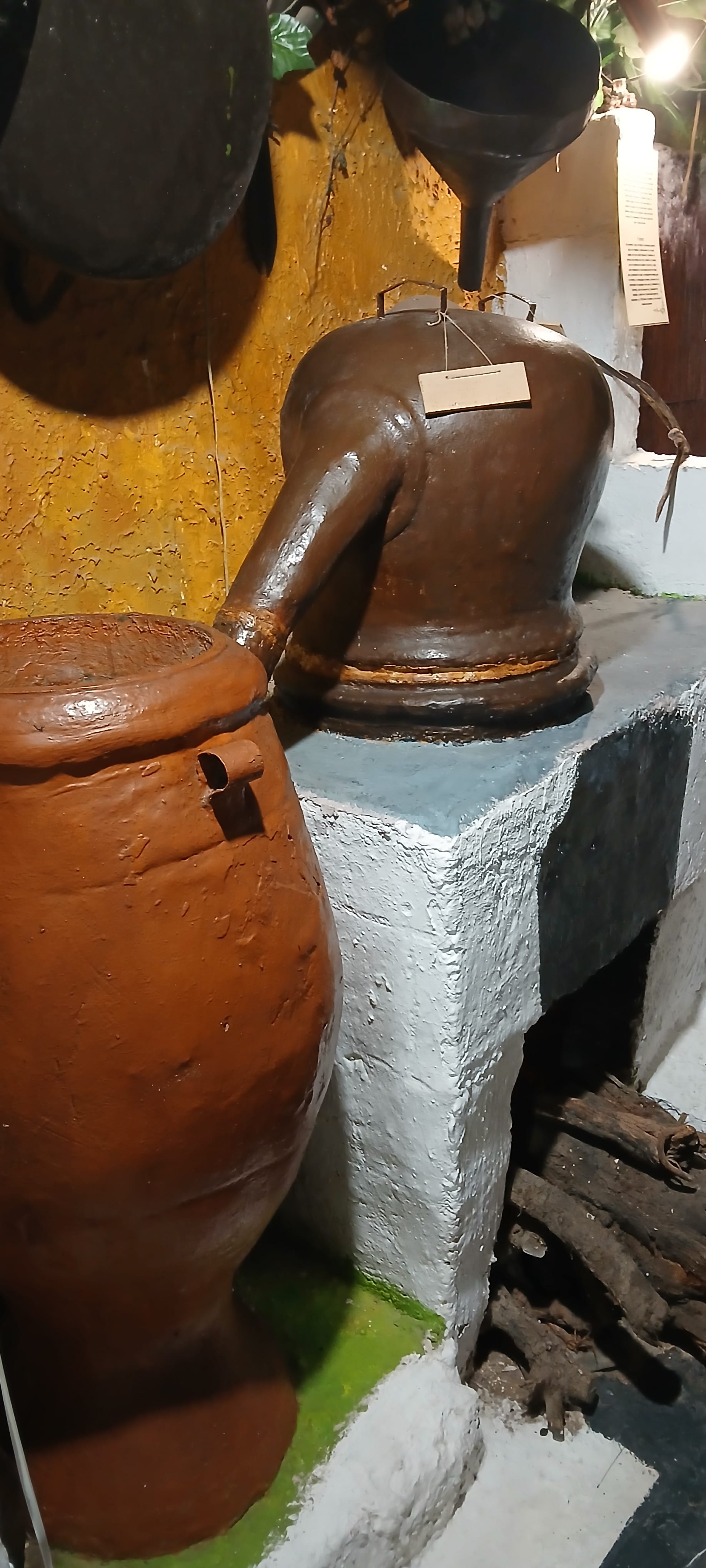
- ceramic distillery
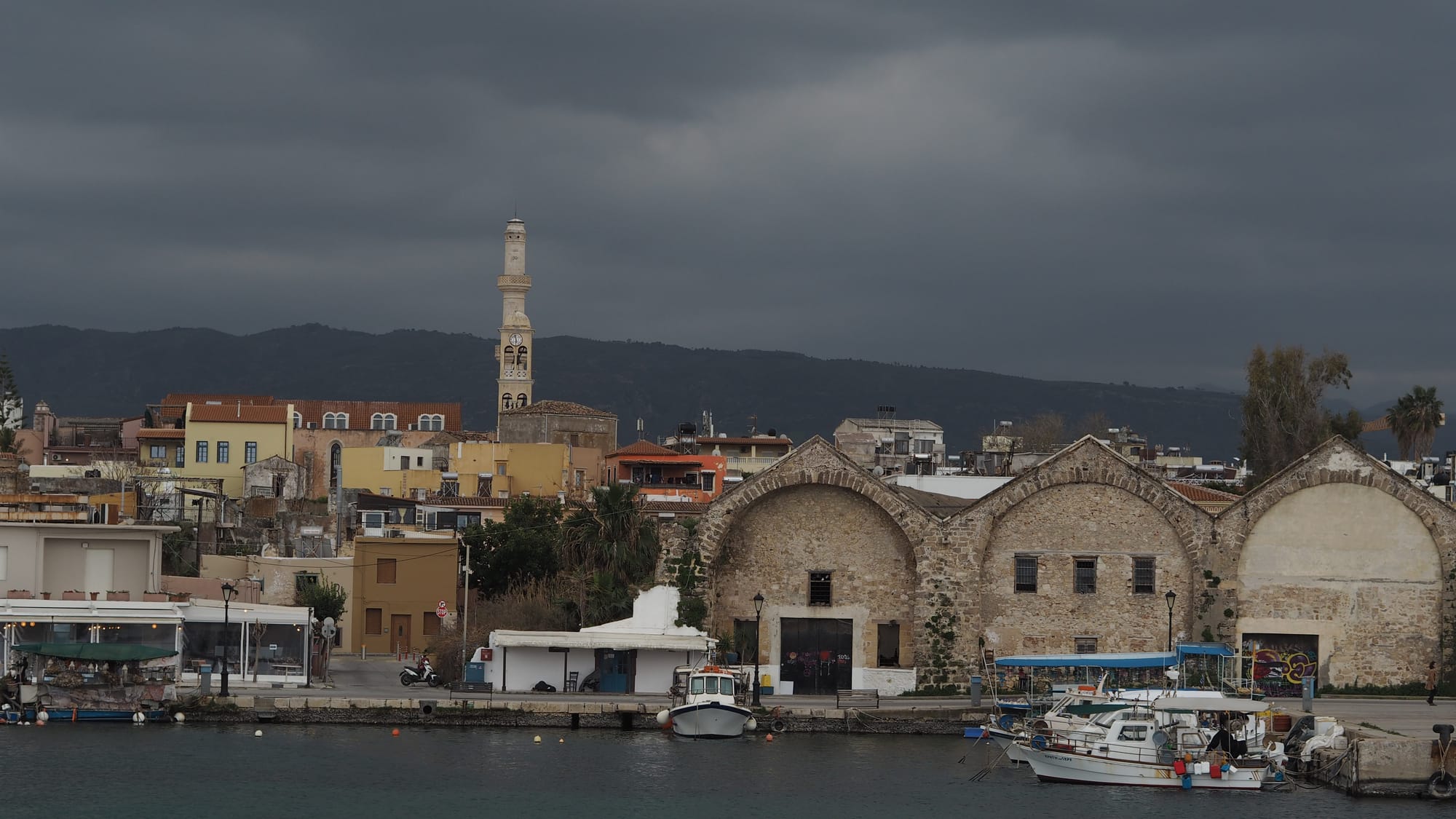
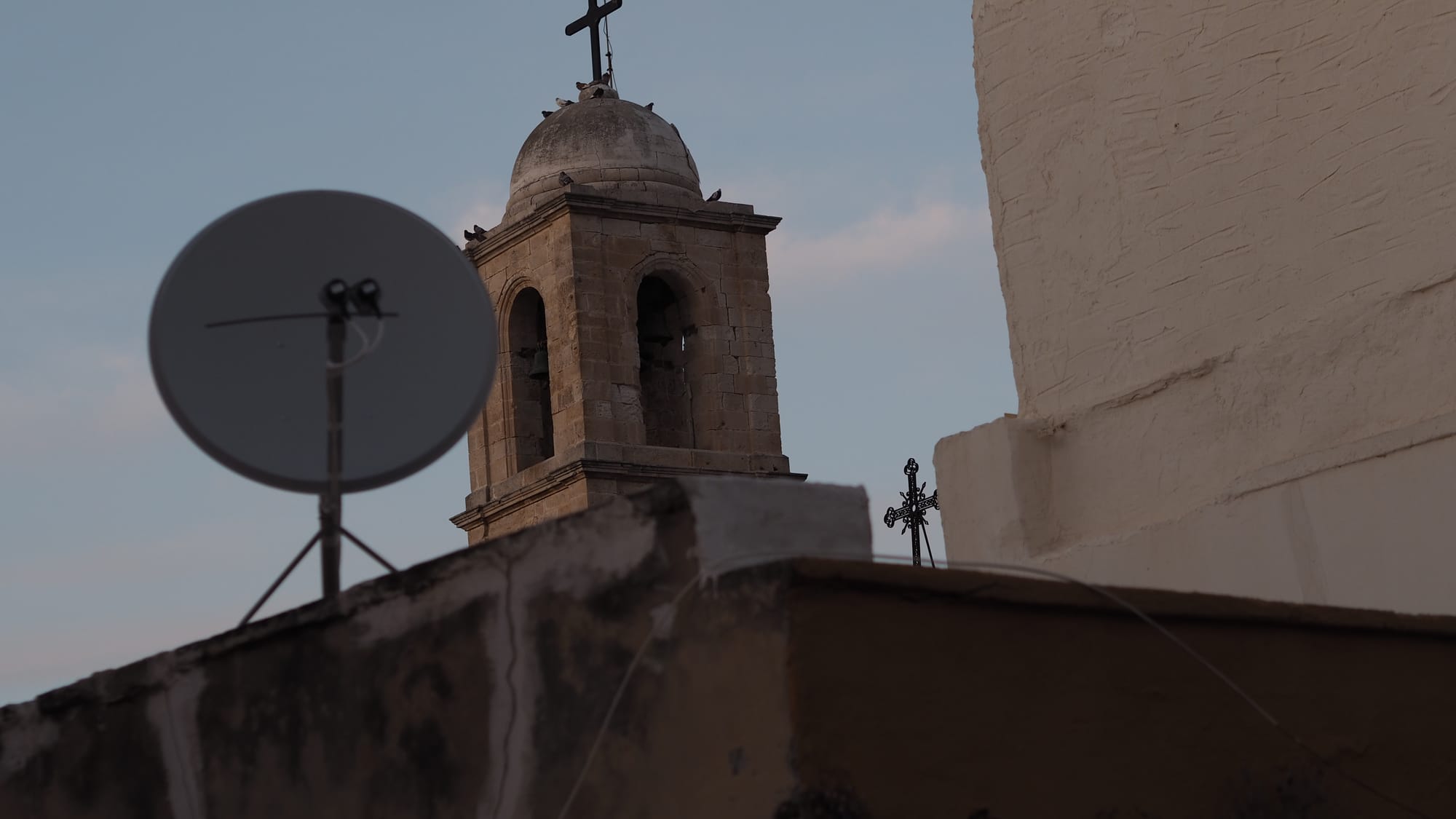
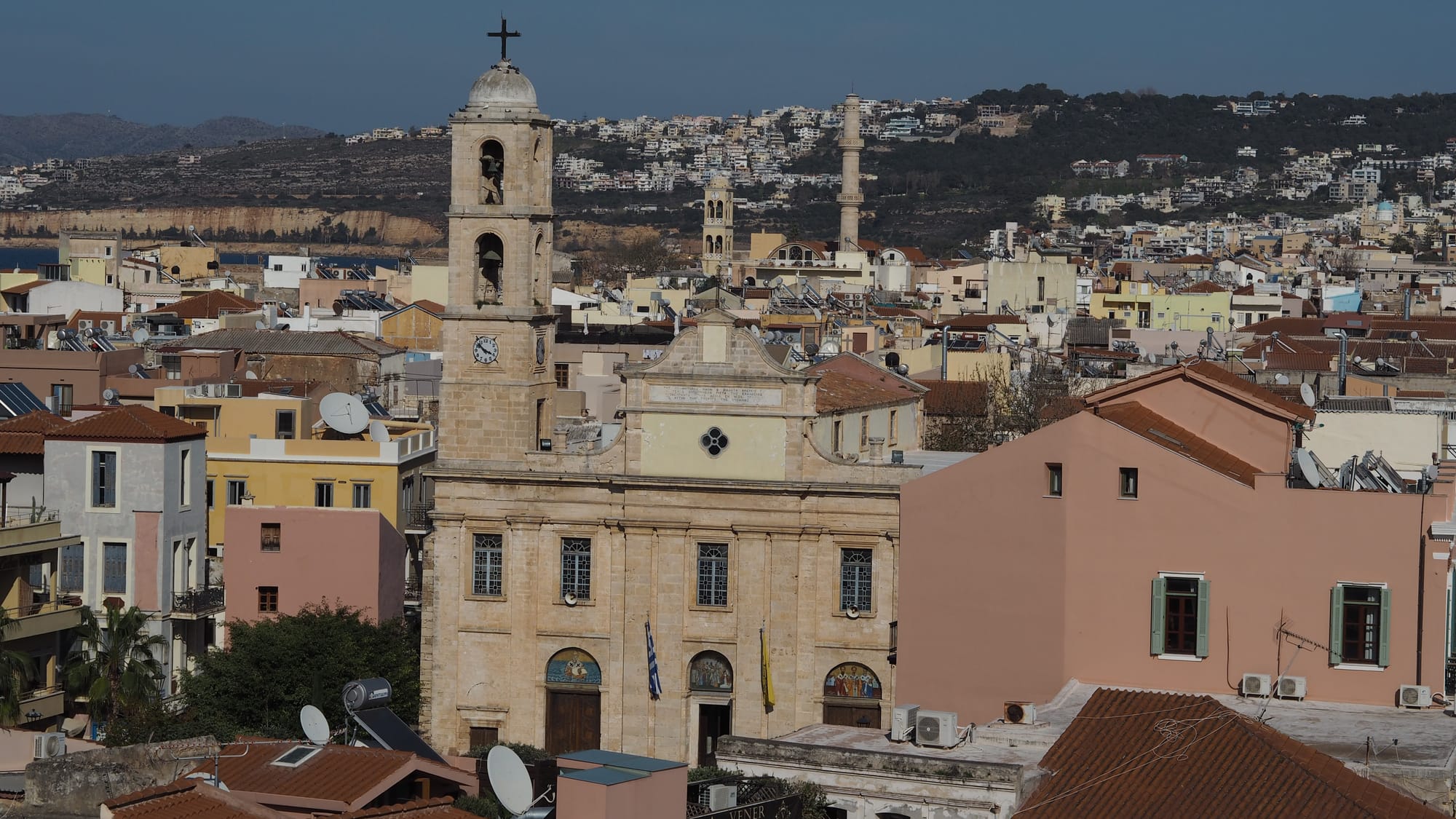
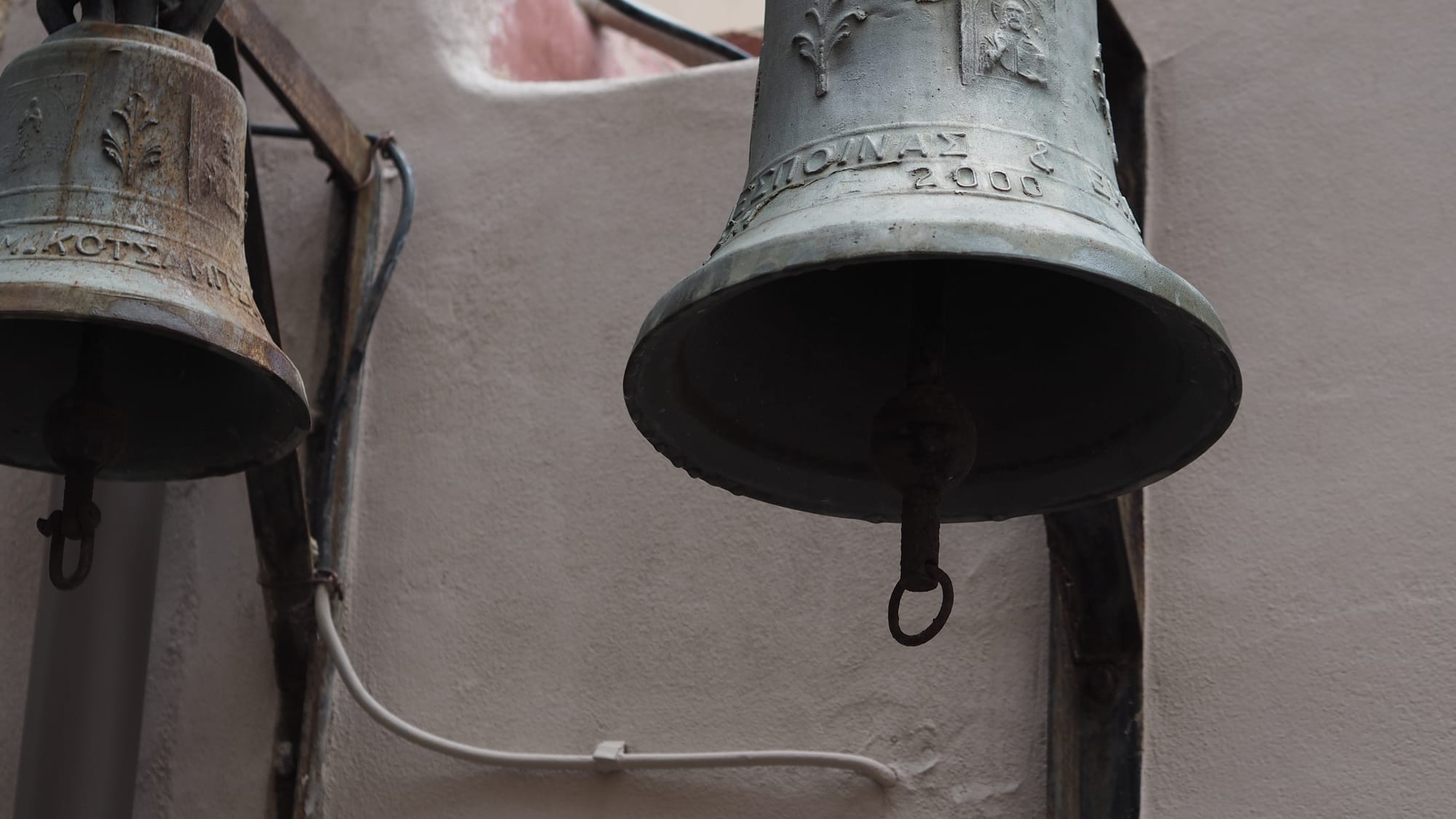
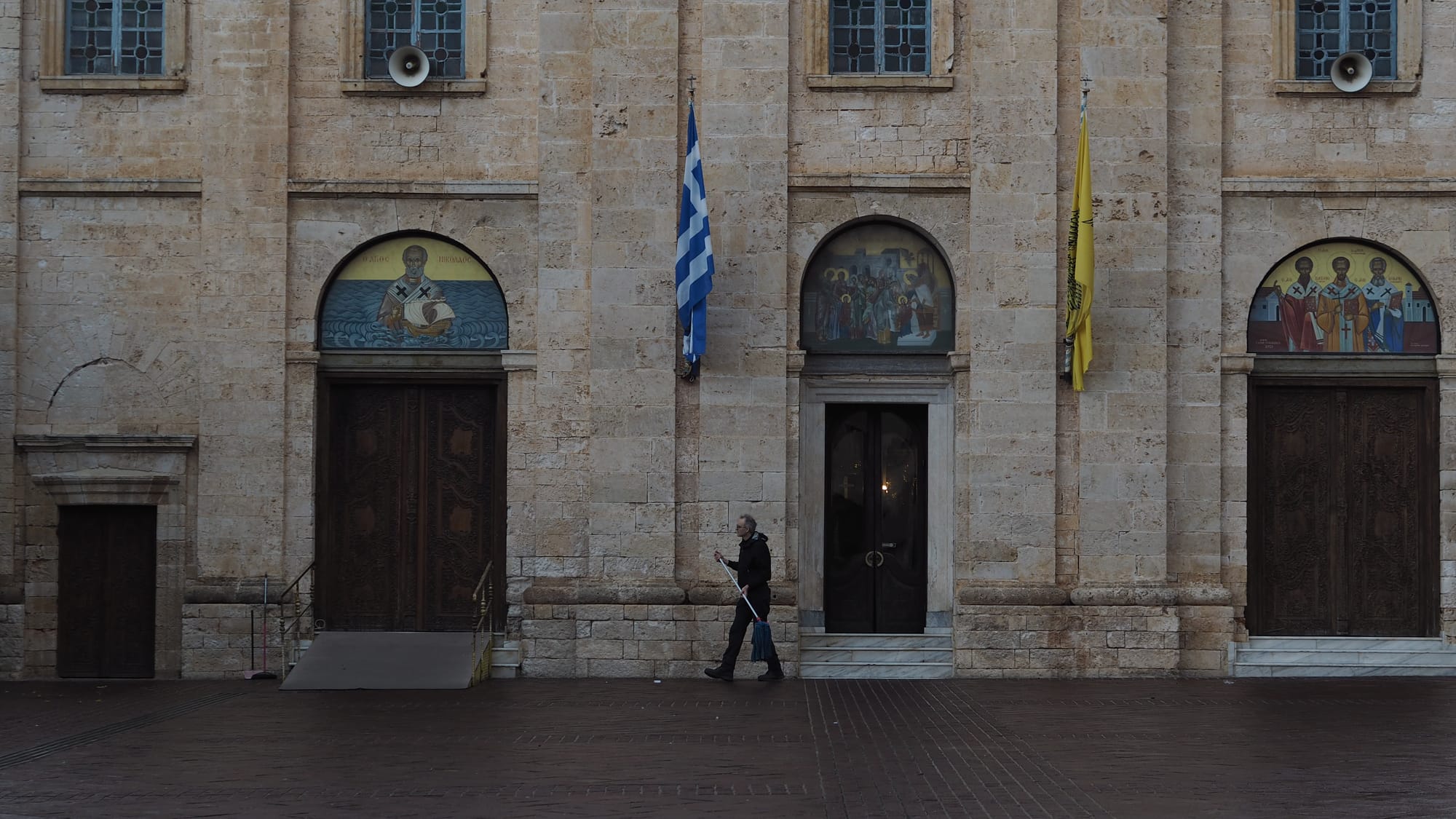
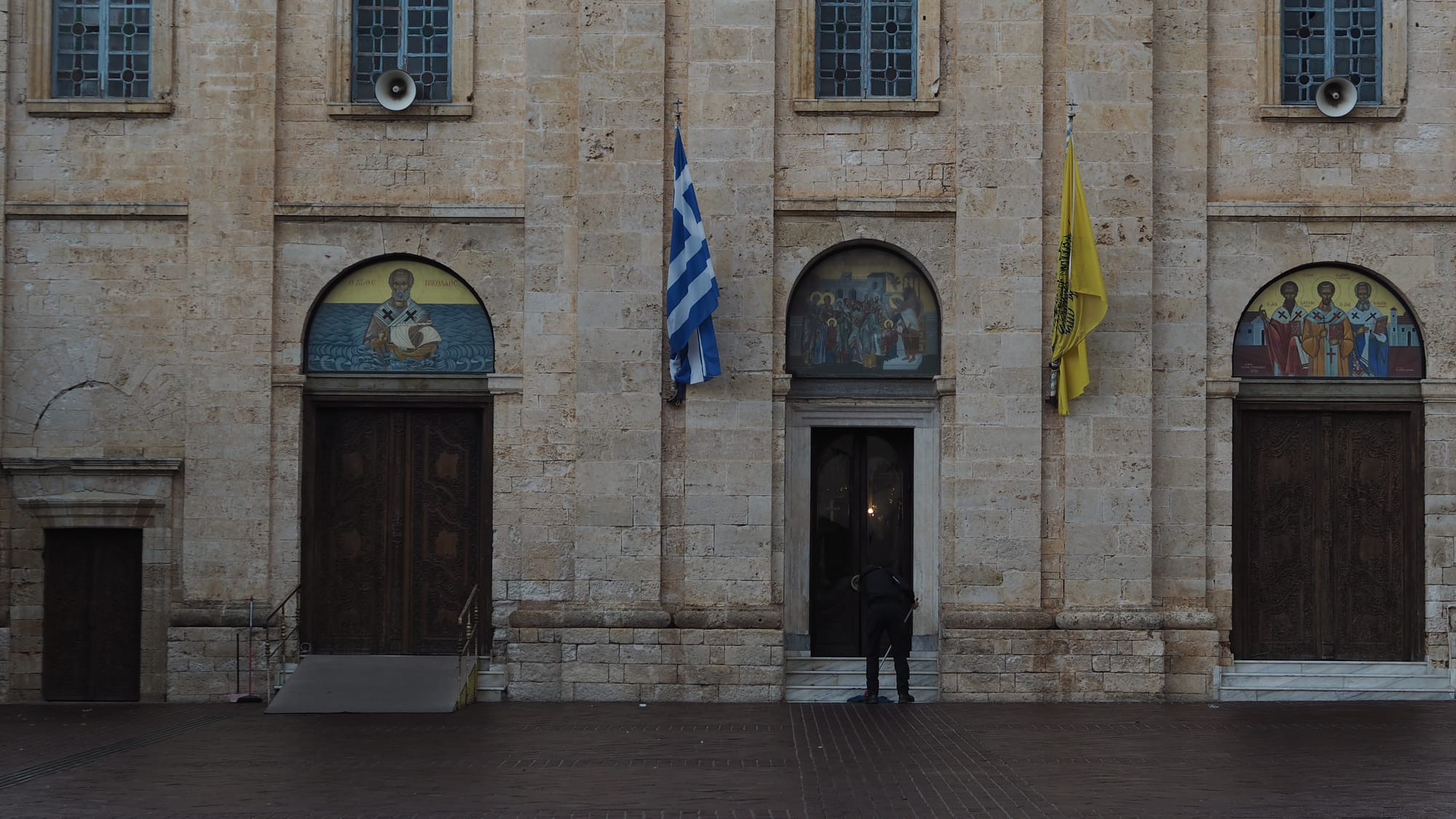
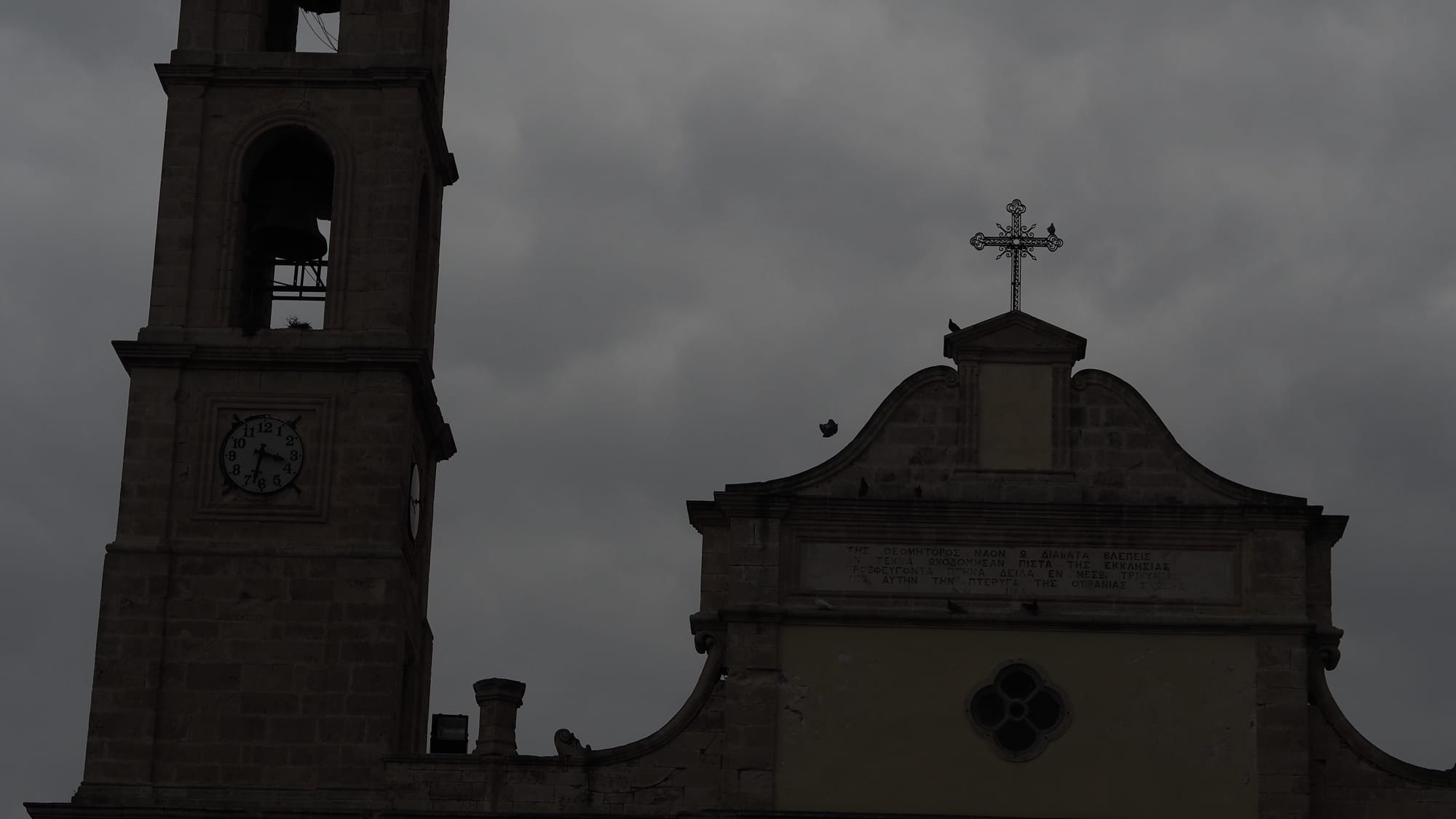
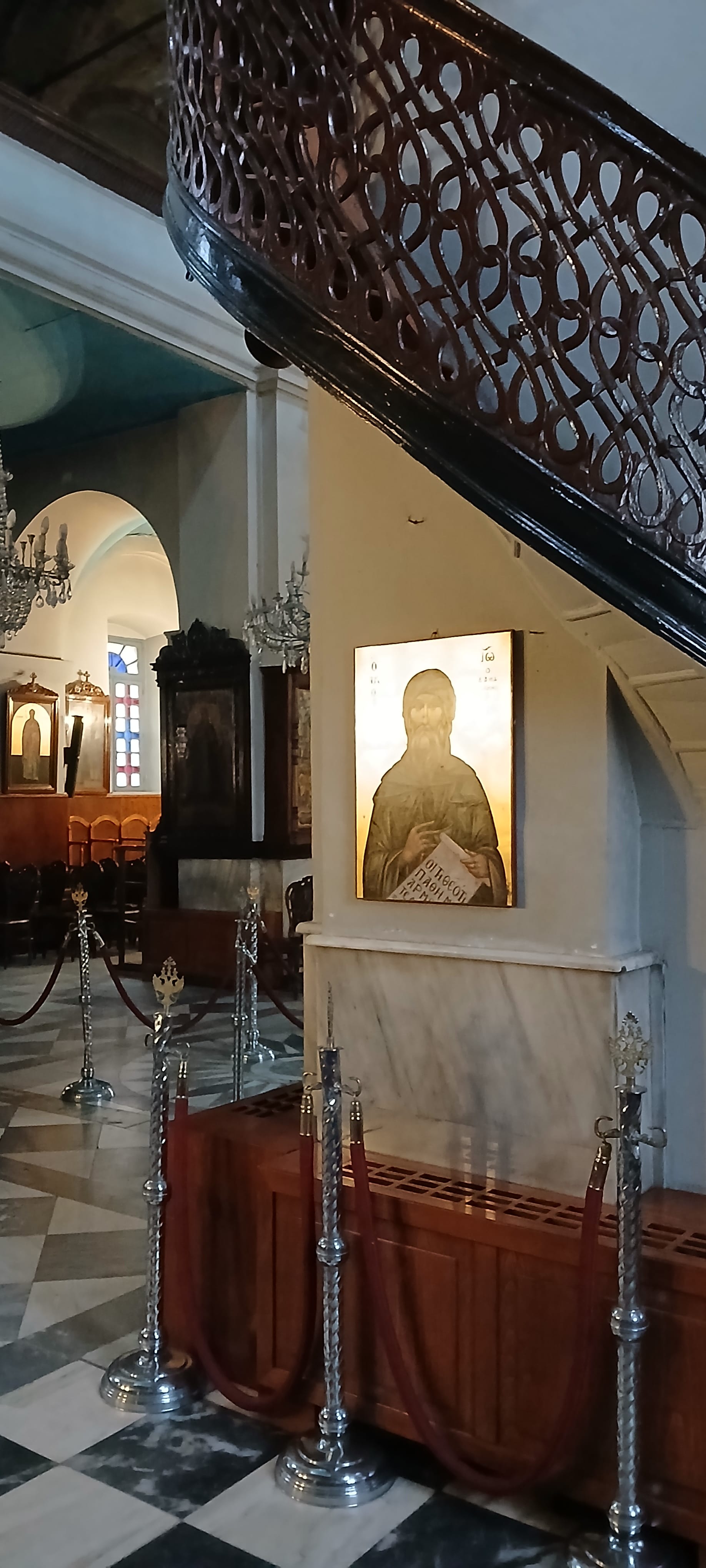
The Church of Saint Nicholas, Ιερός Ναός Αγίου Νικολάου, is extraordinary for having both a spire and a minaret. We visited the nearer of the major churches, the one belonging to the bell that rang earlier on, cathedral in fact, Trimartiri Cathedral, or the Presentation of the Virgin Mary Holy Metropolitan Church, Τα Εισόδια της Θεοτόκου or Τριμάρτυρη,
We met Netis, our charming host, for wines at his shop below our accommodation, having addressed the hum, and for the last two nights slept. A faulty compressor next door, which people over the alley were complaining about as well. There had been a pattern of noises in the night since İstanbul. The first night in our accommodation the sound of sex from upstairs, not once, not twice, four times. The last with paddles. There had not been a repeat performance on subsequent nights.
Netis invited us to watch his daughter sing (see above for choir practice) as part of a school performance. We agreed to meet at our fish restaurant from the first night beforehand. There Netis continued the story he had begun of political betrayal under Αλέξης Τσίπρας, Alexis Tsipras. A leftwing figure, he promised to reverse austerity policies; and on coming to power a referendum was held in 2015. 60% voted for discontinuation of the terms set by the EU, the IMF and the ECB (European Central Bank) but Tsipras, said Netis, sold the country out: Netis's own personal debt was sold on and repayments increased by an insupportable amount.
All we want is an honest leader, Netis said. When I was at school I worked nights at a bar. With the equivalent of a couple of euros I was a king. Now noone can live. ... A bad day today, he said, in his snow-white puffer jacket. Previously we'd only ever seen him in his black cardy. Lease problems on his businesses. His cleaner, her husband and their baby, a Roma family, leaving. ... Against the backdrop of Greek political malaise.
He left to join his wife at the venue, asked if we'd cover the beer he'd been drinking. After an excellent moussaka and risotto, we went to pay and the restaurateurs said, No, it's our friend!
We arrived in time to see Netis's daughter sing. Here's a section of piano with the same band as supported her: