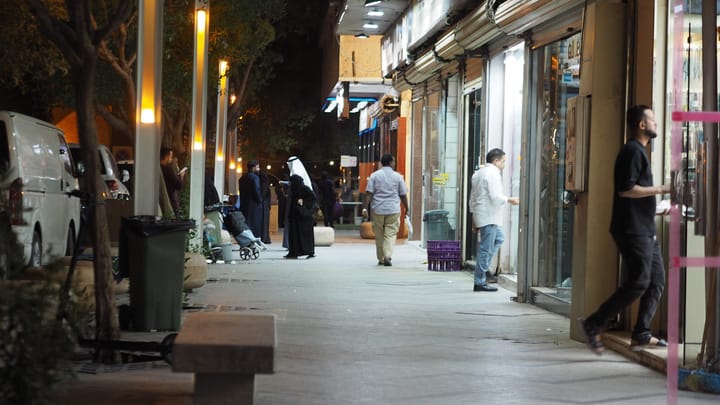
The Kingdom of Bahrain, مملكة البحرين
this morning, Viktor Frankl's lost lectures on the meaning of life caught my eye at The Marginalian—marginalia on the search for meaning. A review by Maria Popova of lectures originally given in German, for the first time translated into English, under the sensational title of Yes to Life, In Spite of Everything. Frankl survived his parents and brother who died in Auschwitz. I must have been seeking some kind of existential titillation.
The answer, it appears, is in the question, the question each passing moment asks. In other words, it's put by life and addressed to us. Frankl is quoted:
Any hour the demands of which we do not fulfil, or fulfil halfheartedly, this hour is forfeit,“for all eternity” forfeit.* Conversely, what we achieve by seizing the moment is, once and for all, rescued into reality, into a reality in which it is only apparently “canceled out” by becoming the past. In truth, it has actually been preserved, in the sense of being kept safe.
He also praises the uniqueness of the individual but I think the above more cogent. To be rescued into reality, rather than to pass without ever having been.
We each become the answer to the question meant for us alone. The individual's uniqueness is counterbalanced by the unique and individual question or problem life puts. And rescued into reality, its safety, not because it is stored there but because it is stored then, is assured by memory.
*note the difference in meaning between forfeit and forfeited, it is either lost or given up; I have chosen lost. Altered from:
Any hour whose demands we do not fulfill, or fulfill halfheartedly, this hour is forfeited, forfeited “for all eternity.”
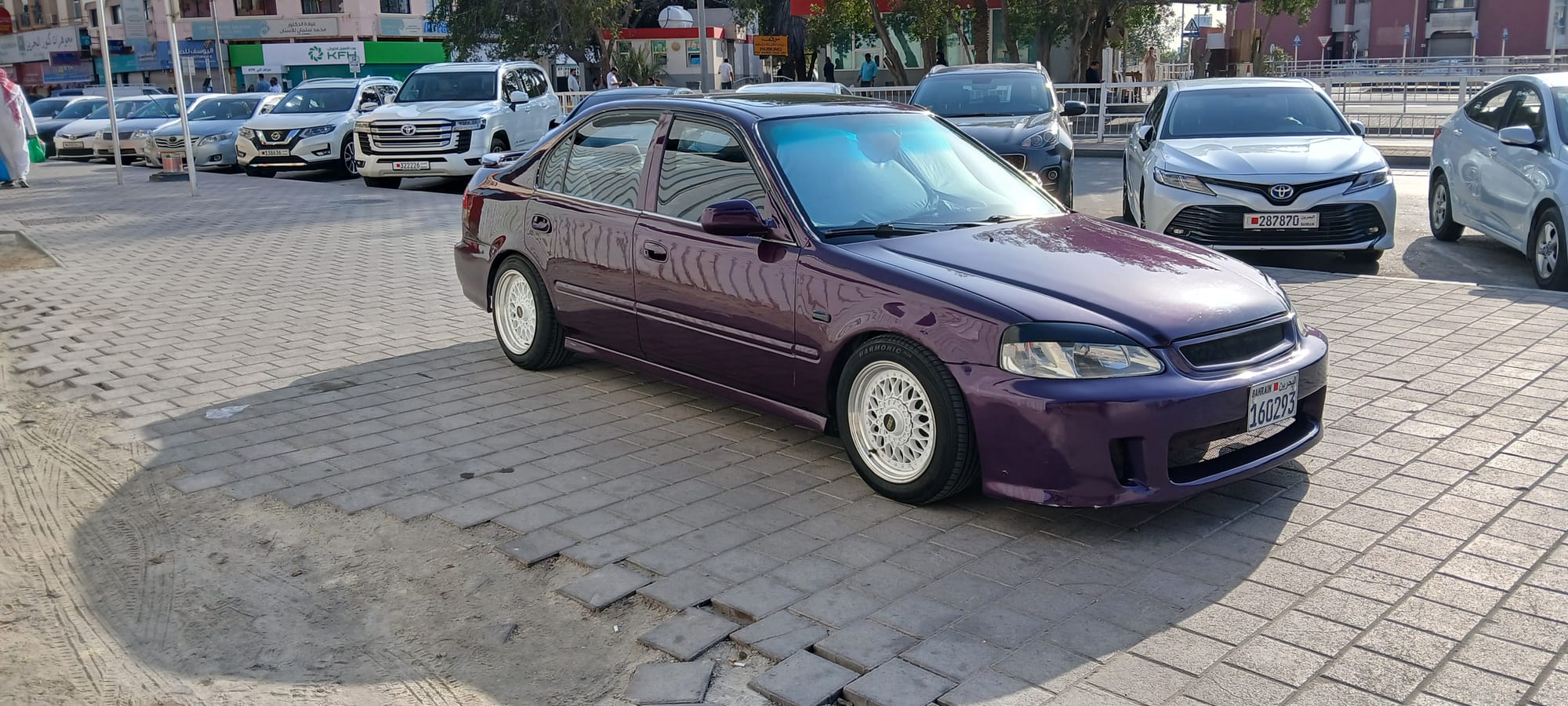
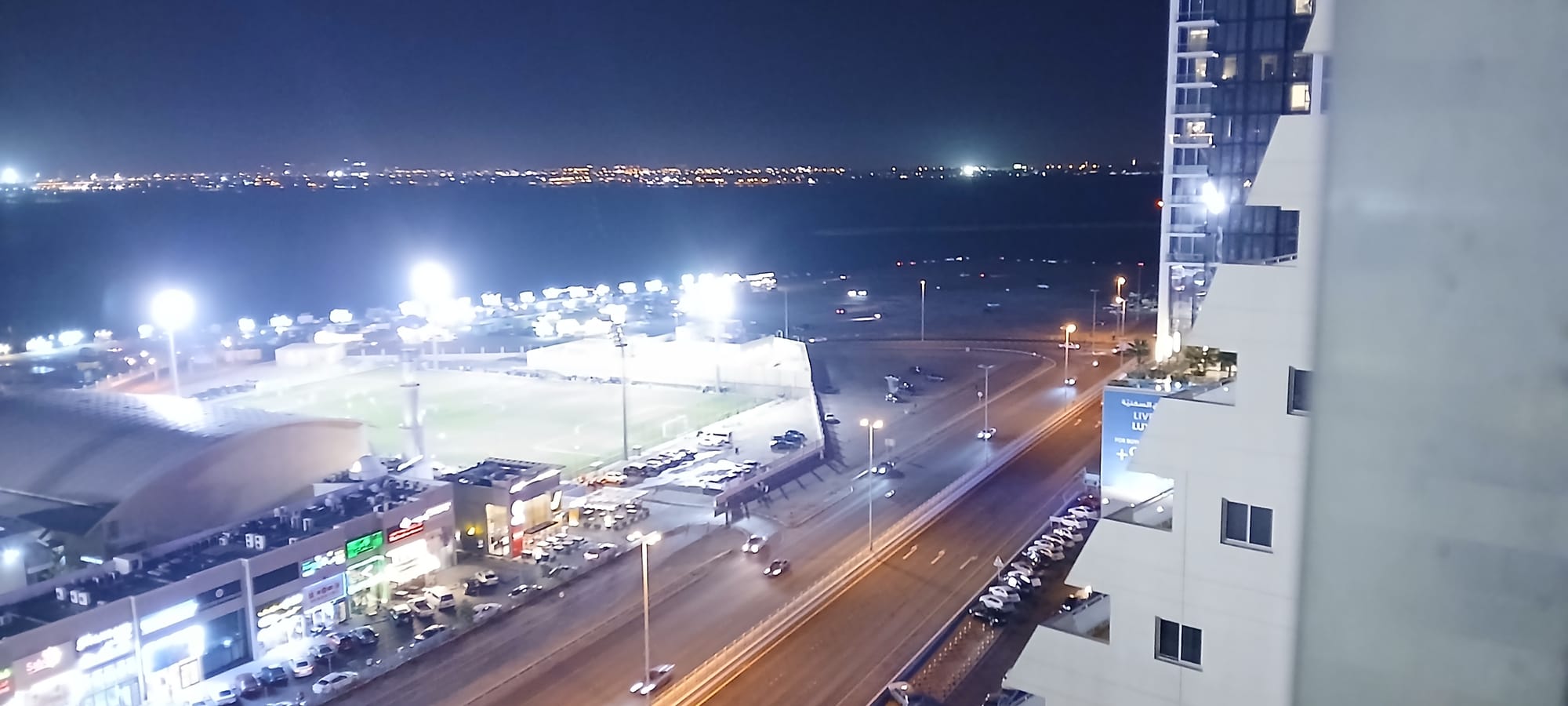
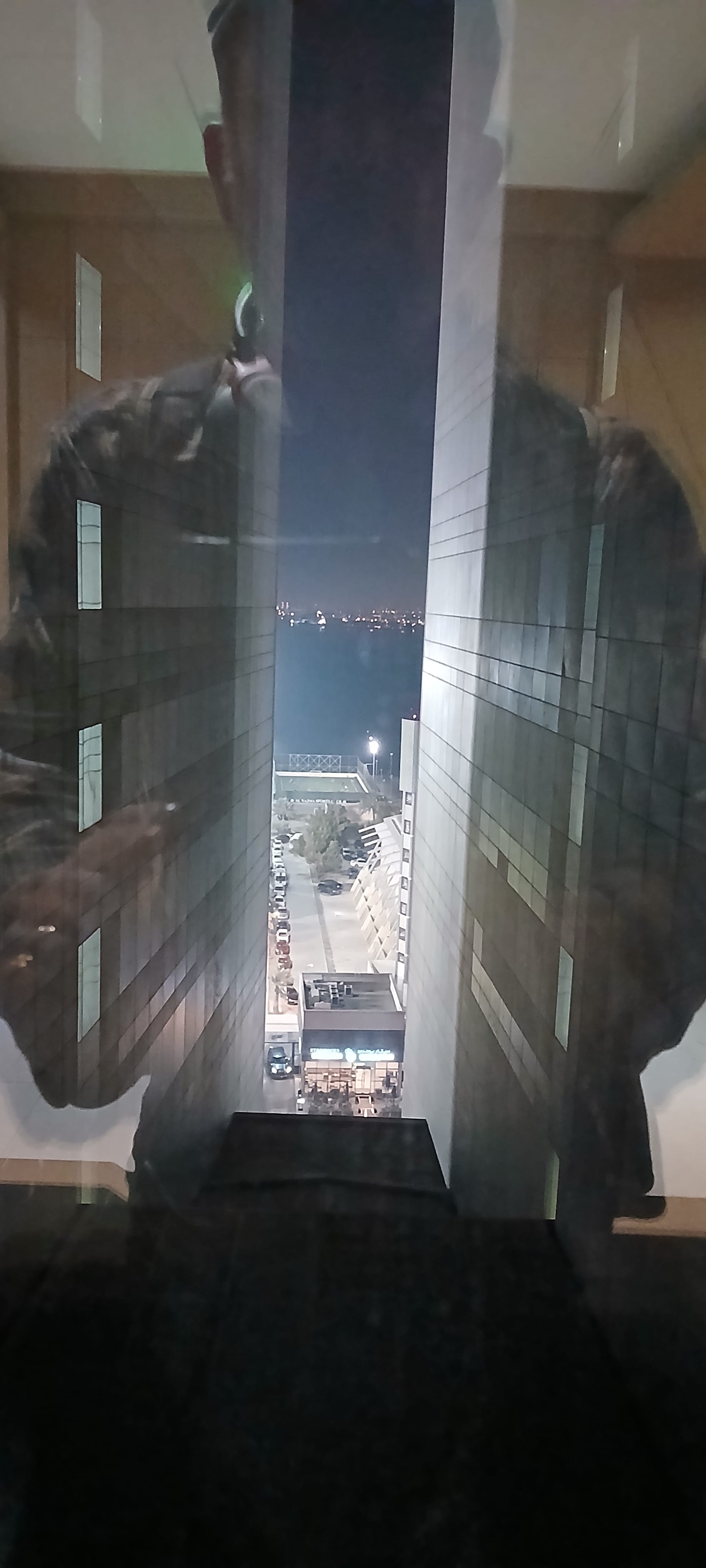
The call to prayer is ringing out over the football pitch and the foodtrucks, lit up like jewels at night, on the reclaimed land where the apartment is. I write at the window of the 12th floor. A mosque is opposite, the call different again from the mournful Saudi, or the competitive Türkçe, every muezzin trying to outdo the others through tinny old metal cone speakers, wires strung above the streets, or the Egyptian, which is lighter and louder still. Here it is melodic, measured phrases cadencing now in an upnote, now in a downnote.
The photos. We arrive Thursday night before Holy Day. Jalal picks us up, a driver recommended whose voice I can hear, pinched by the Arabic letter ع and prickled with trilling rrrr's. Full of "to be honest with you..." opinions. We were waiting for Jo at the airport.
That's her in the abaya, I said. She doesn't need to wear that here! Here in Bahrain we are very free.
She knows, I said. She likes wearing it. Well, that's different. That's OK. I don't want you to think you have to do anything different in Bahrain. I want you to be welcome and to like Bahrain.
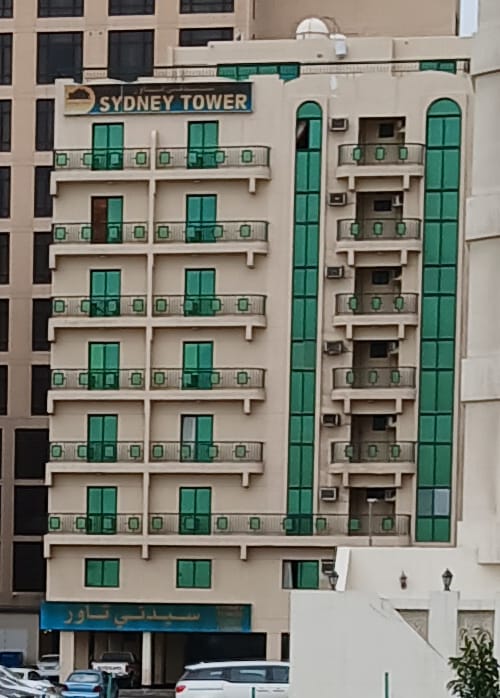
In a much later discussion, we had dropped Jo off at the airport, I was waiting for my visa, on the trip back, Jalal returning me to the Sukoon Tower in Juffair, we addressed this issue of national pride. I said, New Zealanders are not very good at being proud of our country. Yes, I have heard this, he said. He had been recommended to us by other visiting New Zealanders.
The whole issue came back at me when I read this pellucid article on the politics of Iran by Reza Negarestani, "Iran, the Greatest Inconvenience: On the Eternal Silence of a Contemporary Left". I even began an answer to it here, under the title the flagellant left. I was going to say that distance has not afforded any great clarity on my native country, but I am not a native.
What has happened is that the pressure has come off to judge. One thing I do see clearly is the national deformity of judgement. It is the deformity of a largely immigrant population whose second-class status, as both immigrants and colonials, gets bred in and in-grows. The massive inferiority complex turns upside-down and inside-out, festers and comes to resemble its opposite, entitlement. And the sensitive souls who smell something's up end by flagellating themselves for it.
I envy Negarestani's clear-sightedness that is unclouded by judgement. Or resentment. I met an Englishman at the Bahrain National Museum. He said he wanted to move to Abu Dhabi, where his company, also having them in Bahrain and Riyadh, has offices, and move his three sons, because the UK was headed into a period of civil unrest. And things were going to get worse.
There's so much anger, he said. Everyone is angry. It reminded me of NZ, however, what most often comes to mind is not anger but fear.
The anger comes from the fear. And the fear from shame, from being, having been shown to be, inferior—which is more psychologically damaging than being physically beaten: to have no personal pride, no individual pride and no collective or national pride. (That is, apart from a kind of manic pride which coheres in violence, symbolic, real and imaginary. And presently re-enacts the source of that shame in colonialism.)
As regards Negarestani's article, with its subtitle "On the Eternal Silence of a Contemporary Left", I was going to say, but you are simply feeding the idea that the left should be beating itself up. Yes, you are so right! We are cop-outs! You are feeding the perverse pleasure that comes from self-deprecation and in turn feeds into self-sabotaging defeatism. And you are right in your diagnosis of nihilism.
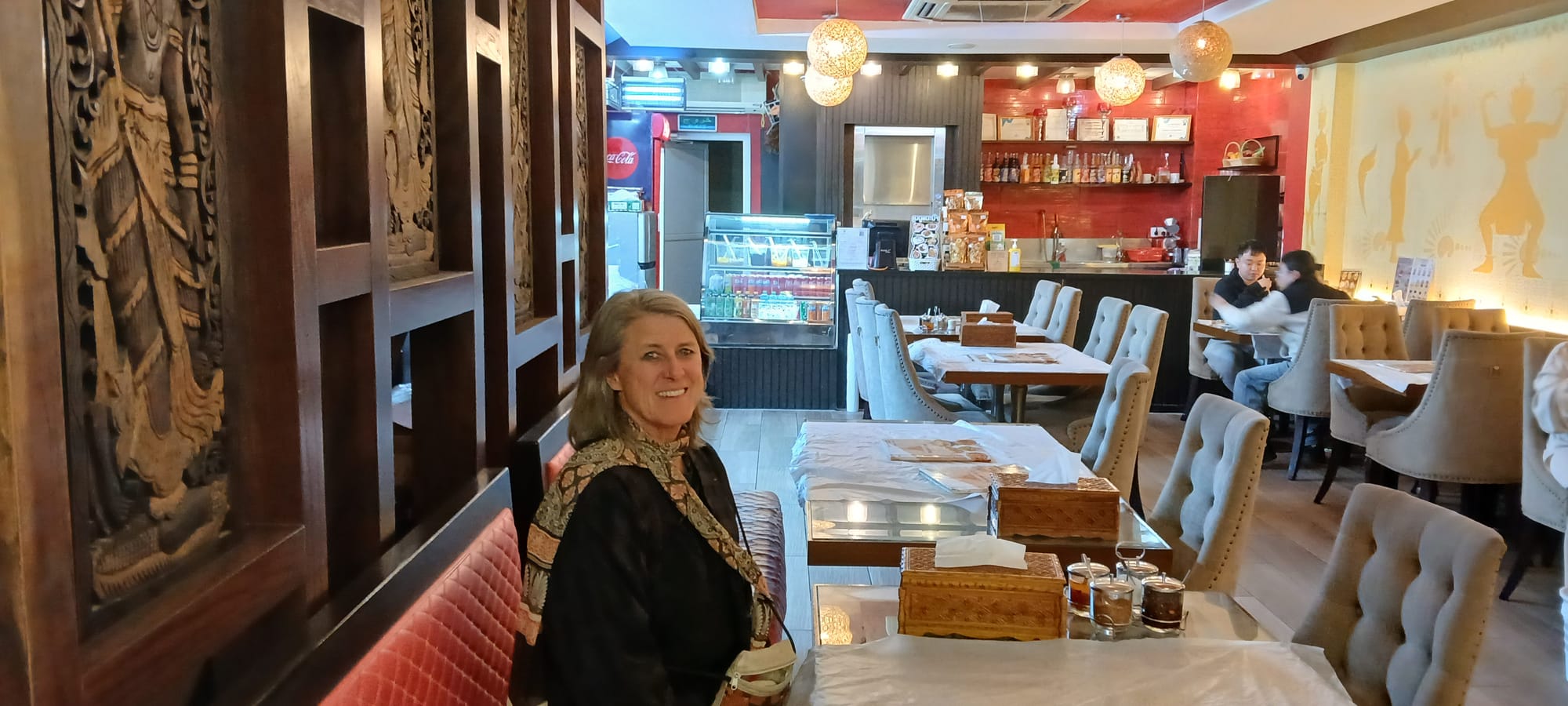
- Thai food
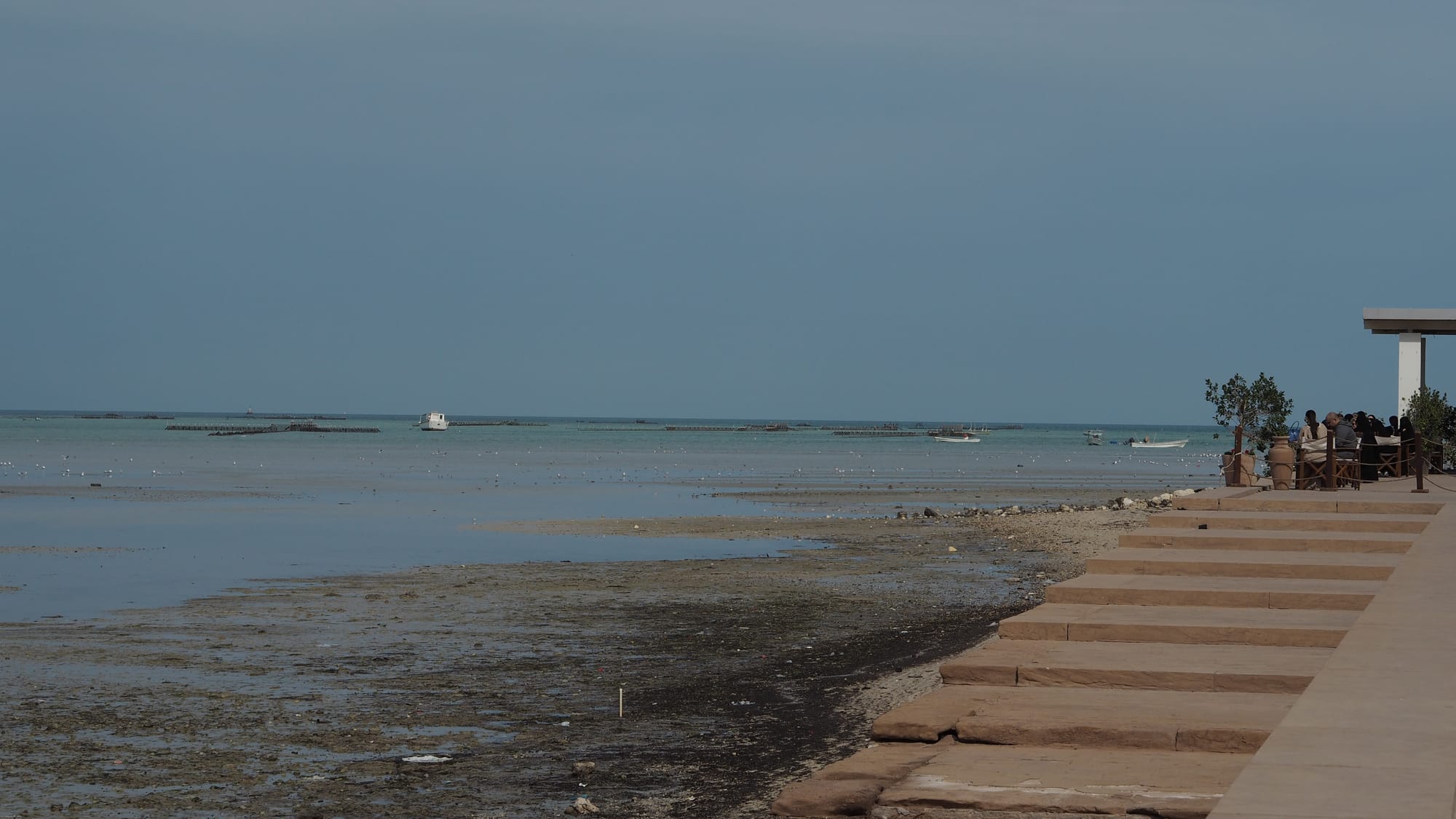
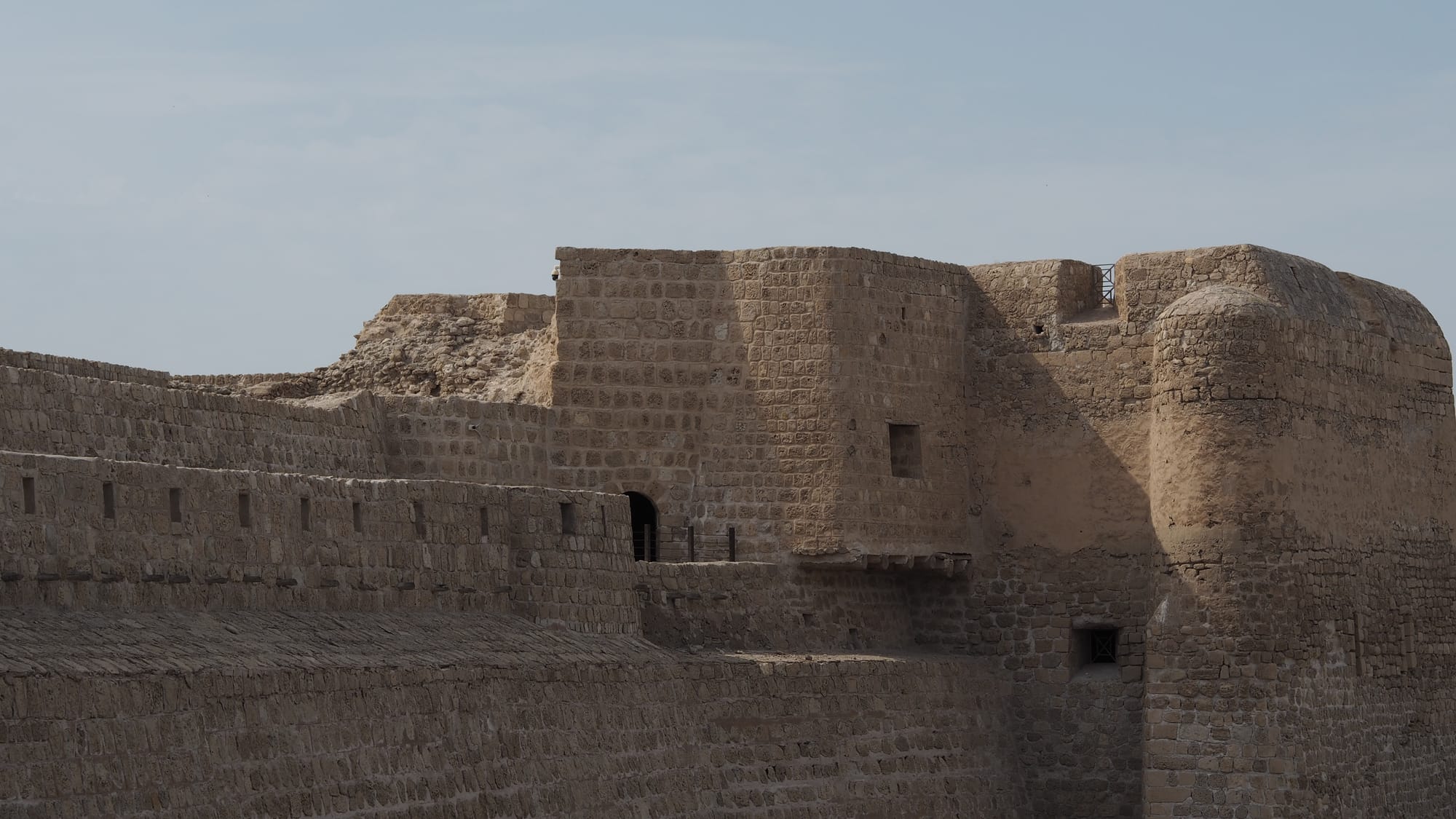
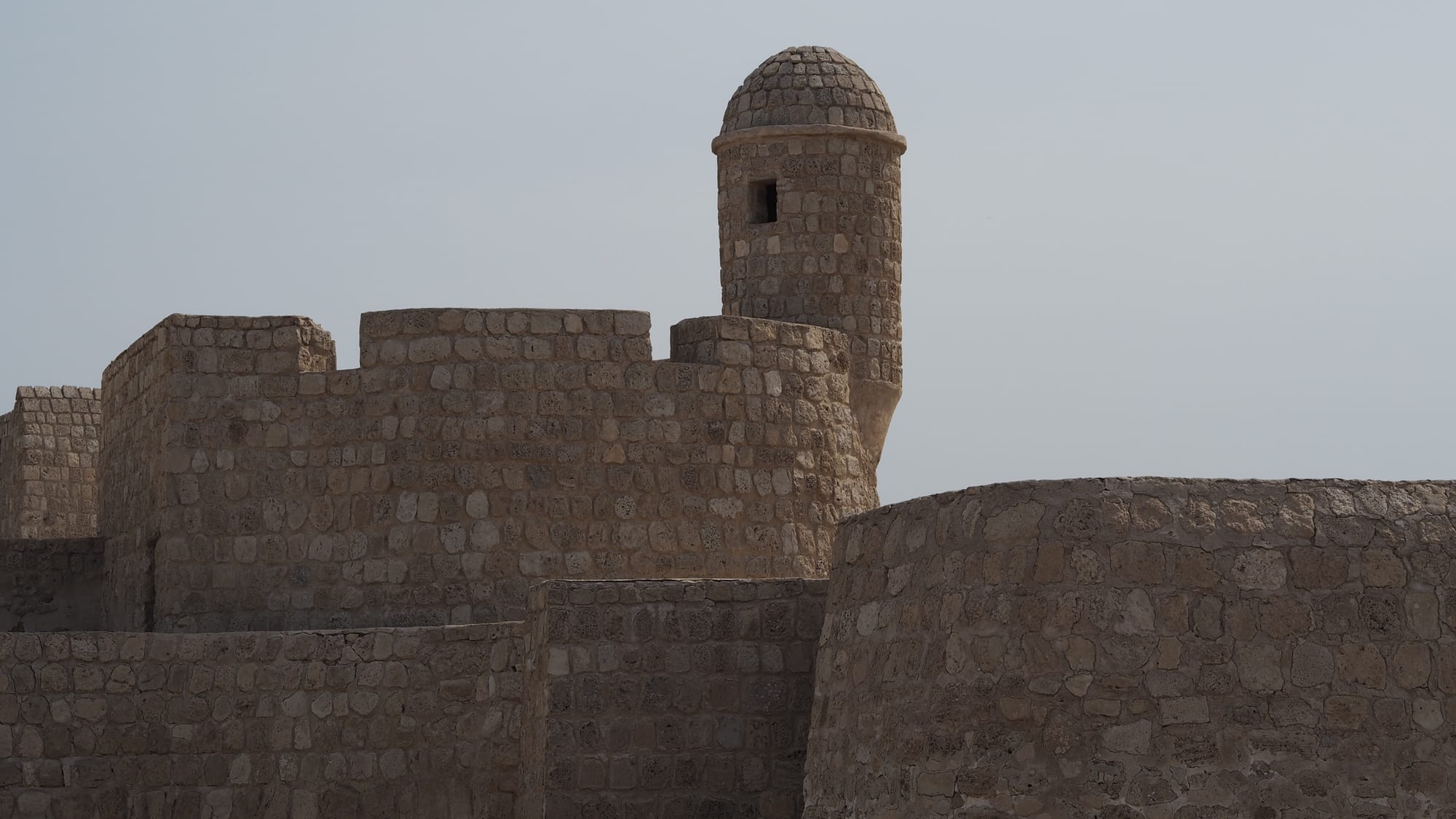
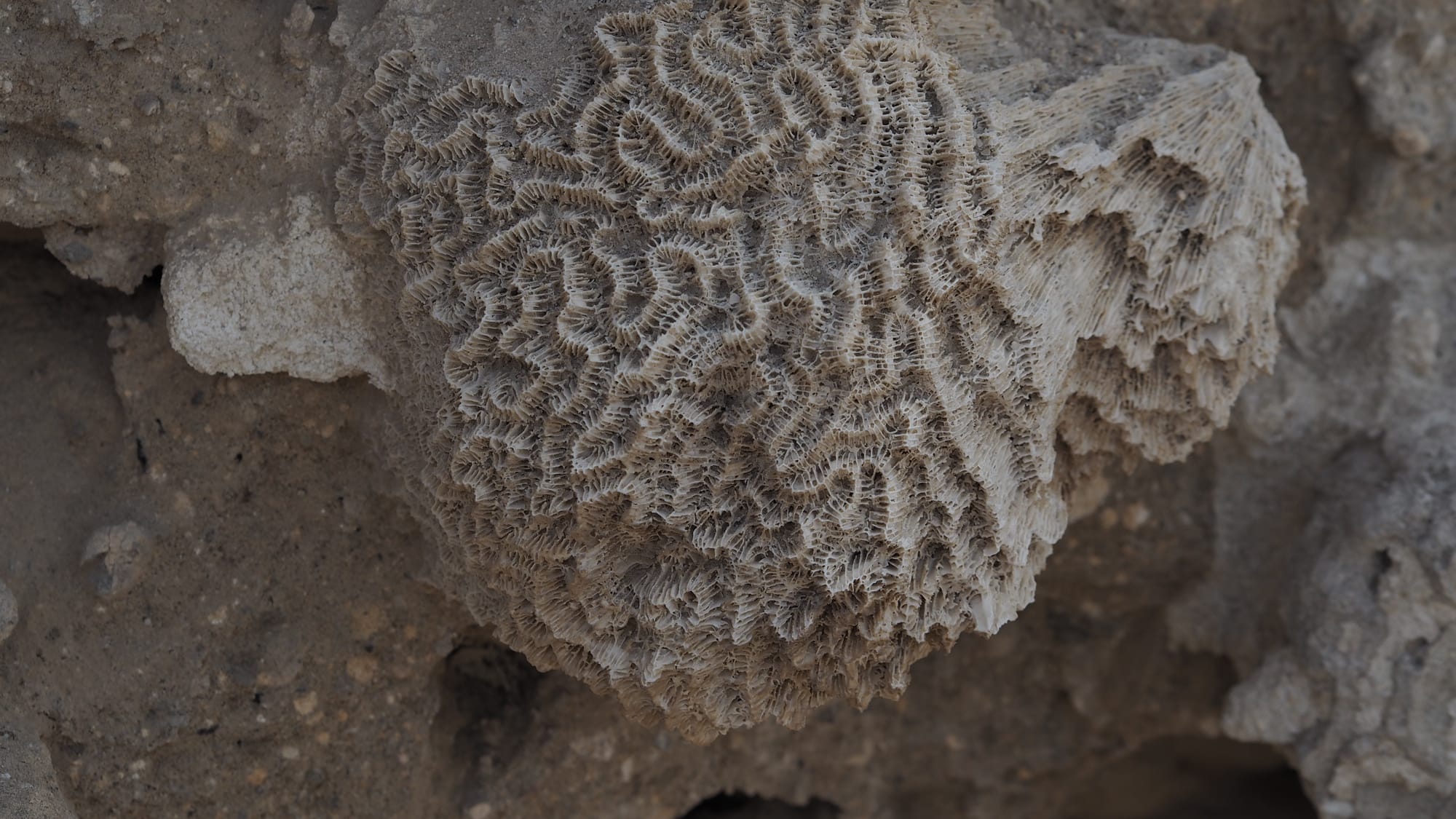
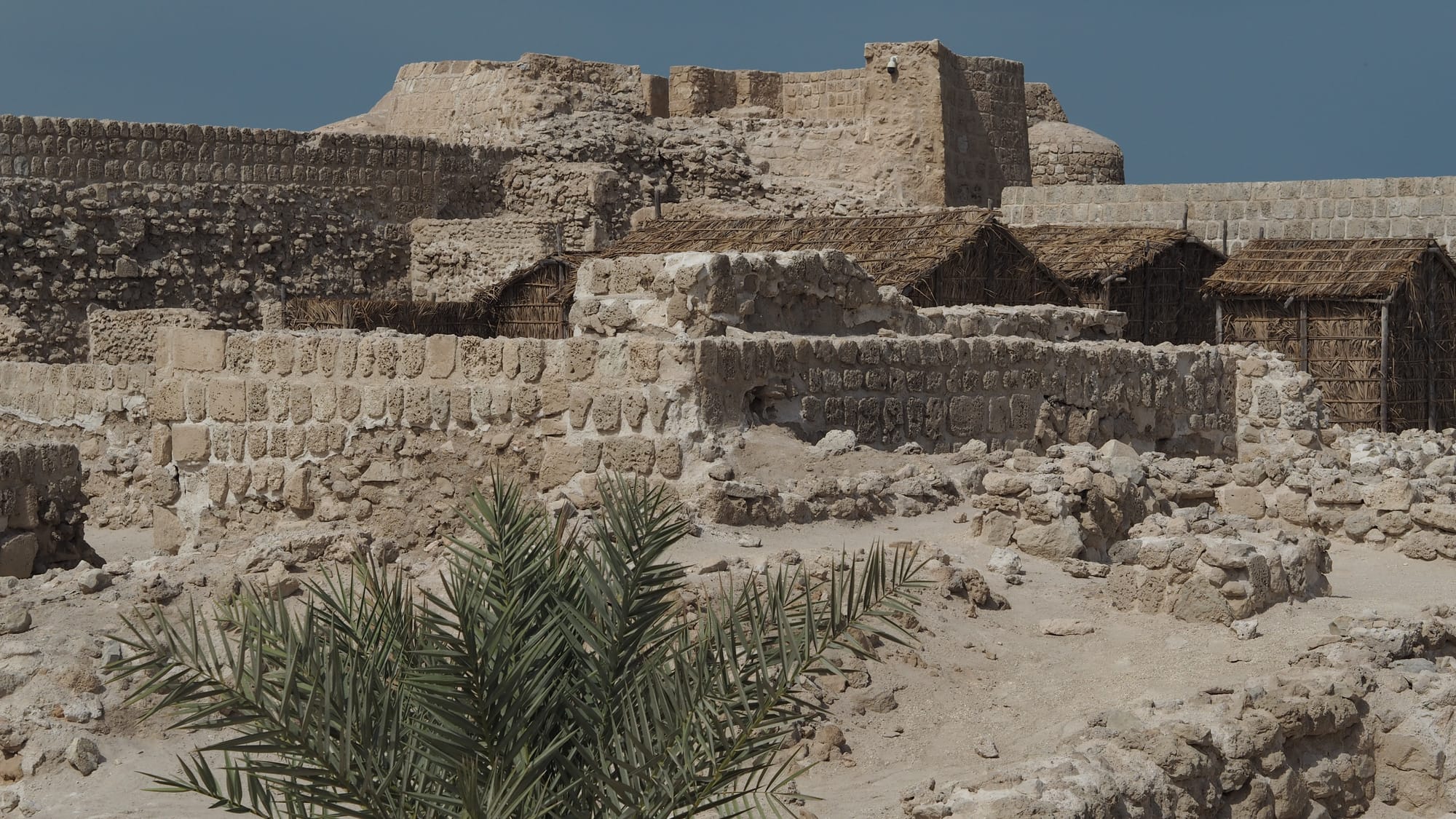
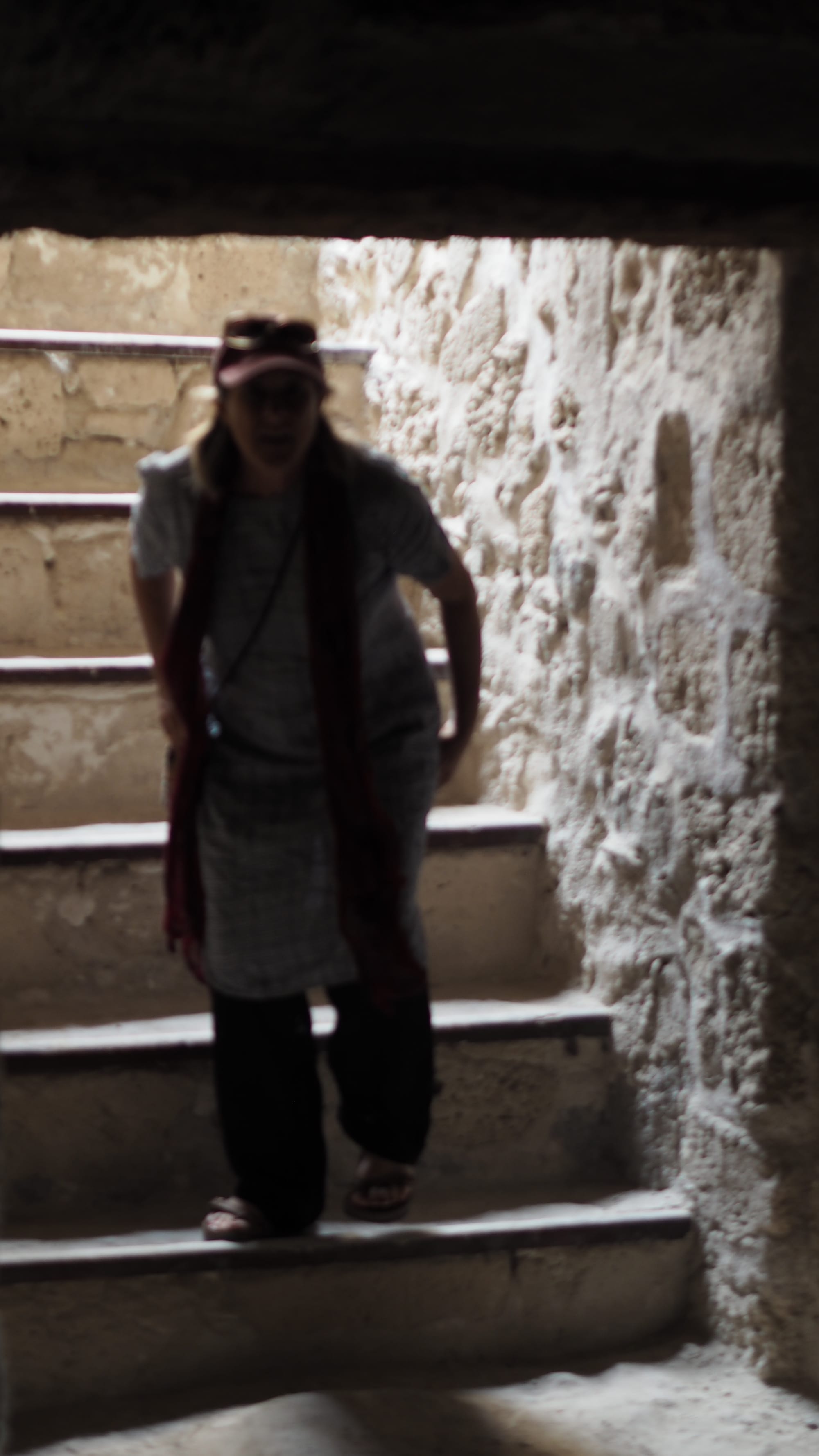
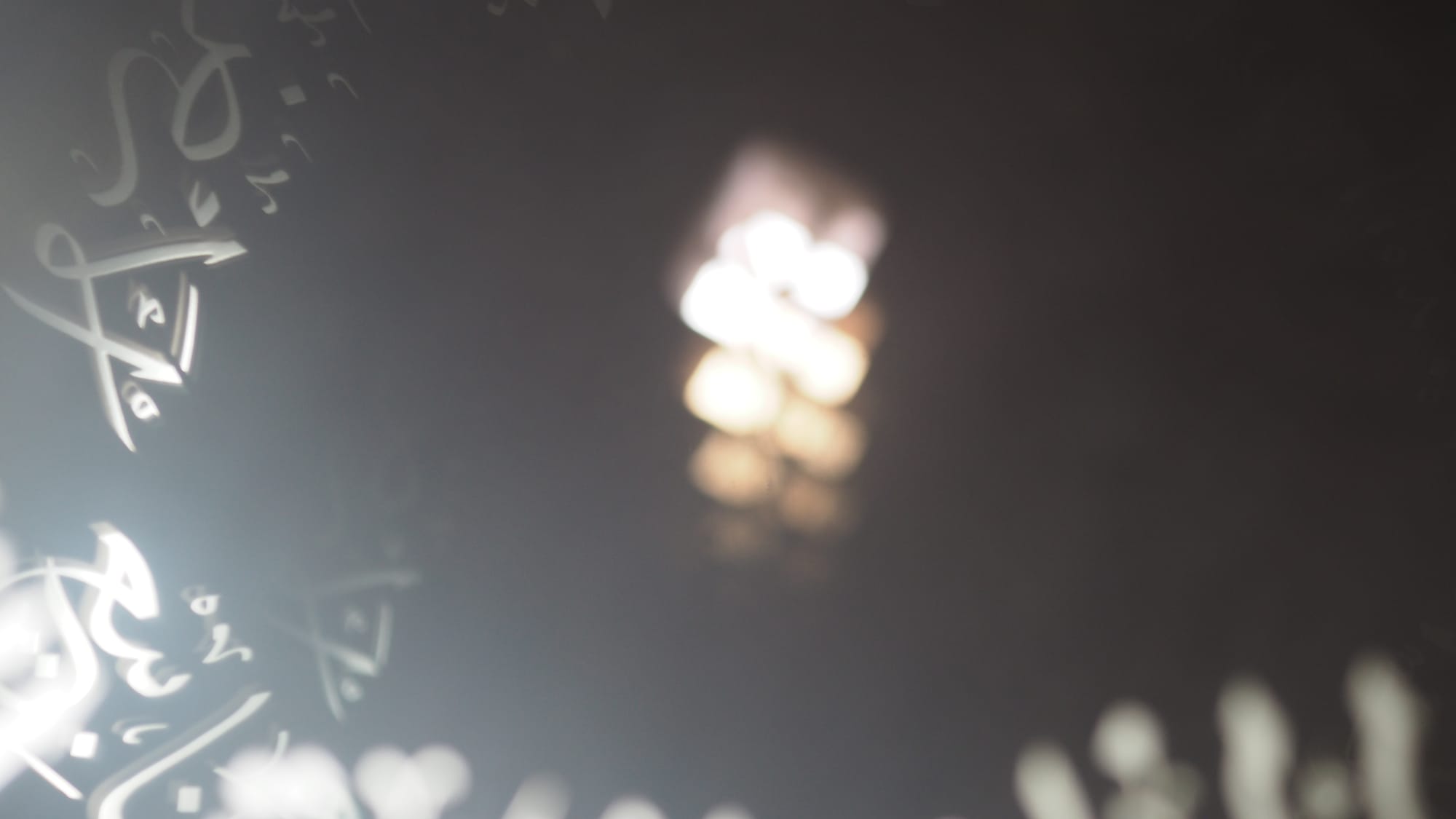
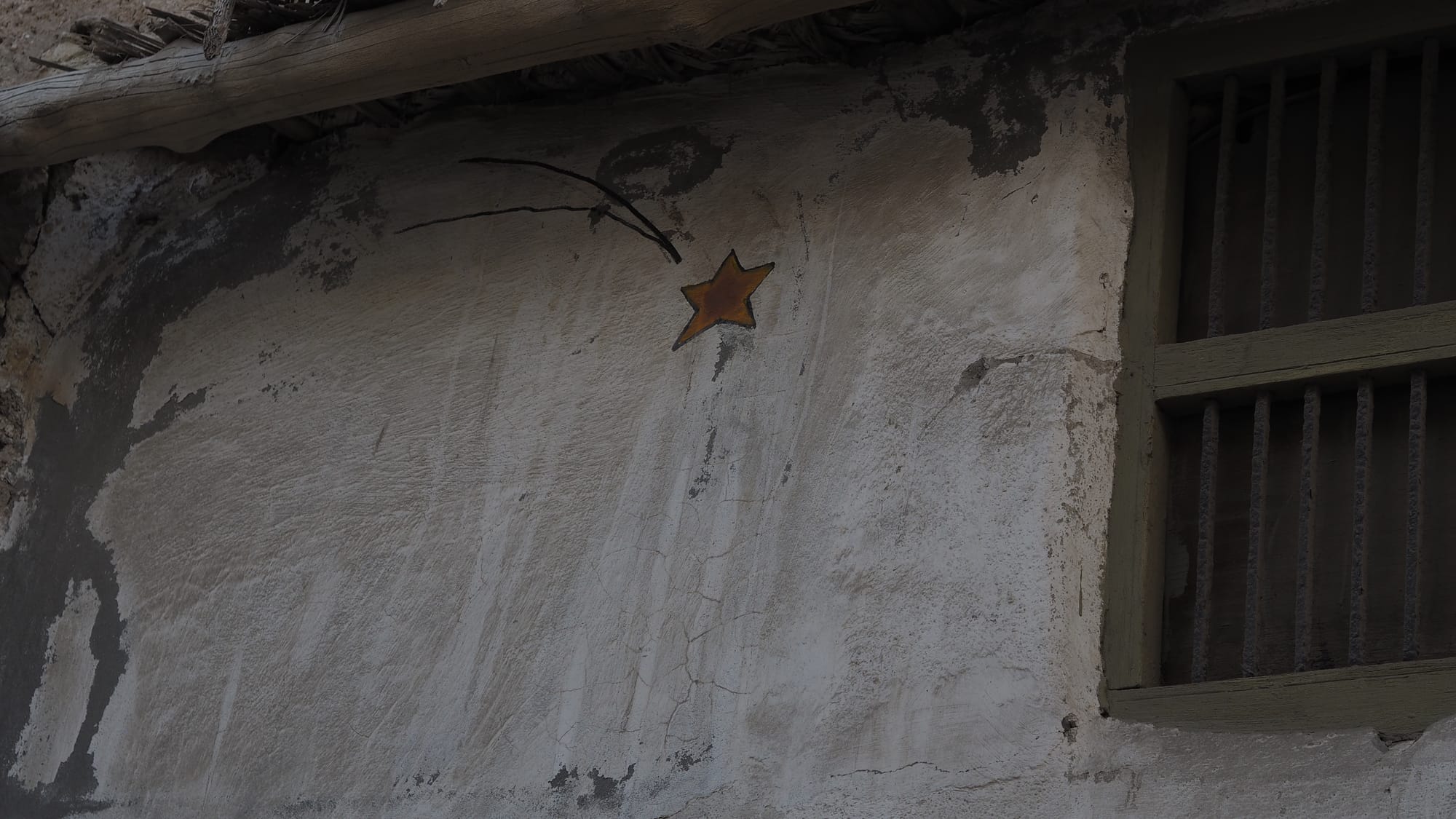
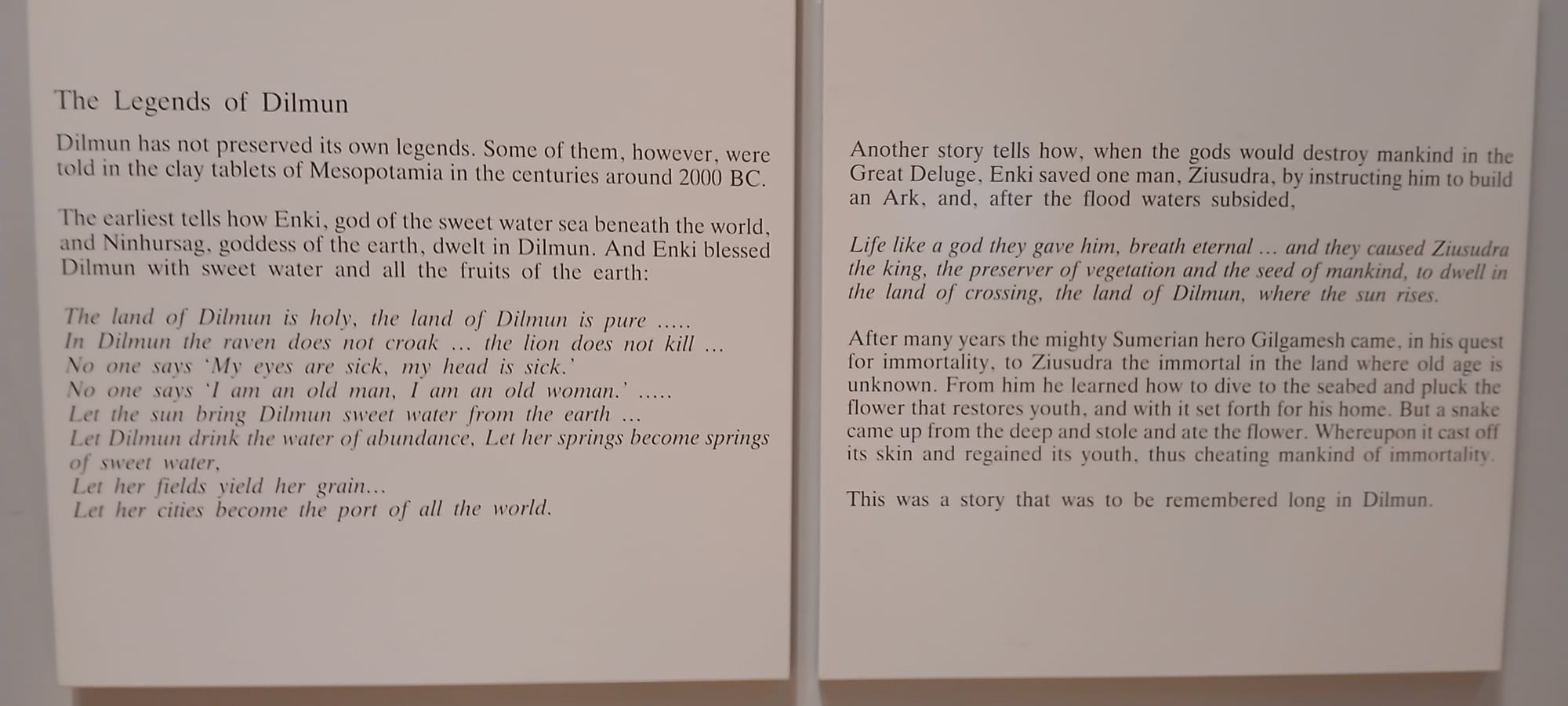
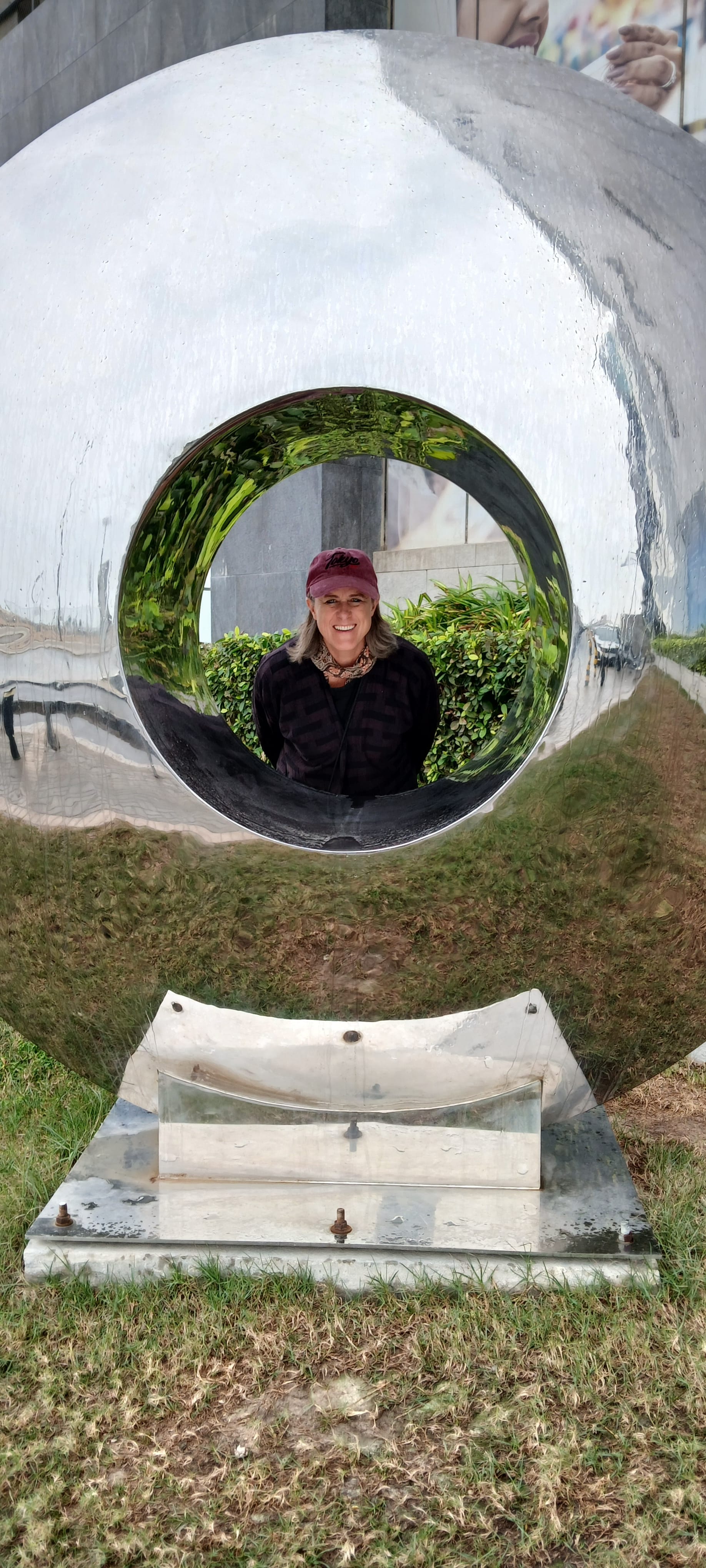
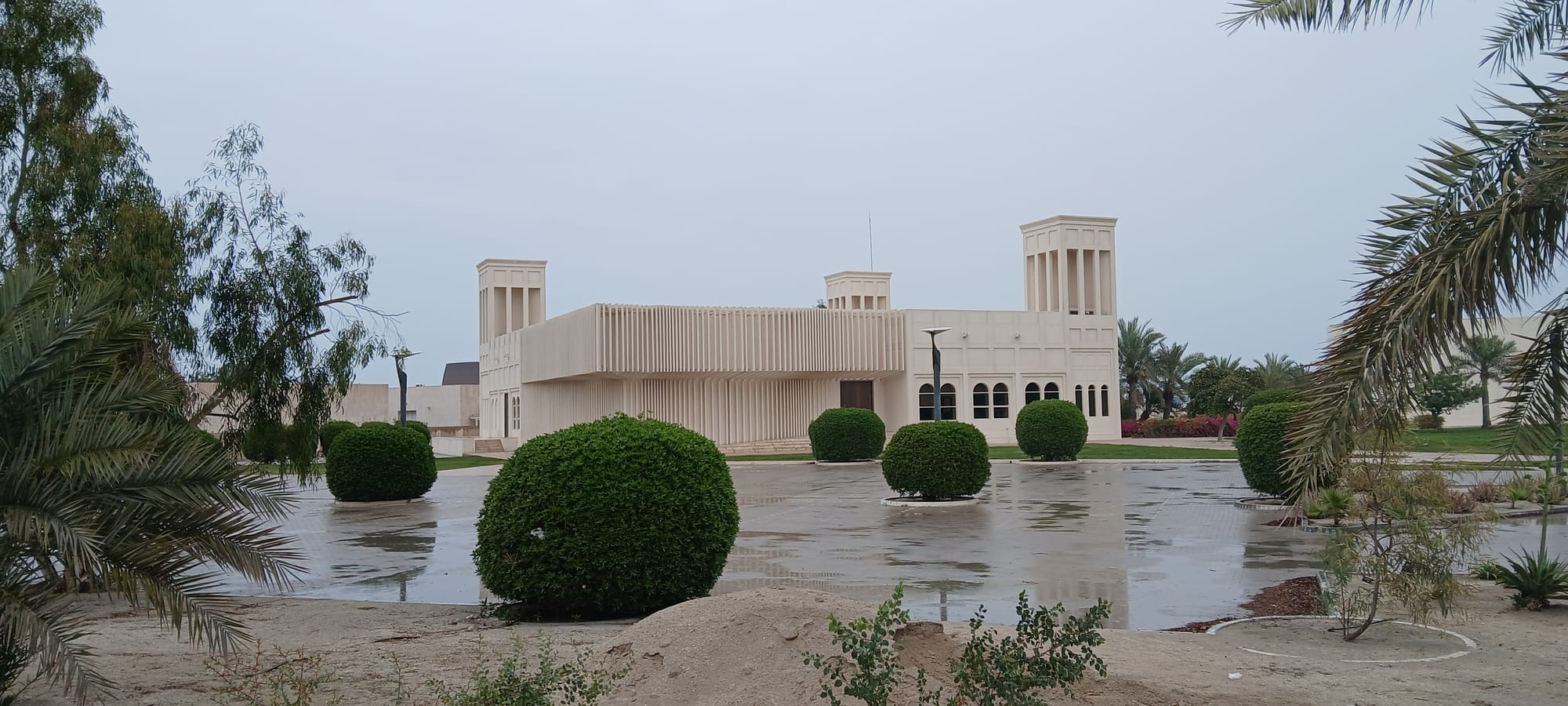
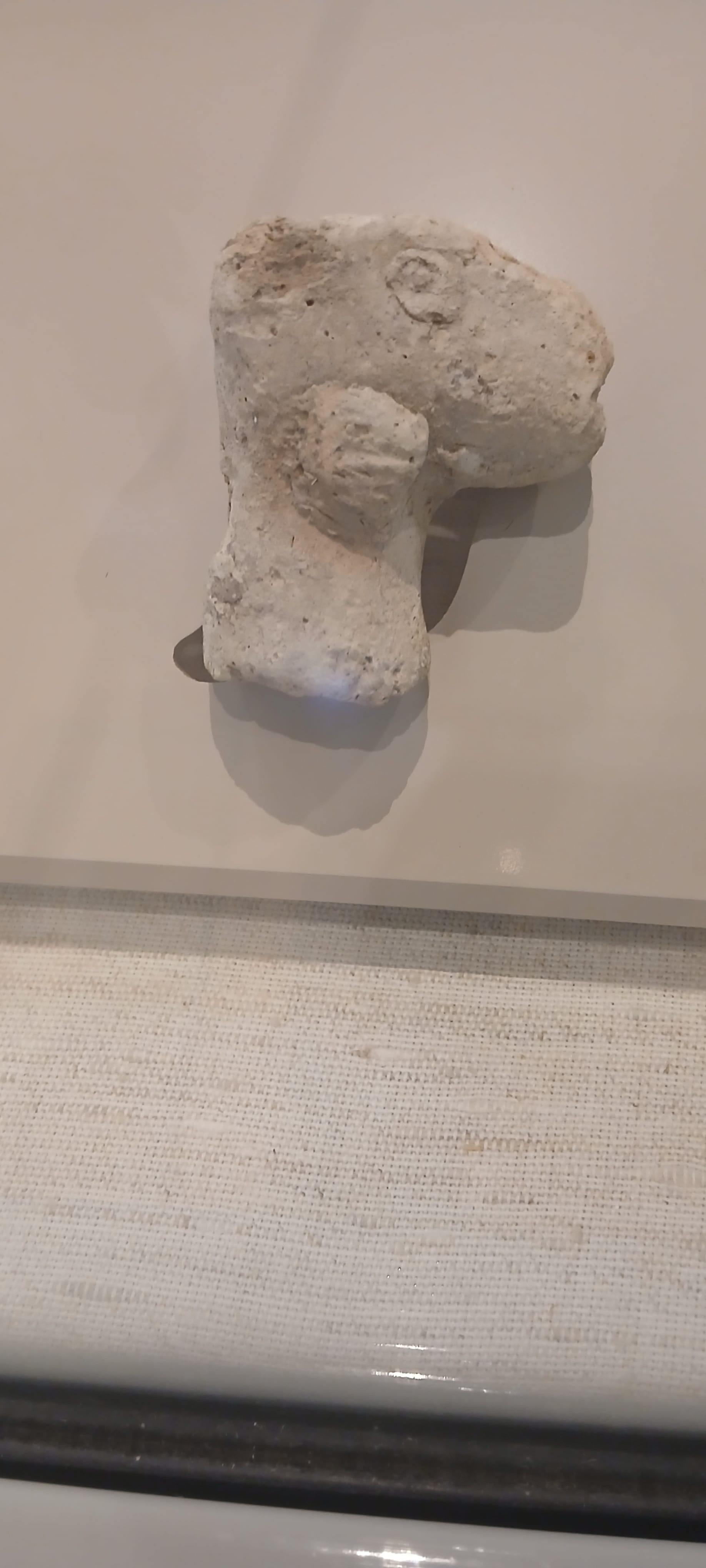
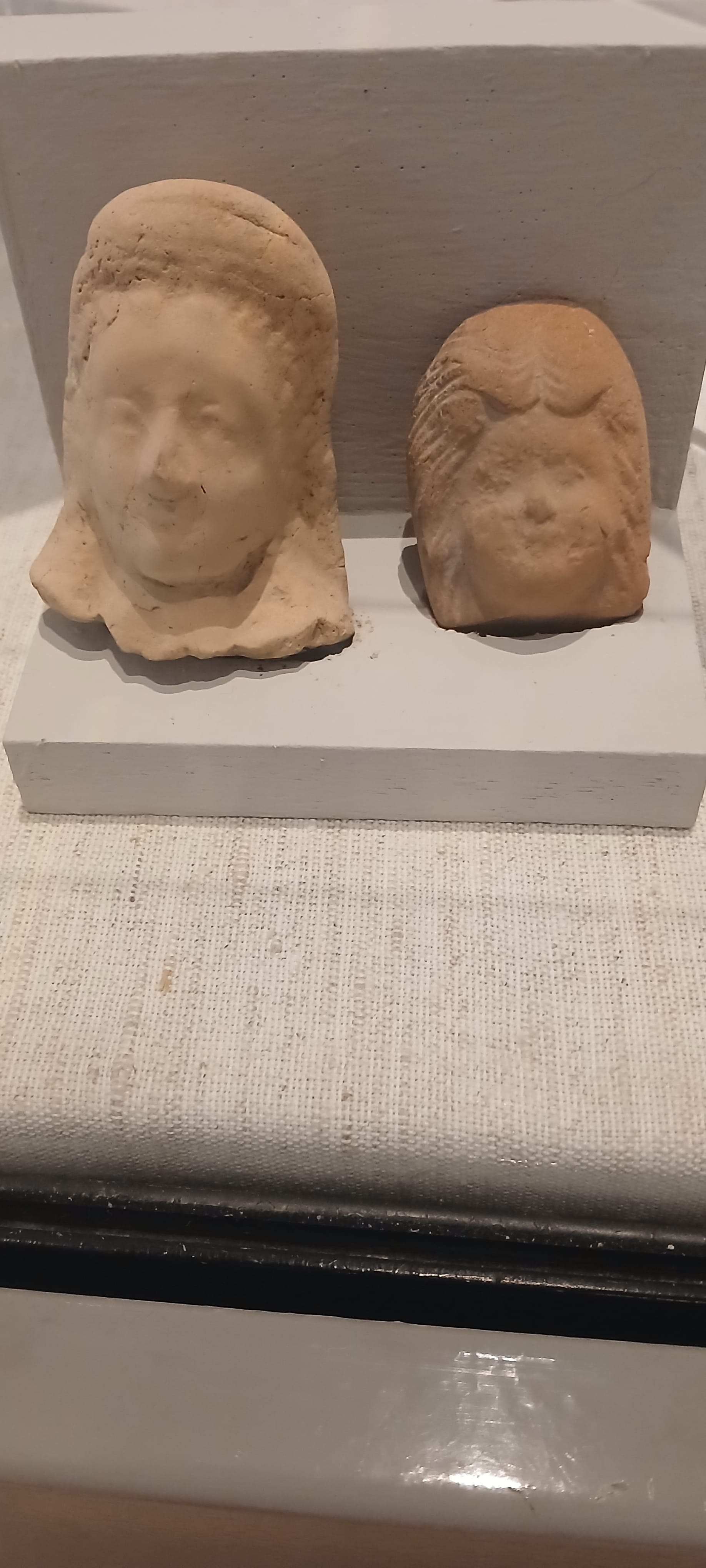
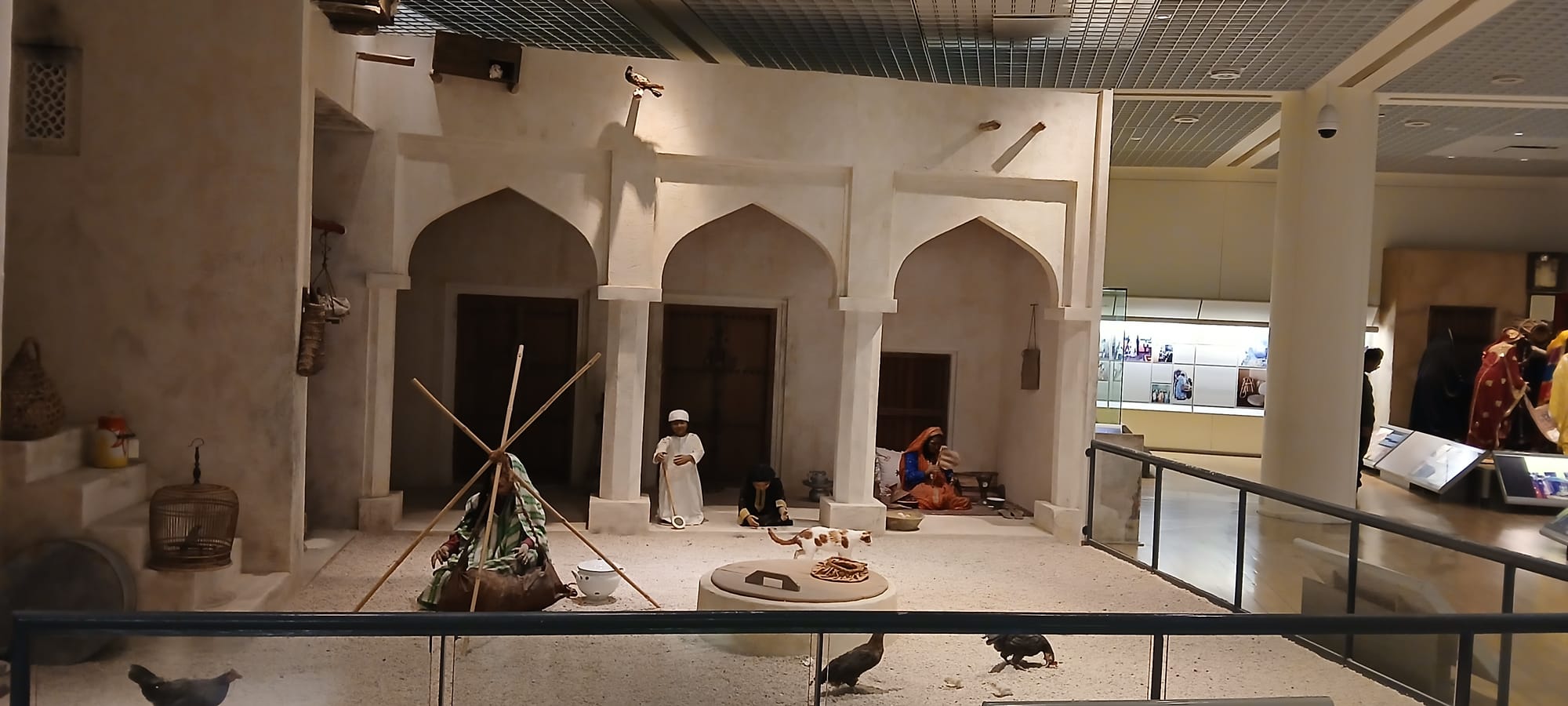
Bahrain Fort is also known as the Portuguese Fort, the islands possessions of Portugal for a hundred years, for what is above the ground. Below the ground, the archeological record goes back to Dilmun. Enki's city, which is the meaning behind the final photo, an art installation, Enki's well. Here is a story from the National Museum. I was talking to the Englishman about Gilgamesh and this was behind me:
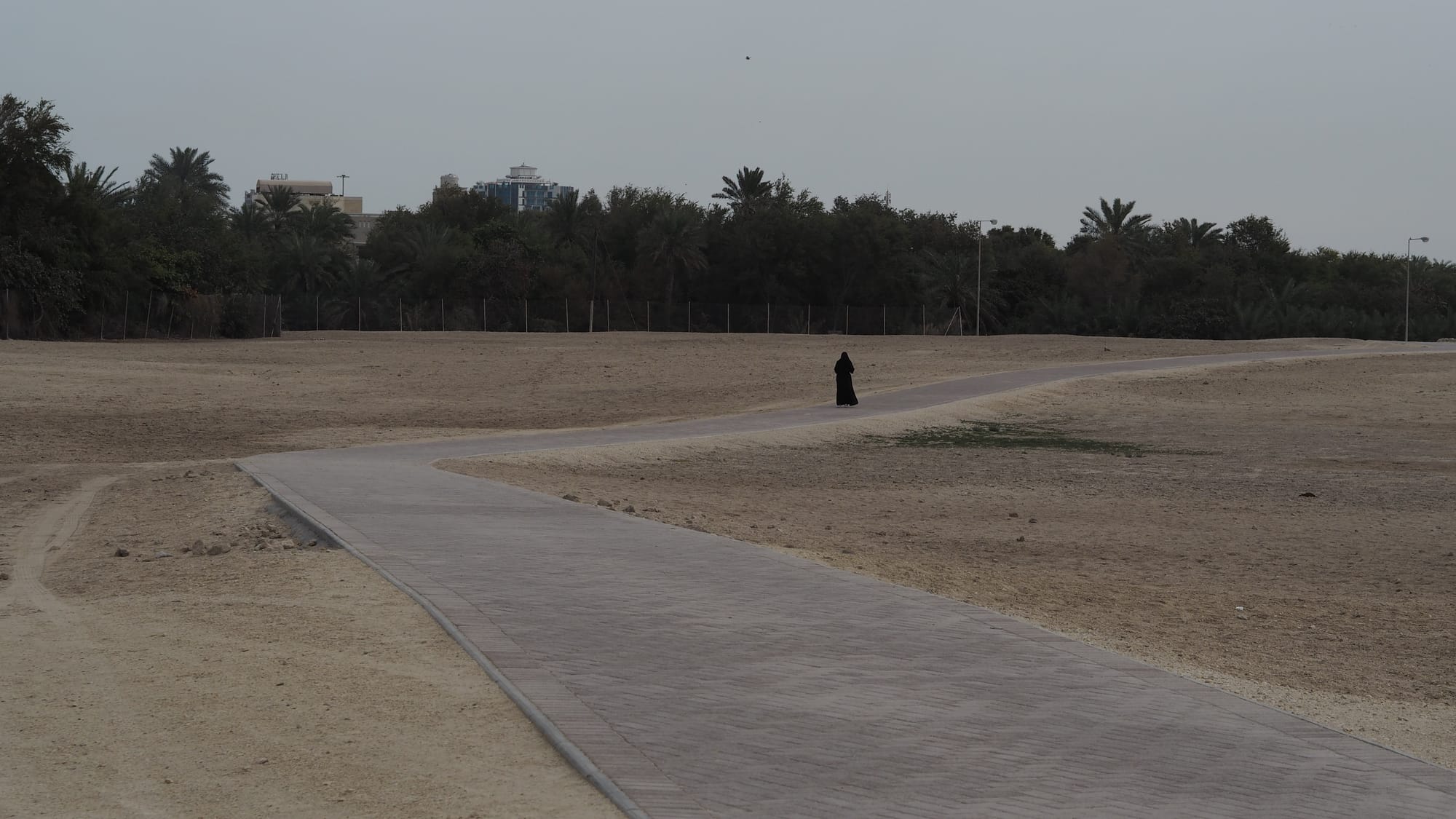
I am going between camera and phone, in certain parts of Riyadh, as here, you get the feeling, cameras are just not welcome.
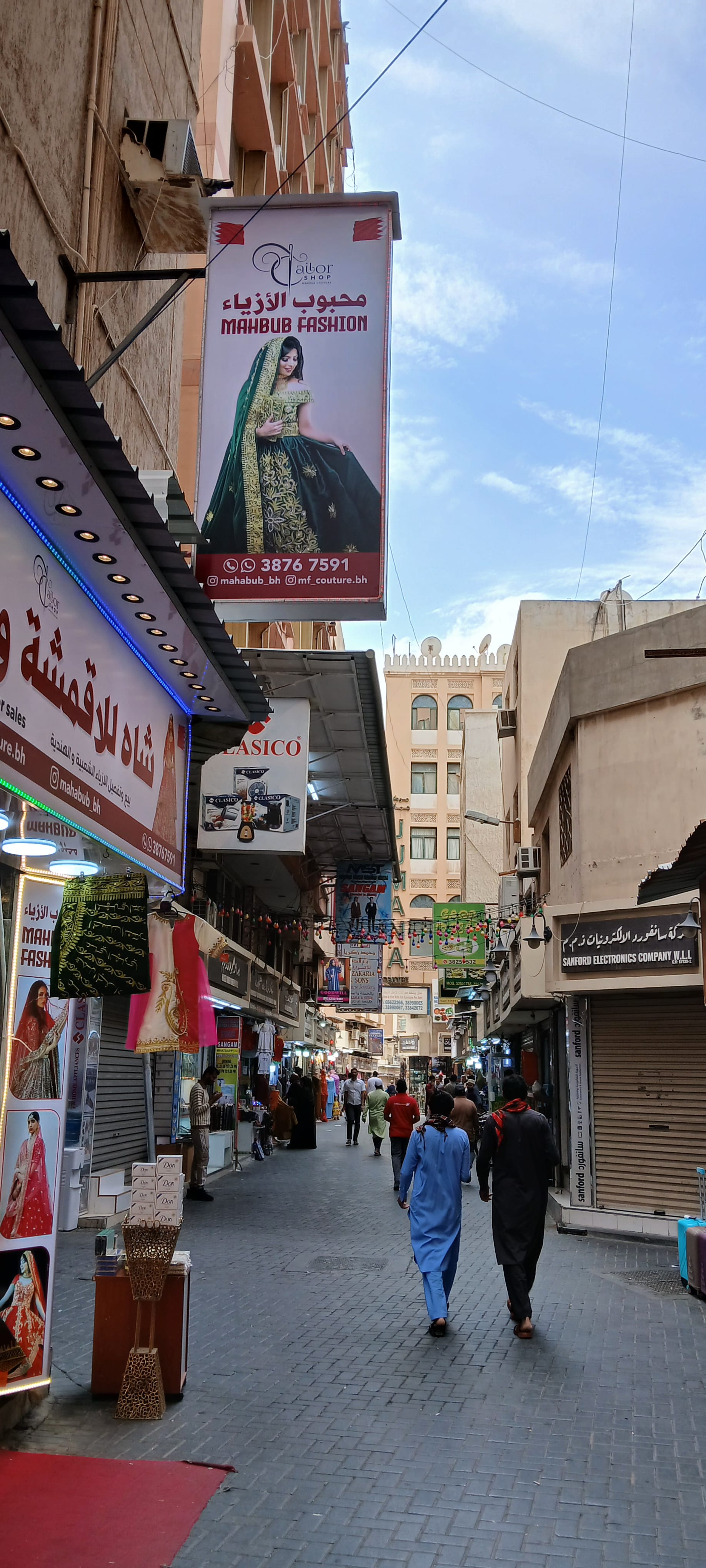
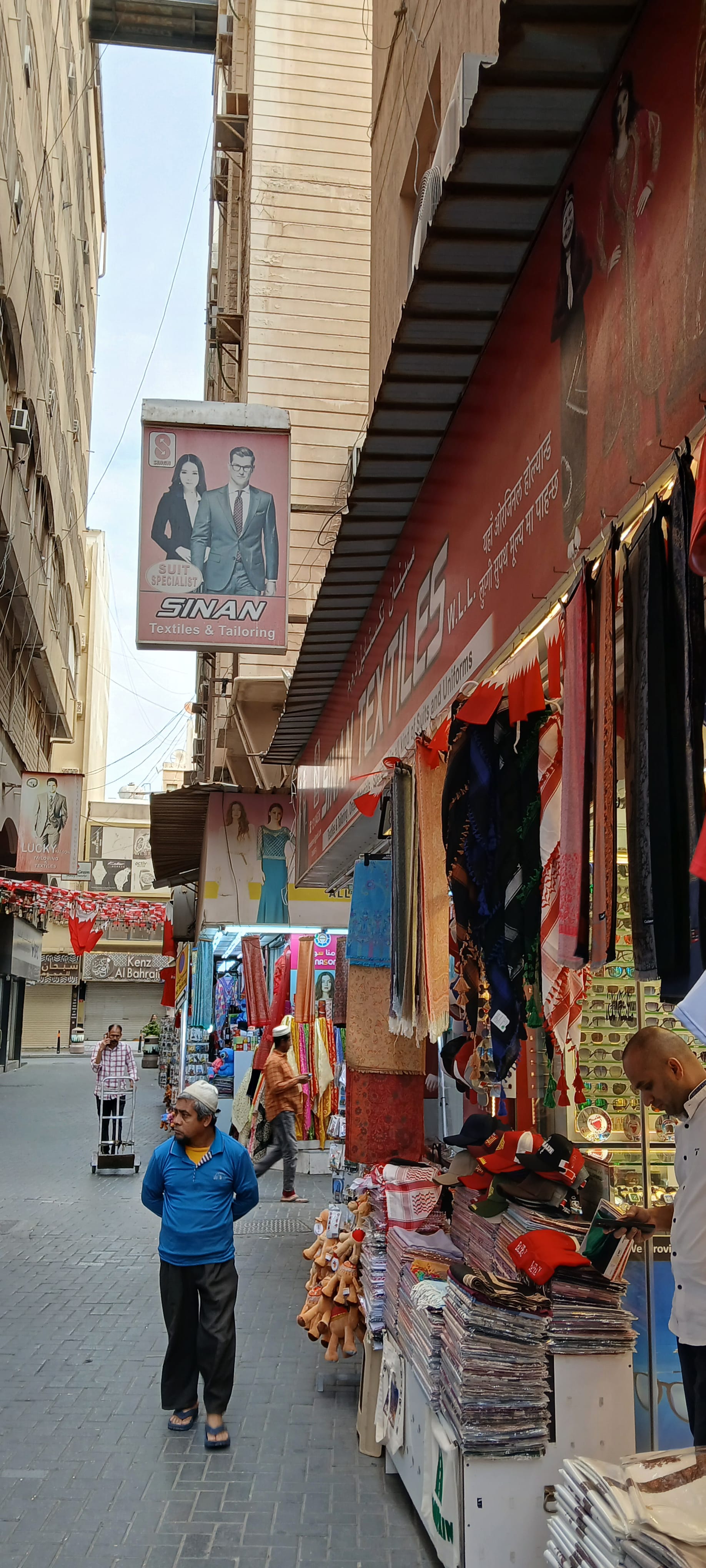
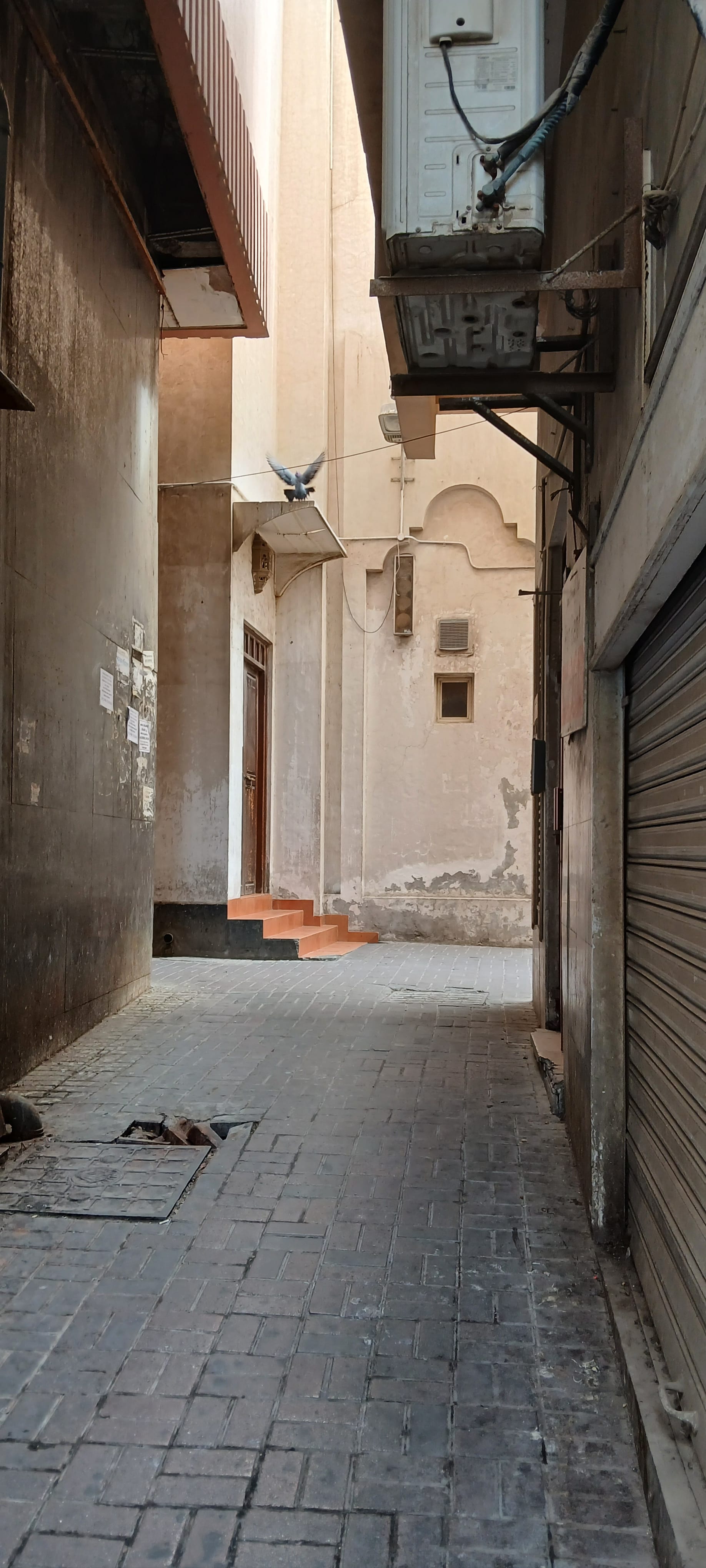
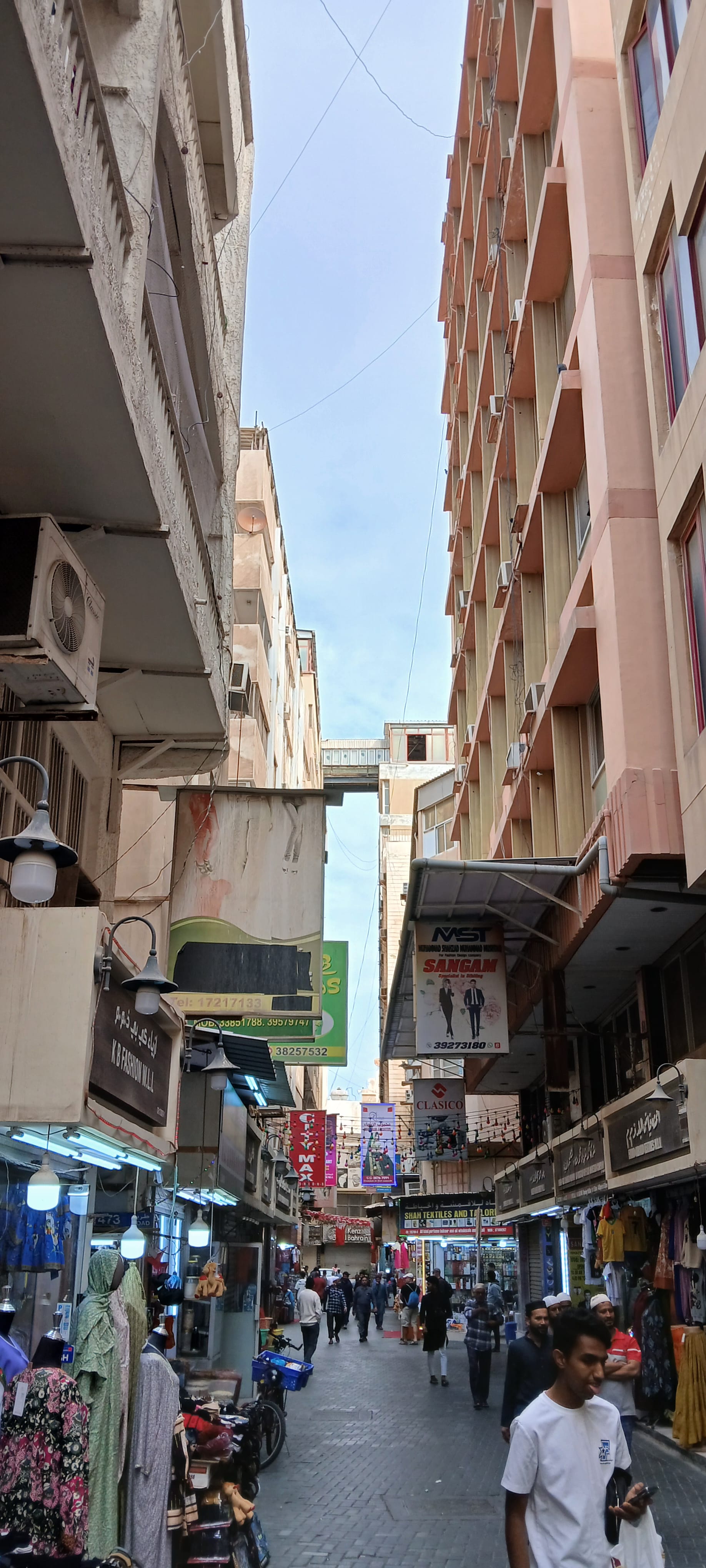
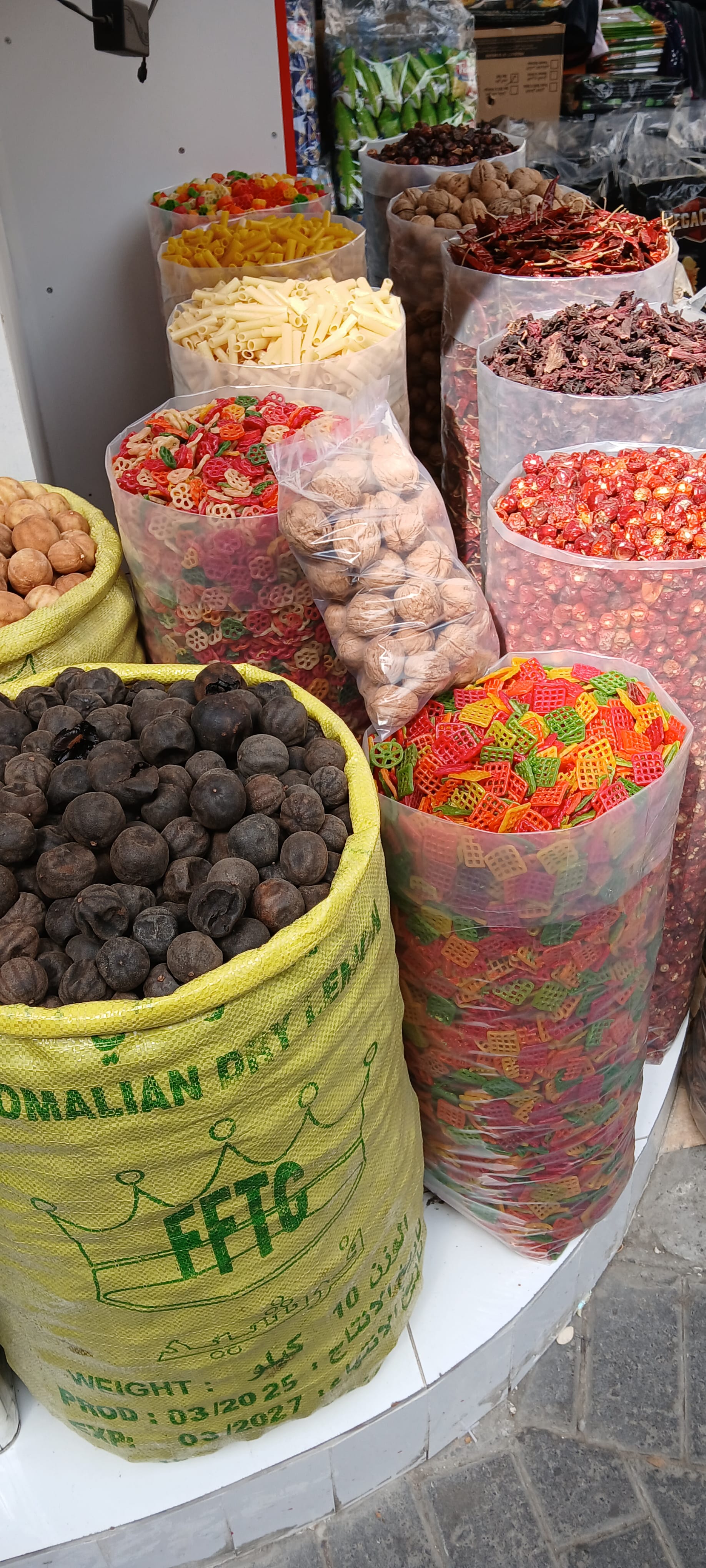
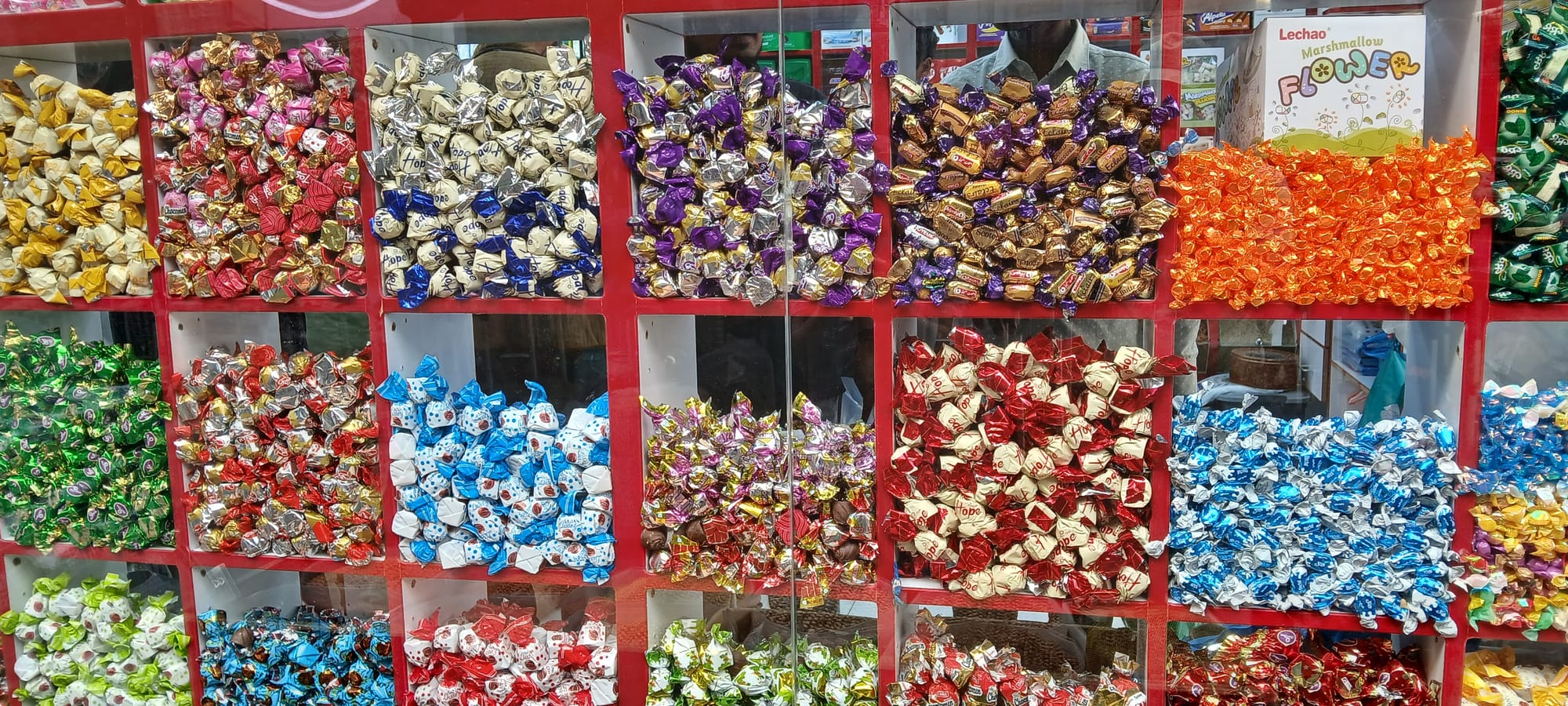
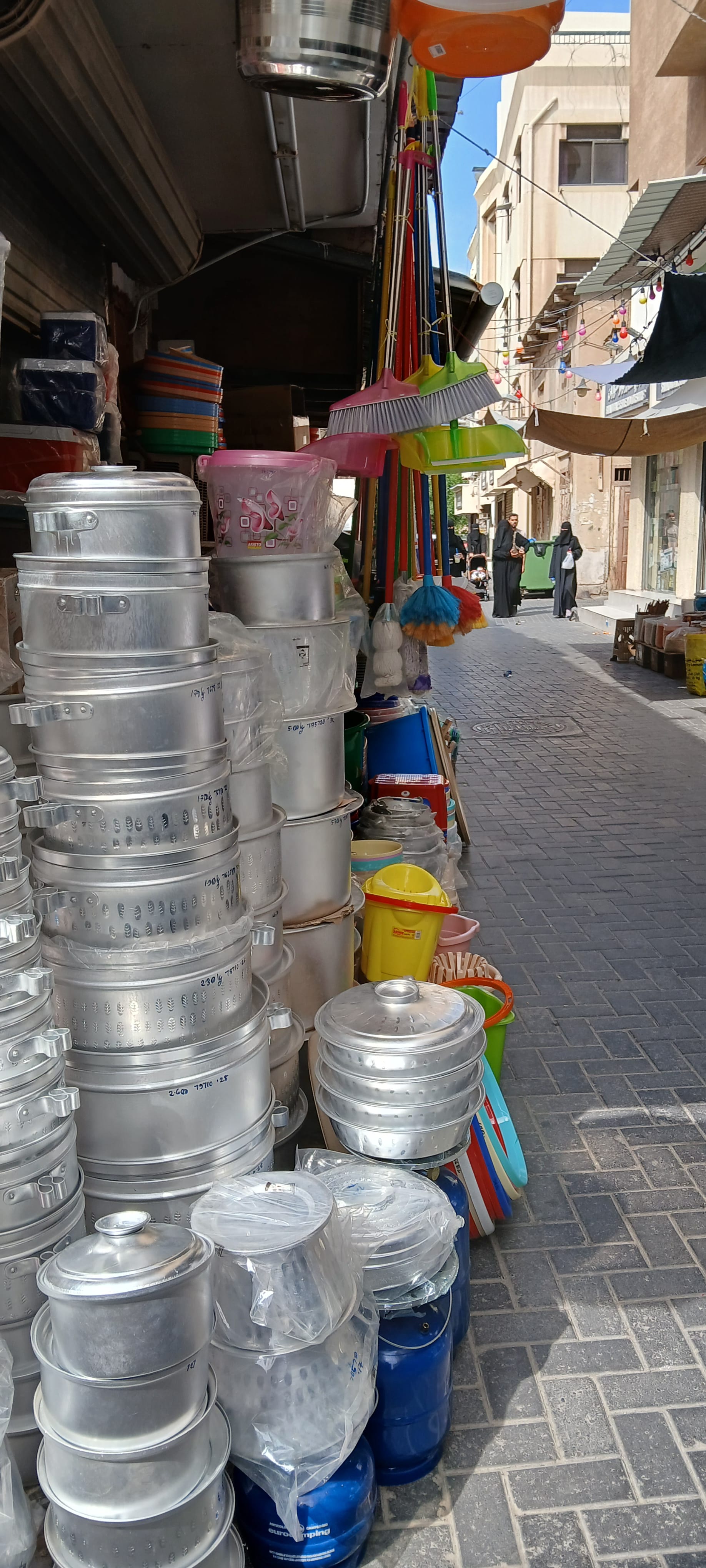
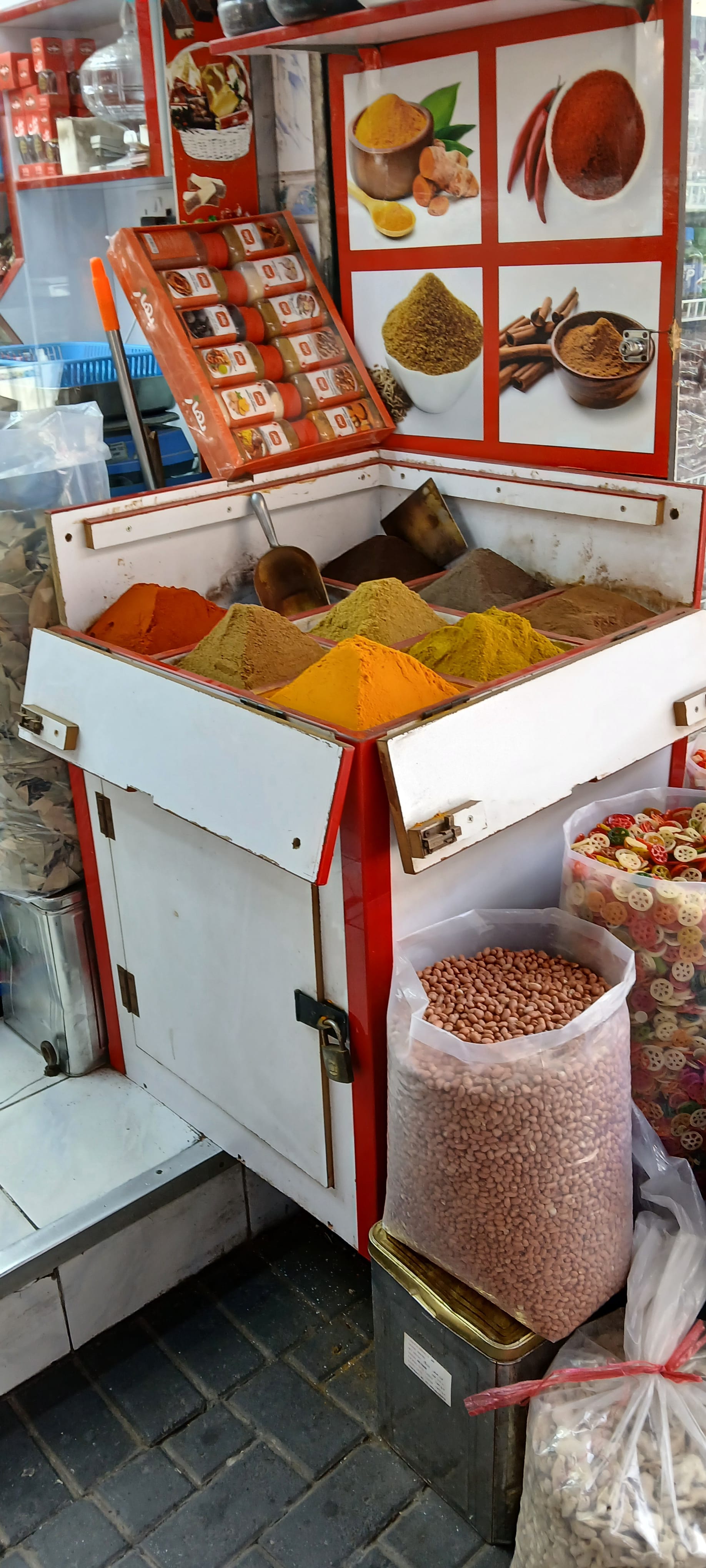
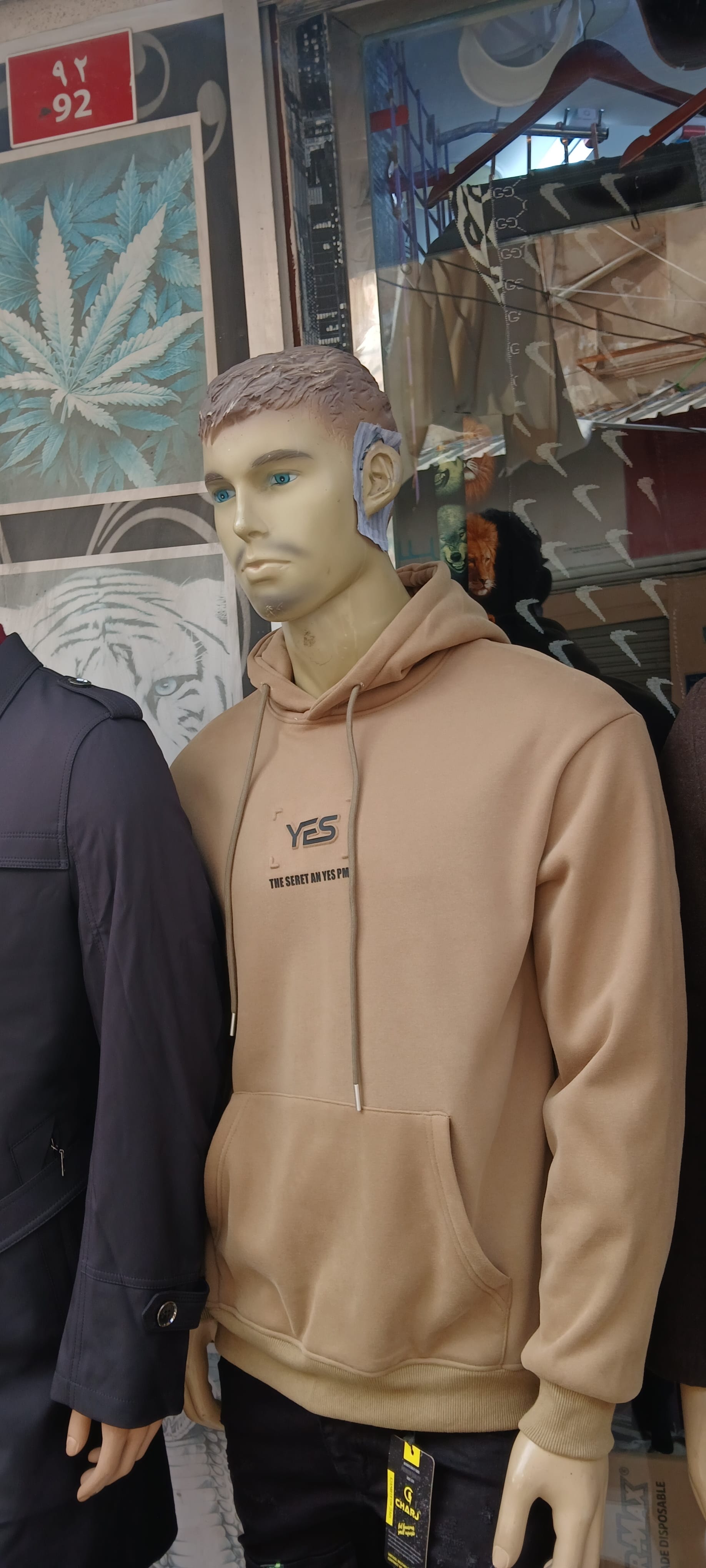
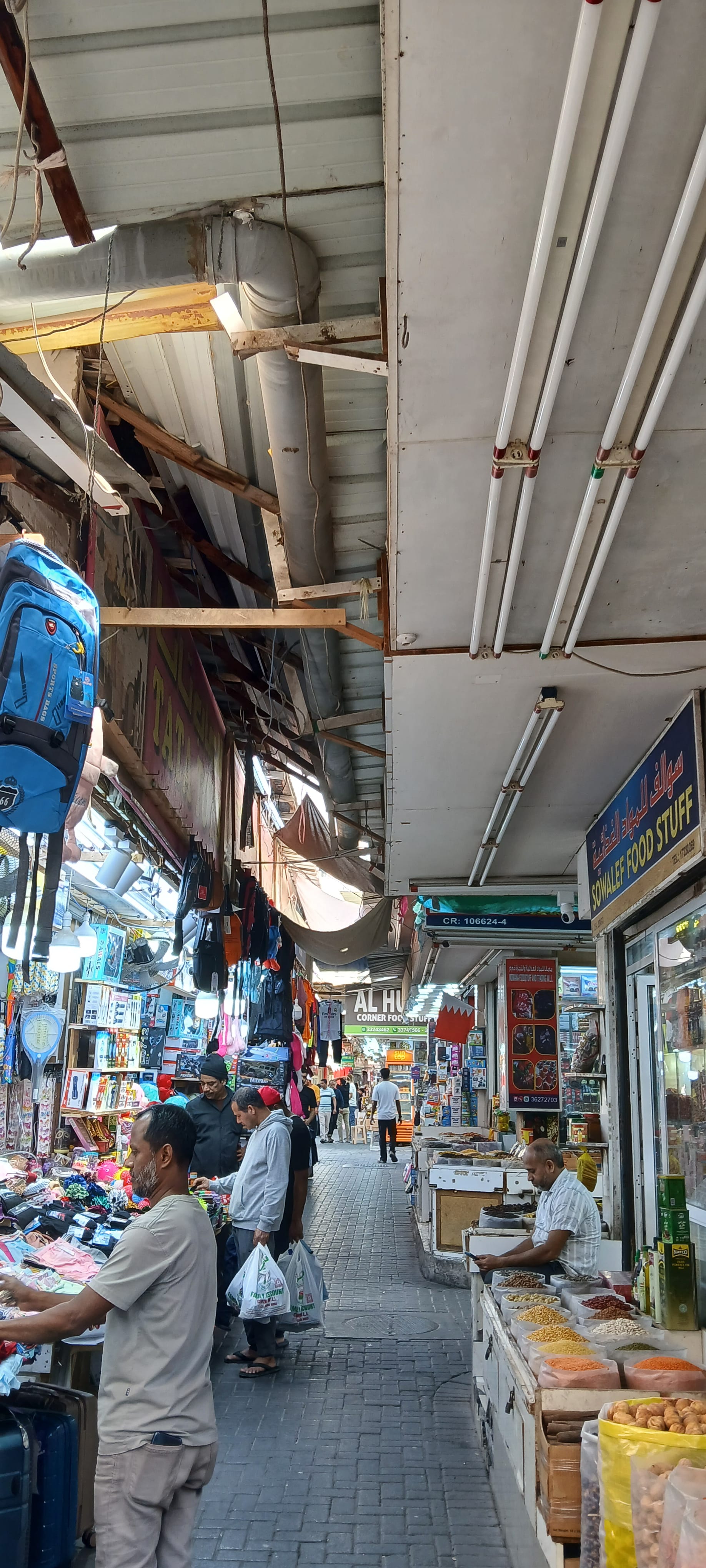
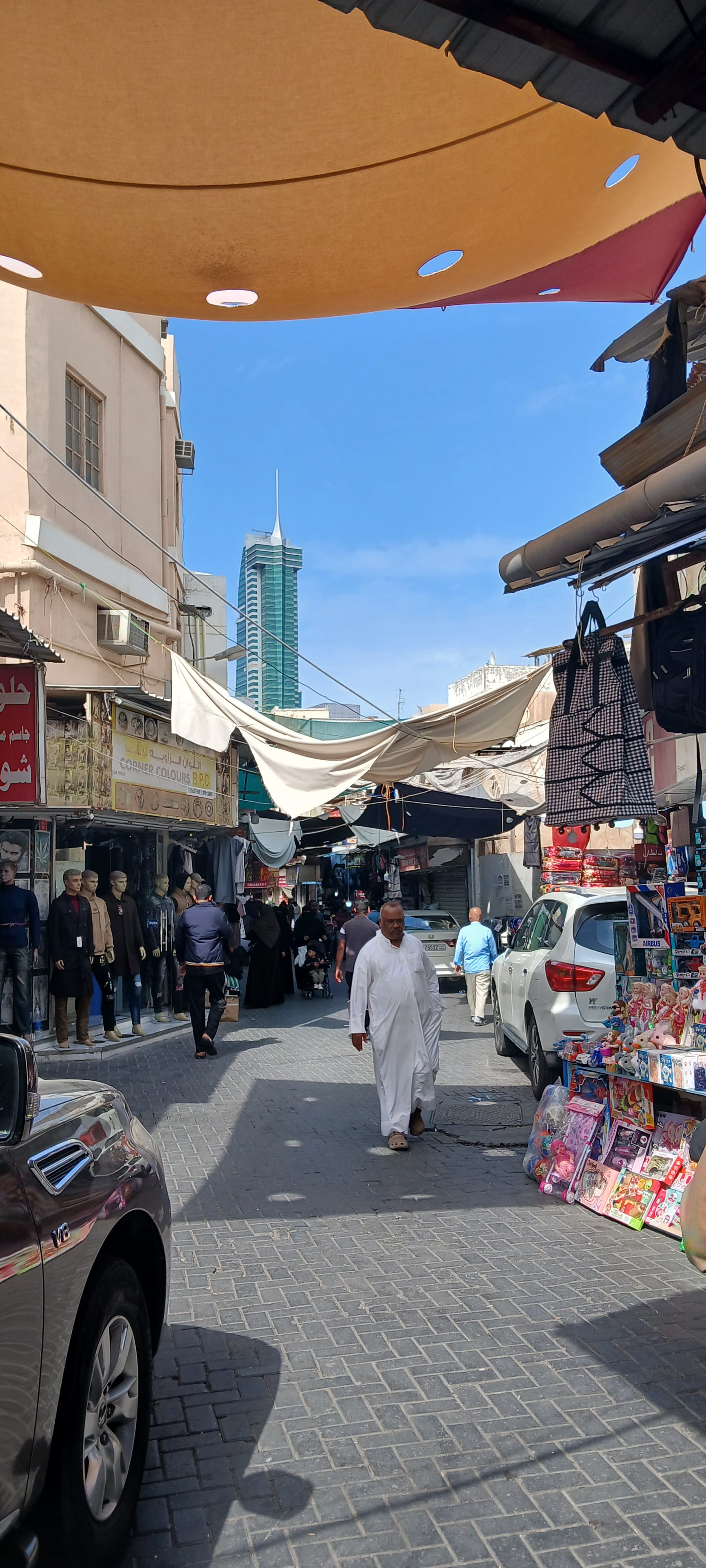
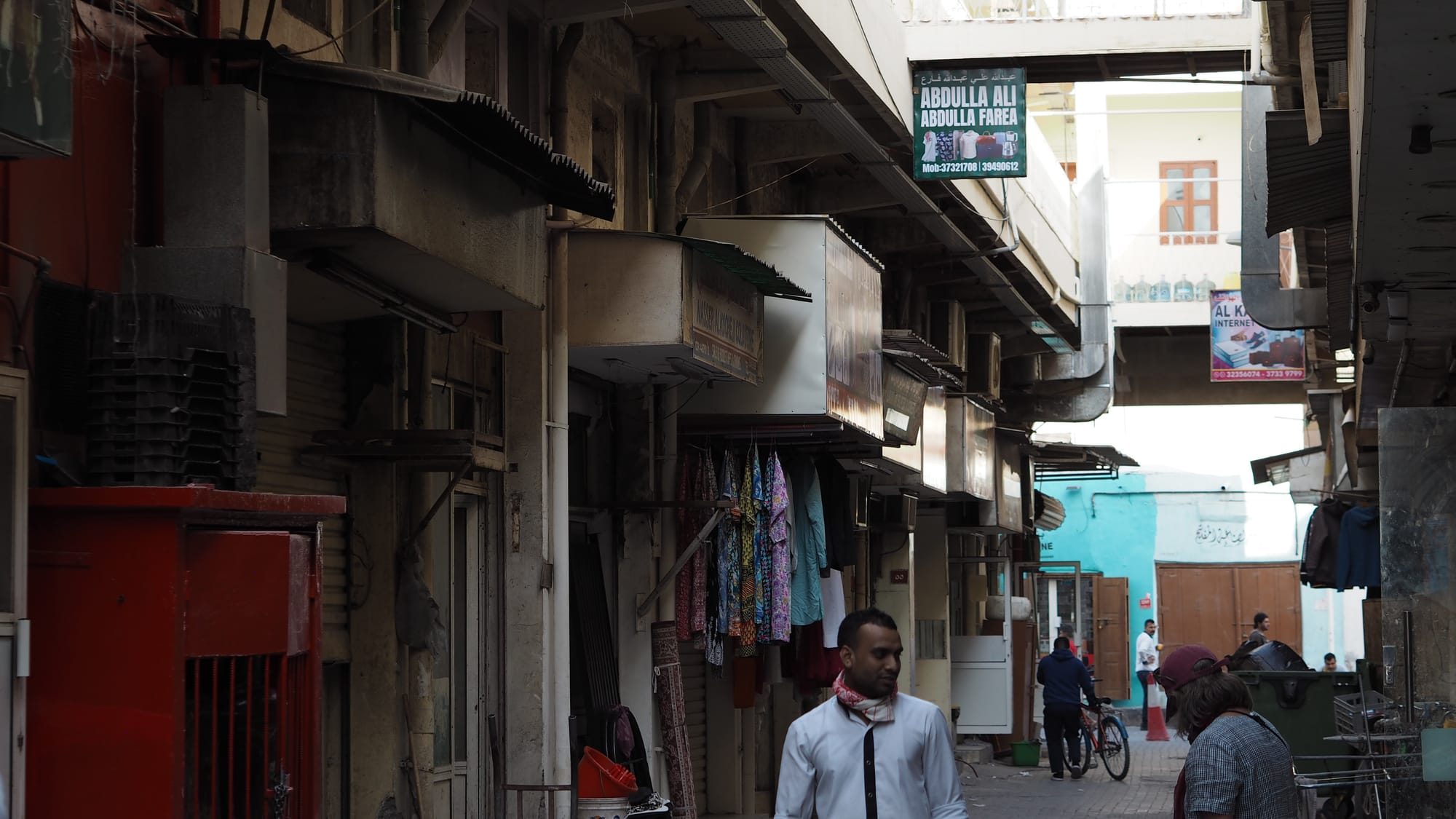
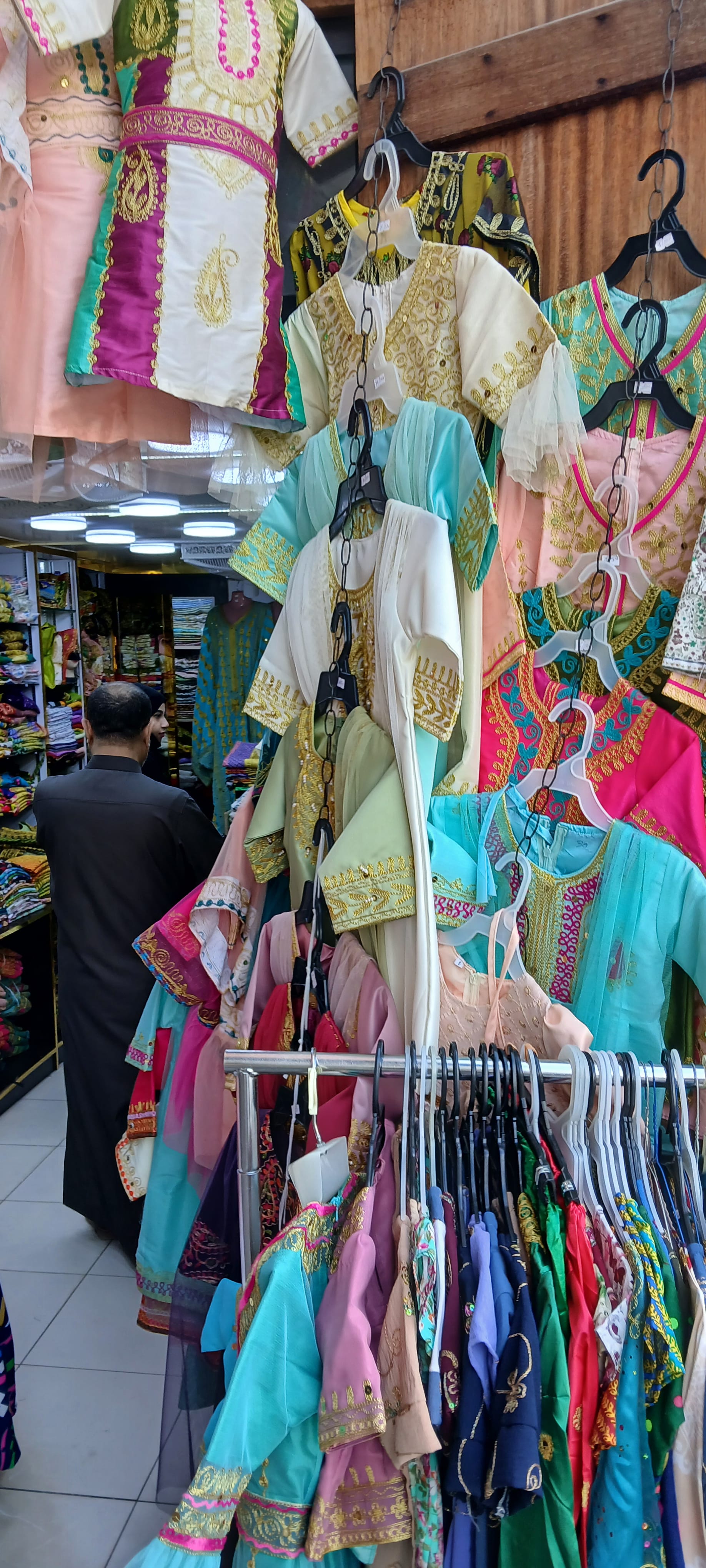
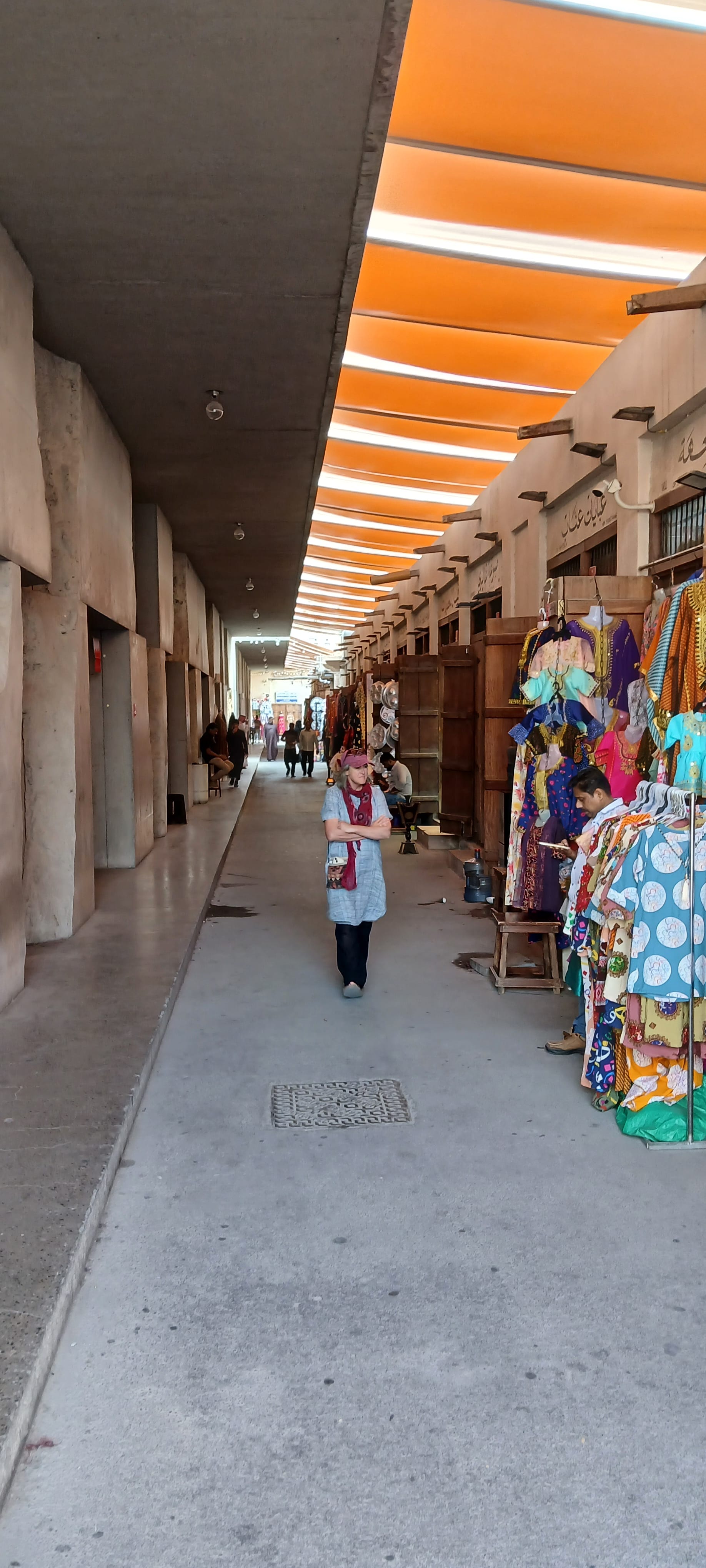
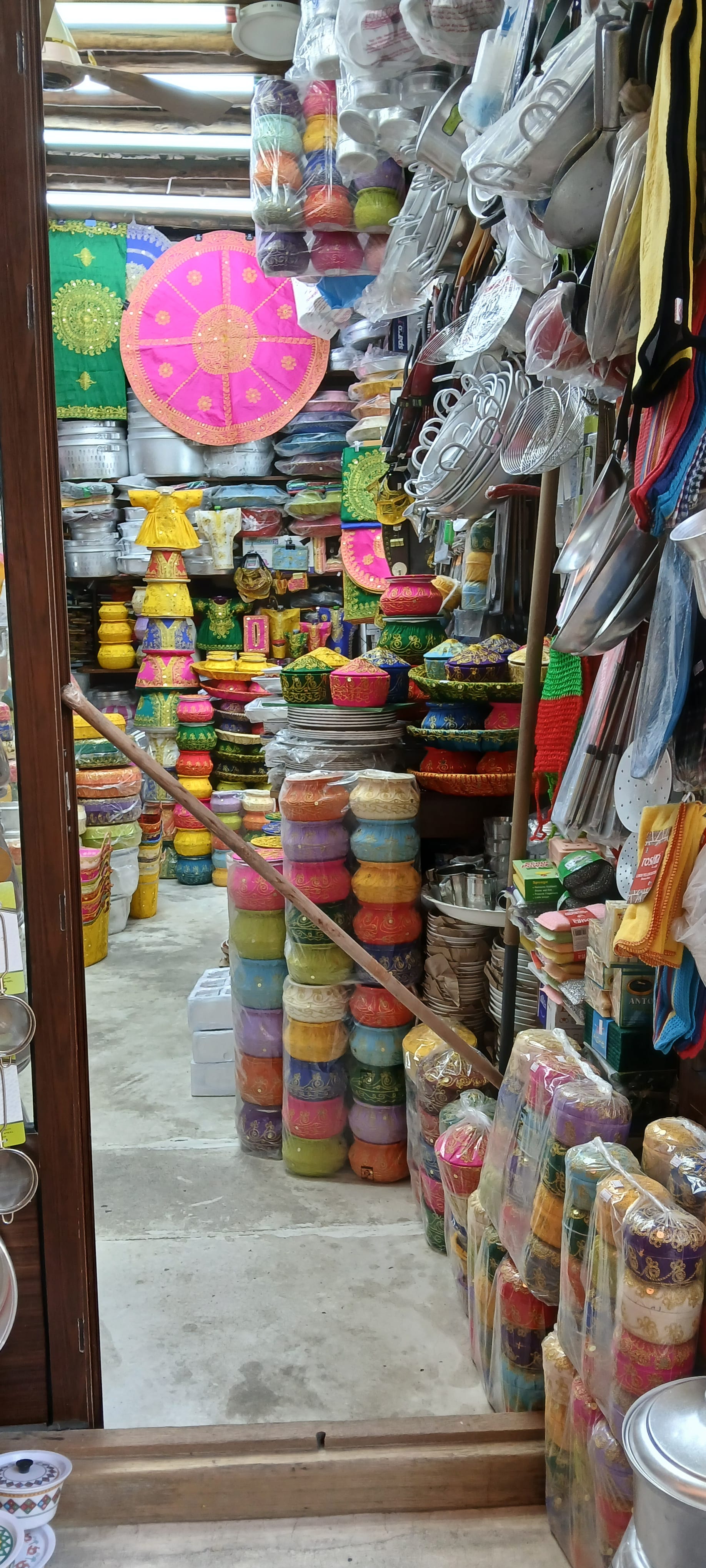
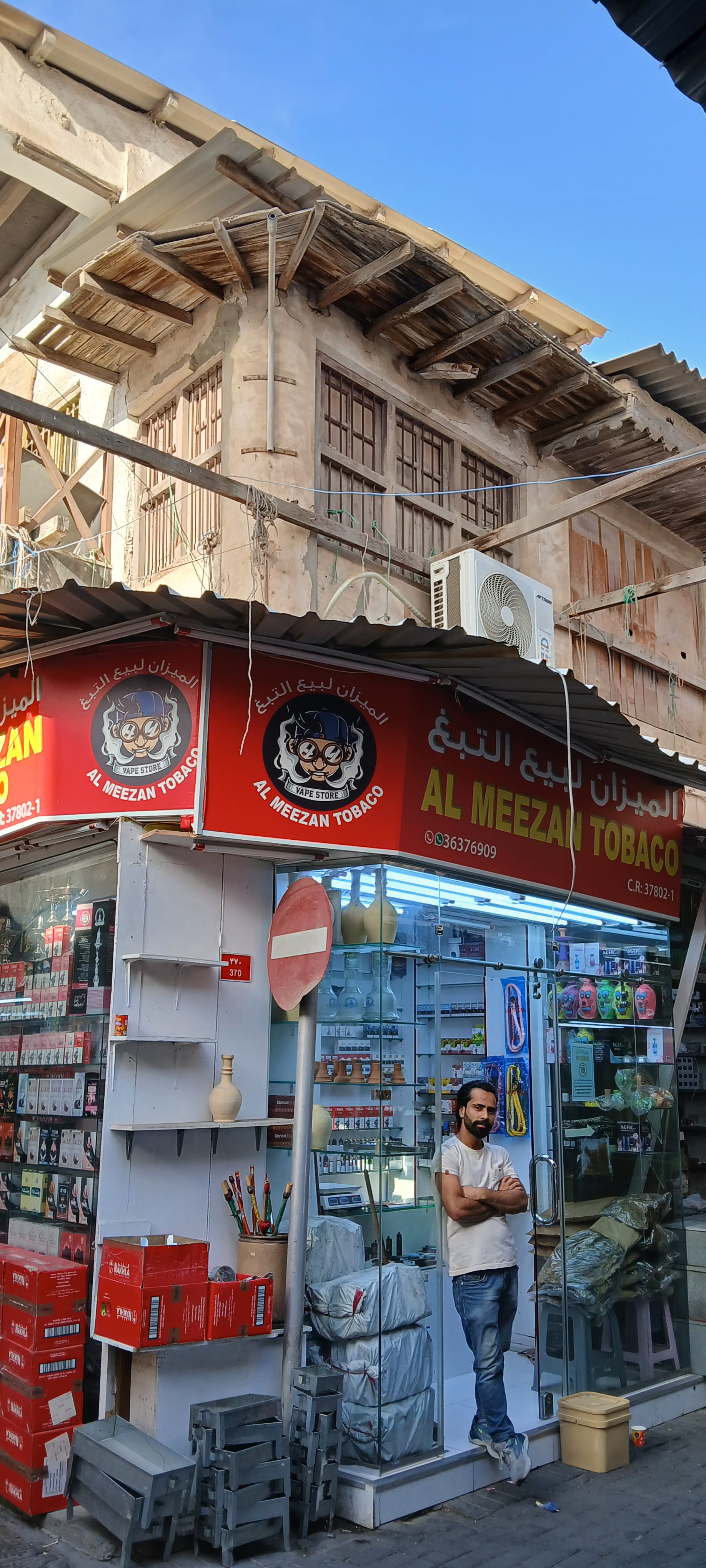
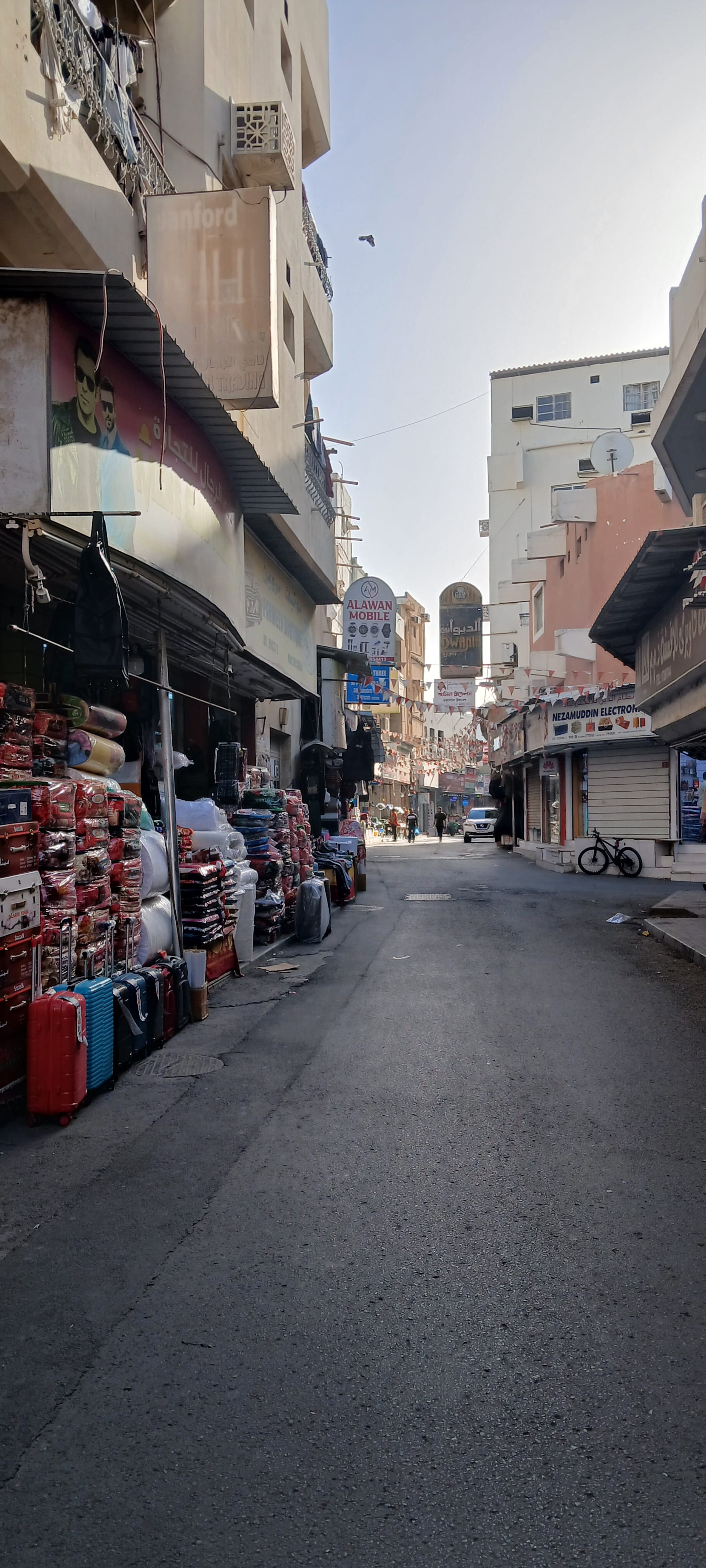
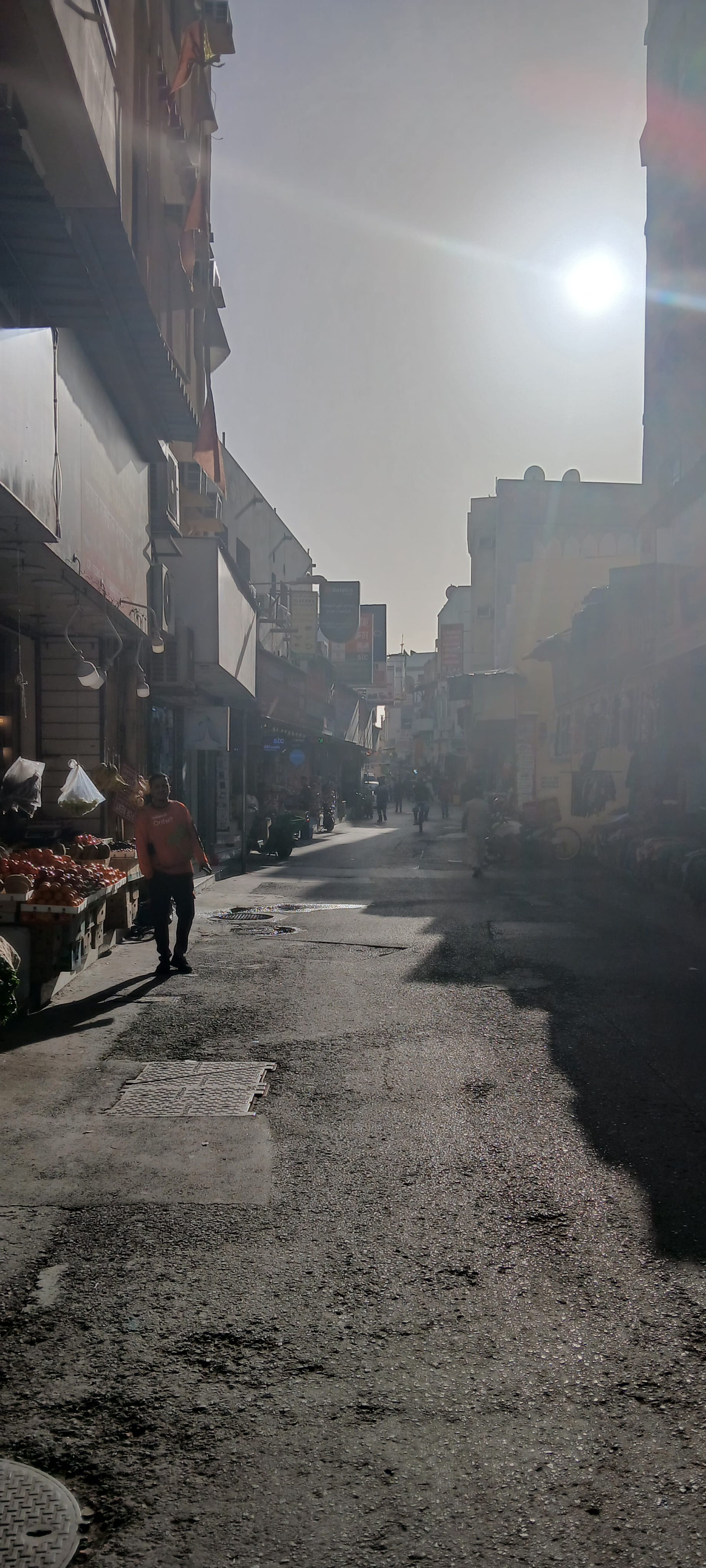
This is Manama Souq, which will be revisited as I walked there yesterday. My phone, speaking of which, could find me but not the route. Young Indian guys kindly pointed the way, asking, Bab Al Bahrain? No, that's too far to walk!
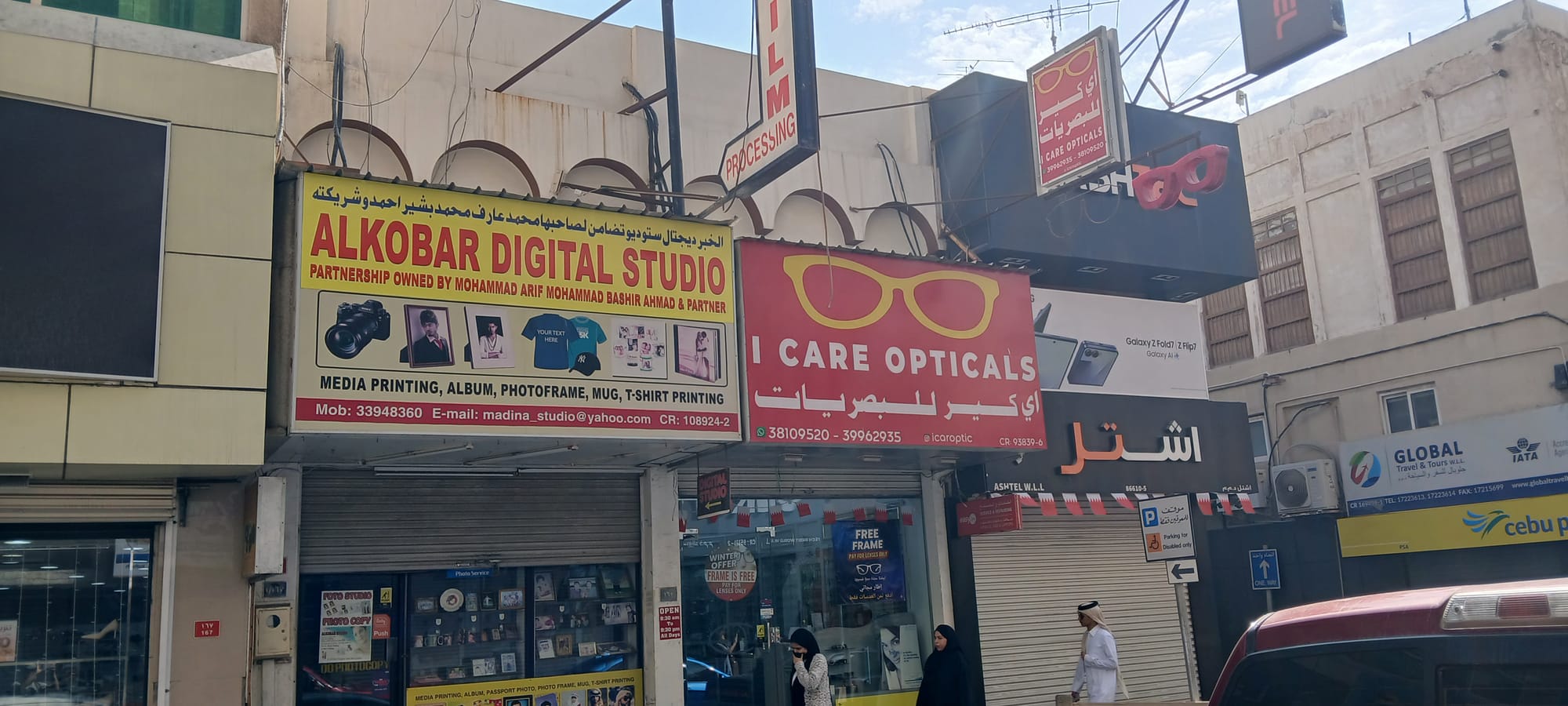
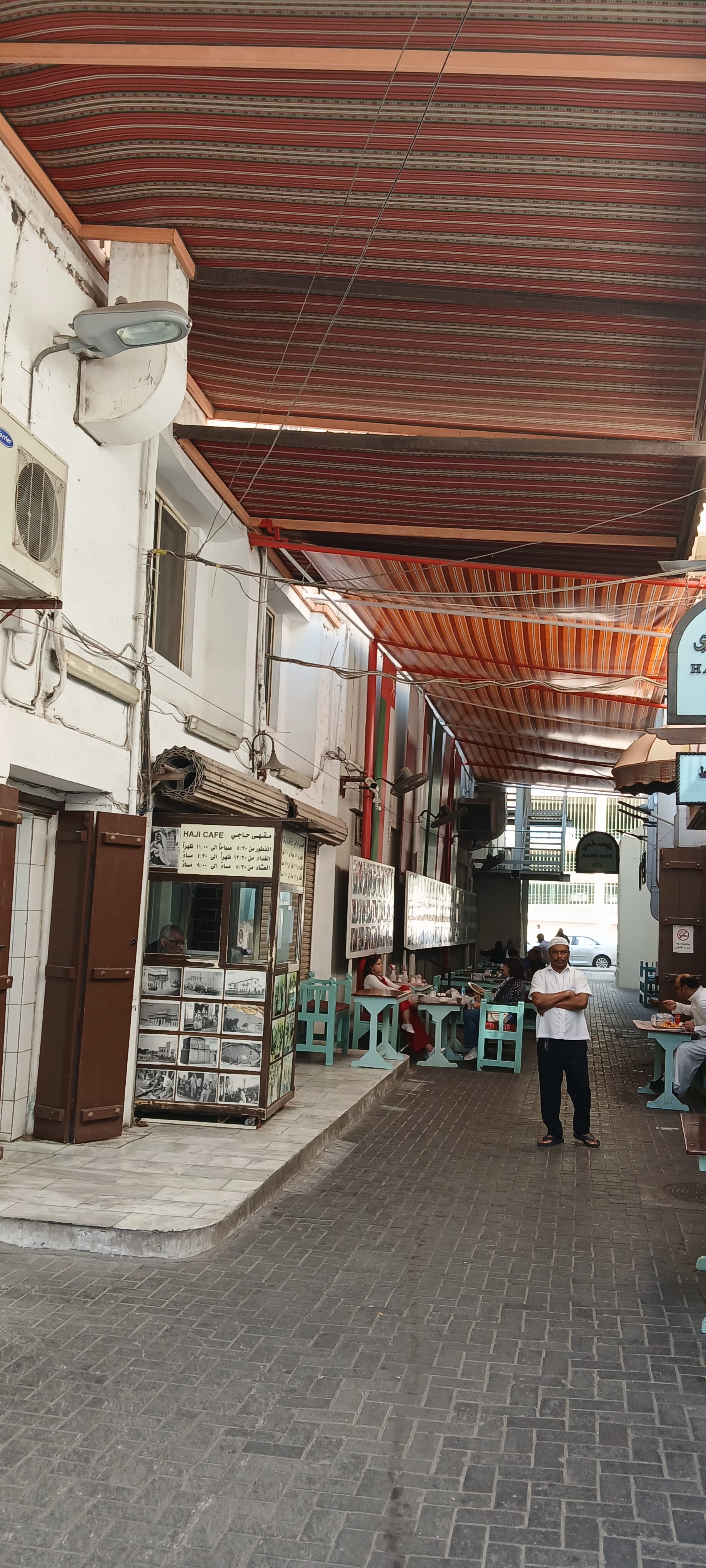
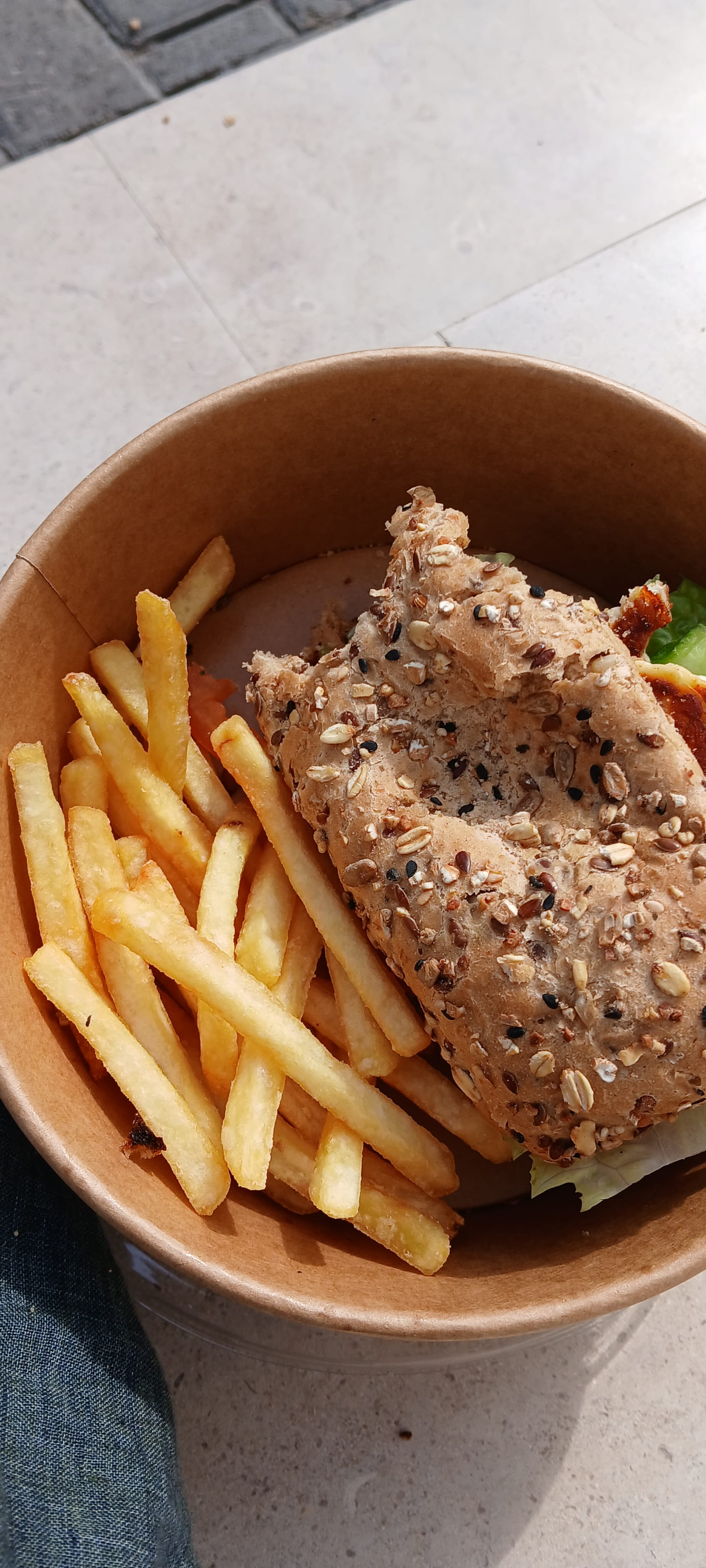
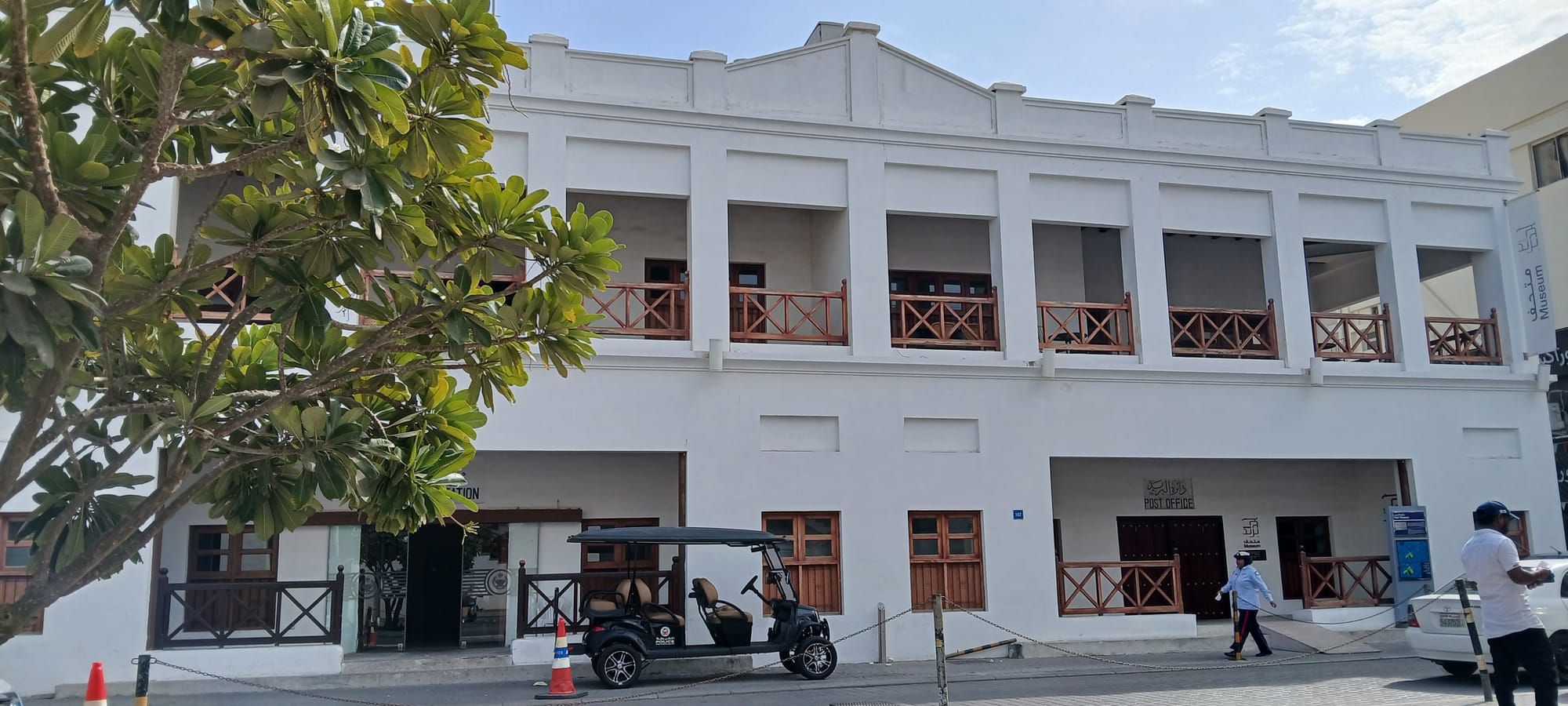
- the police station and old post office, behind us, where we sat eating NZD25 sandwiches, Bab Al Bahrain, entryway to the souq
See that guy with his arms crossed? We didn't eat there.
I should go out adventuring, catching the bus... wish me luck!
I did. 41 into Manama. A1 out to Muharraq. A1 back. 44 to Juffair. The Bahraini dinar is 1000 fils. Each leg of the trip, paying cash on the bus was 300 fils.
Funny thing was, apart from the bus taking longer than it would to walk, which I had yesterday, although I went only as far as Bab Al Bahrain, that the guy in the green tank top who welcomed me onto the 41 was on the 44, and said Bye! in English. Cool.
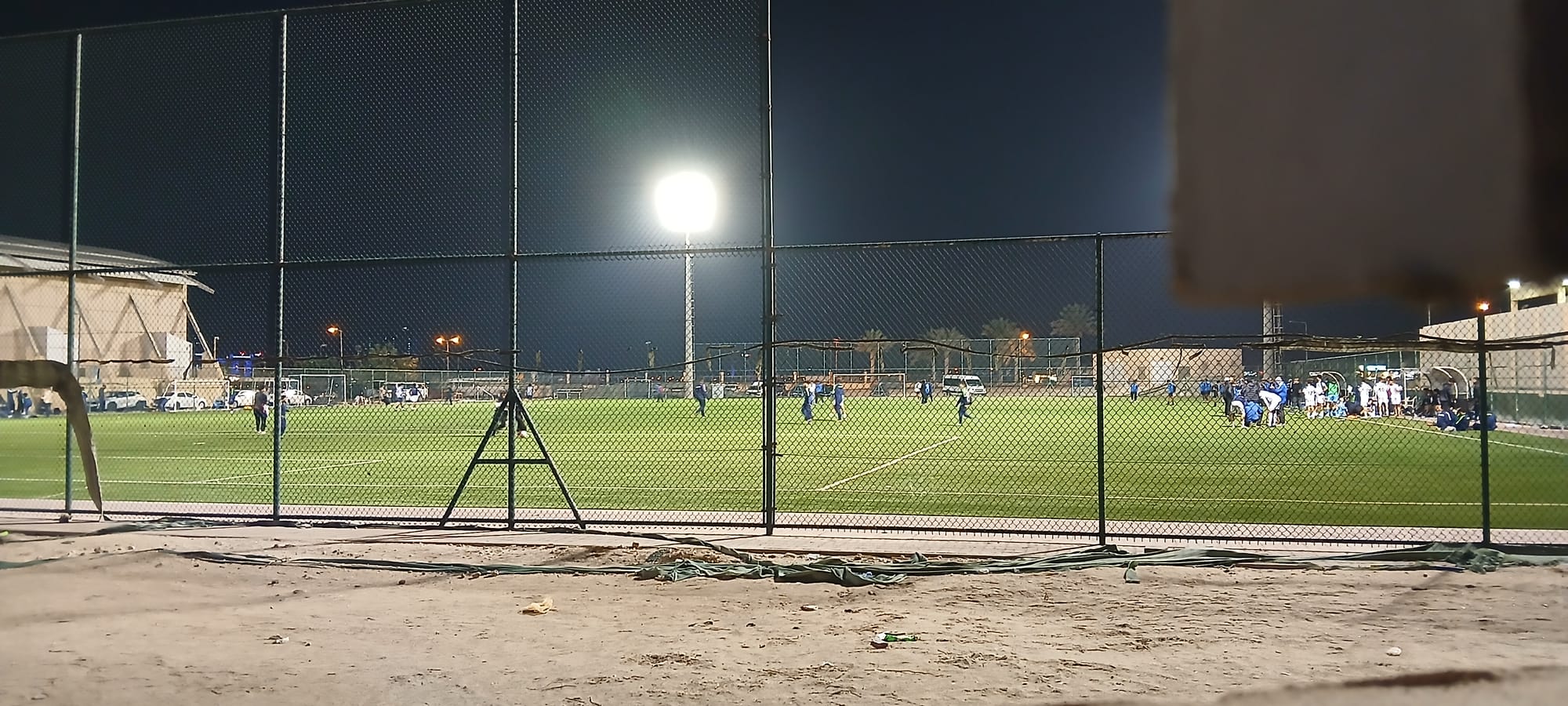
I could watch the football game going on down below out the window but I better complete this, so back to. . .
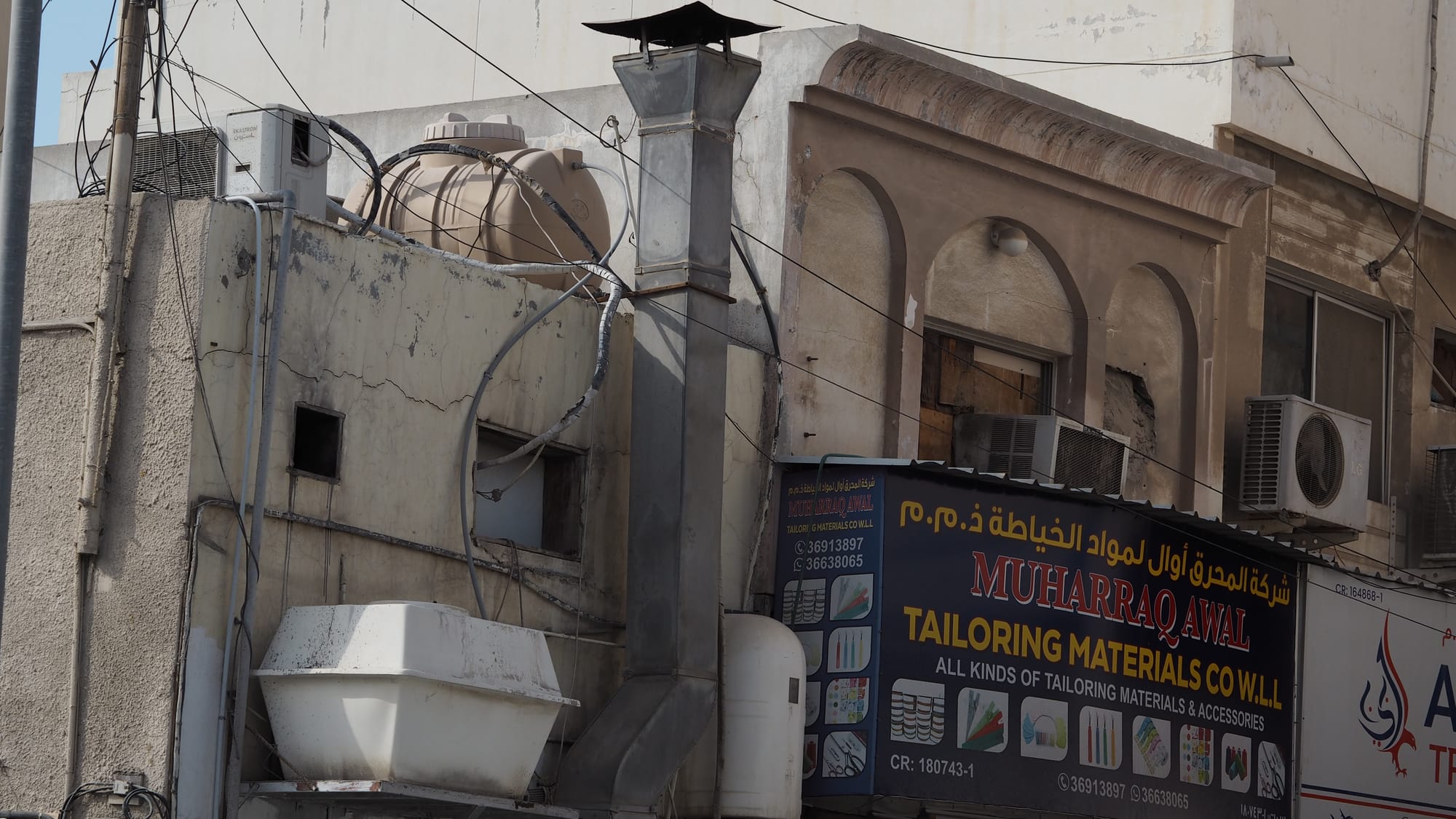
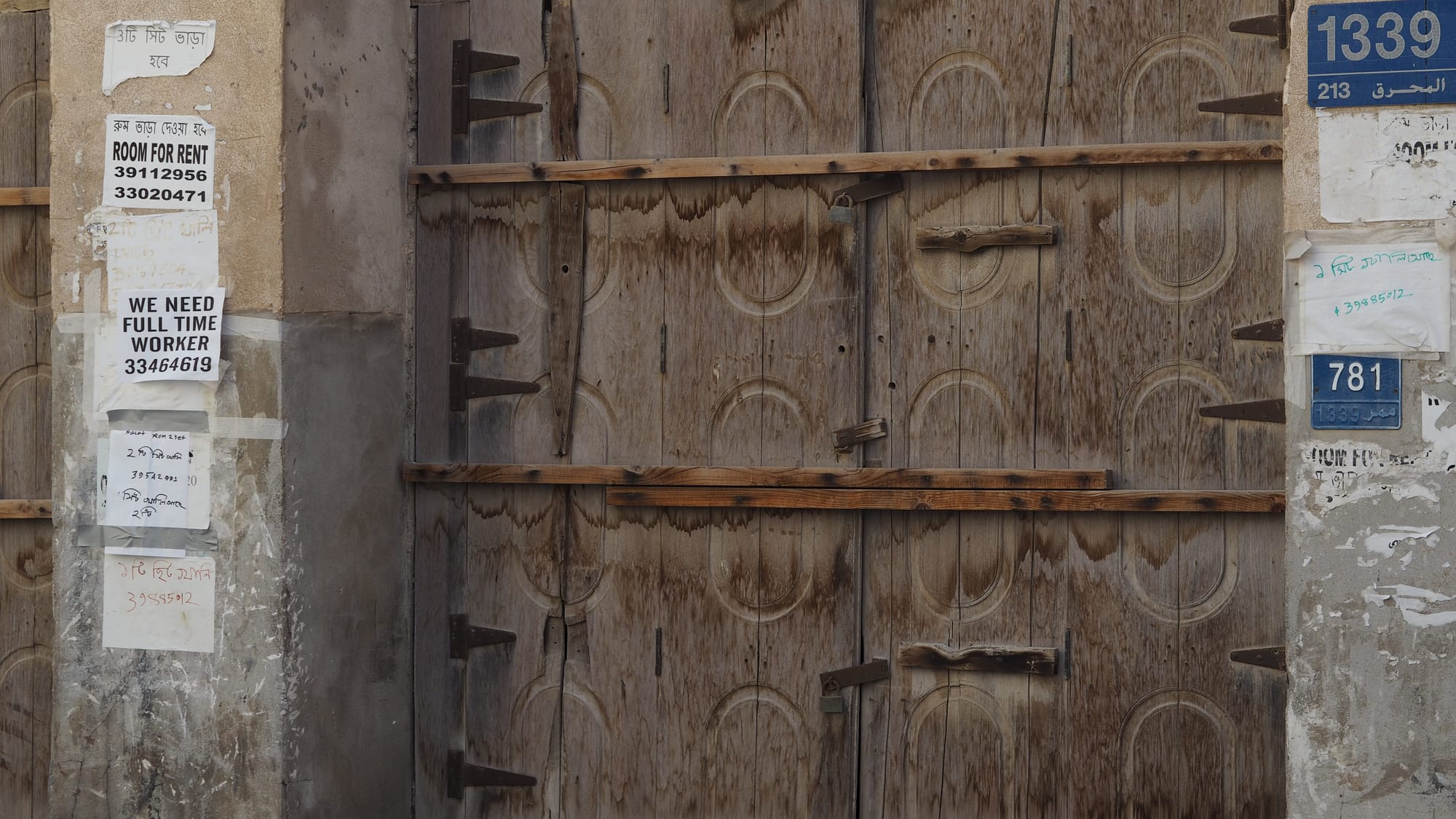
Muharraq, driven by Jalal:
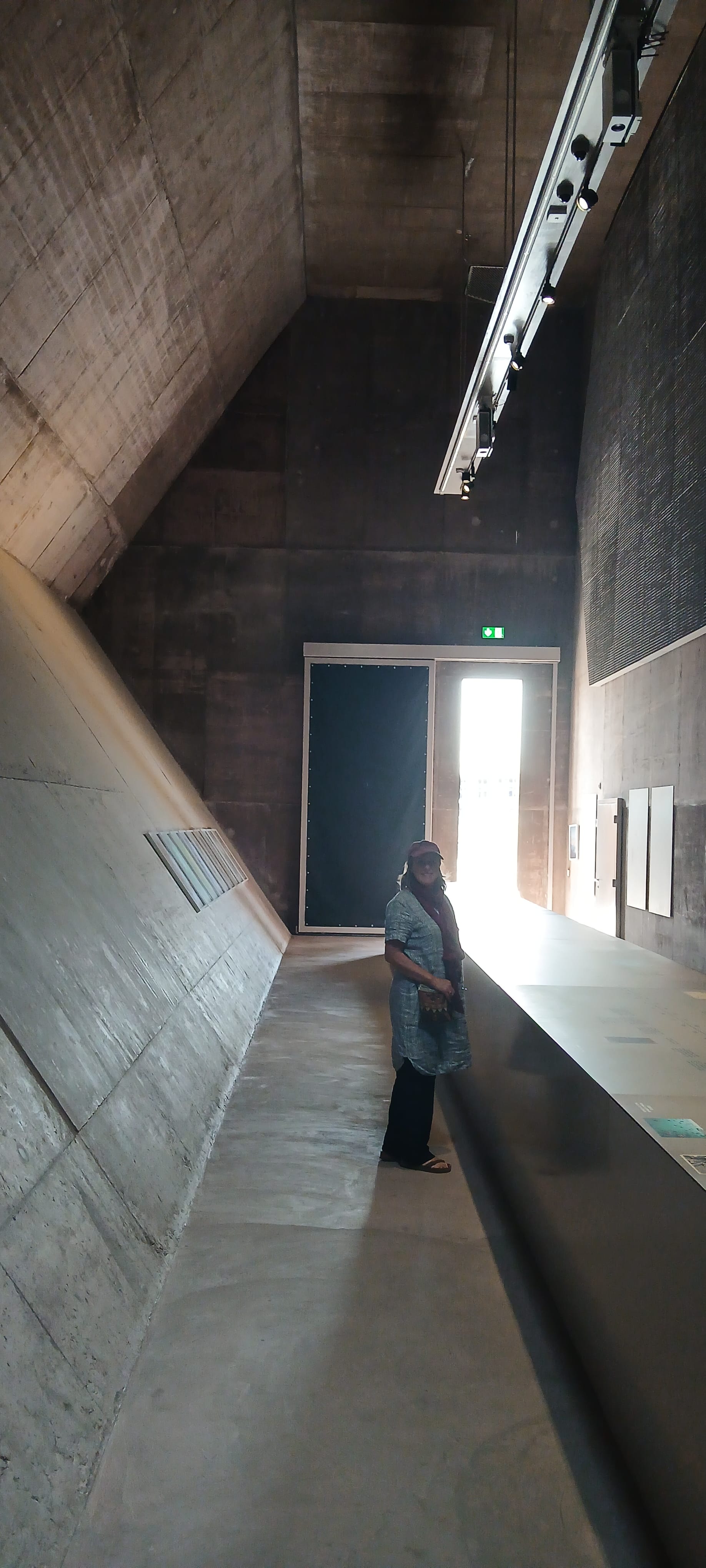
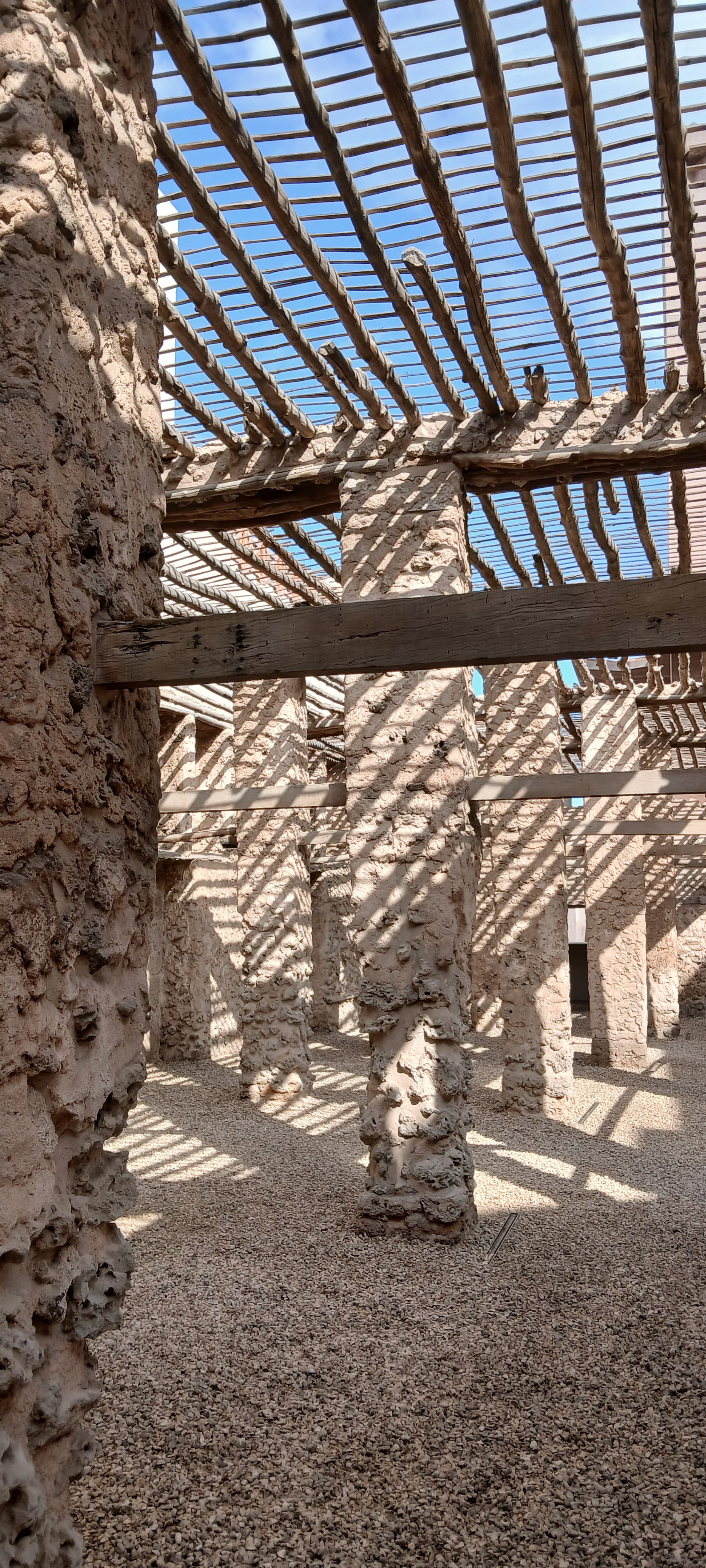
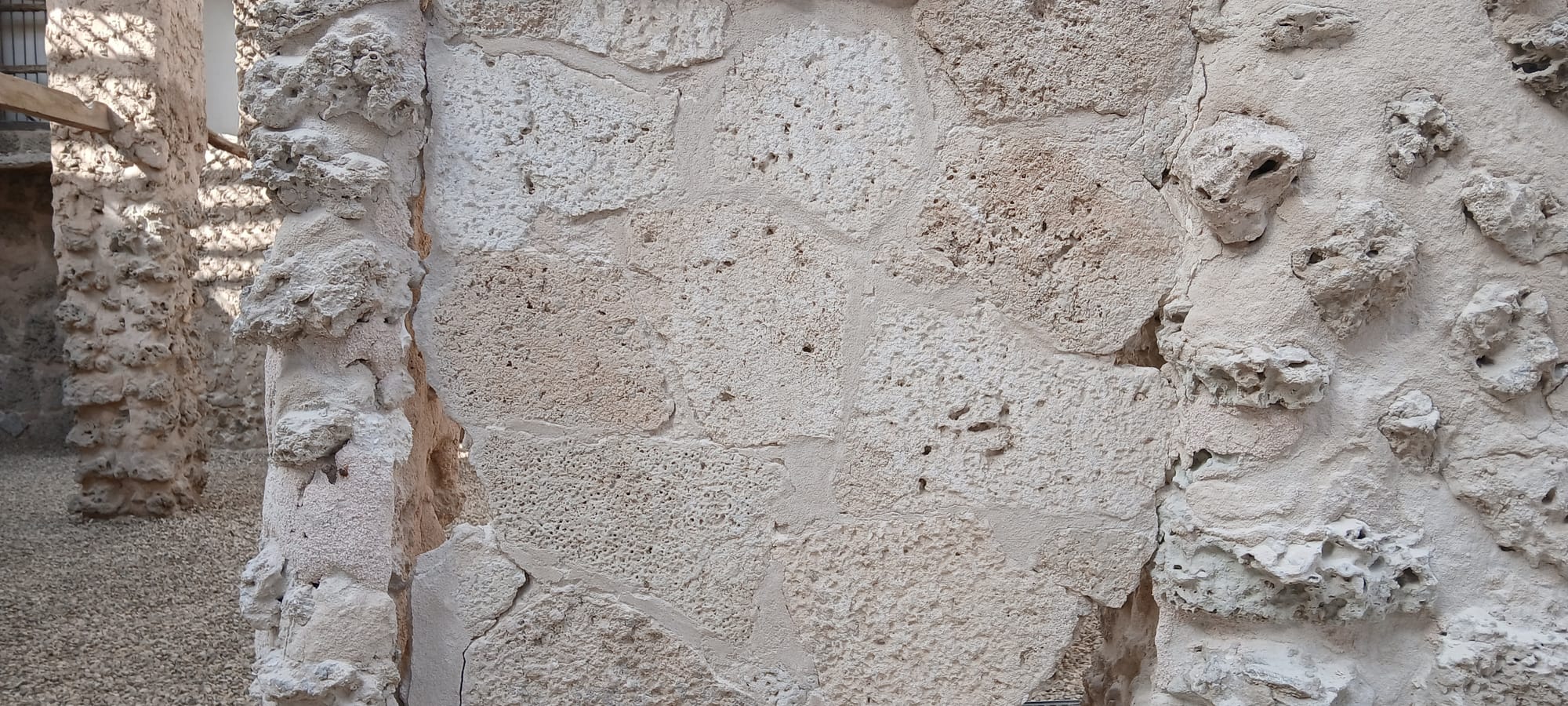
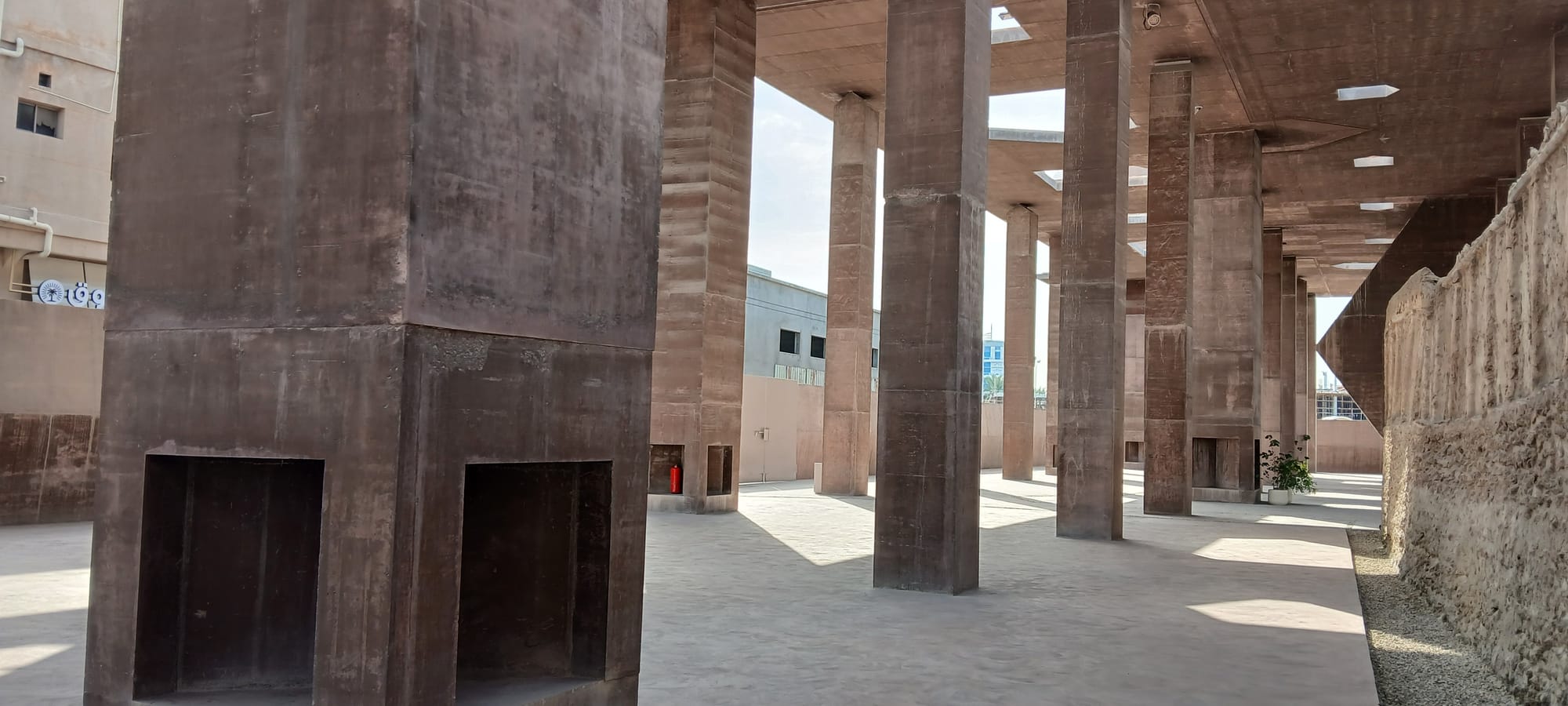
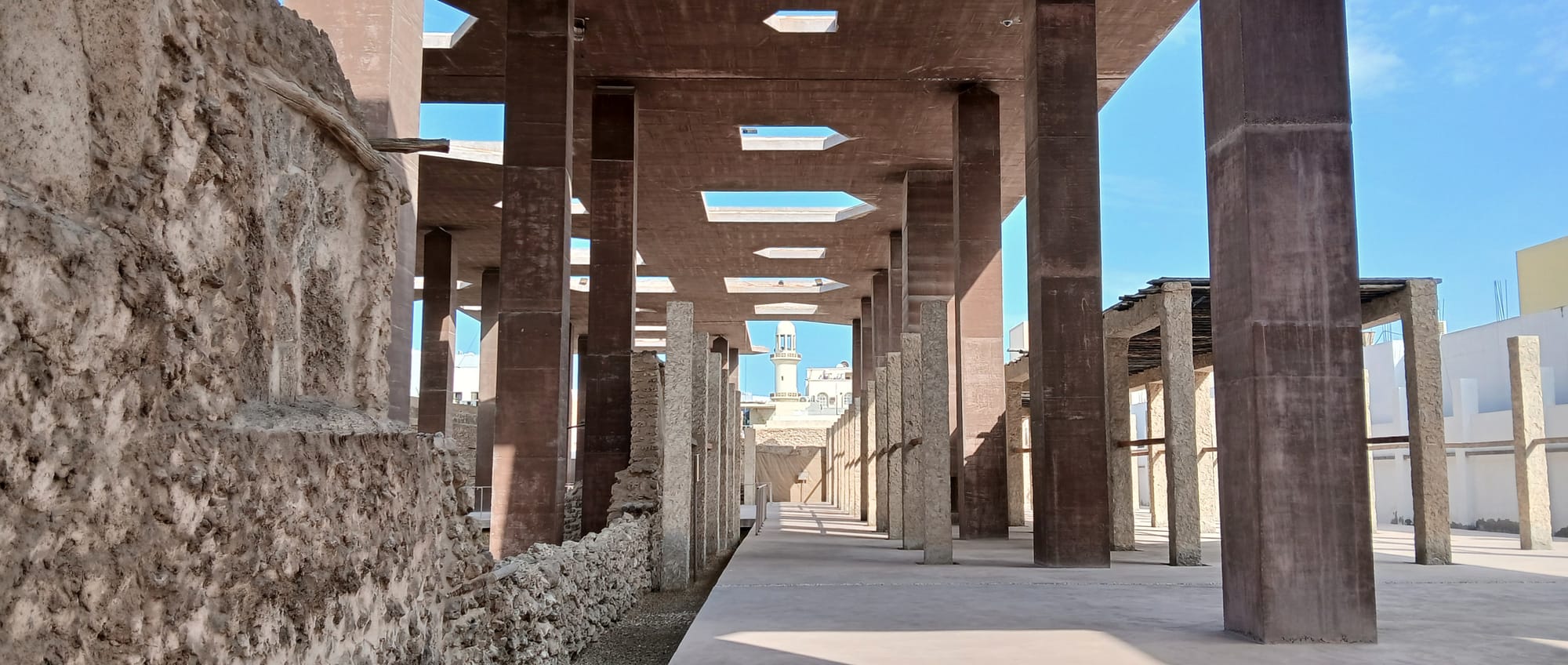
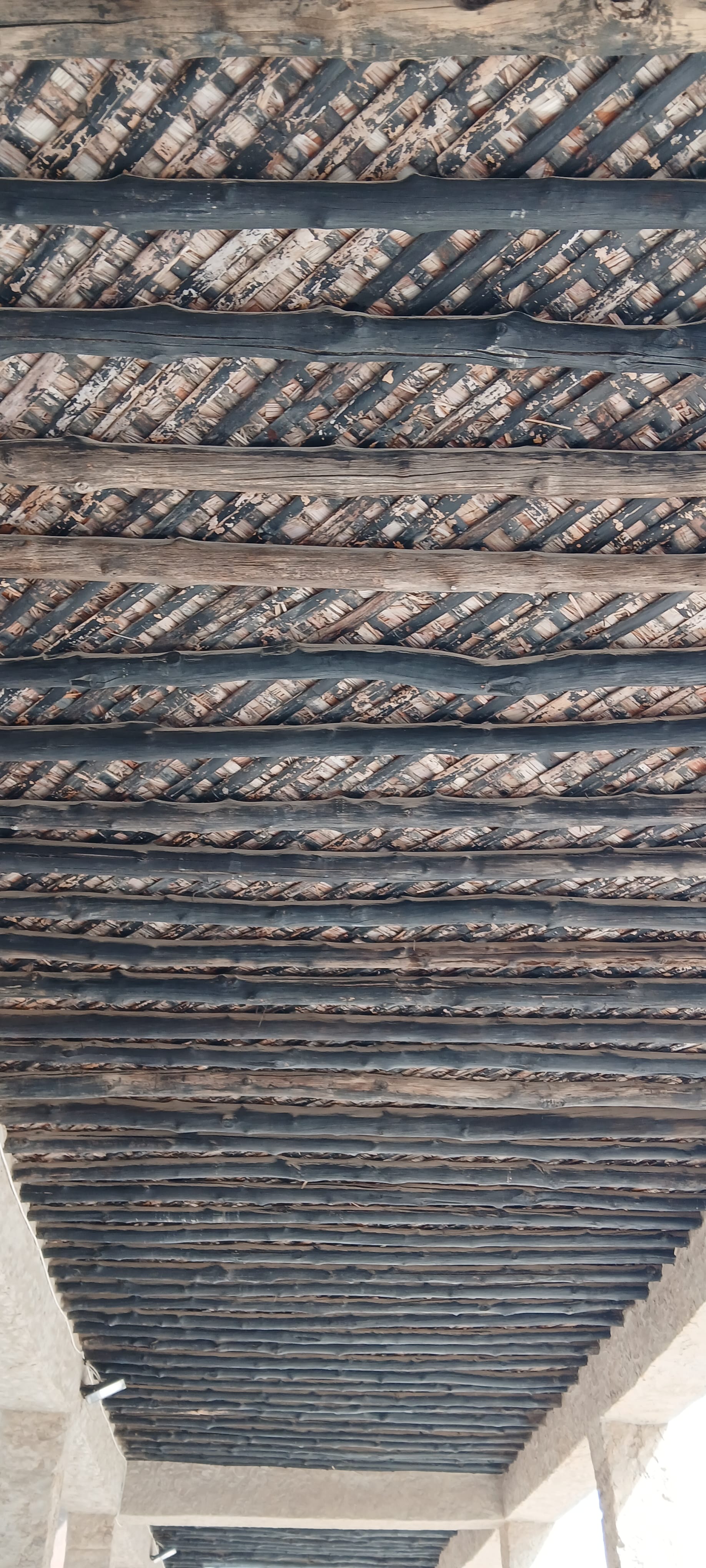
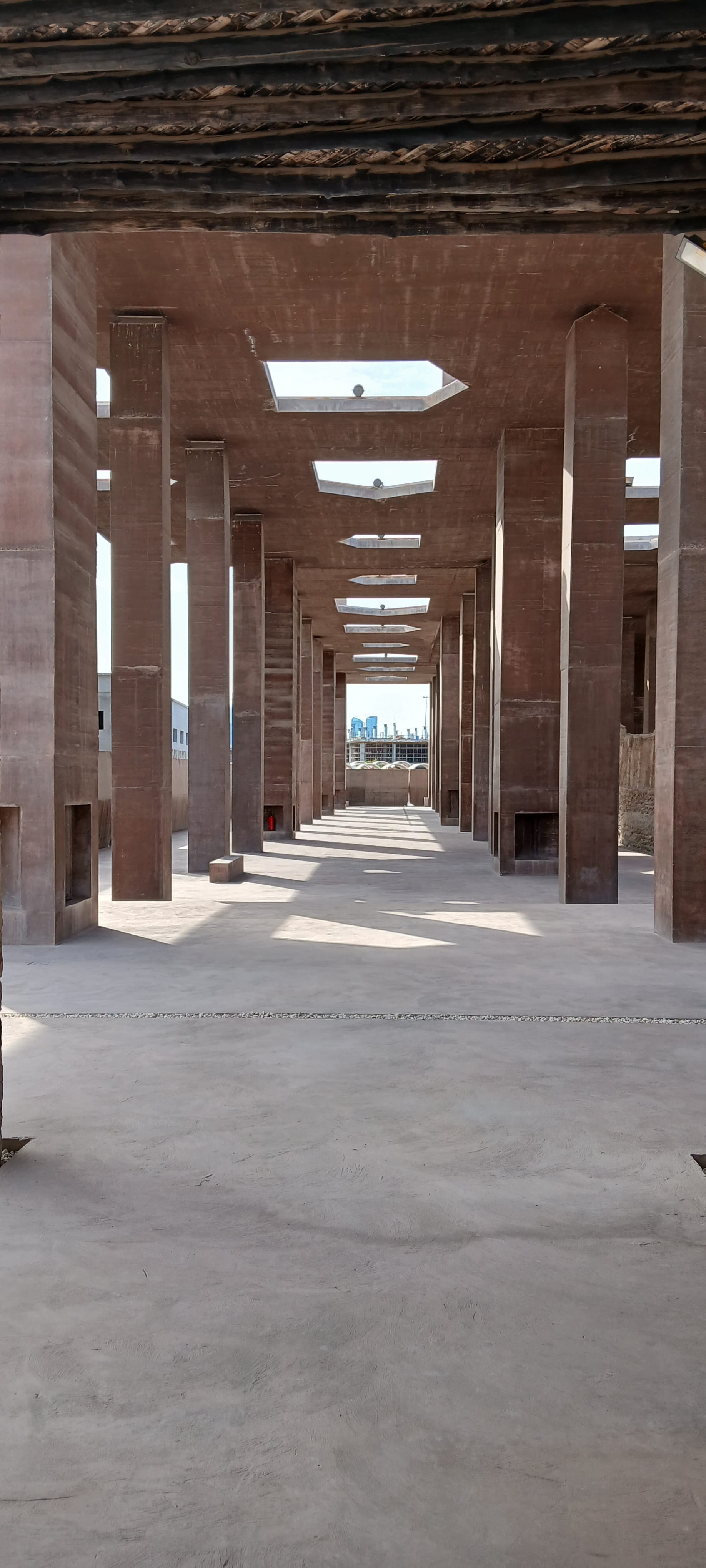
This extraordinary building is said to have been built to protect the beginnings of the Pearl Pathway, apart from date molasses, pearls were Bahrain's most desired product. Isn't this interesting. Saudi, it's the trade in myrrh and frankincense and oud, scented barks and gums, here it's pearls. The ancient world had such a lust for beauty. What has happened?
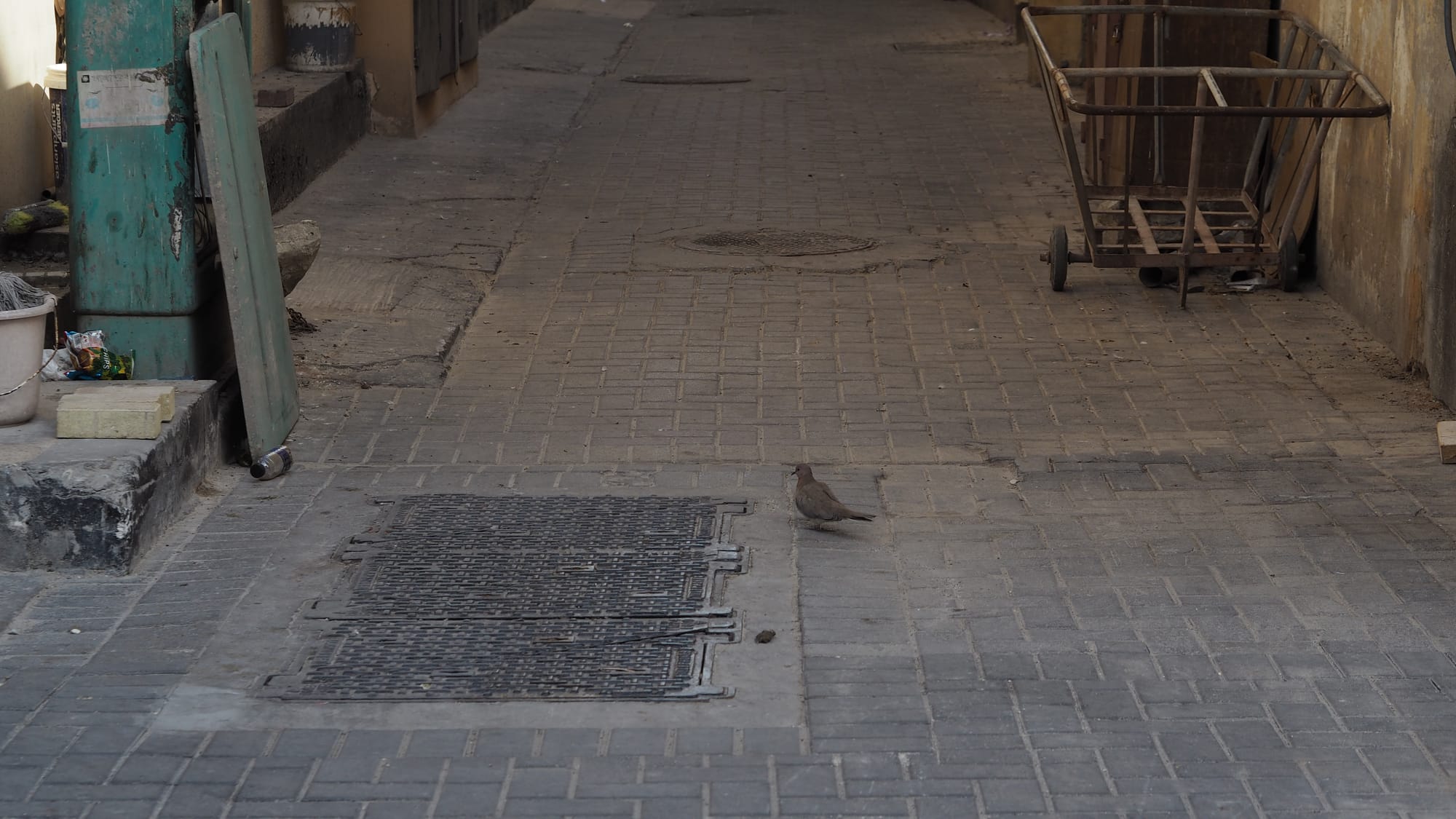
Here I took out my camera:
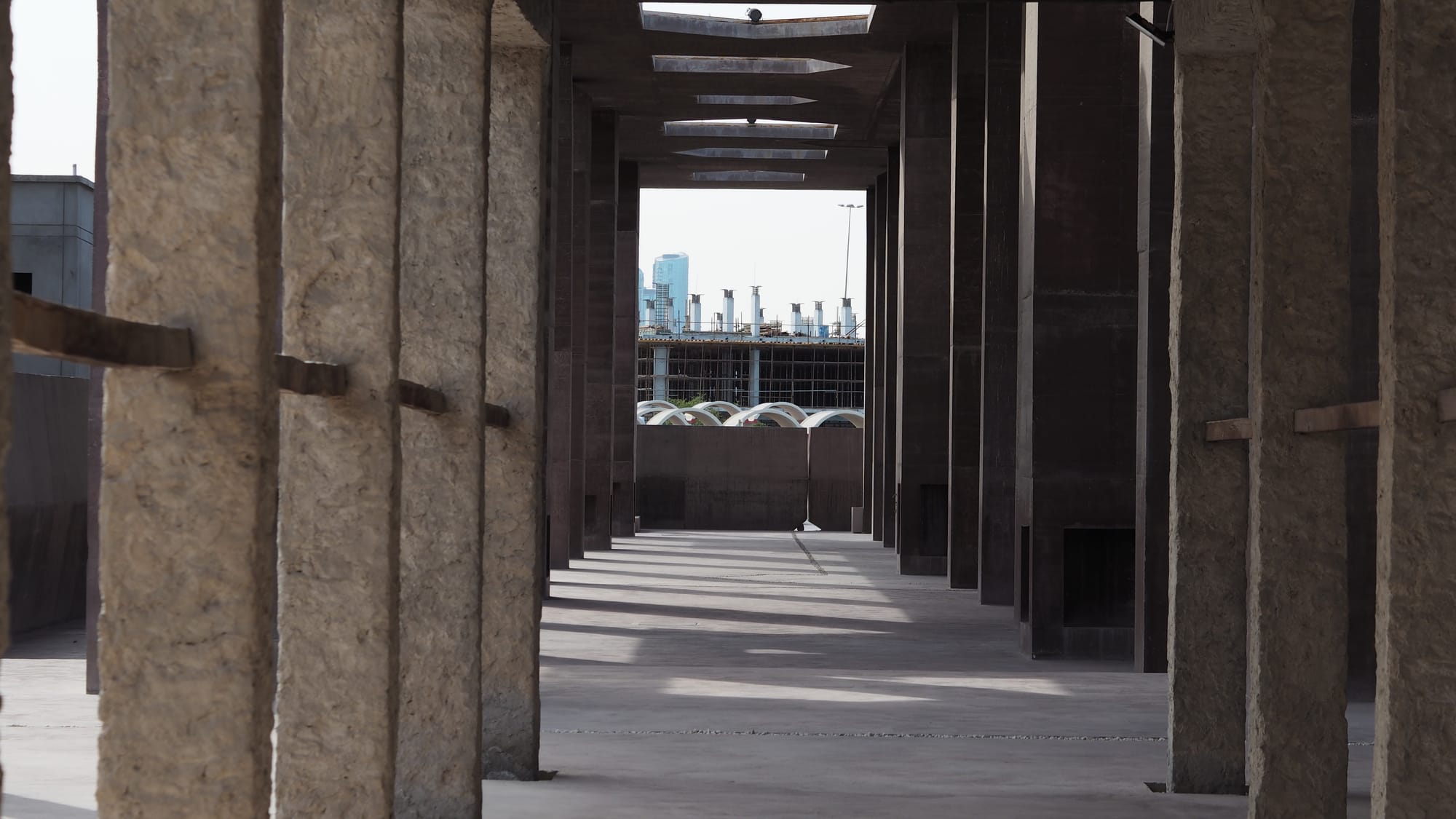
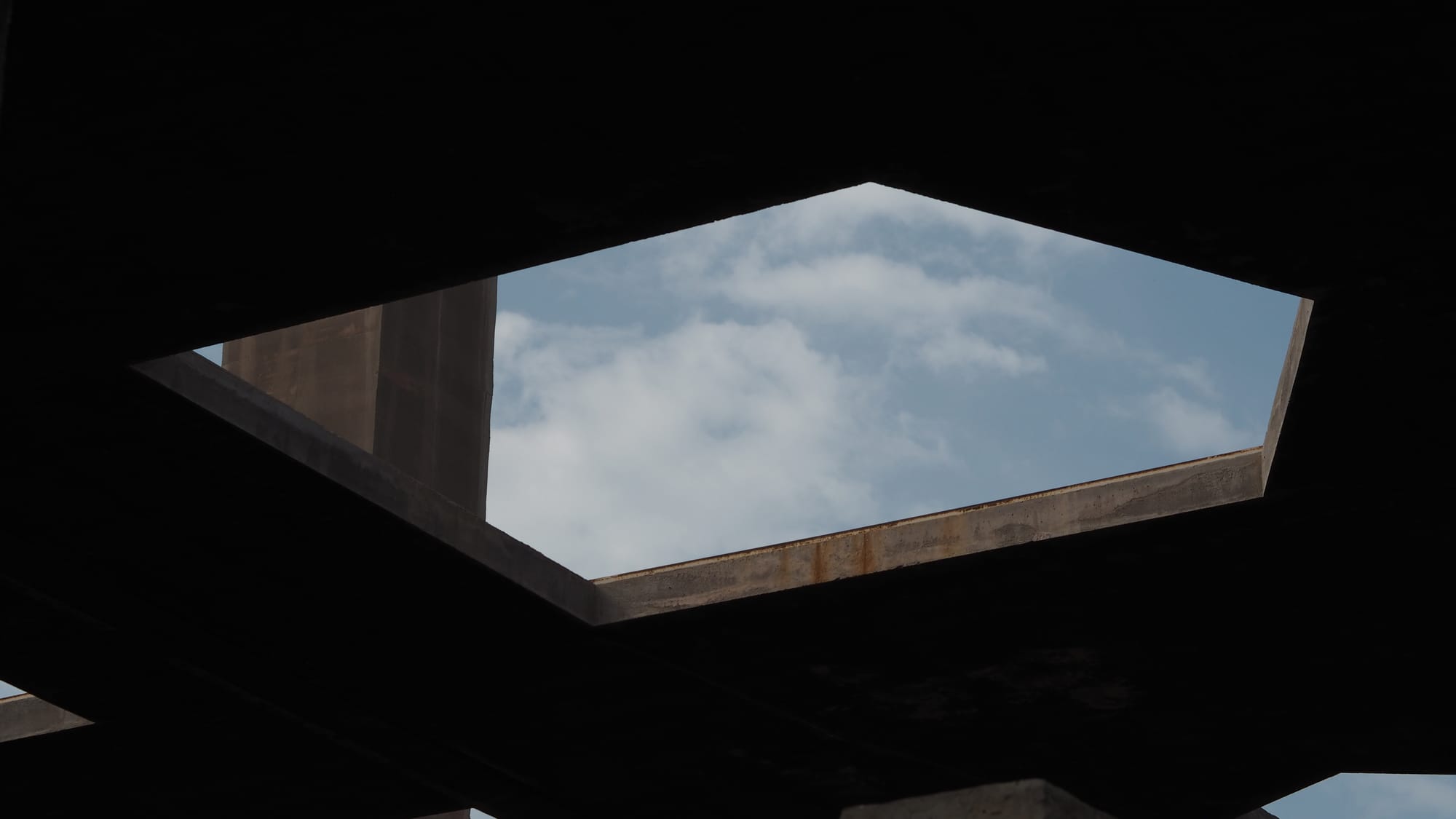
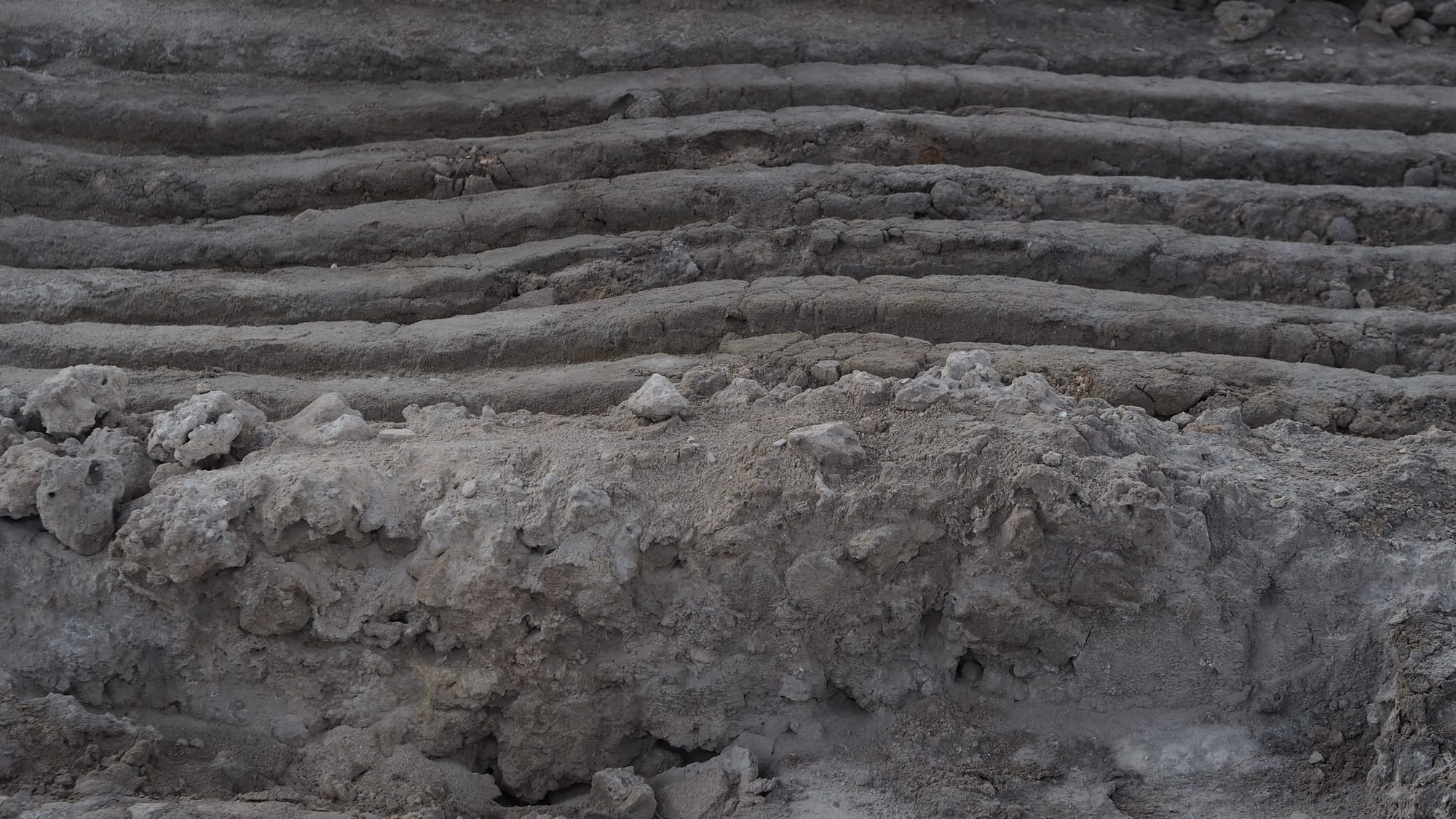
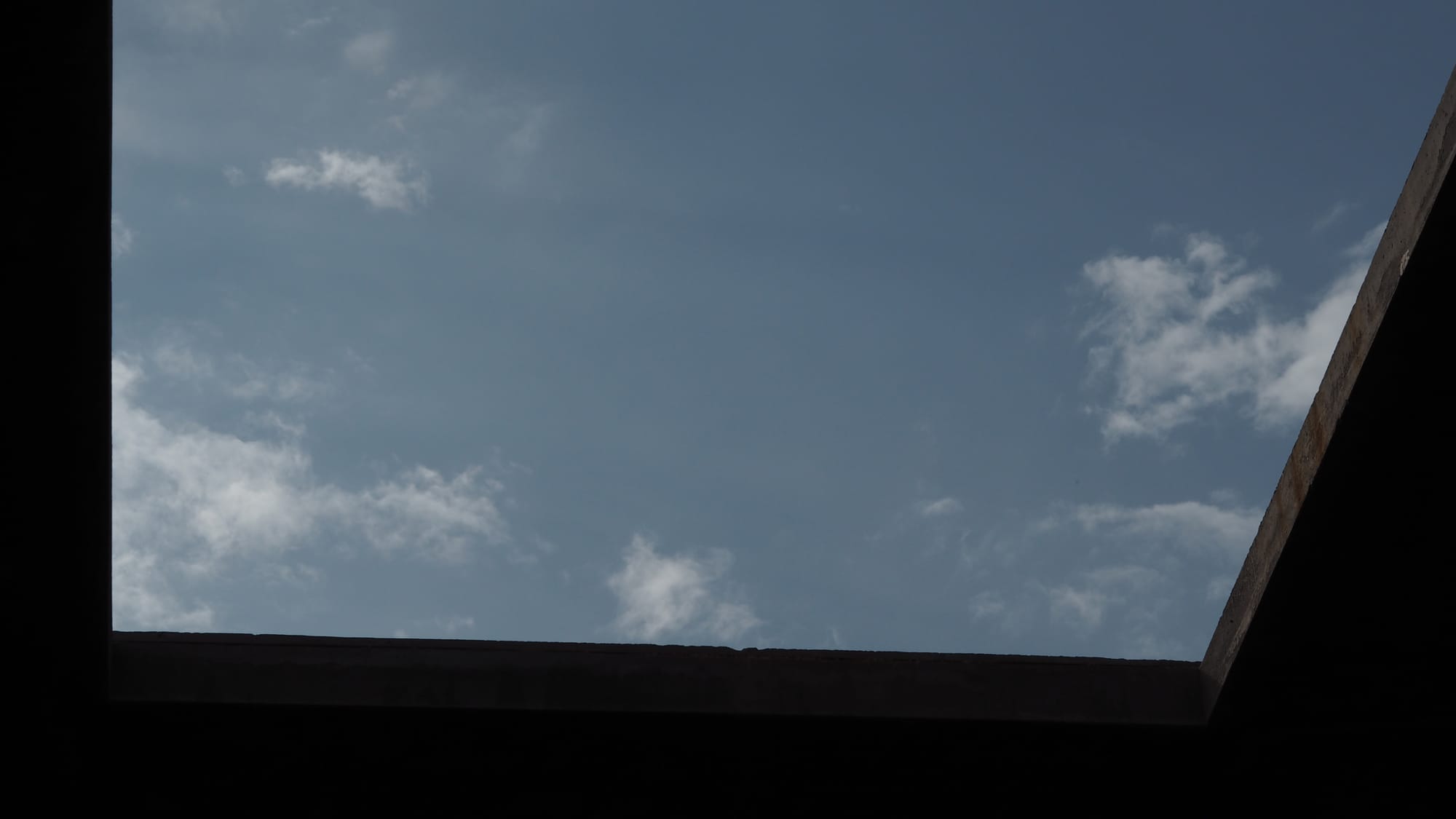
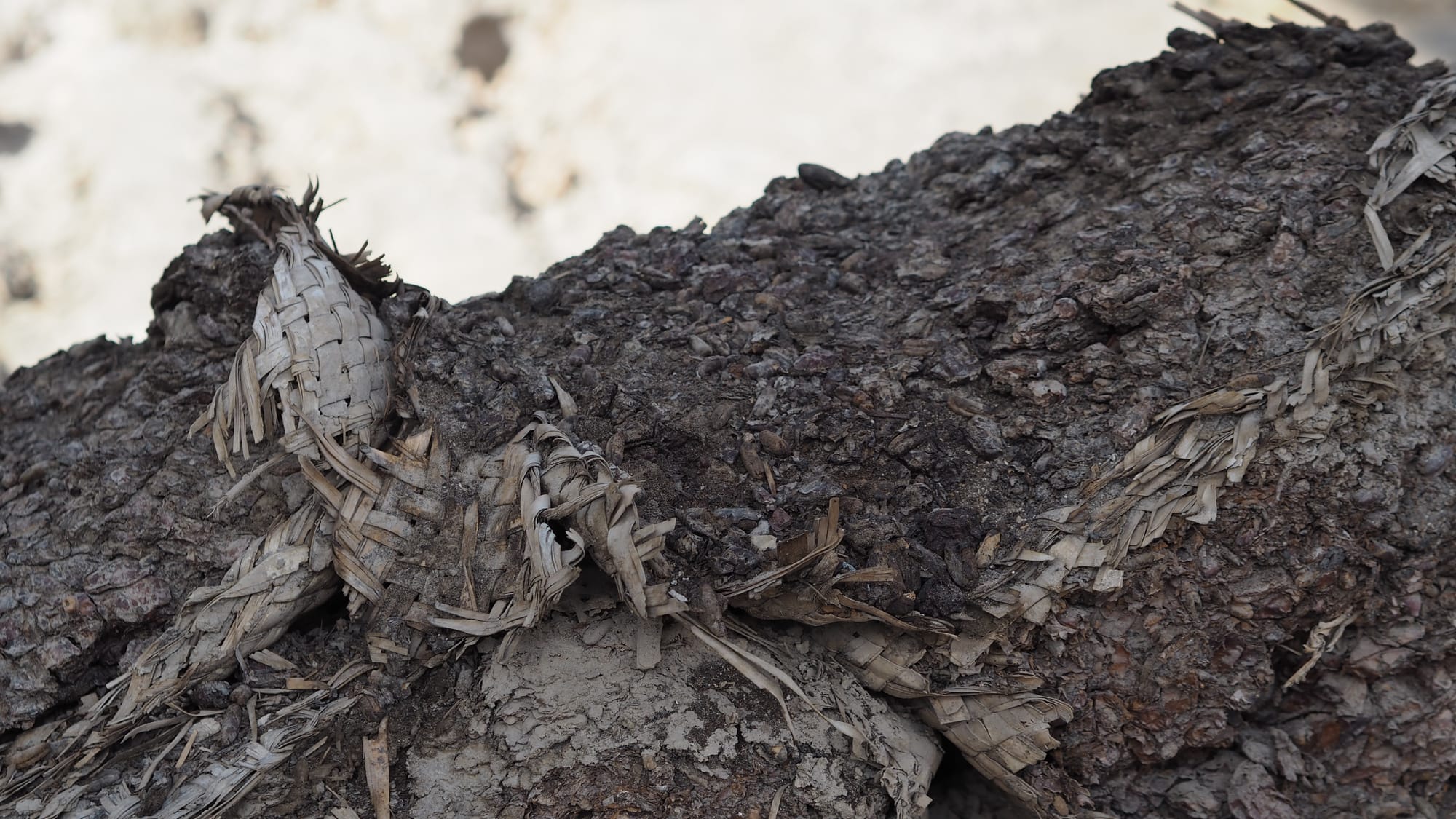
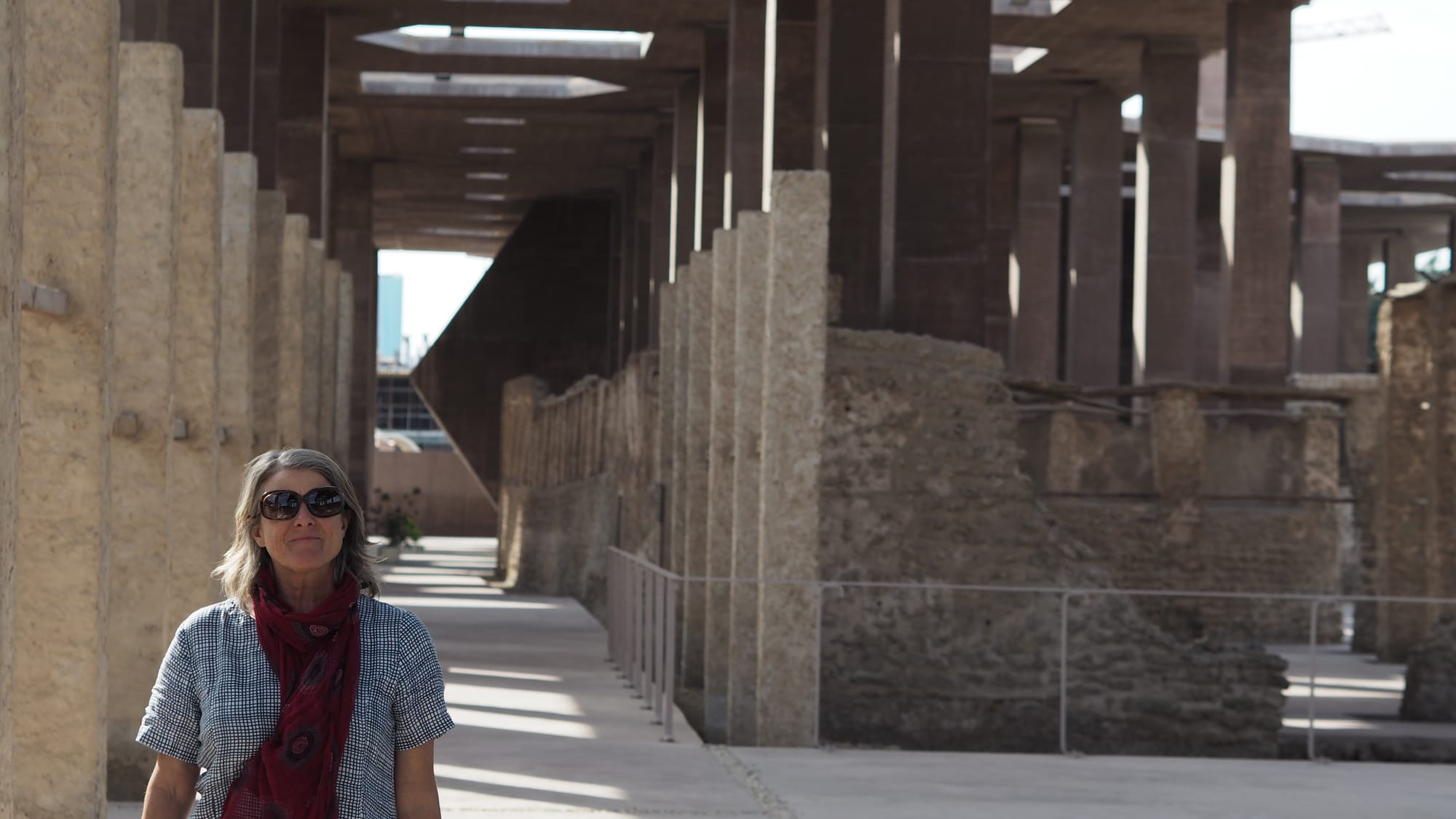
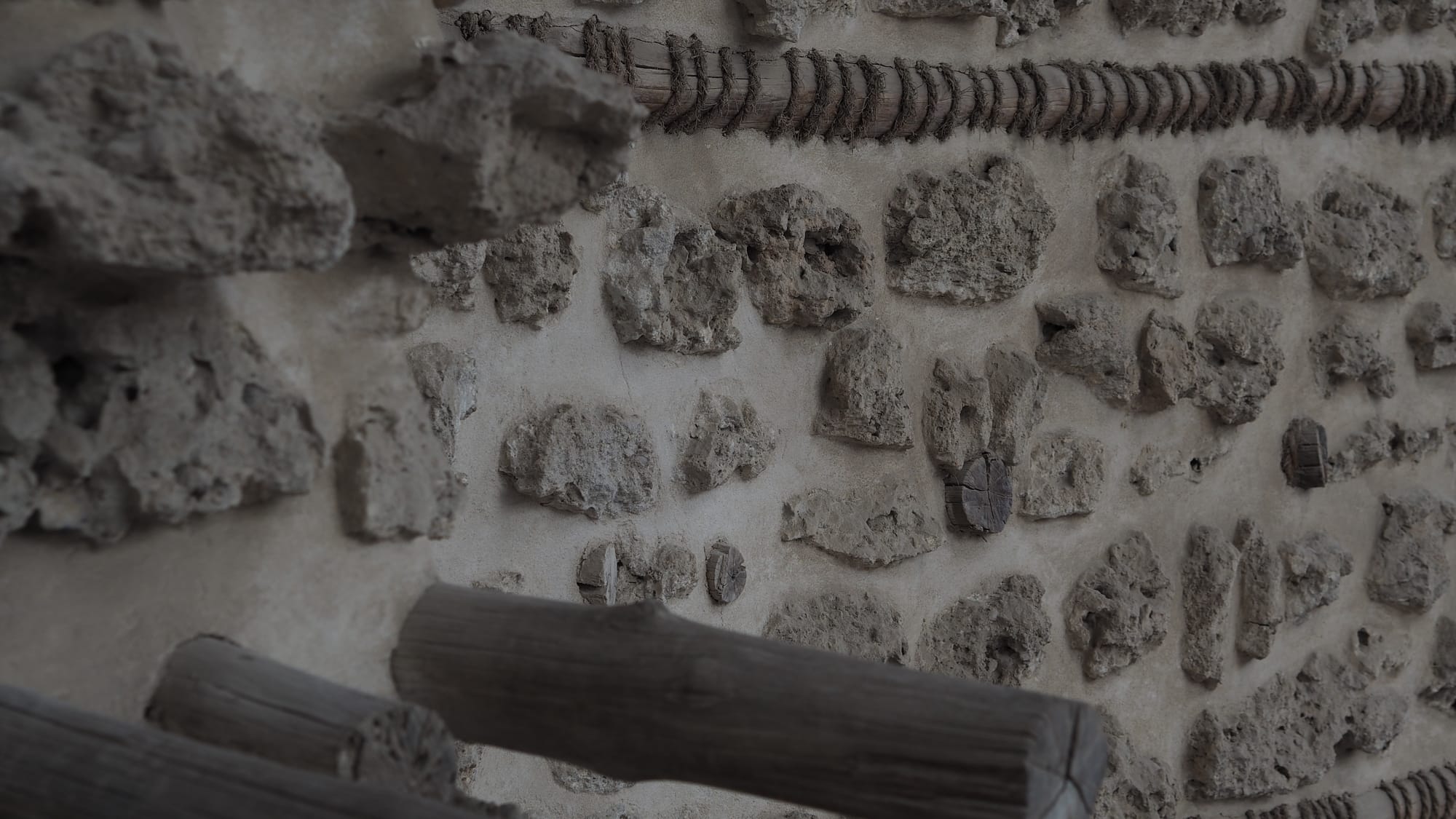
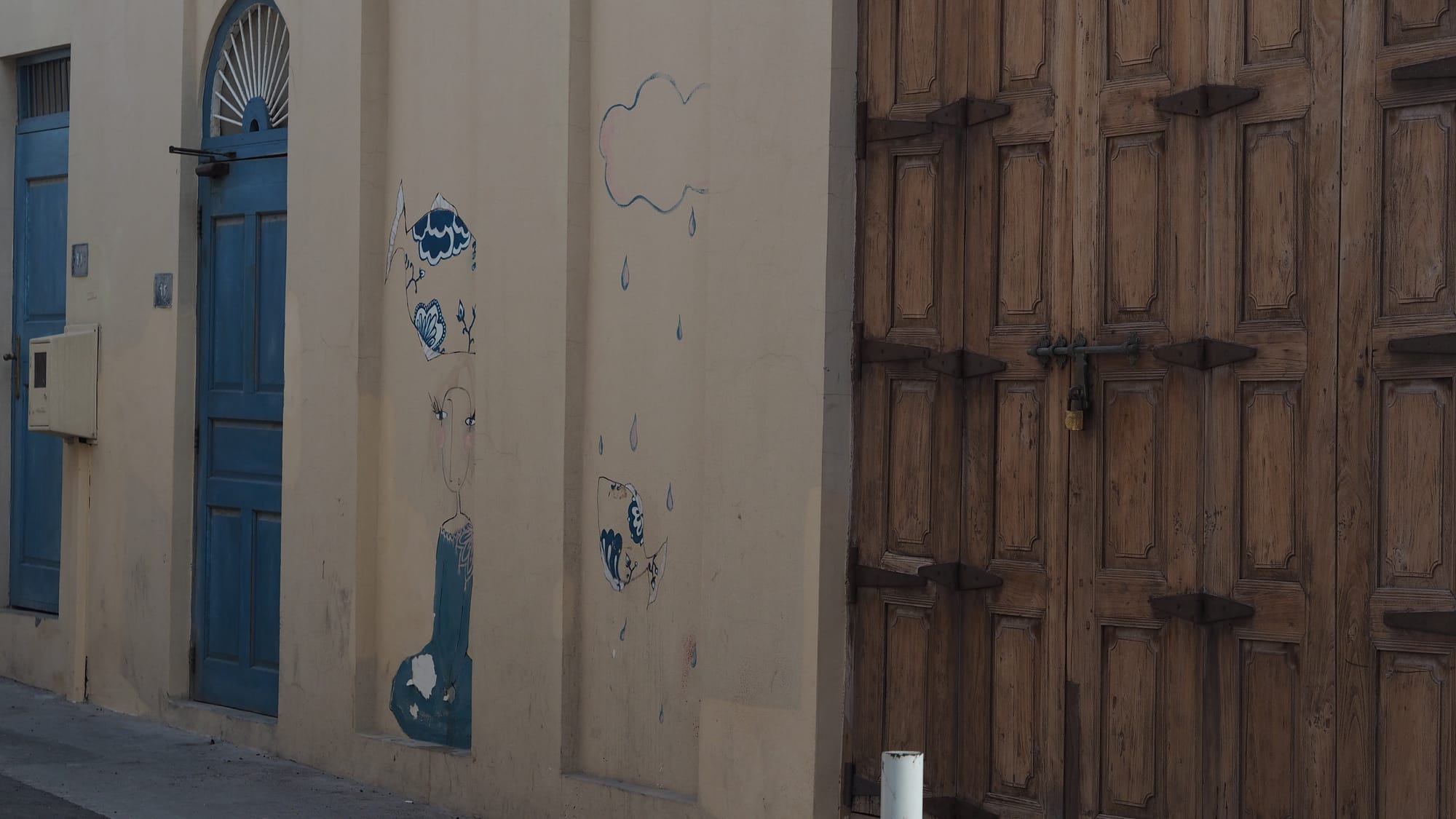
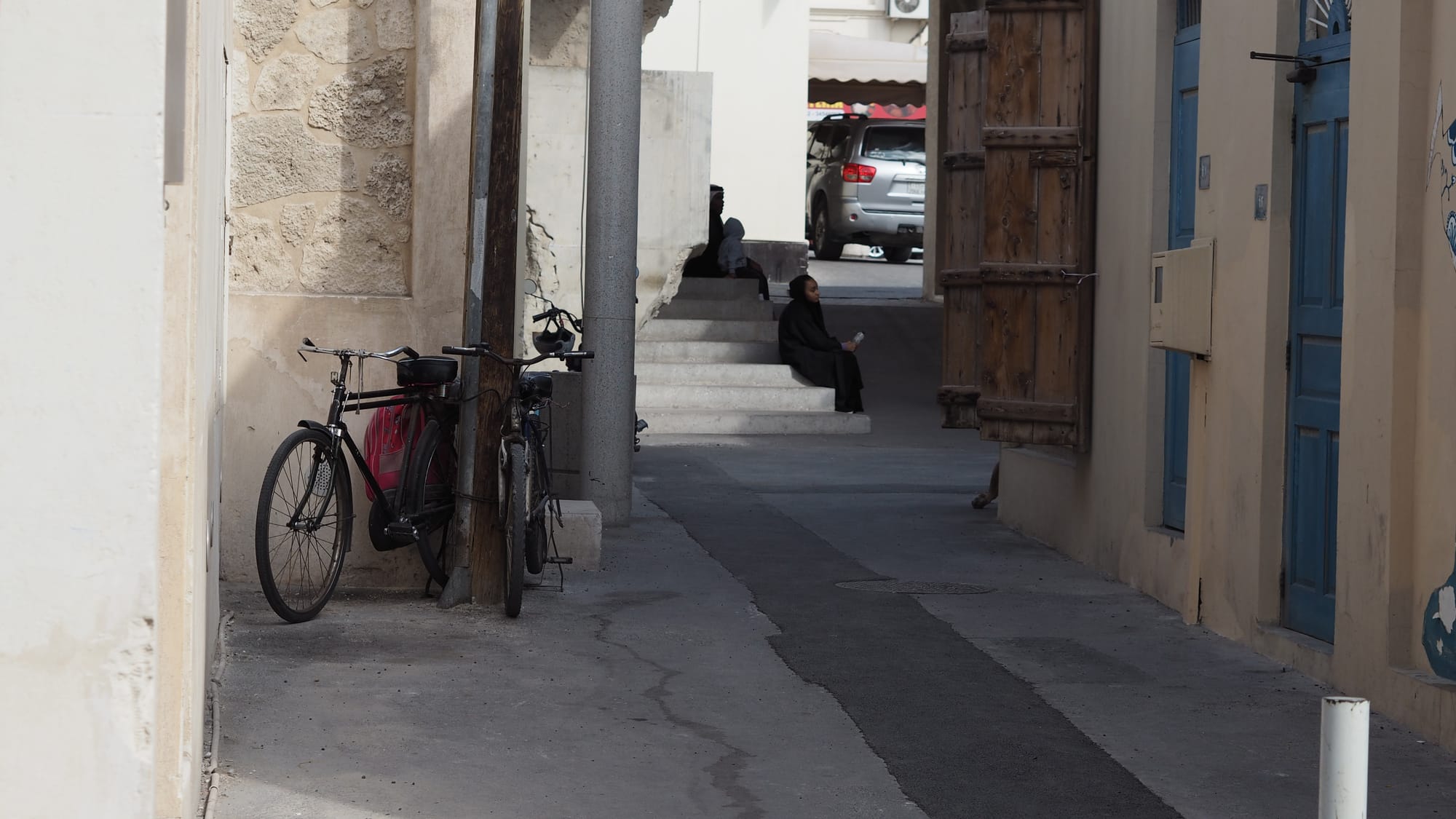
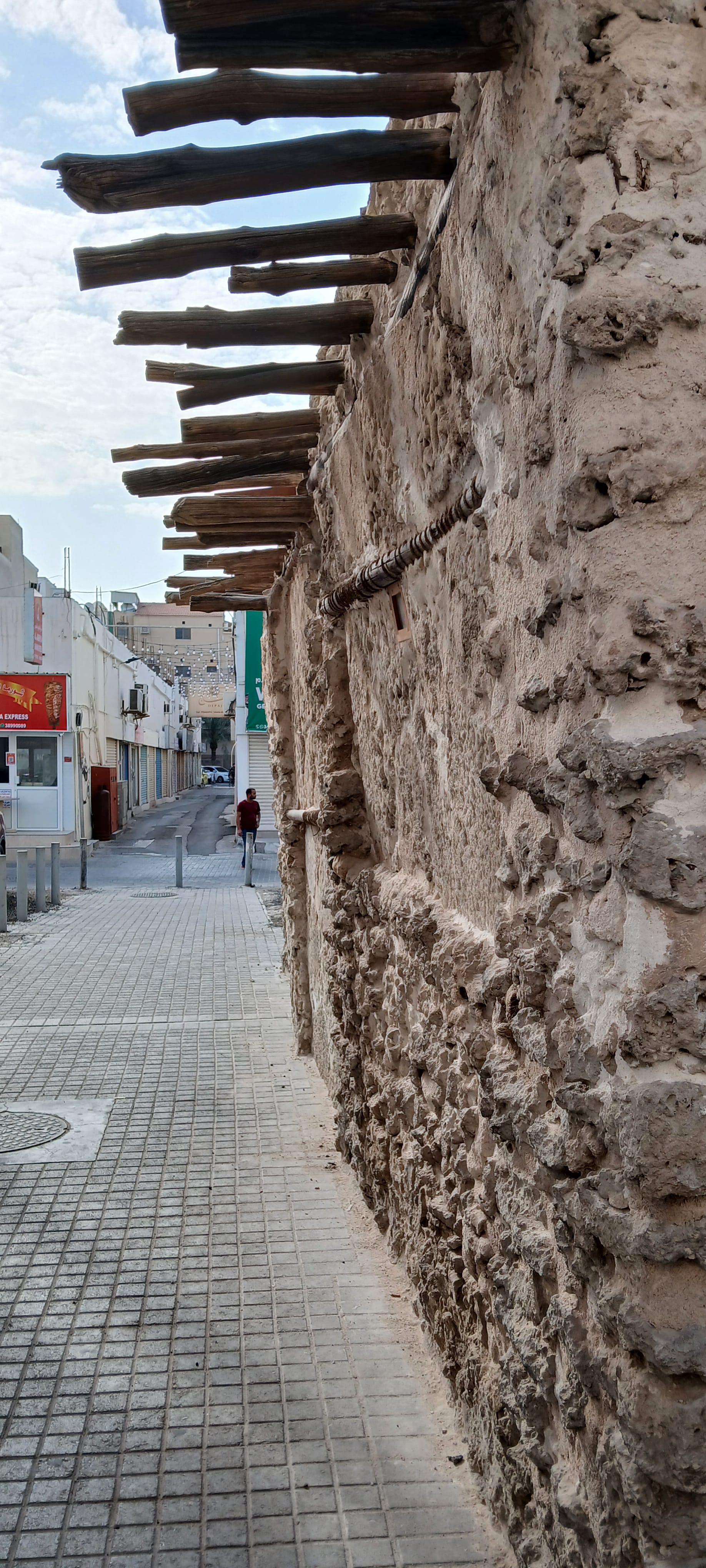
This, reputed to be a more historical souq than Manama, had undergone a makeover. The pile of dreck in the woven fragments of datepalm leaves is dates, left to drain into the runnels, to produced date molasses for trade. There was a figure at the Fort of 10,000kgs of molasses in a single year, while under the Portuguese.
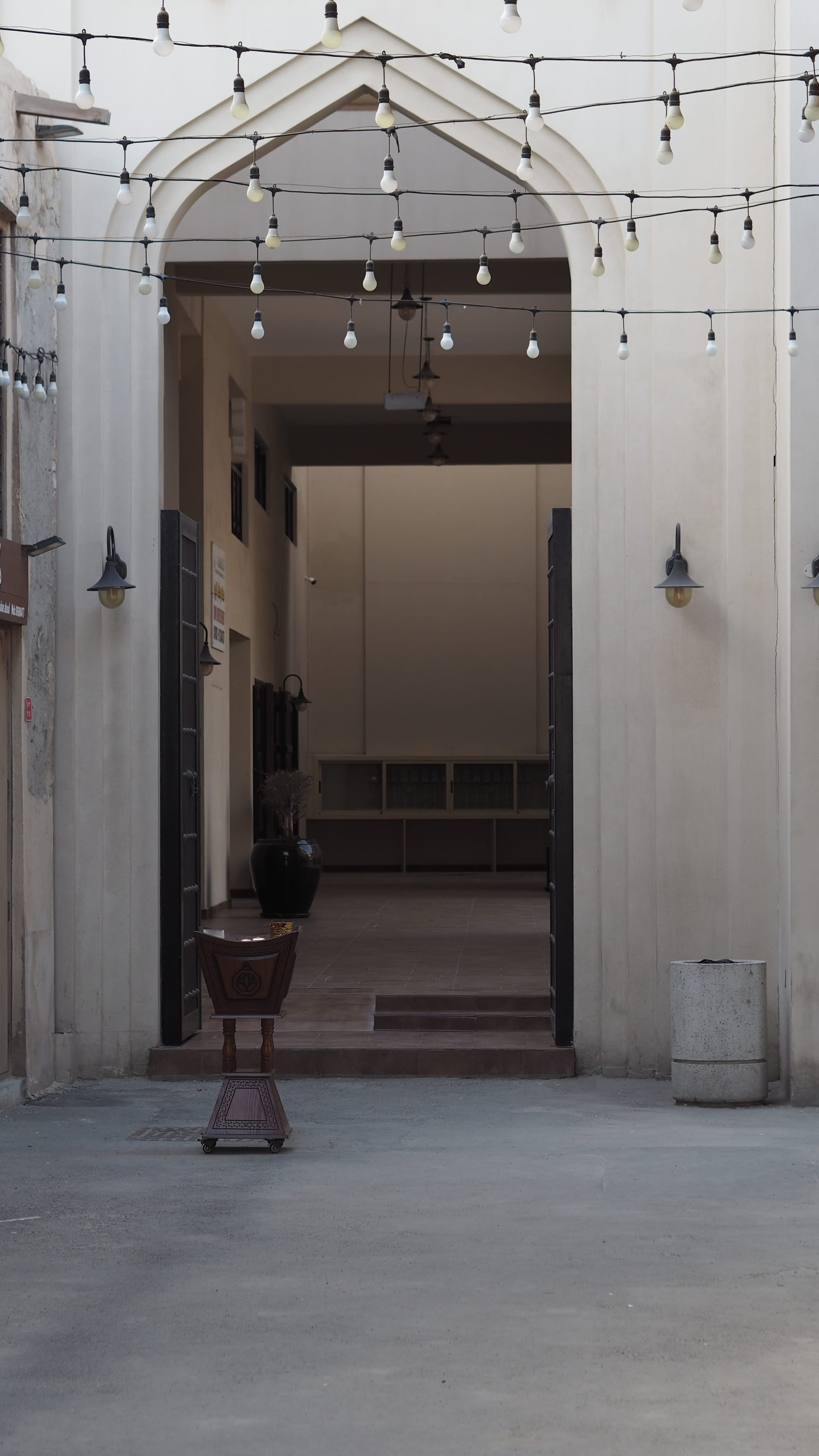
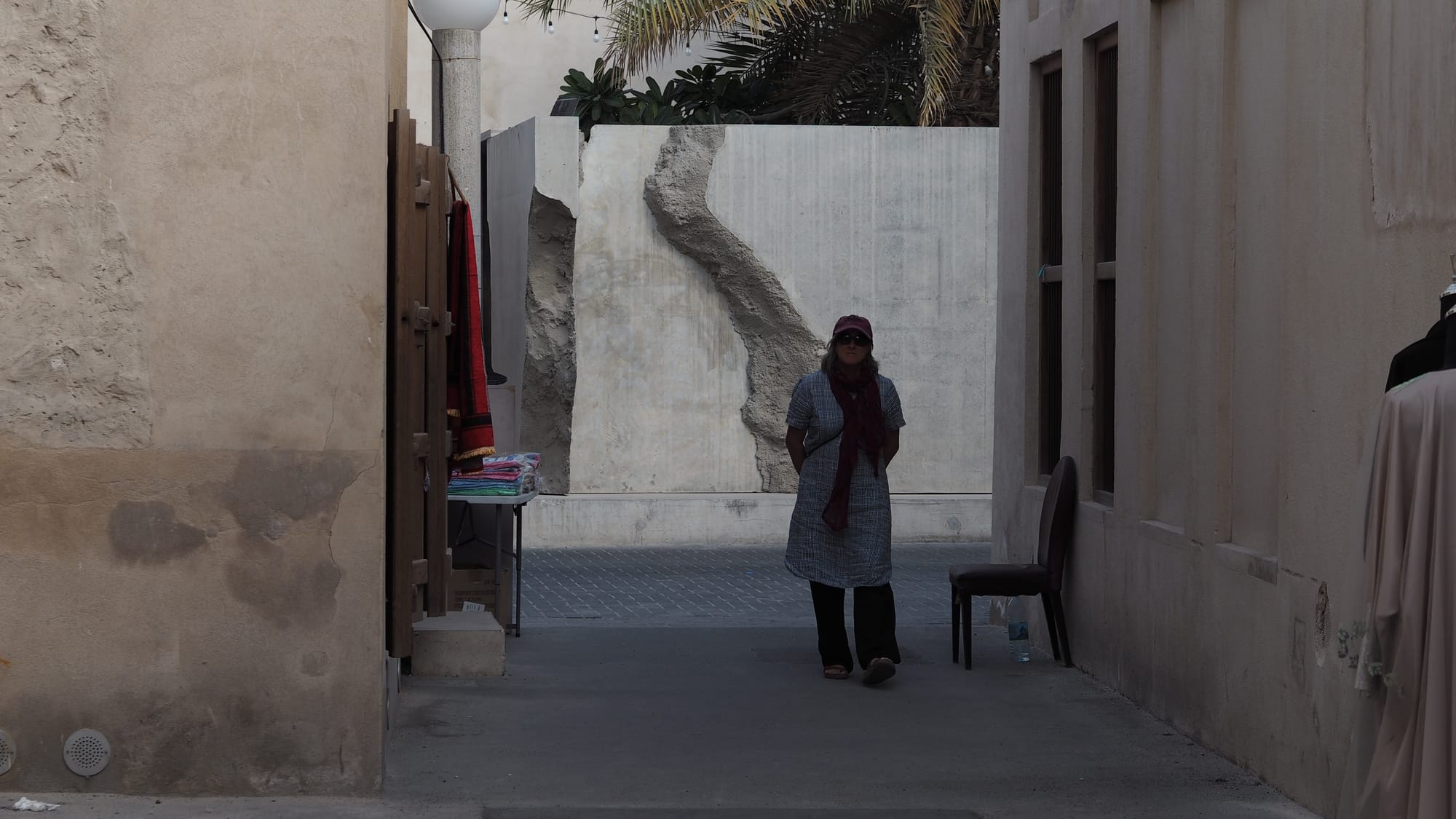
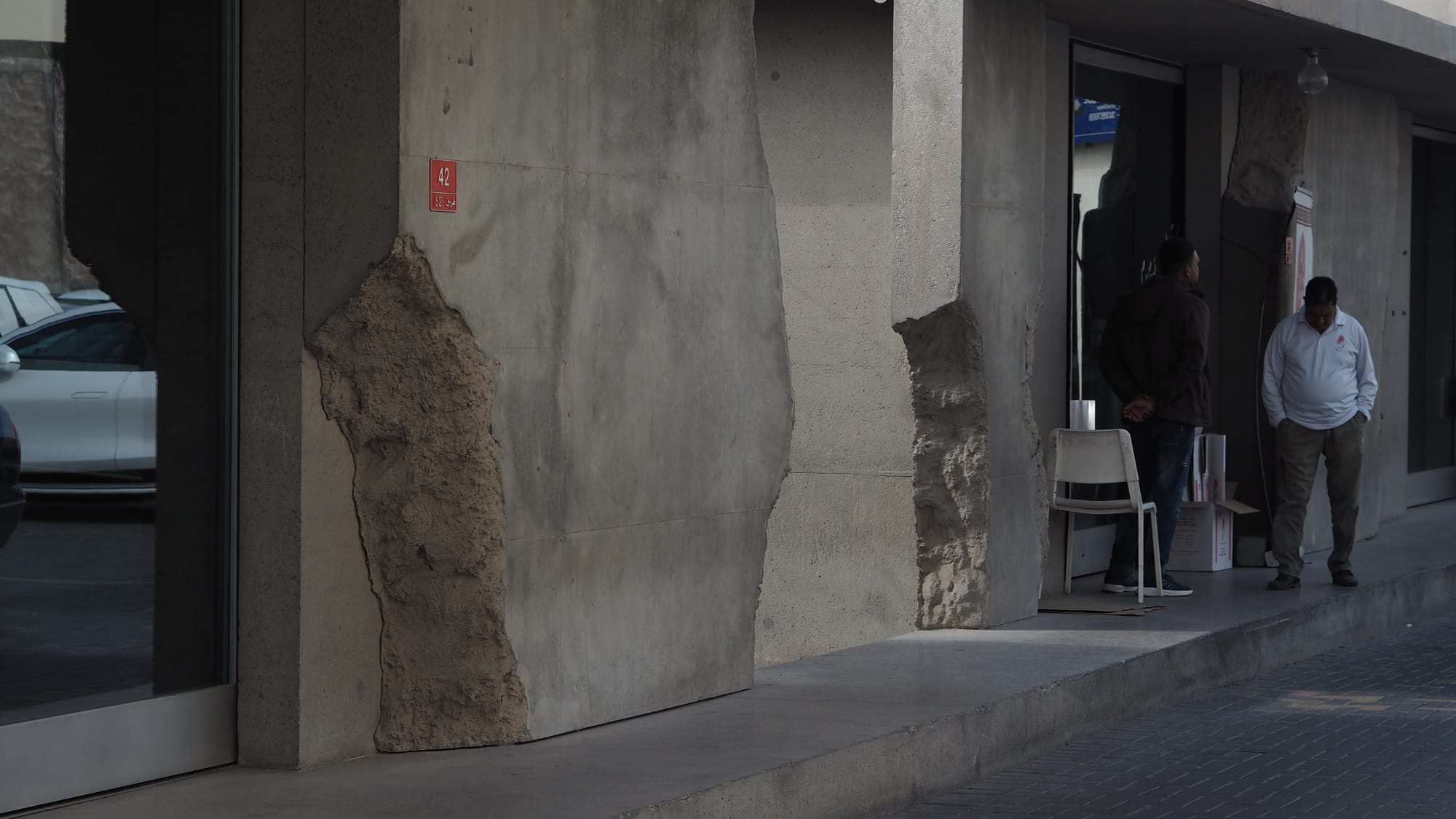
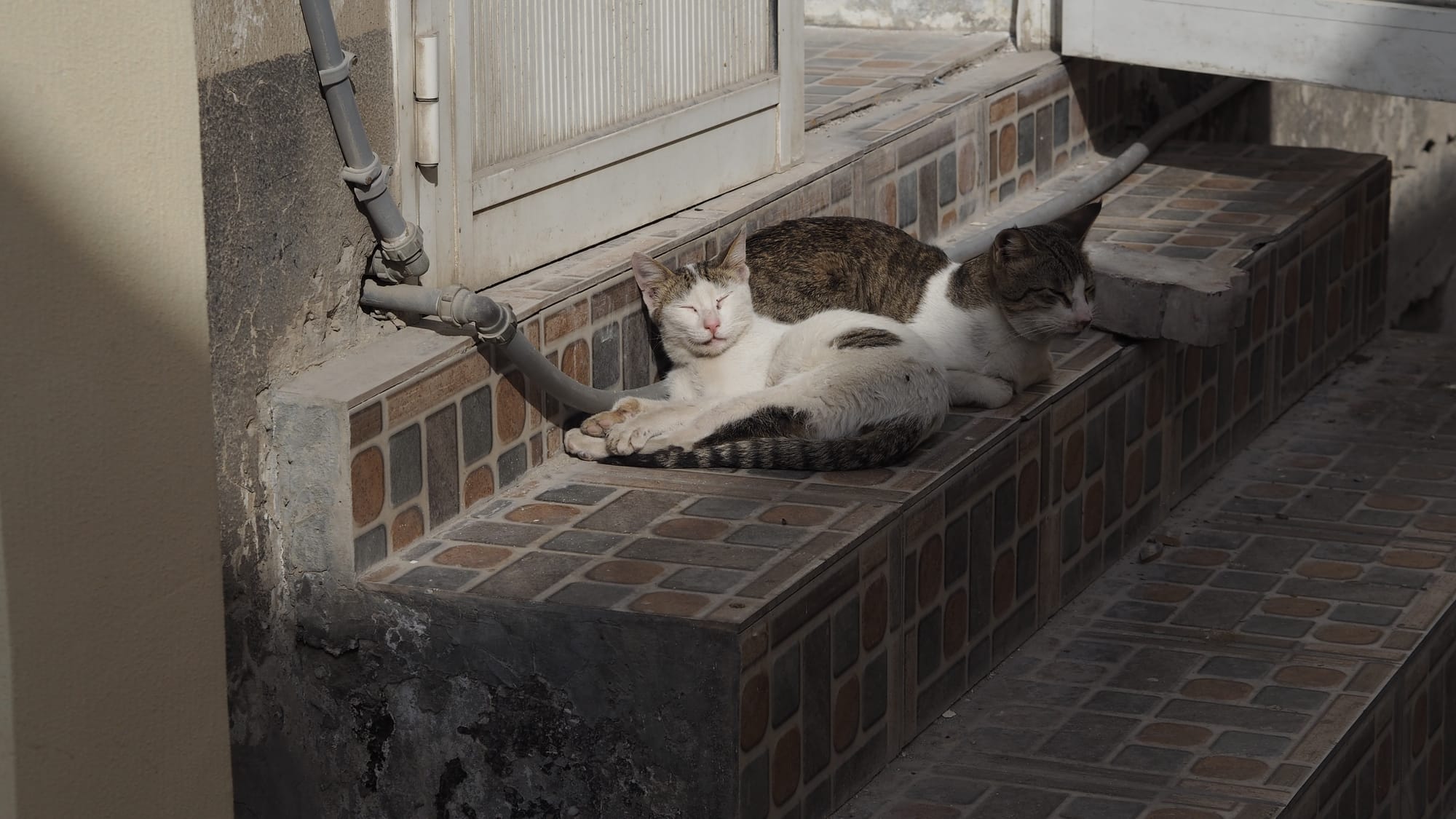
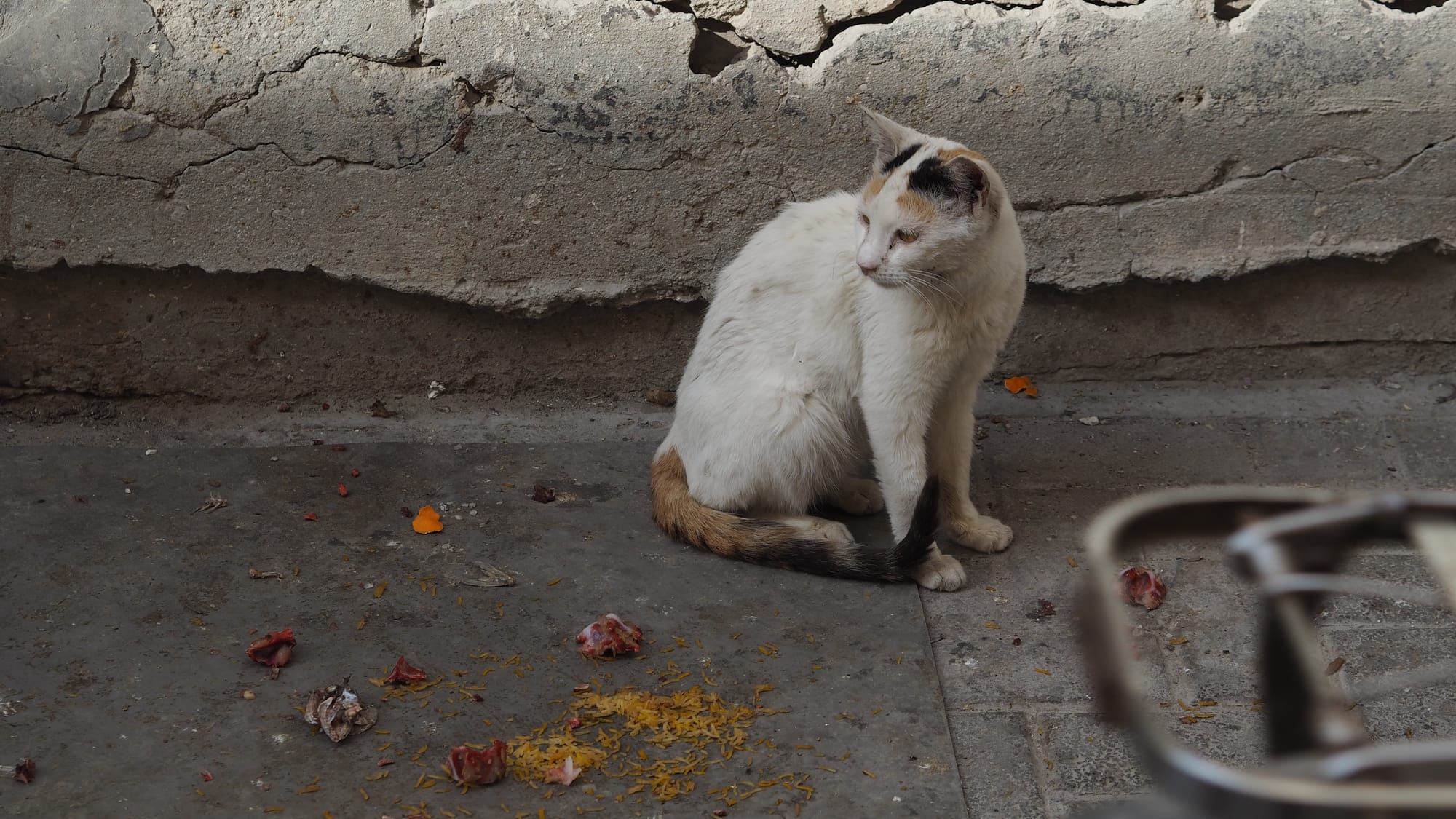
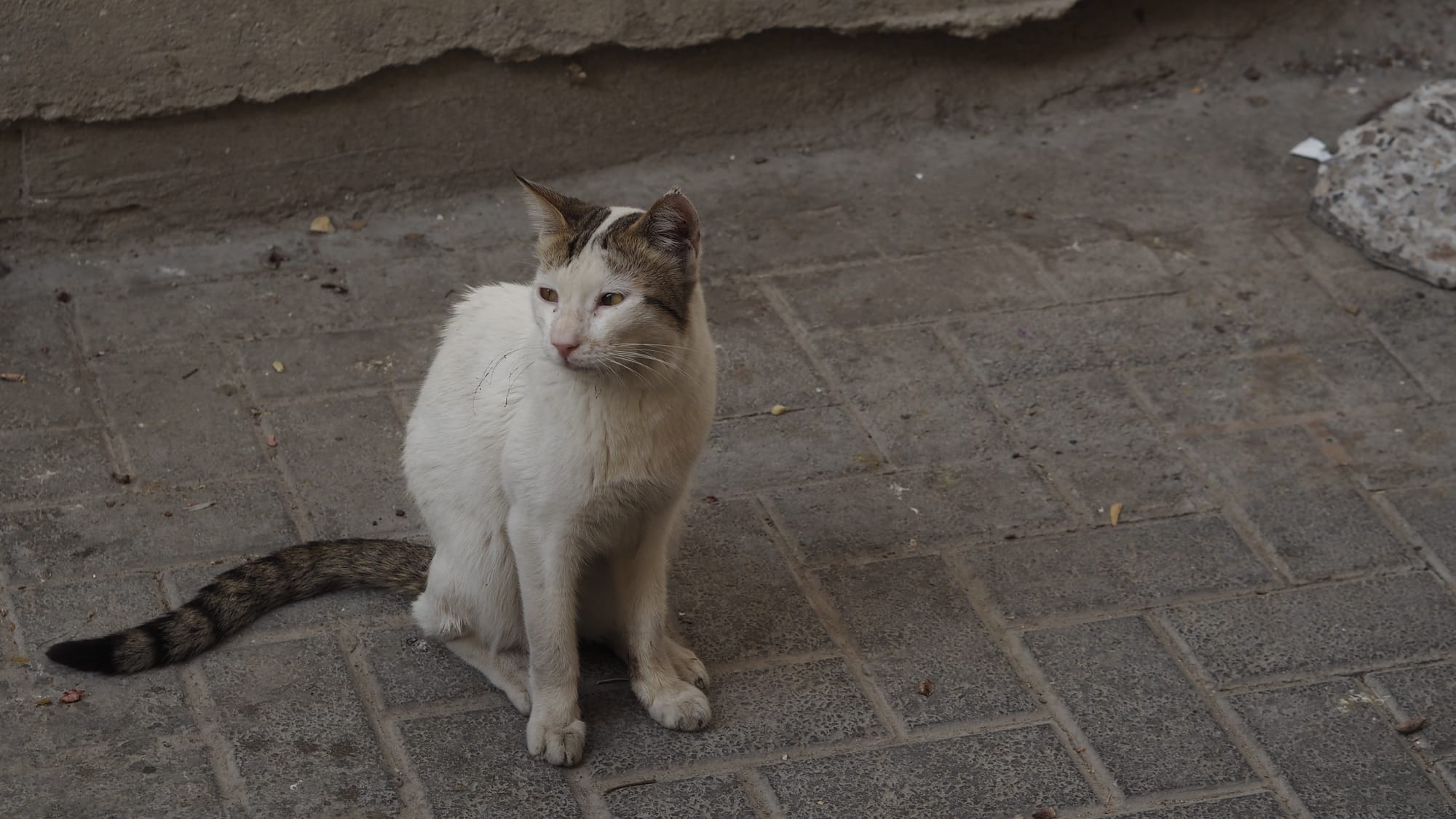
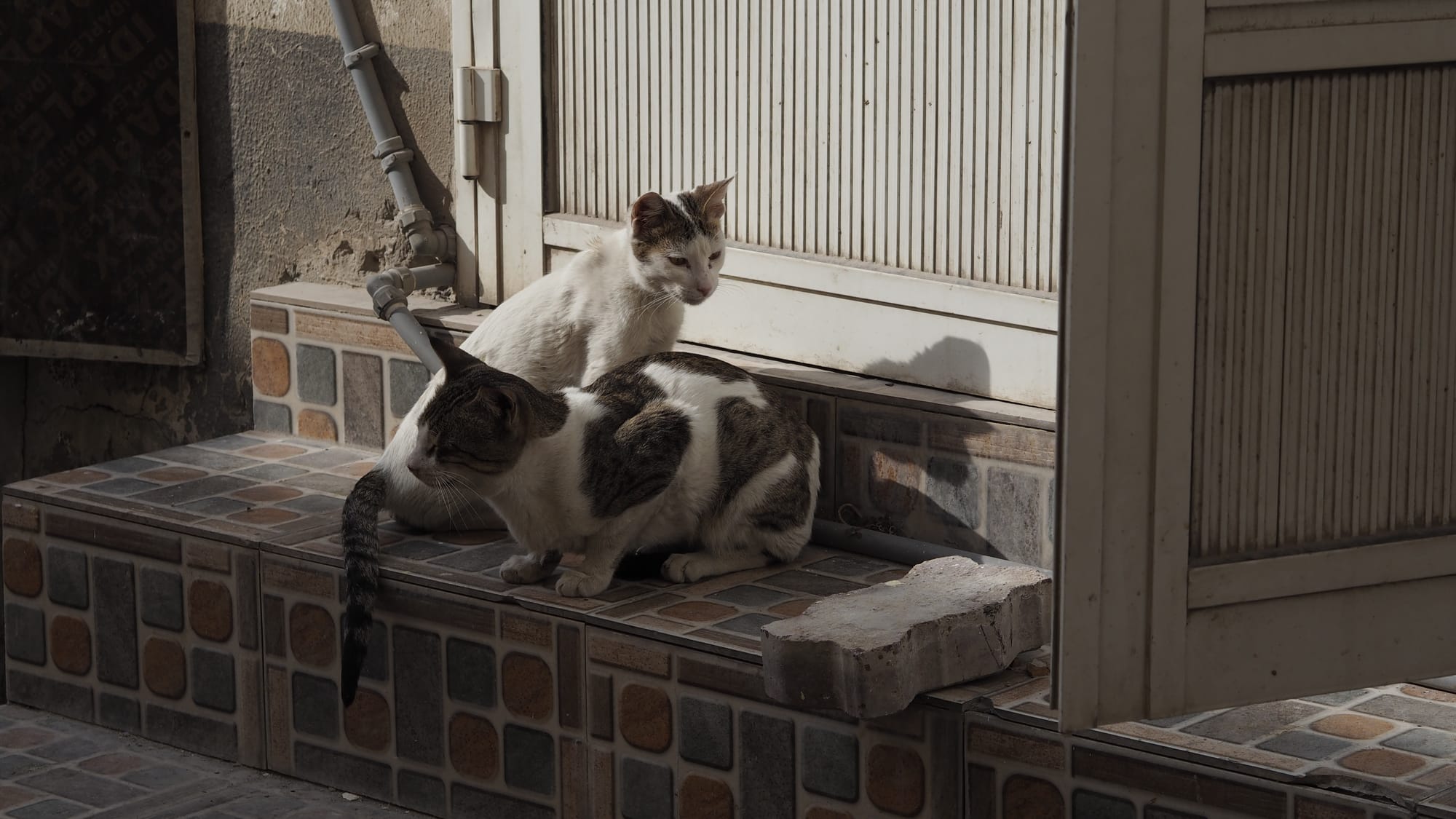
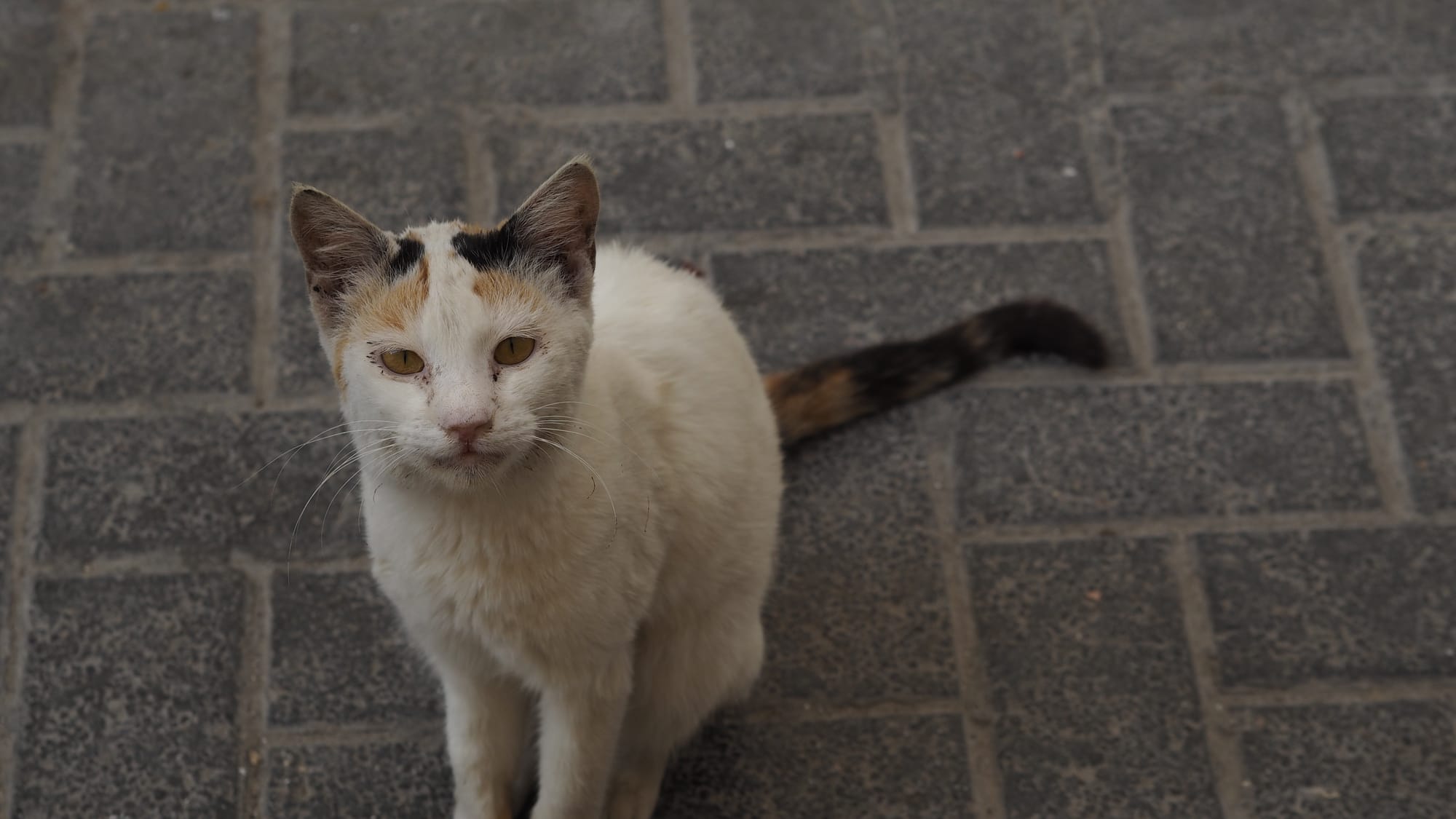
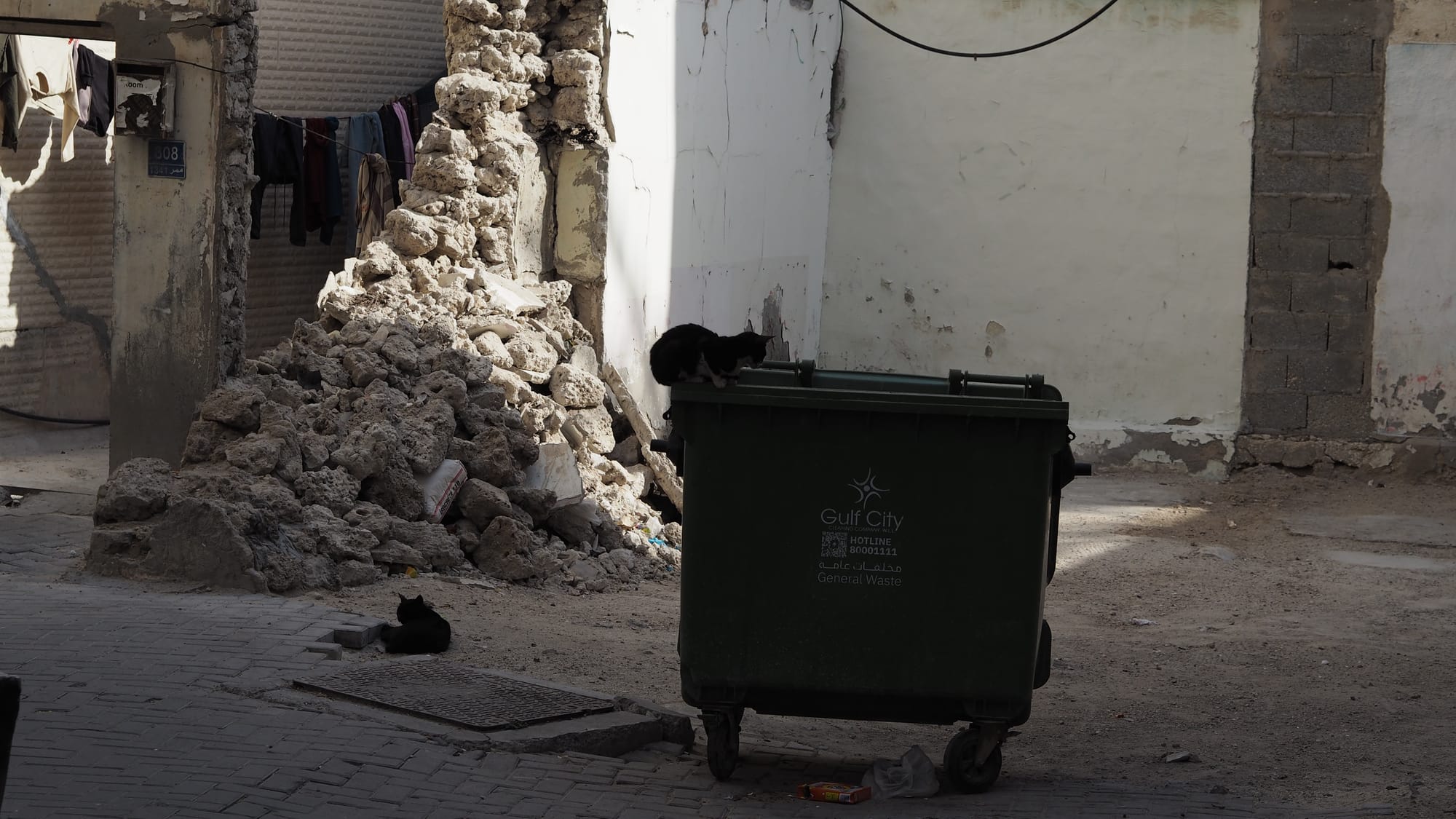
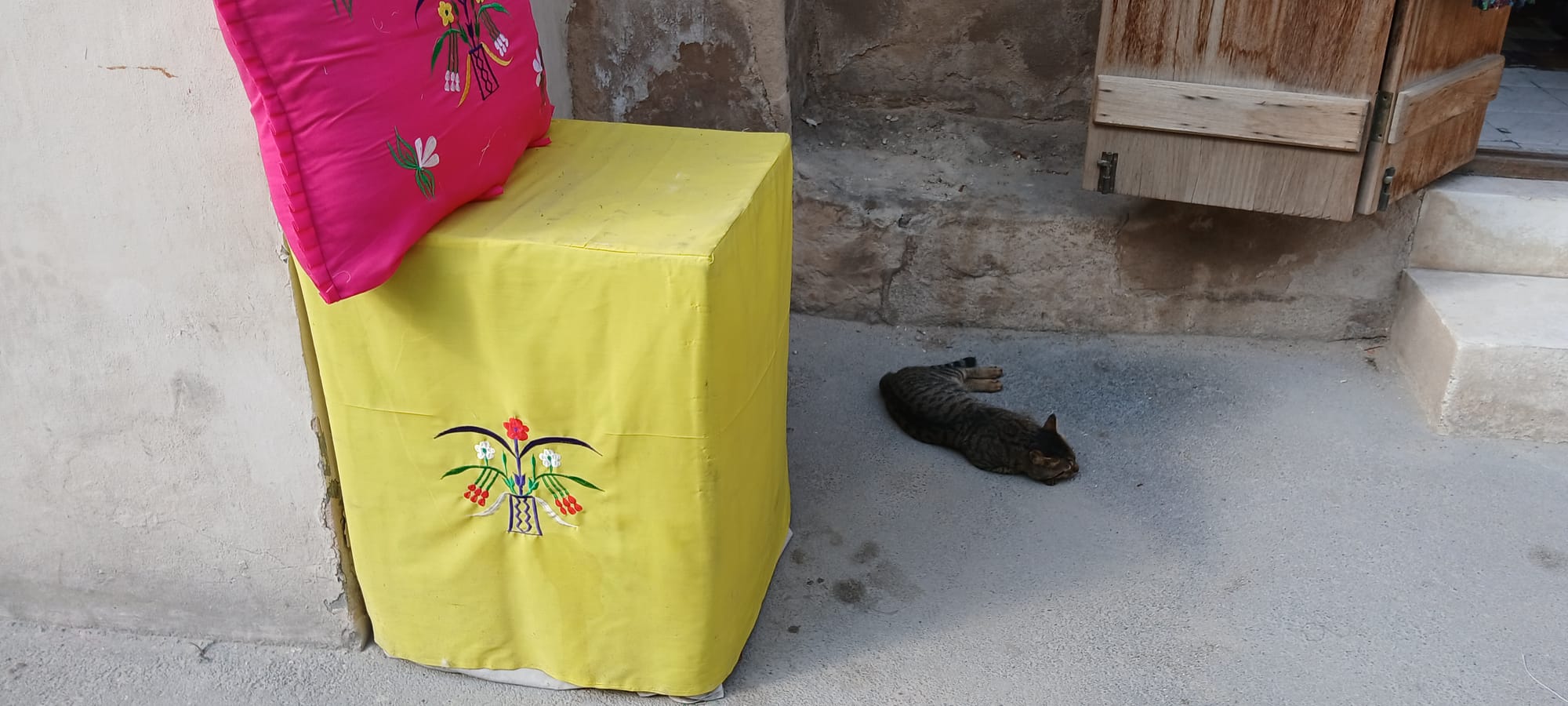
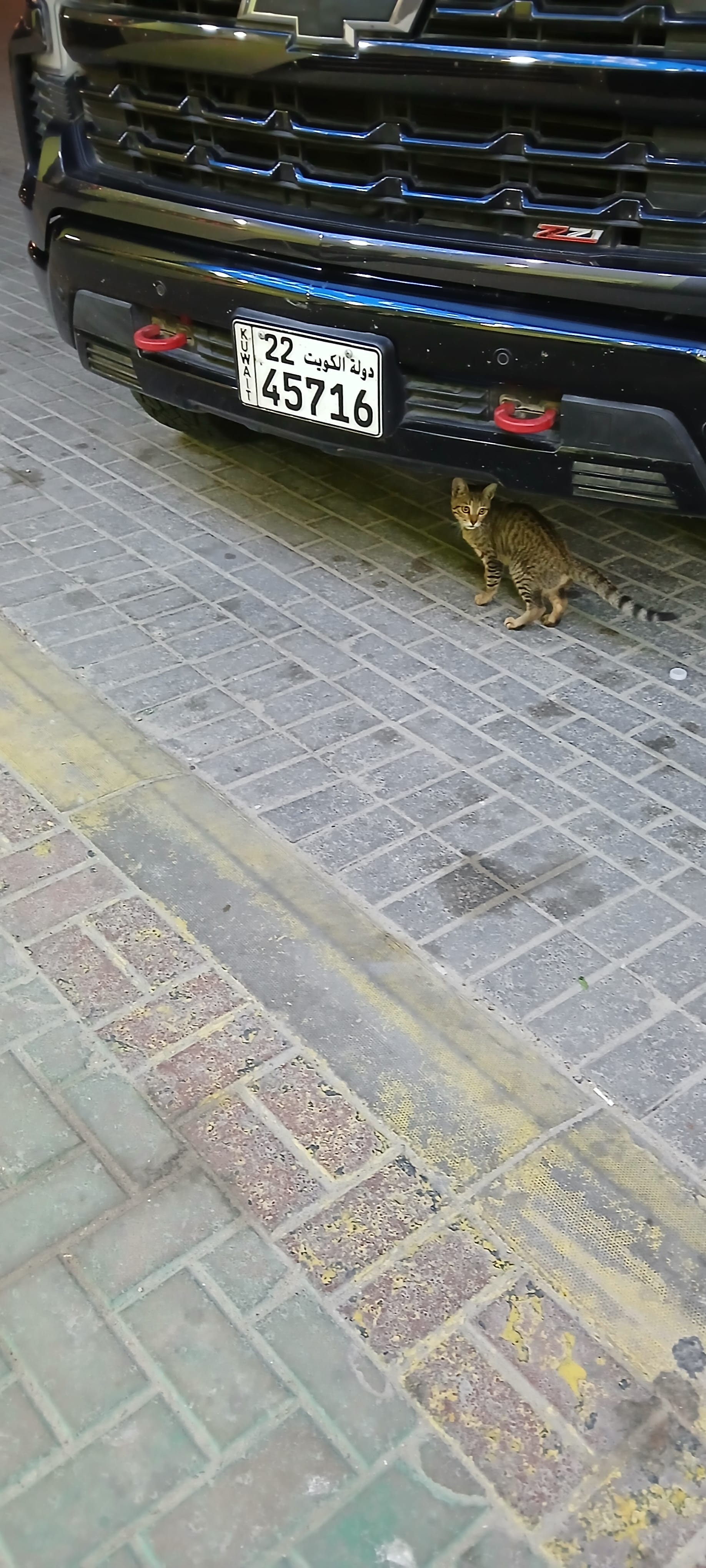
Cats were bred in ancient Egypt as part of a spiritual technology by which to gain access to and knowledge of other worlds. They are in Philip Pullman's terms daemons. Ever see a cat looking at what is not there? It's not there because it's here, but only visible out the side your mind. Here's someone now:
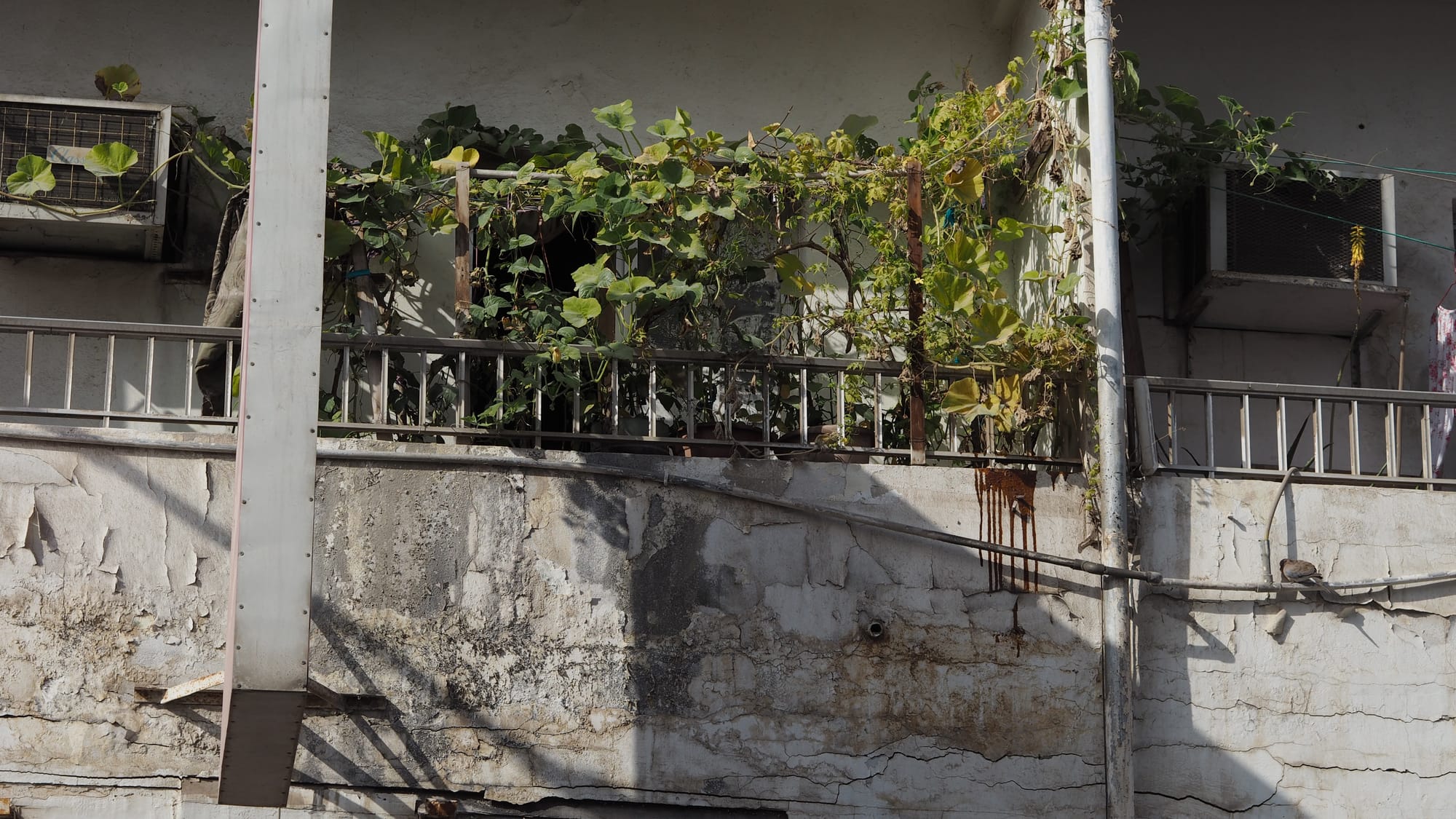
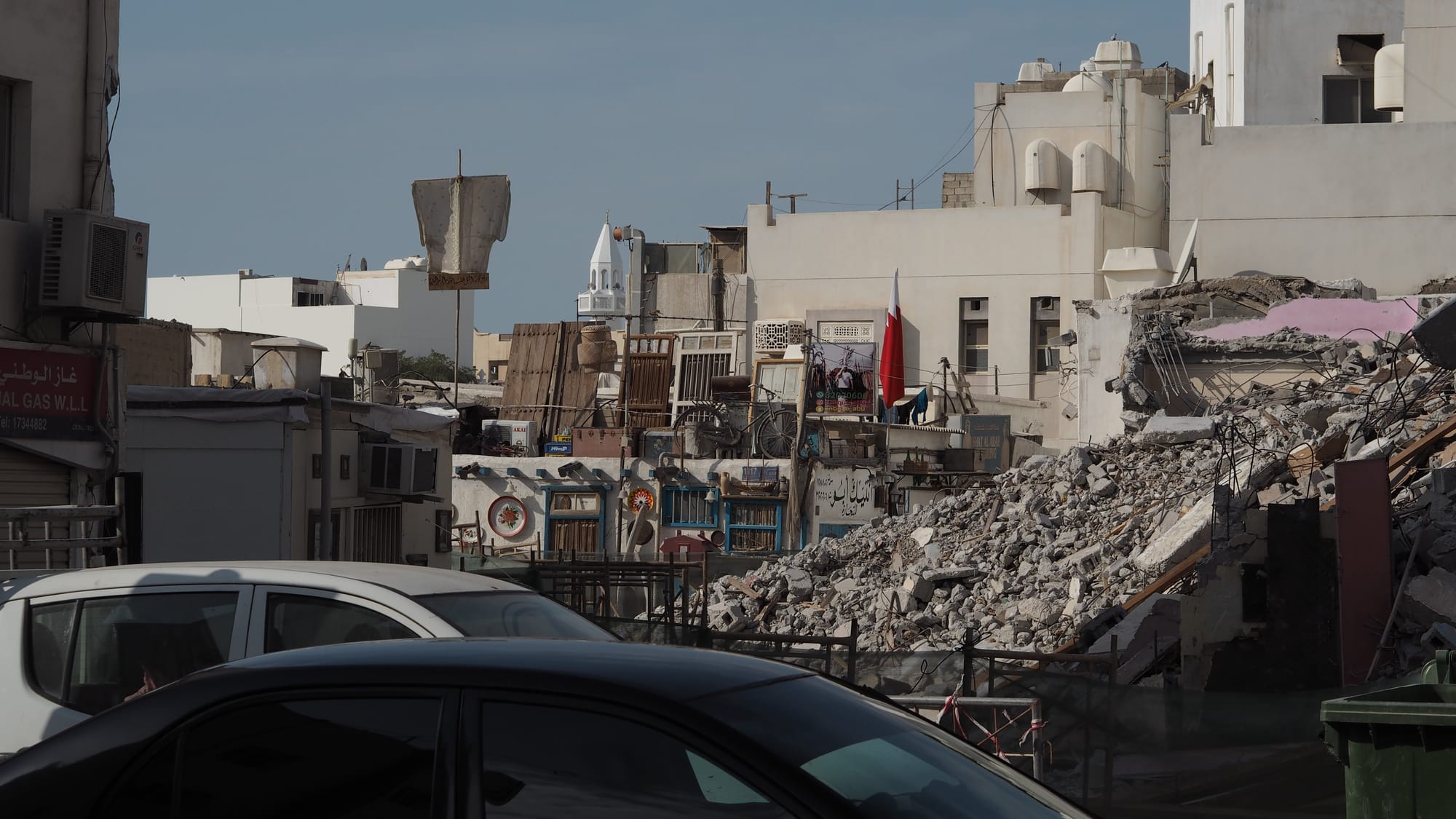
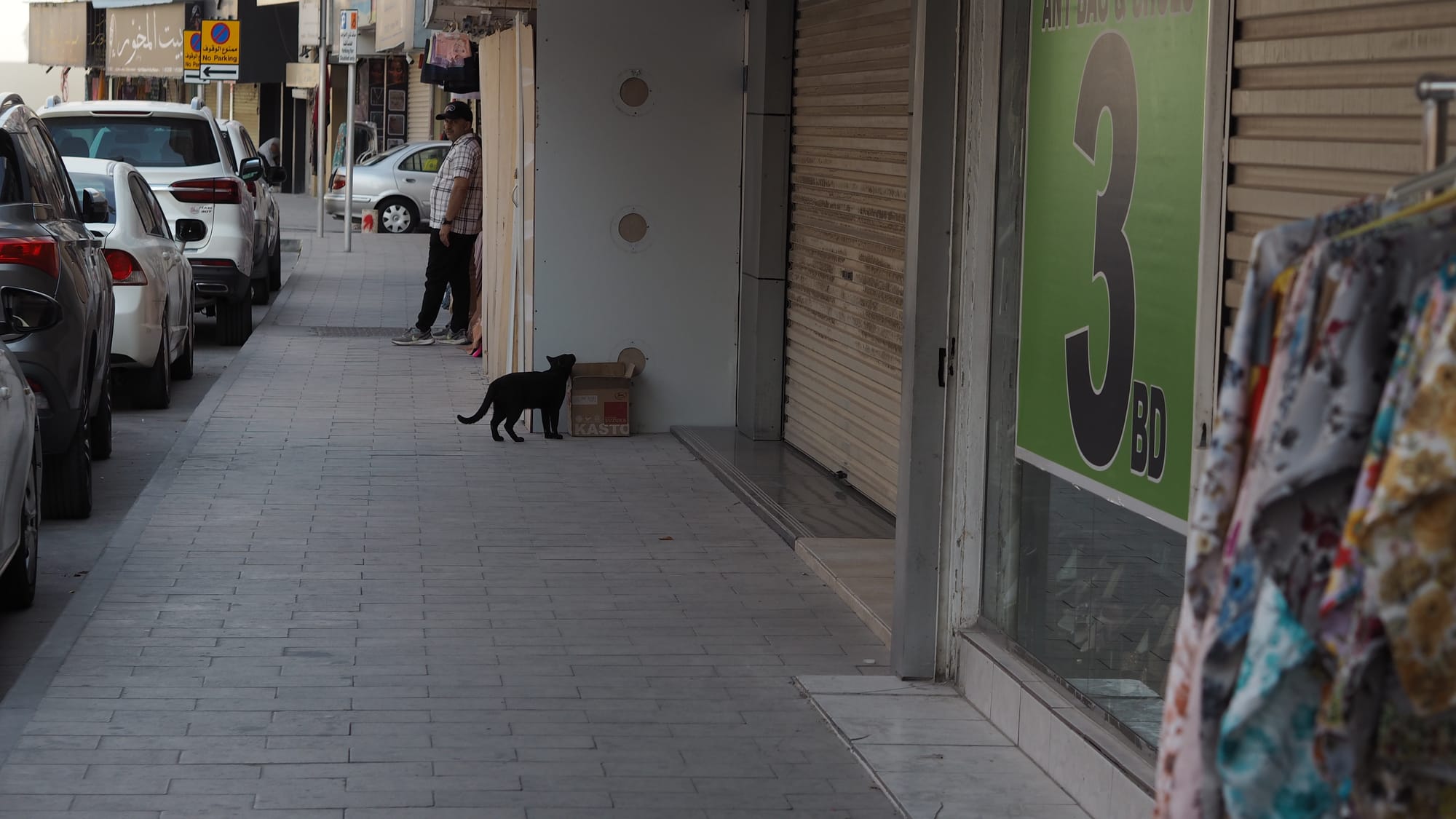
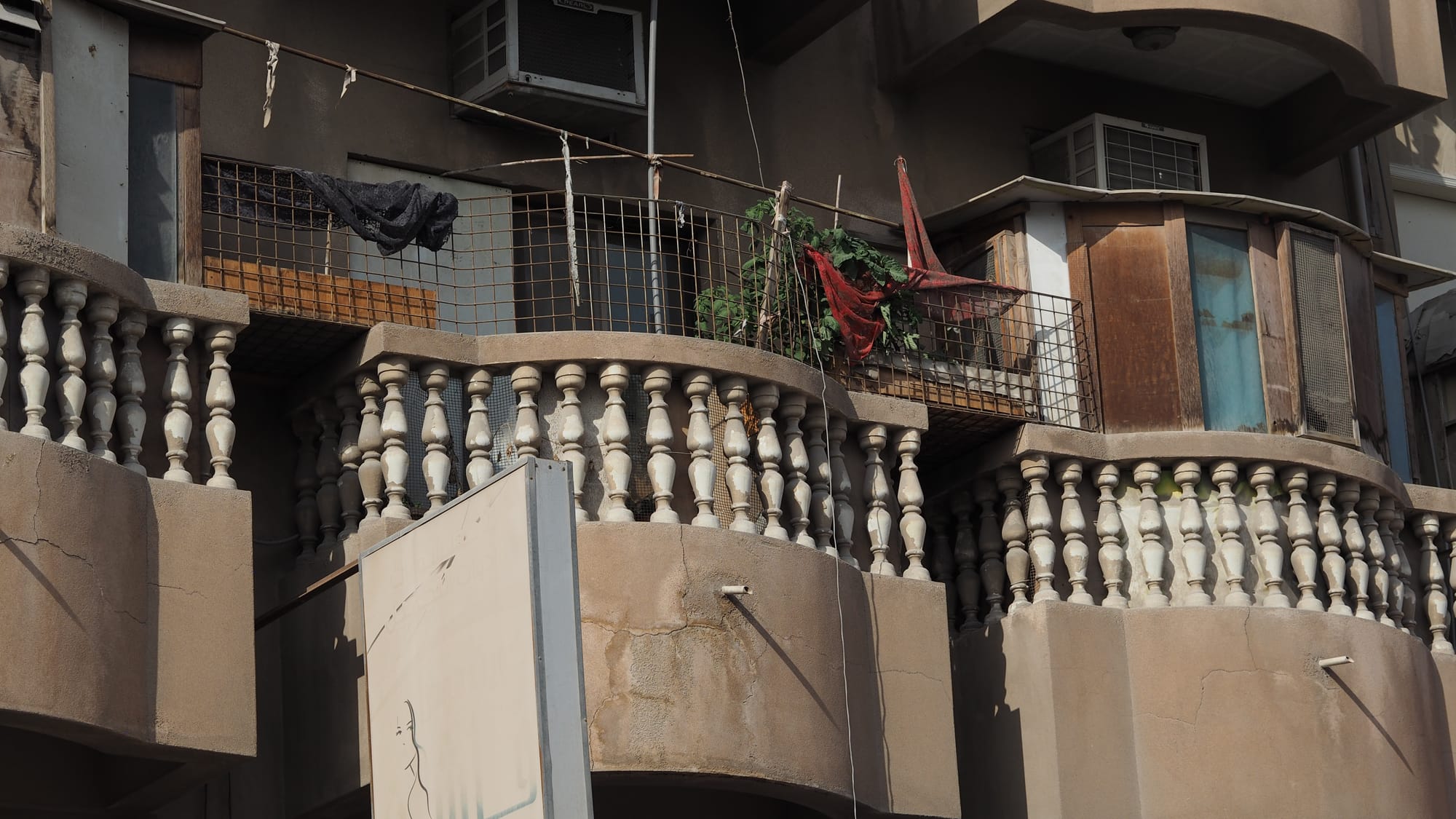
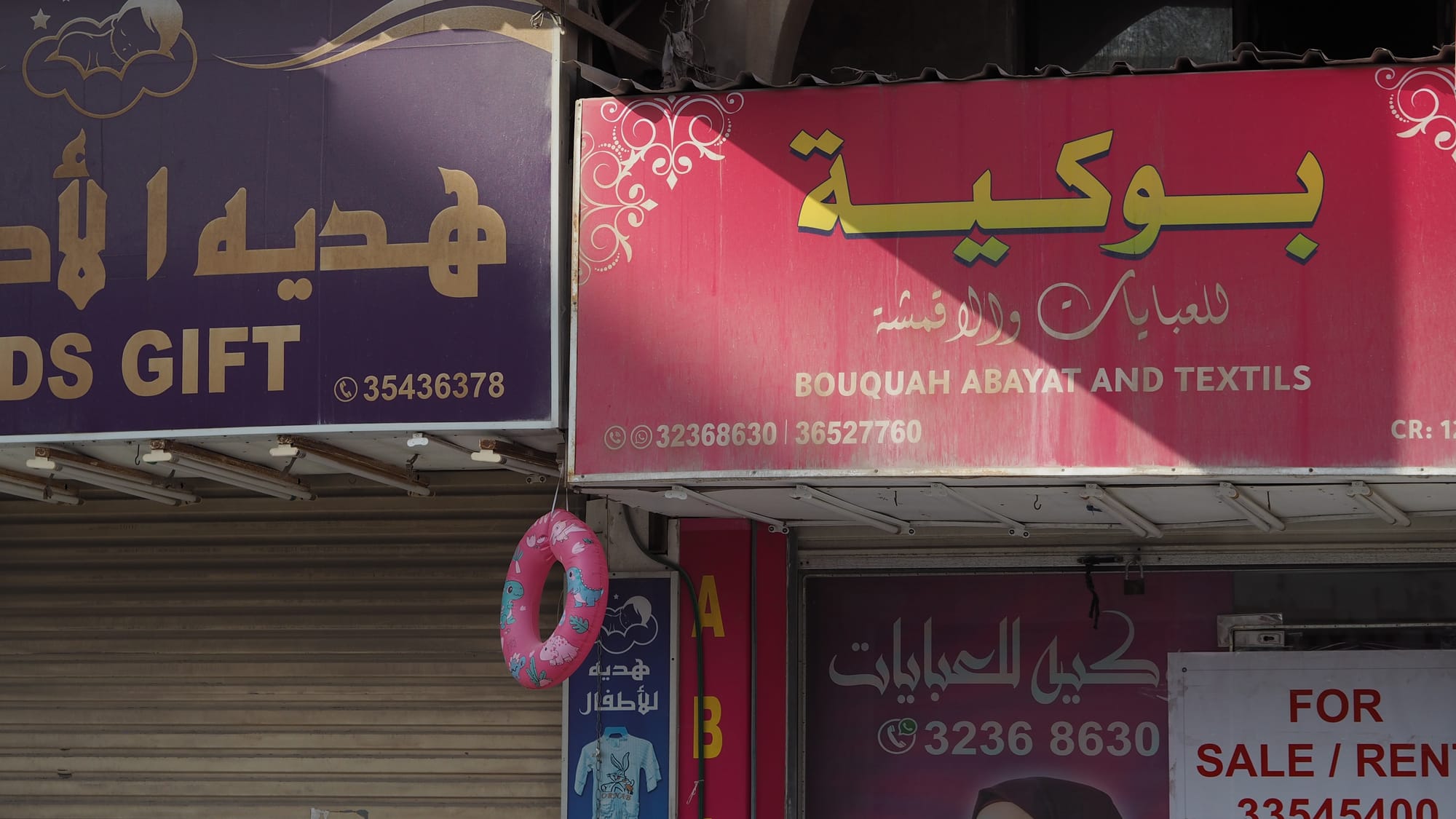
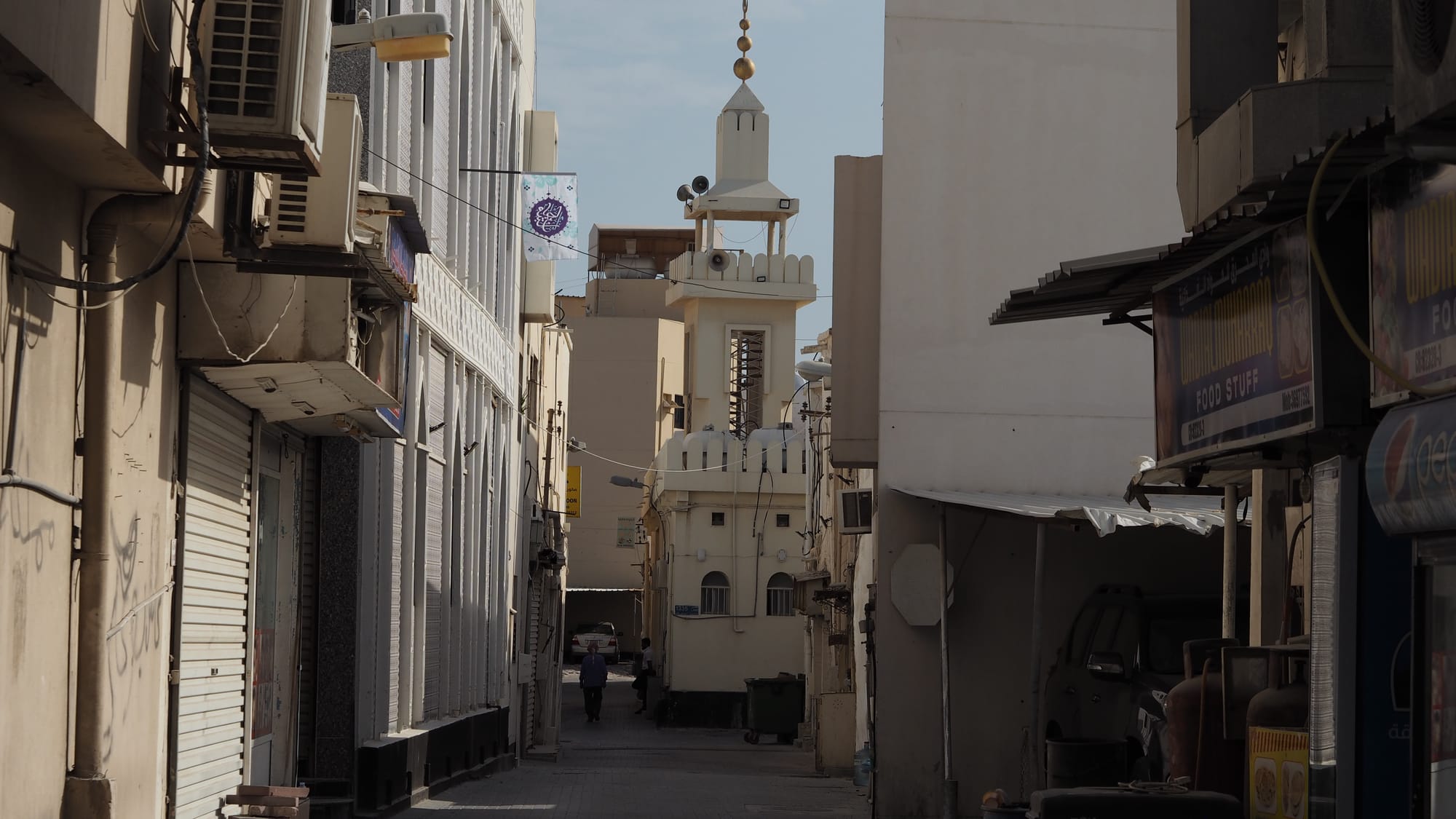
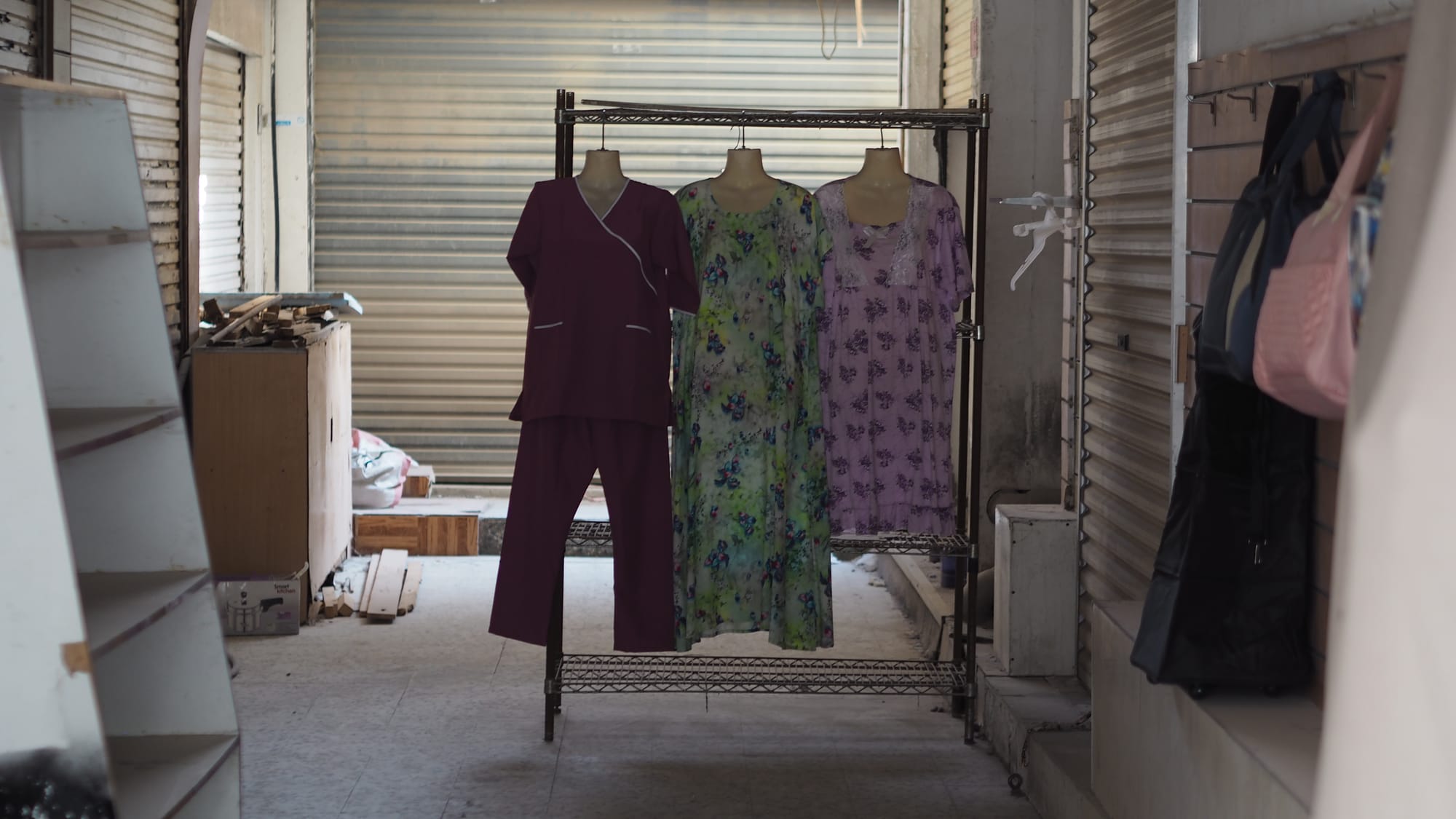
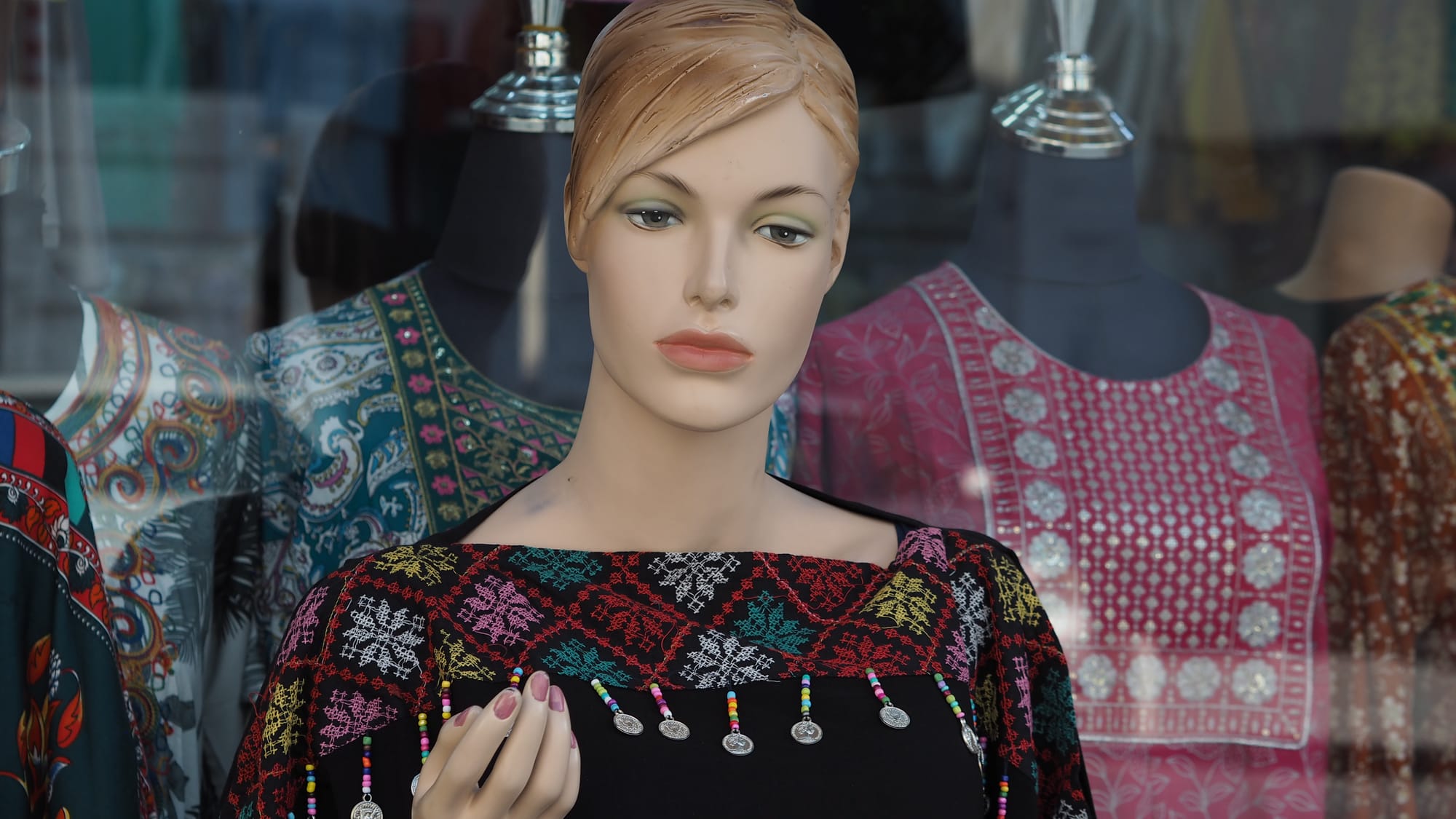
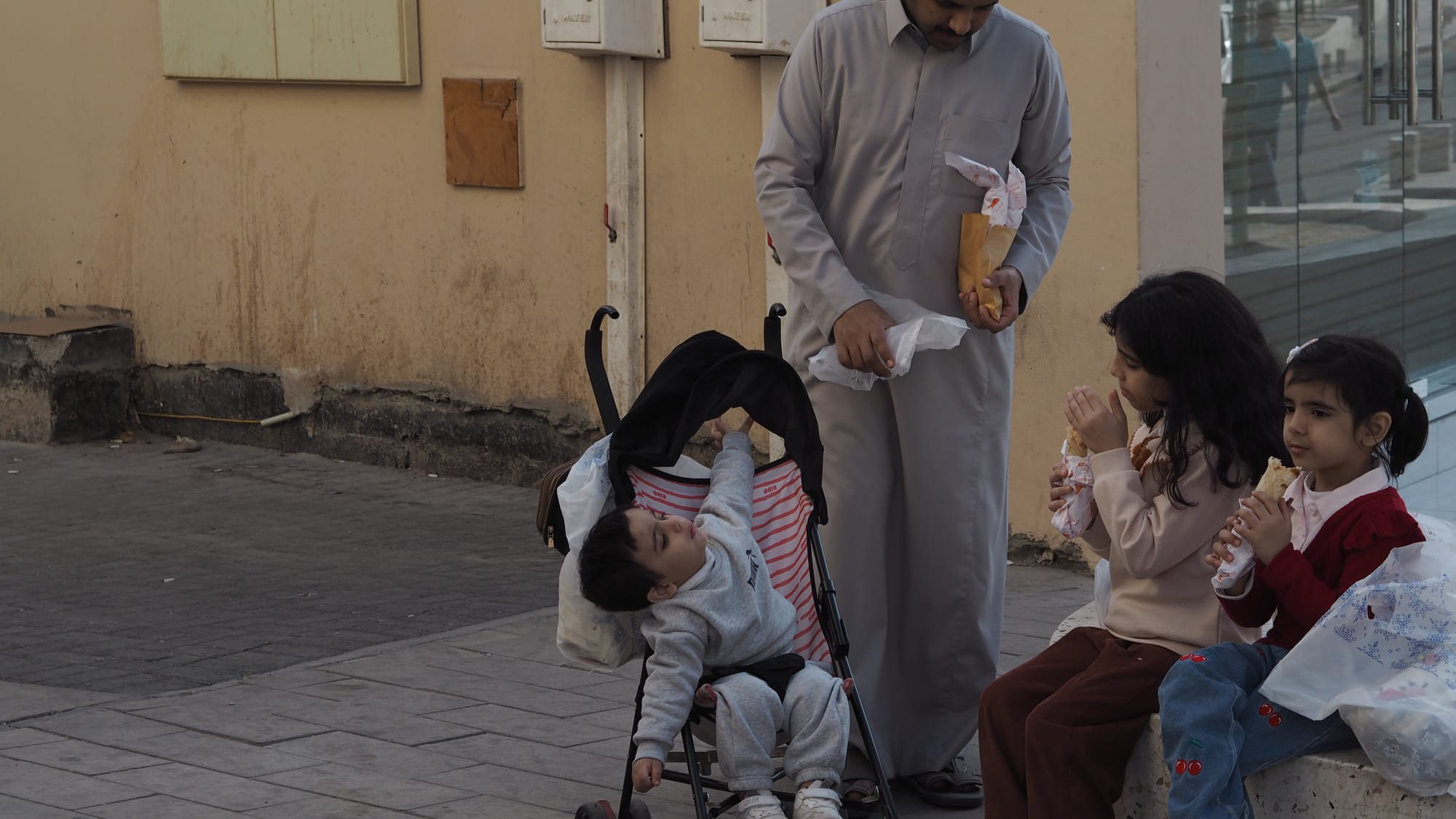
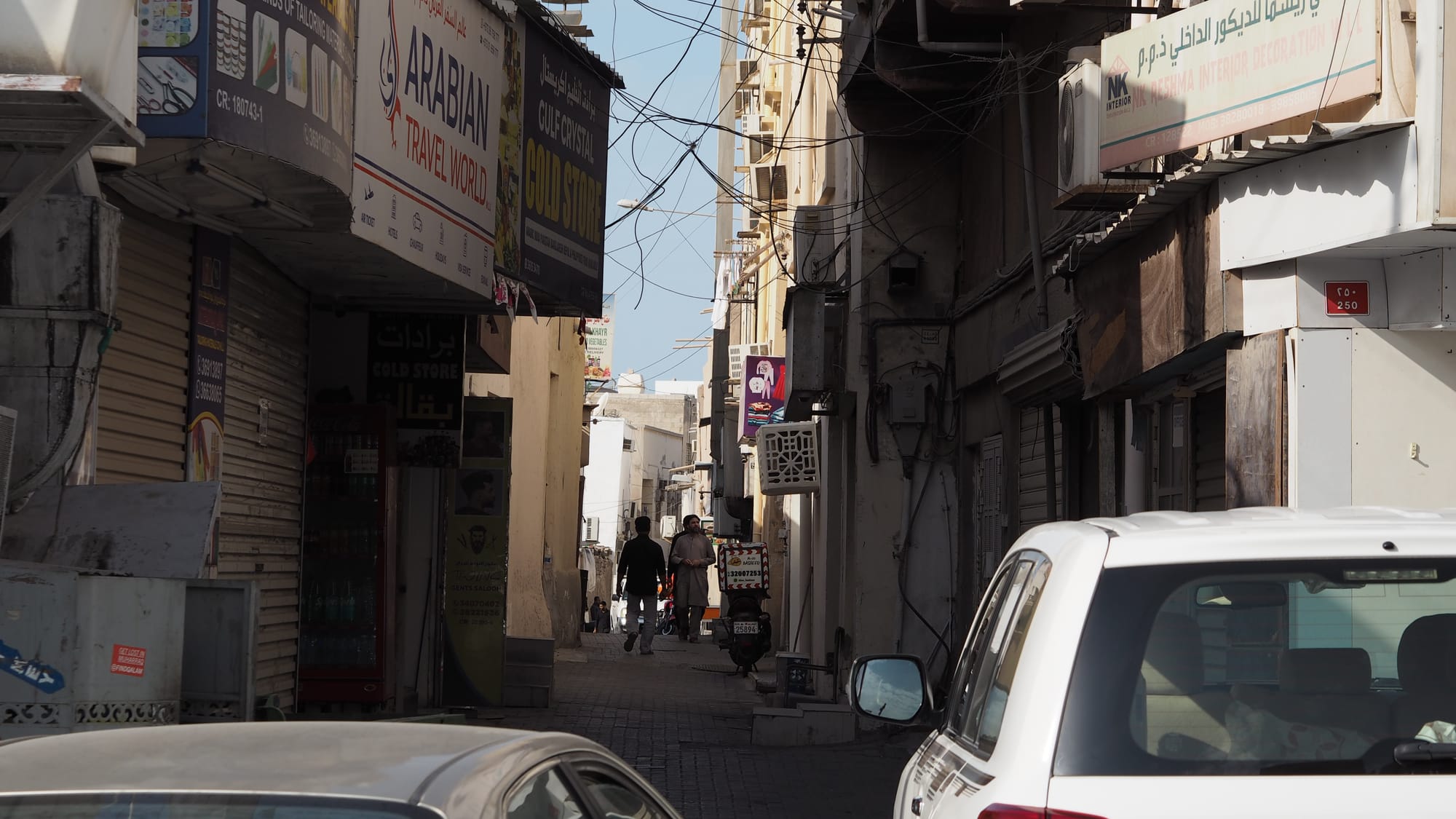
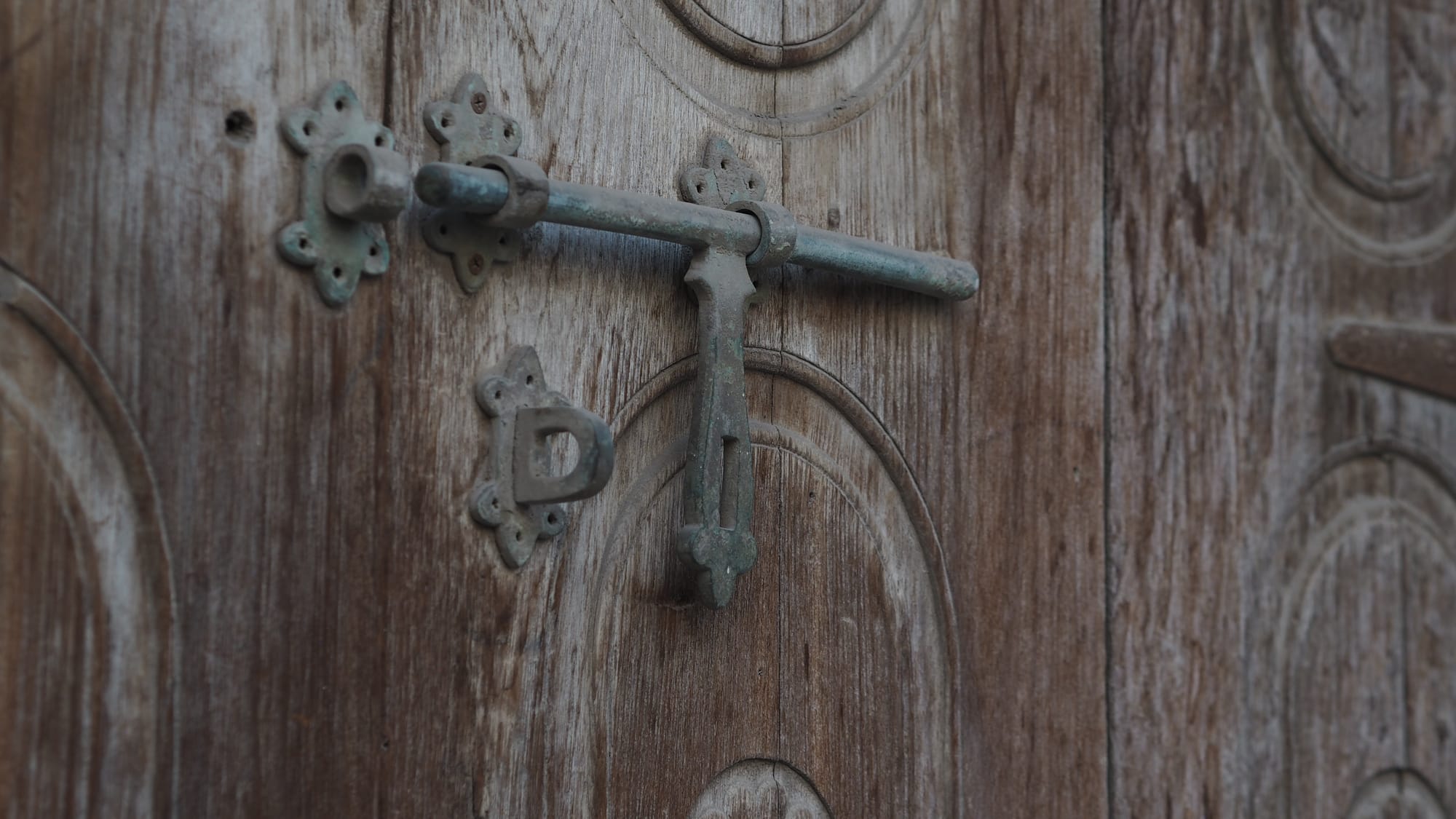
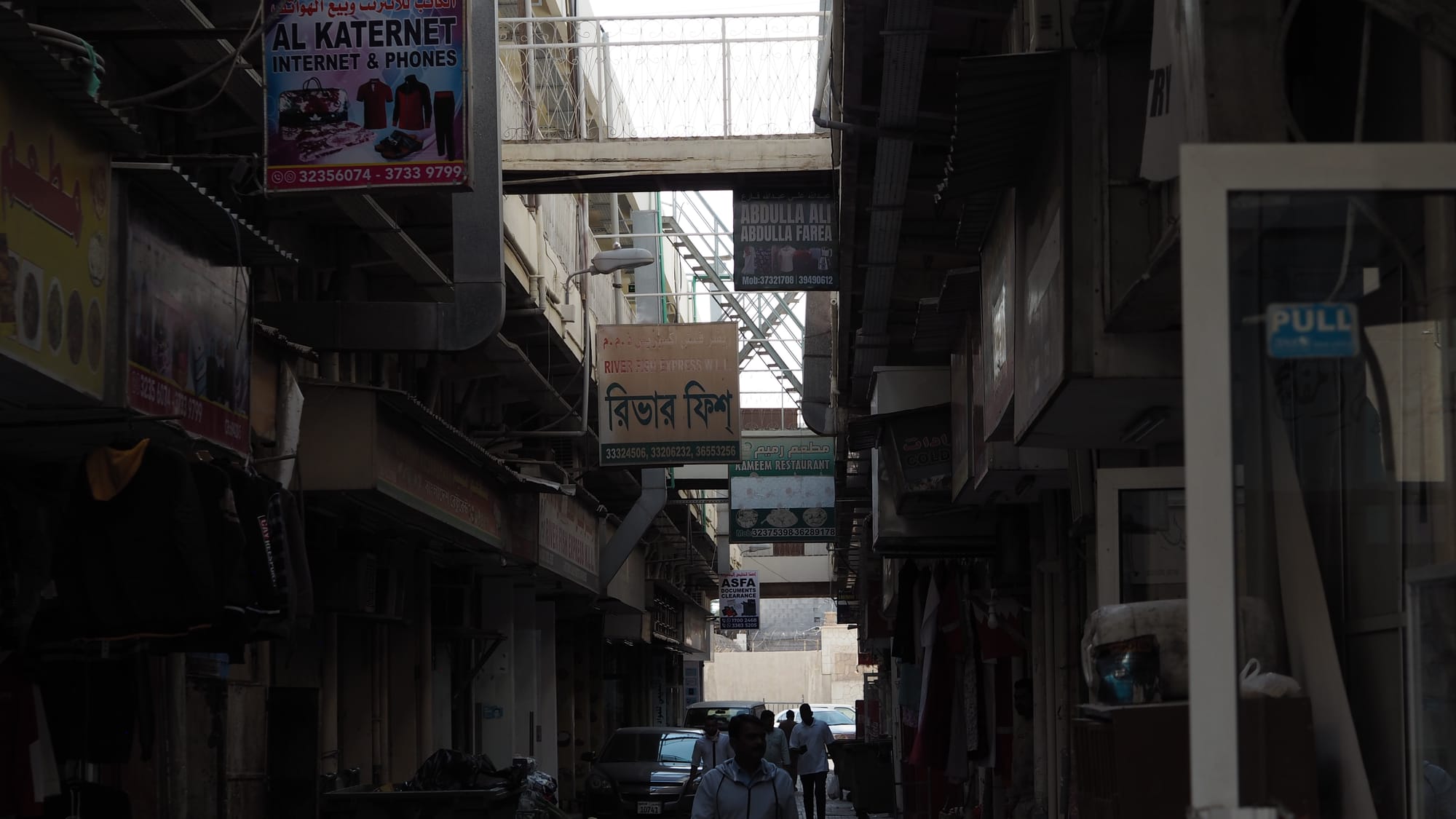
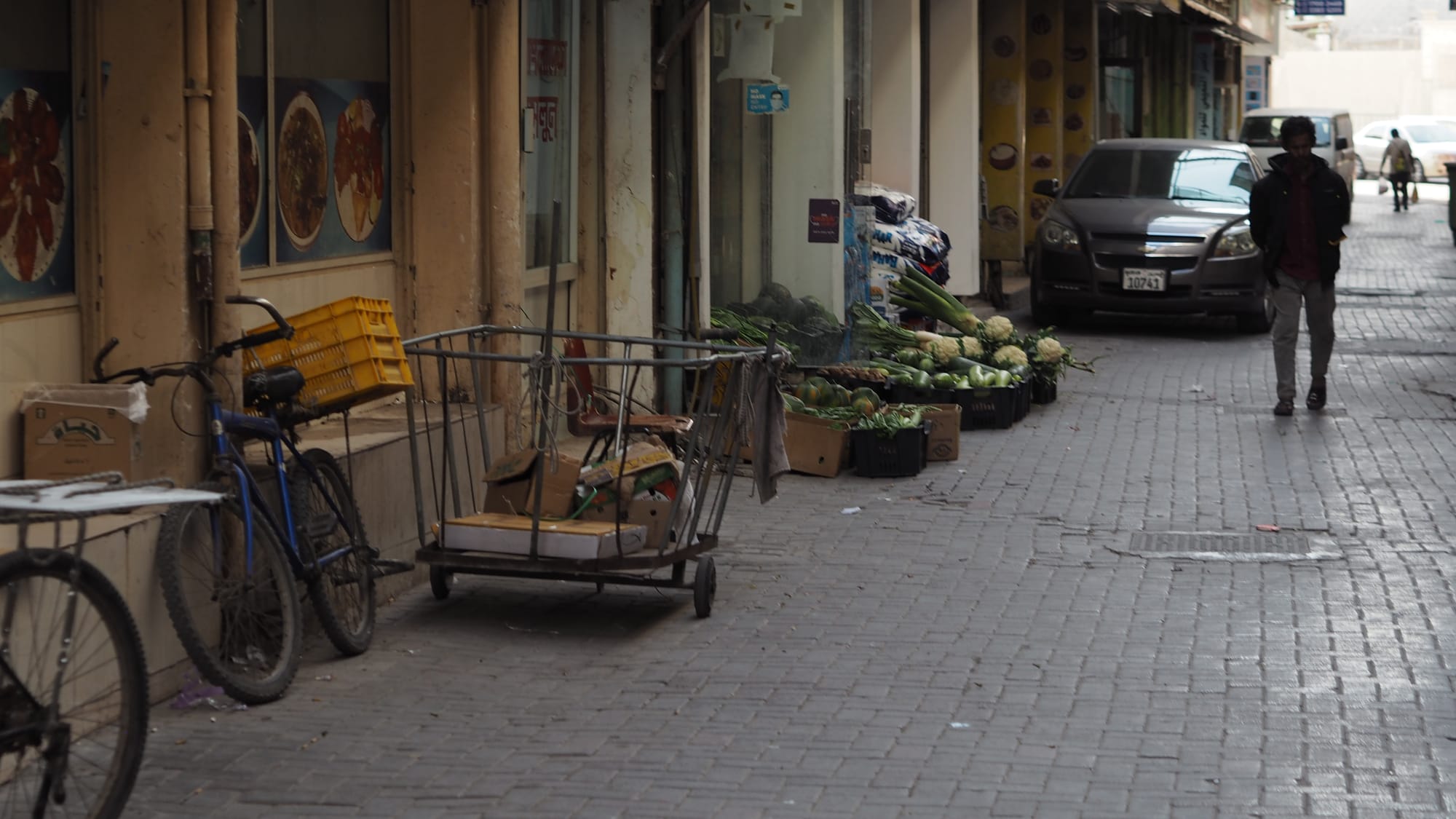
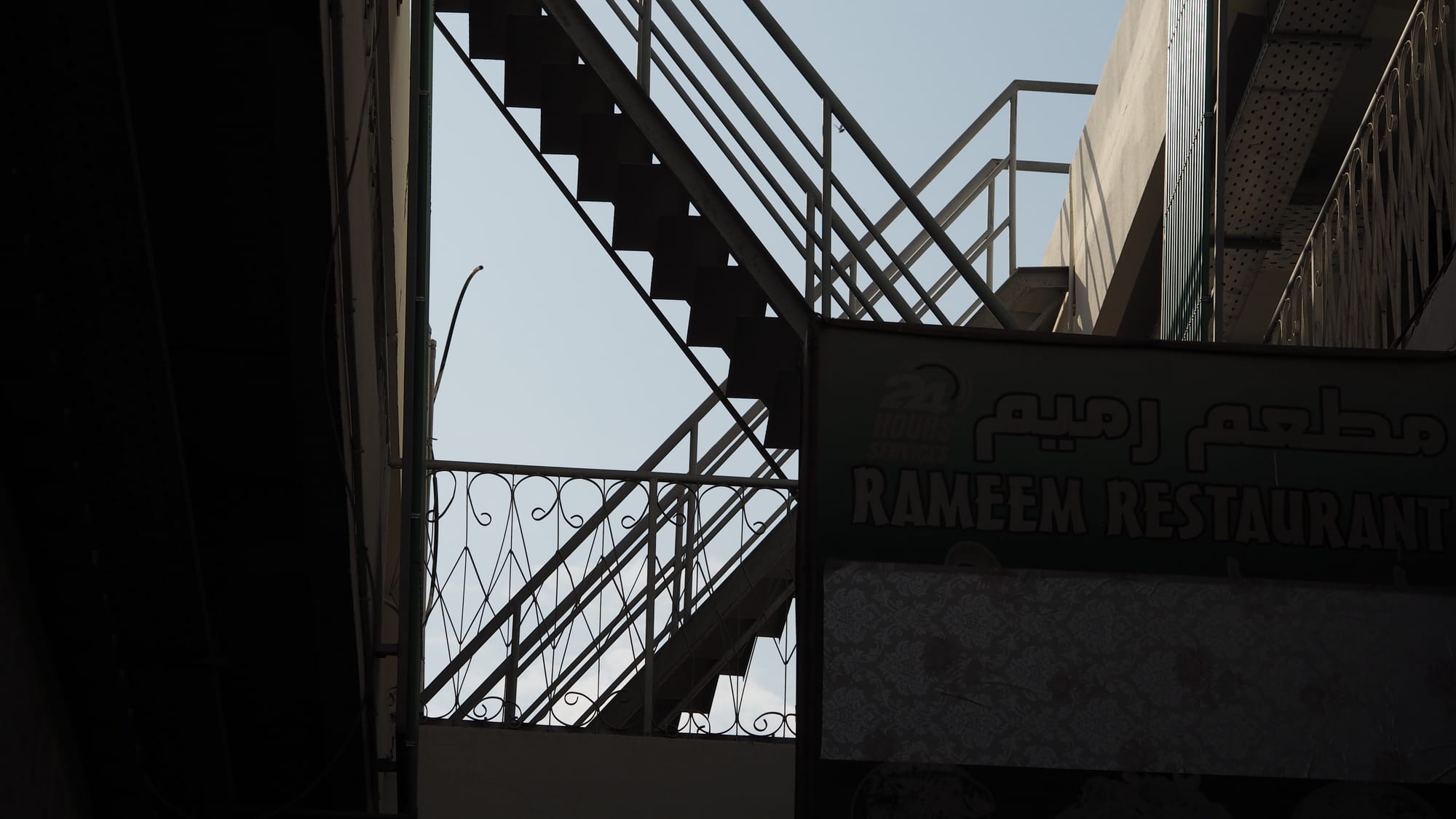
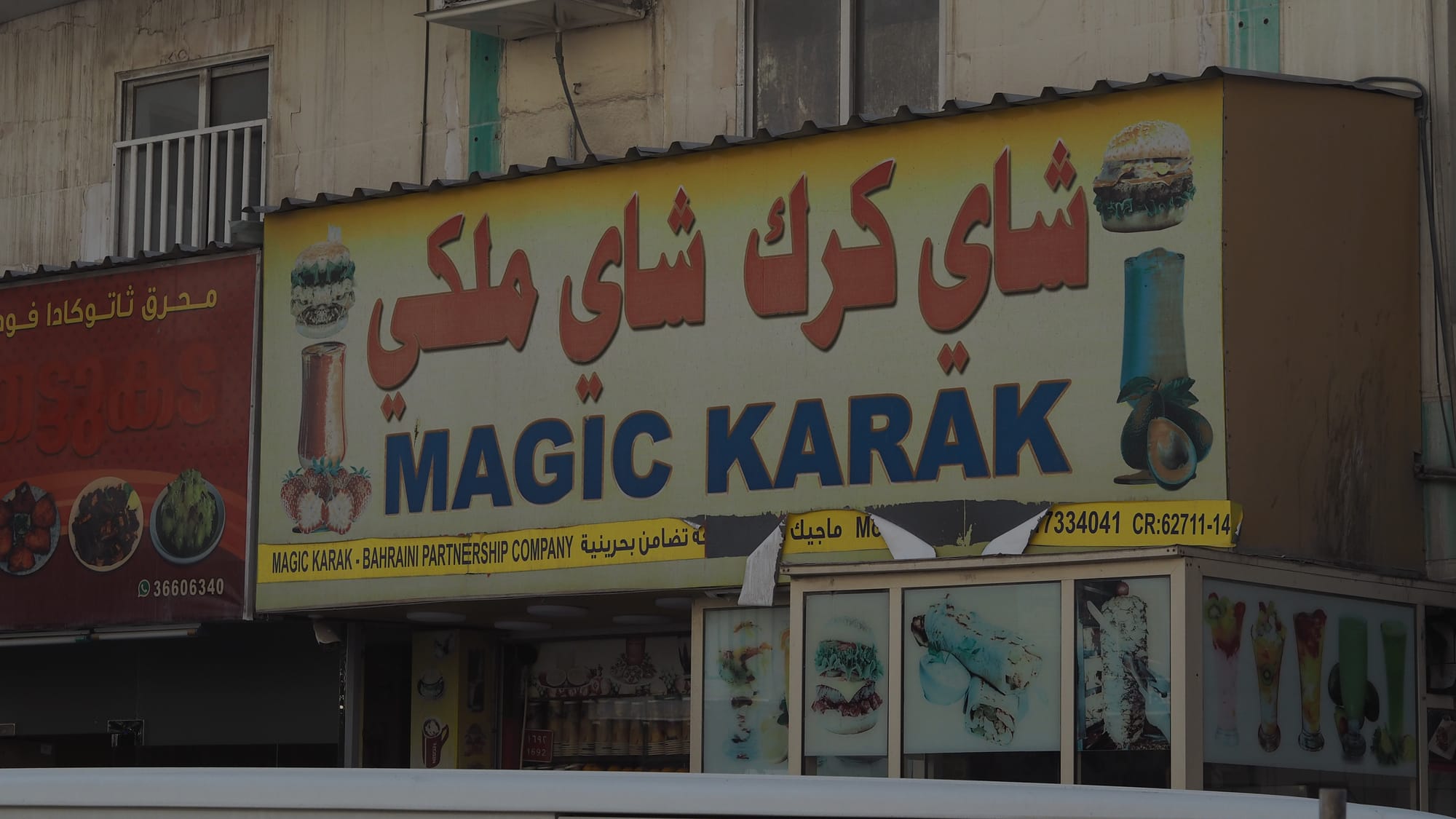
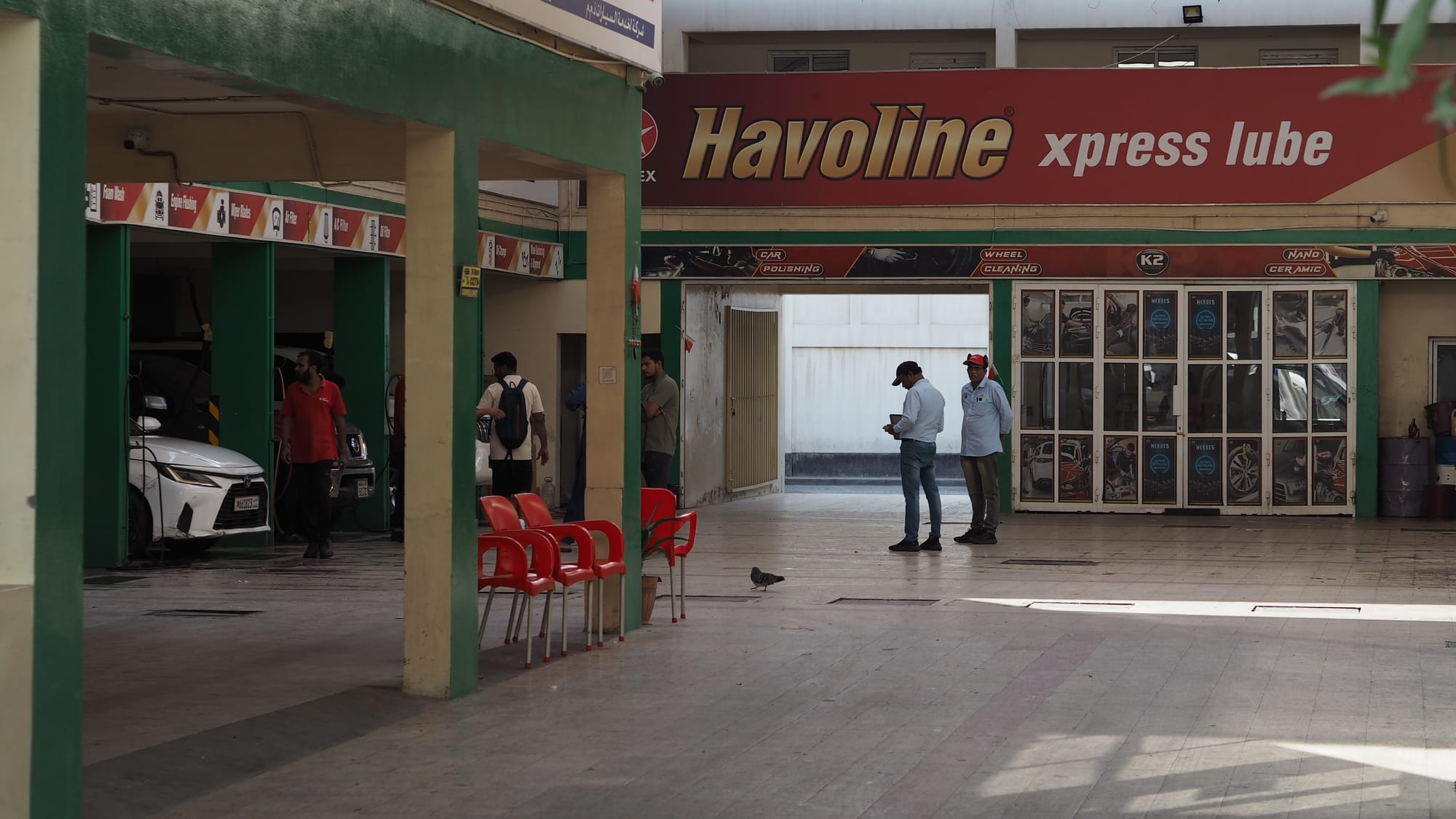
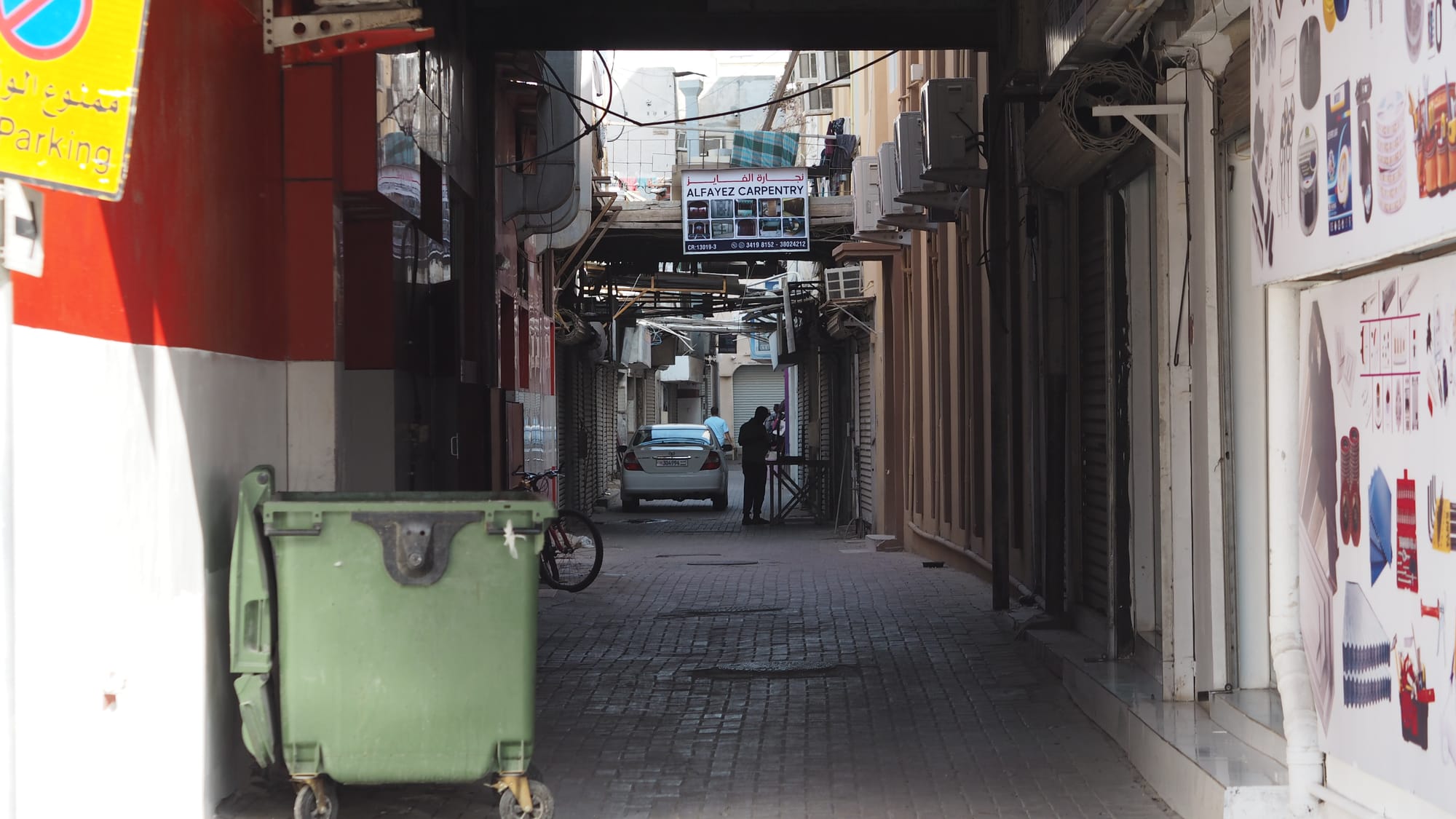
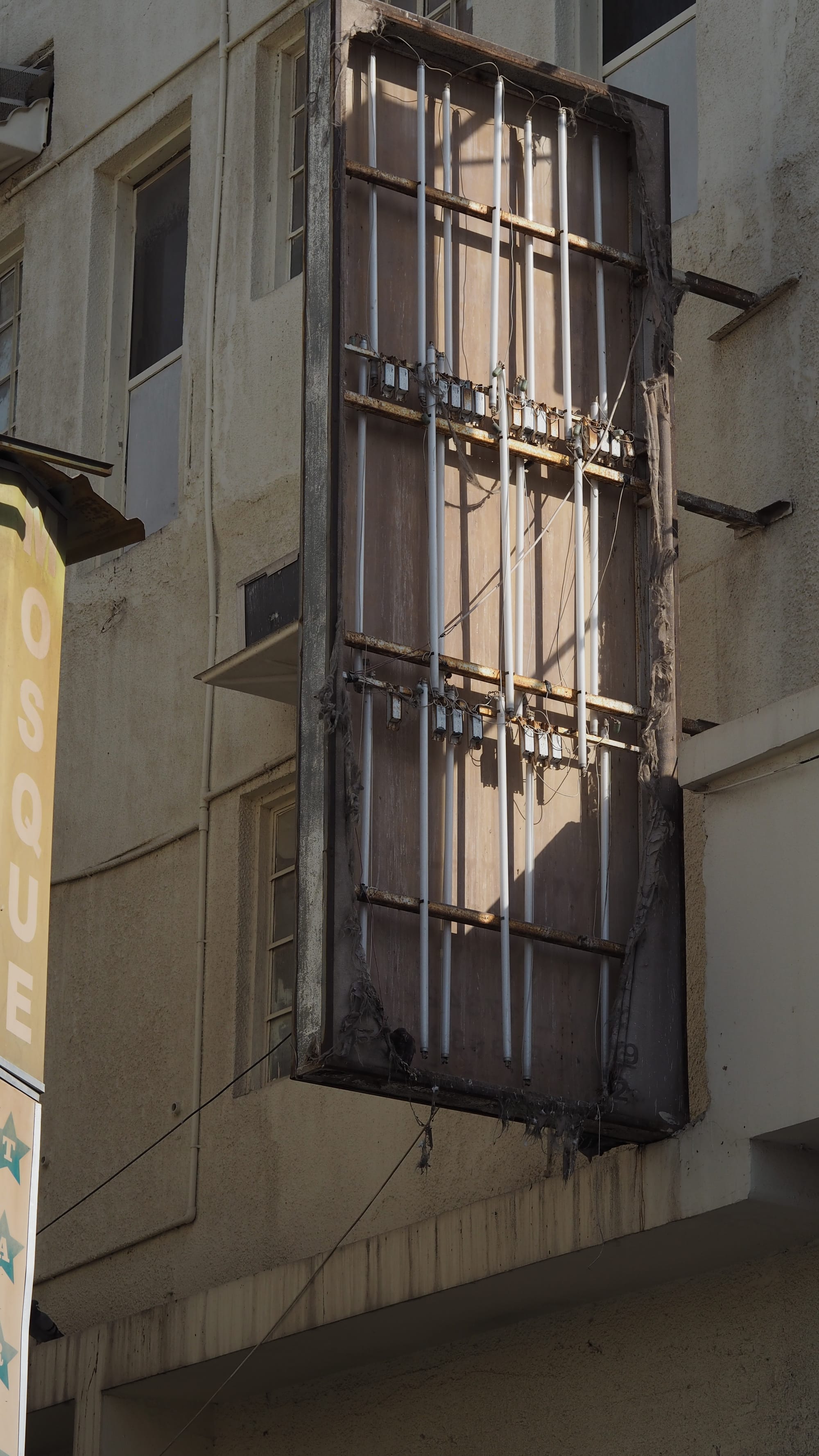
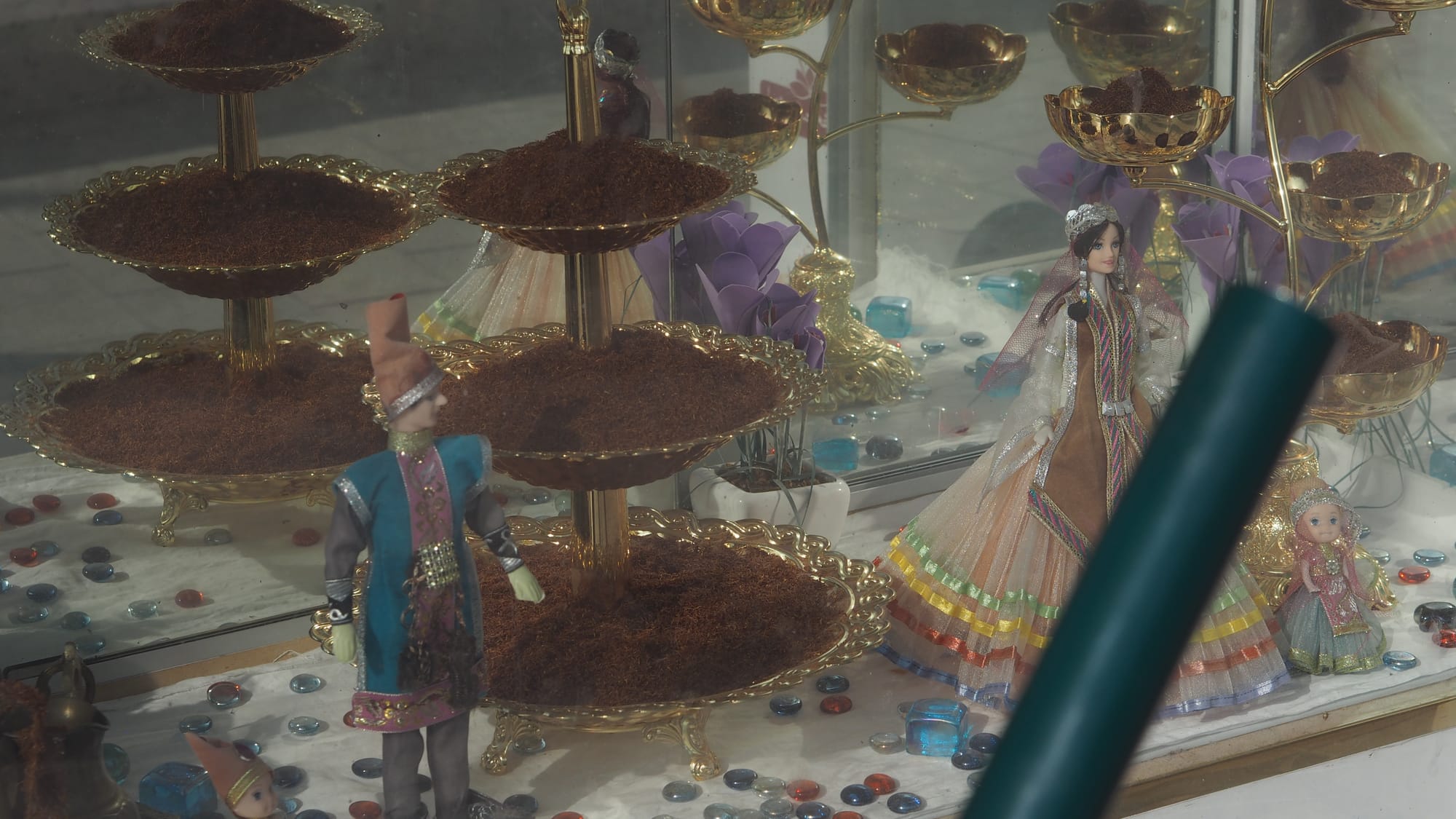
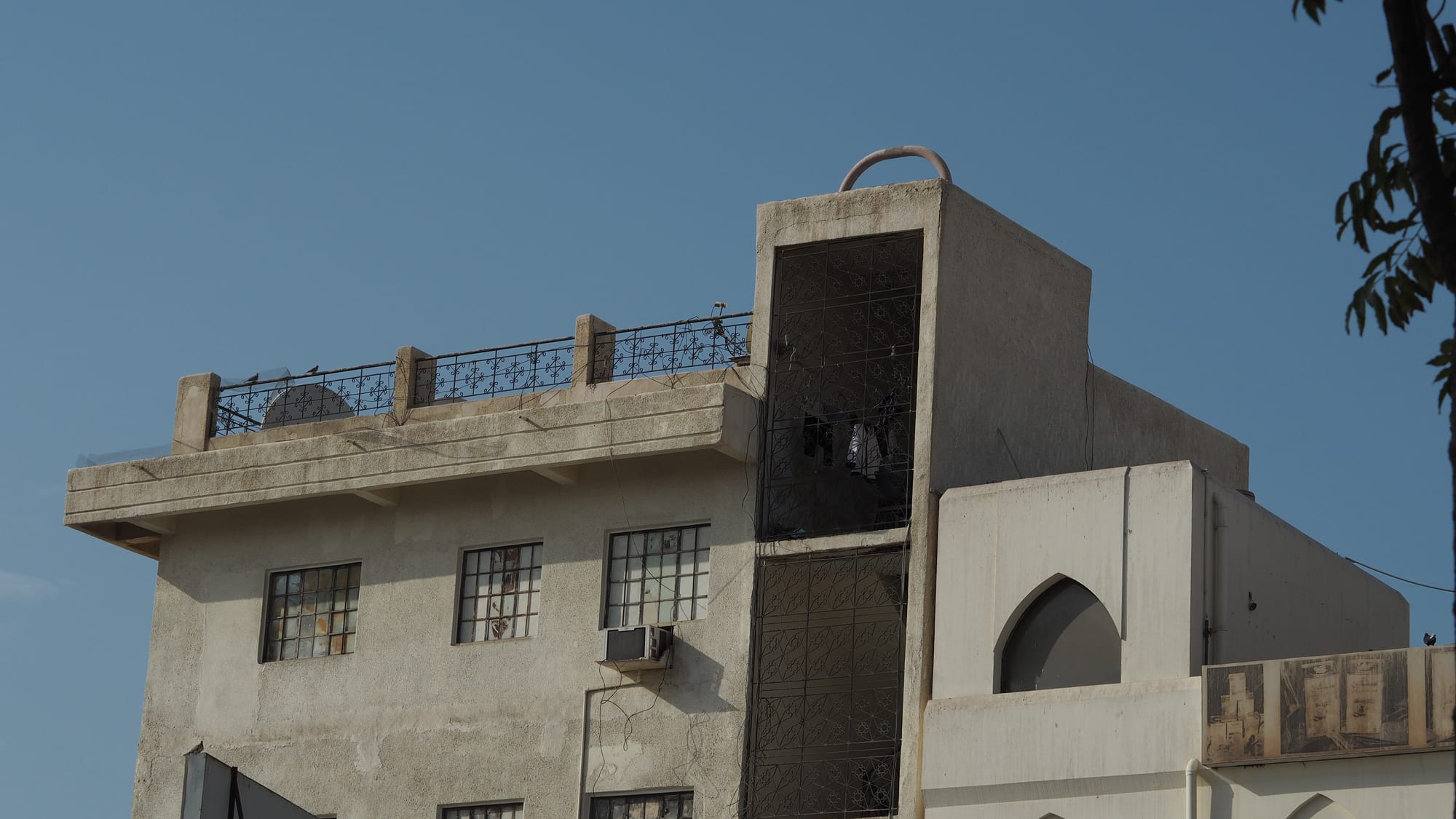
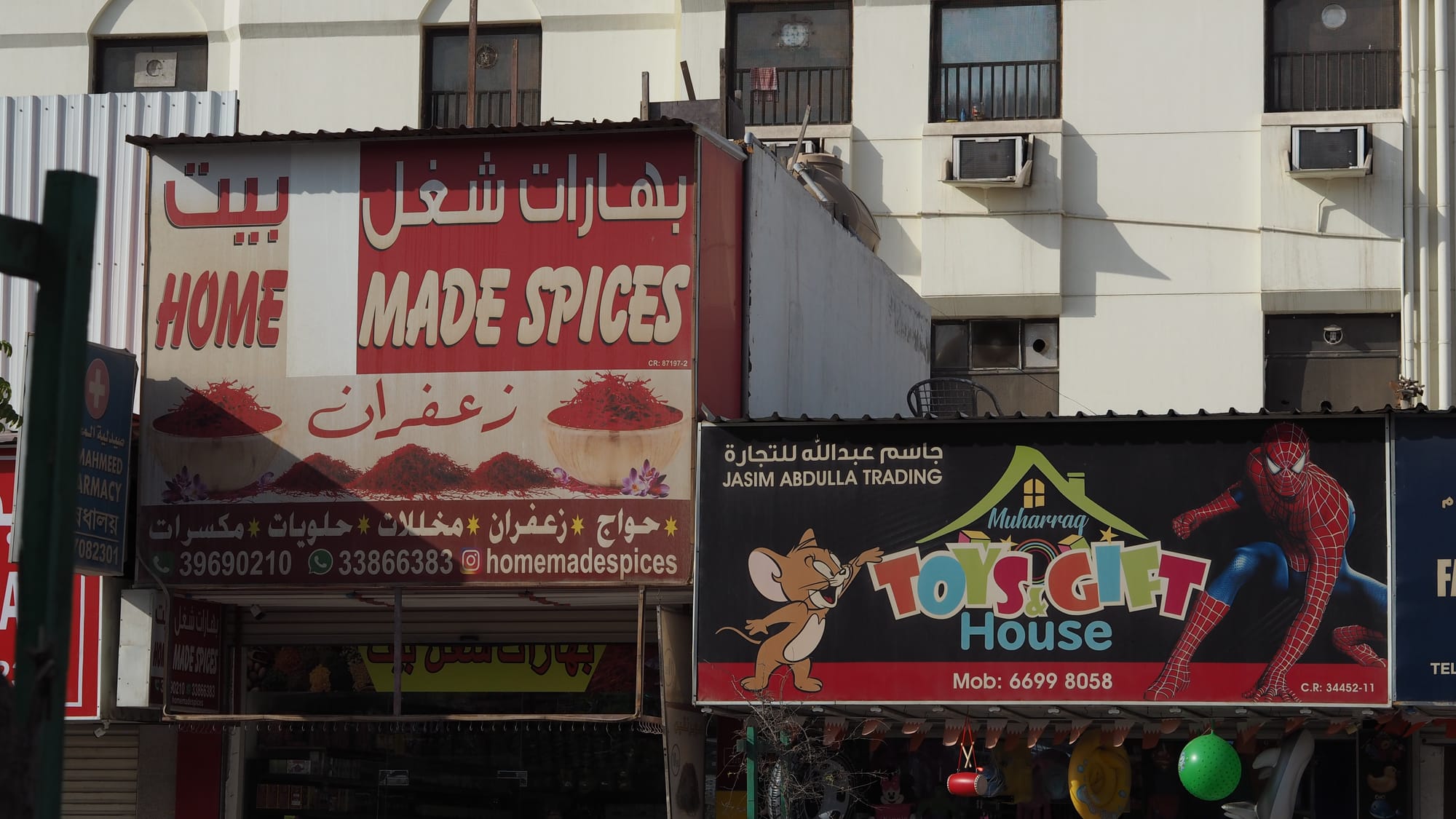
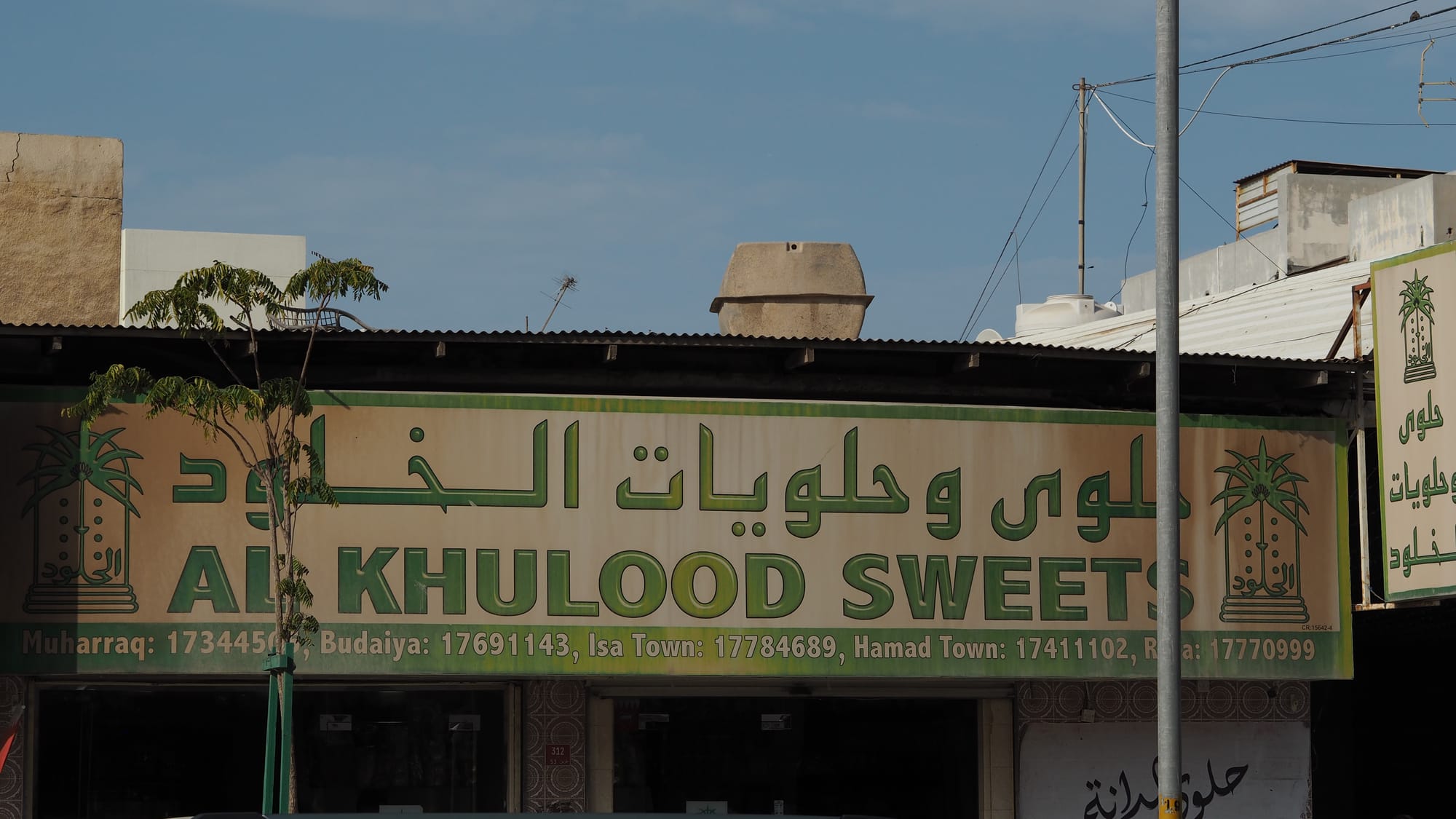
Al Khulood Sweets is where I went back to today. The brownish fuzz in the window with the prince and princess is saffron. Karak is a matter of national interest, it's tea but not as we know it. Jalal informs us that tea is where it's at. Black tea. Like the Türkçe but straight up, no sugar.
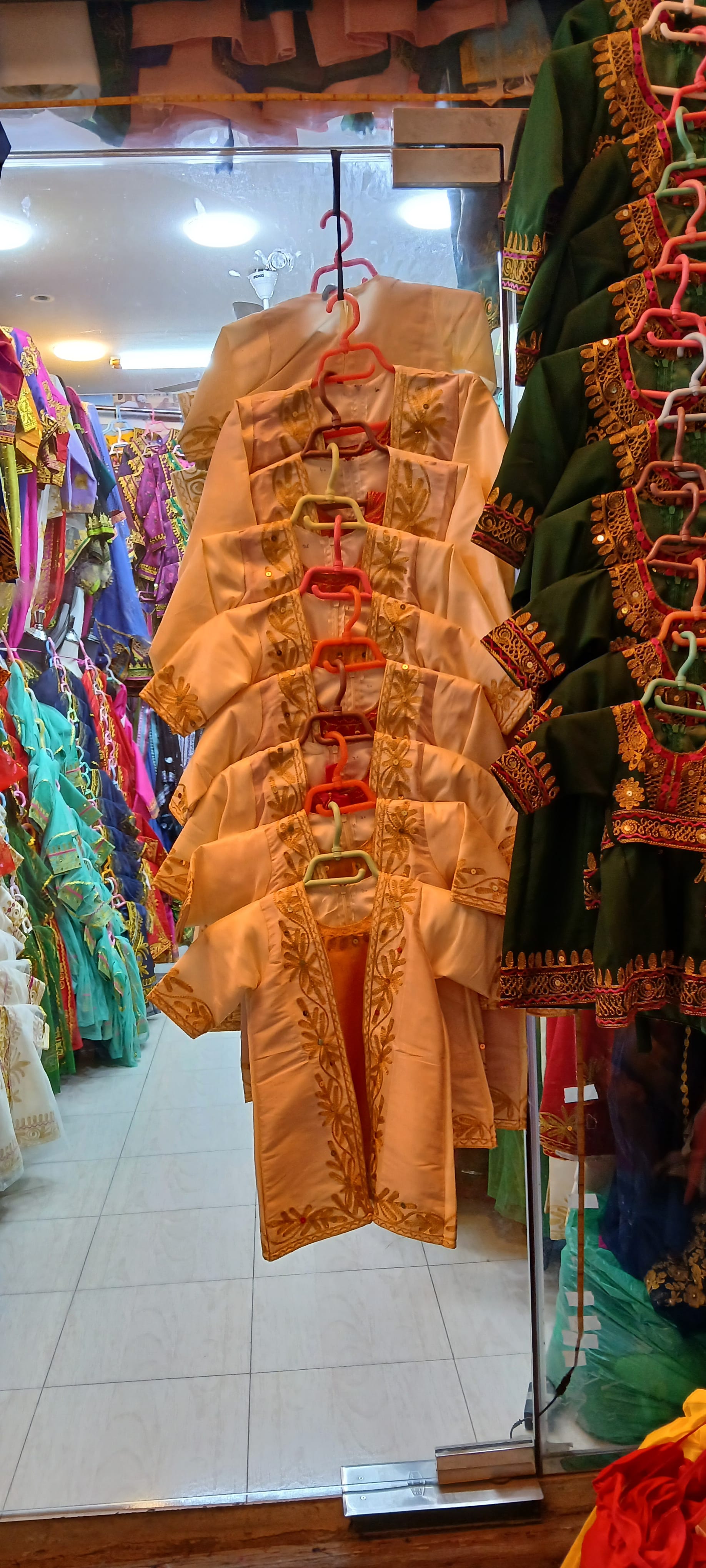
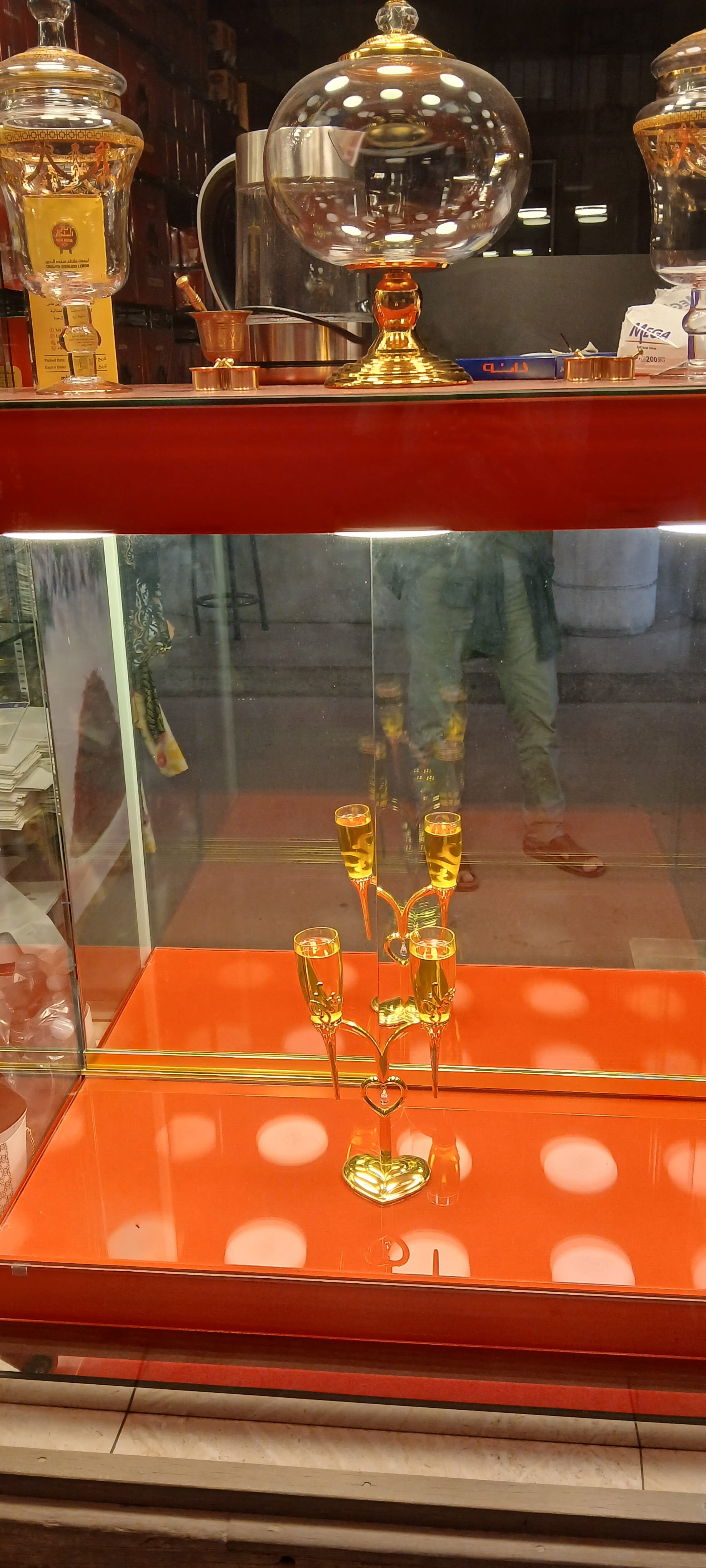
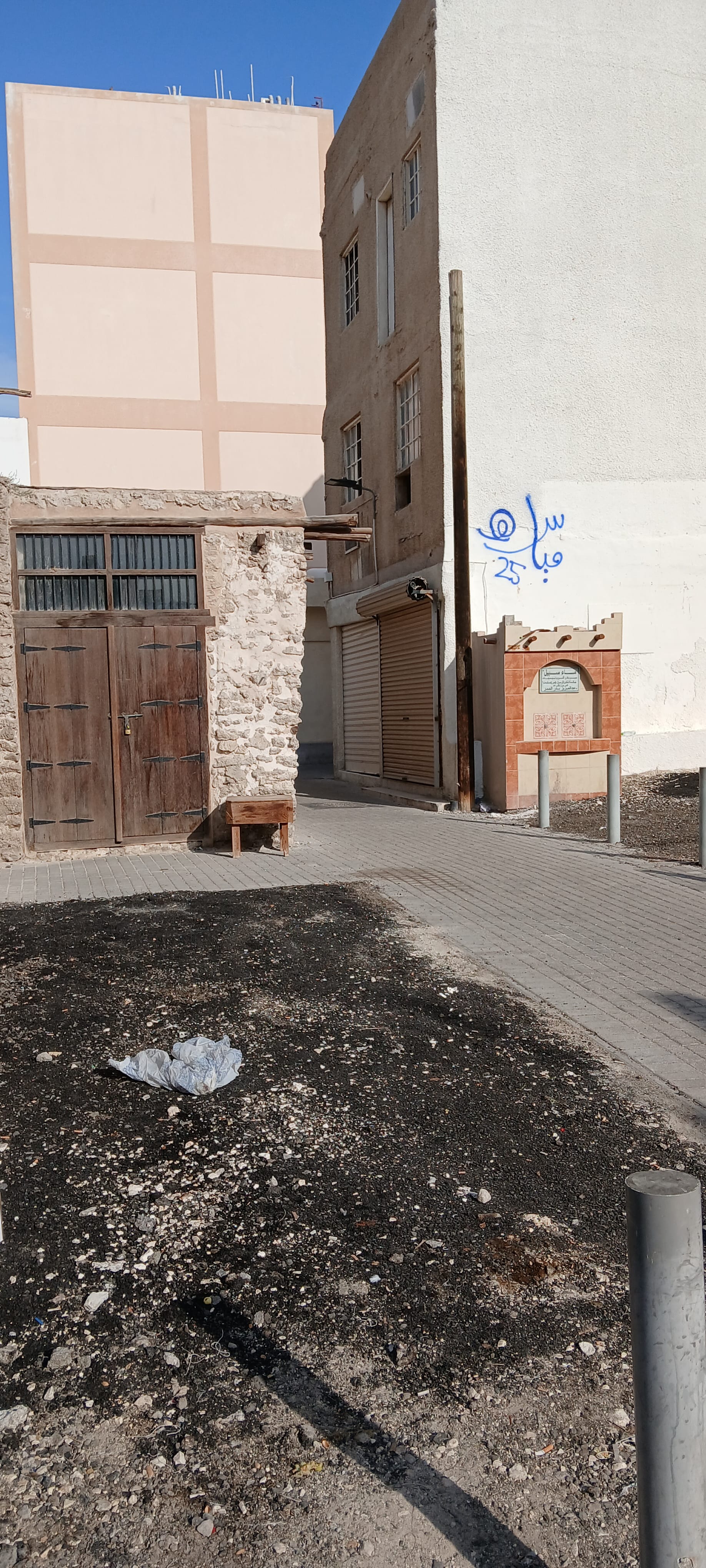
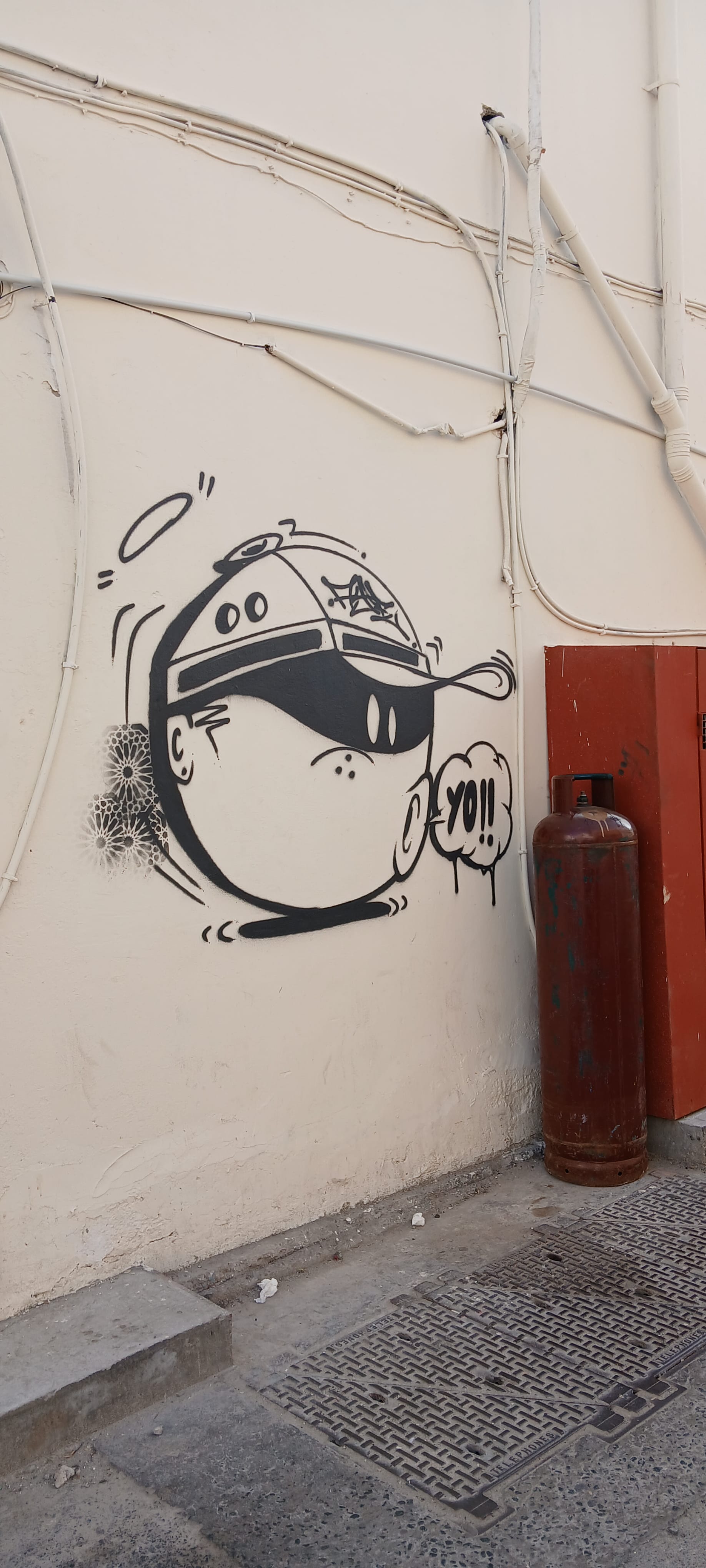
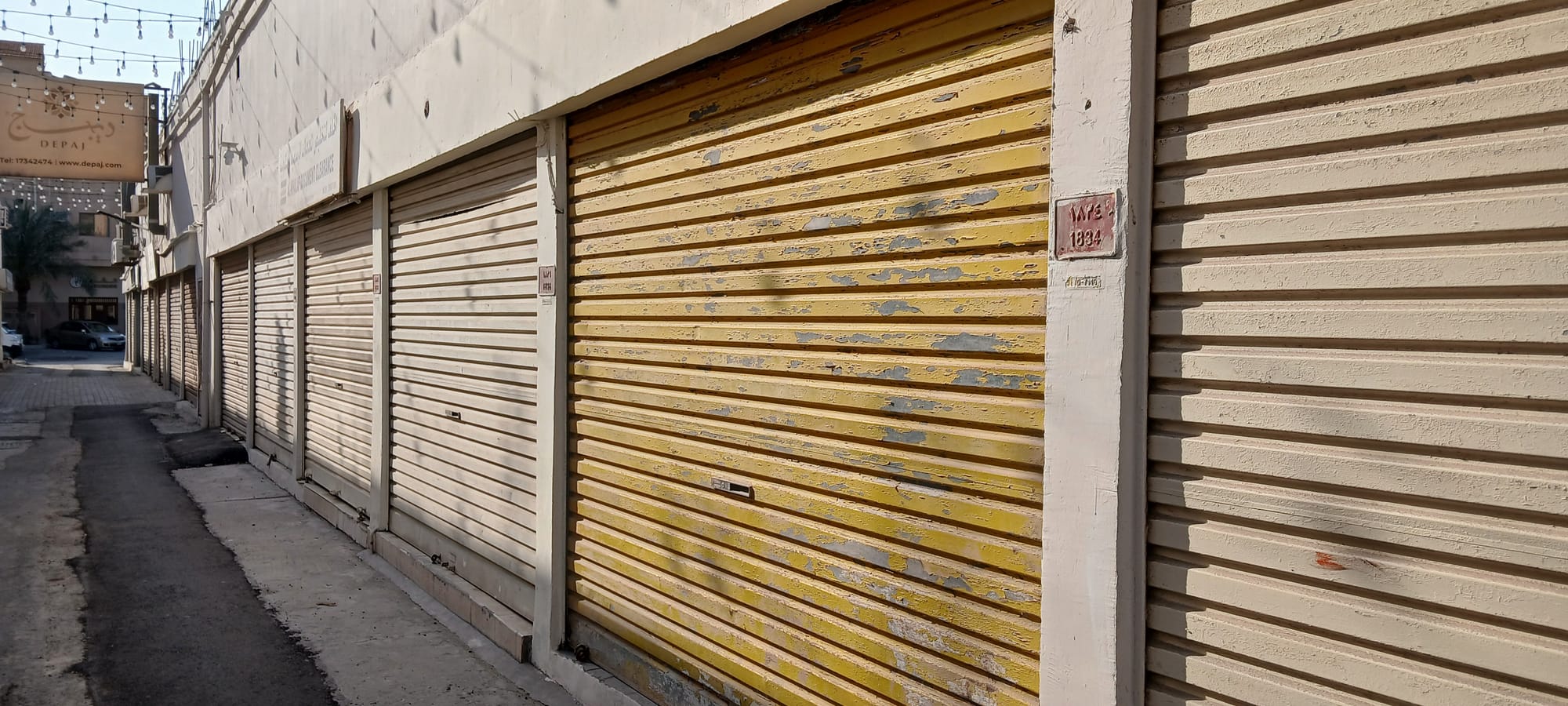
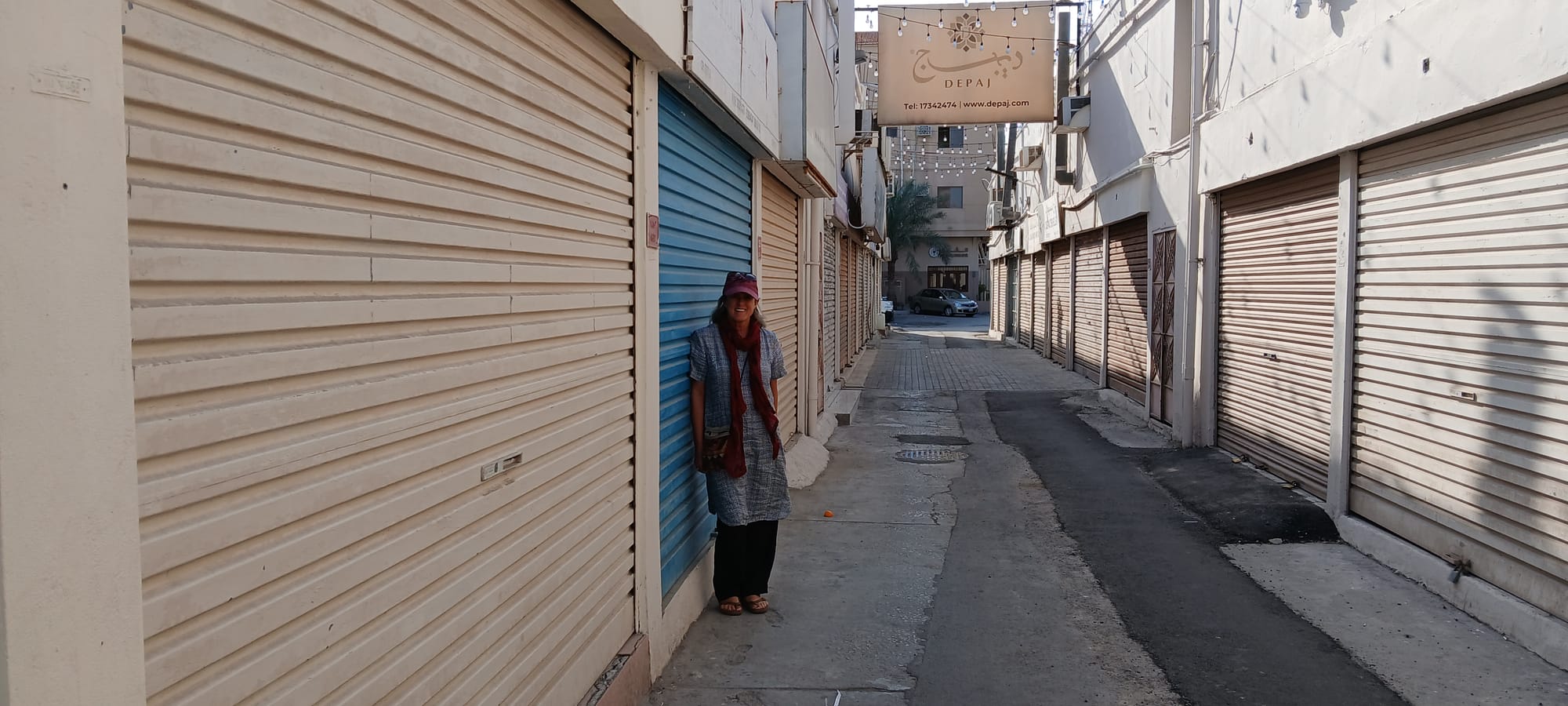
Some phone catching up in Muharraq:
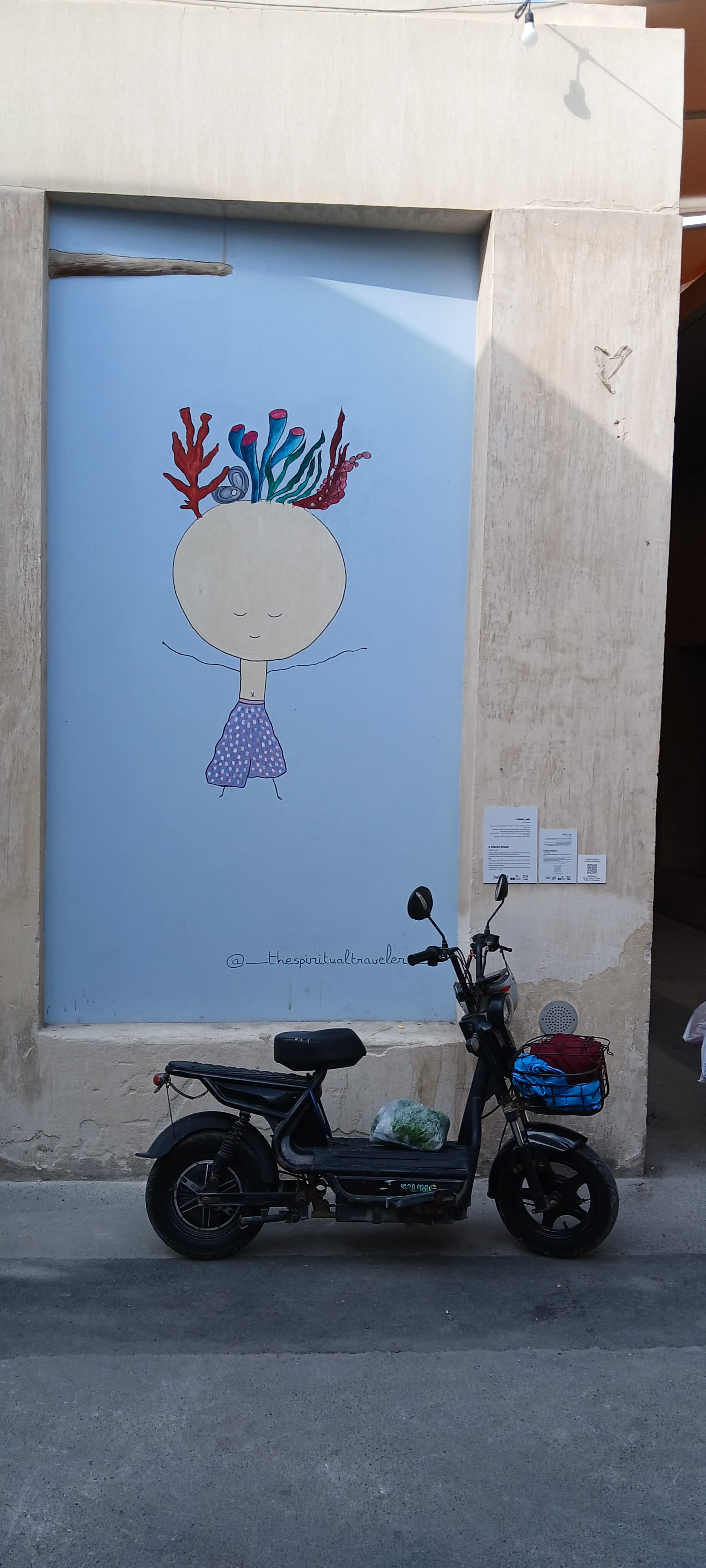
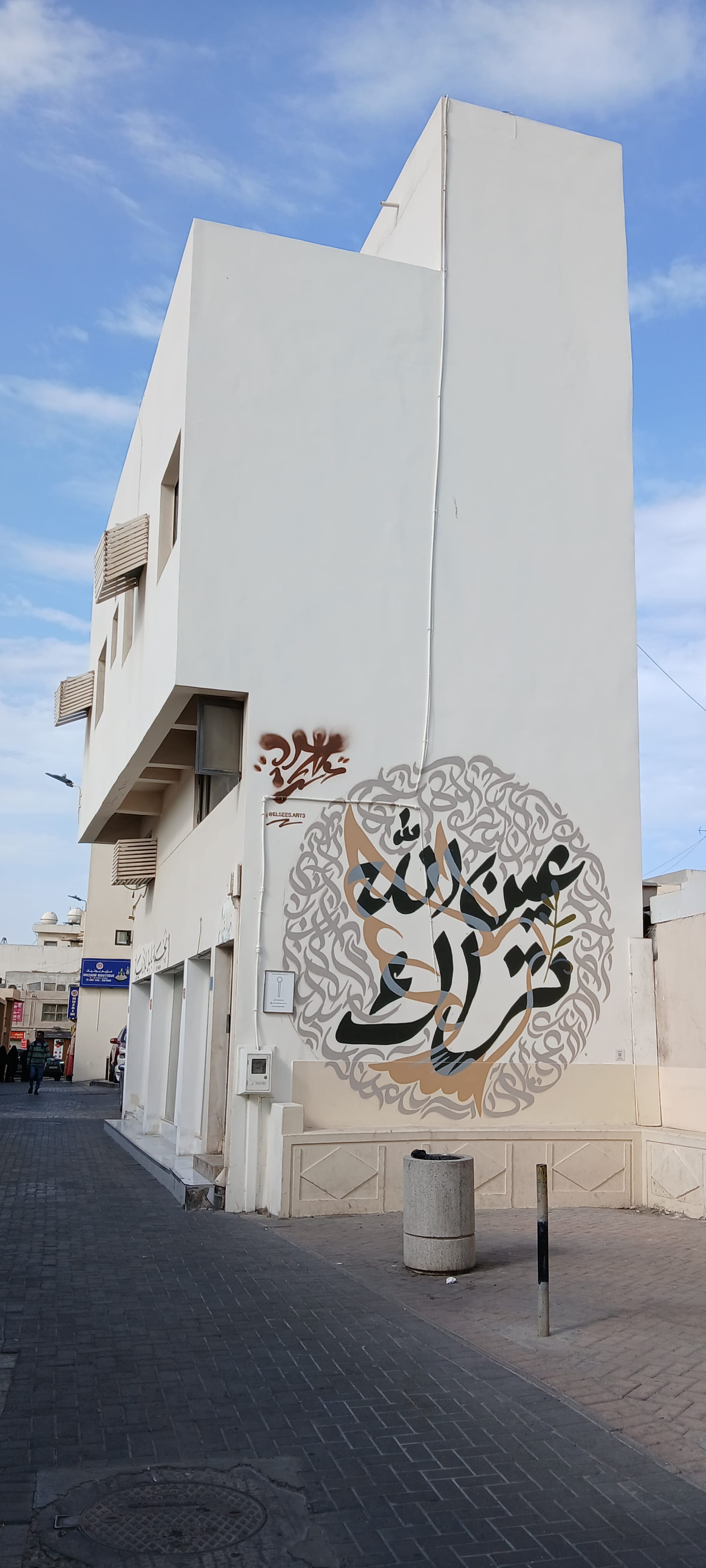
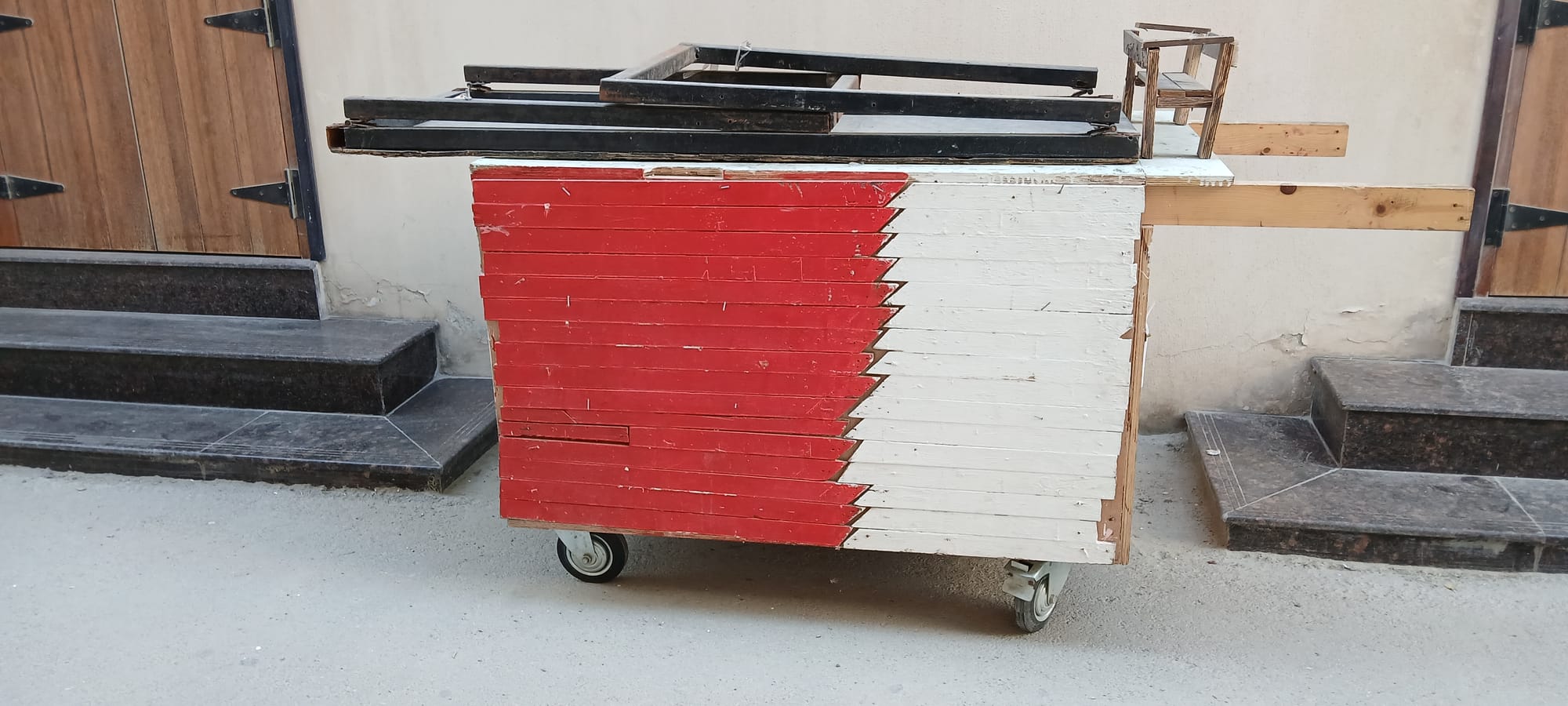
I will pause in my archival fever . . . and get some dinner. And I'll watch some TV, should say, I'll watch some platform, El Eternauta, Netflix—don't stop your support of terroir tv, Netflix. Local for global is super cool. And El Eternauta is one of the best, alongside La Casa de Papel.
as I pick up this thread I am back in Riyadh. Late Tuesday night my visa came through. I didn't receive word until Wednesday morning.
I went to Bahrain one-way. No visa for KSA, no return. The visa came at the last, the best last minute.
I'd arranged for two further nights at the Sukoon, had to back out of that, and book a flight! Flying Gulf Air 3.40pm, arriving King Saud International Airport at 5pm. Leaving me two hours to pack, arrange a taxi, checkout and g g get out of ...
but before that. . . A pleasant boat trip à la touristique and further highlights of the international highlife to follow:
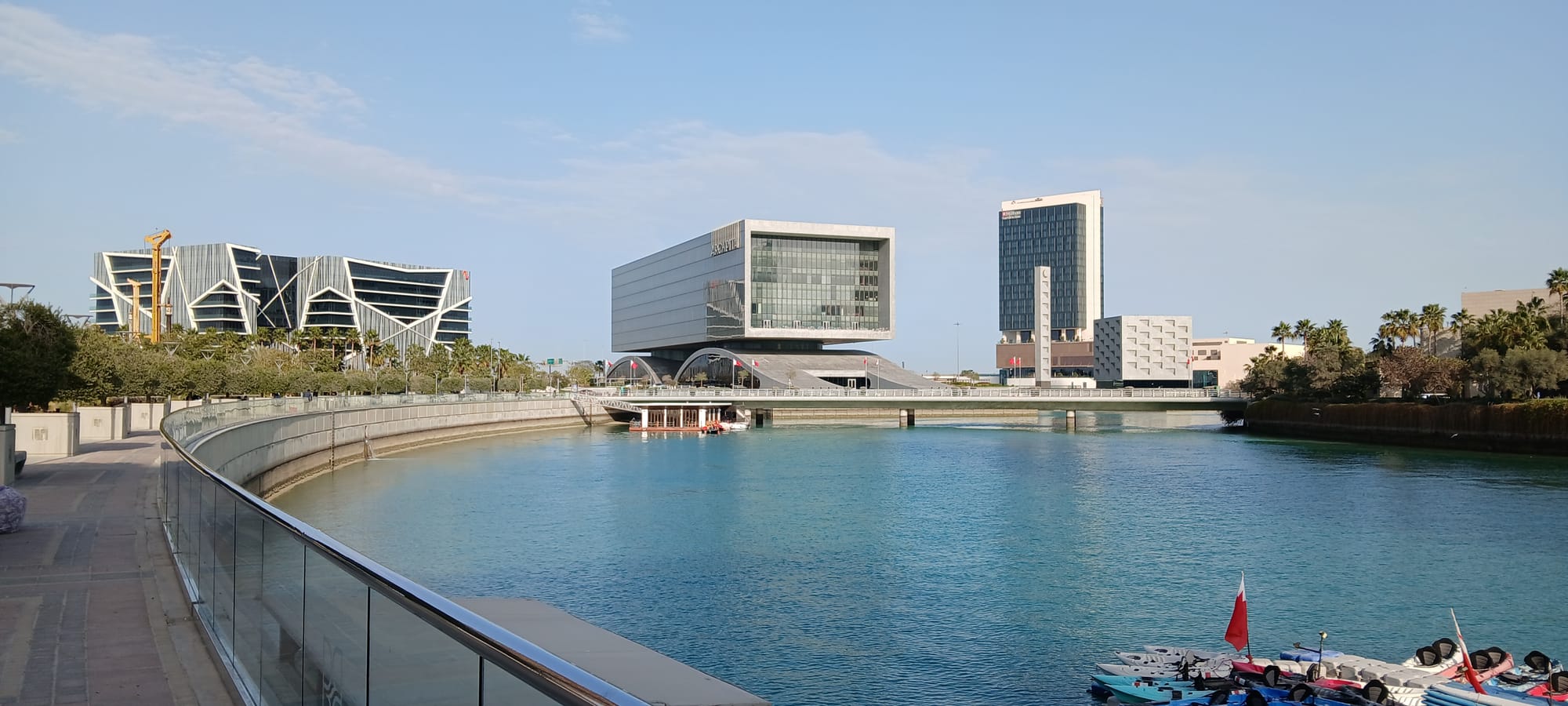
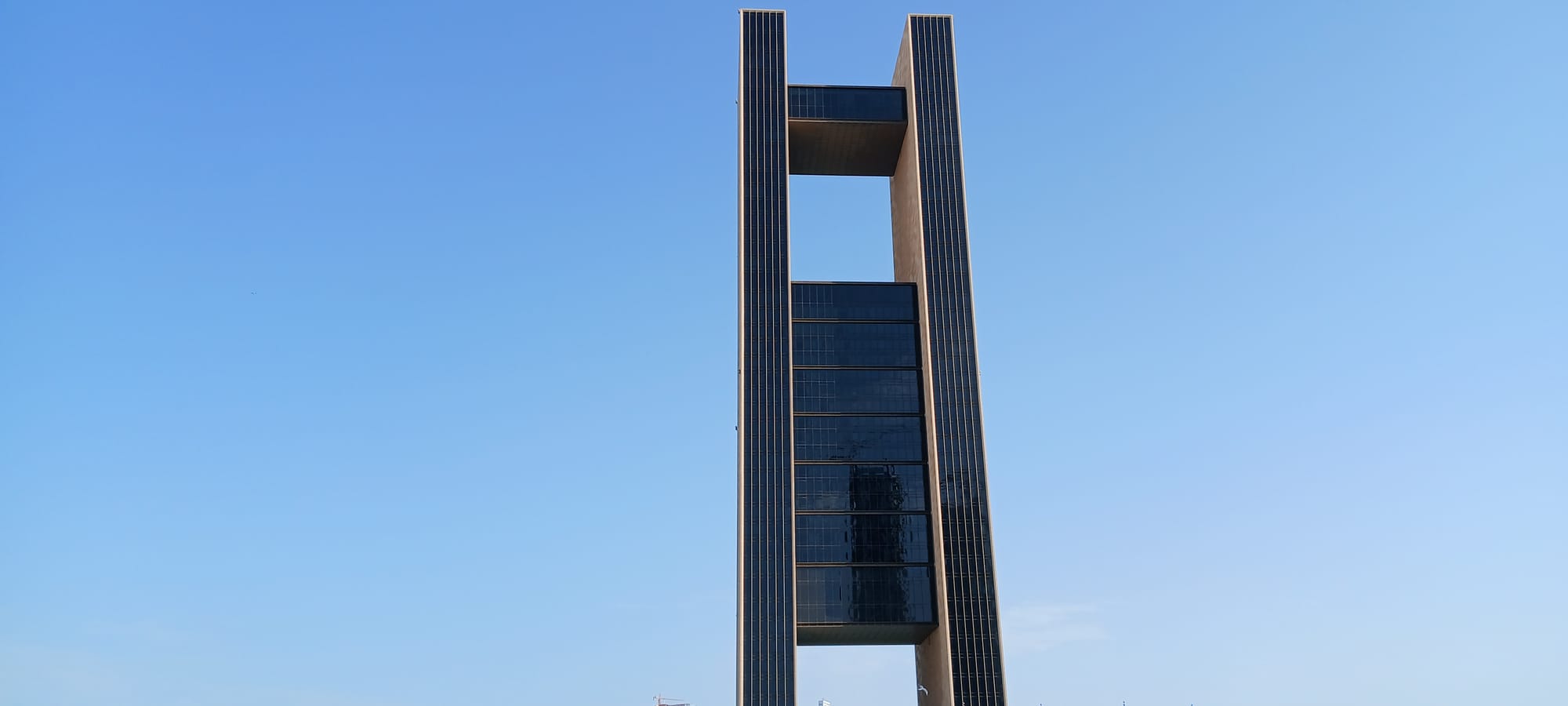
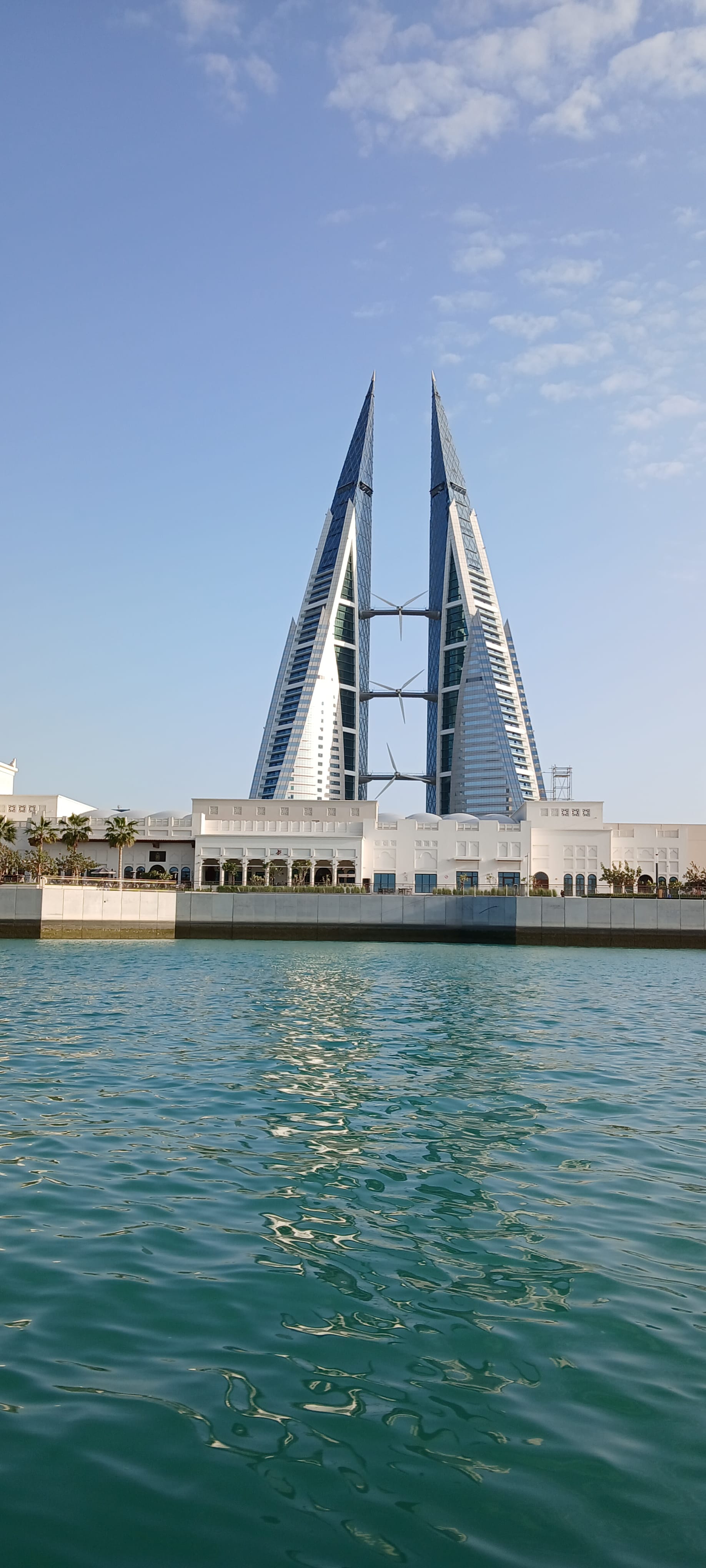
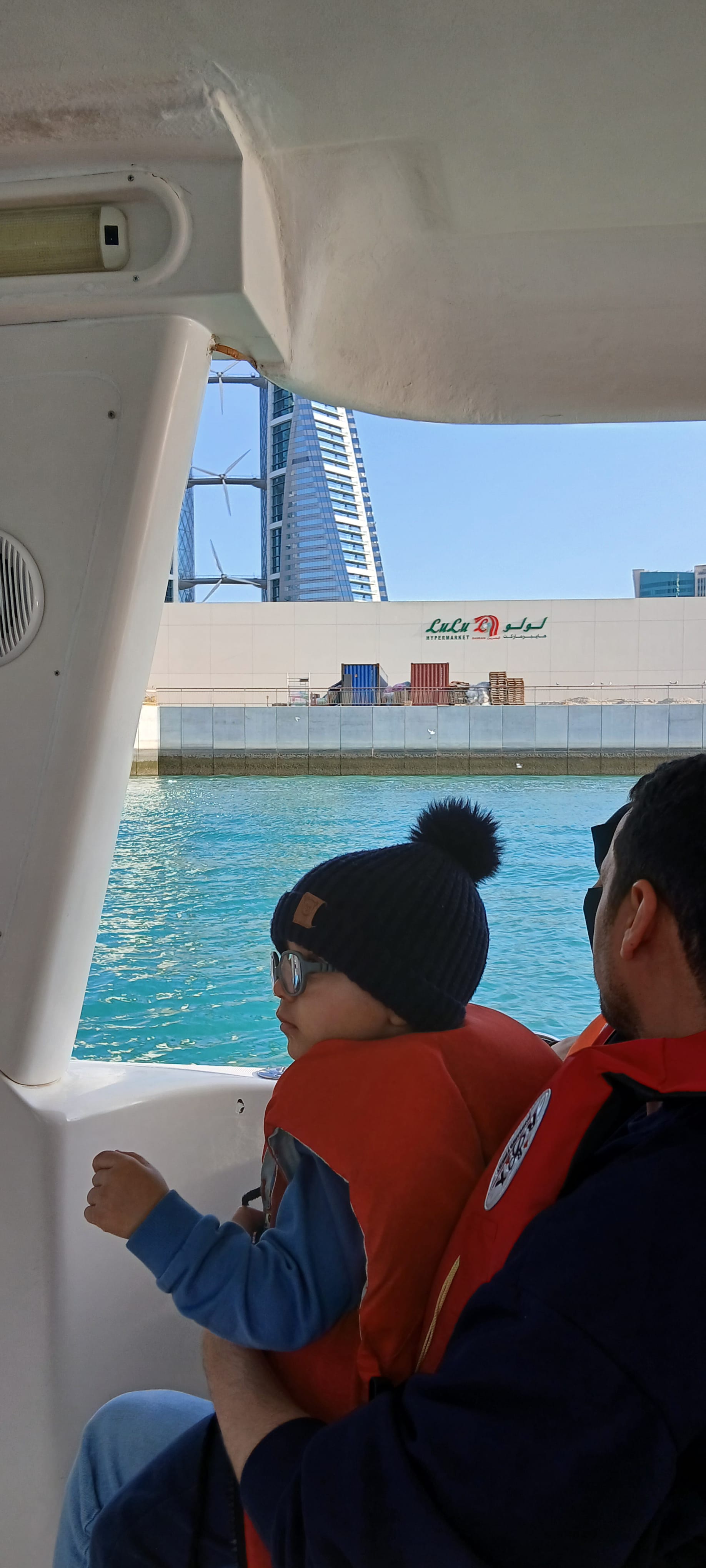
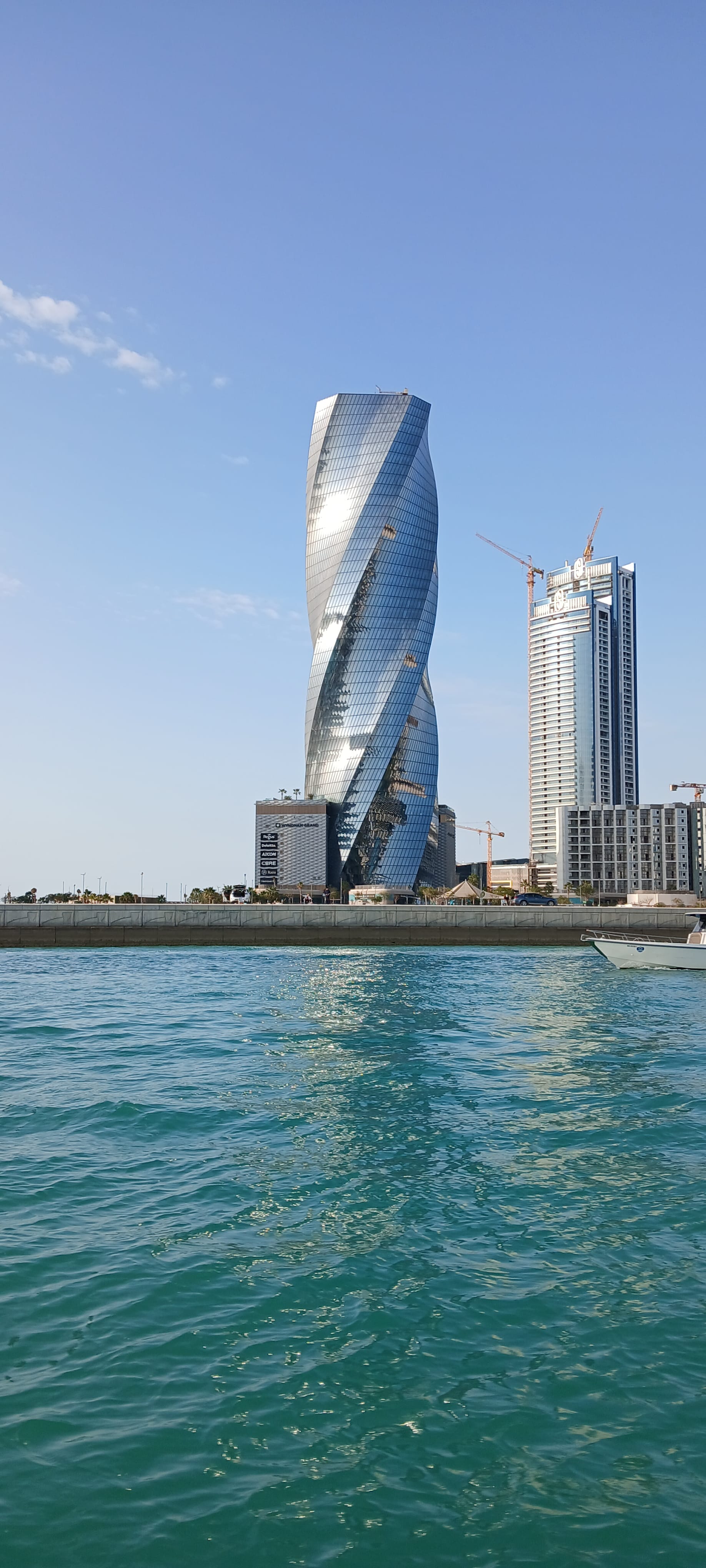
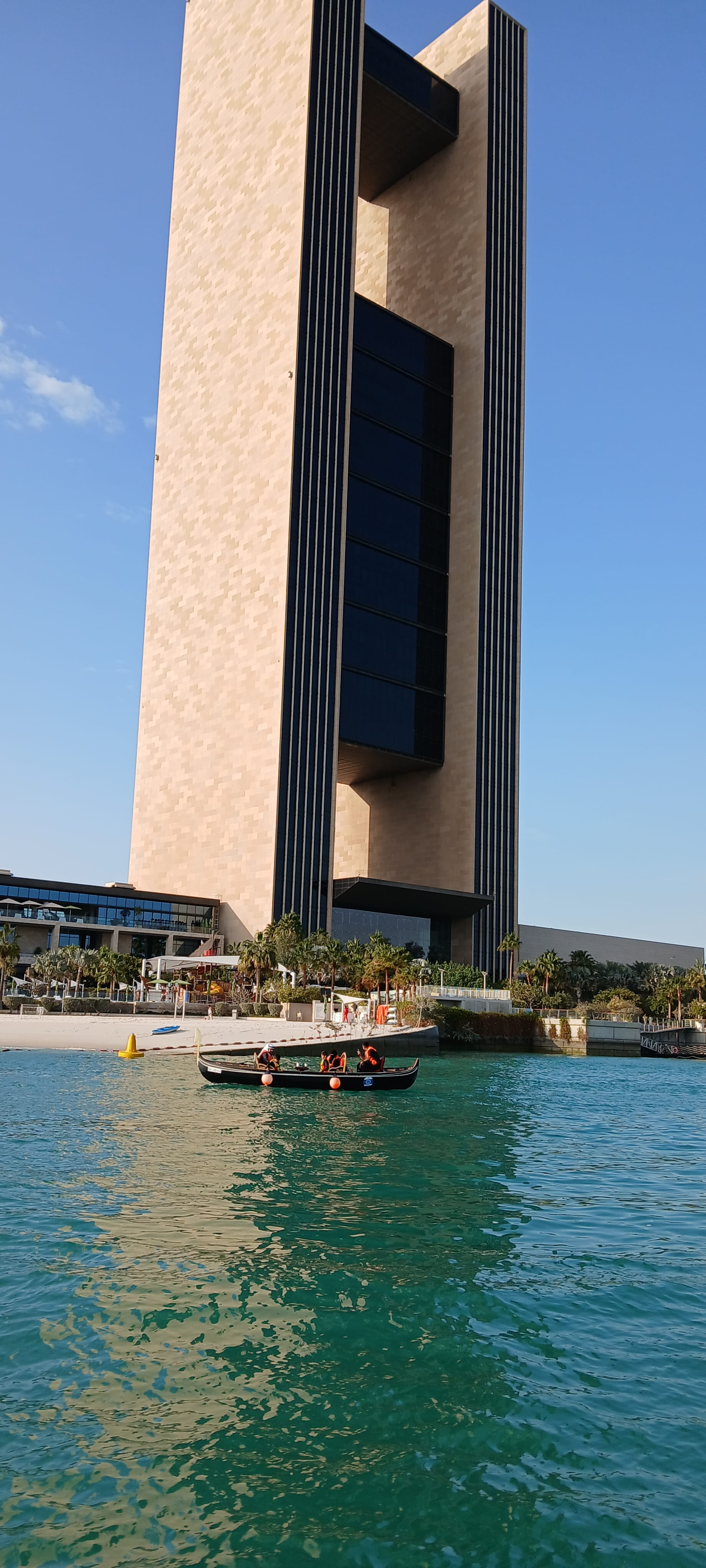
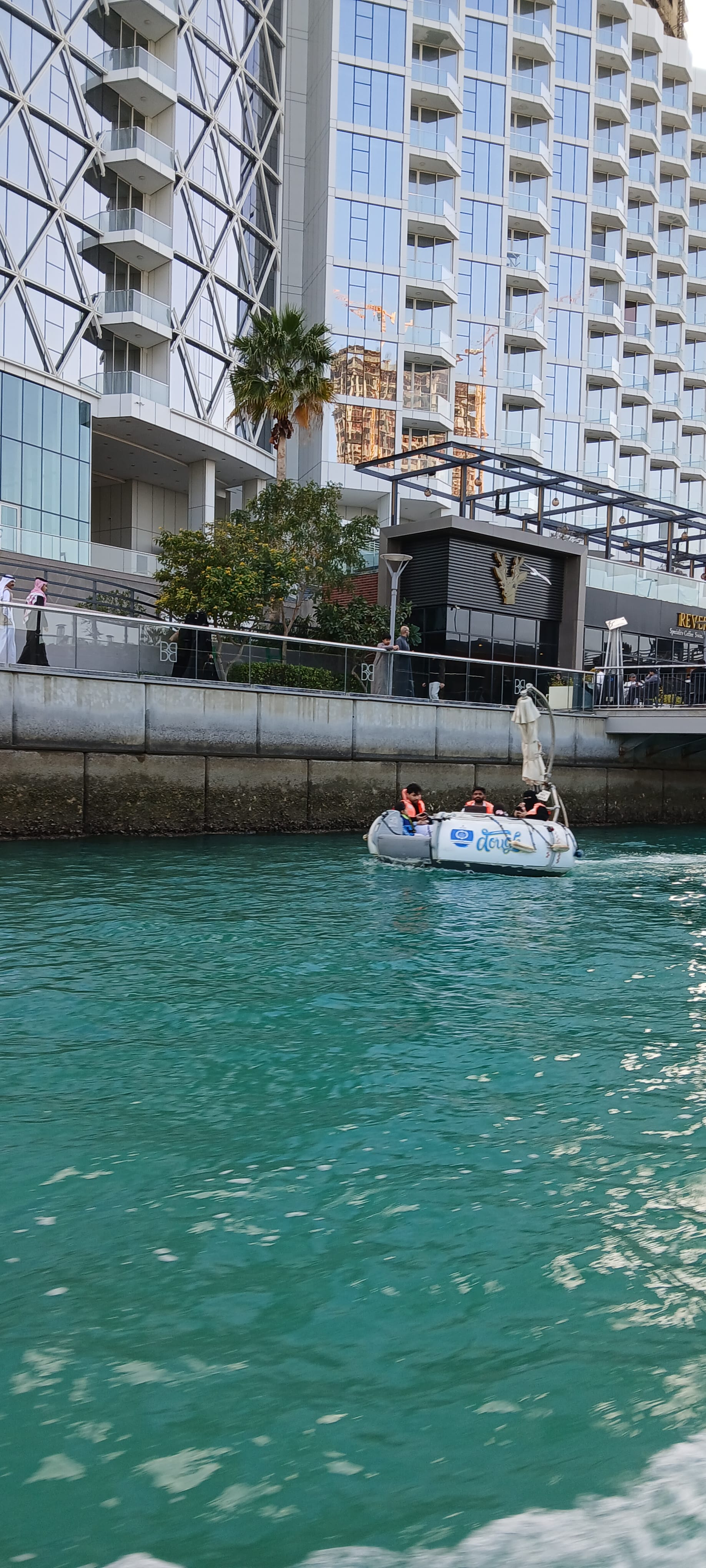
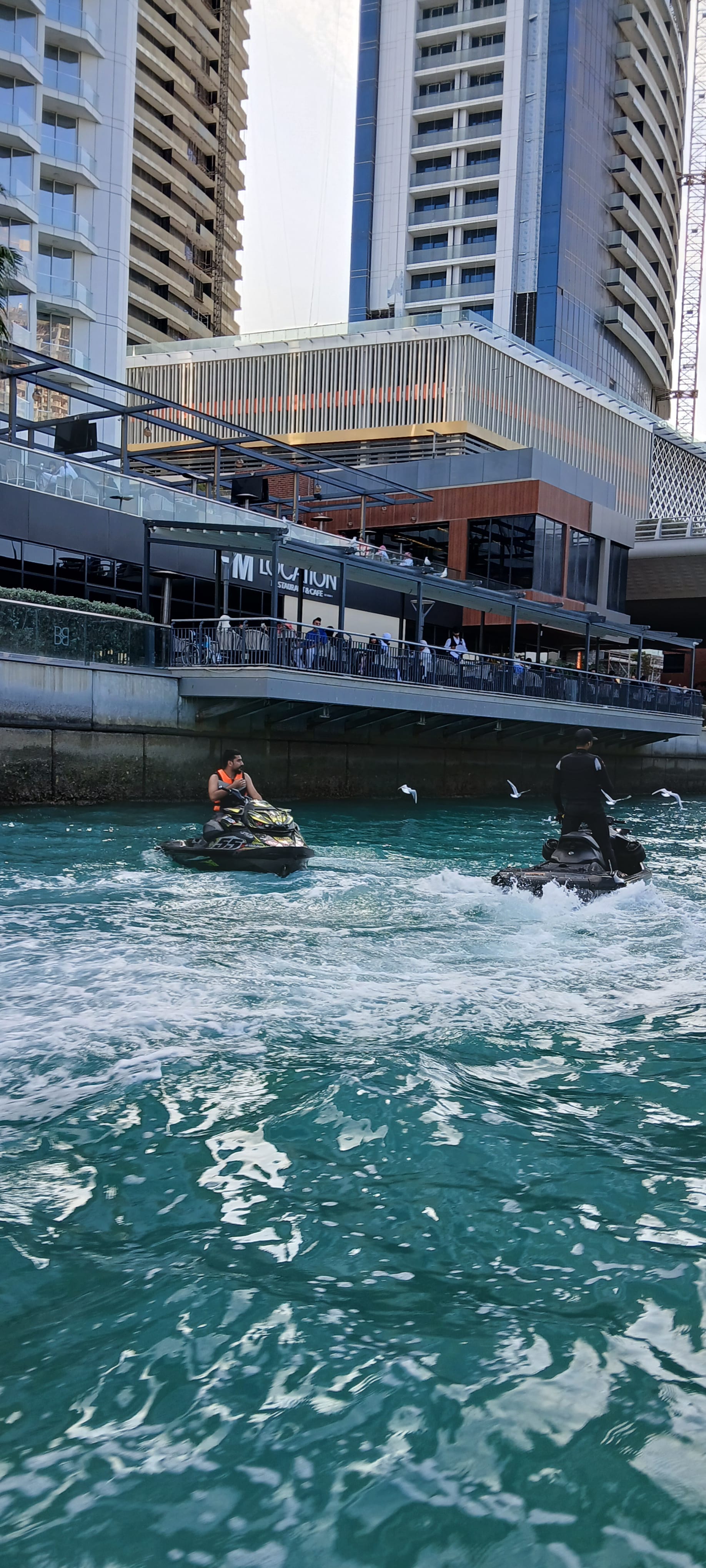
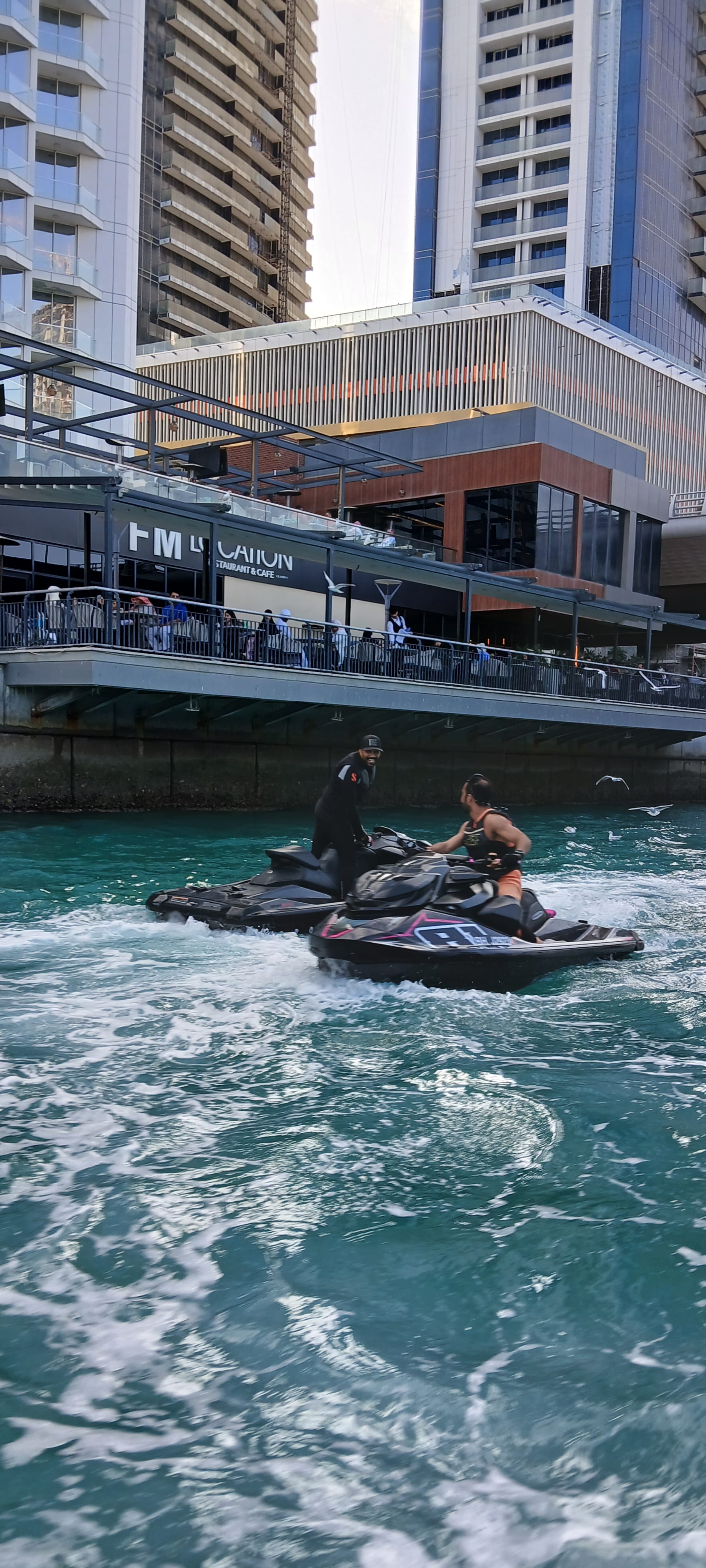
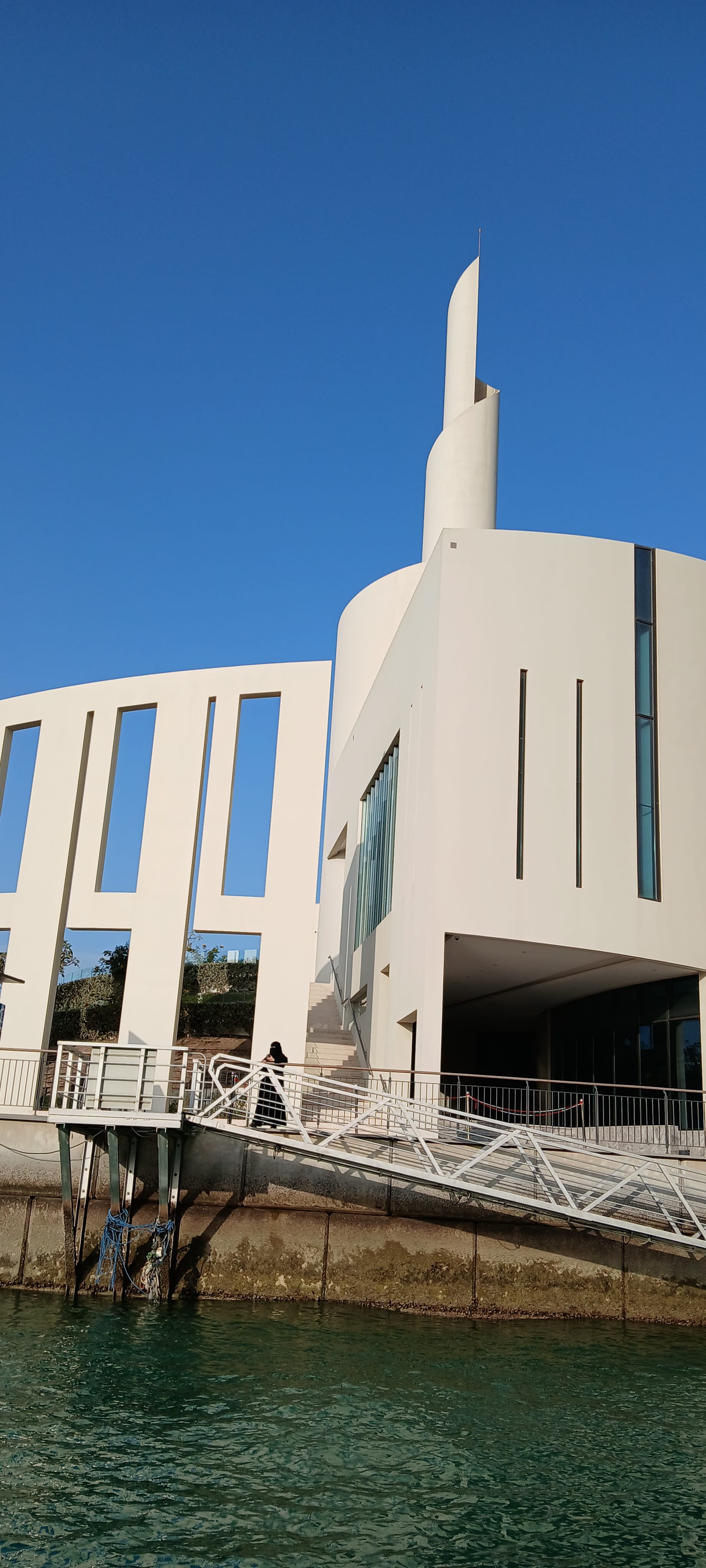
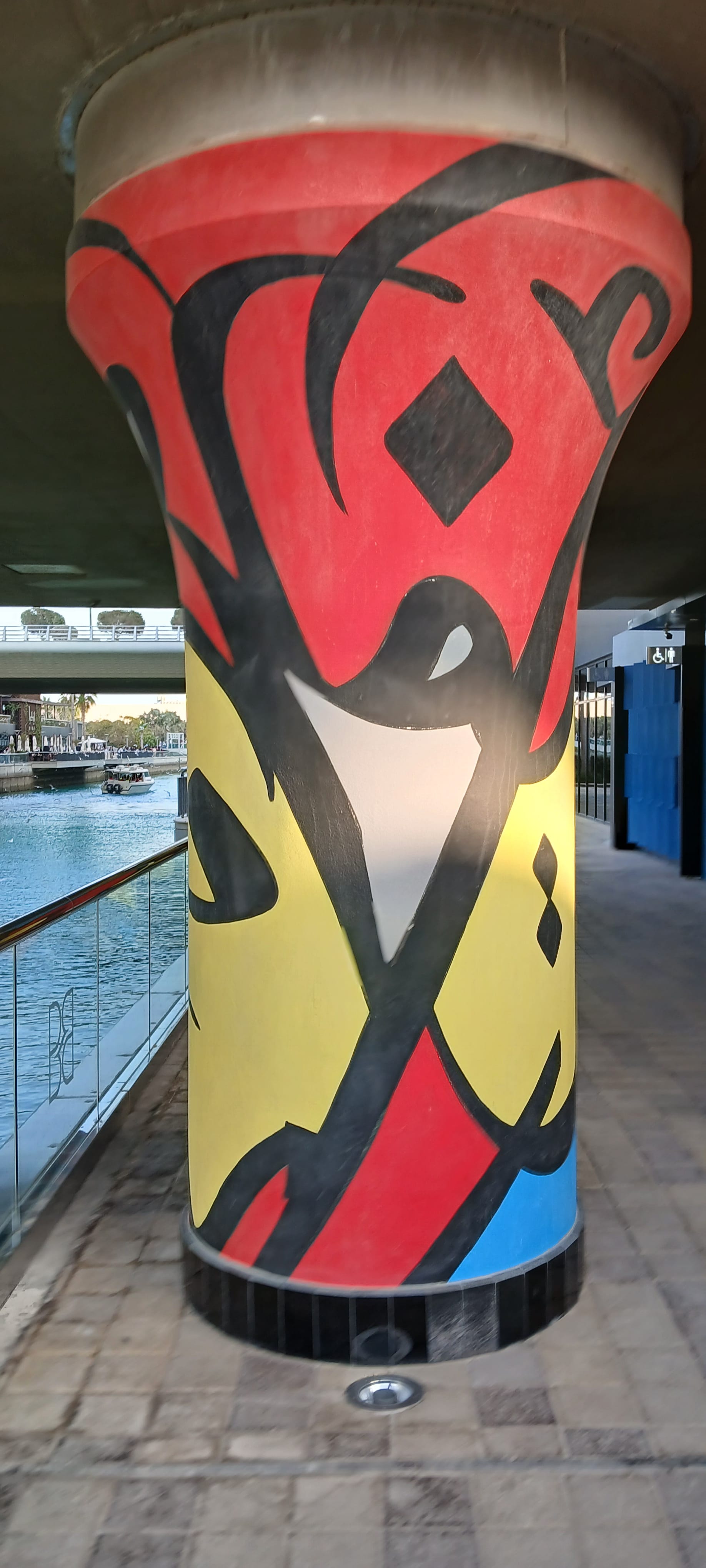
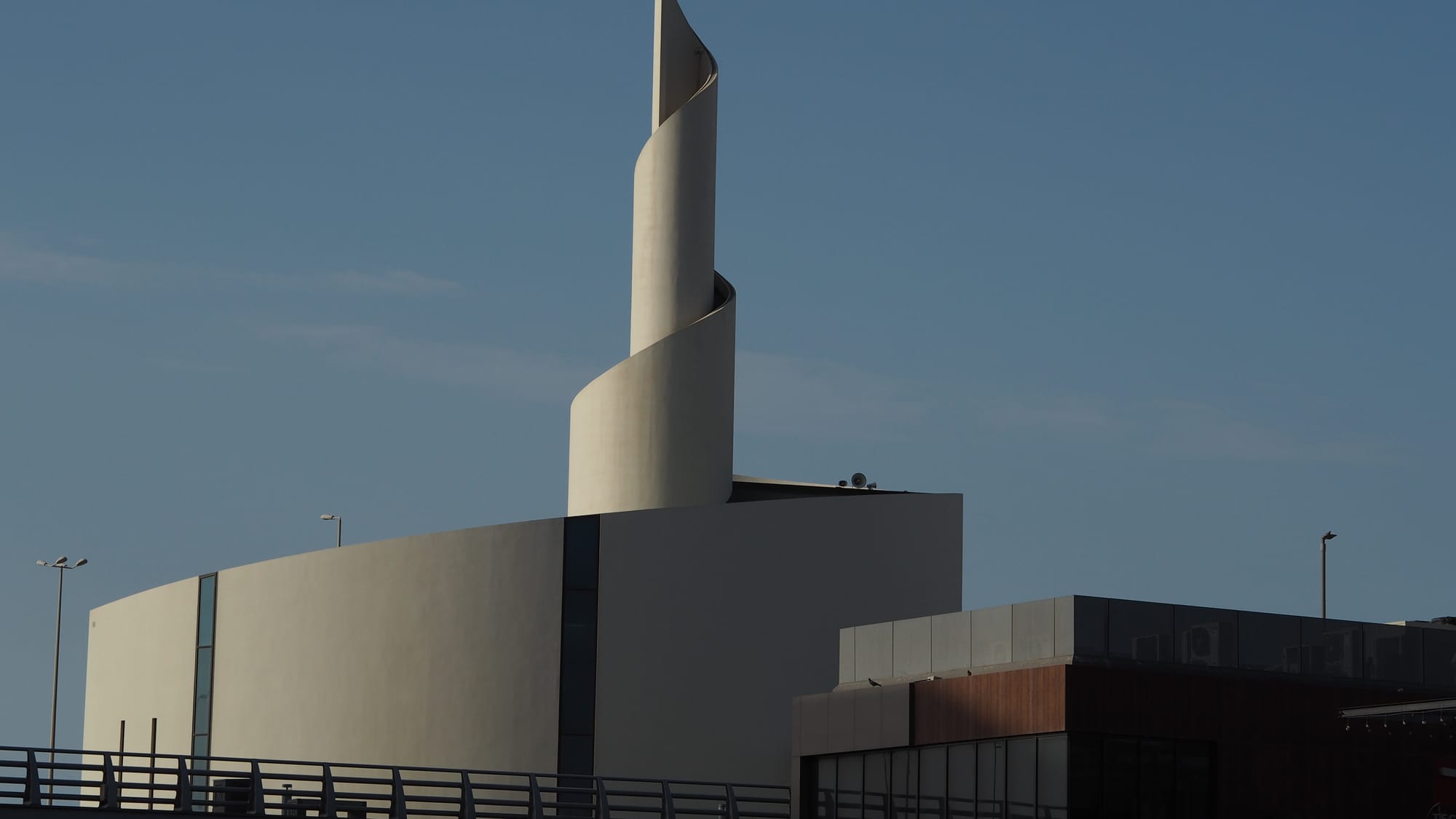
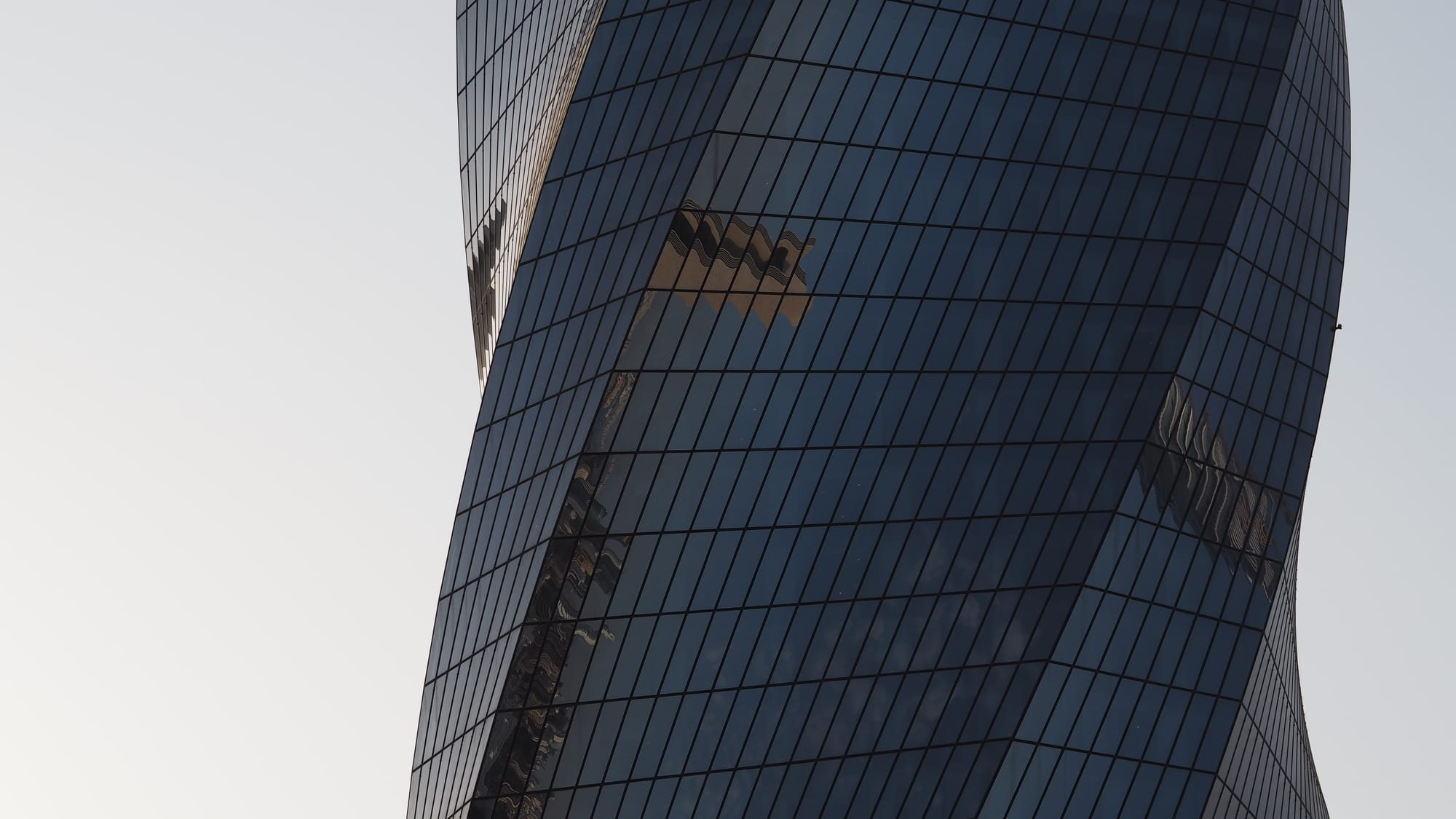
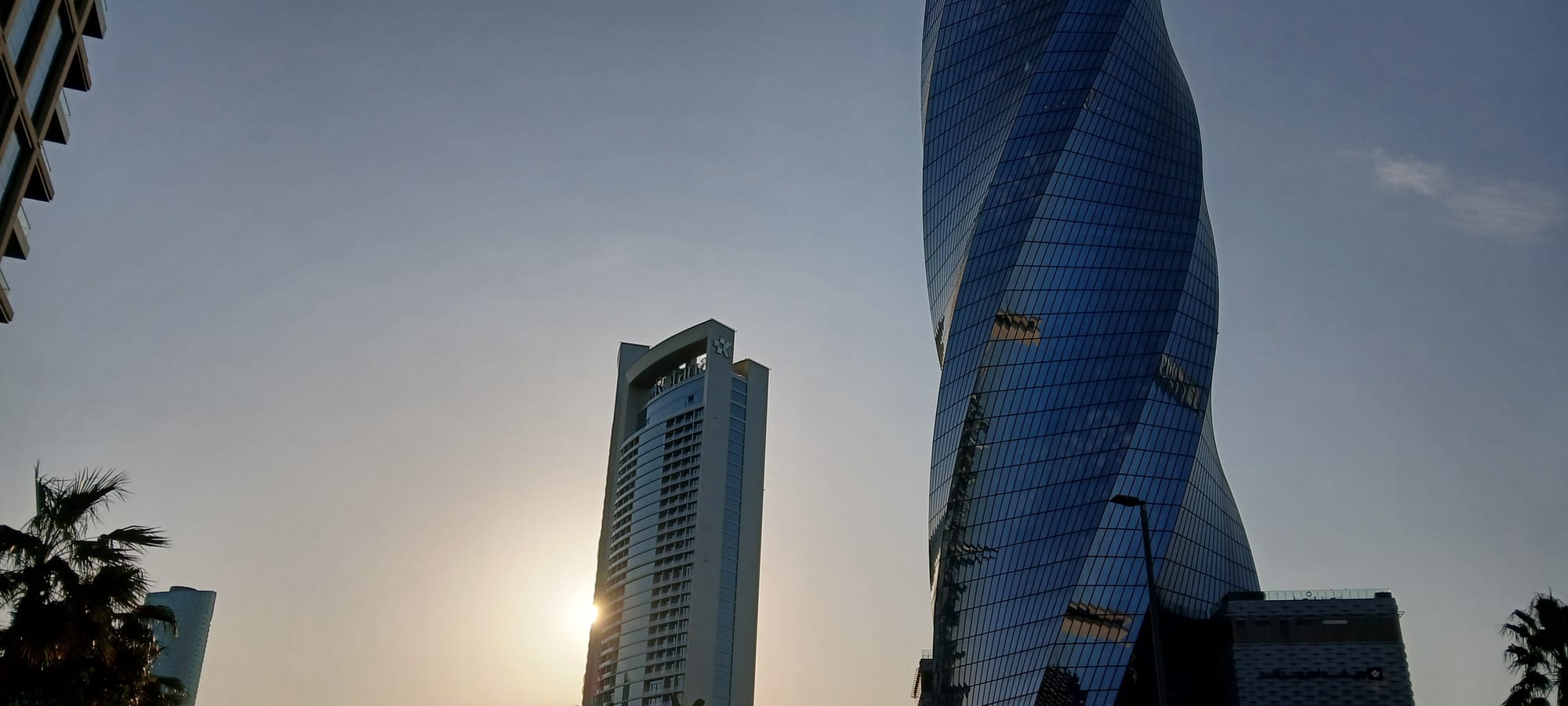
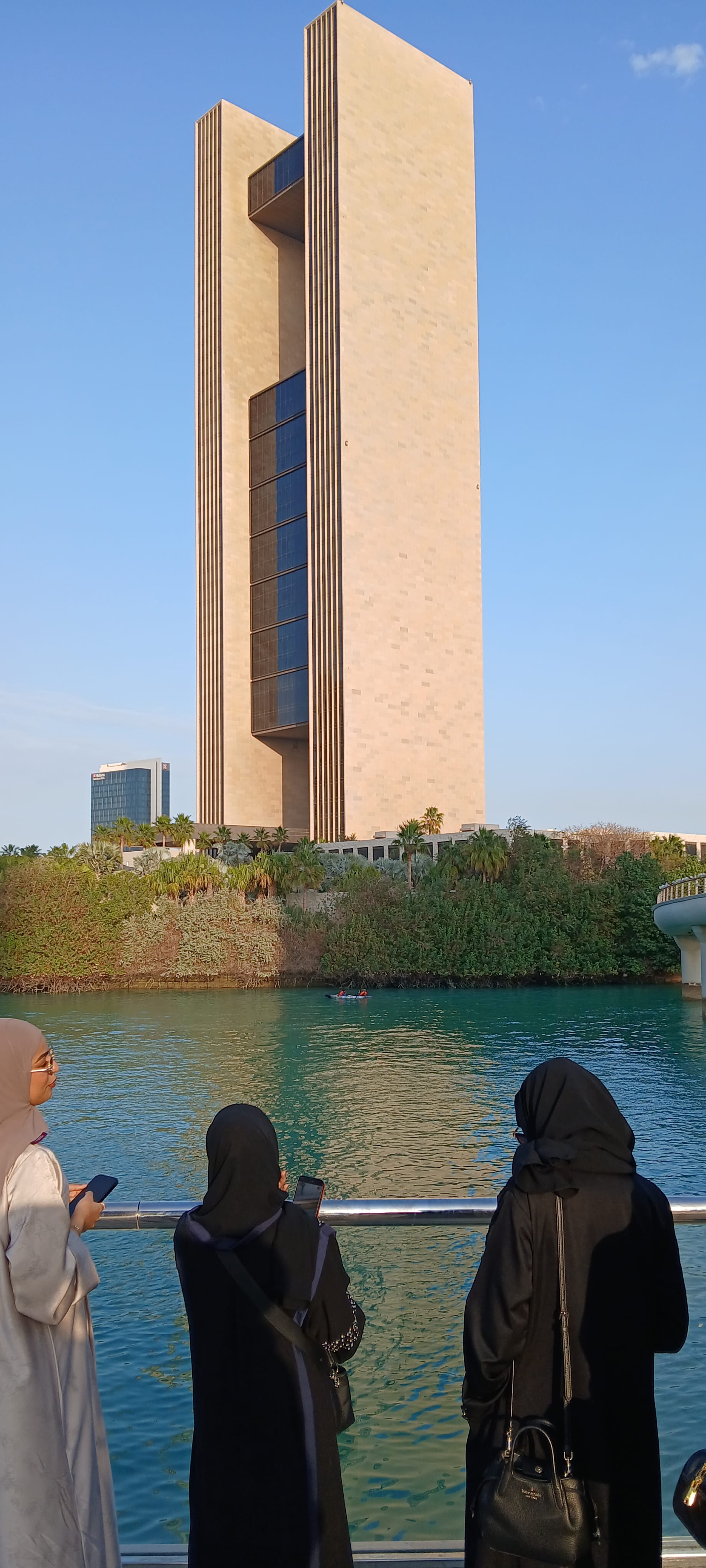
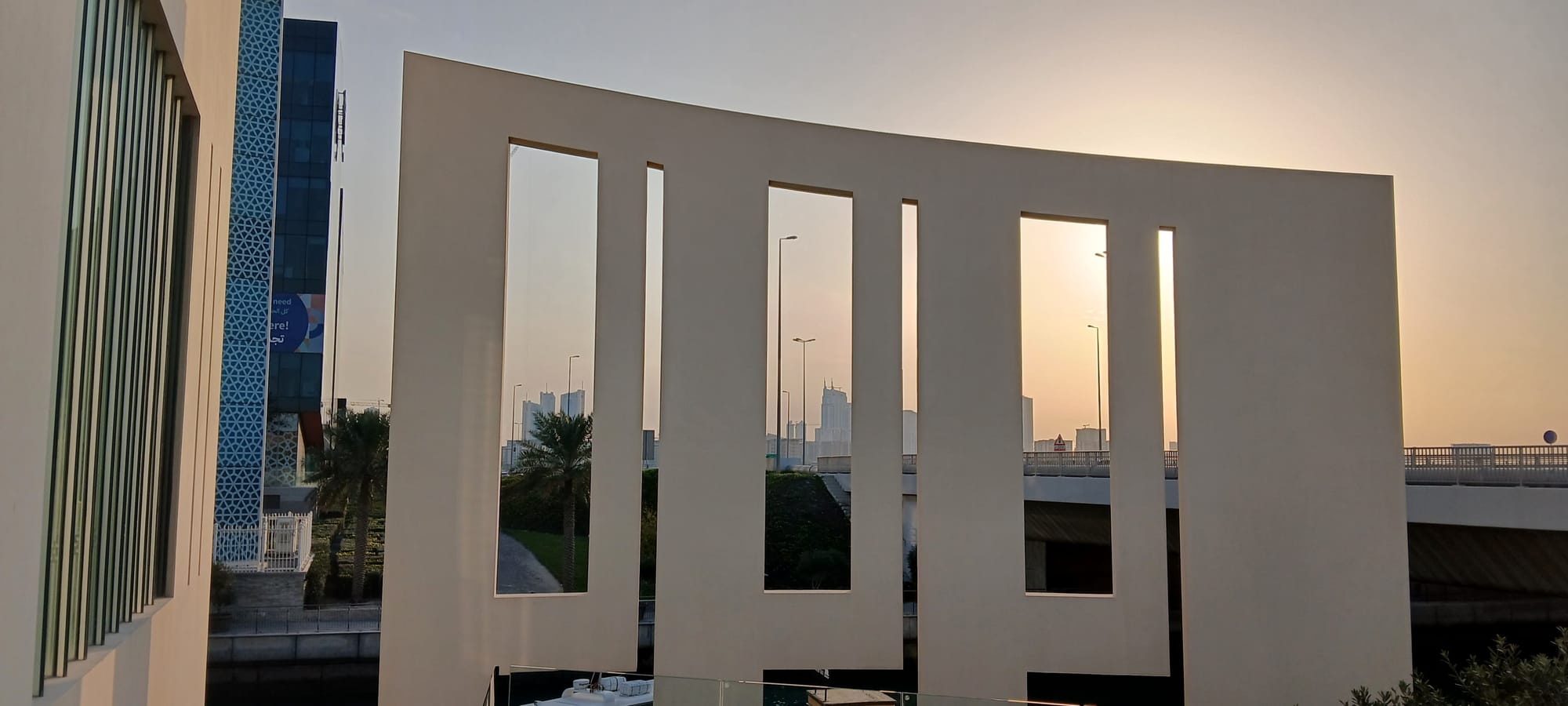
Jalal took us back to Sukoon where we restored ourselves and ate in Filipino style, pancit and lumpia. Assuring us of the authenticity of our experience, the chefs took great care.
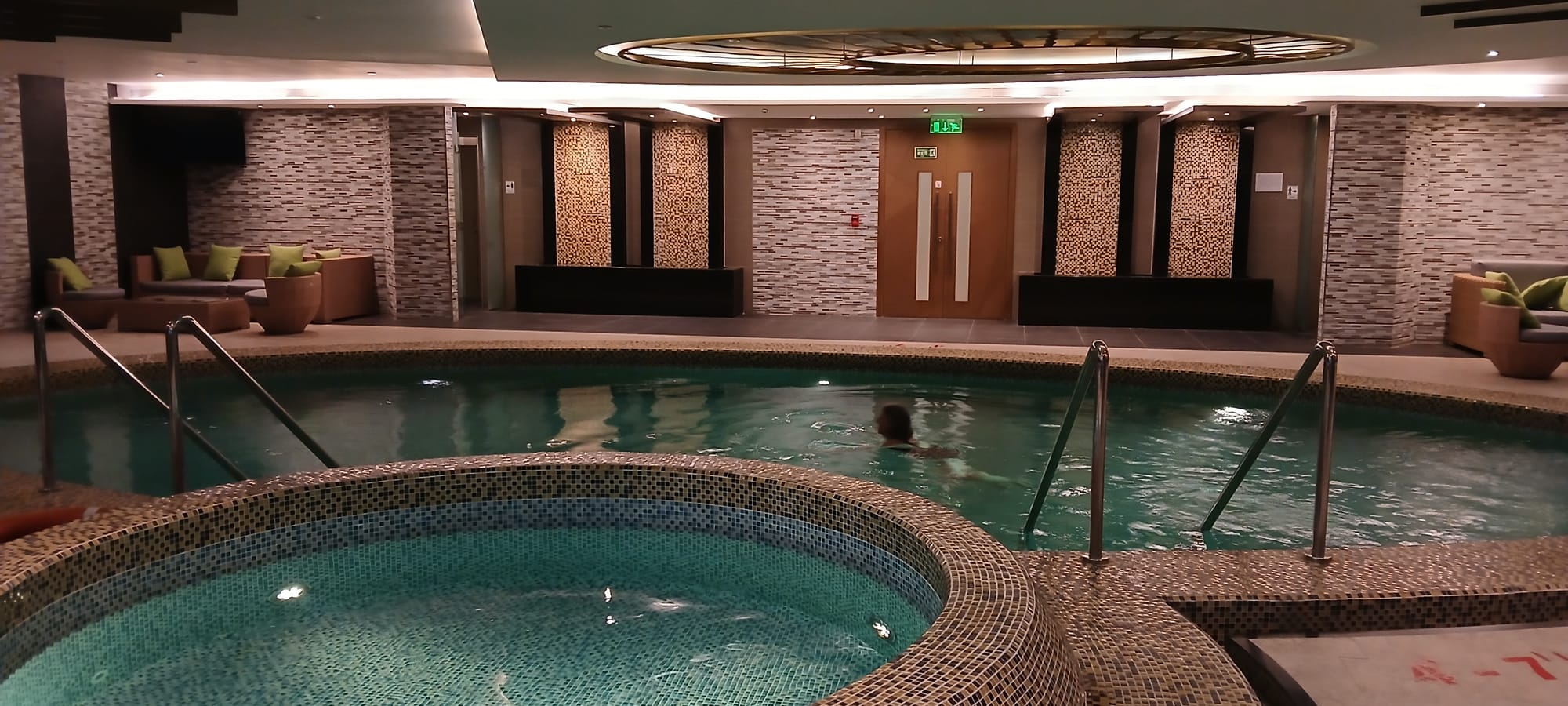
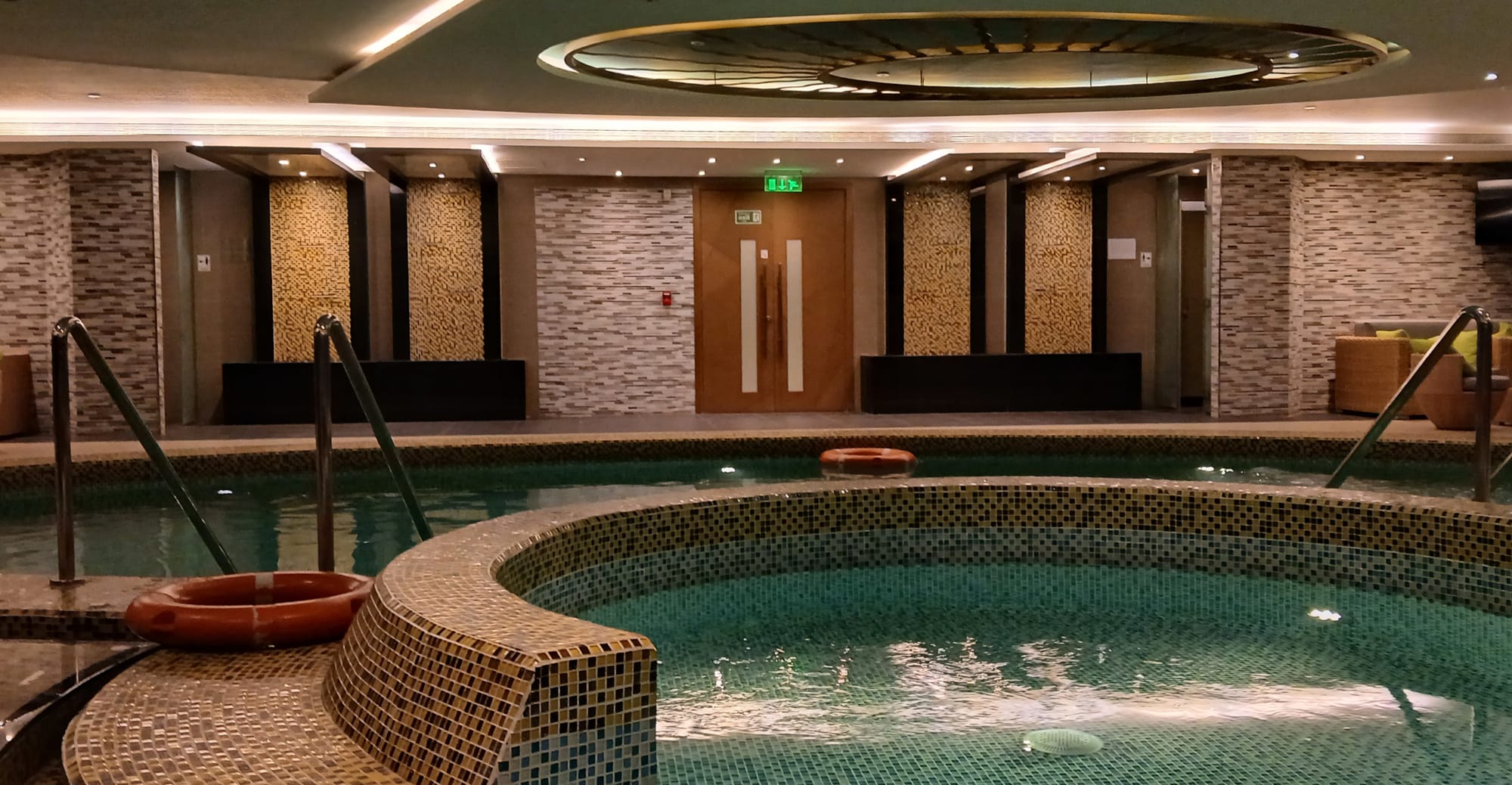
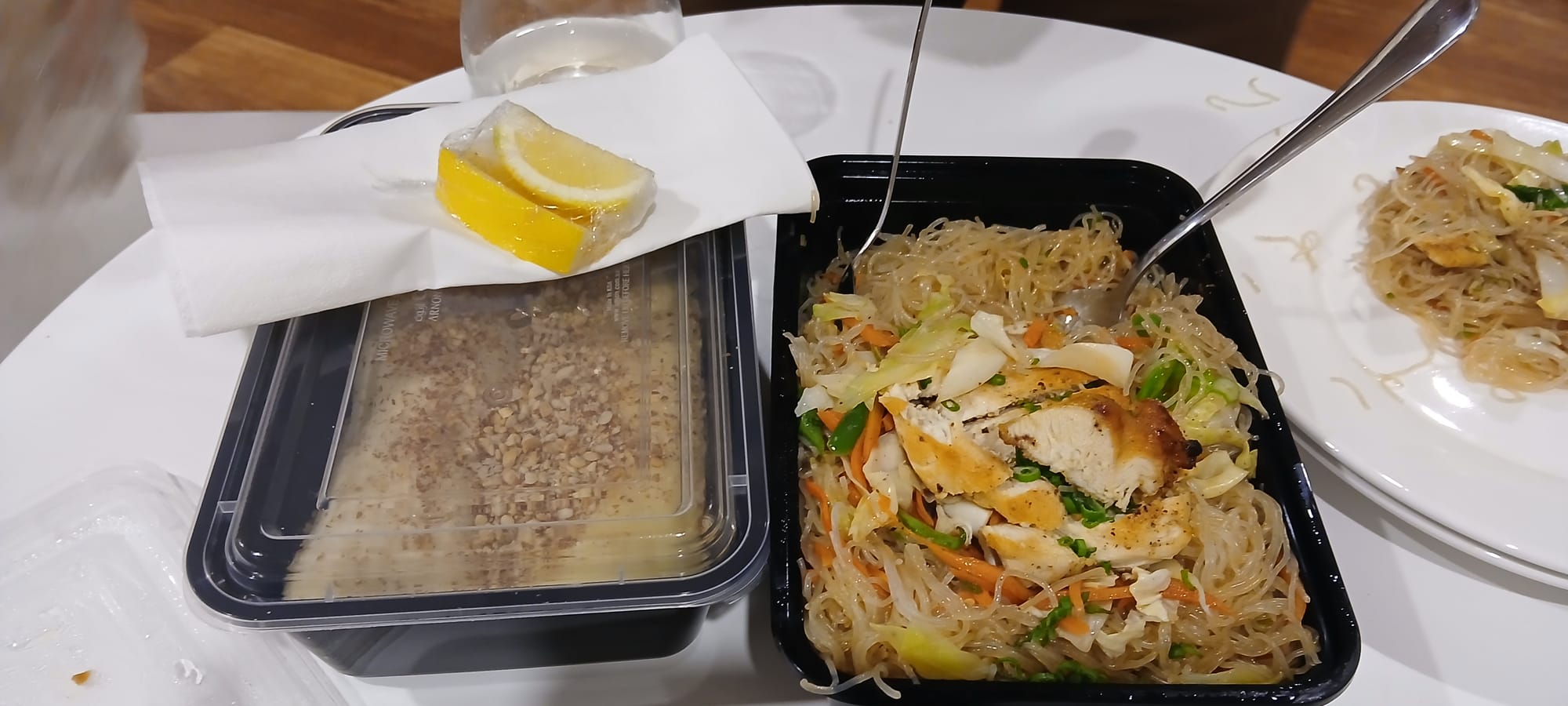
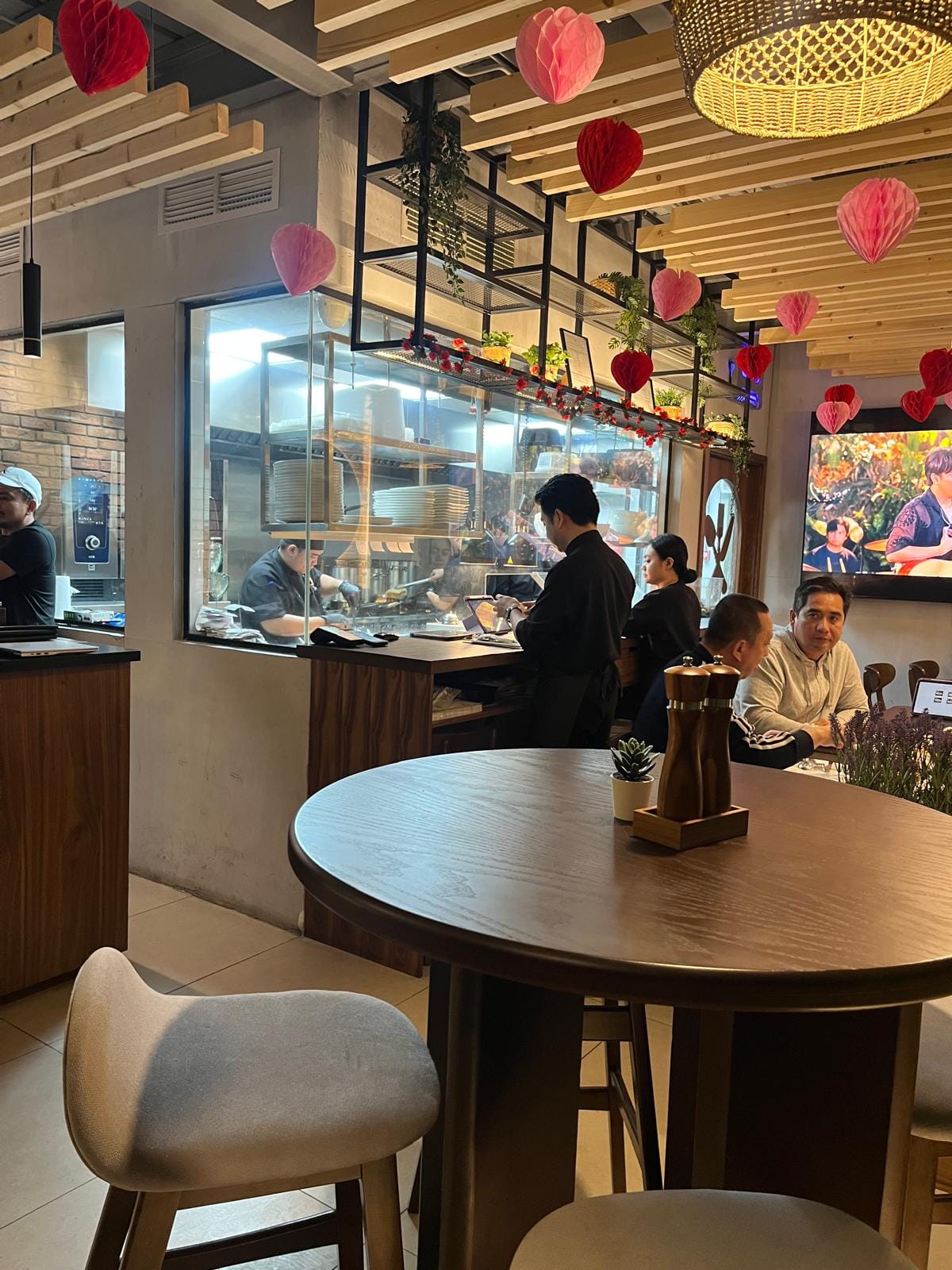
here is the next day:
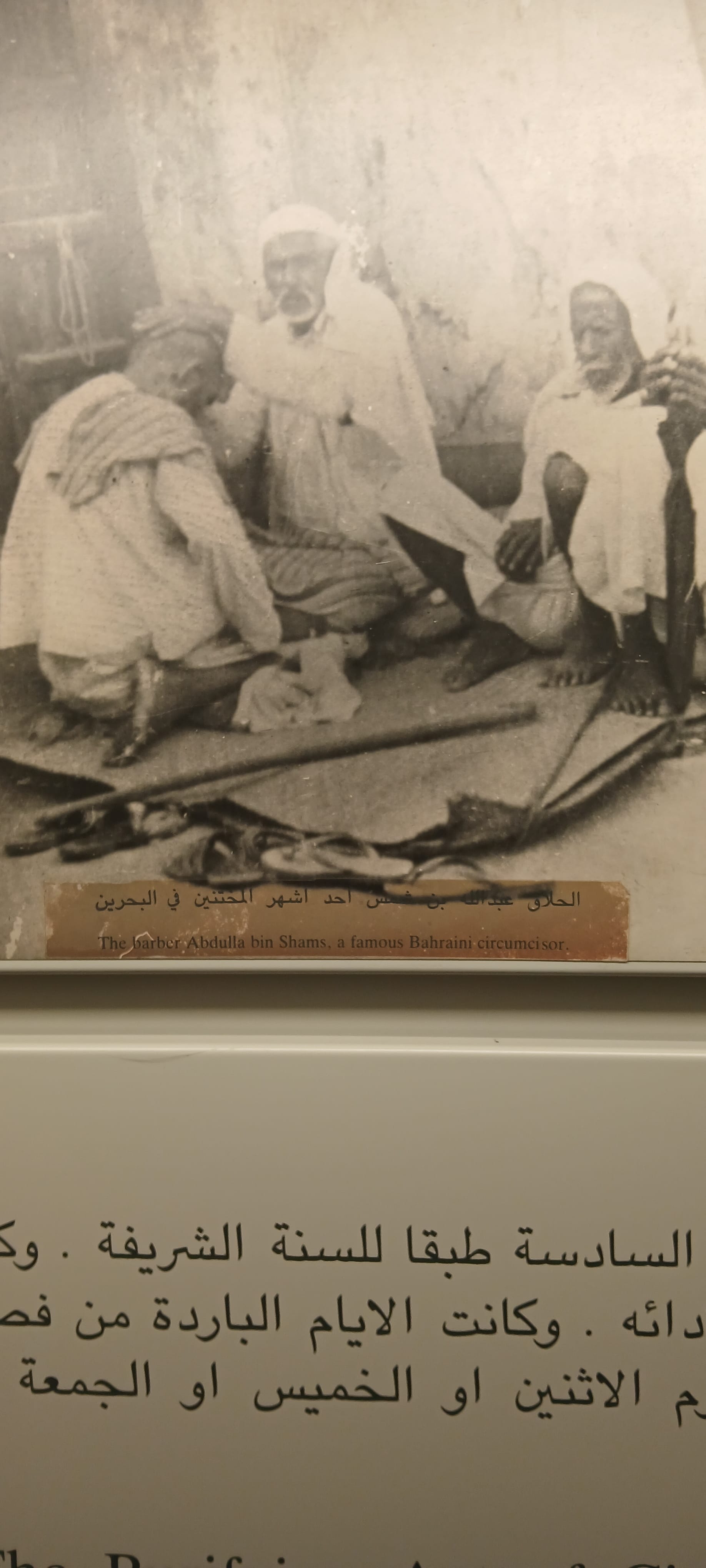
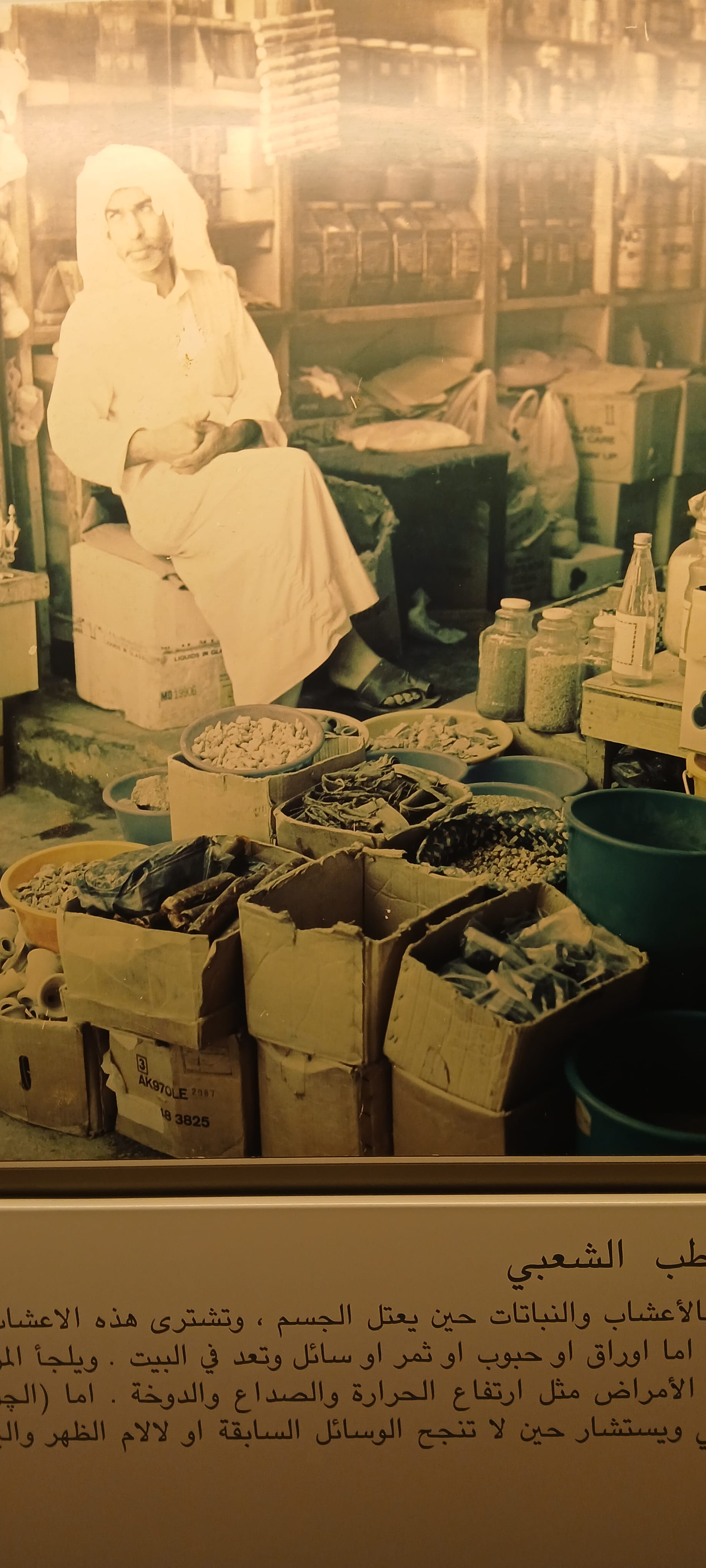
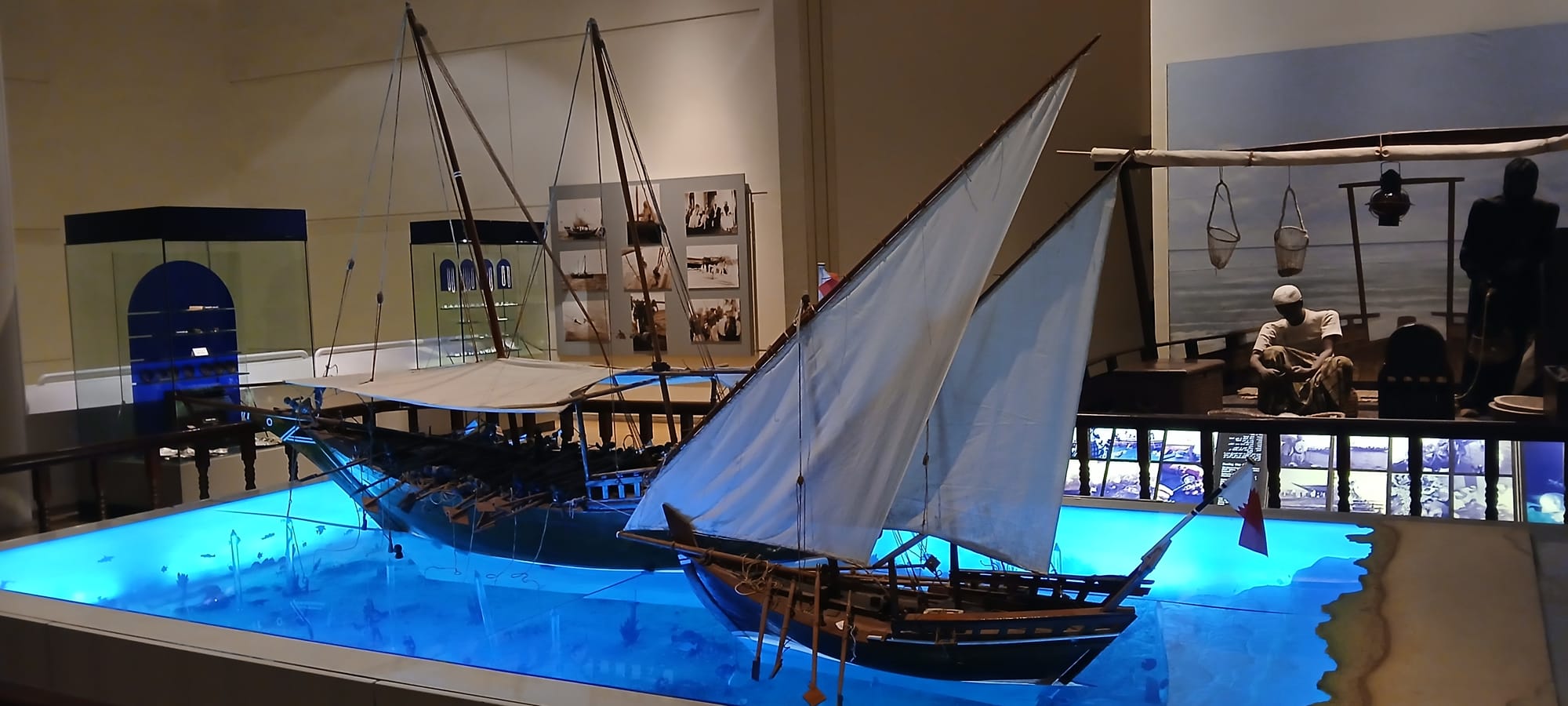
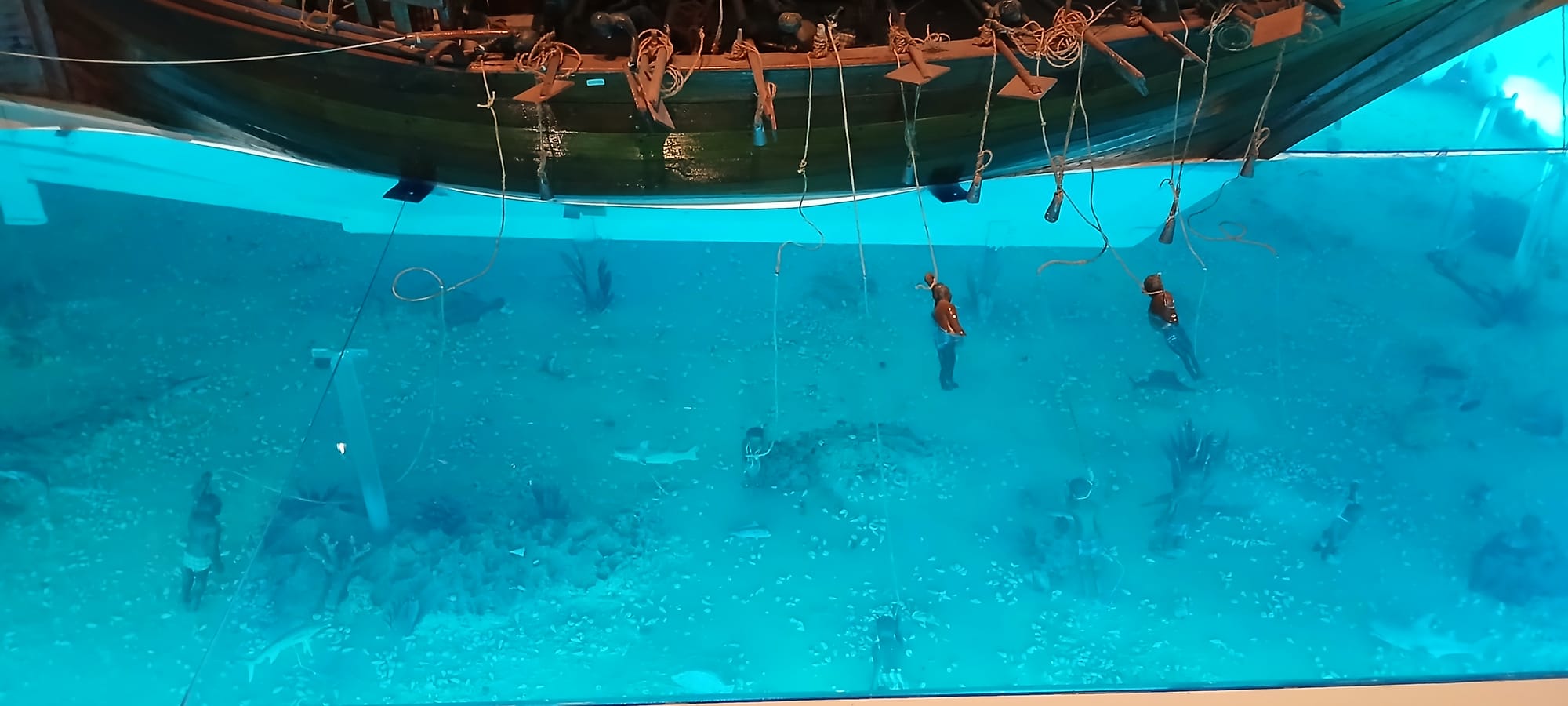
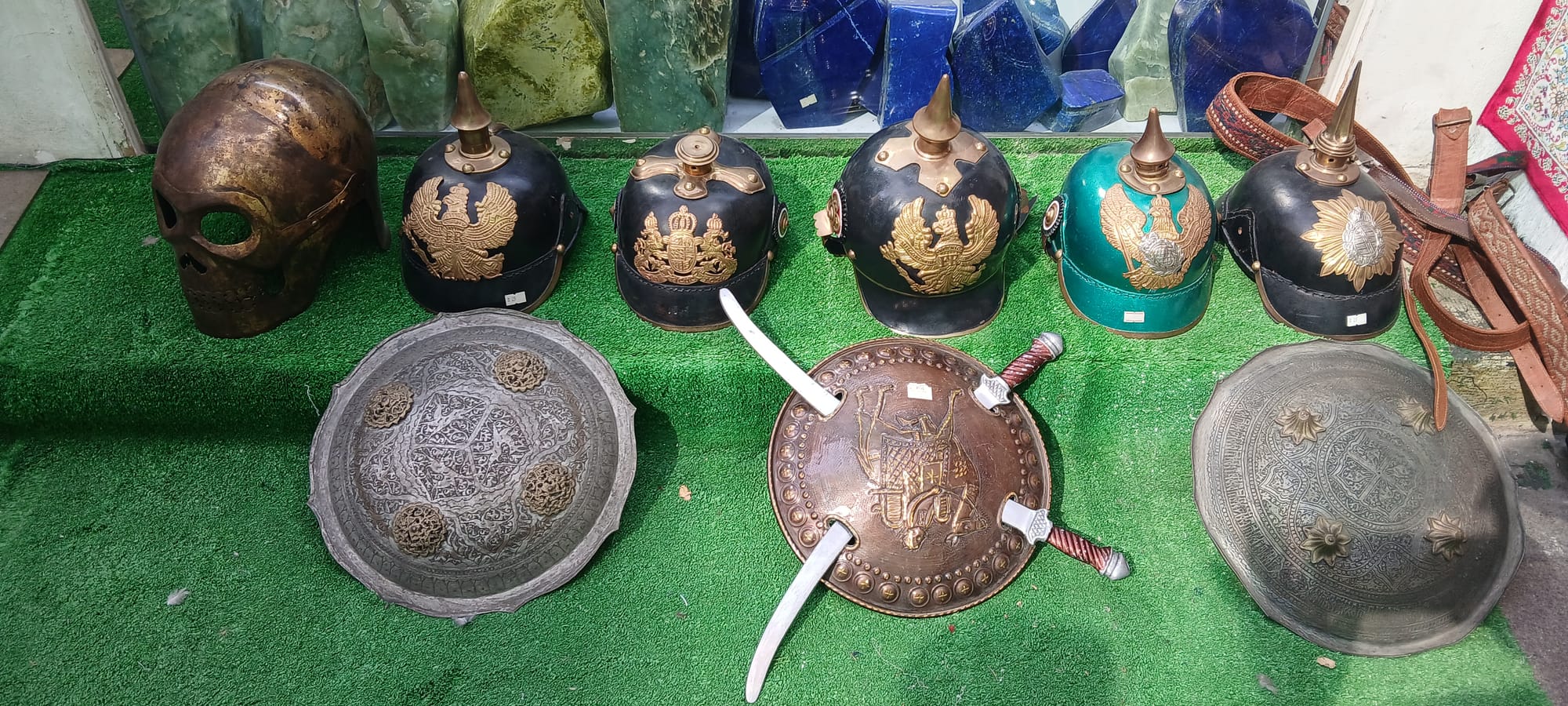
- several things above are of note: top centre the unmistakable architectural precursor of Riyadh's Minus Theatre, pending; centre, middle note the small print; right middle, the unmistakable precursor for the seller of traditional medicines with whom we had a chat at Manama Souq, looking cool; bottom left and centre, ships with tiny figurines diving for peals.
as you can see, we walked 4km to the National Museum along the designated walking and jogging track. En route I felt a slight panic at an aesthetic-free environment. More than squalor, this kind of poverty of imagination is frightening. Then, however, the National Museum made up for it, in particular, the café, where the posters below were.
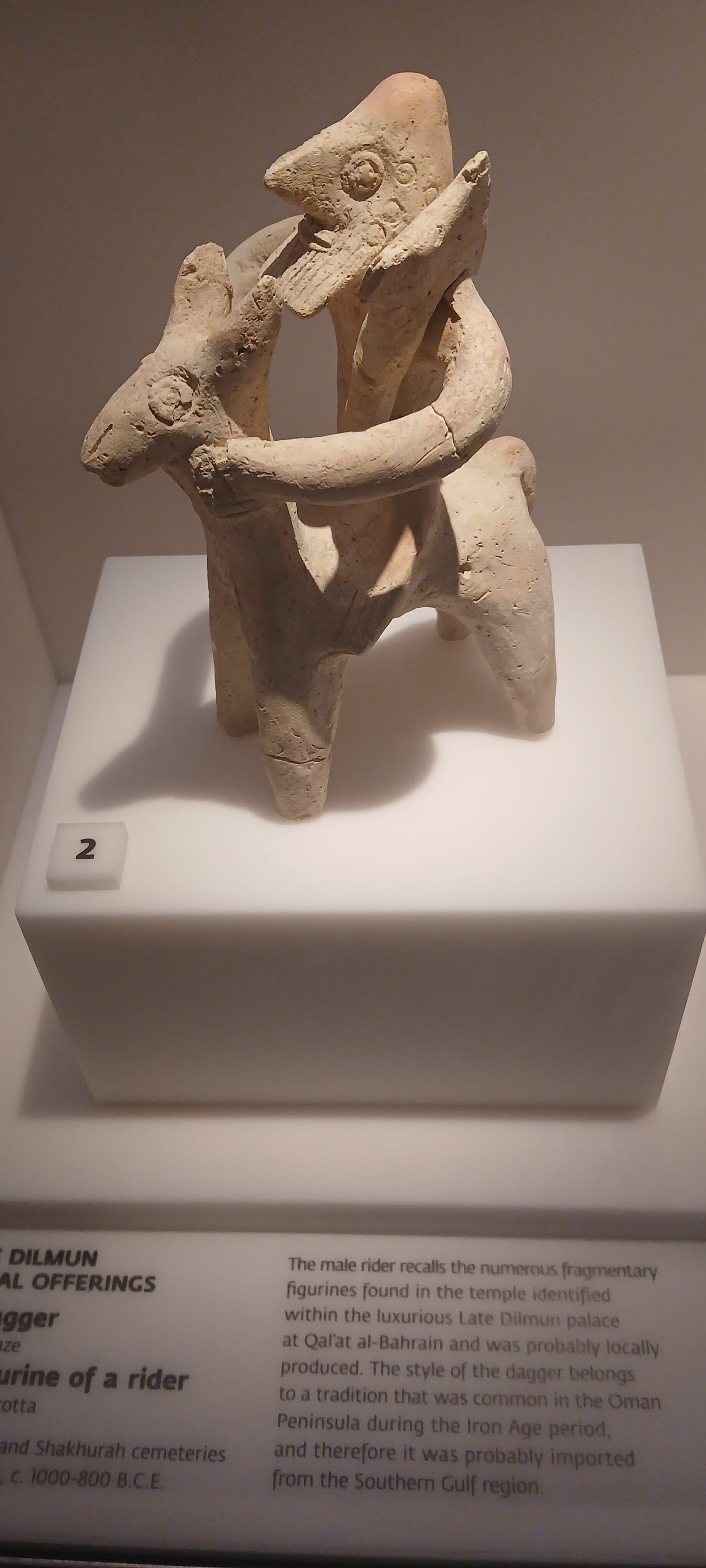
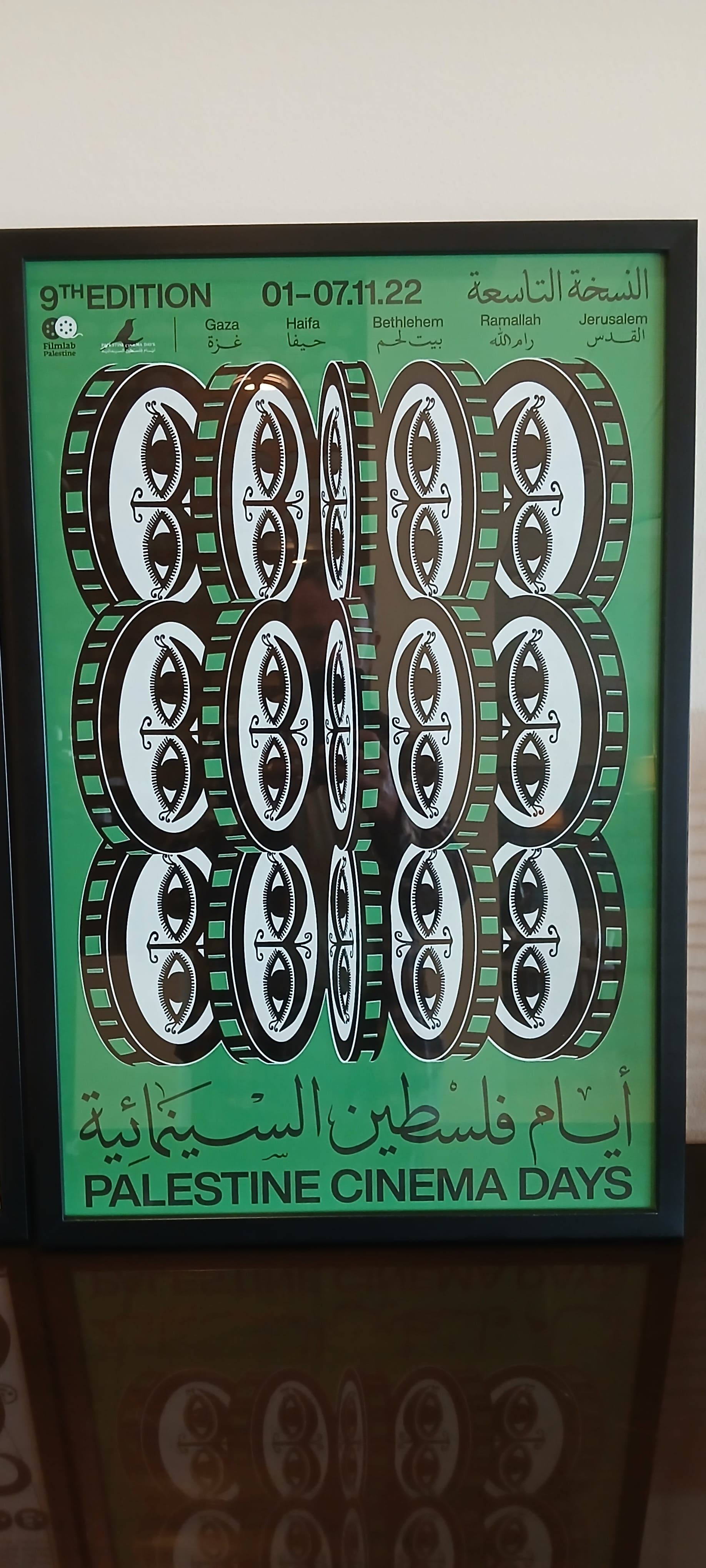
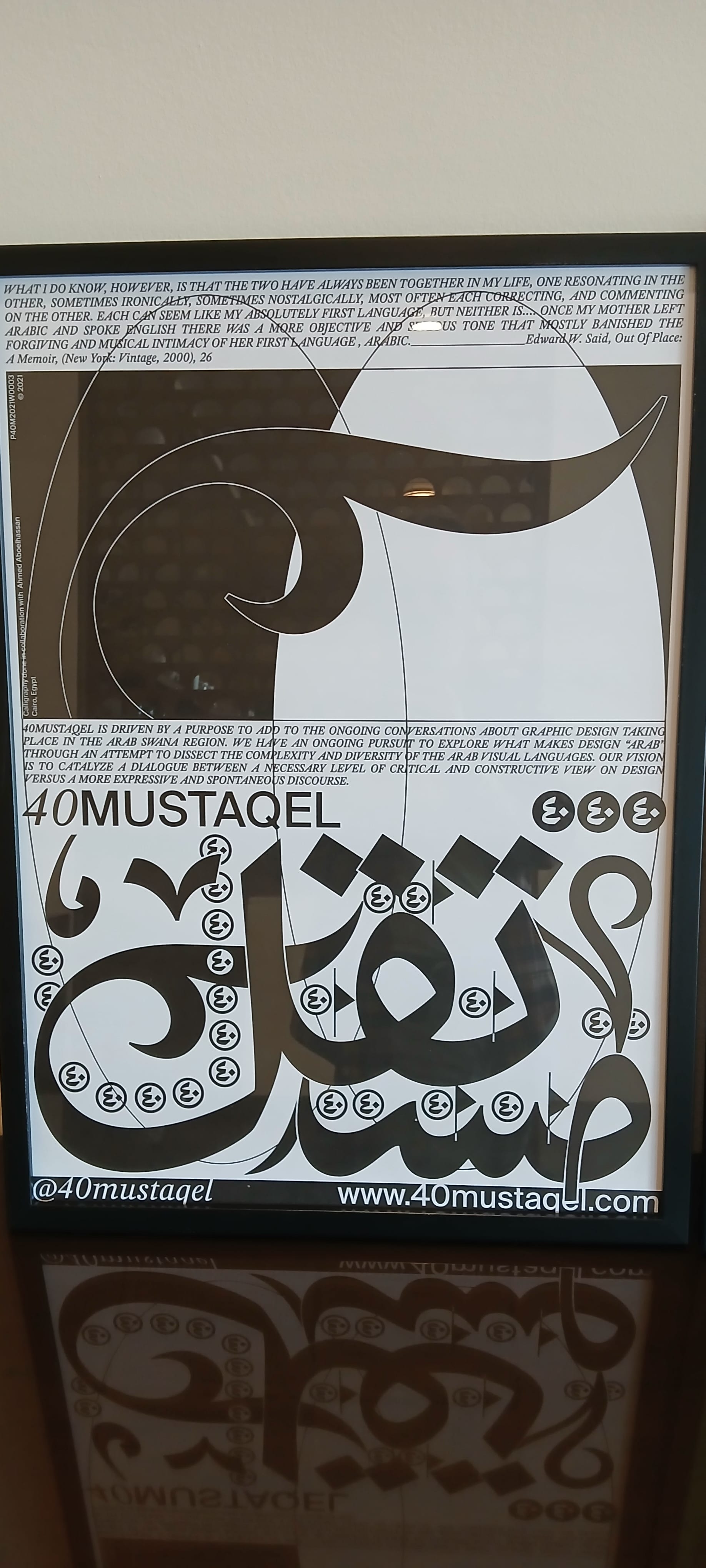
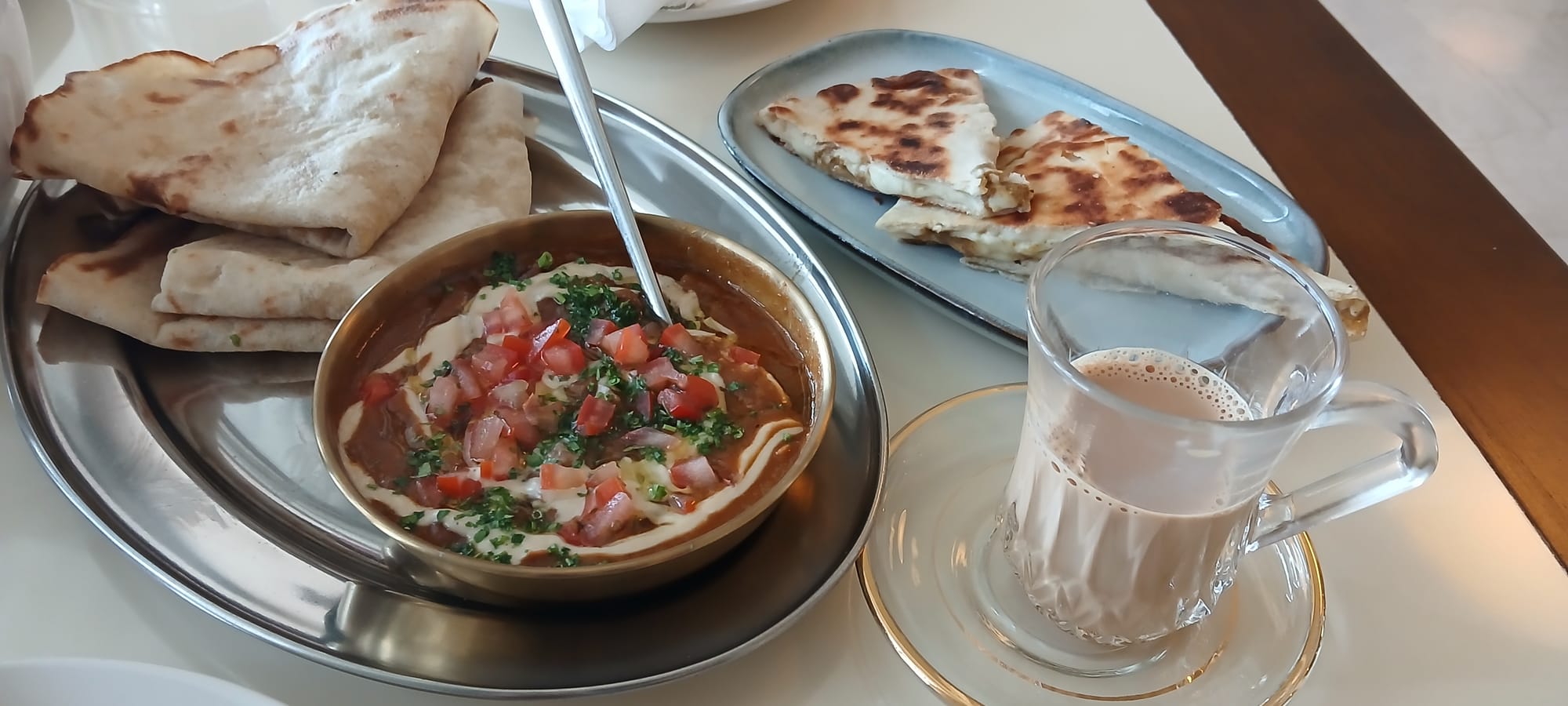
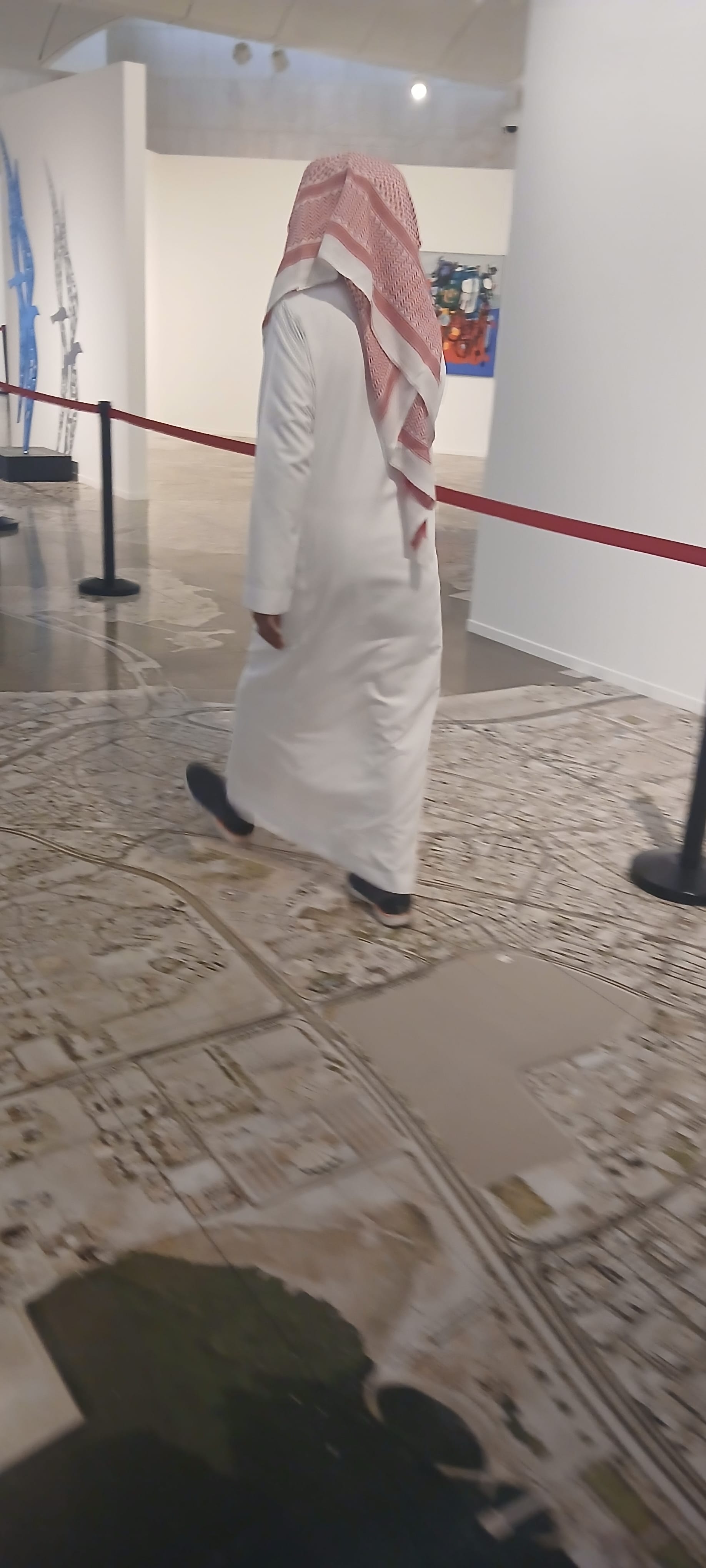
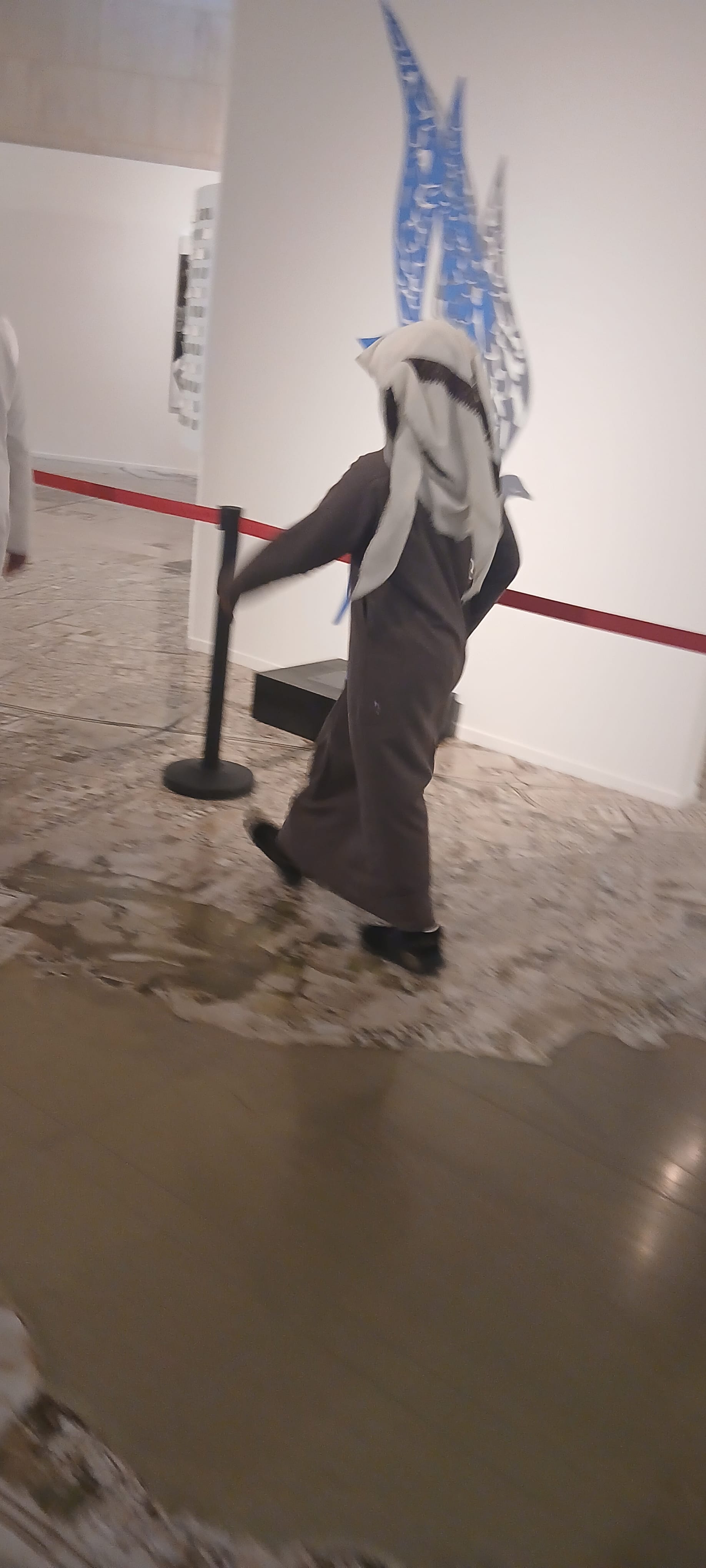
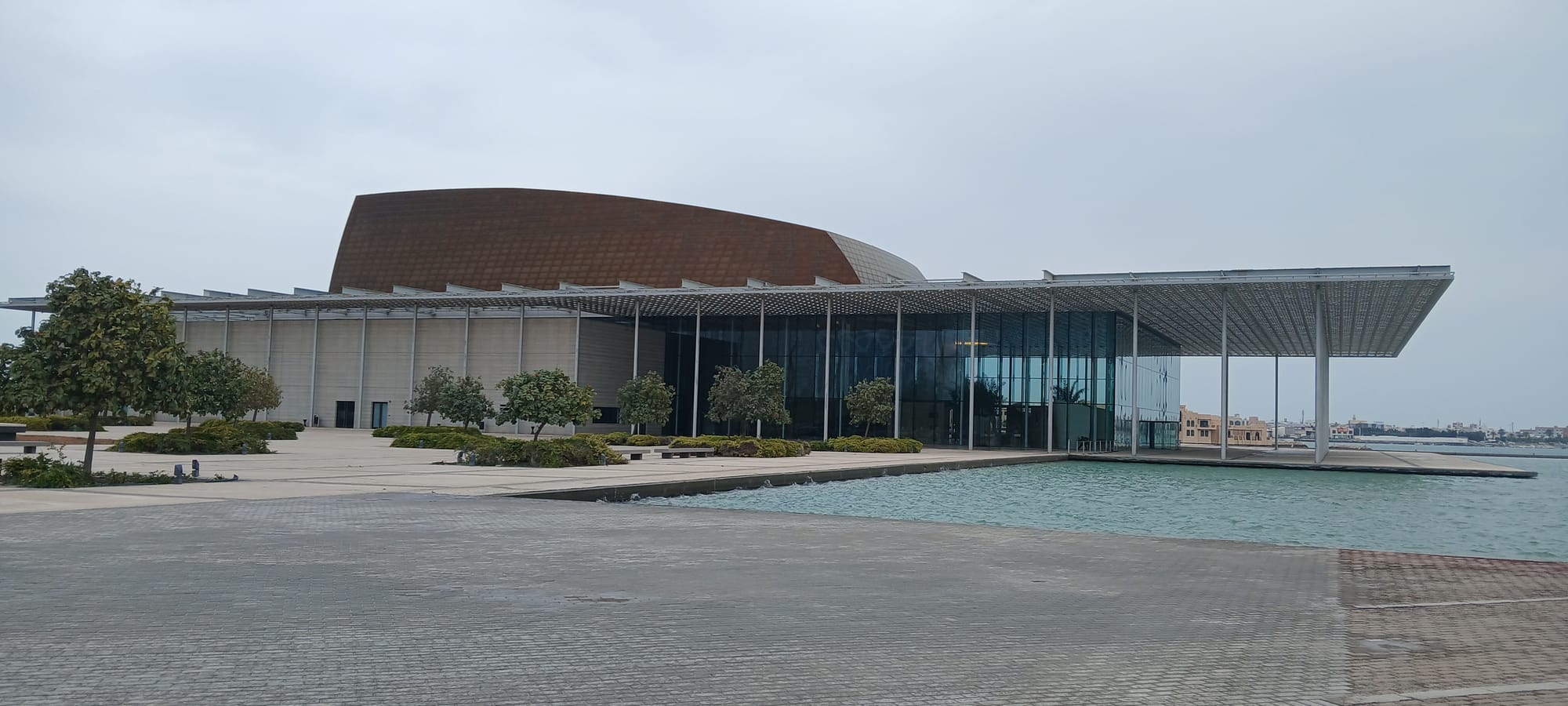
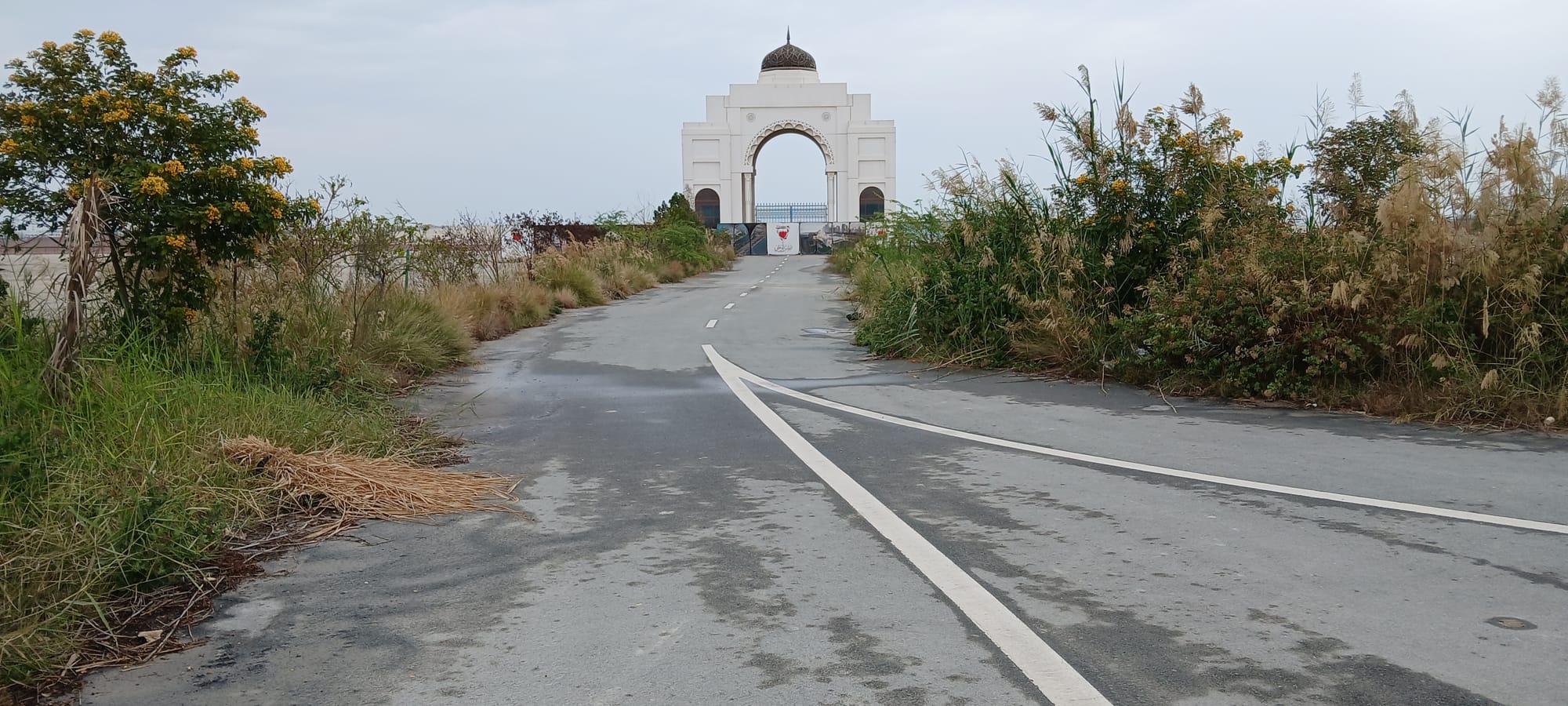
- top left fuul with barley bread, mehraru bread and mozzarella, a pot of karak! at the Museum Café; middle left, the National Theatre, which recalled but was not the theatre that the Sultan of Brunei offered my dad, because that one was in Brunei; and having dropped Jo at the airport, soon I go down to find some food. . .
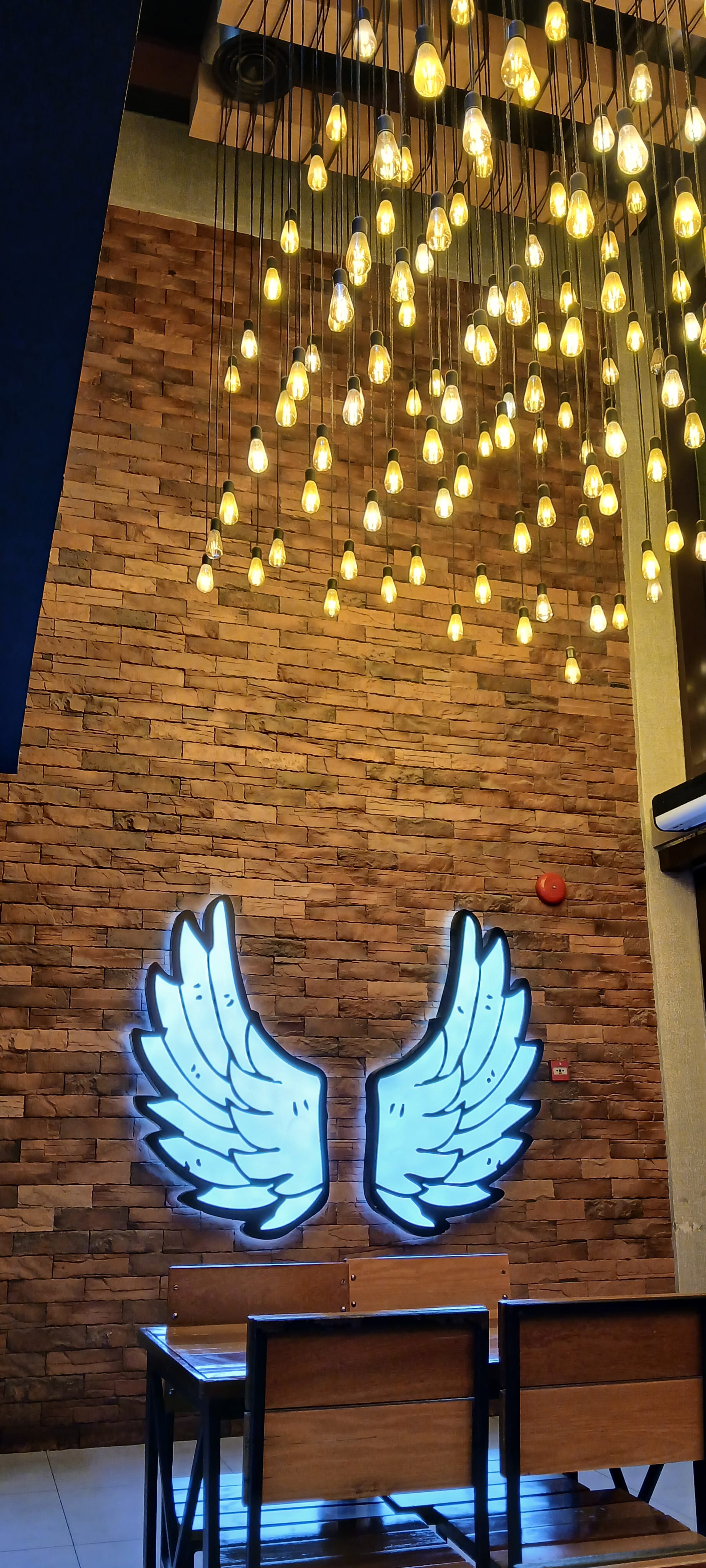
Wingman unboxing video:
Although I did consider other soundtrack options, including Igorrr's "A Very Long Chicken" and "Half a Pony," which afterwards I felt like I'd eaten, because the VO has been nixed my Wingman unboxing video may be viewed in parallel with Igorrr's unparalleled "Chicken Sonata":
a walk out into the night:
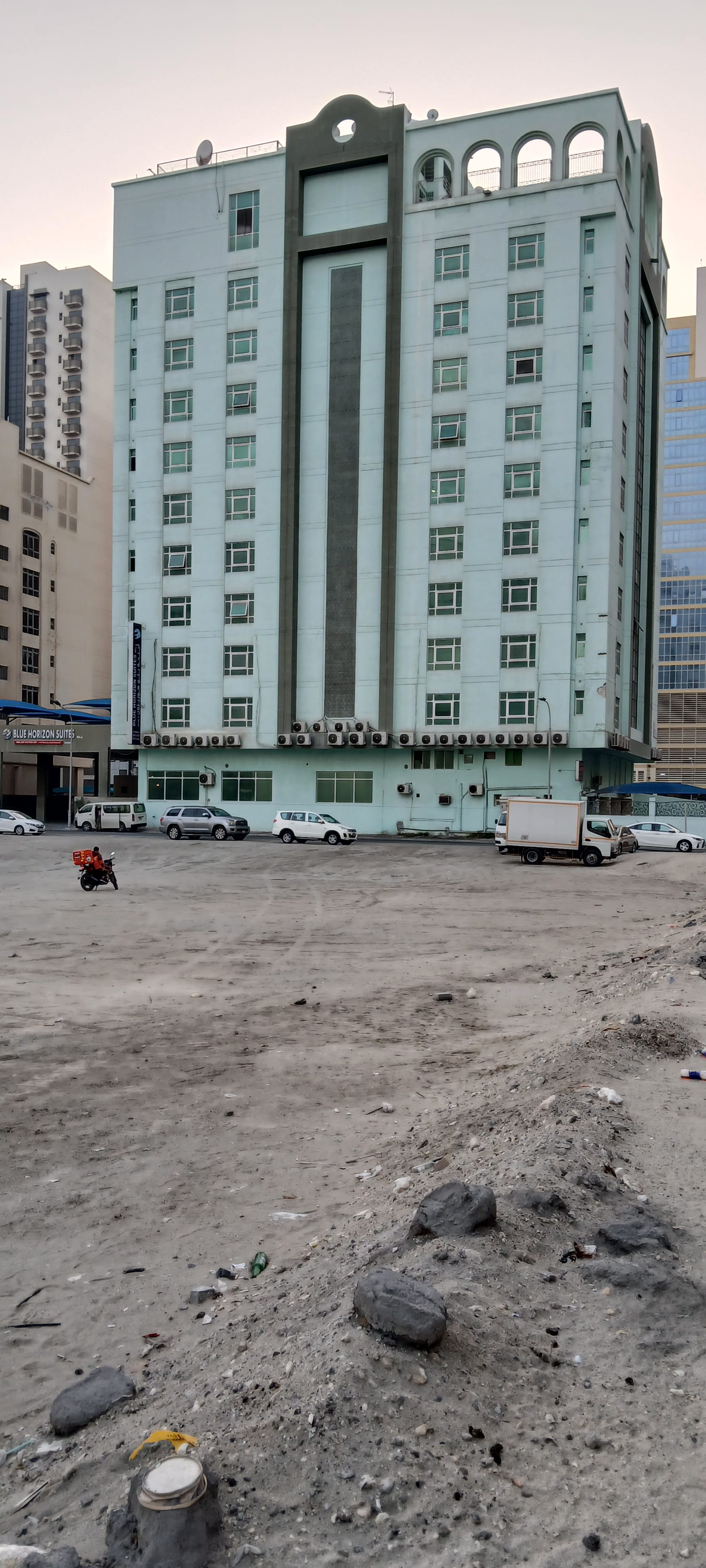
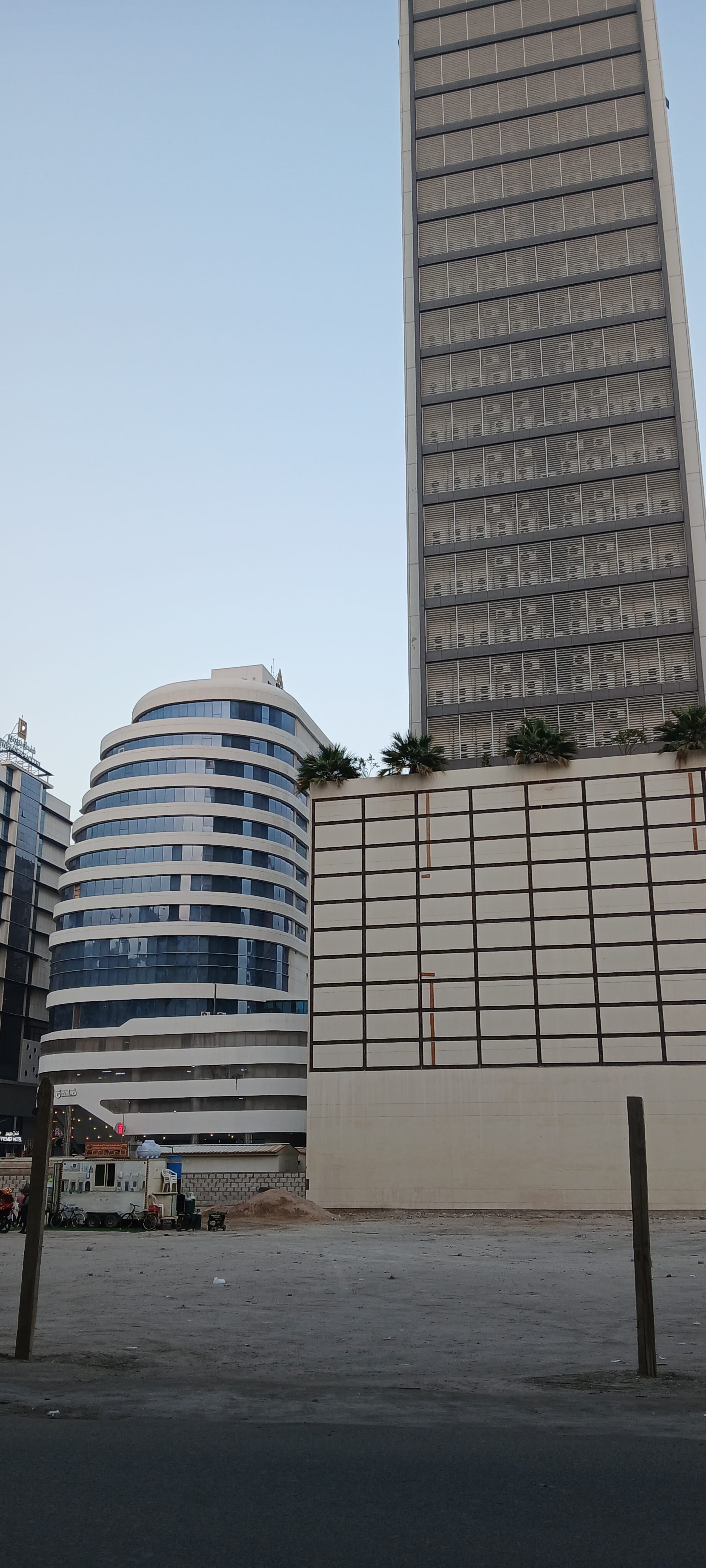
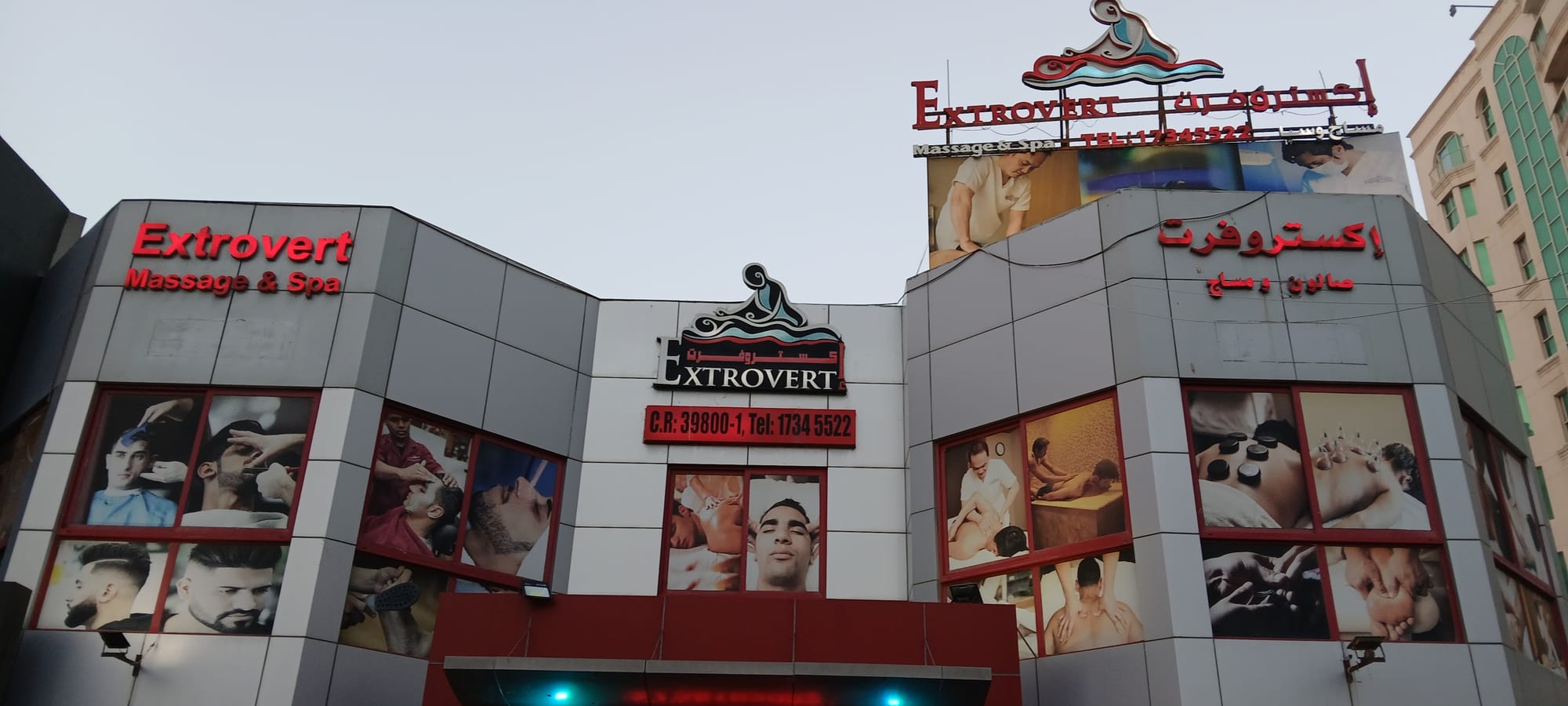
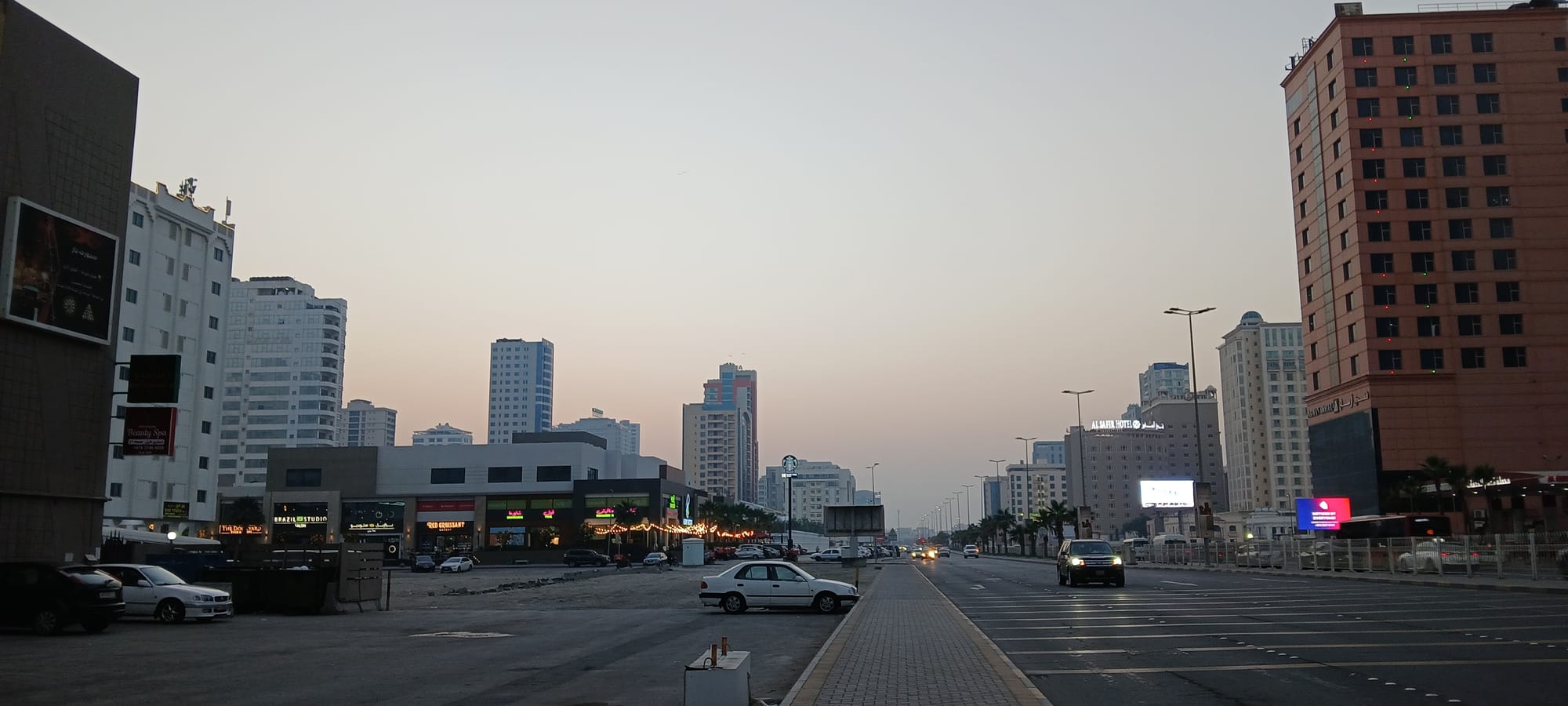
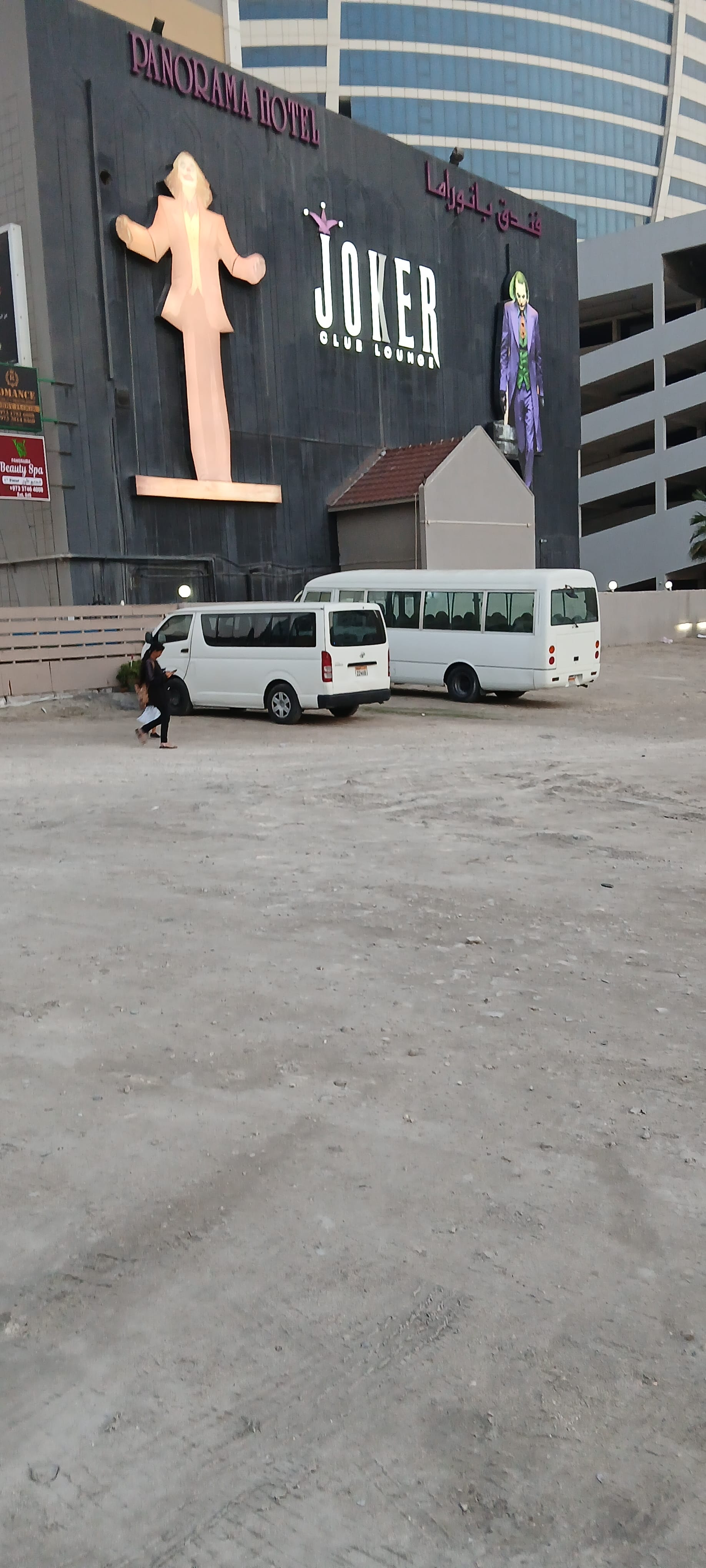
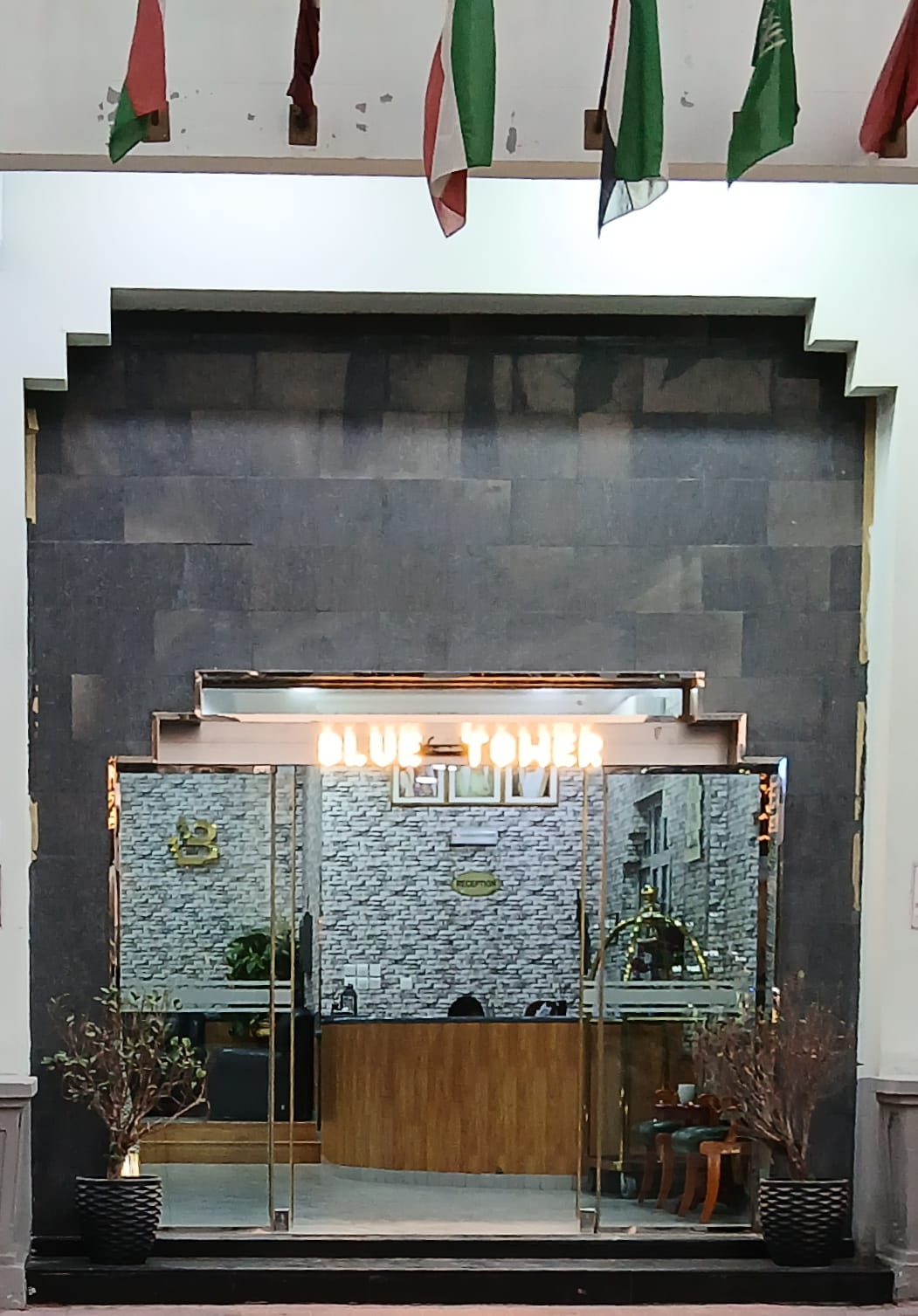
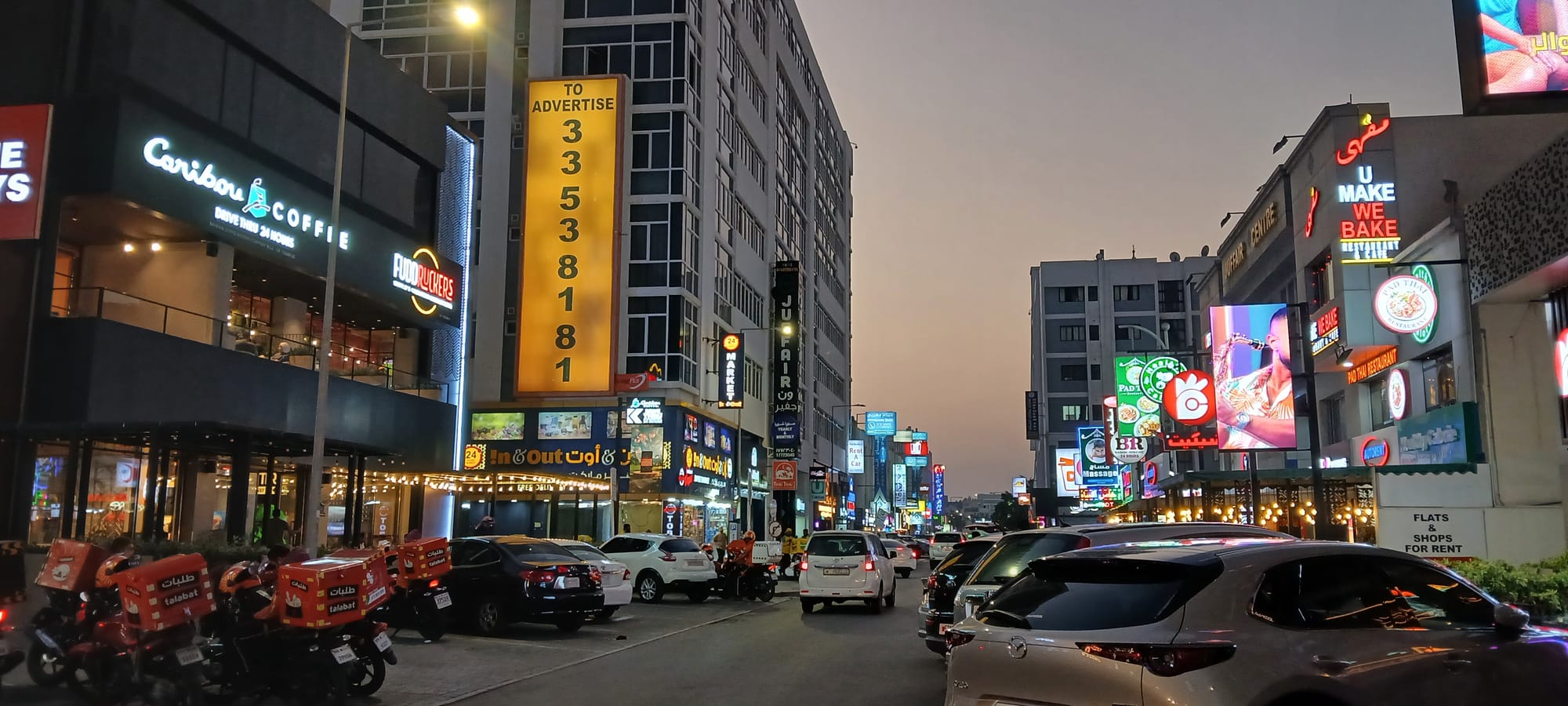
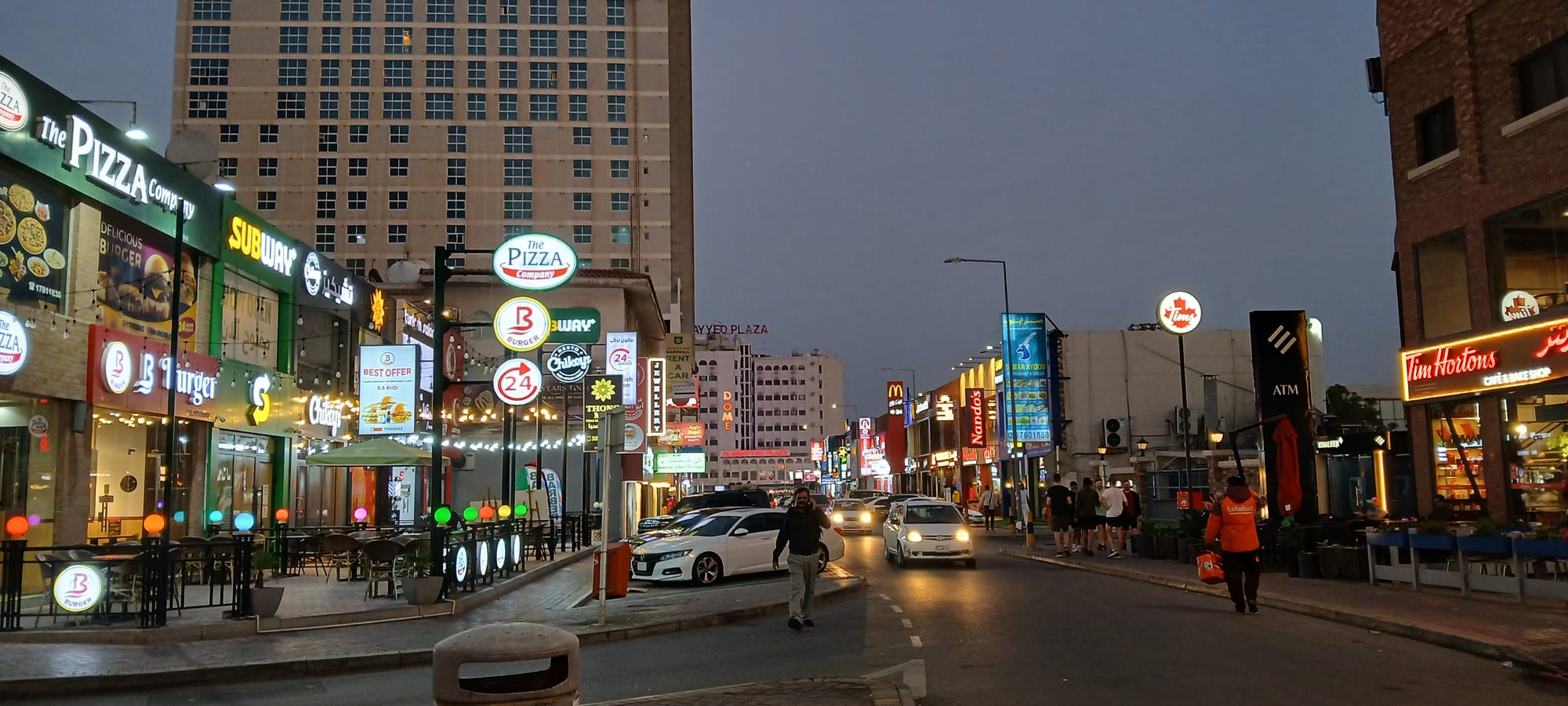
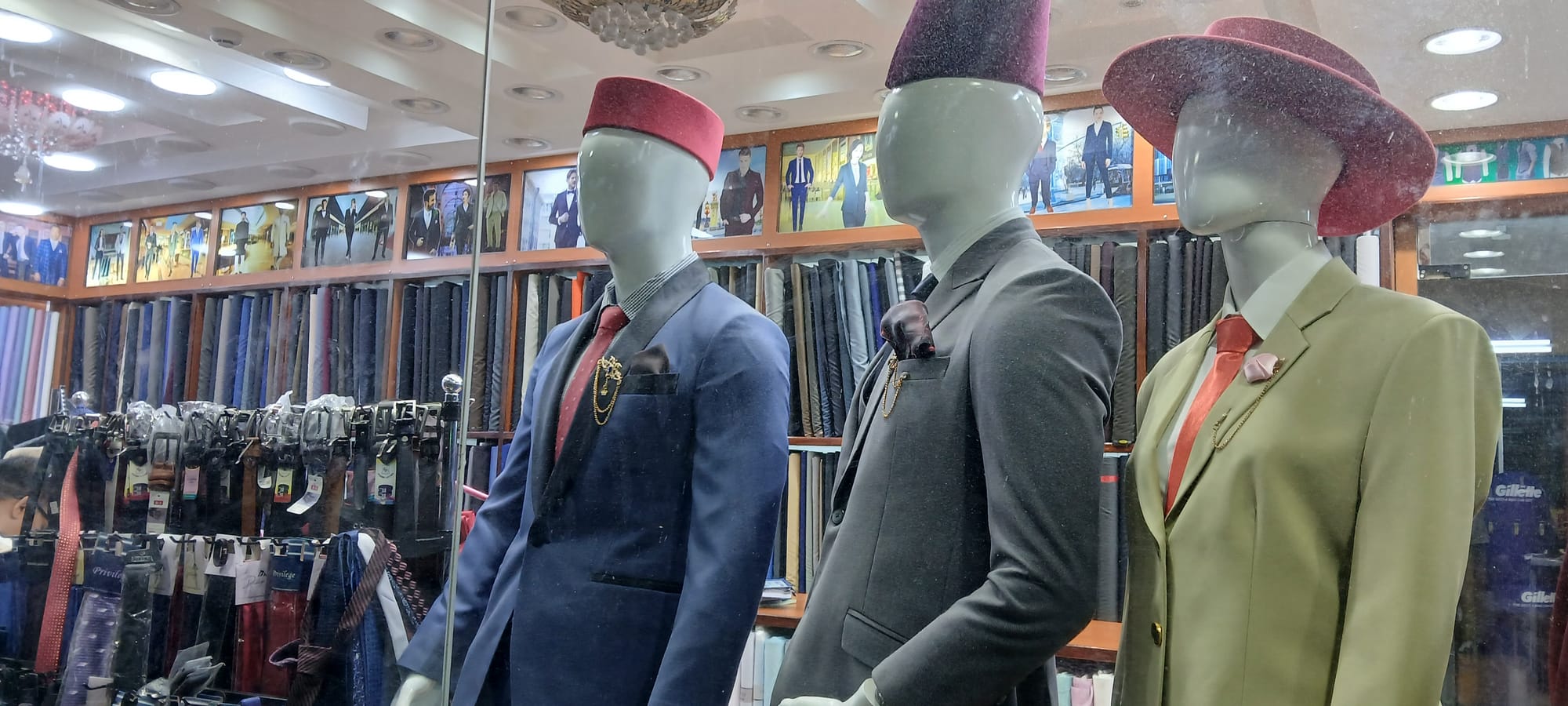
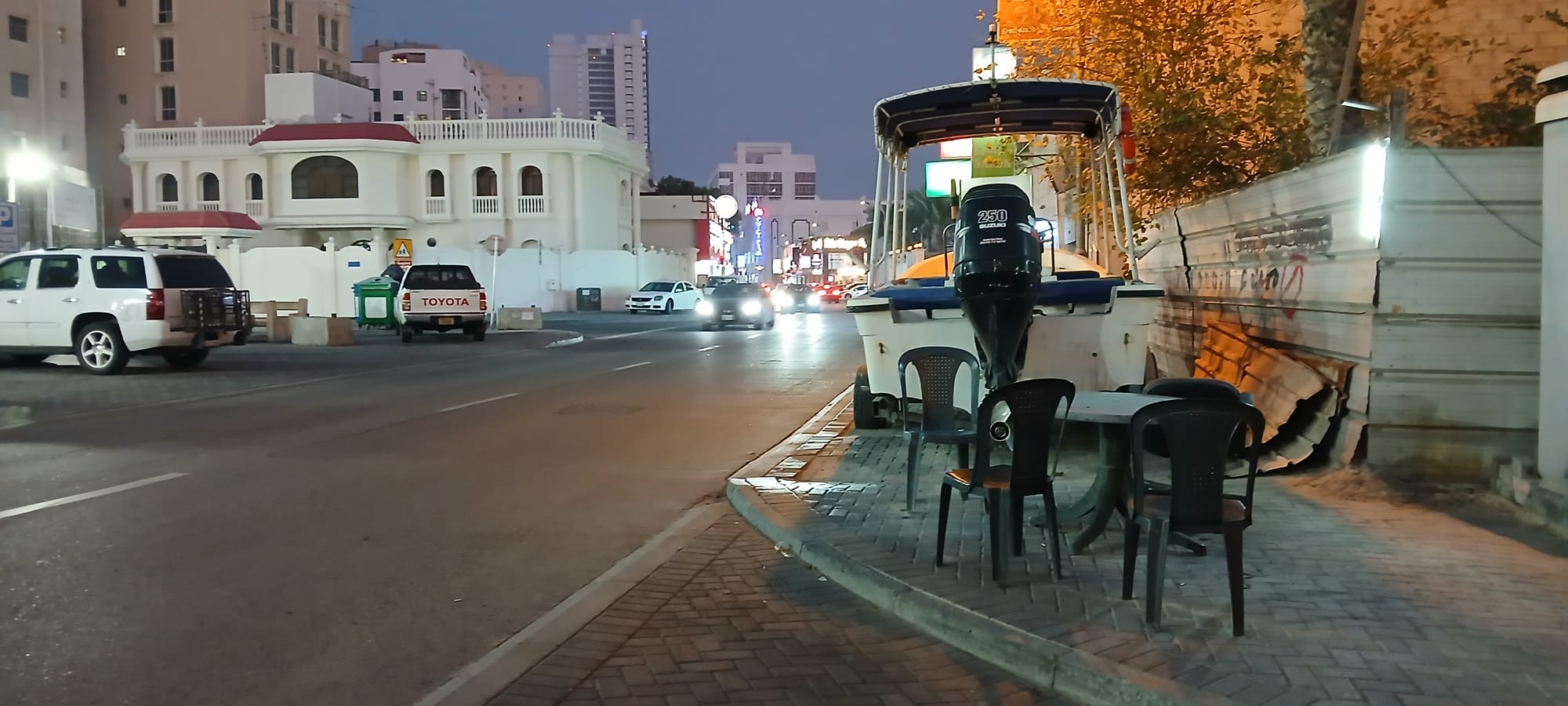
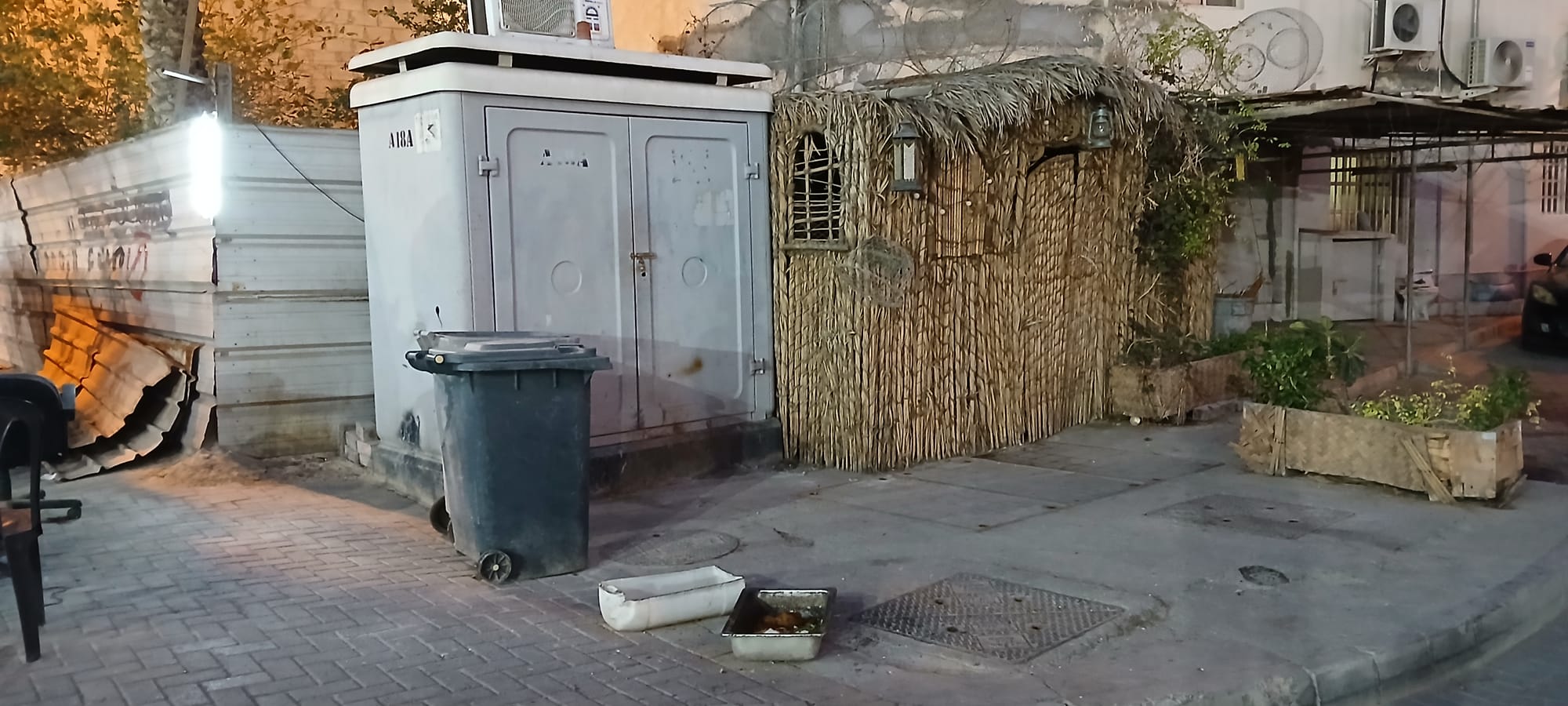
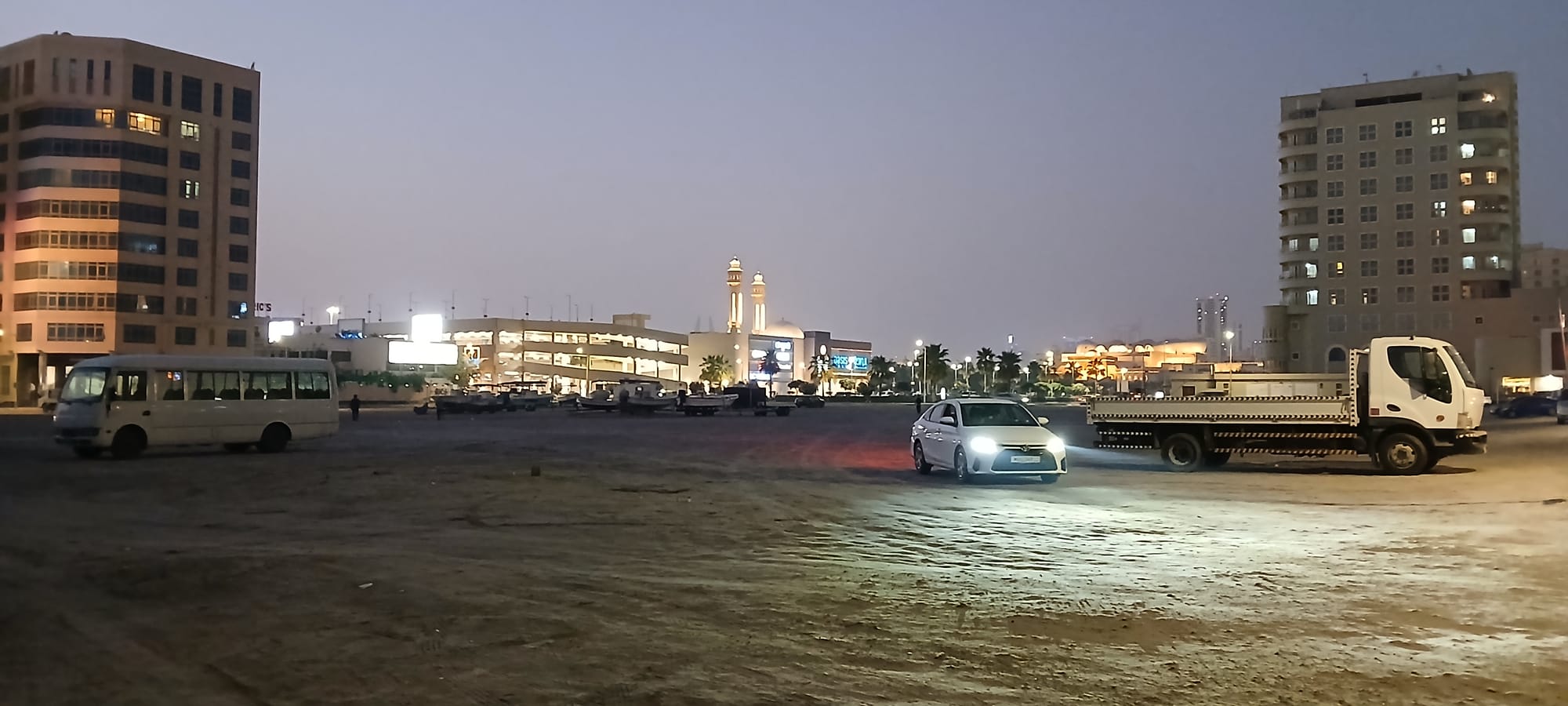
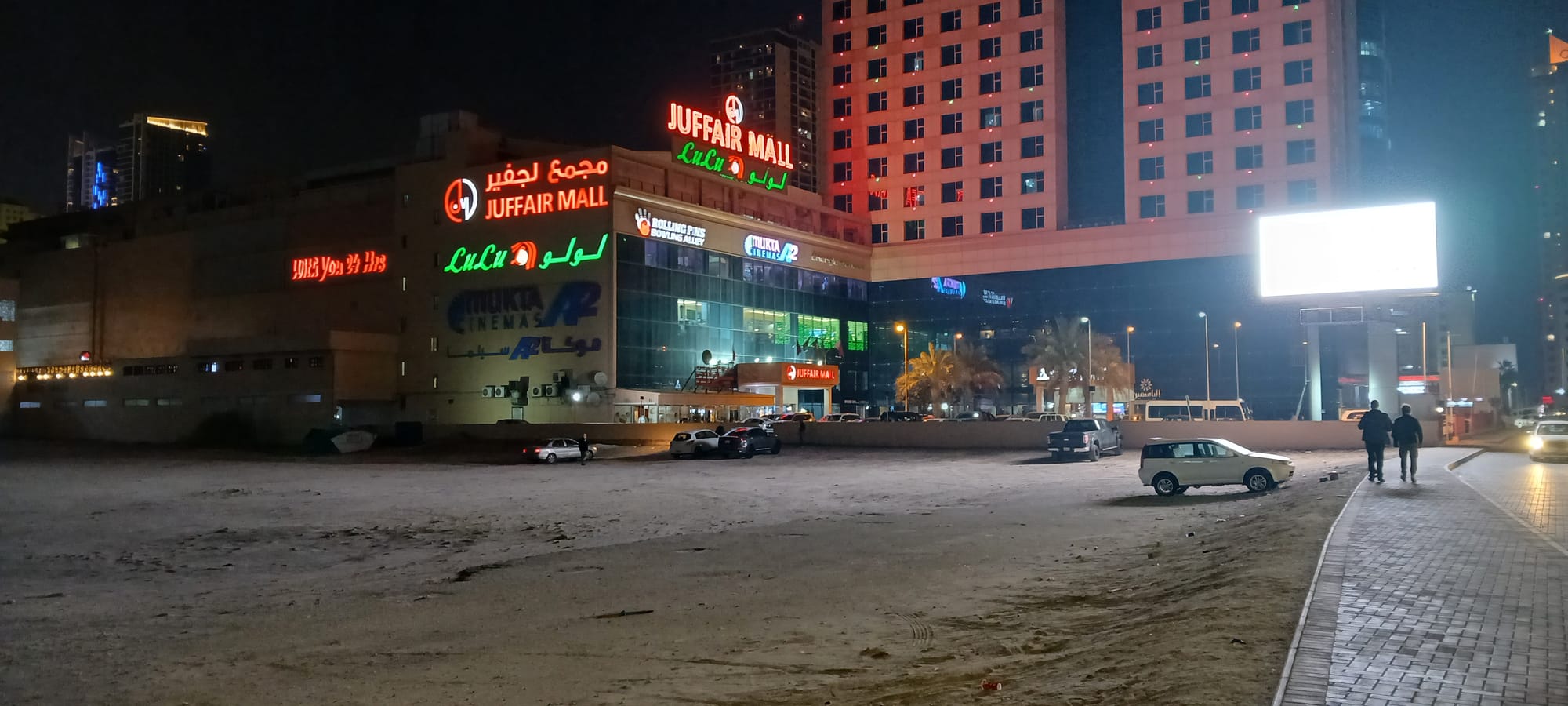
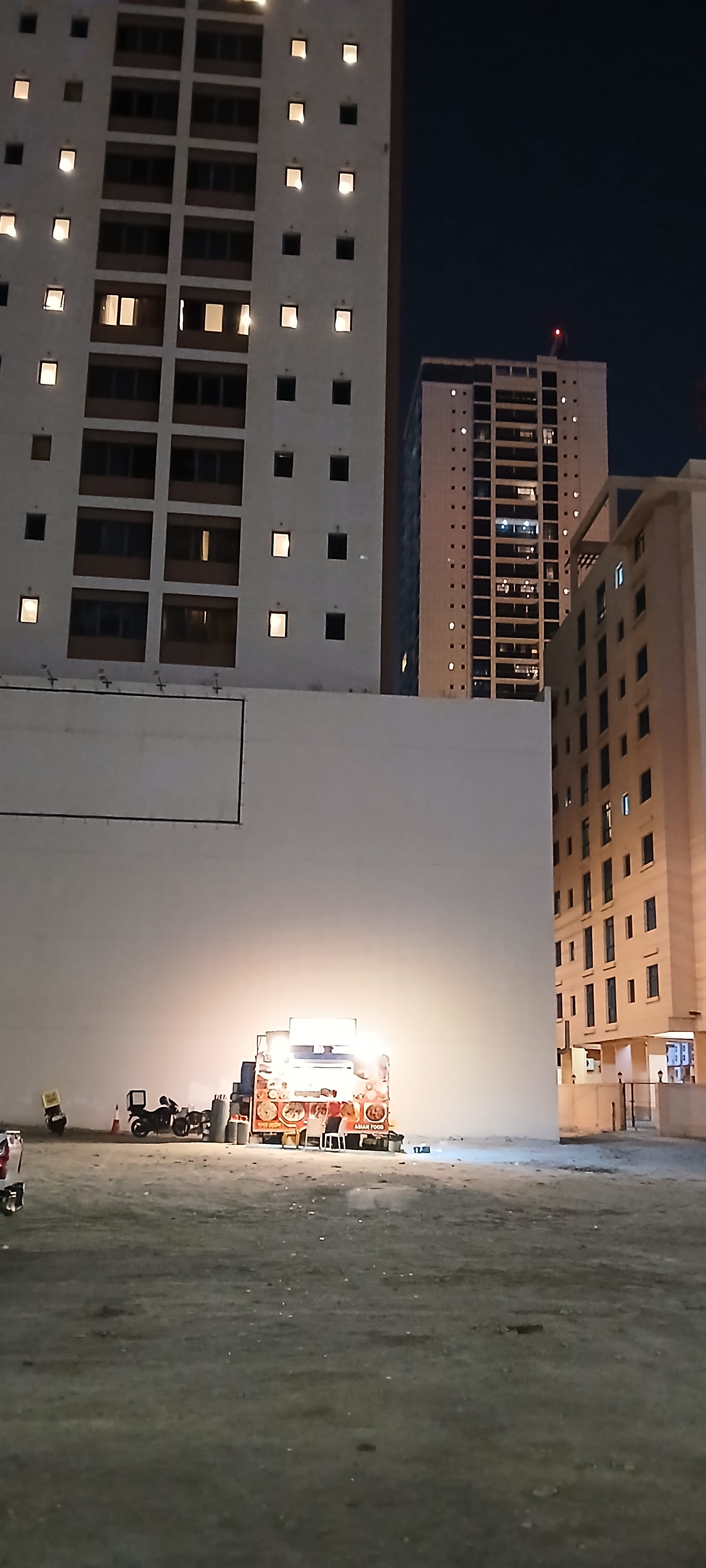
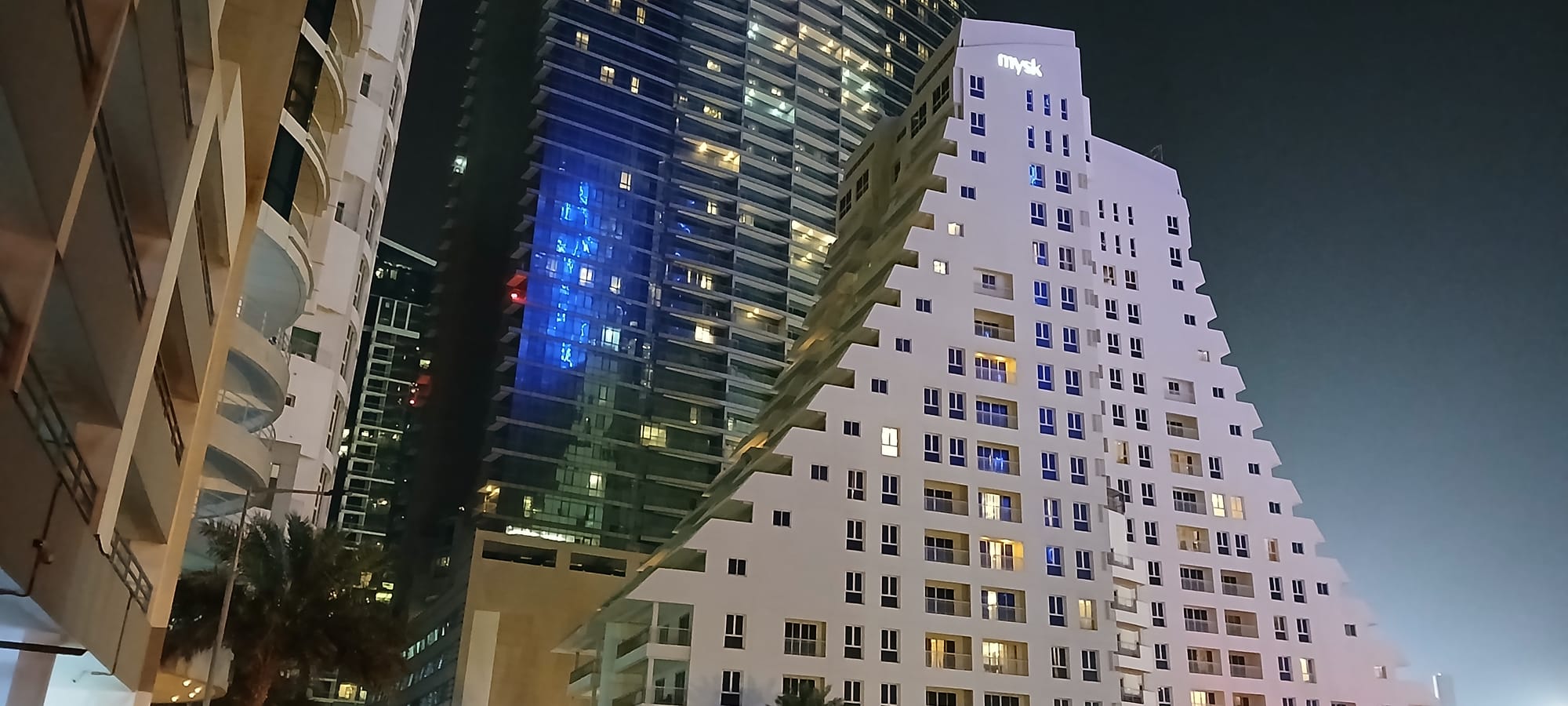
a walk out into the day:
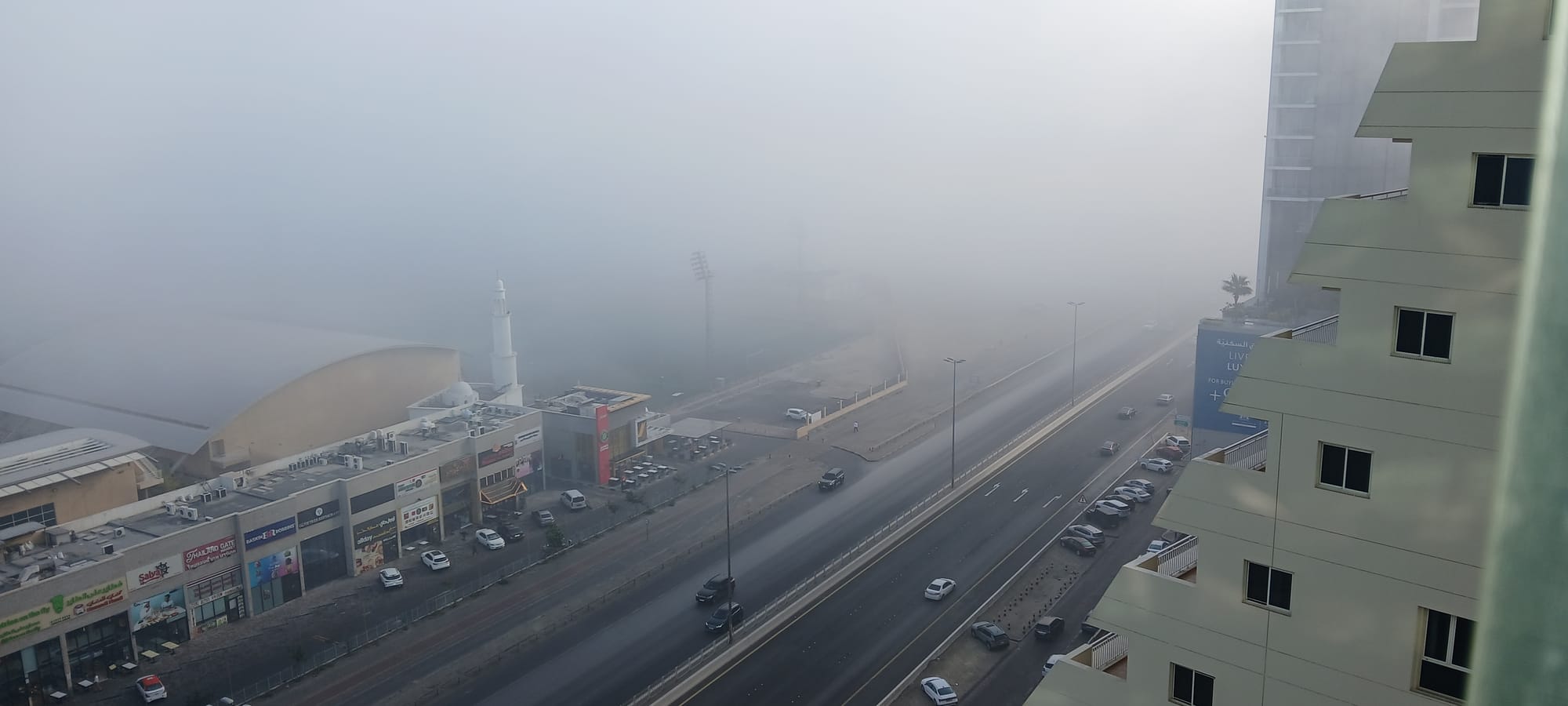
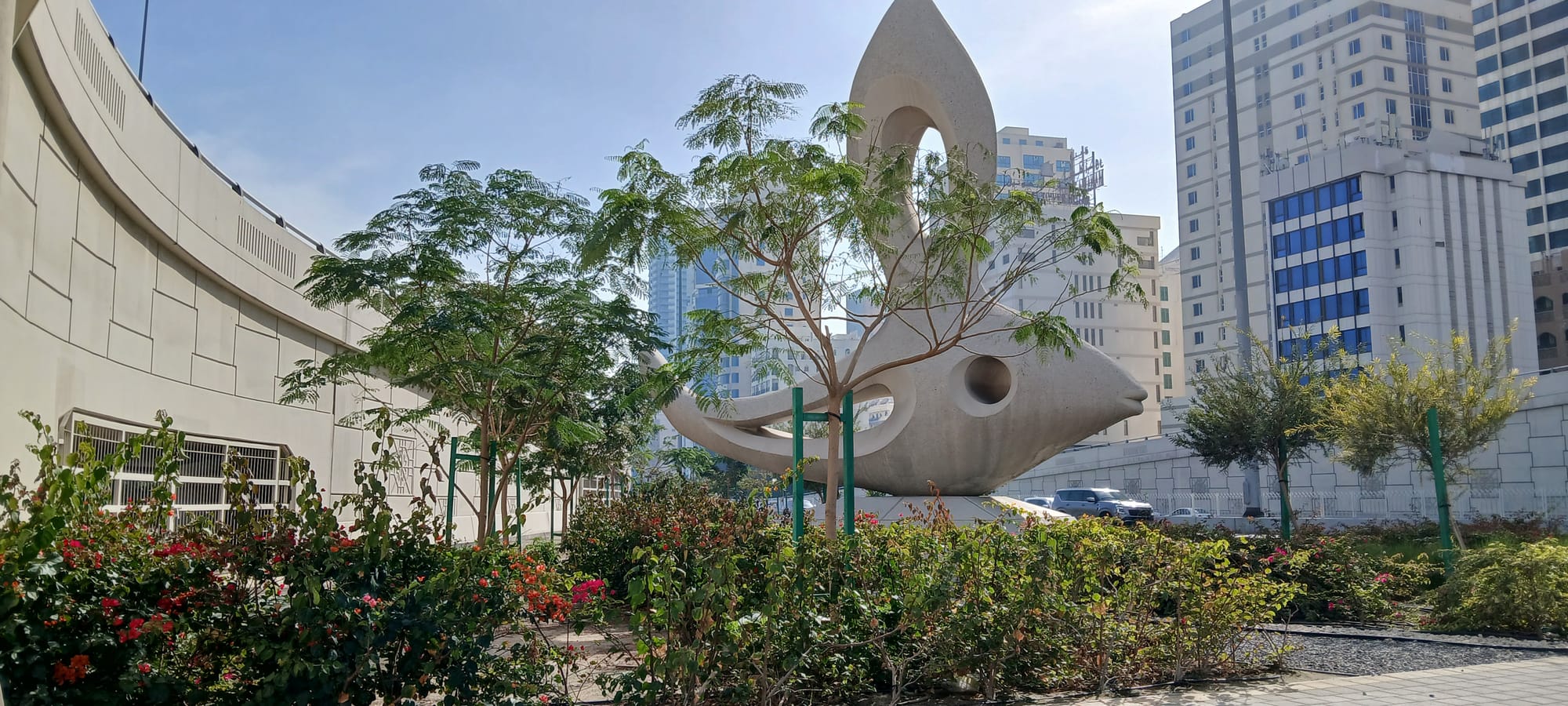
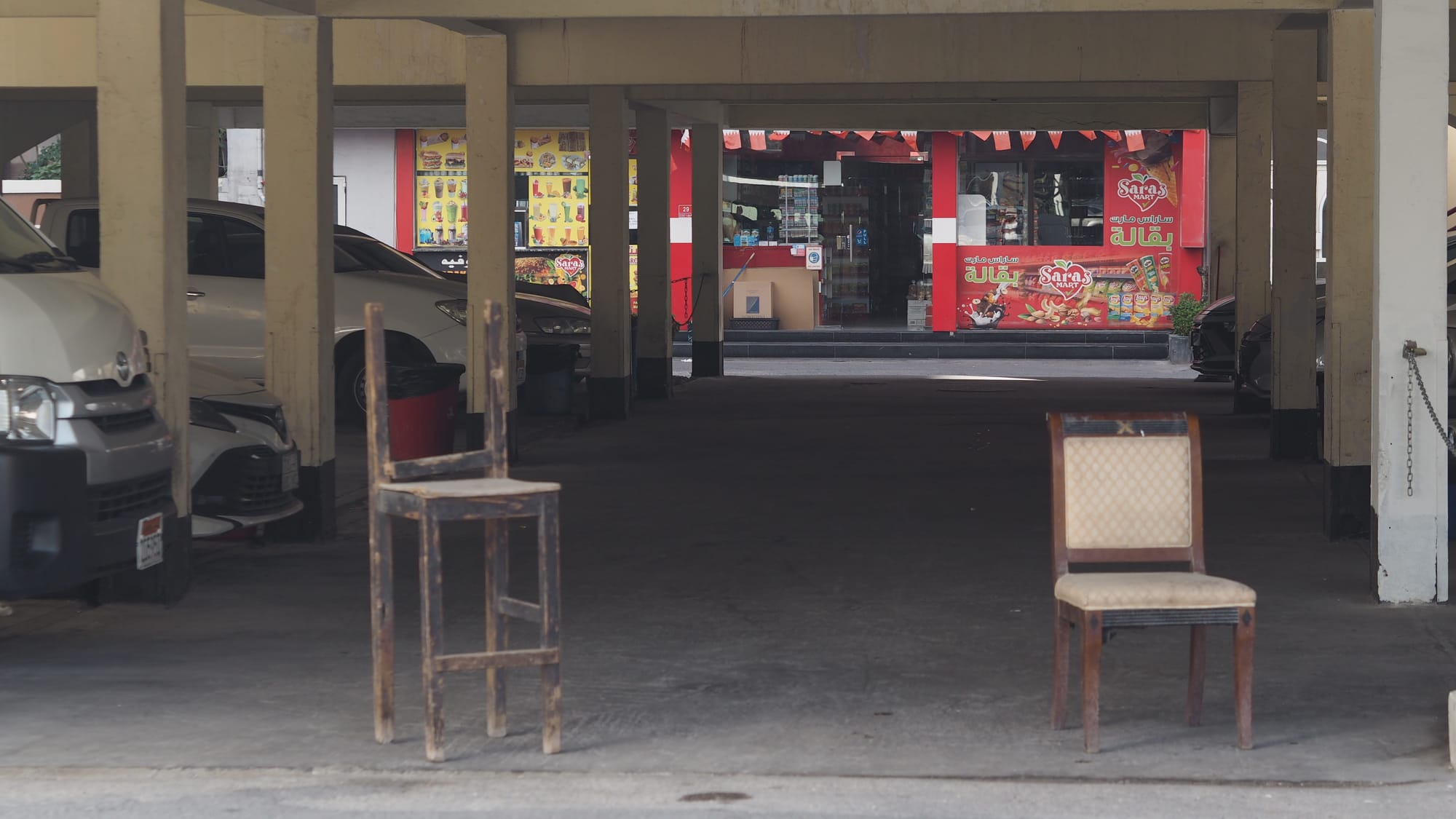
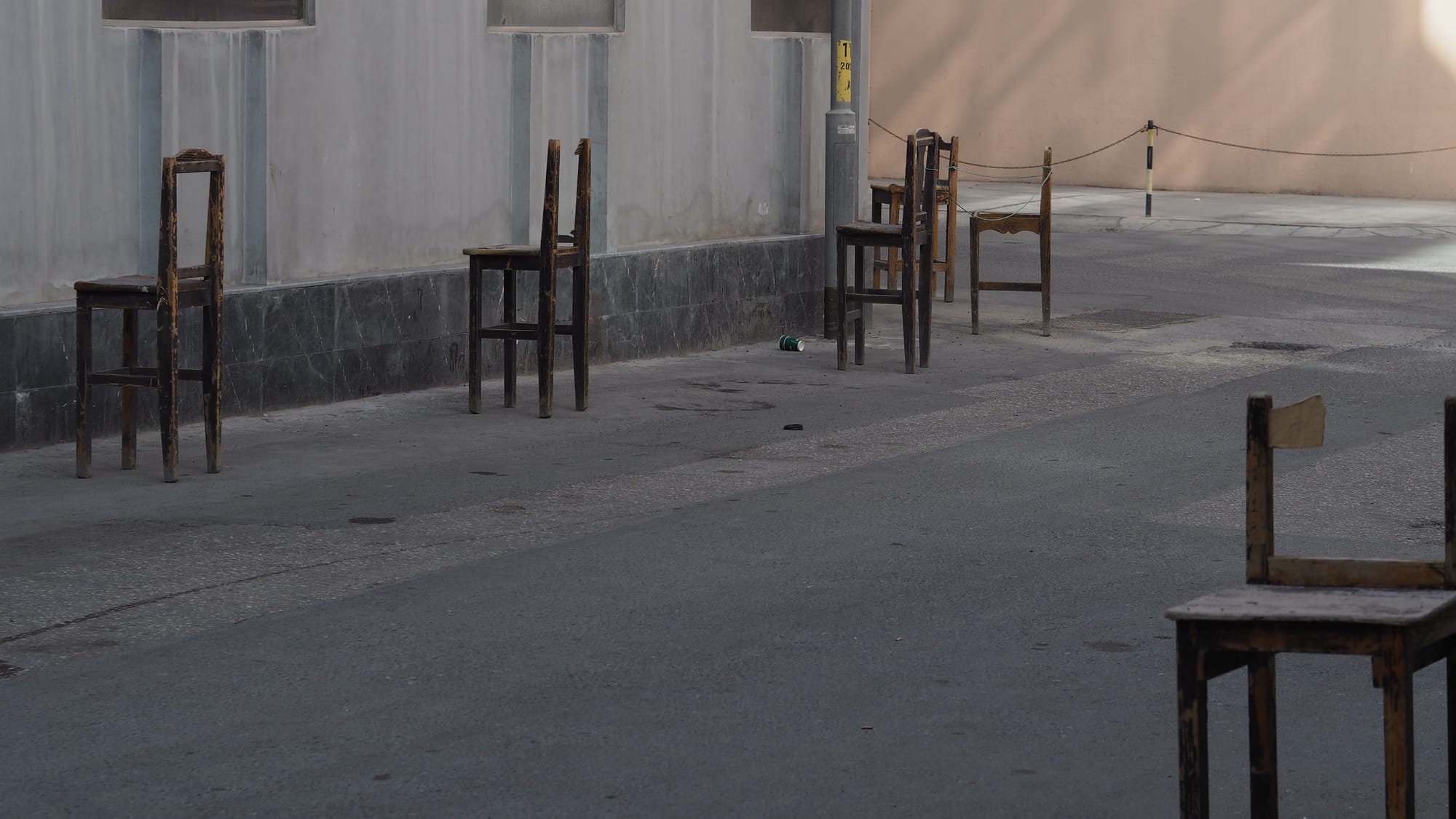
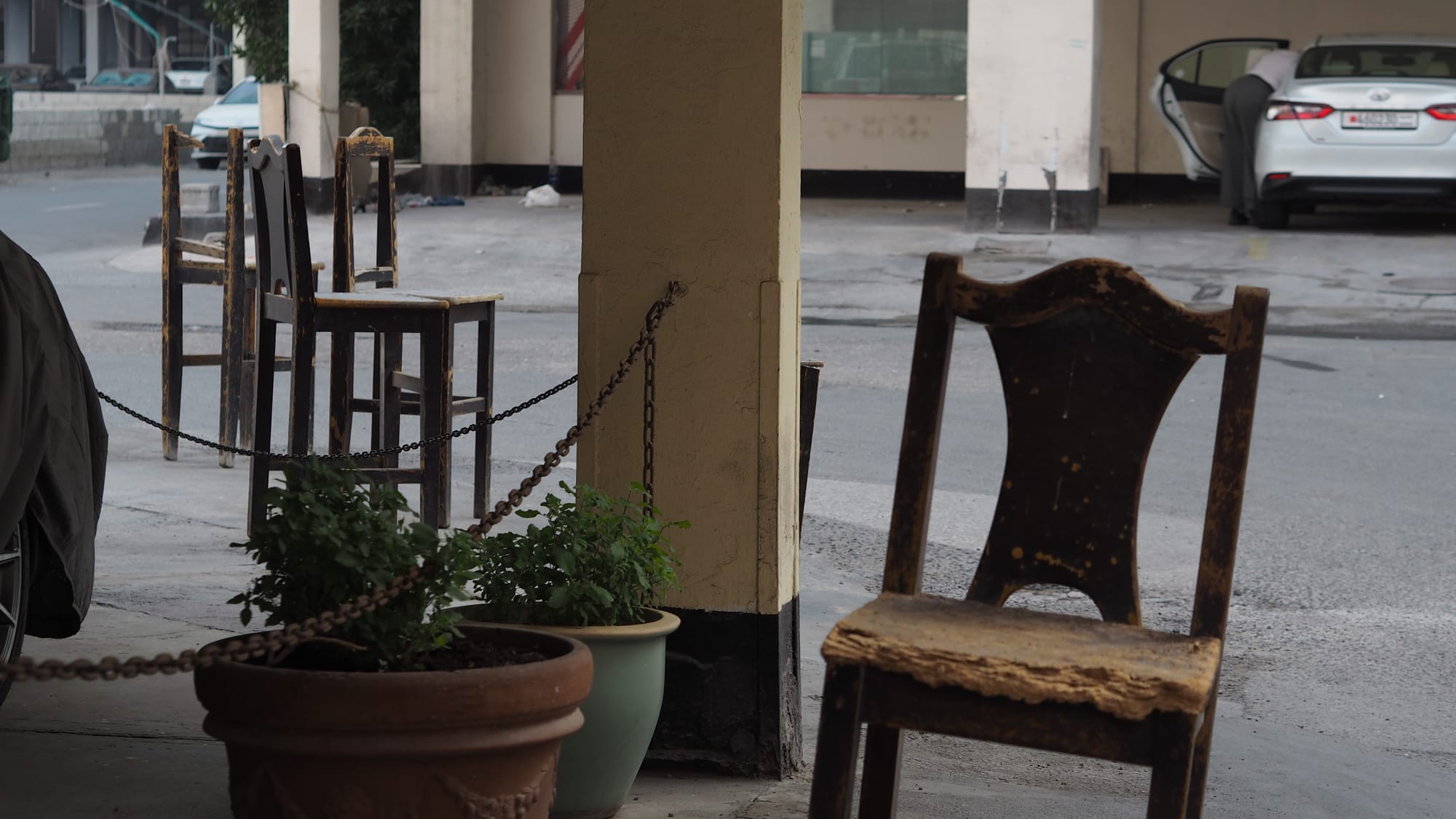
the personable architecture of chairs:
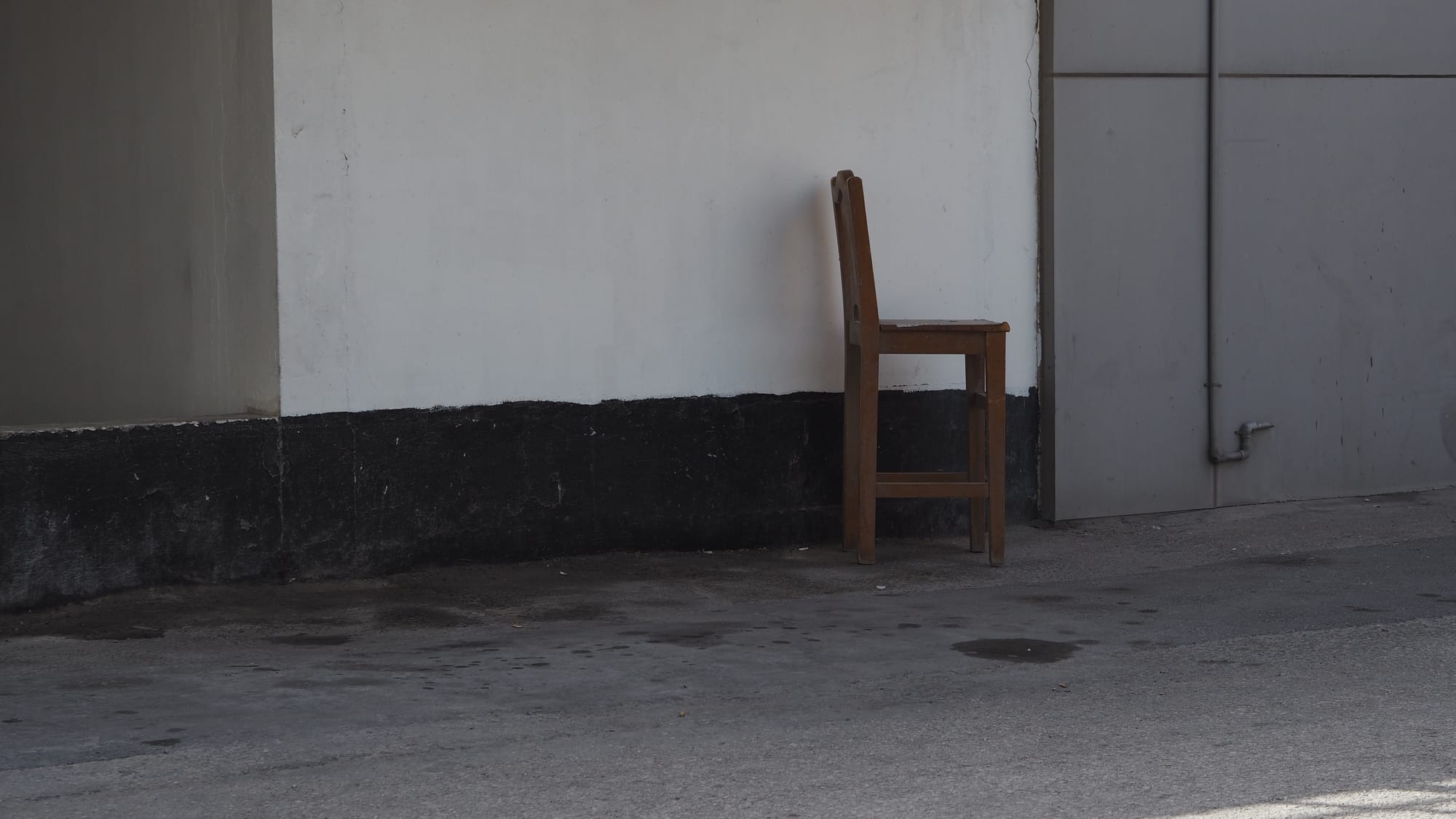
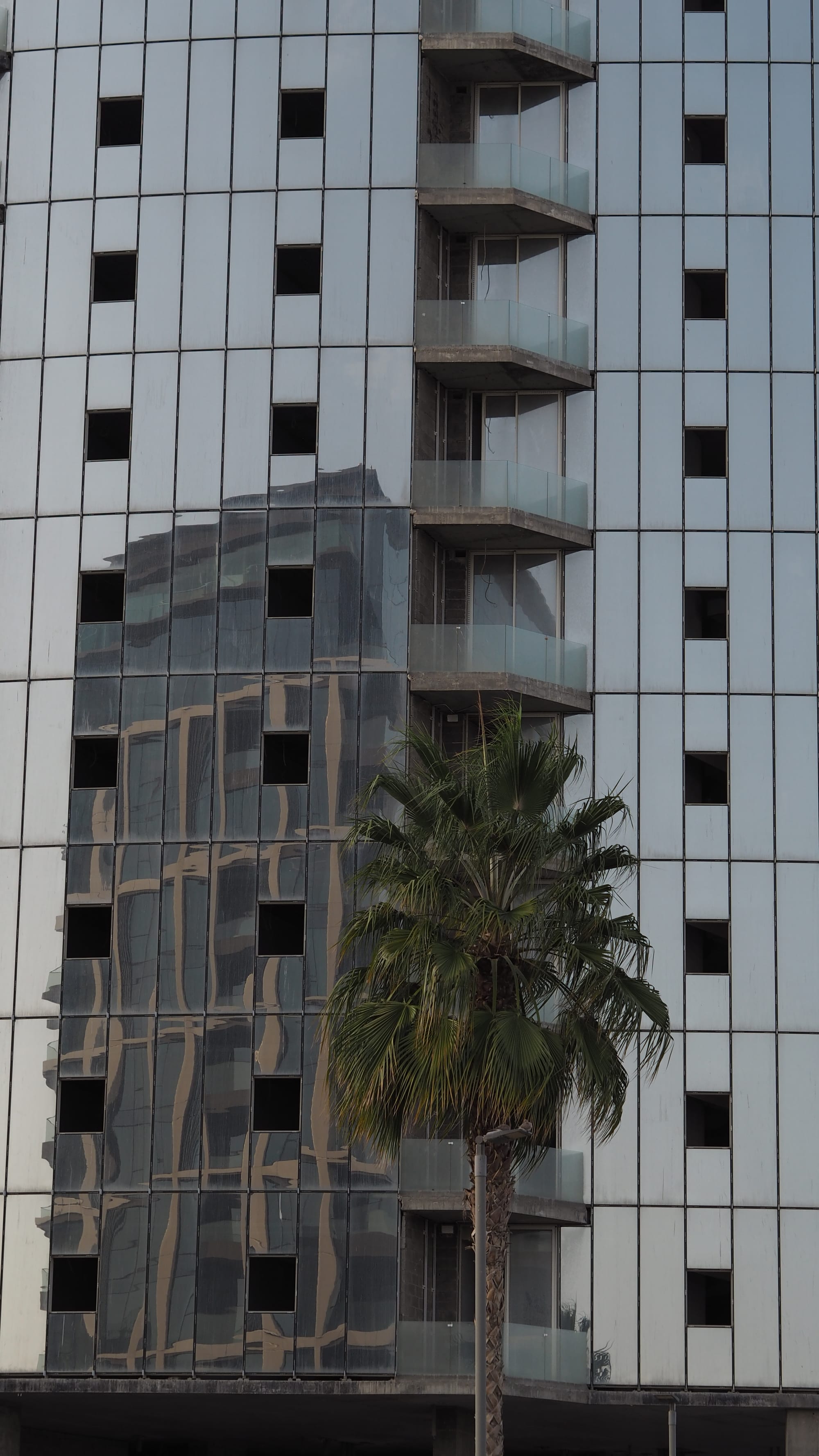
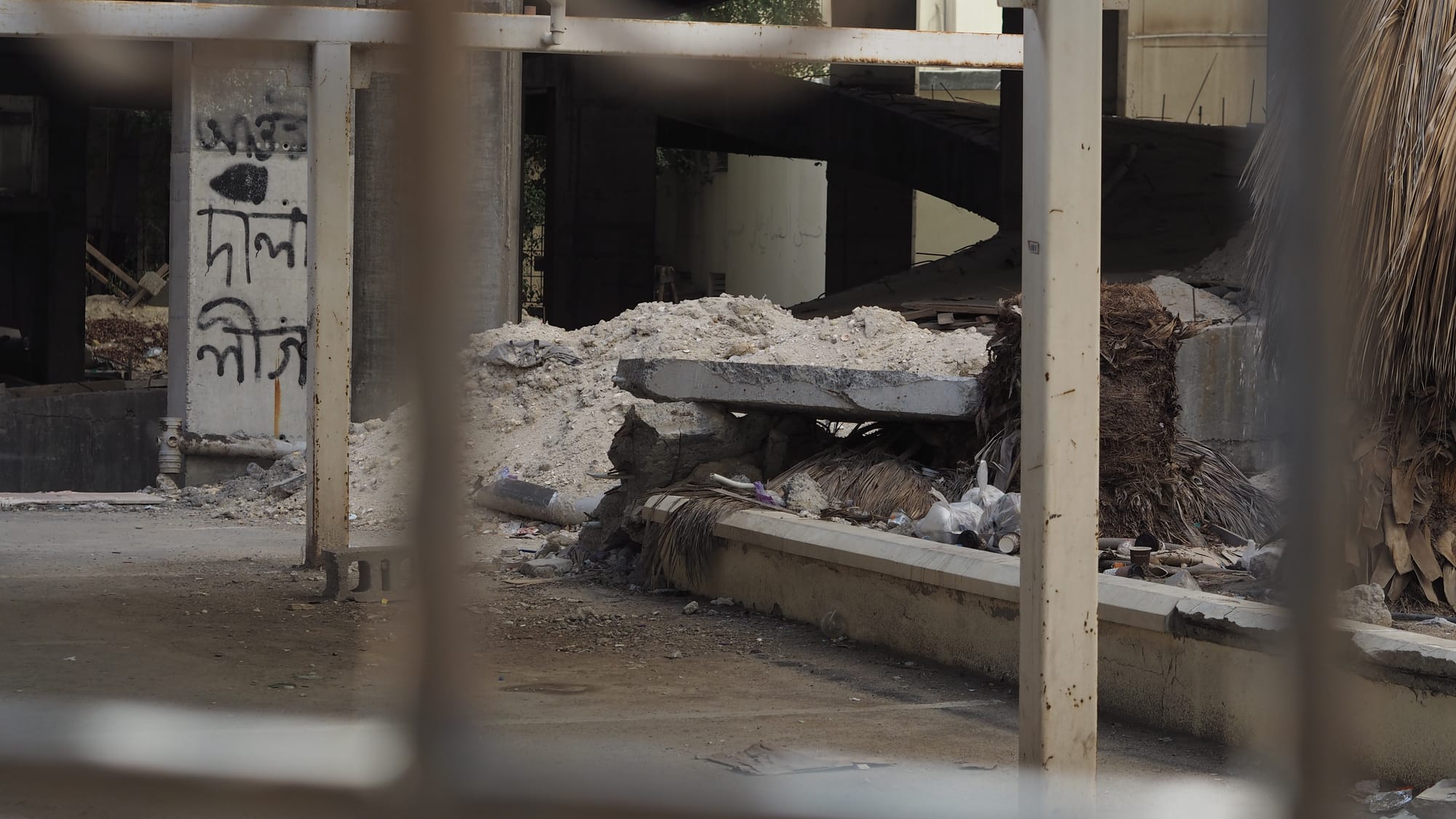
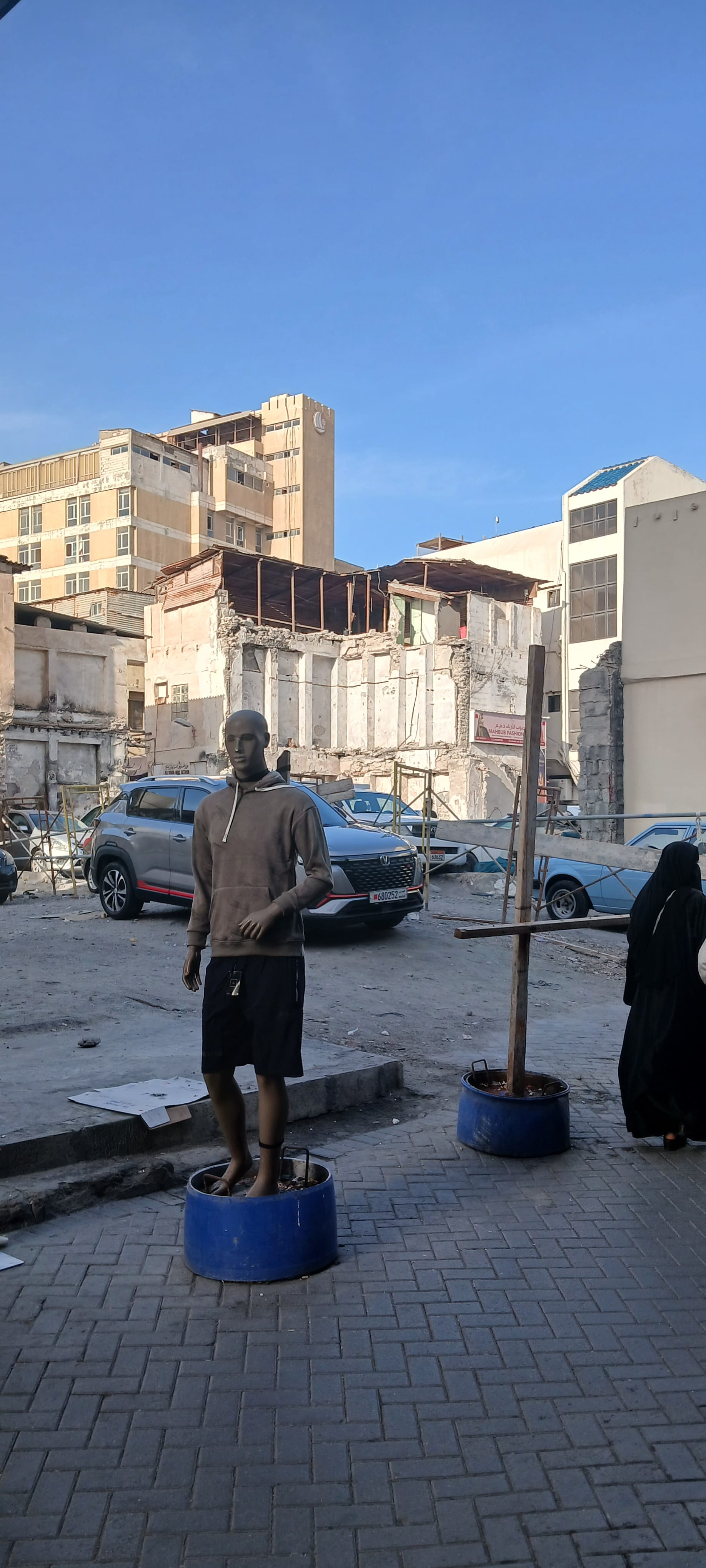
the ruin that was to follow, and, moving right along:
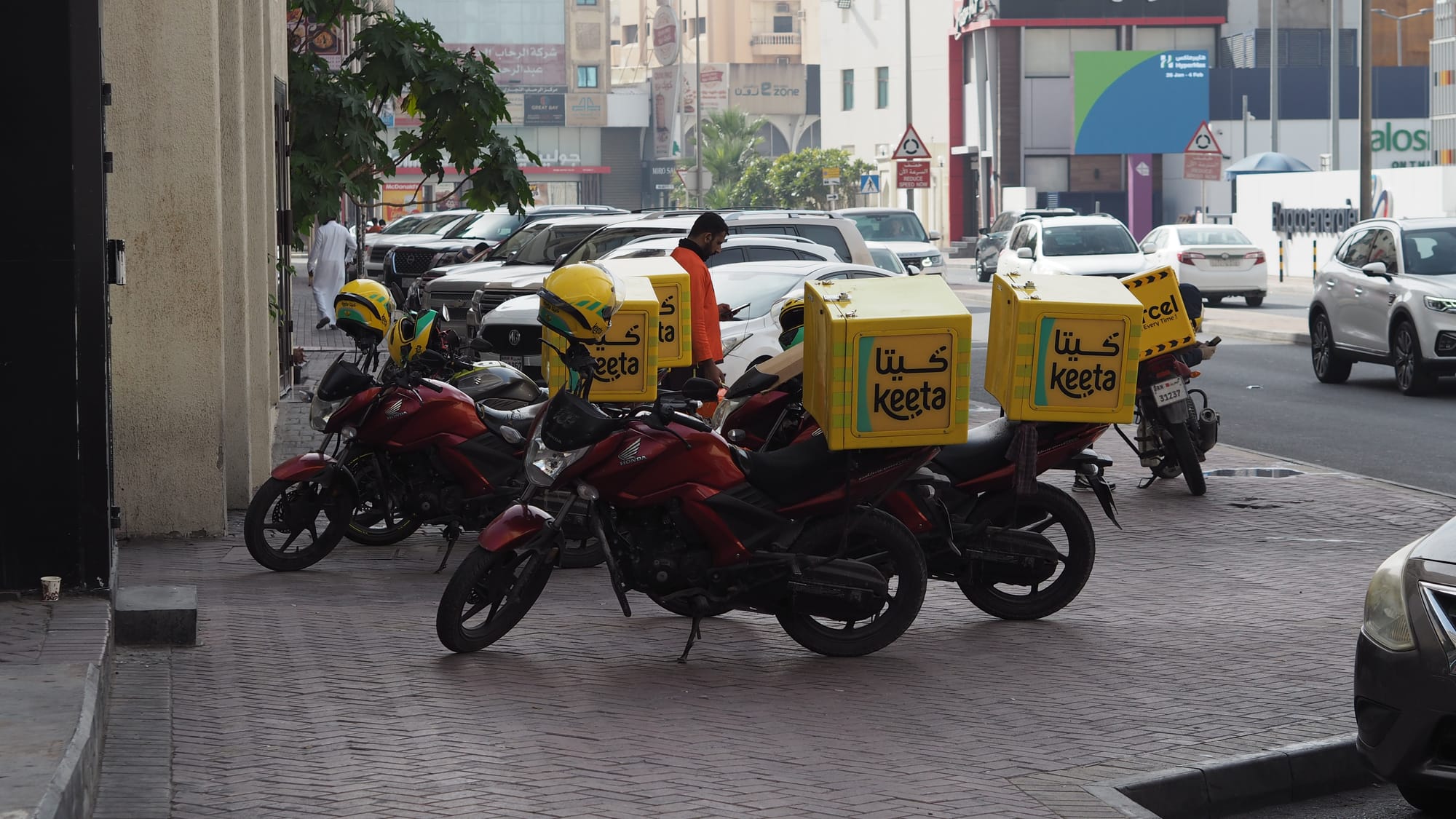
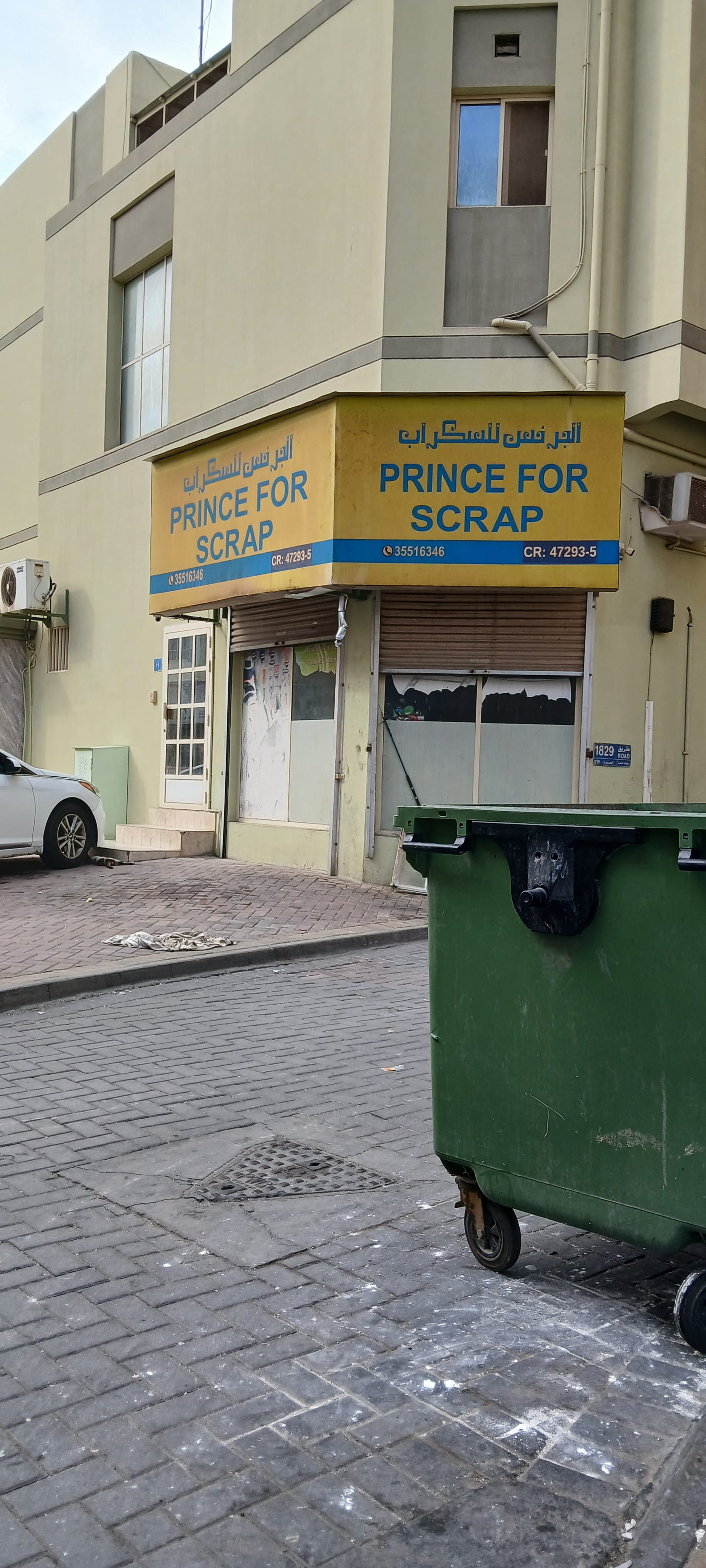
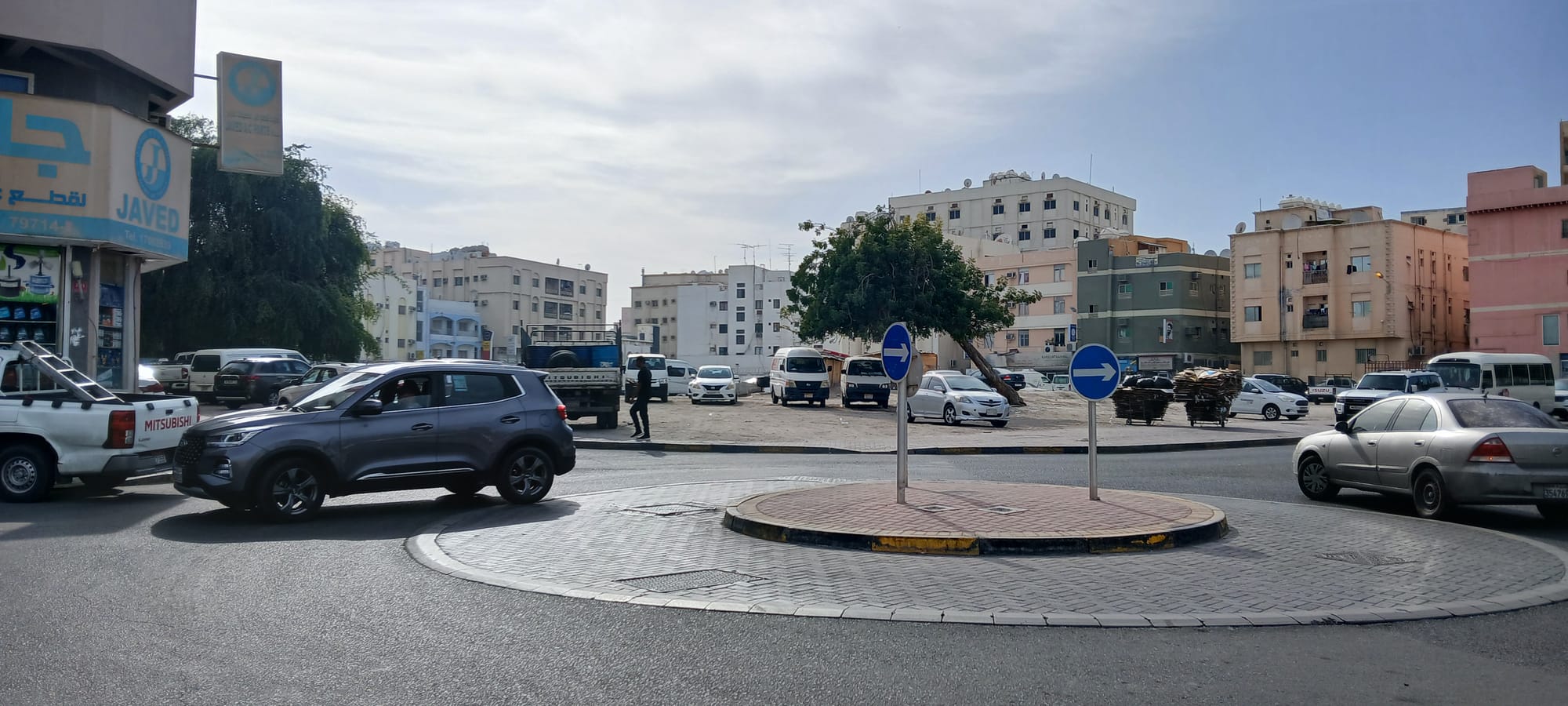
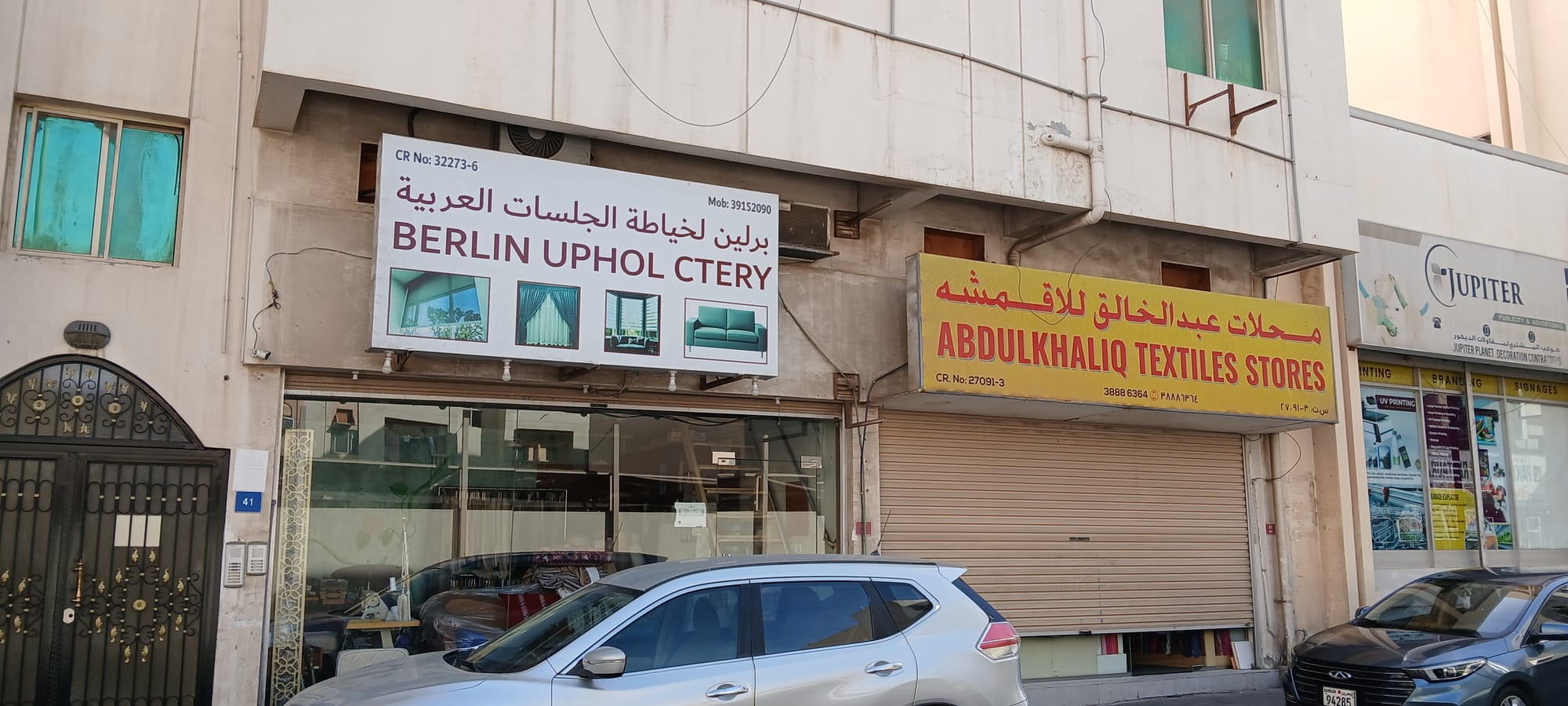
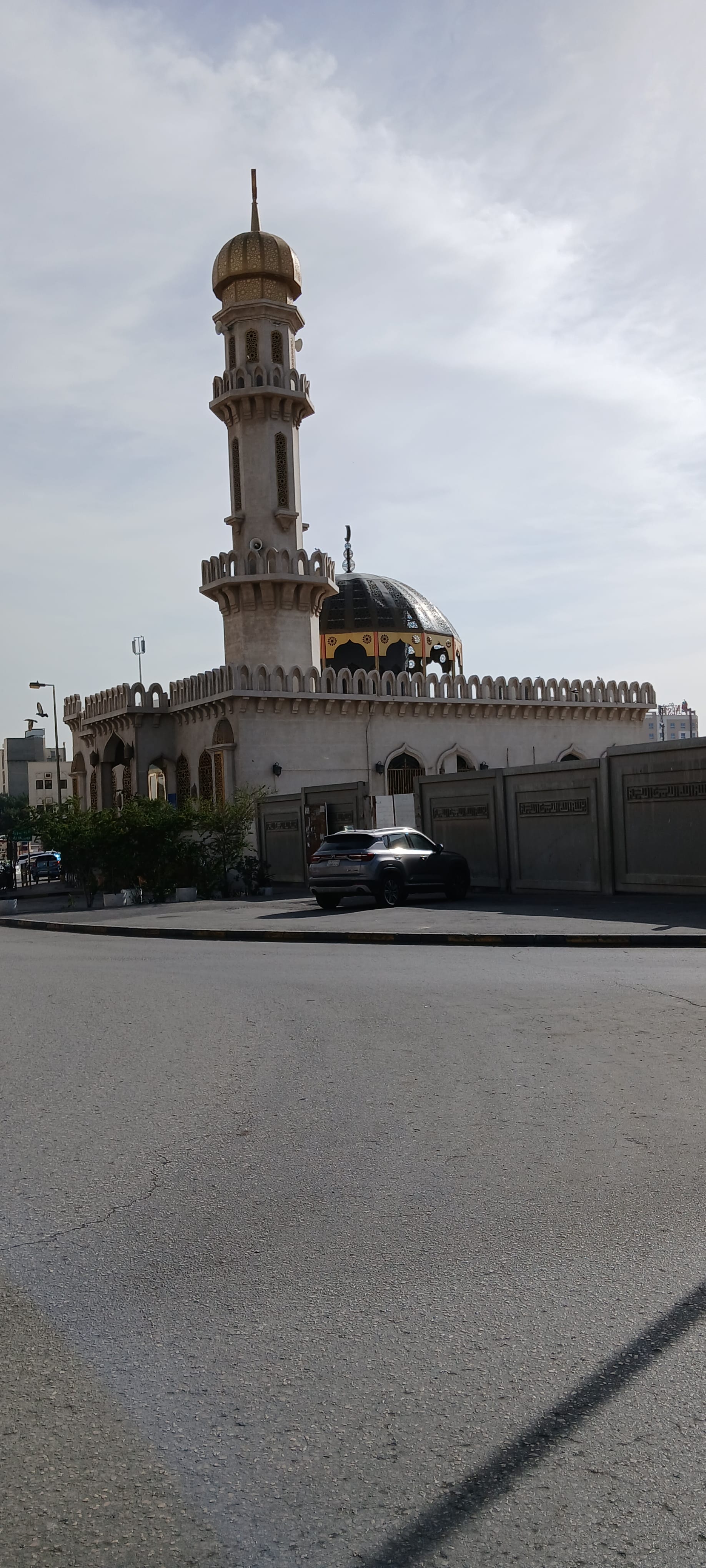
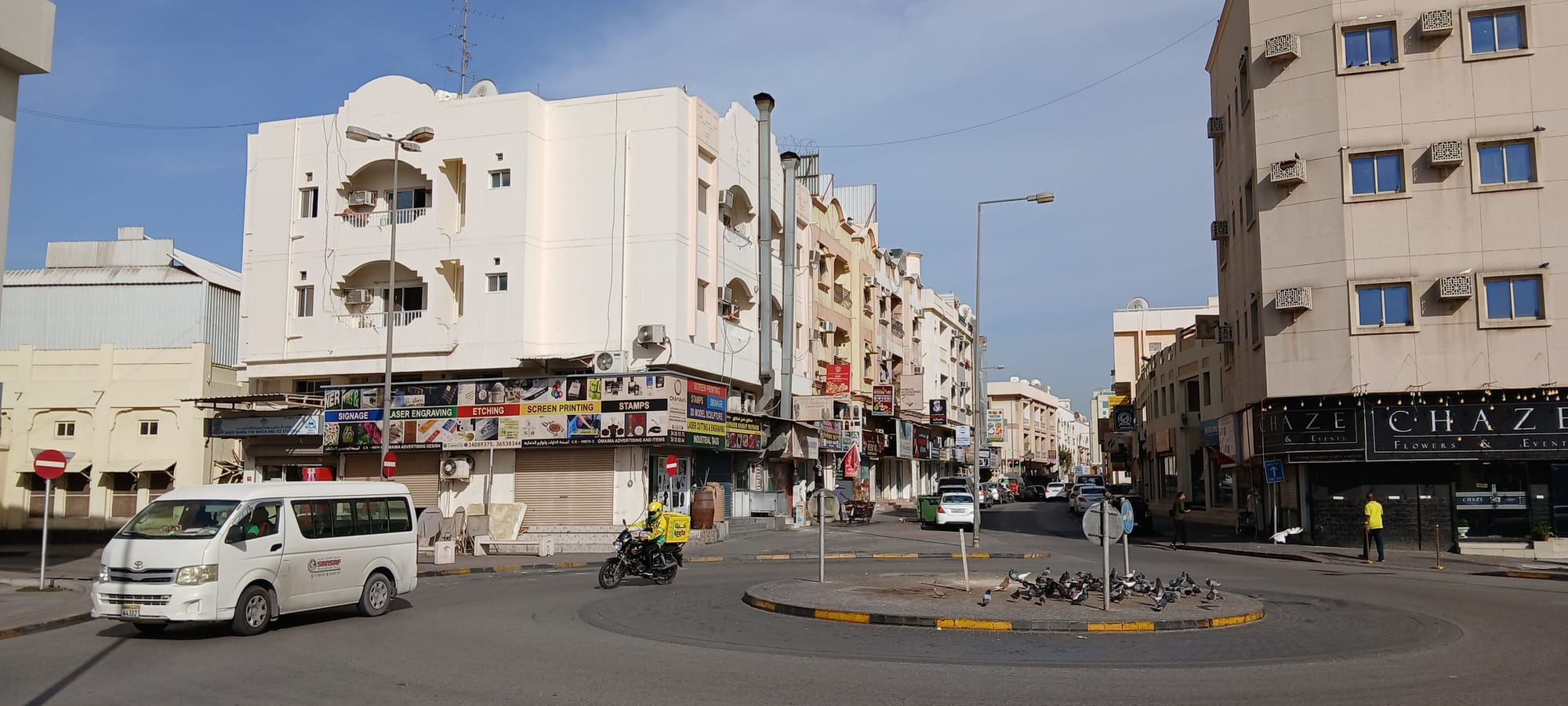
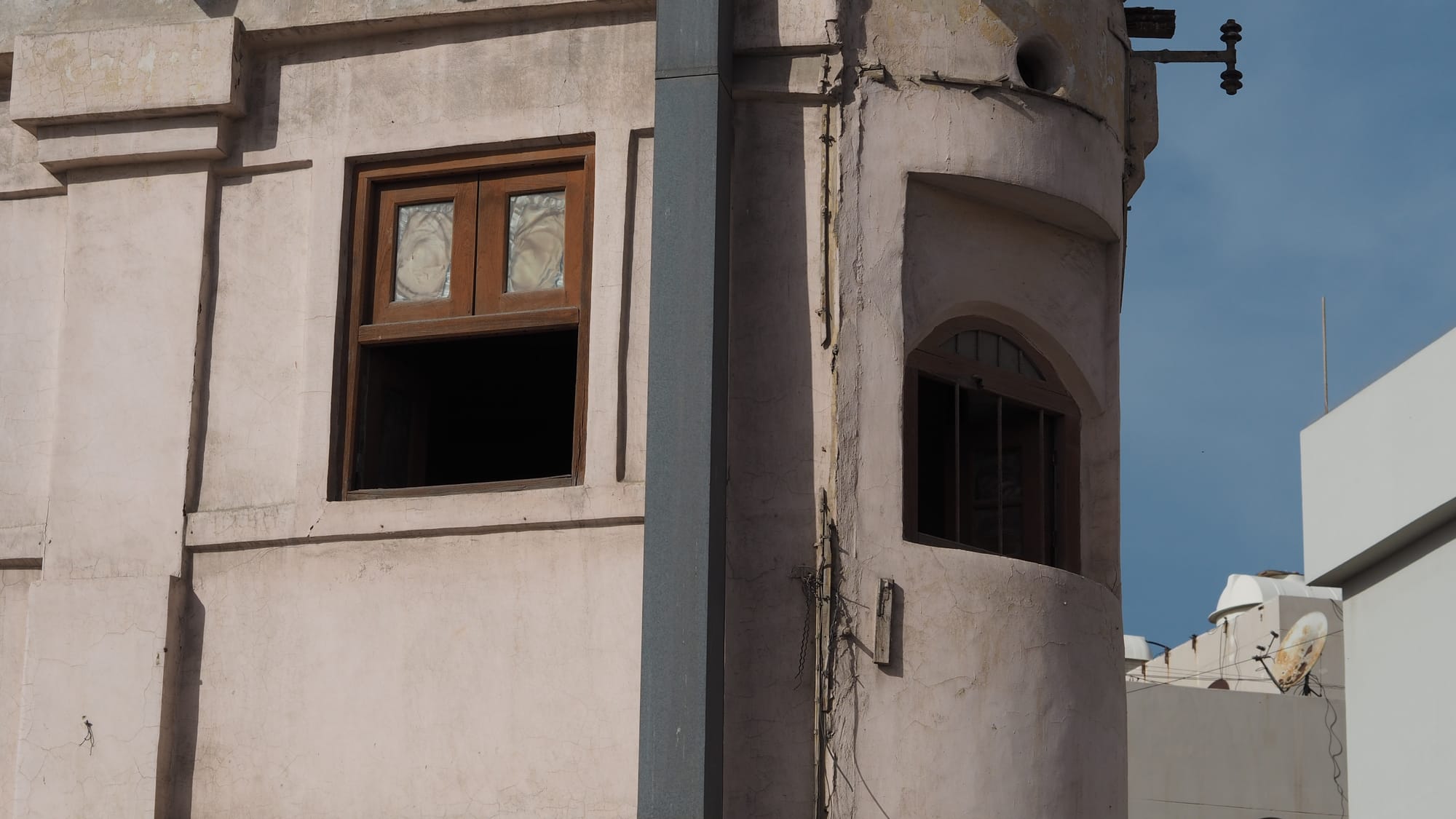
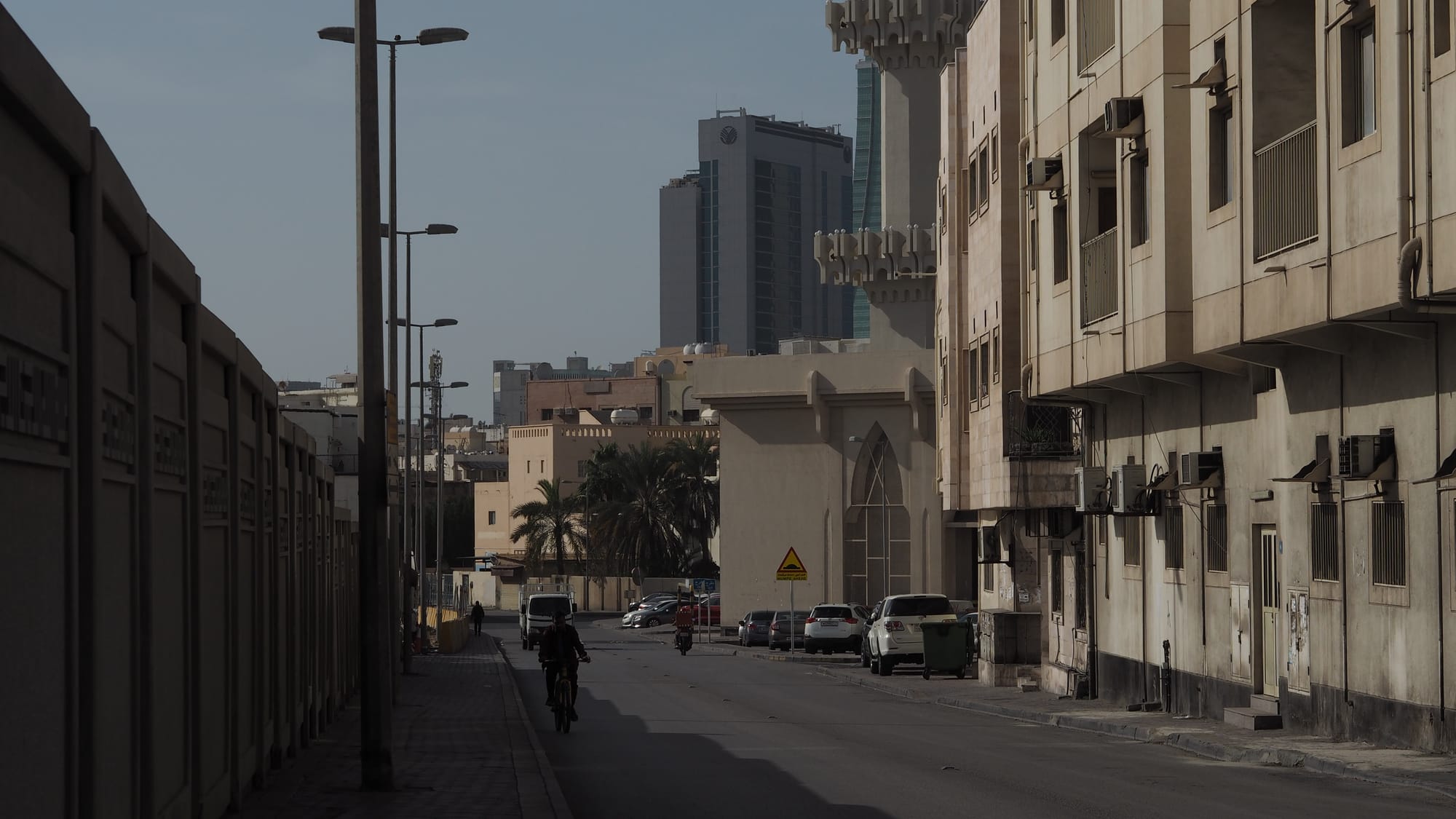
- a mystical white cat had been at the corner window, it turned away at the last moment, like a creature from Dr. Seuss a fur pompom at the end of its tail
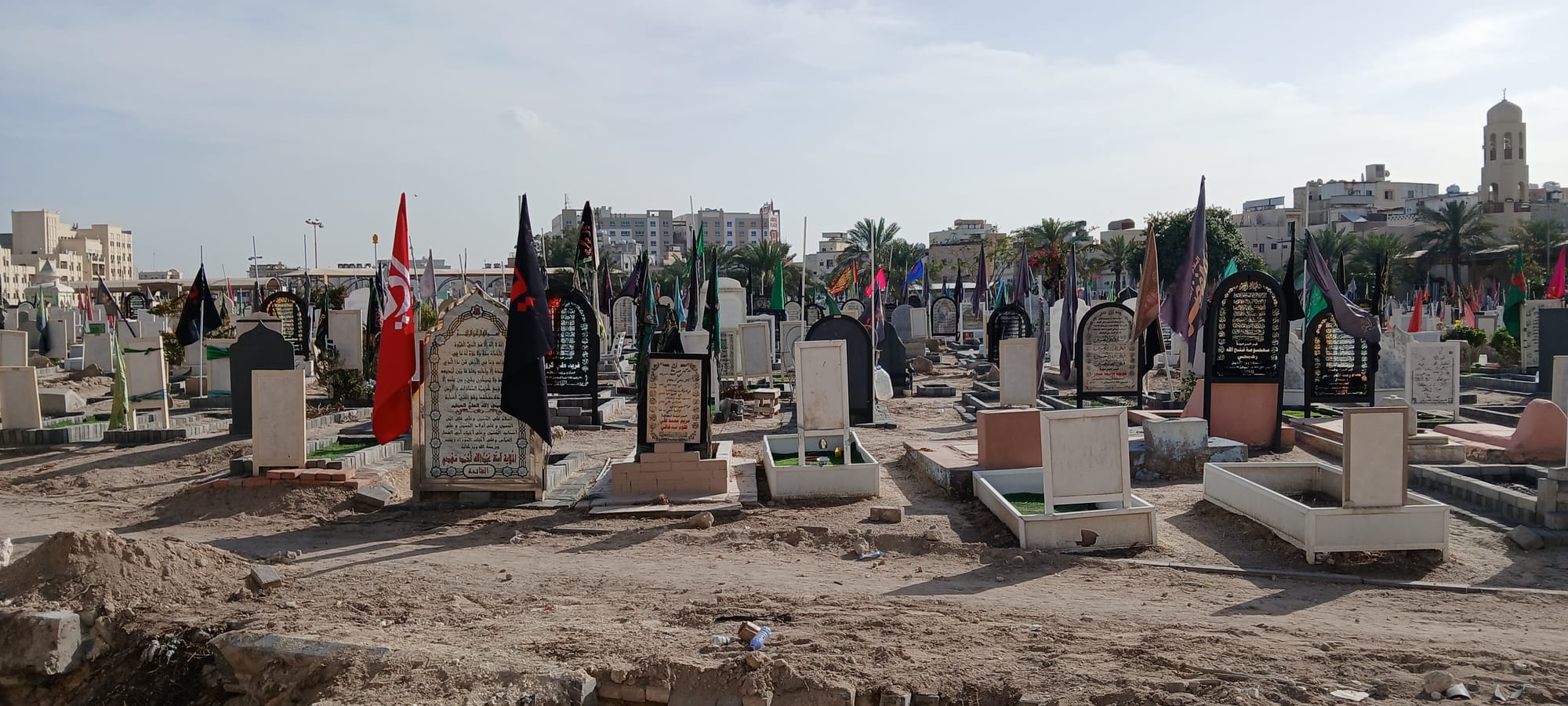
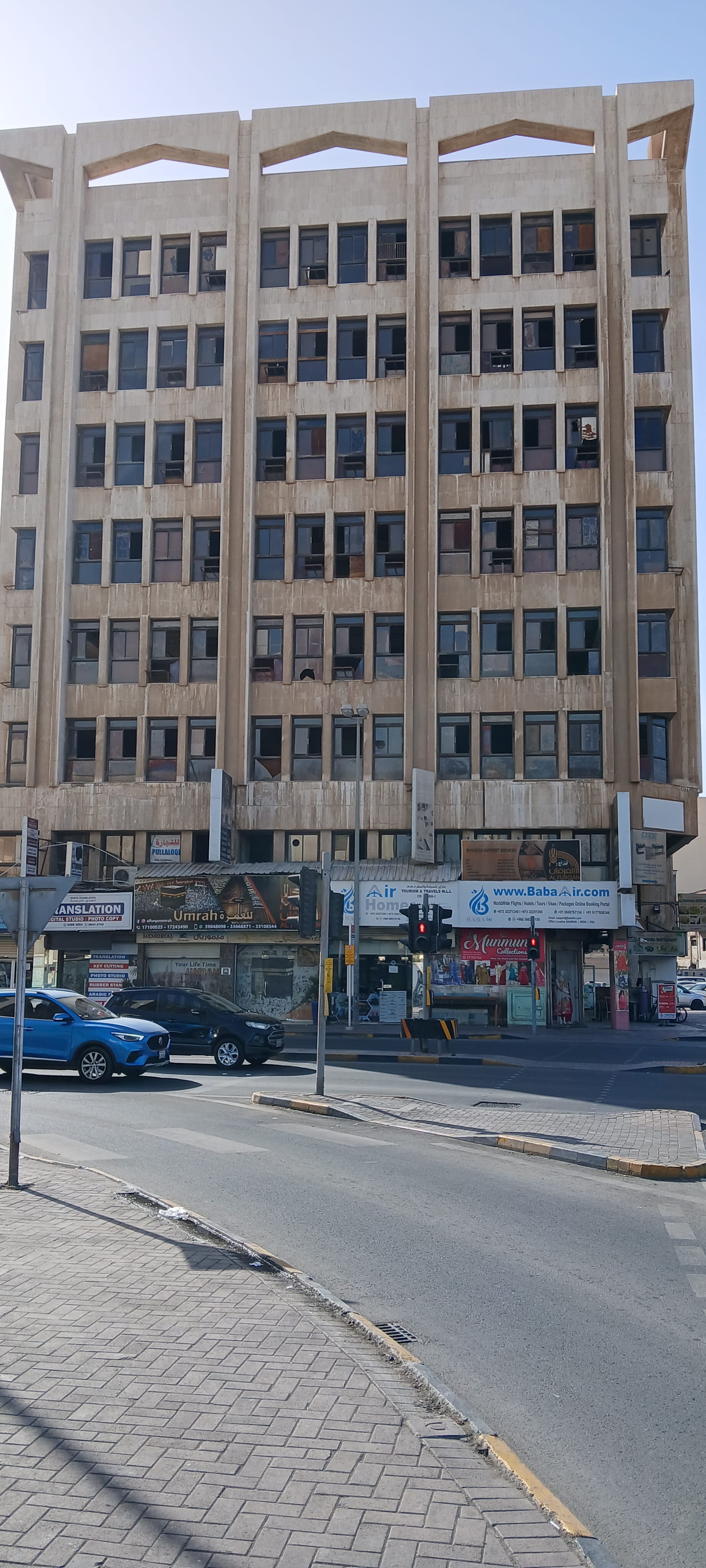
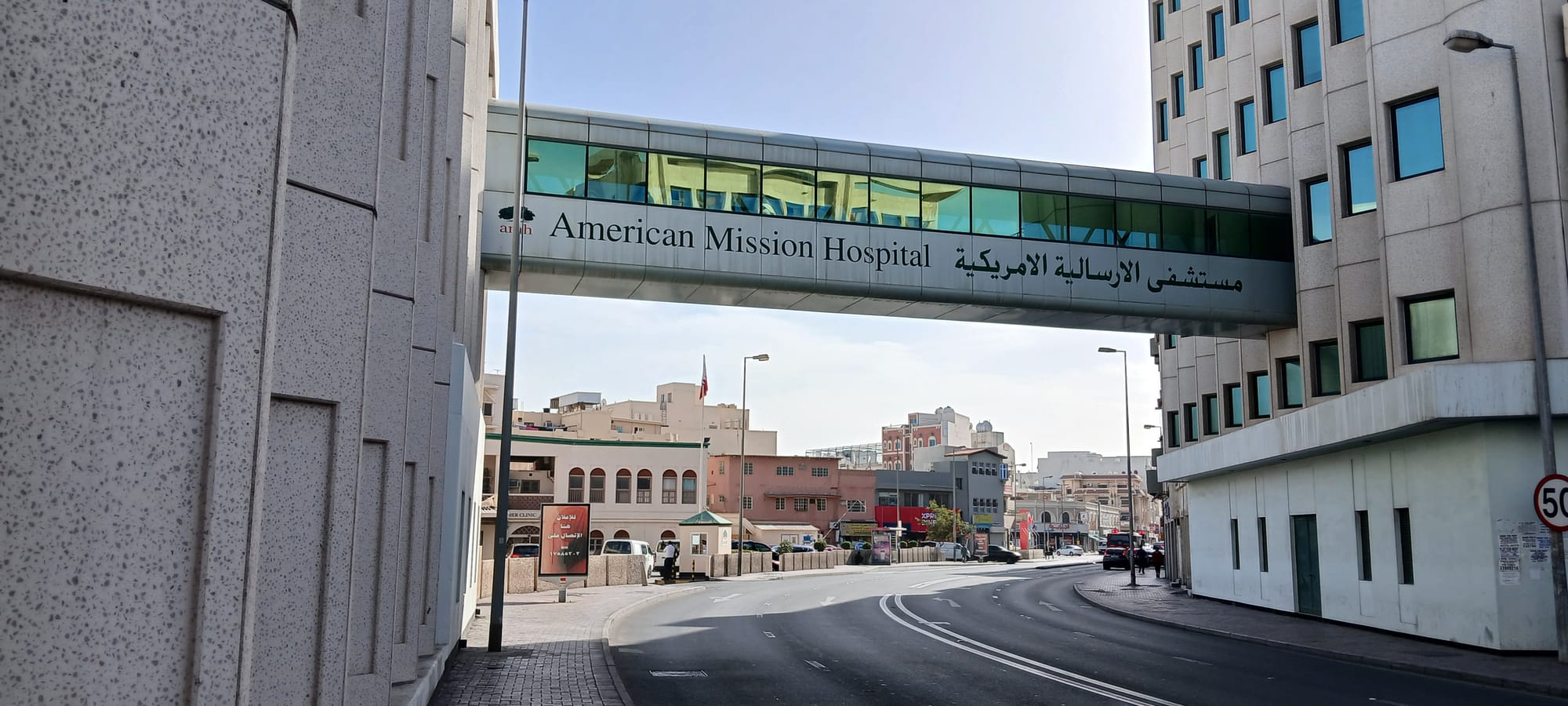
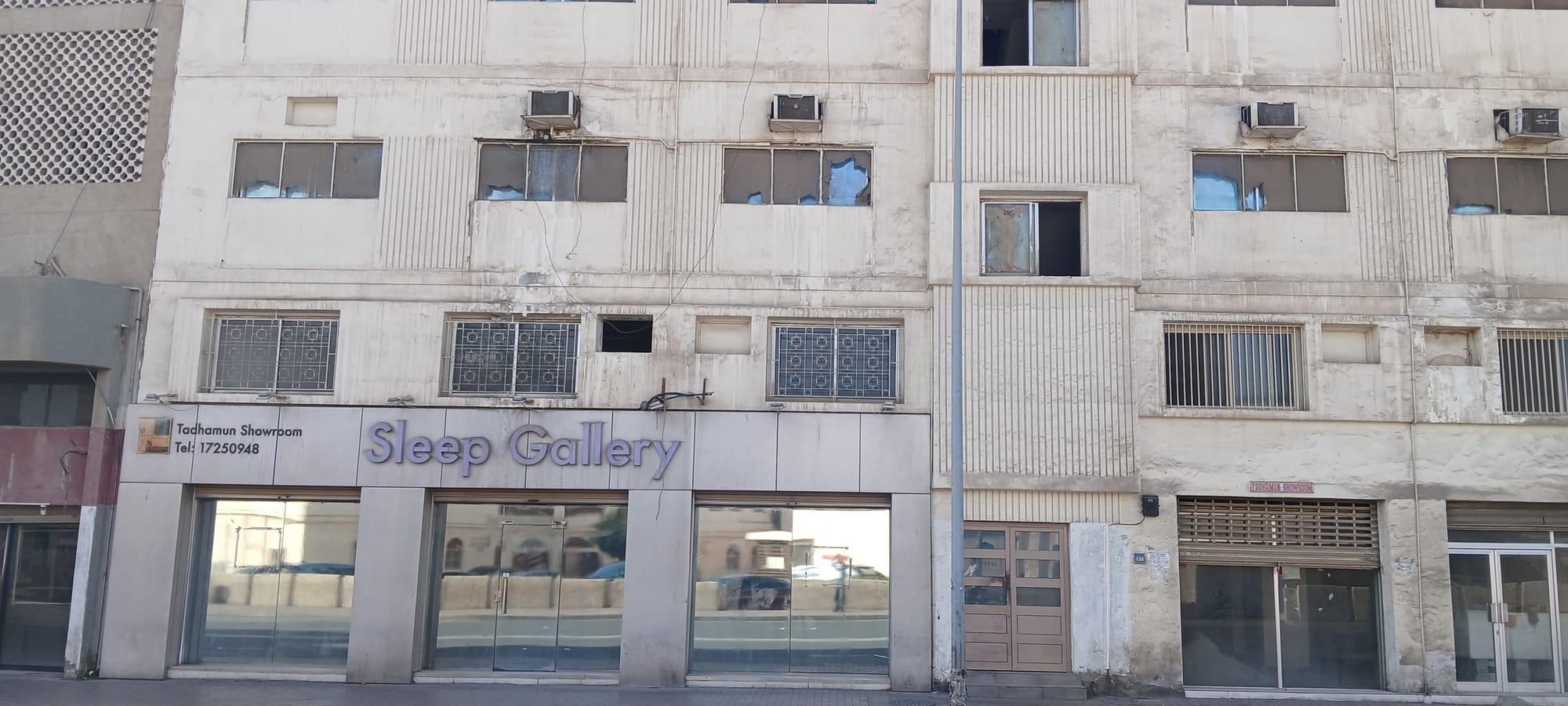
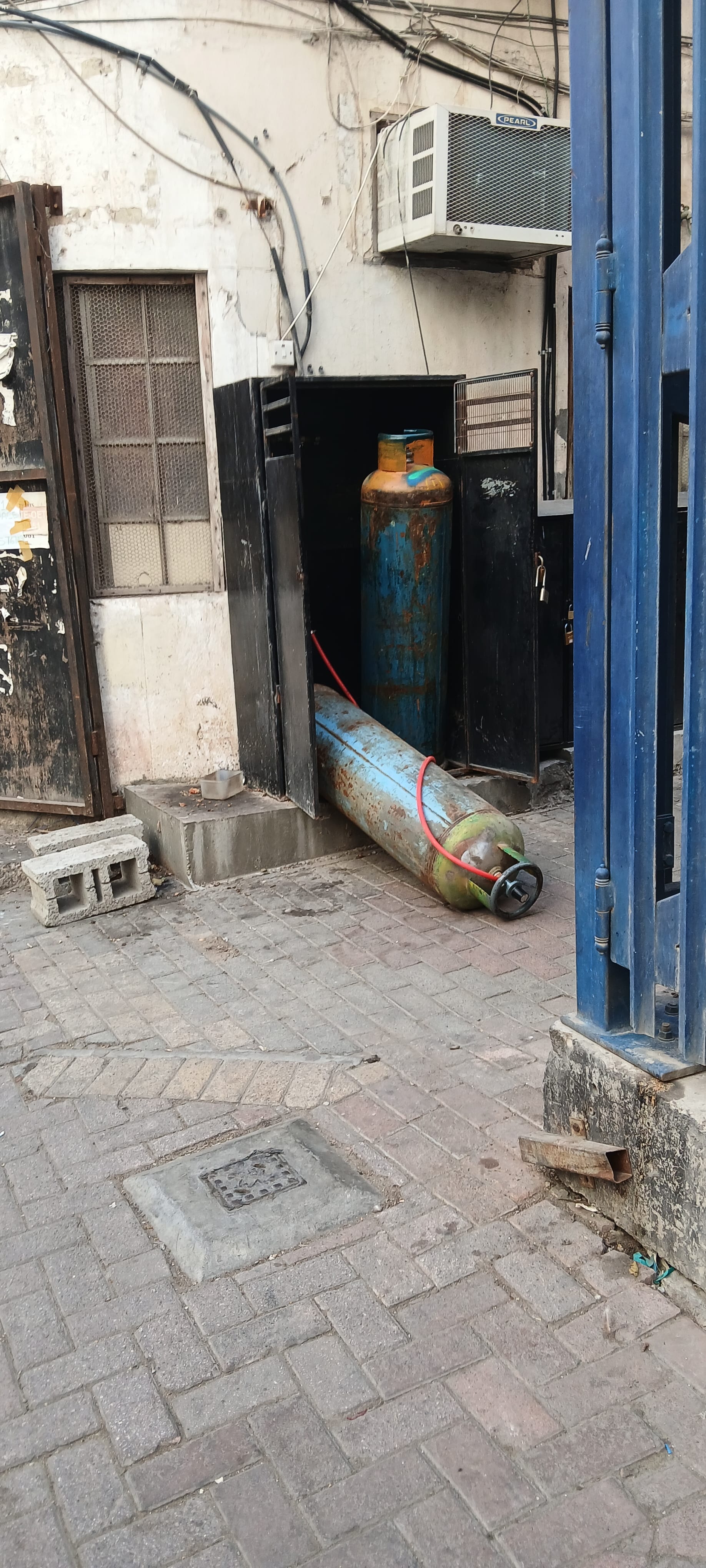
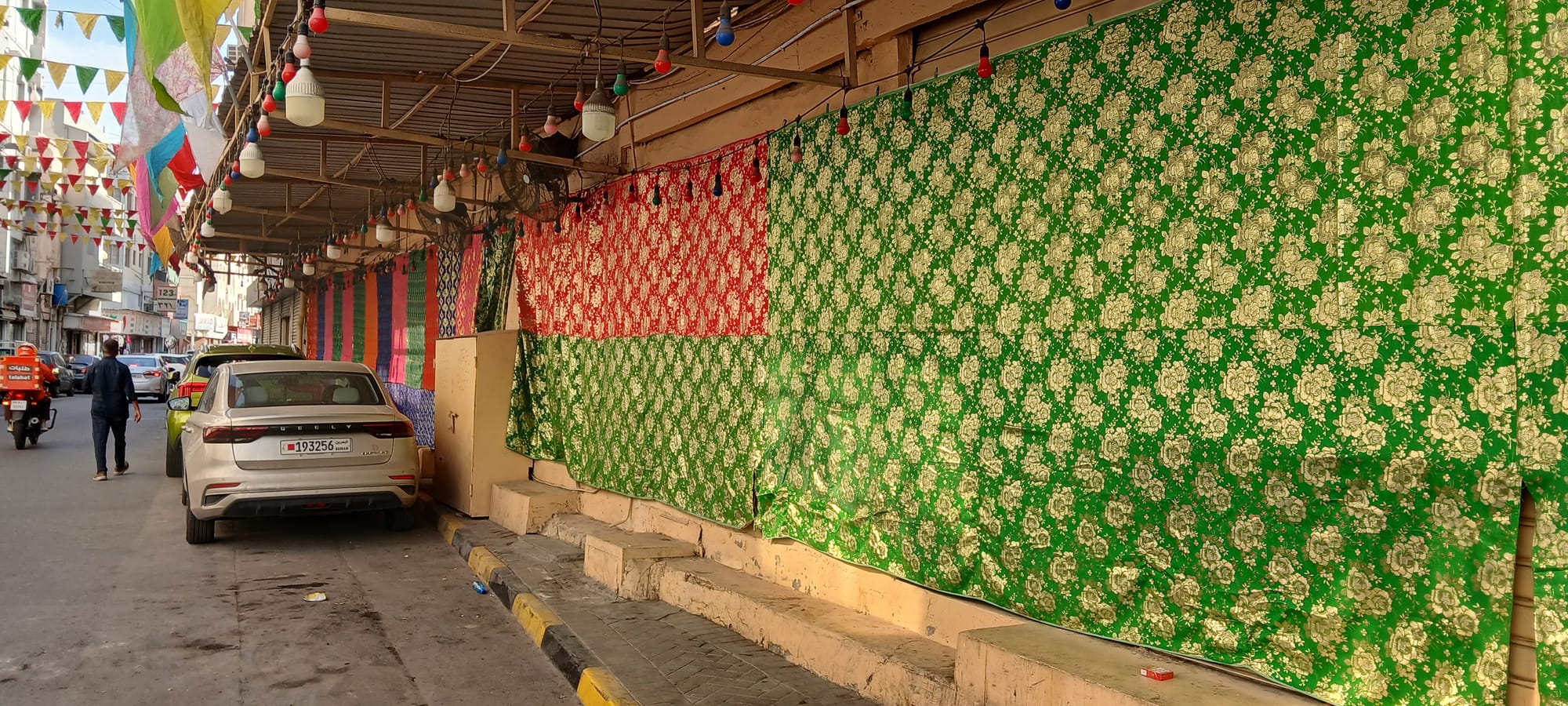
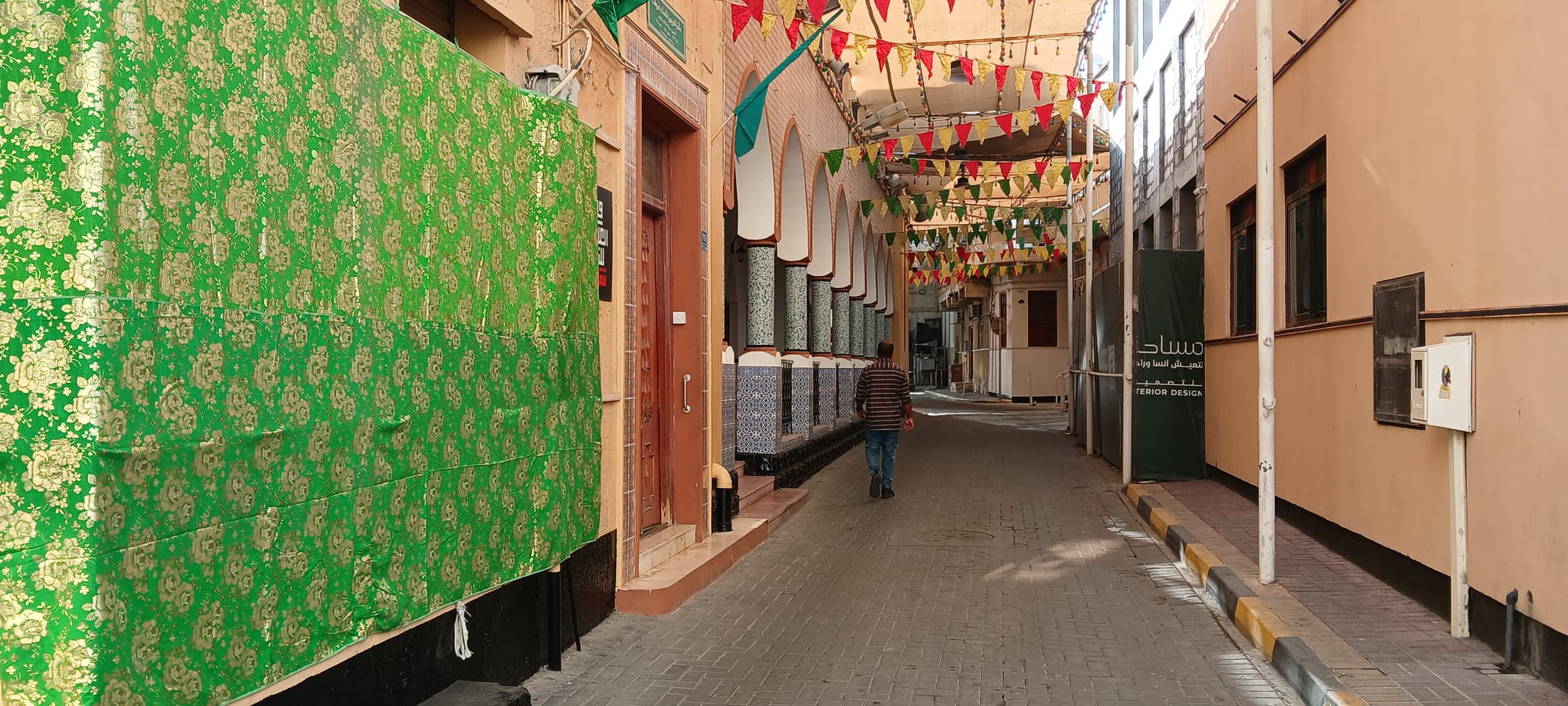
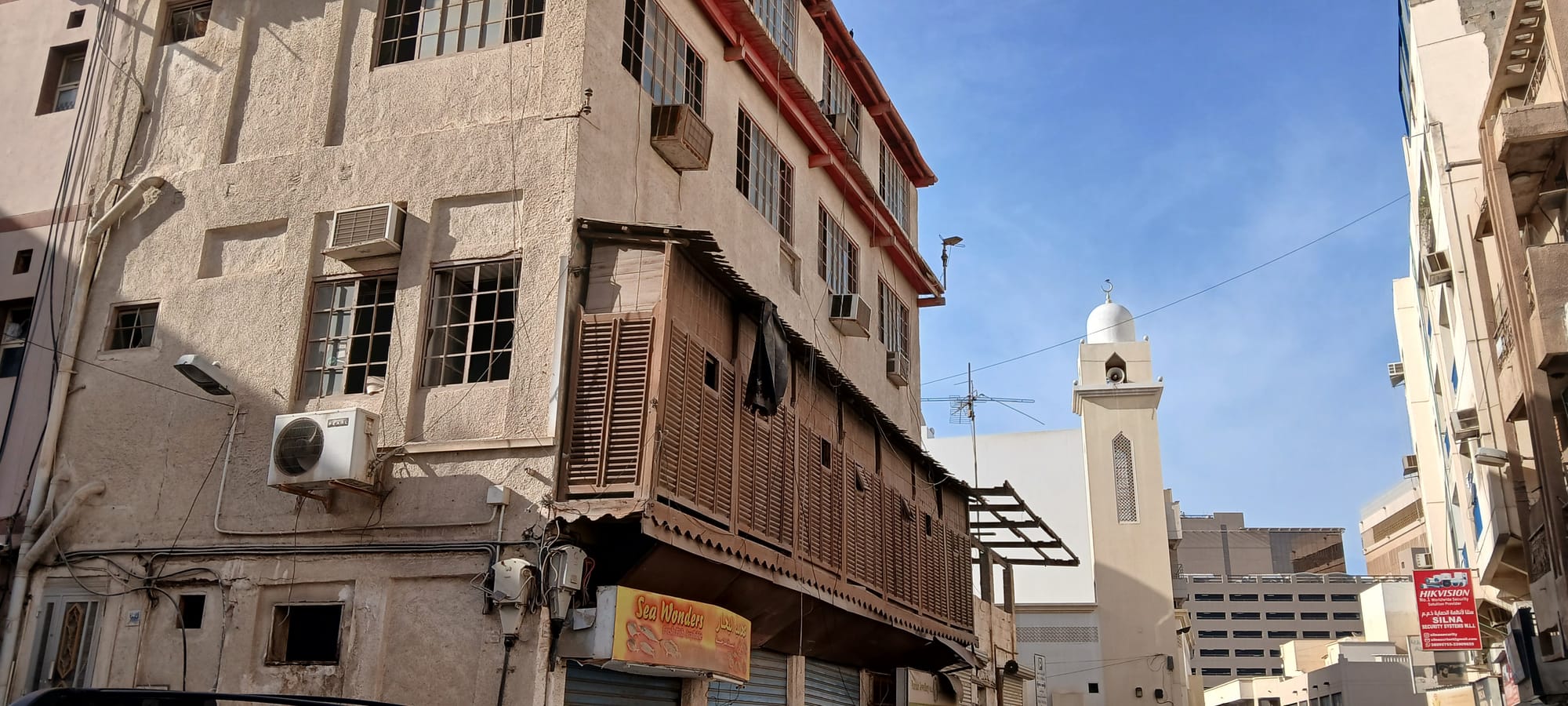
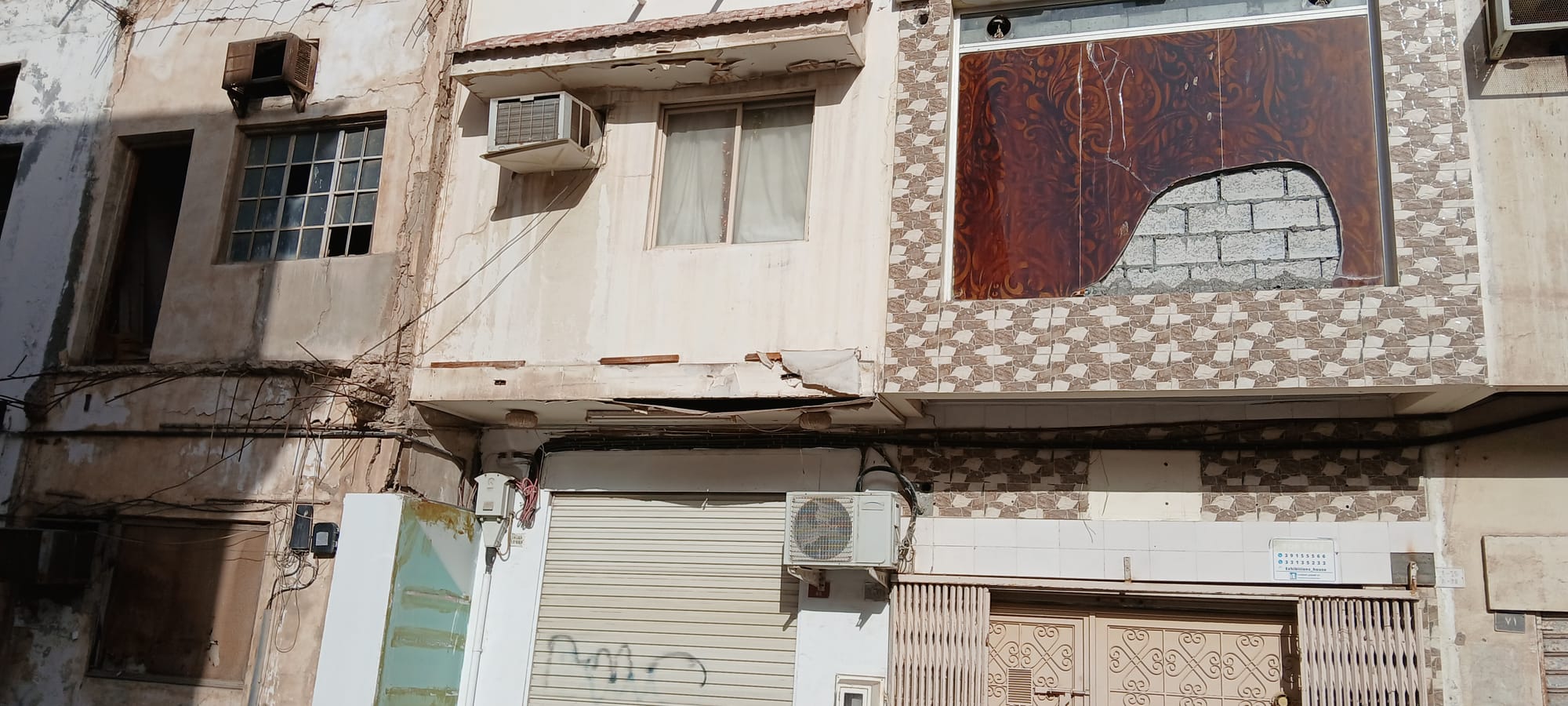
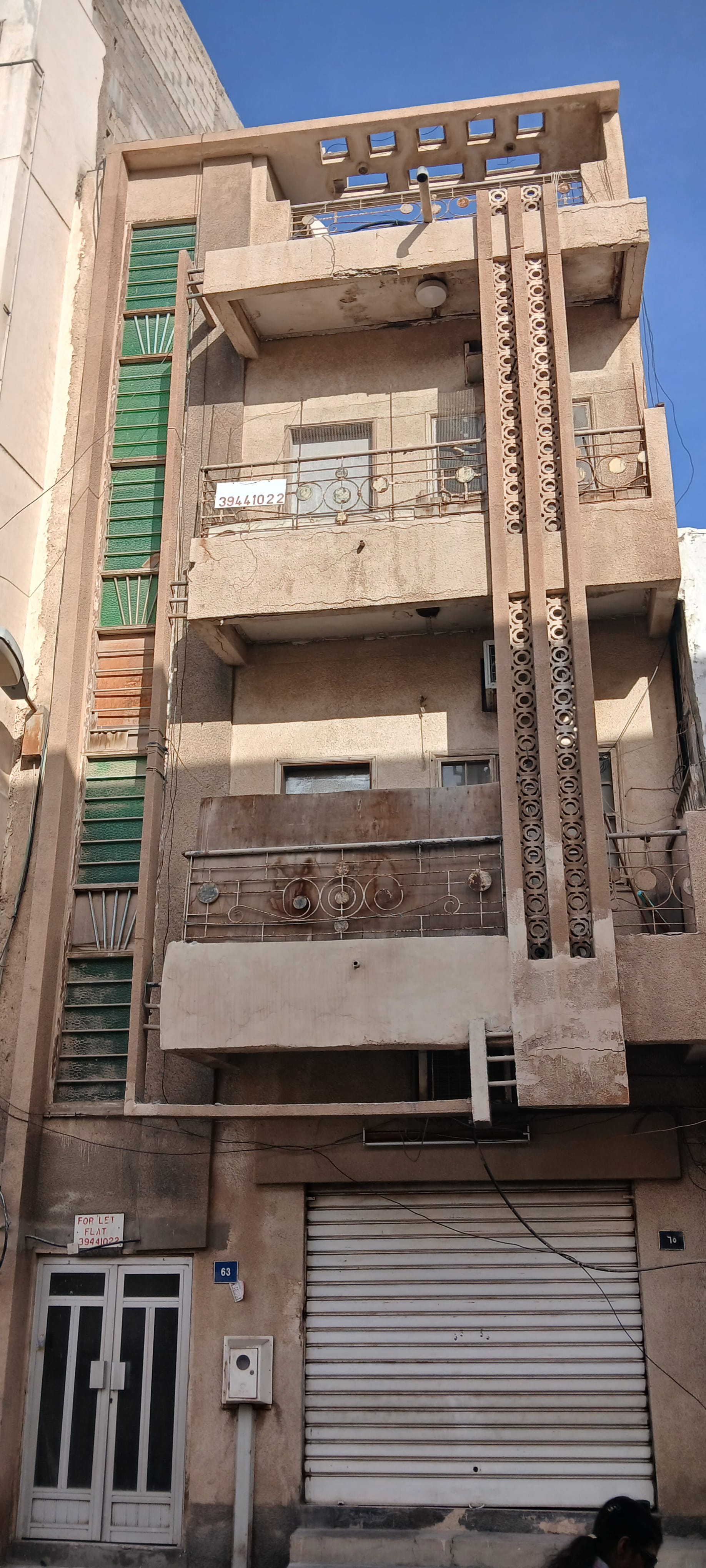
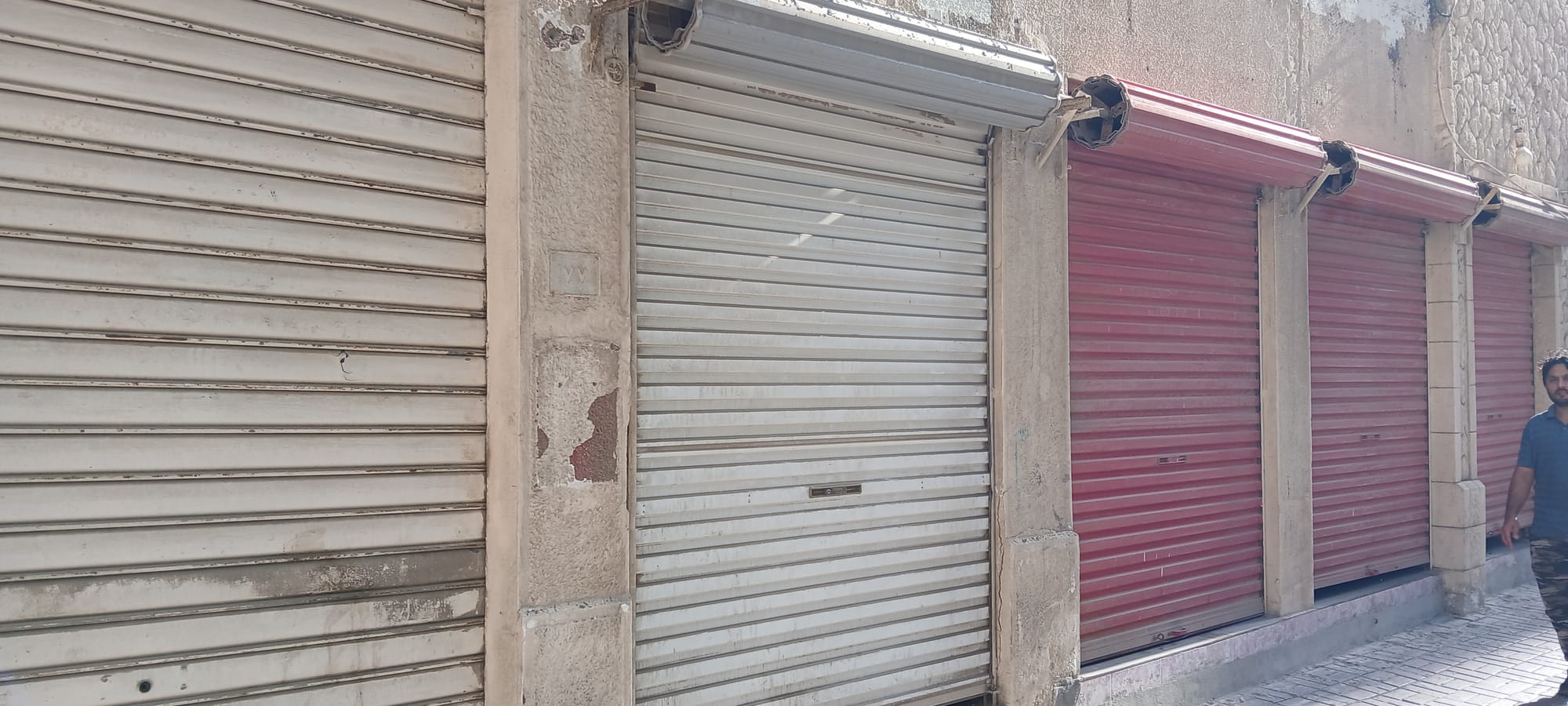
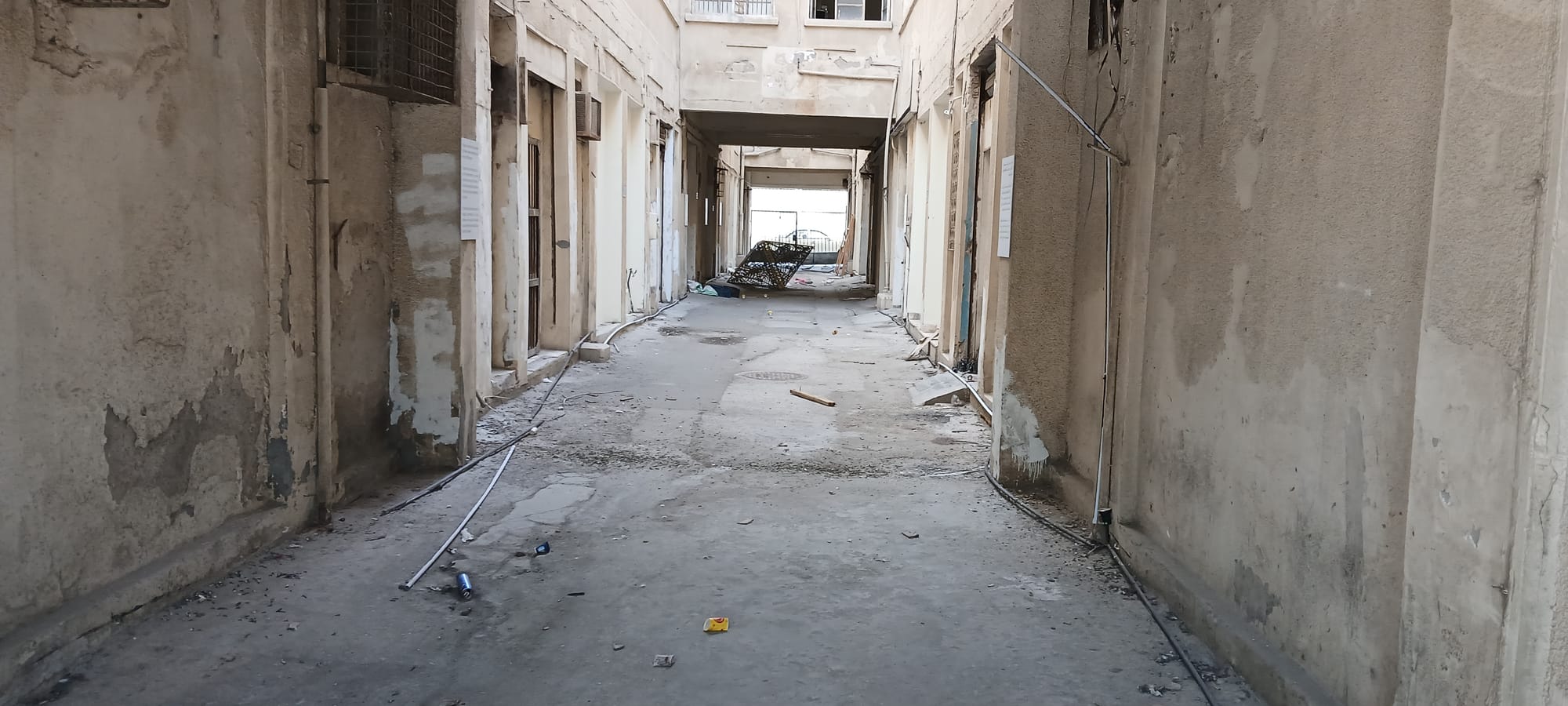
to the souq, which I found my way to using my phone as a compass, and beyond:
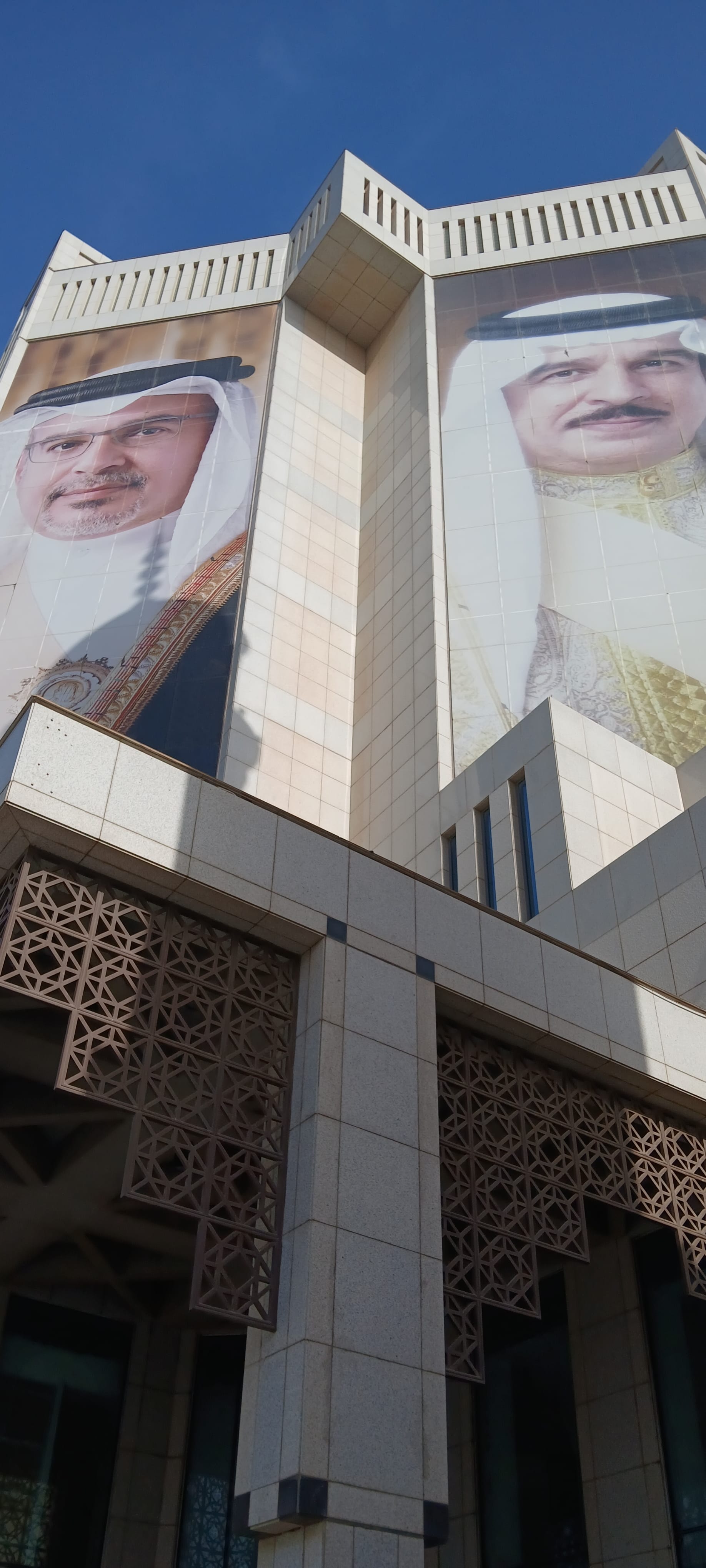
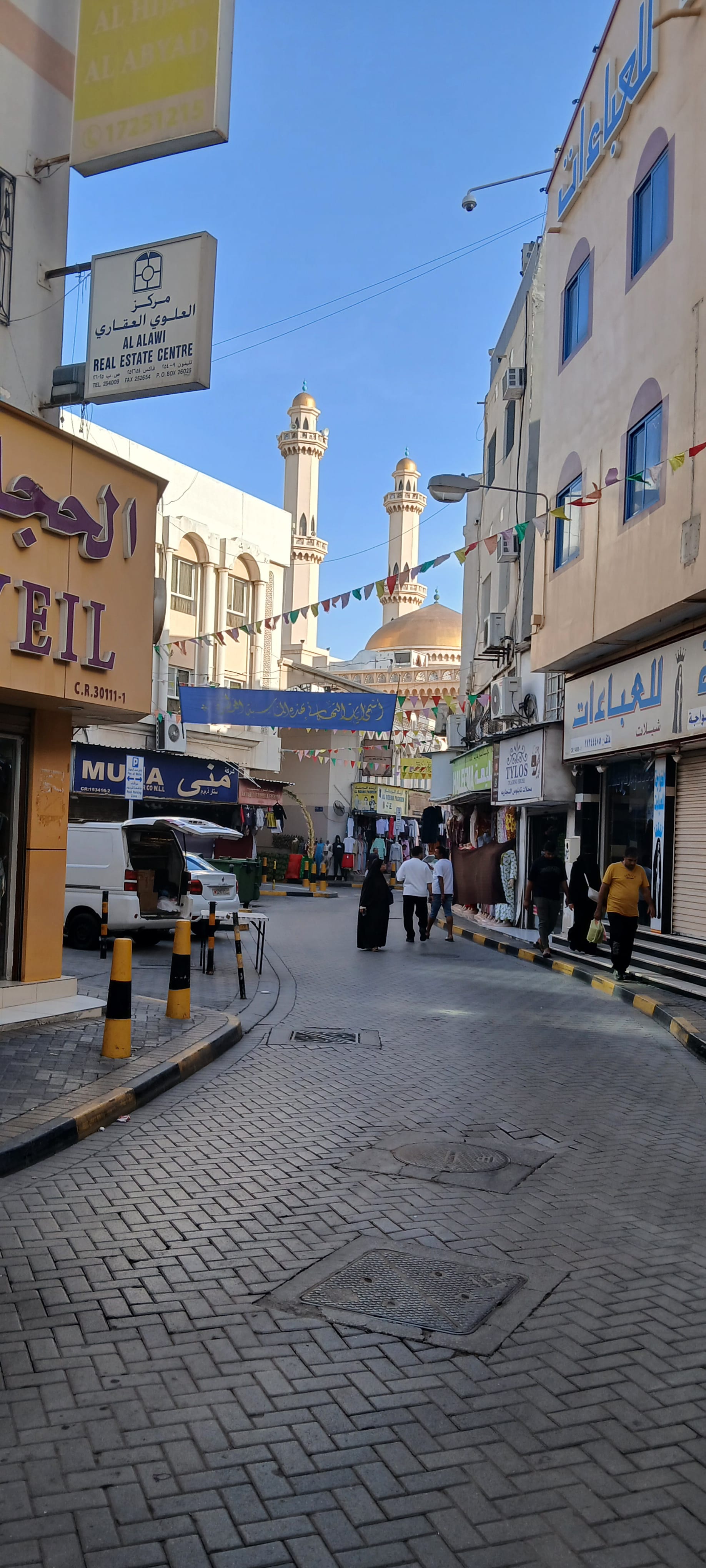
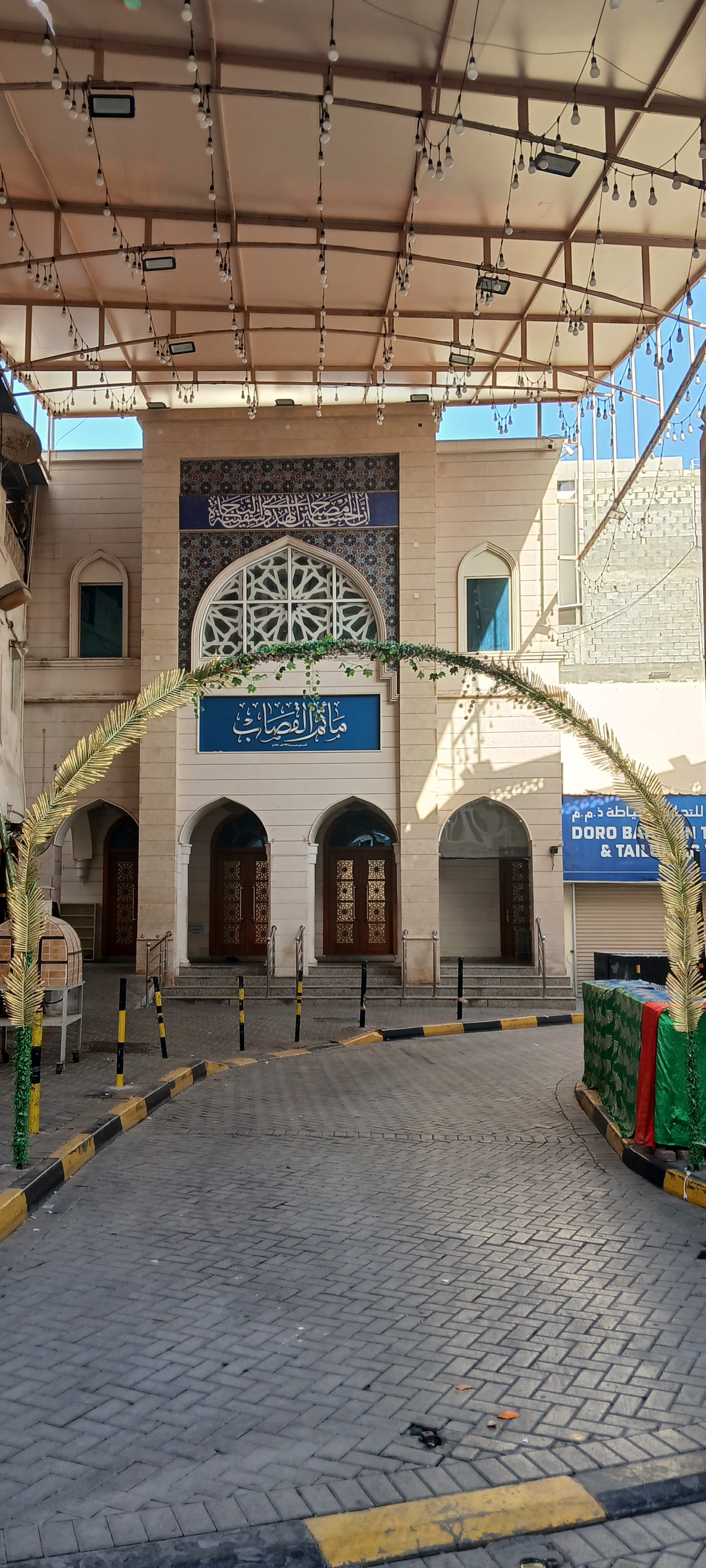
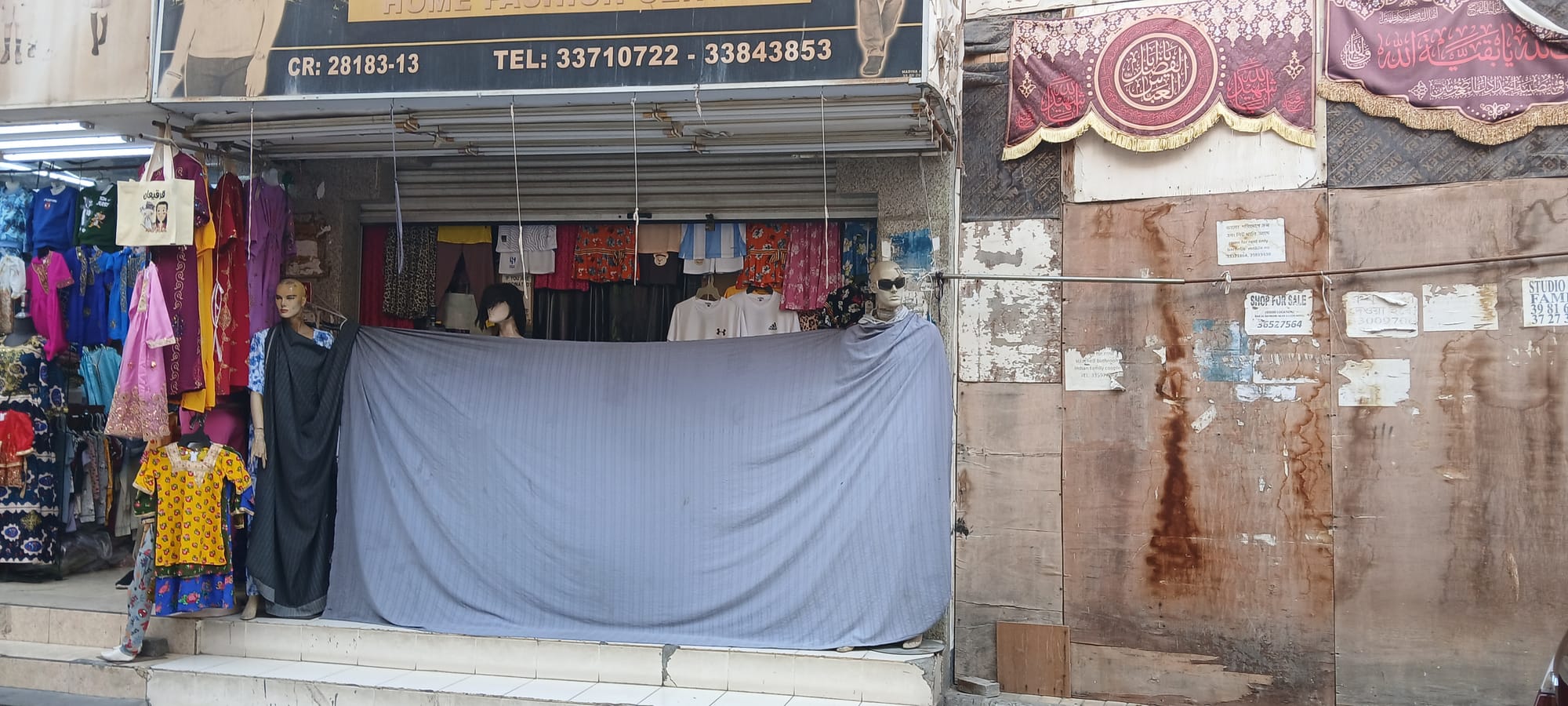
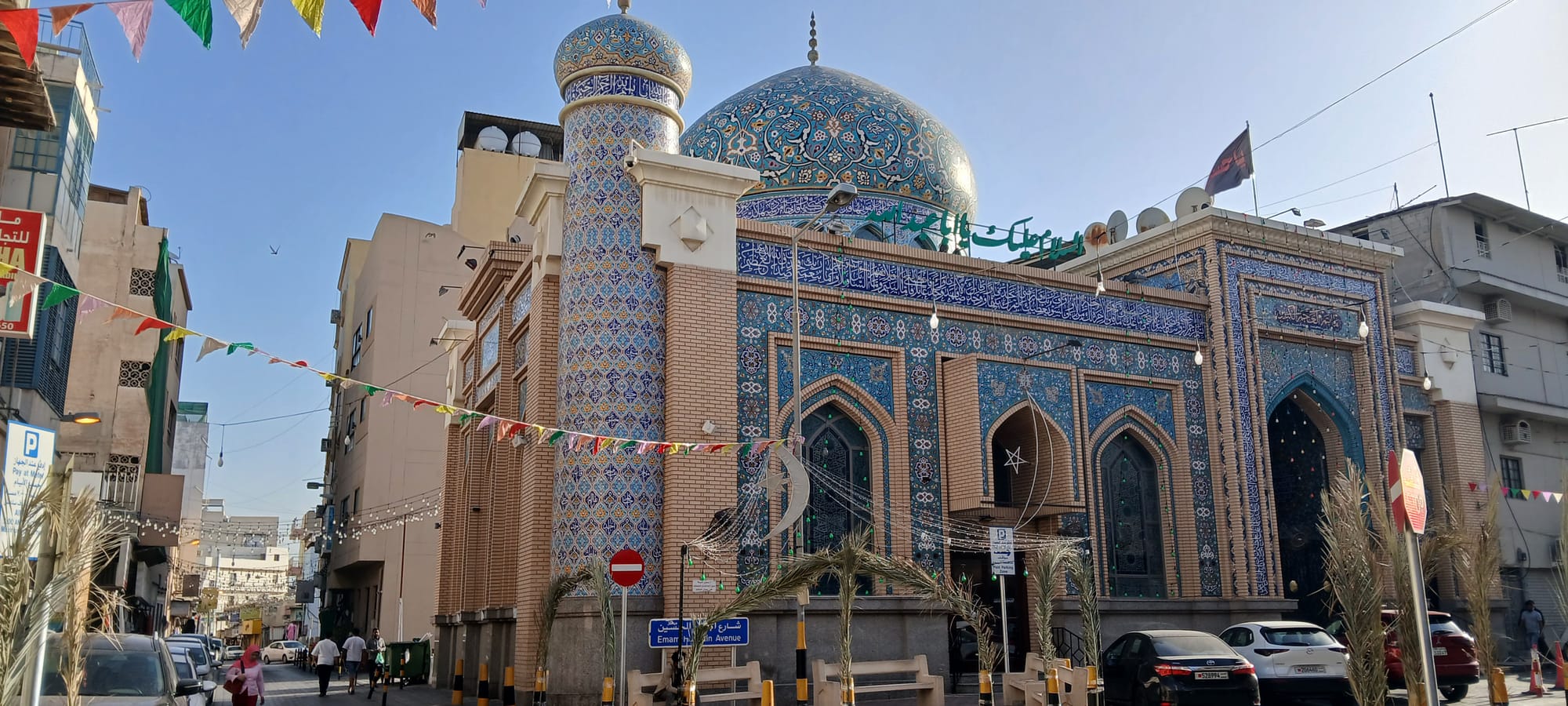
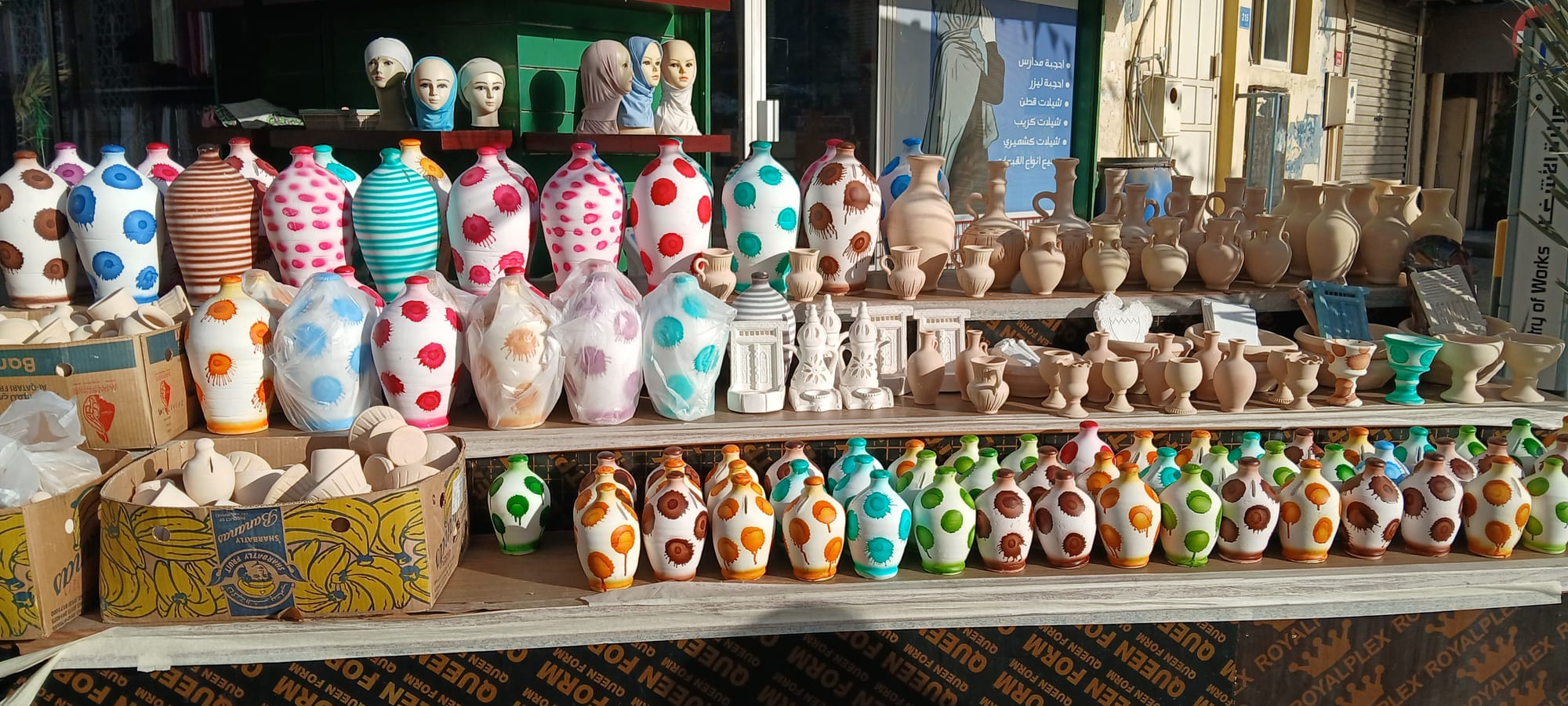
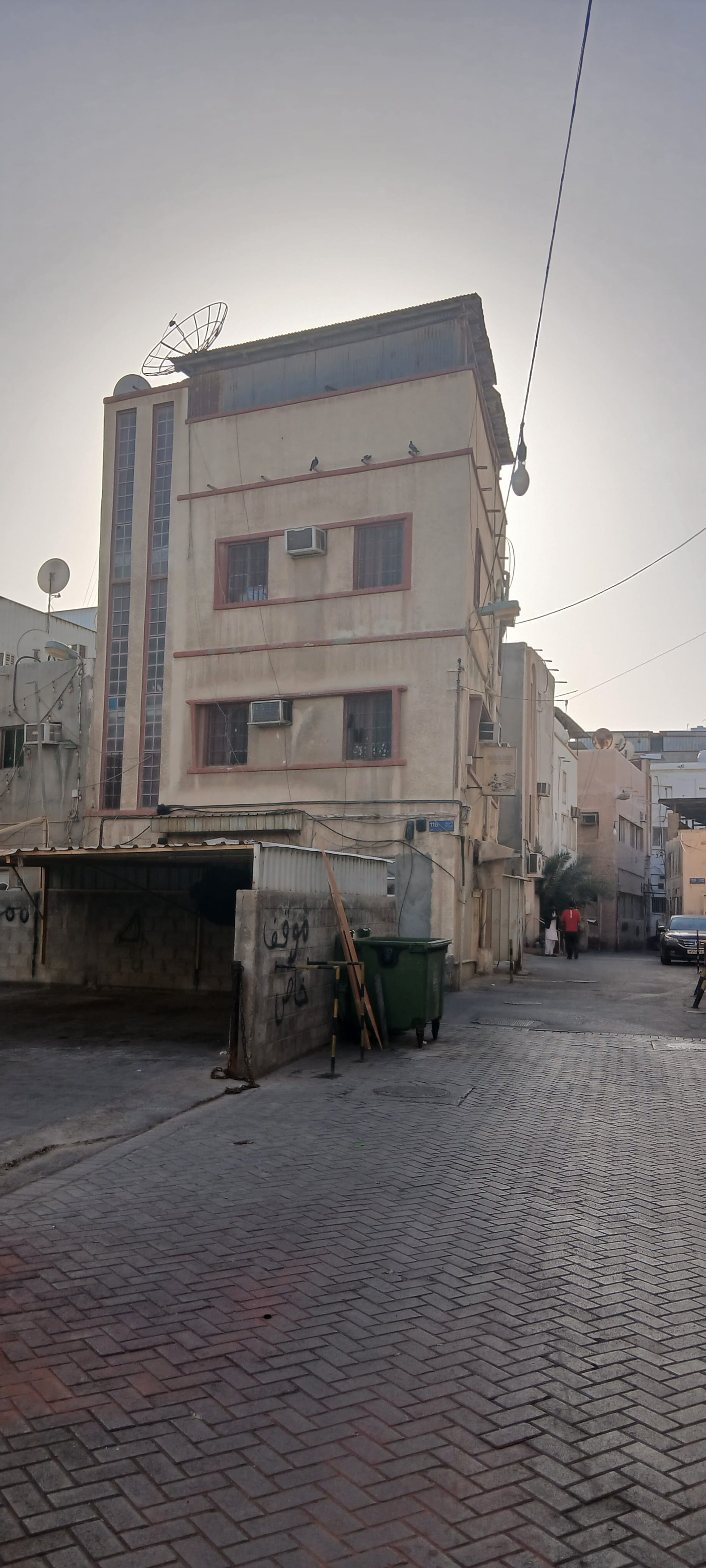
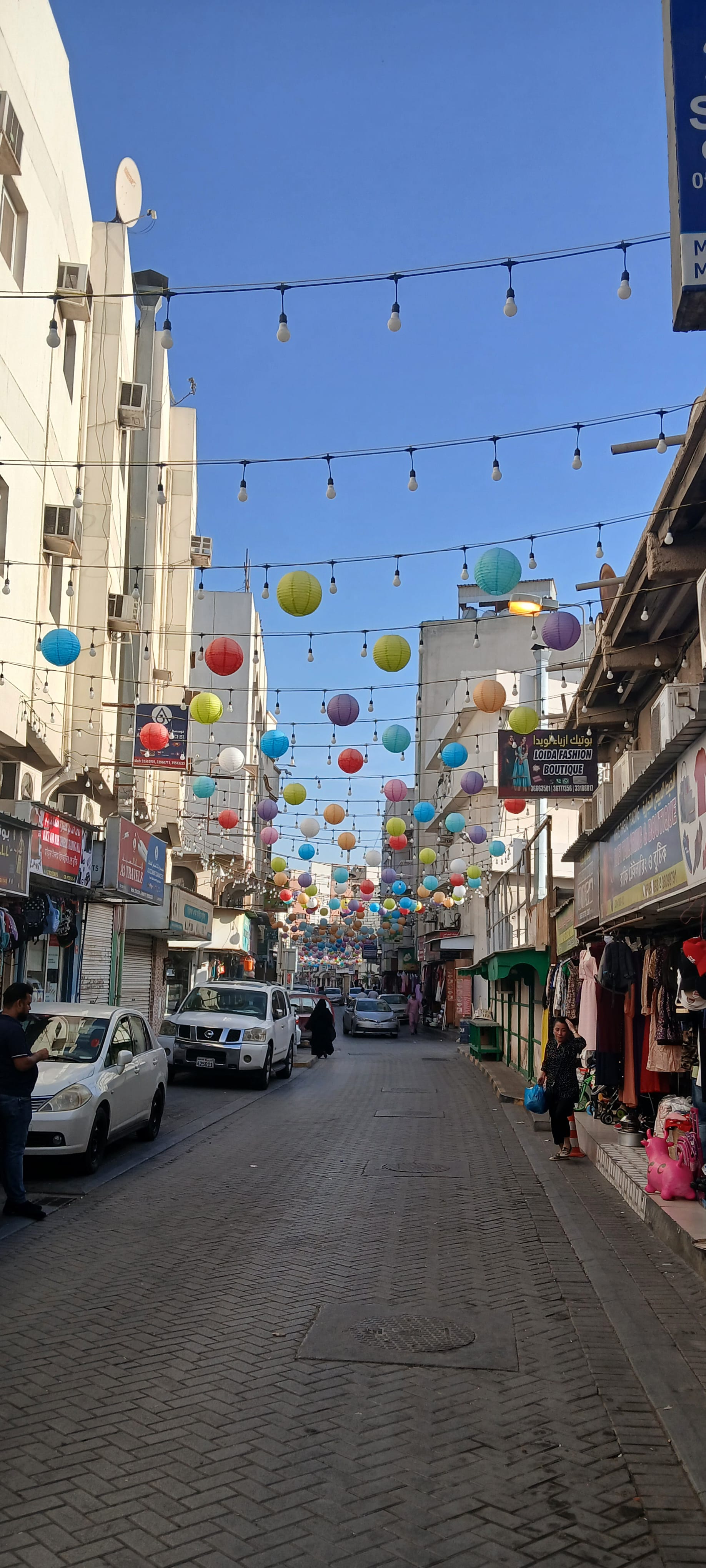
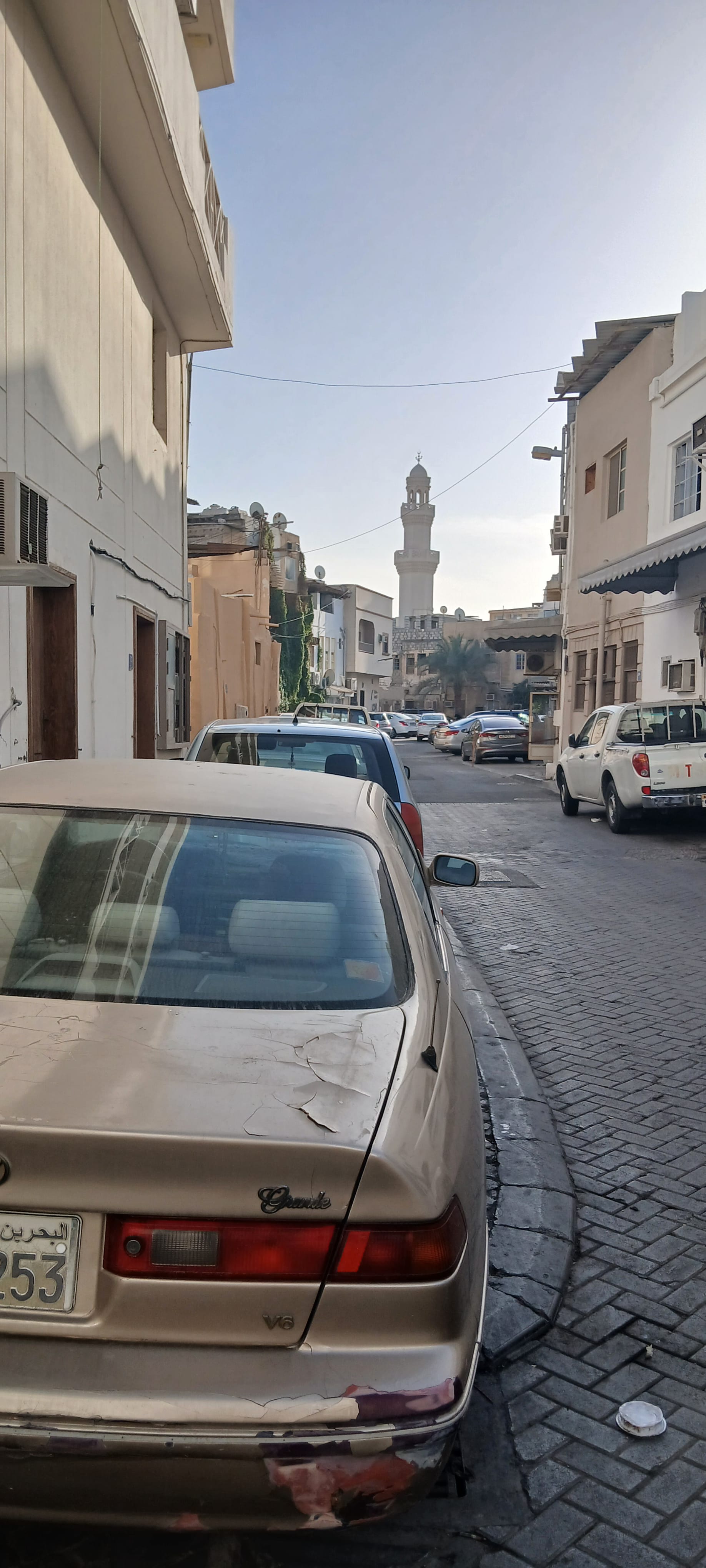
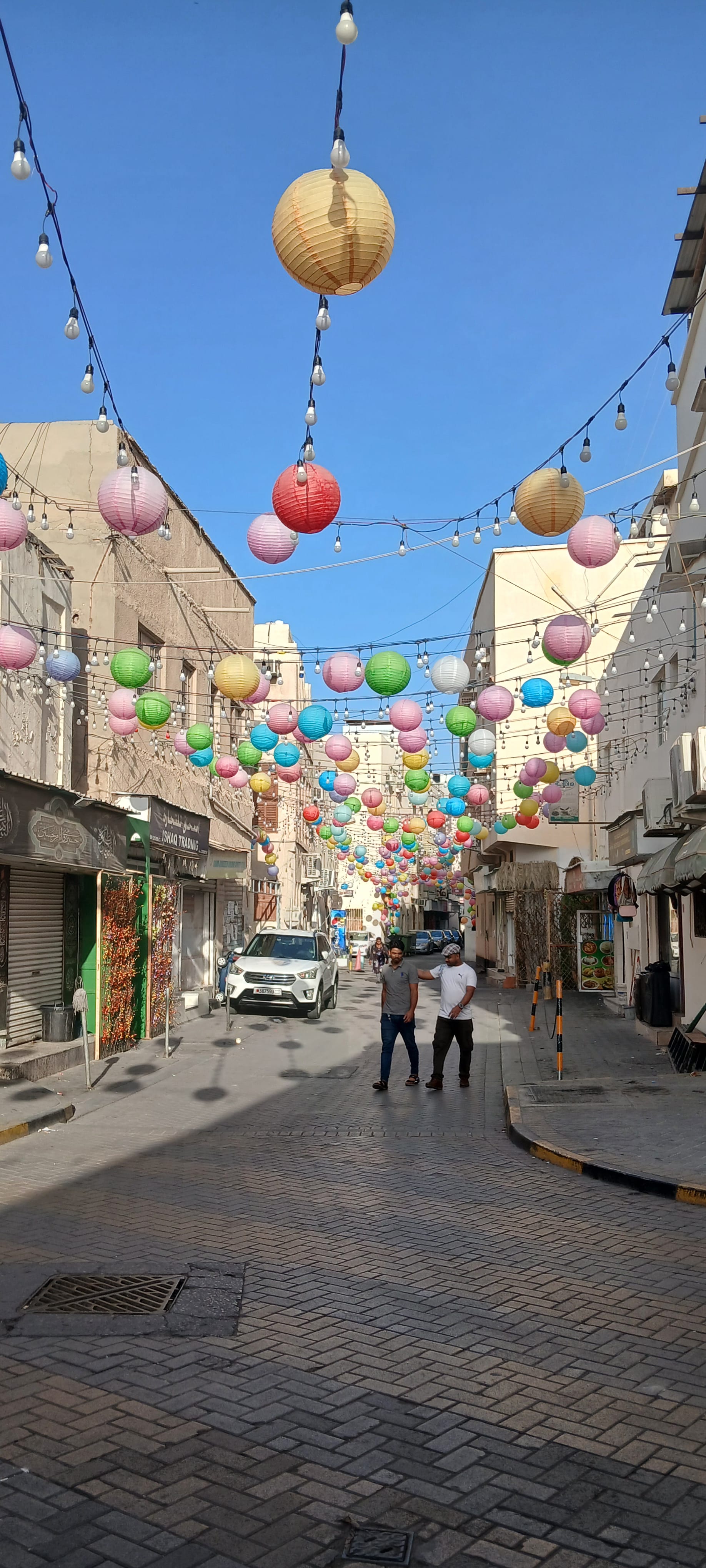
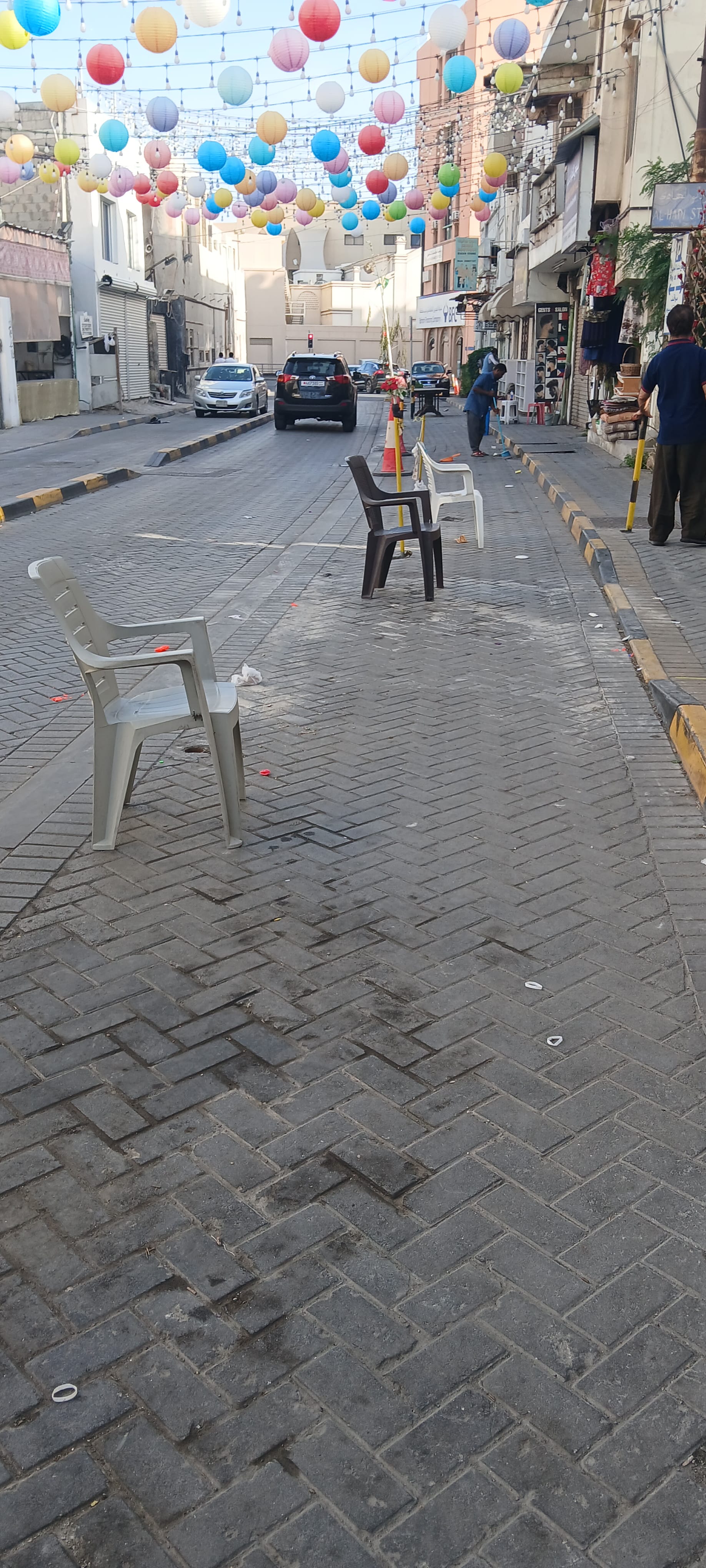
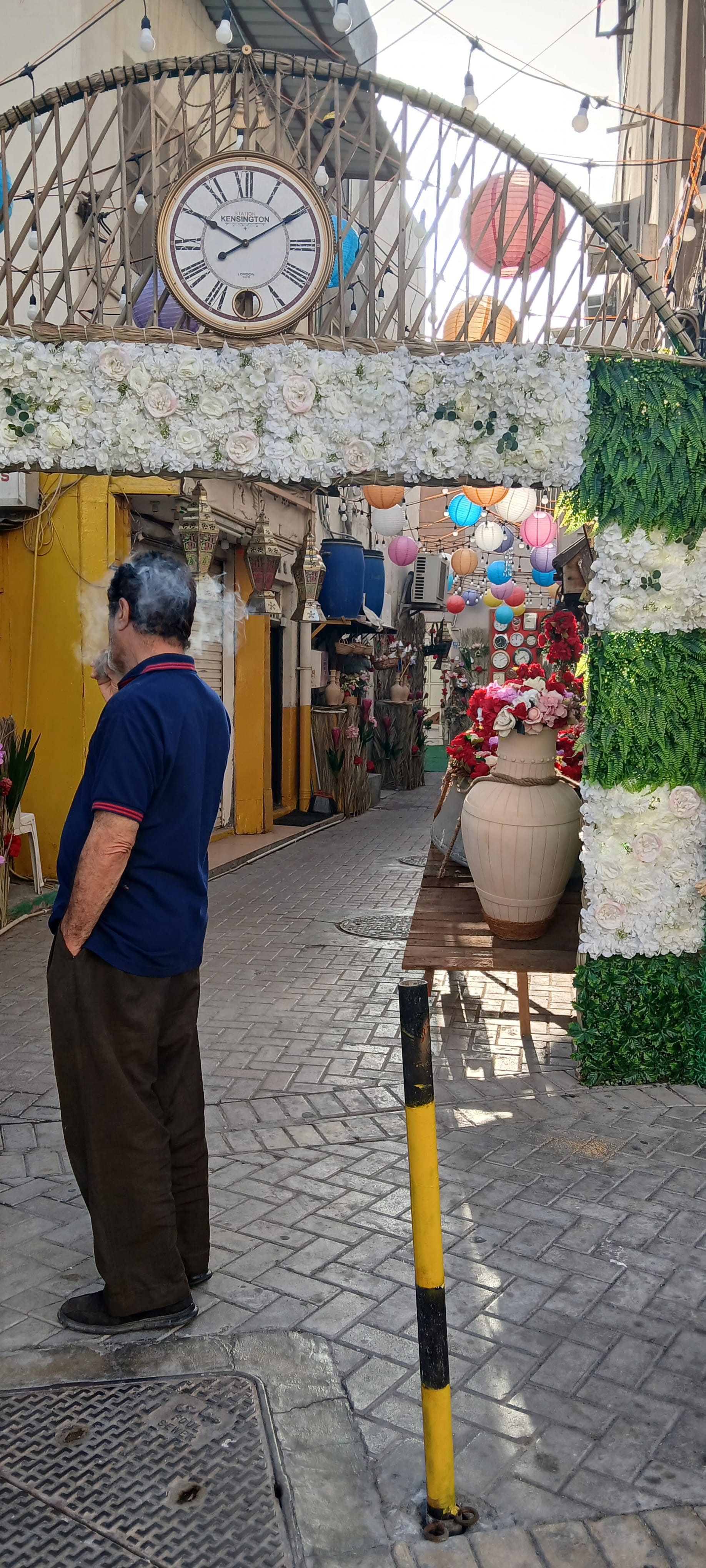
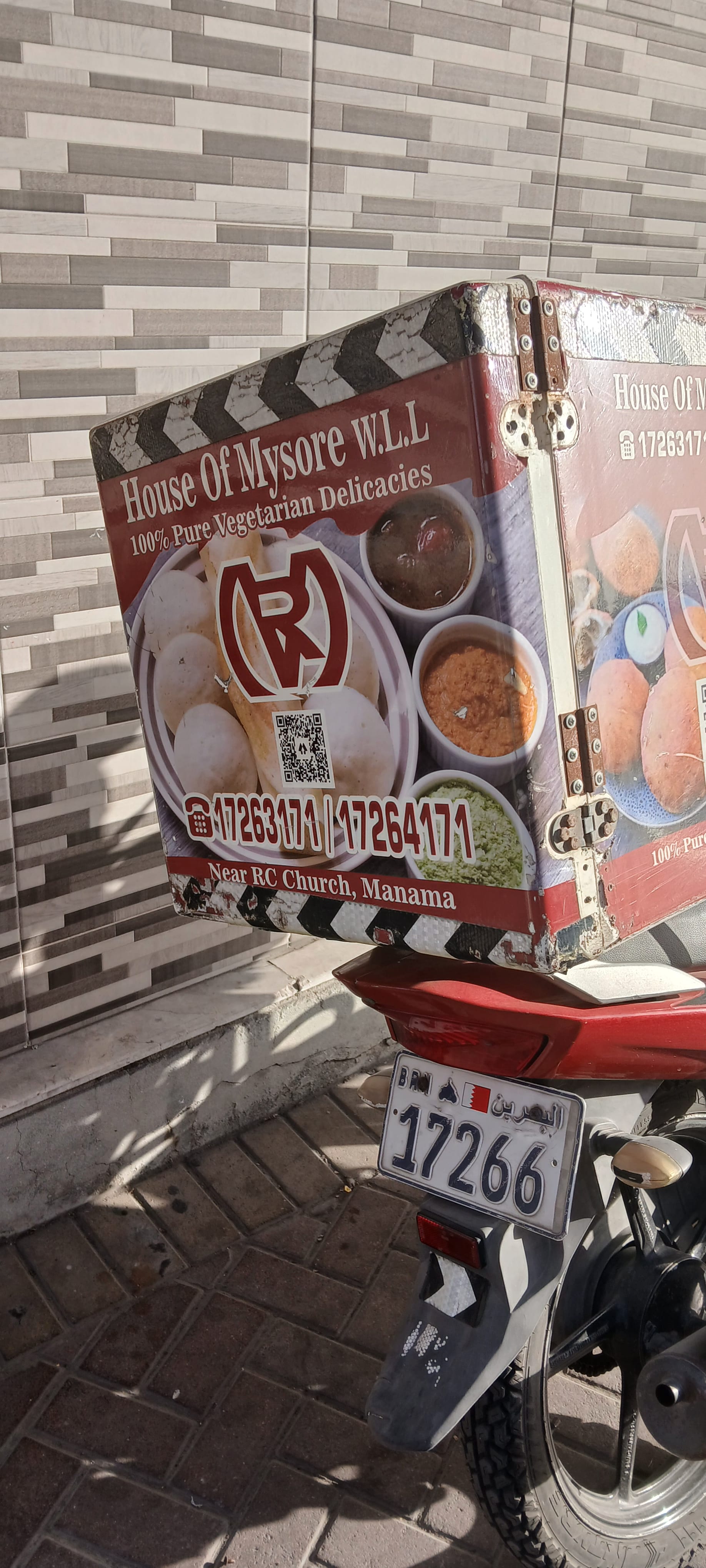
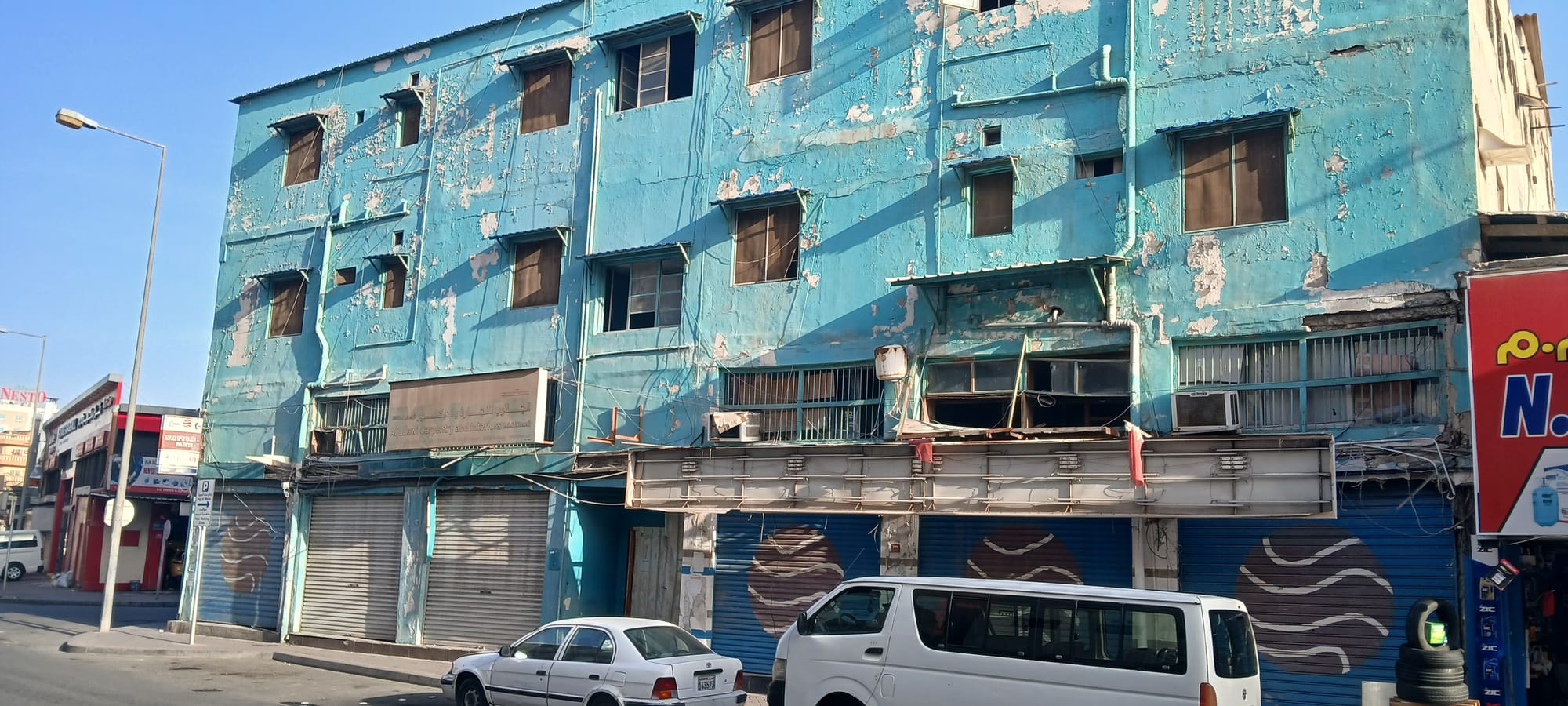
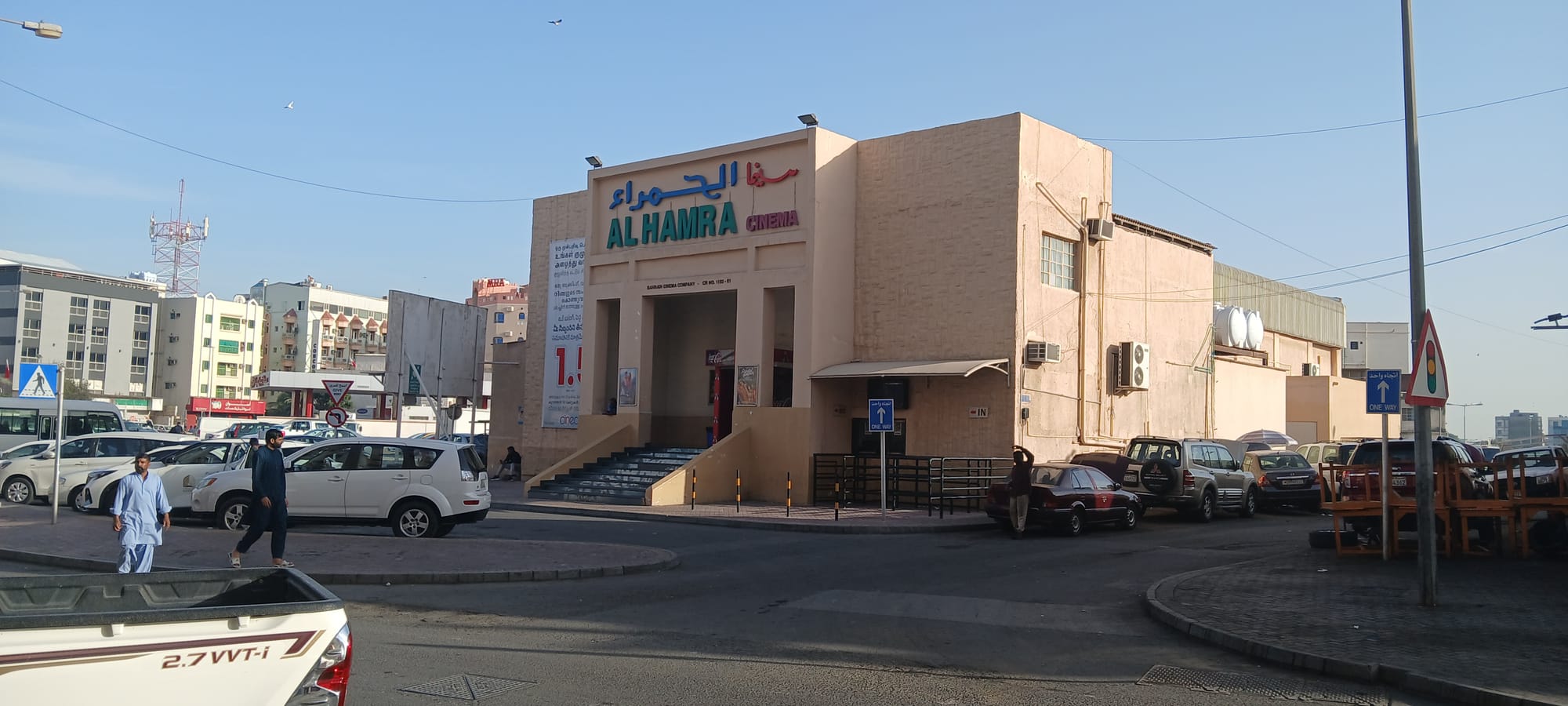
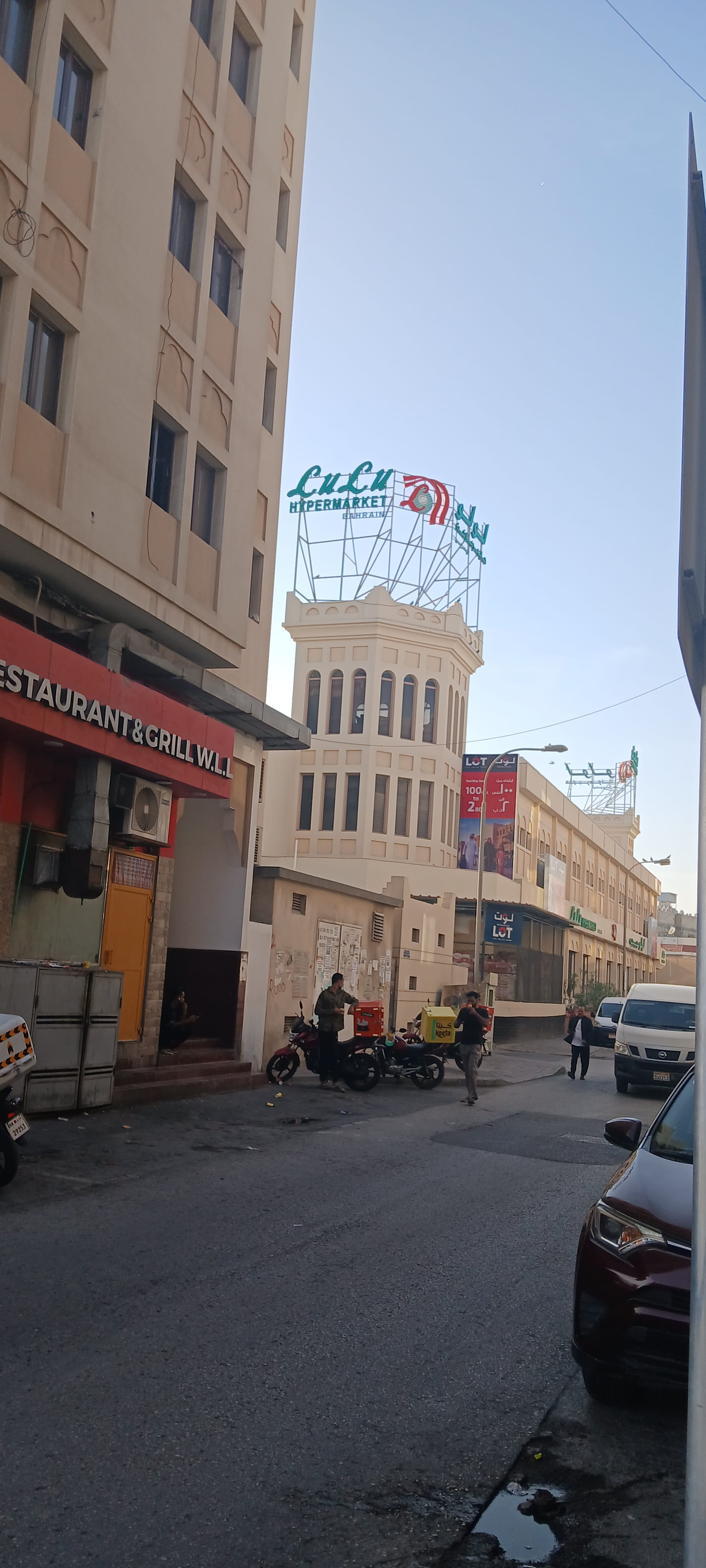
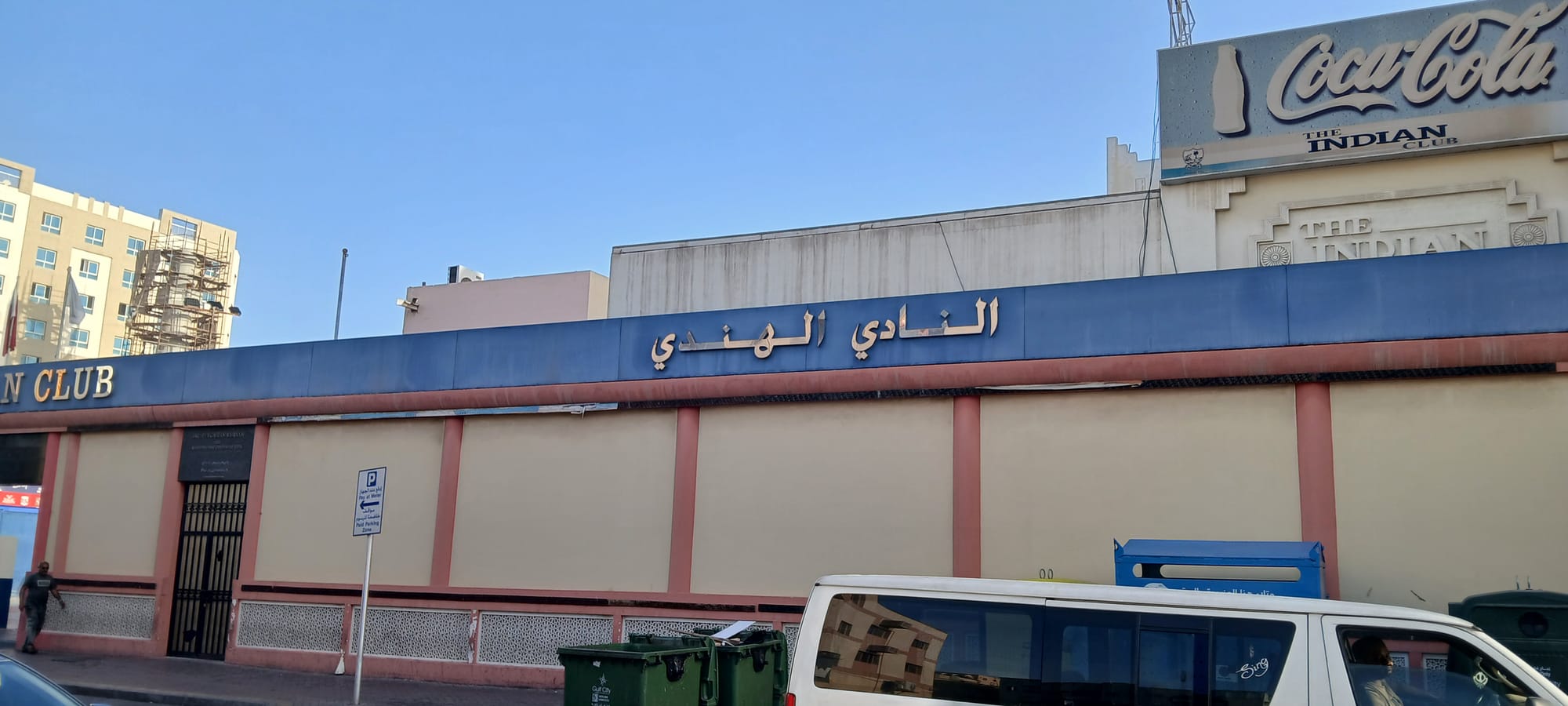
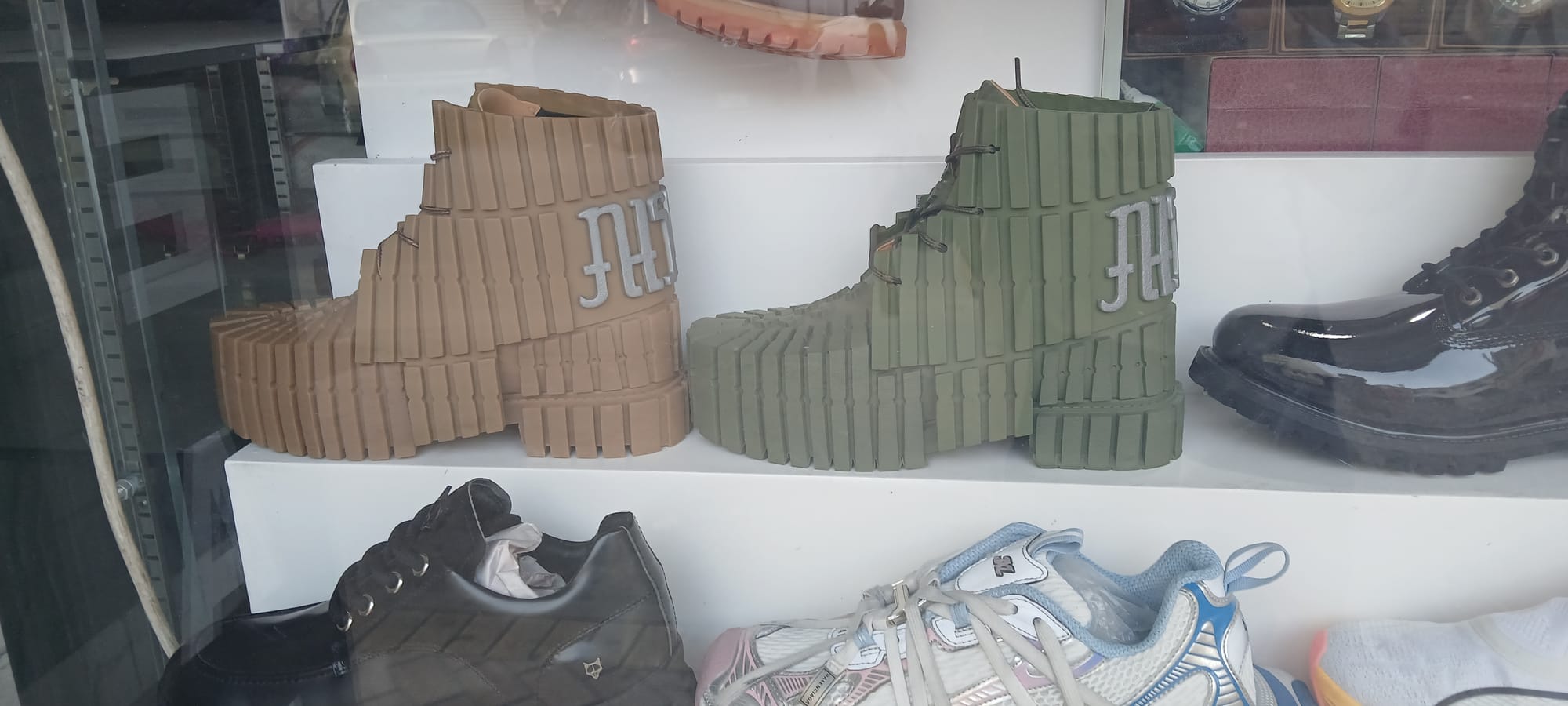
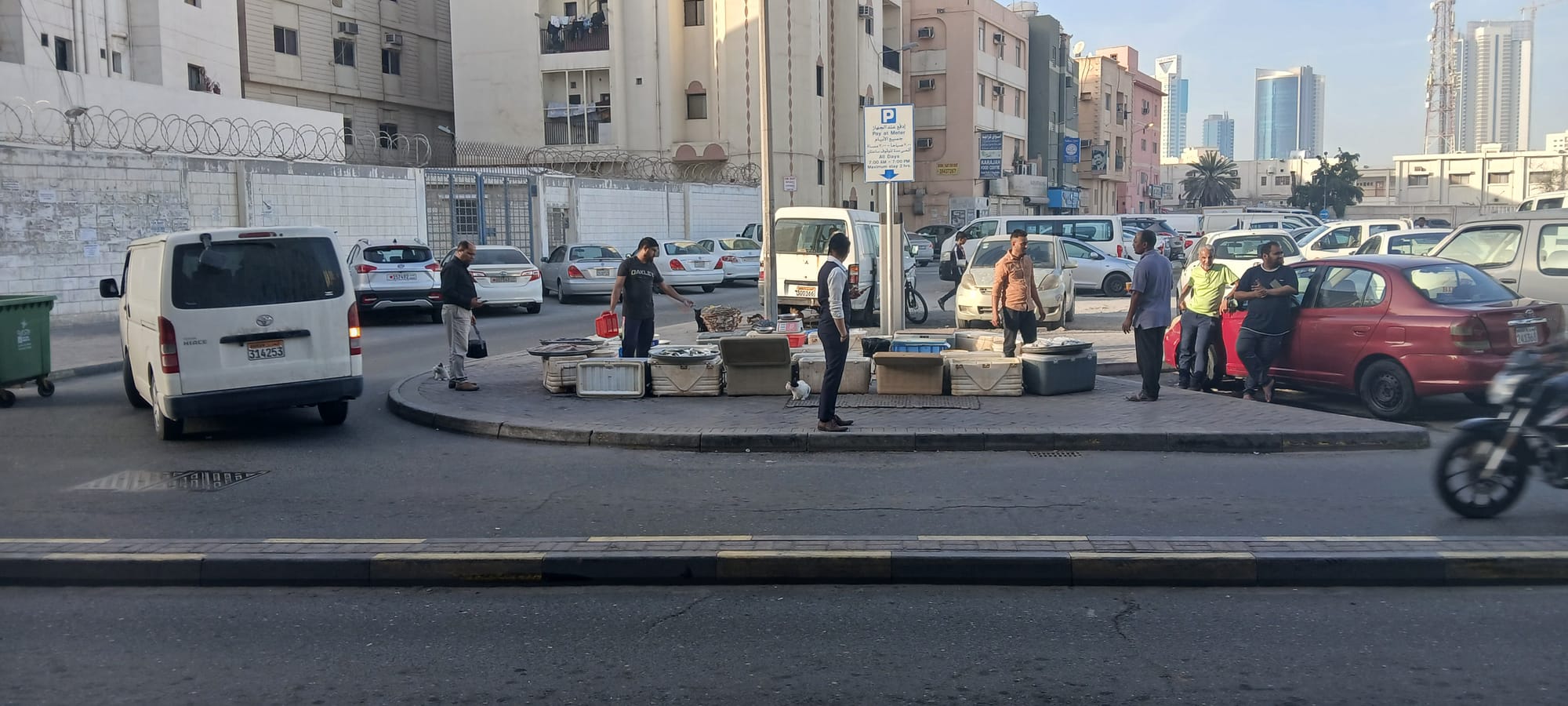
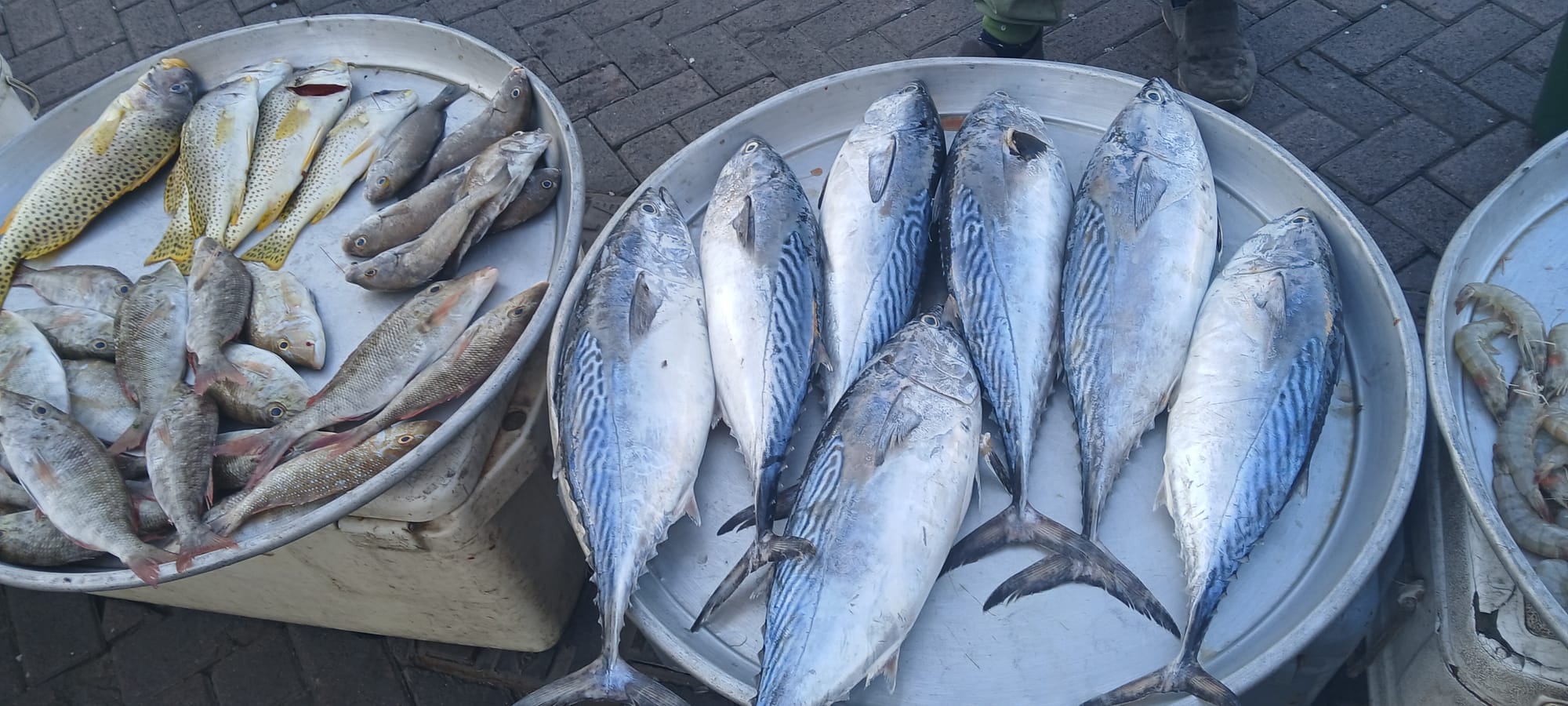
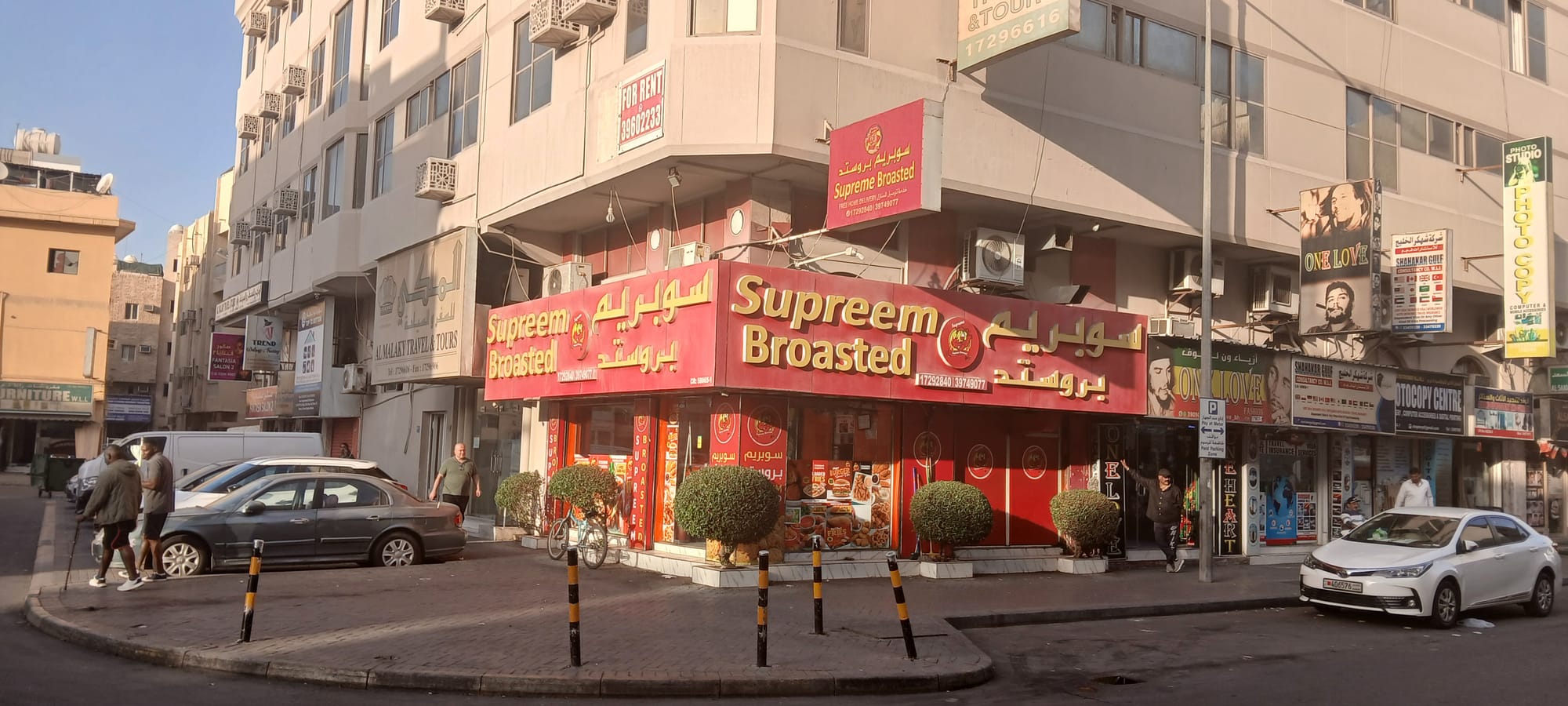
- Zubara Avenue, with open air fish stalls, bottom left tuna; bottom right shout-out to Supreme Coffee Bros.
return to Juffair:
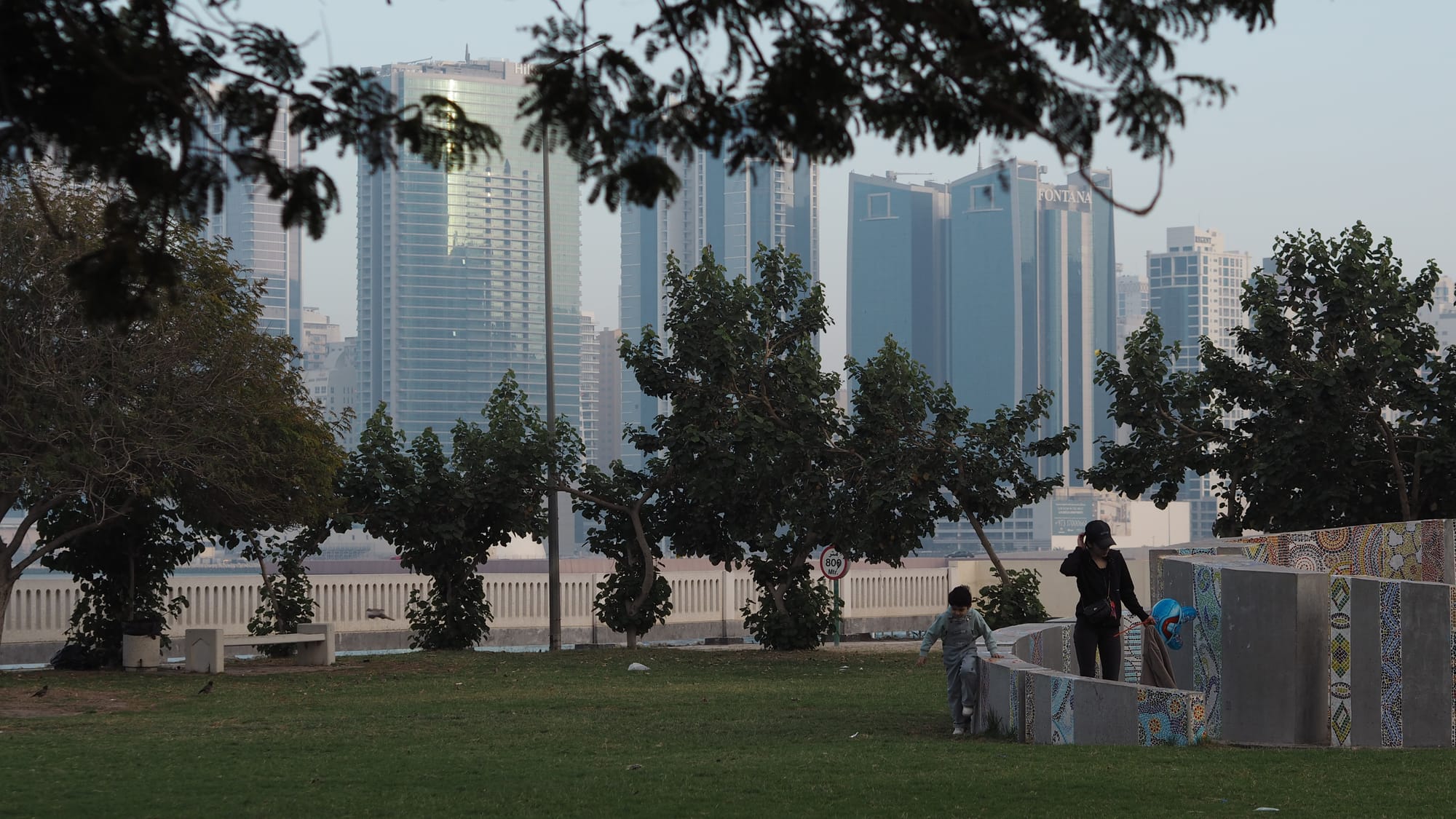
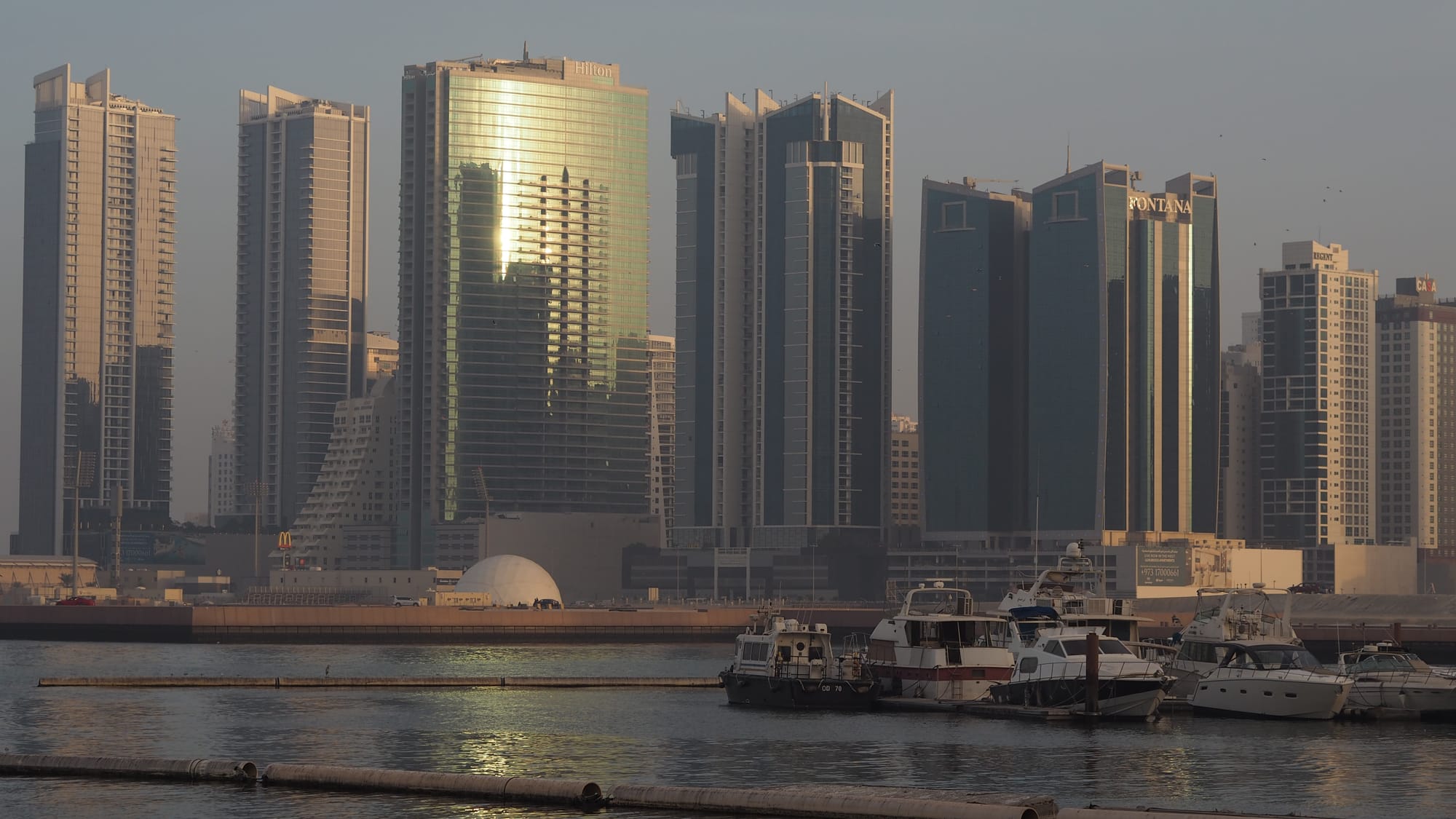
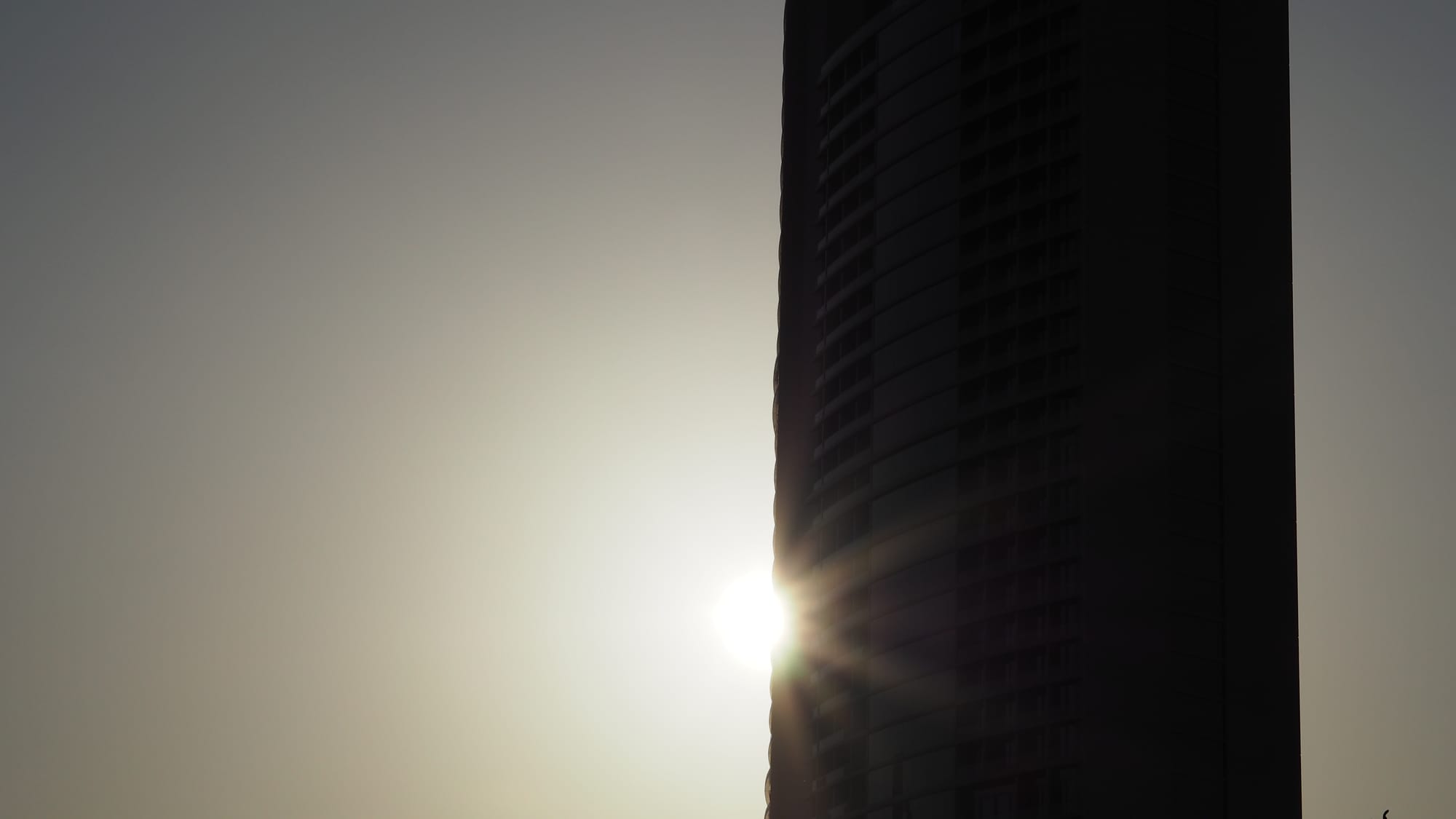
- the sun on Sukoon
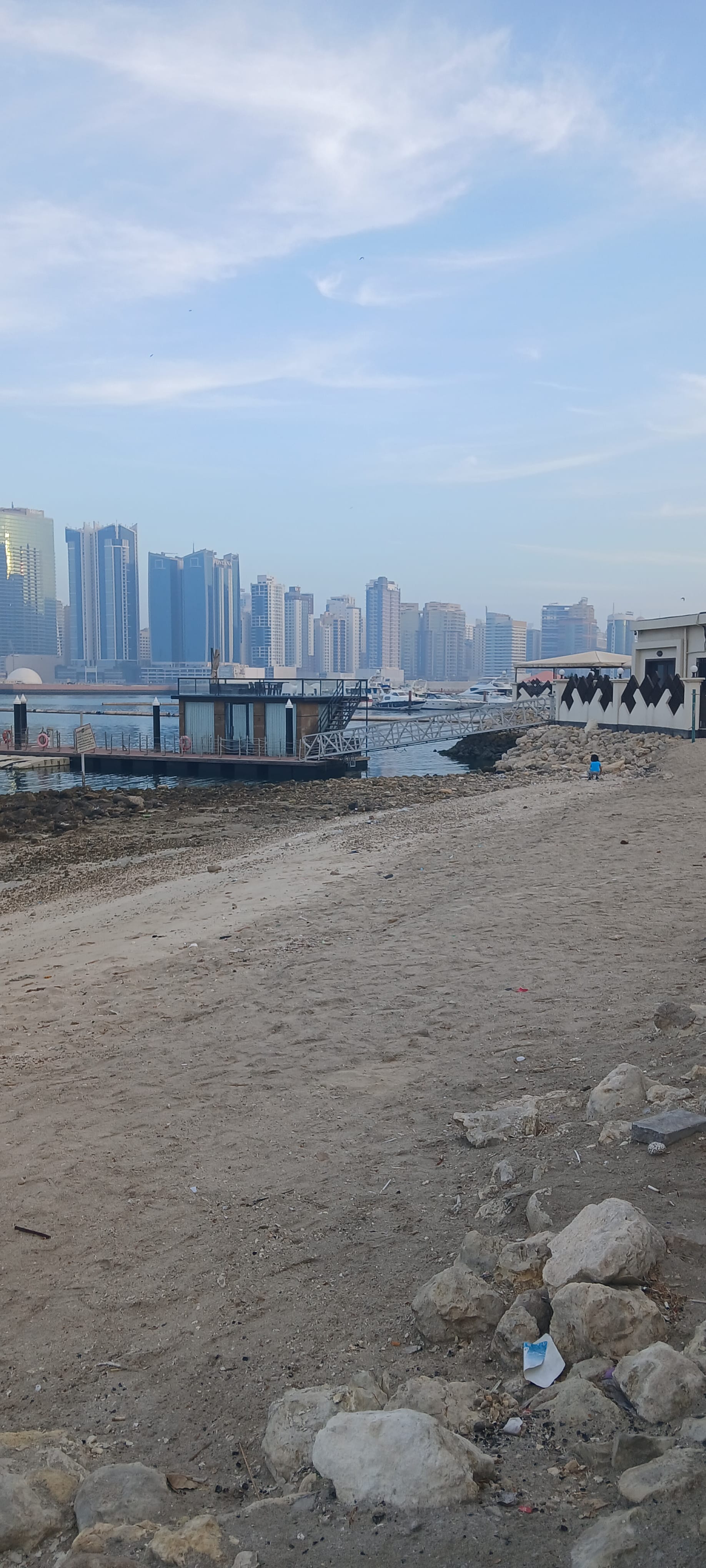
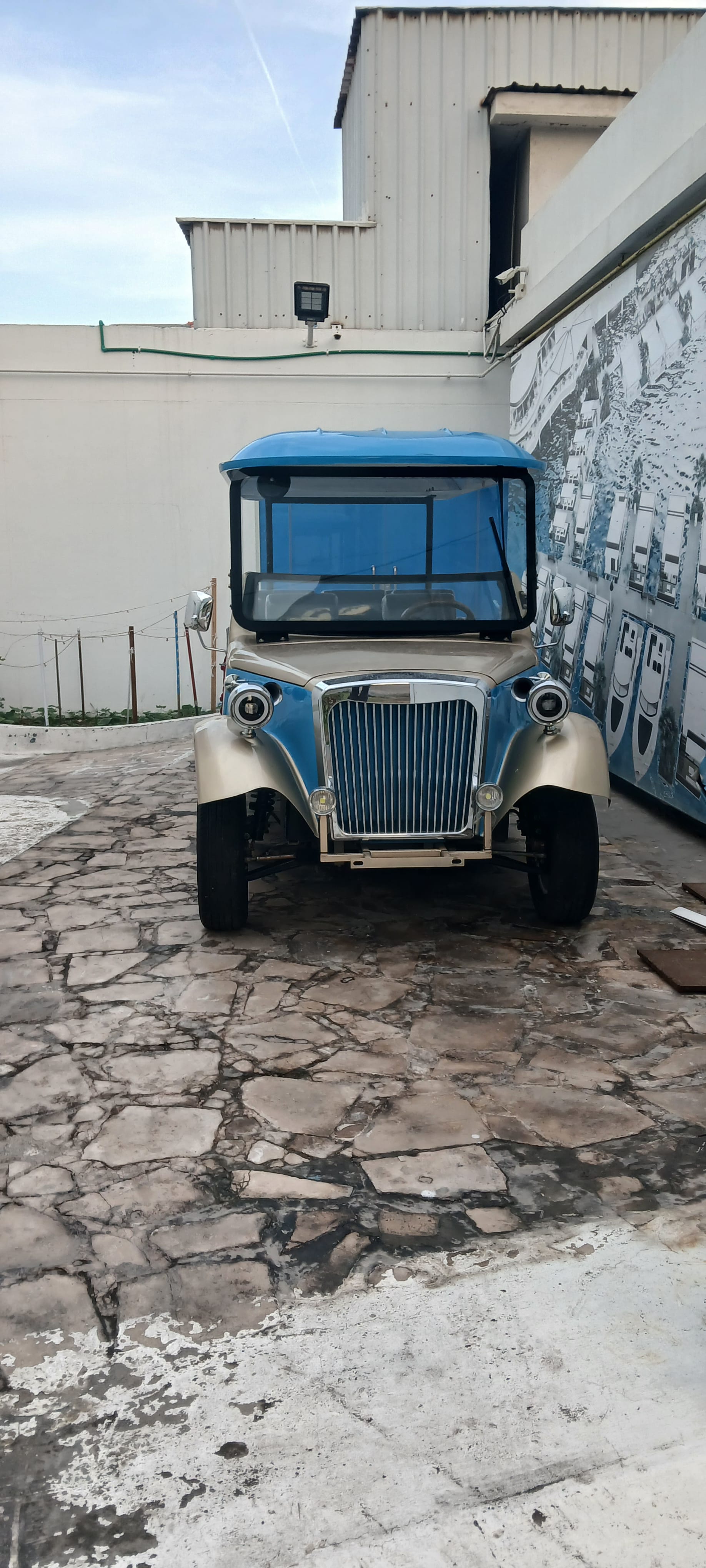
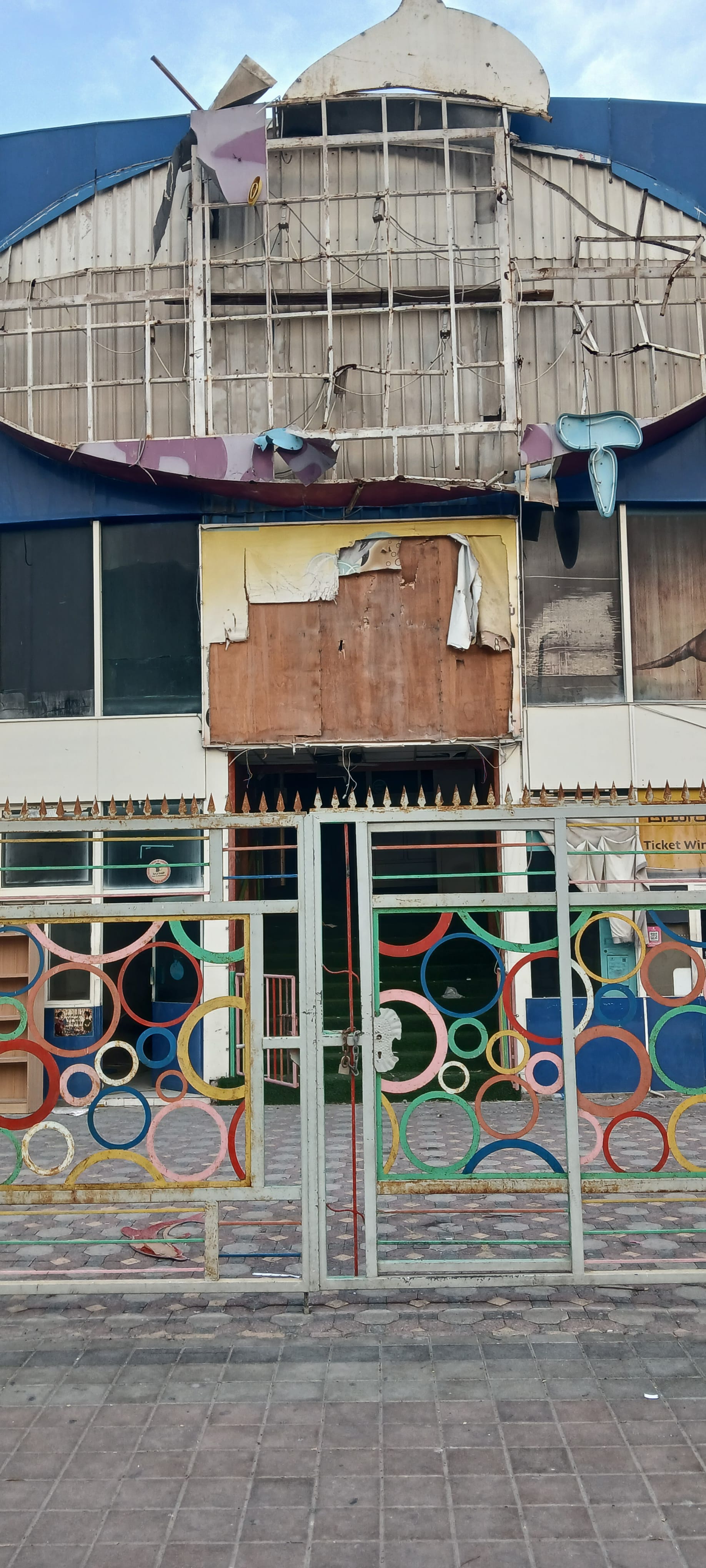
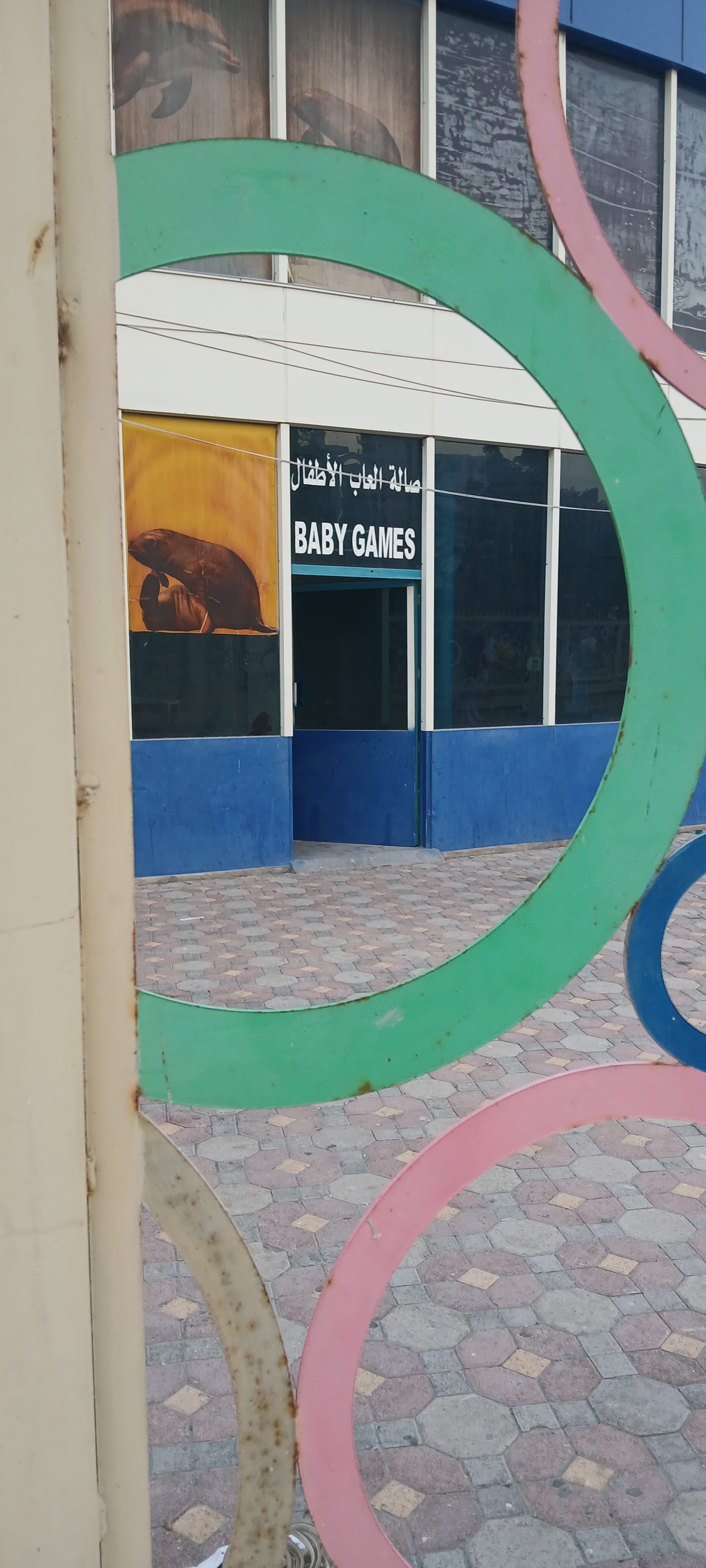
coda:
حب من البحرين، سيمون