... "it's hardly clear what good any novel can do for the poor, displaced people now picking their way through ... rubble." E. Frank, Stranger than Fiction, 2024, p. 303
This world, where a chicken could run without a head, where there was milk in the morning and frogs he could get to dance by holding their front feet—this world still preoccupied him.
All this time David was being clasped by strong warm hands. He didn't feel his eyes go dark, his heart become empty, his mind grown dull and blind. He had been killed; he no longer existed.
Sofya Levinton felt the boy's body subside in her arms.
–Vassily Grossman, Life and Fate (vol. II, For a Just Cause, vol. I) at ibid., pp. 296–297
... as [Grossman] describes with his journalistic eye a scene he could never have seen, entering into the hearts and minds of two people dying together and alone, two people who are just like us and, mercifully, not us, though they could be. He shows us Sofya's eyes, the physical organ of vision, and what are told those eyes have done?
–Frank, ibid., p. 297
Her eyes—which had read Homer, Izvestya, Huckleberry Finn, and Mayne Reid, that had looked at good people and bad people, that had seen the geese in the green meadows of Kusk, the stars above the observatory at Pulkovo, the glitter of surgical steel, the Mona Lisa in the Louvre, tomatoes and turnips in the bins at market, the blue water of Issyk-Kul—her eyes were no longer of any use to her.
–Grossman, op. cit., at ibid., p. 296
They have read. They have tried to establish a point of view on reality, whether from reading the newspaper or an American author. We see, in her final glimpse of herself as a mother ...
–Frank, ibid., p. 297
This boy, with his light, bird-like body, had left before her.
"I've become a mother," she thought.
–Grossman, op. cit., at ibid., p. 297
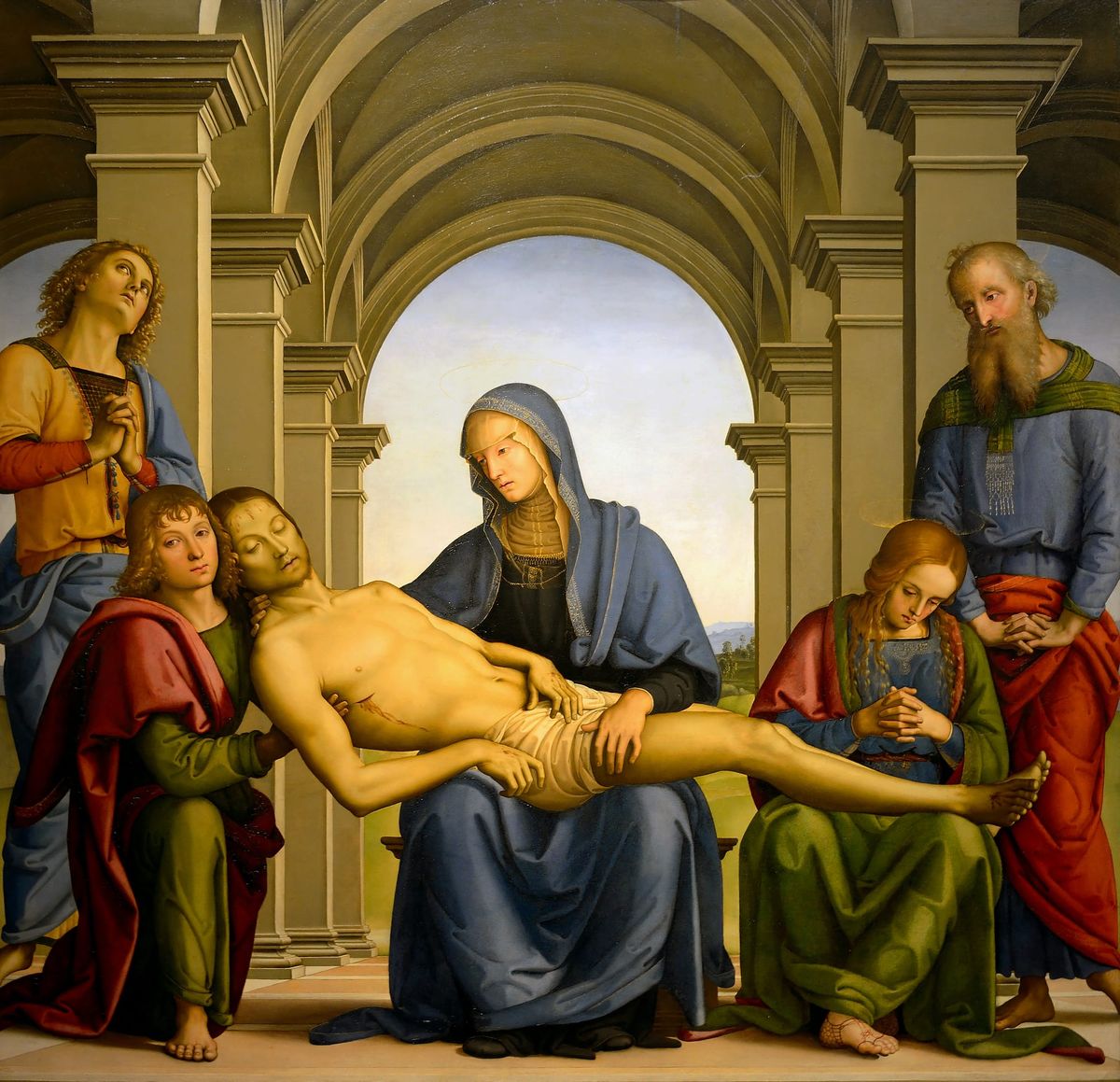
... a mother, someone still yearning, as well as a not-yet-extinguished sense of irony that we in turn experience as bitter irony and deep pathos. We see David, his mind mixed up to the last moment with the stuff of life, including—those dancing frogs—the casual cruelty that exists on a continuum with the deliberate cruelty of the men who have brought him here to kill him. We see all that, and perhaps also in the background the fairy-tale figures of Hansel and Gretel and Brother and Sister, and it is probably not necessary to point out the allusion to the Madonna and Child.
We see that all points of view end here.
–Frank, ibid., p. 297
Things have come to nothing. Things have to be rebuilt from the ground up and, one way or another, will be rebuilt; and one way of addressing the damage that has been done will be to work the questions and uncertainties it raises into the new work. Much of that work will be the work of mourning.
–Frank, about to read Anna Banti's Artemisia, 1947, ibid., p. 301
Reflections on Damaged Life is the subtitle of Minima Moralia, by the German philosopher Theodor Adorno, a set of bracingly dour fragmentary reflections on the impossibility of leading a truly reflective life in the modern world, which is to say after the outbreak of war, after the death camps, and in a newly triumphant America, where Adorno wrote the book as a refugee from the Nazis. He begins with an encomium to Proust, the independent and independently wealthy artist par excellence, and the kind of great writer that what Adorno excoriated as "the culture industry" existed, in his view, to suppress. Culture, in Adorno's mind, was what could not be reduced to product or content, but in the world of the mid-twentieth century, whether you were in Hollywood, Berlin, or Moscow, this was what the powers that be had conspired to turn it into. Official culture was designed to degrade the appetites of audiences, the better to destroy true culture and with it the freedom it grew out of and the freedoms it sustained.
–Frank, ibid., p. 317
Adorno ... could easily be a character in a novel by Vladimir Nabokov.
–(whose Lolita, submitted for publication in 1953, and rejected, published in 1958, Frank is about to read), ibid.
Hemingway
... stood apart as an American because he was always an American apart ...
–Ibid., p. 338
Another word that recurs throughout [Ralph Ellison's] Invisible Man [1947] is absurd, and in the riot at the end of the book it is ... Ras the black nationalist who seeks to string up the protagonist from a Harlem lamppost, just another part of "the absurdity of the whole night," but equally of the absurdity of "the simple yet confoundingly complex arrangement of hope and desire, fears and hates, that had brought me here still running." Thanks to that, however, he at last knows "who I was and where I was and ... too that I no longer had to run" from the white and black preceptors and preemptors who have driven him on his way, but "only from their confusion, impatience, and refusal to recognize"—and here we come full circle—"the beautiful absurdity of their American identity and mine." ... the real recognition the hero arrives at is, simply enough, "it was better to live out one's own absurdity than to die for that of others. This is not much, but it is something, and having come to this realization, he turns to speak not as he has been told to speak, and not—though it is important that he has finally learned to do that—for himself alone, but to the reader. He speaks for himself and for the possibility of community, even if that possible community still lies unseen around the corner. He speaks for the necessarily invisible entity that is us, at home and in the world at large, beyond the visible differences we can all all too easily tot up.
–Ibid., pp. 349–350
Who is this narrator, at times so knowing, at other times quite in the dark and yet so devoted to the novel's characters? Surely it is the author, yet we are never told that it is. We are never told who the narrator is because in the end, I think, the narrative voice is meant to stand in for us, any and all of us, observing other people and the world at large, trying to make out what is going on, and doing so by a continual, provisional comparison of how things look to us and how, we imagine, they may look to others. This narrative voice proceeds by a continual projection of the imagination, and it is this common lived world of the imagination—the reality of that, the necessity of that, our only saving truth if there is one—the book is meant to evoke in us.
–(the book is Elsa Morante's History, 1974) ibid., pp. 388–389
see also the concept of perception-imagination as it contrasts with memory-recognition in this article.
What is poetry which does not save
Nations or people?
–Czesław Miłosz, at ibid., p. 390
[A partisan] burst out from the brush onto the trail, saying with a twisted laugh: "No, wait. This one's mine." ... In determined raging hatred [he] aimed a terrible kick, with his heavy boot, the man's flung-back face. After an instant's pause, he repeated the action, exactly the same, and again, several times, always with the same mad violence, but with a strangely calculated rhythm ... [the] kicks, in their grim heaviness, following one another at regular intervals, as if marking an incredible time in an immense space ...
The German had reacted with a stifled, rattling scream, which still sounded rebellious; but his screams had gradually weakened until they were reduced to a little feminine moan, like a question steeped in a nameless shame.
–Else Morante, op. cit., at ibid., p. 390
And with that moan of shame we are taken back to the "guilt in being born" of the animals, which links them to the sacred. Sacred shares a root with sacrifice, and what we witness here ... is an act of human sacrifice, the partisan seeking not only to kill the German but to kill his own humanity, acting, we would say, like an animal, though only the human animal acts that way.
–Ibid., p. 390
see also "seven eleven" and cf. the shame at being human of Primo Levi, explored in What is Philosophy?, Deleuze and Guattari, pdf. online
Written, in spite of the horror it documents, with an overflowing, even joyous, energy, History turns on History to offer a defense of innocence against all the odds and does it by asserting and defending the primal innocence of storytelling and make-believe. [cf. imagination above] ... an innocence that is common to all humanity, an innocence, a commonality, that the voice of the book continually asks us to imagine, one that the twentieth-century novel has, to its own shame, neglected. This common innocence is not to be confused with guiltlessness. Guilt is also common to humanity. ... Even good men have bad dreams, Socrates says in Plato's Republic, but the converse is also true, and we could say that dreams are where the possibility of humanity—which is to say our sense both of guilt and innocence, of shared responsibility and love—is preserved in any of us ...
–Ibid., p. 392
Reading online is a restless, demanding occupation—more like hunting and gathering than agriculture ...
–Ibid., p. 412
Austerlitz's scholarly interest, he tells the narrator, is the architecture of late capitalism—like the train station, devoted to the flow of people and goods. He is also interested in the architecture of public institutions—train stations, but also hospitals, libraries, museums, fortresses, prisons. After all, the flow of goods has long been lubricated by the flow of bodies and blood.
–Ibid., p. 416 (on W.G. Sebald's Austerlitz, 2001)
... the dissolution, in line with the inexorable spread of processed data, of our capacity to remember ...
–Sebald at ibid., p. 419
There is, Sebald is intimating ... a peaceful community of the dead that is greater than the deadly community of the living. ... Can the living attend to the dead or the dead to the living?
–Ibid., p. 420