A Delicious Event
after Samanta Schweblin
The idea began as a recipe and became a recipe for writing a short fiction. Credit goes to Carmela Padua for the idea, which I connected to an interview with Samanta Schweblin in Bomb magazine. (Issue 173 / Fall 2025, pp. 40–47; online) In the interview she says (the quote is long but every part I think is necessary):
People say that everything has already been written and there’s nothing new to write. I think that’s true, but only in the most boring aspect of fiction: plot. For me, fiction isn’t about plot. The plot is a bridge that conveys a precise feeling from my chest into someone else’s. The feeling is so exact and unique that you need an extremely long set of instructions. I’ve read somewhere—or maybe it’s my idea—that writing fiction is like trying to tell a friend how to find your spare house key when you’re not home and the electricity is out. You know exactly where the key is, but it’s a complicated place to reach. You tell your friend to go inside and take three steps, and then if they reach out with their left hand, they can open the curtains and let in some light. They’ll see a set of stairs—they shouldn’t take those. They need to take the back stairs instead, but there’s a sofa in the way, and they need to go around it to the right. . . . The problem is that it takes so many directions to reach one place or object that it’s easy to make mistakes. If the reader turns the wrong way, all the subsequent commands will be incorrect. That’s why writers must be so careful, and that’s why fiction needs to imbue an object, idea, or conflict with a particular emotion.
–"Samanta Schweblin by Megan McDowell," Bomb, September 15, 2025
Then:
When I say I start with an emotion, it doesn’t mean that I know from the start what that final emotion is— ...
I can’t fully see or describe the emotion until I start working out an idea, but it’s the end I’m moving toward.
–Ibid.
Recipe:
1–5=ingredients
6–7=method
A set of instructions (noting that the plot is not important):
- The situation, describe it;
- The mood of that place (which isn't at all to do with the "final emotion");
- the mood will be affected by:
- the sort of place it is, open, enclosed, elevated, deep, terrestrial, oceanic, solid, watery, gaseous, solar, sidereal, local, distant, internal, external;
- the atmosphere at the time: is it raining? light and bright? is there wind or movement in the atmosphere? does it change? is it changing?
- who is there:
- is the character alone? (is the character a person? It will be affected by who the character is. Is it you? Is it plural? Is it us? Is it them?)
- if not alone, who else is there? (Is the character aware of them? Does the presence of others affect the mood but not the character?) Are they known? are they knowable? Are they friendly or fierce? communicative or incommunicative? Dominating or dominable? wild or tame? of the place or strange to it?
- the mood will be affected by:
- Is action called for?
- is it immediate?
- is it under consideration? is it potential?
- Are there the potentials for danger? Is, are the character/s at risk? Is the character aware of the danger?
- Does the action come from the character, or characters? Do they want something? Are they seeking something?
- Does the situation the character or characters find themselves in hold the promise of something? Is she, he, it, are they aware of the promise that the situation holds for them? Or is it only hinted at? implied?
- Is no action called for ... so far?
- What are the sensory attributes of either the character, characters or belonging to the situation and atmosphere?
- smell: does it? what of?
- listen: what is that sound? Is it quiet and faint? Is it the first hint of an oncoming storm? or locomotive? Is it a high whistling? Is it a low rumbling? ... Is that music I hear?
- what does the air taste of? (is there air? or is the character inorganic? inanimate?)
- is there another kind of taste? food? drink? are they part of the situation? include these as necessary;
- which brings us to a necessary instruction: TASTE YOUR DISH! i.e. read it to yourself—what's missing? salt? heat? ADD NOW! ... from now keep on TASTING WHAT YOU ARE MAKING REGULARLY!
- does the taste arise from another source? from a feeling inside the character, for example? What is it? Fear? an unpleasant taste ... or a pleasant sweet one?
- touch: what is that brushing against the character? What is that warm breath down their necks? or is it a chill breeze? Are the little hairs standing up on the backs of their necks? ... Or: is that slime they can feel between their fingertips? ... what is that cold rising feeling that starts at their toes? Is it ... water?! or something worse? Do they touch something expecting one kind of feeling and get something else entirely? ... like touching a frozen lamppost with the tip of their tongue and finding it sticks?
- see: can they? Can you, writing, see them? Can you see them clearly? Can they see themselves? ... Do they know what they are and how they look? ... Is it a monster who thinks she's a beautiful princess? Or a frog who regards himself as divine? Or the opposite? ... What else is there to see around here?
- TASTE again:
- if there is too much of something take some of it, perhaps all of it, away; beat the mixture! Taste again: was it necessary? Do you need to leave it out? Even if you don't want to, perhaps you should. Think of the reader, to whom you're going to be presenting your dish, who's going to be trying your dish soon...
- Do you need to add something? Has the character not done their bit? Have they not come through with the goods? ... Get them on the move! Shouldn't they be reacting to the threat of annihilation that confronts them now? Is it the situation? Is it sufficiently there? ... Or, perhaps it is all too obvious. So see a. take something away.
- Try your dish: try it without something you thought was necessary. Add something, a detail, an extra adjective. What does it change? Better or worse?
- Order: is everything in the right order? perhaps the instructions are to blame and you should have started with the detail you added at the last minute and ended with the situation you described at the start?
- Re-ORDER your sentences. Mix it up. Better keep a copy. You might want to change it back.
- TASTE, meaning read through, your text, your dish.
- PREPARE YOUR DISH FOR PRESENTATION: final checks. Are all the details there? are all the words you need there? Is it fully cooked? ... PRESENT!
No one will be judging you ...
but ...
[HERE IS WHERE THE DISHES ARE TRIED: EACH ONE.]
... they will be following your instructions, because these are the precise instructions that you have prepared for them to end up with a ... [HERE IS THE TWIST ENDING] feeling, a ONE-OF-A-KIND final emotion.
FUTURE EVENTS—inspired by Samanta Schweblin:
I: what did you like? ... a negative that does good ...?
When she was six or seven years old, her grandfather took her on outings, every fifteen days. The arrangement came about due to her grandfather's estrangement, when he had divorced Schweblin's maternal grandmother. He was, she says, training her to be an artist:
He always insisted that I pay close attention to what I wrote. For example, if I said I liked going to the museum, he'd say, "Great, but what did you like specifically?" I might say I liked the Picasso, and then he would ask why. And I'd realize that I liked it because it made me uncomfortable, and he'd press me: "Is feeling uncomfortable something you enjoy? Is that feeling positive or negative?" I'd tell him it was negative, and he'd ask, "Is it a negative that does good, or a negative that does bad?"
–Bomb, Issue 173 / Fall 2025, pp. 40–47, p. 46
And:
II: poetry
The moment I remember most was when I was about ten years old and he took me to see Waiting for Godot. Imagine, a ten-year-old girl watching half-naked men whipping each other on stage. And when I got home, I had to write down my impressions. But I was in shock; I didn't know what to write. So, he walked over to his library, came back with books of poetry by Alfonsina Storni and Gabriela Mistral, and read to me. Whenever I didn't know what to write, he'd read me stanzas of poetry, and whenever a word connected to my emotions, we'd write it down as if we were reinventing those poems. I think the creative act was ignited for me there, in that gesture of using the words of others, words I didn't fully understand yet but that were saying something to me. It was like I was inventing what those words meant.
–Bomb, Issue 173 / Fall 2025, pp. 40–47, p. 46
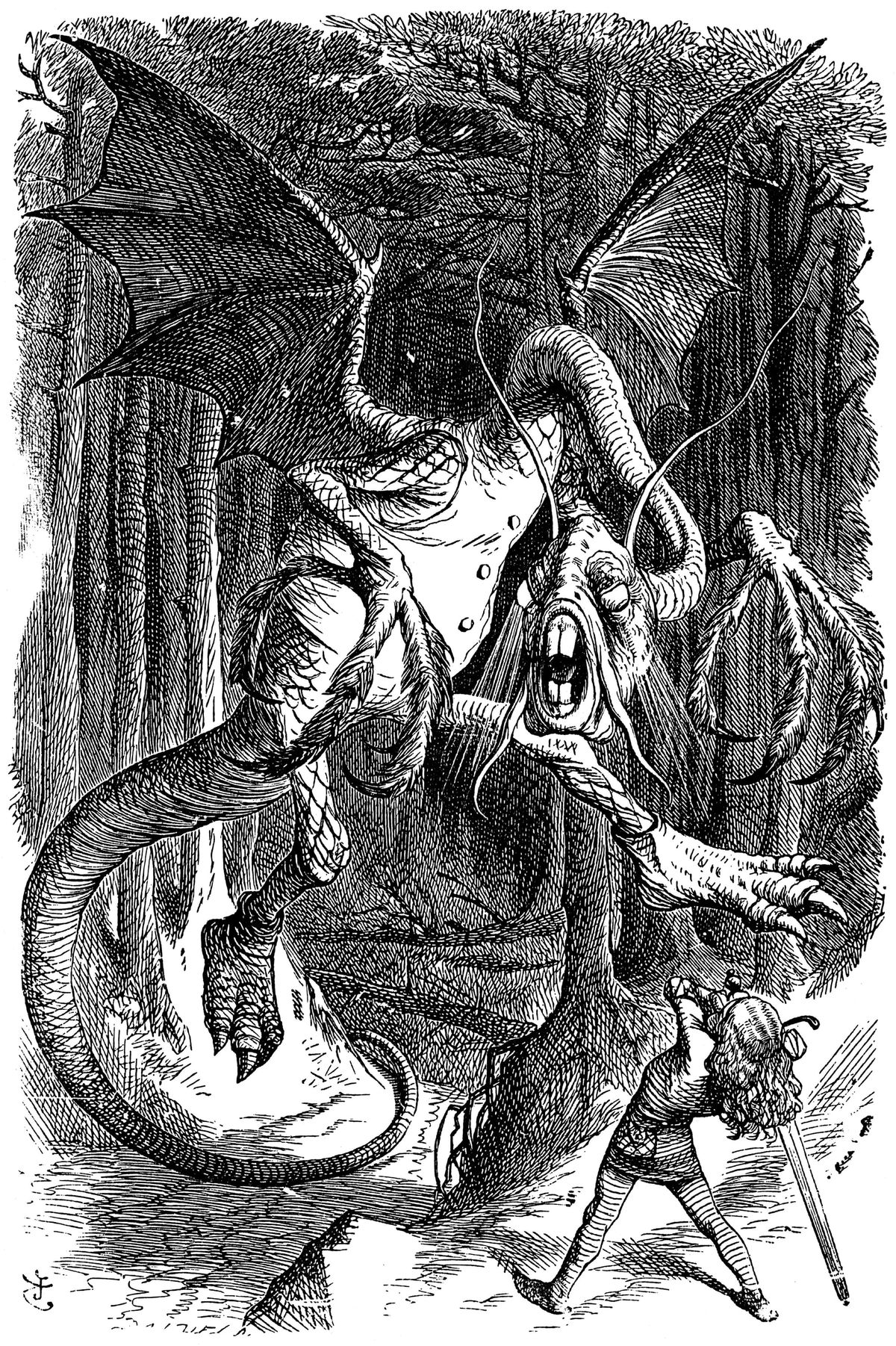
The foregoing have been prepared for Jabberwocky, a literary programme running currently at Waiheke Library for 10–13 year-olds, Wednesday 3.30pm–5pm