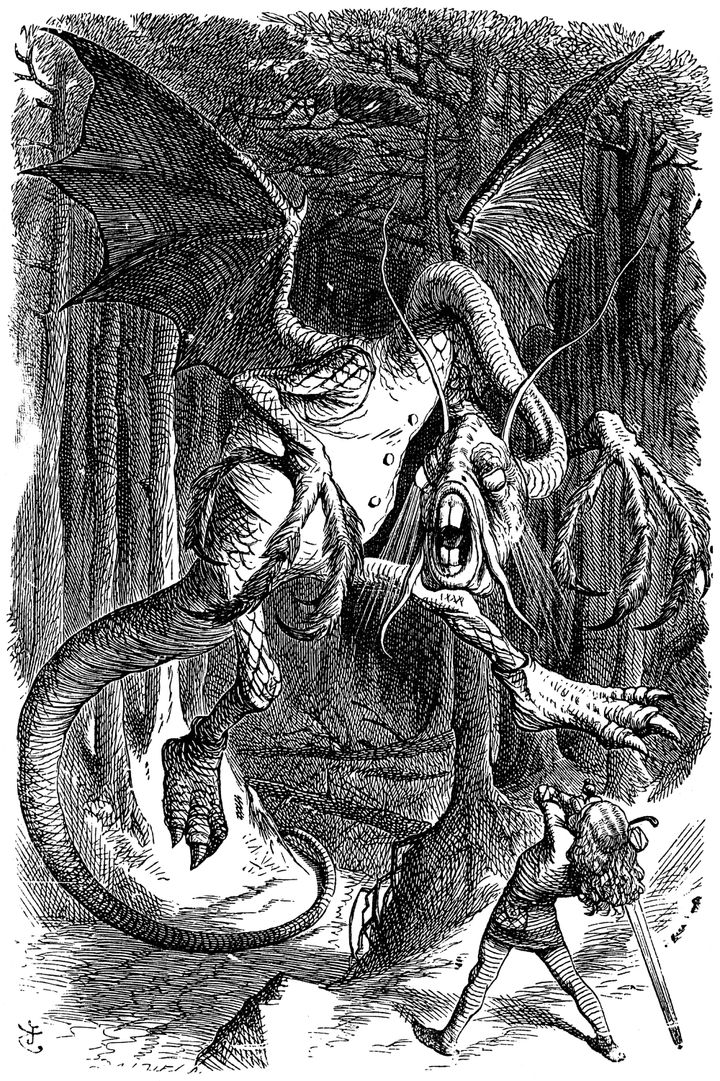
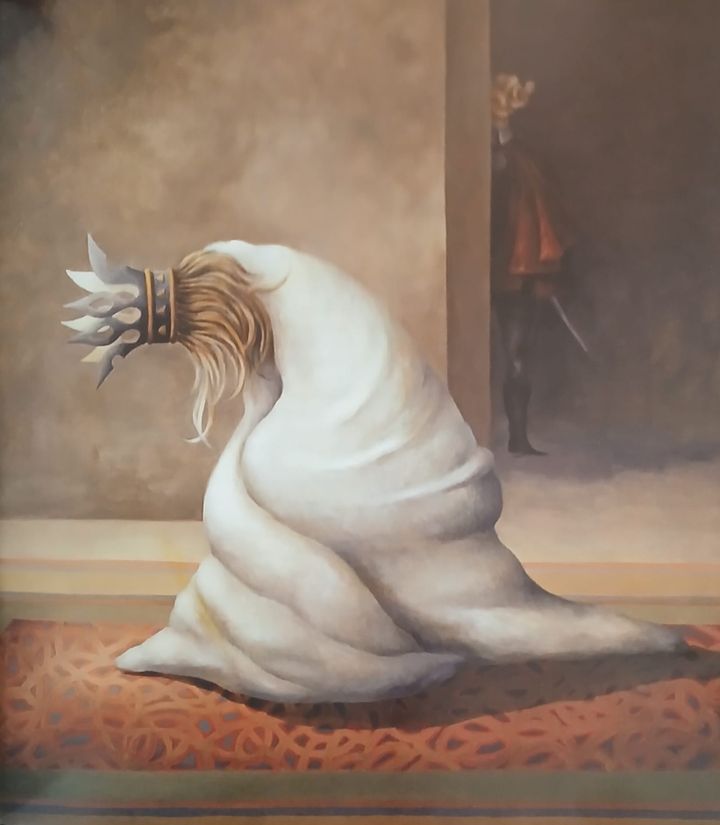
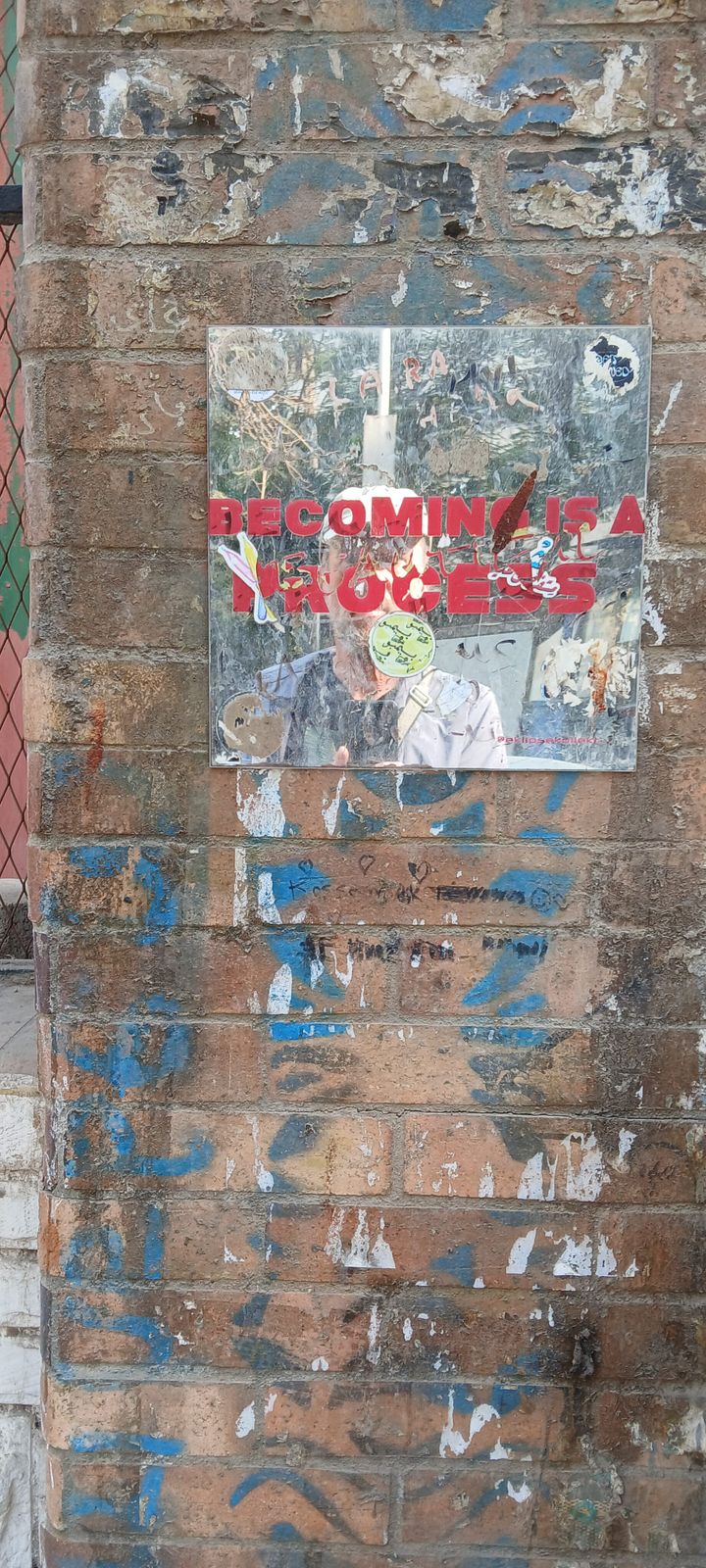
The Challenge of Writing a Novel: world, character creation and monstrosity
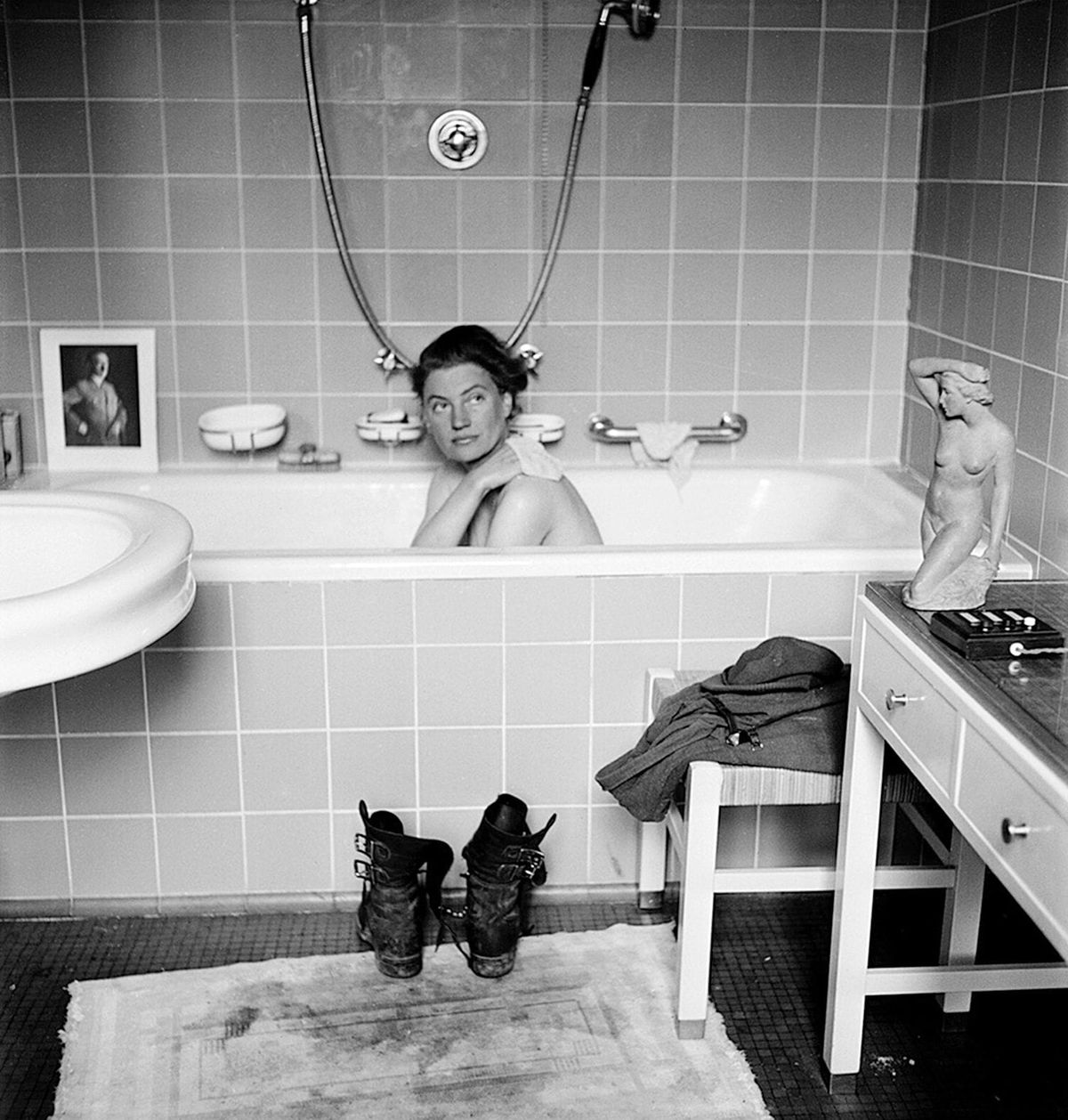
In April, 1975, Harlan Ellison invited the country's top science fiction writers of the day to participate in a unique science fiction conference at UCLA. Four of the writers would create a basic world and planetary system ...
–Bill Ransom, from the Foreword to The Pandora Sequence, Bill Ransom and Frank Herbert, WordFire Press, Colorado, 2012, p. iii
For Frank Herbert, who was involved in the conference, things didn't go to plan. Just before the deadline to contribute to the collaborative work, Medea, which came out of the world-building and story-brainstorming at the conference, his wife was admitted to hospital coughing blood. Herbert appeared at Ransom's door, a mile down the road. Ransom was known in the US at the time, he admits, as a minor regional poet.
Herbert asked Ransom, Can you write like me for $750?
Ransom replied, I can write like anyone for $750.
This began the collaboration which became the three novels comprising The Pandora Sequence: The Jesus Incident, 1979; The Lazarus Effect, 1983; The Ascension Factor, 1988. The first was new when I read it, so it must have been around 1980 and I must have been around 14. It was one of two books which were particularly memorable from that time. There is a third, a trilogy, which we will get to. The other was a collection of short stories called New French Science Fiction or New Science Fiction from France. One story dealt with a biological spaceship, like a whale bred in space to take people across the void between stars. The idea lies behind "Preparations for Transport" and its sequel "Transport 3Z1," both part of the collection called not meaning anything. Dad and I were swapping books; it was in fact a particularly memorable time.
We were staying at the lake, Rotoiti (it features as a setting in lying in long grass, which I wrote for Mum), one of the Nelson lakes. The Krammer family ran the General Store, where they had a small but good selection of books for sale. Perhaps it was the eldest son who curated it. Looking at Ted's obituary, his name might have been Simon. Then it might have been Tony, Peter or Graeme. No, I think what is strange about it is that it was Simon. One night we went around to the bach he was for the first time living in on his own. Mum and Dad smoked a joint with him and we listened to Dark Side of the Moon for the first time, and, with its famous coke-bottle down-pants cover, Lou Reed's Transformer. I was allowed to partake of the red wine, not the joint.
I remember only about The Jesus Incident its cover, blue with white lettering in the signature font, which produces a strange effect paired with Jesus (recalling the Dionysian messianism of the '60s (cf. Habermas)), and the two names of the authors. Neither Dad nor I had read Dune at that point. I remember its transgressive appeal, and, picking it up yesterday, as part one of The Pandora Sequence, this is still striking, perhaps even more so now than then, considering its theme: an AI ship being God. The transgression then would have been the revision of mysticism through the revelation we had made God, so backward-looking, now it is forward-looking. We look forward to the Singularity (cf. Vernor Vinge, another SF writer, pdf.).
Ransom says Herbert's theme, was conscience and consciousness, and their relation, a theme taken from the contribution to Medea into the Pandora books, the necessity of the connection between moral conscience and a self-aware consciousness or the lack of one. His primary concern, however, in every story, Ransom quotes Herbert as saying, is: "We're not going to get anywhere, though, if we don't put people in the situation. ... [T]hen we see through the reflection of what happens to them the conditions of the planet." (ibid., p. vi) Creation, the creation of a world or universe, world-building, has as its first concern what happens to the characters.
Bergson writes at the end of his final work The Two Sources of Morality and Religion (Les Deux Sources de la morale et de la religion, 1932):
[I]f we were sure, absolutely sure, of survival, we could not think of anything else. ... Joy indeed would be that simplicity of life diffused throughout the world by an ever-spreading mystic intuition; joy, too, that would automatically follow a vision of the life beyond attained through the furtherance of scientific experiment.
–Henri Bergson, The Two Sources of Morality and Religion, 1932, translated from the French by R. Ashley Audra and Cloudesley Brereton with the assistance of W. Horsfall Carter, 1935, this and following, p. 306 [pdf. online] (NB: the use of man, mankind and his to signify humans of both genders.)
Bergson continues by covering, nicely for our purposes, the idea of responsibility—
[W]hether we go bail for small measures or great, a decision is imperative. Mankind lies groaning, half crushed beneath the weight of its own progress. Men do not sufficiently realize that their future is in their own hands. Theirs is the task of determining first of all whether they want to go on living or not.
—before coming to the statement that finishes the book and is most often quoted:
Theirs the responsibility, then, for deciding if they want merely to live, or intend to make just the extra effort required for fulfilling, even on their refractory planet, the essential function of the universe, which is a machine for the making of gods.
The volumes Dad and I concurred in reading, book by book as they came out, previous to The Jesus Incident, were The Chronicles of Thomas Covenant the Unbeliever by Stephen Donaldson: Lord Foul's Bane, 1977; The Illearth War, 1978; and The Power that Preserves, 1979. We read the last possibly the same year as Ransom and Herbert's book, which came out as a stand-alone. In the Chronicles the apogee of Herbert's intention, as Ransom quotes him as stating, is reached. The world is reflected through and in what happens to the character. The significant twist is that Thomas does not believe in the world Donaldson sets him in; worse, he believes in it as a form of wish-fulfillment. It is like a dream and without moral consequence, so it is without moral consequence, except that which his own conscience will permit to enter, he can commit murder and rape. He will feel either guilt or shame, and any share in responsibility, only as his personal conscience will permit their intrusion.
Herbert's polarity of conscience and consciousness is shifted from the divine, from God the creator, to a mortal consciousness, a human creator, which Donaldson is. The question too has shifted to whether the writer is responsible for the world he or she has built or the character in whose experience of what happens to them that world or universe is reflected, or, in Thomas Covenant, doubted. The problem of whether the creator takes divine responsibility or none is taken up by the writer Vajra Chandrasekera.
I first encountered Chandrasekera in interview for David Naimon's podcast Between the Covers. I really dug there what he said about world-building. It works in stereotypes and is usually tied to a colonial project, but rather than the writer being accountable and held responsible, it goes with the territory, for SF and Fantasy, that its murders, rapes and genocides go unaccounted for. The writer is not accountable for them and, in this, consists the writer's freedom.
Murders, rapes and genocides are normalised for and by their readership as stock devices by the genres that trade in them. They seldom reflect the worldview of the colonised, which unrepresented is assumed, an assumption that is built in, to be unrepresentable. The prevailing worldview is never anything but that of the majority. It holds to the superiority of those who dominate and to the narrative necessity that the dominated are subordinate, that their suffering under domination is of negligible plot value.
Chandrasekera in his own work seeks to prevail against these expectations, as any other, against the expectation of genre as the perpetuation of existing political hegemony. His concern is literary, from literature draws its seriousness. He is dead against the idea that postcolonial literature, because of its political nature, has to be serious. It is because of its nature as an art, as literature, that it has to be, that it has to take its political and moral responsibility seriously.
He writes, in the essay "Every Throne Will Fall," which appears on his website,
The question is not simply whether art is political or not. Asked and answered: it is already and inherently political, even and perhaps especially when it is reinforcing an ideological status quo. The real question is how to make good art. How do you make art that is political in a good way? How do you make the politics of your art liberatory rather than repressive?
–this and all subsequent quotes is from "Every Throne Will Fall," Vajra Chandrasekera, 8 November 2023, available online.
The central question of the essay is how to be a writer in a monstrous world:
how can you be an artist, a writer, in a world like this? What do you do? What do you say? Does anything matter?
His answer is that for art to be political is the same thing as being good. The imperatives behind making good work and it being political are the same.
This work is not depiction nor representation, which are important in their own right but neither necessary nor sufficient for our purpose here.
He writes:
In every world of discourse, there are things that are true and important but too often unsaid and made unsayable for many by dominant ideologies backed by state power and violence, like Zionism, white supremacy, Hindutva, and of course, Sinhalabuddhism. Ethnosupremacist states and their ideologues support each other, all line up together in support of genocide. This is not how the world naturally “is”; it is made this way, constantly remade, with billions of dollars and tremendous violence poured into propping up this world. These constant makings and remakings take place as much in the space of our shared consciousness as within the space of our bodies. The world is made out of our very matter, and we can change it.
—and the final paragraph invokes, as do the references above, his birthplace in Sri Lanka, making him a writer from the third world, facing the obstacles to publication such writers do:
For a long time, part of what drove me as a writer from the third world trying to publish and be seen in the first was the idea that I had to be proof. To be quod erat demonstrandum. I wanted to say to others like me, writers and other artists from the third world without the resources and opportunities that our first-world counterparts have, that this can be done, we can also do this, it is possible. But this work of demonstrating possibility goes so much further than merely overcoming barriers to publishing. We cannot simply want seats at the table. Bring Kafka’s axe with you and plant it in the centre of the table when you get there. There is no more time for compartmentalizing your life, your work, and your politics. Allow yourself to be unpartitioned and whole.
The Modernist response to a monstrous world is to become a monster, of which there are few greater than Ezra Pound, whose masterwork, The Cantos, 1970 (pdf.), ends in shame and guilt. He asks for forgiveness for what he has made. The Postmodernist response to a monstrous world is to say, alongside the Elephant Man's I am not an animal! (in David Lynch's film of that name, 1980), I am not a monster! I am ... a human being!
Yukio Mishima had the lucidity to admit that the monster wears a mask. His autobiography, Confessions of a Mask (1949; 1958 in English translation), by its psychological honesty, suggests that the human being is a mask as well. In the erotic imagination no relation is one to one; the terms structuring the relation are outside. Marquis de Sade uses this to devastating effect. His 120 Days of Sodom (1904; 2016 complete and unexpurgated, in English translation) is the monstrous love-child of the libido and reason. Perhaps that all economies rest on desire is the reason economics can never be a science.
These unholy nuptials, between desire and reason, lead to the monstrous—in all senses, complex, excessive, multiplicitous—birth of the novel. As a new technology of writing the novel arises out of a conjunction on which Chandrasekera in his essay places metaphorical weight, that of industry and ideology.
The work that must be done by art, the friction it must generate, is located in the contact it makes with the conditions of its production, which in our time and our field is an intermingled machine of the industrial and ideological.
The artist, the writer, has a choice, as Chandrasekera sees it, either to oil it or to create friction by throwing sand into the gears of the industrial ideological machine. The conjunction is historical. The same social and historical forces set this machine running as have their issue in the monstrous form of the novel. That it will bear witness to them is its achievement, an achievement which becomes self-conscious at the end of the era of what we may call labour, in the age of Freud, Marx, Darwin (think of the new image of man, sic., as an animal, a monster) and Bergson. The labour is that of the production of conditions, post-Enlightenment but pre-ideologial, of reason and, from the Industrial Revolution, that of their reproduction in the social forms which Marx recognised as belonging to political economy, in the 19th century, and the psychological forms which Freud recognised as belonging to libidinal economy, that is, desire, at the end of it. It is these social and historical forces Bergson imagined us to lie groaning under, half crushed by the weight of their progress, that is also ours.
Another genesis of the novel is possible in epic poetry. Chandrasekera is novelist as epic poet. The genre he most defies, by seeking to put the novel back before the time and the conjunction of forces which produced it, is the novel. It is for the sake of an easy and safe birth, of a human (but then what child is not both part god and part monster?) that he eschews the political and moral monstrosity that belongs to both the time and the novel. There are people who work in theatre in NZ who have been doing the same. Putting its cause back 50 years, they have claimed it as the site of identity more than as the question of identity. In a similar way, they have claimed for their unserious approach serious moral and political consequences—to get funding, and thrown sand like confetti over the nuptials.
The post-Postmodern response to a monstrous world is to counter the whole dialectic of which art, whether theatre or writing, can never be the synthesis in an anti-political and immoral age, one prepared earlier by the nuptials described above, with another. I am as a writer first a human being and if I am, as the author of my books, the creator of imaginative worlds, I will be a responsible and good one (and not use AI). This response does not seem to recognise that the God who is good and present, and who does not abandon His or Her children, wears a mask.
coda: masks
Ein Buch muß die Axt sein für das gefrorene Meer in uns.
A book must be the axe for the frozen sea within us.
–Franz Kafka, letter to Oskar Pollak, January 1904 (cf. this source, "Franz Kafka On Books That Gut Us," Linda Caroll, 23 January 2024)
Chandrasekera: we cannot simply want seats at the table; bring Kafka's axe with you and plant it in the centre of the table when you get there. The axe is a book. It cracks the frozen sea inside us. What if that sea is our frozen creativity? our sterility? What if it is your voluntary sterility lest you give birth to monsters?
Should you call yourself out before you start? Should we cancel ourselves? Change our lives first before assaying to create? And before creation should we address ourselves to the conditions of production? which are the conditions of ideological and industrial reproduction, and certainly give birth to monsters?
The SF/Fantasy novelist has the hubris to create a basic world and solar system; at least four did in 1975. Ransom and Herbert took the themes of conscience, religious and moral, and consciousness, animal, human, plant and machine, and put them into the basic world, in its solar system, which was Herbert's creation. Donaldson has the character Thomas himself think he is the creator of the world, but he is only the reflection of what happens to him. At the writer's hand he suffers for his hubris, a tragic hero, or tragedian, who puts on the mask of a God.
The writer is monstrous, human and divine. All three are planes of consciousness. The mask most to be afraid of freezing in place is the human. If Chandrasekera can tell us it is least free, it is because he is playing a character, in view of a world he did not create.
cf. 🞵