reading Bergson: after the advent of cinema, series 1
I present the sections below, + or - one or two, as an independent series because, in completing a trajectory of thought, they seem to complete themselves. Each was written, although in succession, mostly represented by the numerial series from ⓪–⑩, in independent response to a problem, not necessarily philosophical, I had reading Bergson, that struck me as worth drawing out and making a journal entry of, making it all the more striking that together they not only document but also form a distinct series. Of course starting at ⓪ gives some room for internal movement that starting at ① would not. I present them together for this reason under the label of theory, relegating the original journal entries as they were written to the part of this website called resources | links. Some do still bear, by commenting on them, the marks of their origins. I have cut most of the remarks made directly to the reader, who is assumed by the text rather than addressed by it. I hope that what remains in the way of internal commentary and the occasional aside is not too distracting, is not in the way. Neither is the following exclusively concerned with the reading of Bergson suggested by the title. It includes other things, other subjects, which diverge as much as converge on this one. Series 1 also suggests more to come, as this work builds on my lectures on the theory and context of moving image, cinema, as well as Bergson, Deleuze & Cinema, of which, perhaps, it is the continuation.
⓪ The proof of the infinity of attributes
For Spinoza, God or Nature, Substance, has infinite attributes of which we have access only to two: thought and extension.
If perceptions are outside, they are attributes of substance.
Bergson solves Spinoza's problem. To put it like this, Bergson solves Spinoza's problem, is completely false: that we have access to only two of the infinite attributes was never a problem for Spinoza; and Bergson never proposed perception as its solution. For Bergson, perception is outside is a marker, a milestone marking his progress along the road he takes, set by the problem of duration, of time. For me, it's at the start, yet comes in the middle and opens an immanent field of practices, in which thought is only one.
If perceptions are outside, they are both attributes, of substance or immanence, and infinite.
① what part of words fall within bodily perception?
this is the question from my reading of Bergson this morning. Arguing against the idea, which has returned since he was writing and entrenched itself as neuroscientific dogma, that memories are stored as images somewhere in the cells of the brain, Bergson suggests a motor-diagramme acquired by the body as it acquires language, which comprises a map of the movements elicited by hearing the words, so is a direct, once learnt, bodily response to them. The body for Bergson is a centre of action—and the brain neither more nor less than the central relay of the nervous system. Connecting incoming signals to outgoing signals for action, it engages a delay, an hesitation, into which images interpose themselves, which is all of free will and all of consciousness: Consciousness is that zone of indetermination. To recognise a word requires that the perception engages a bodily attitude, a movement towards it, when the word is at the tip of one's tongue.
The part of words is different that falls within bodily perception than that which draws meaning from the images of recollection; and different again is the part of words that falls within poetic perception, which is more like the outsides of words, words as themselves images, or that falling within philosophical reflection, where, as Deleuze says, concepts are created.
⊖no windows
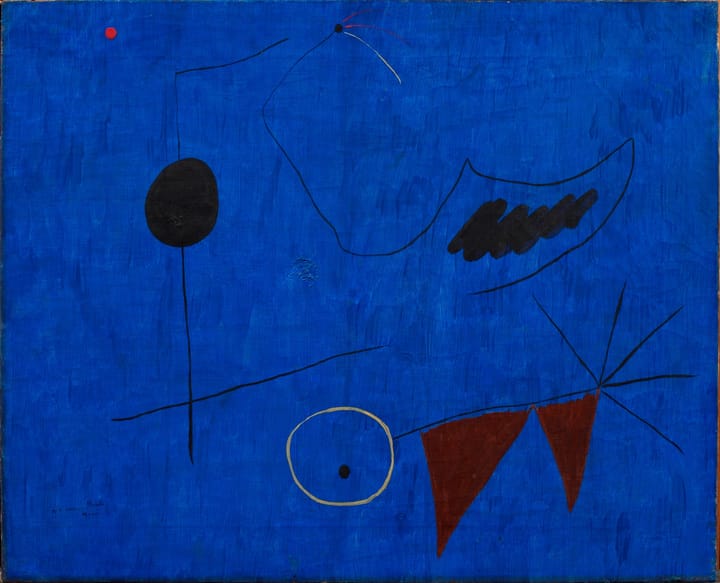
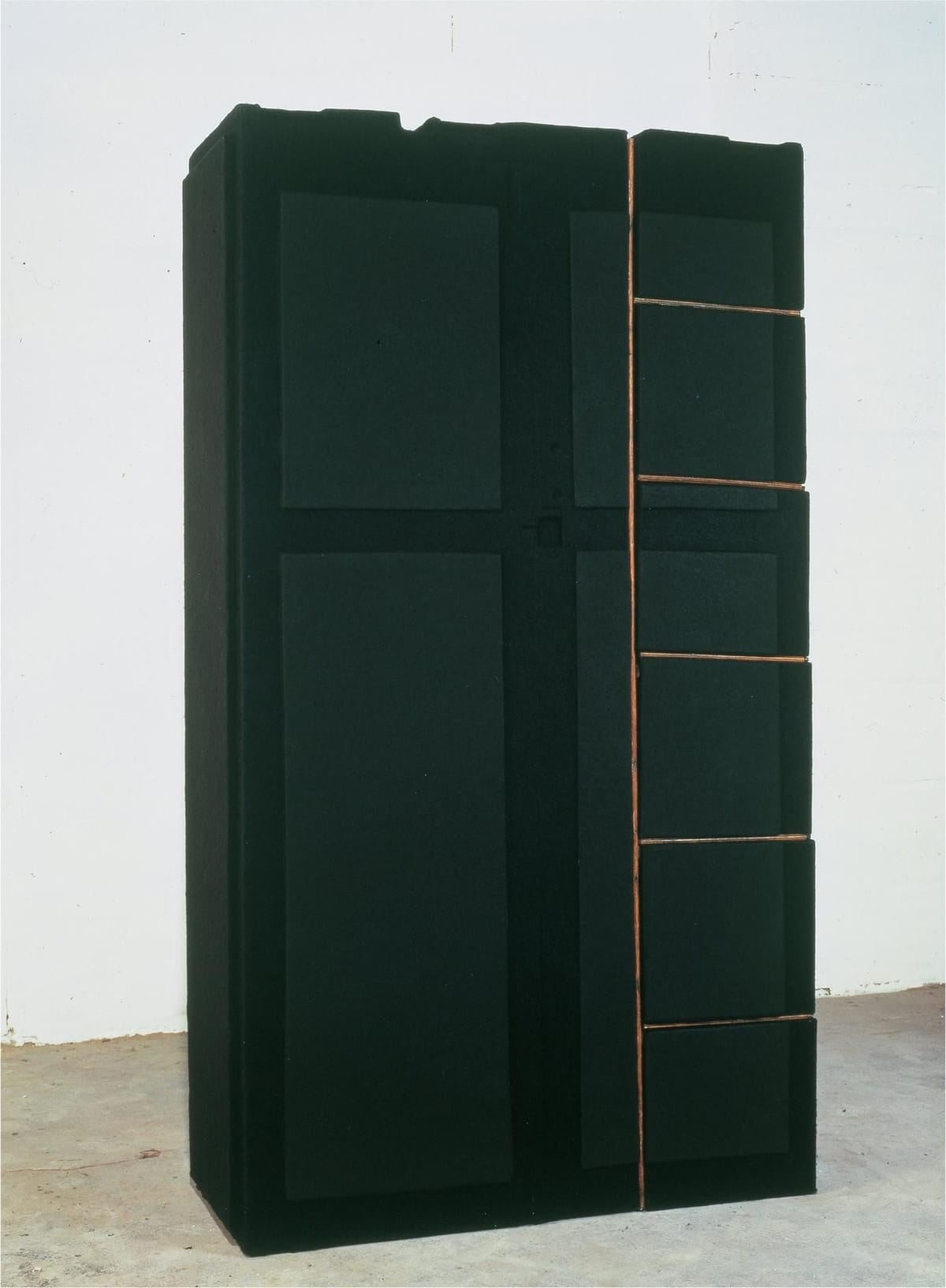
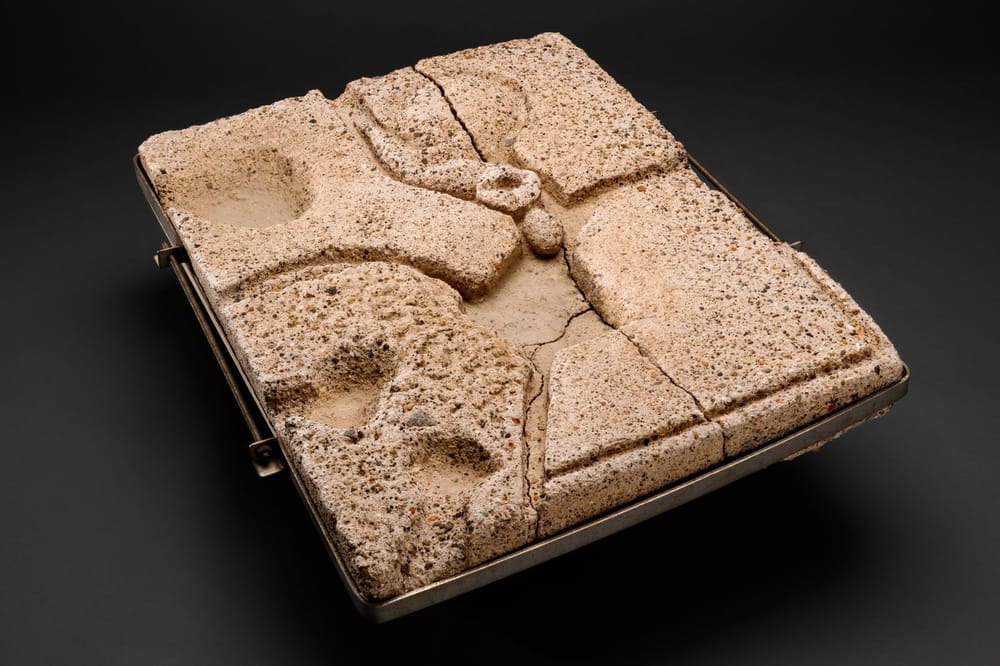
see also the arrows works by Gordon Matta-Clark, shown here, which don't resemble those of another artist known for arrows, for example,
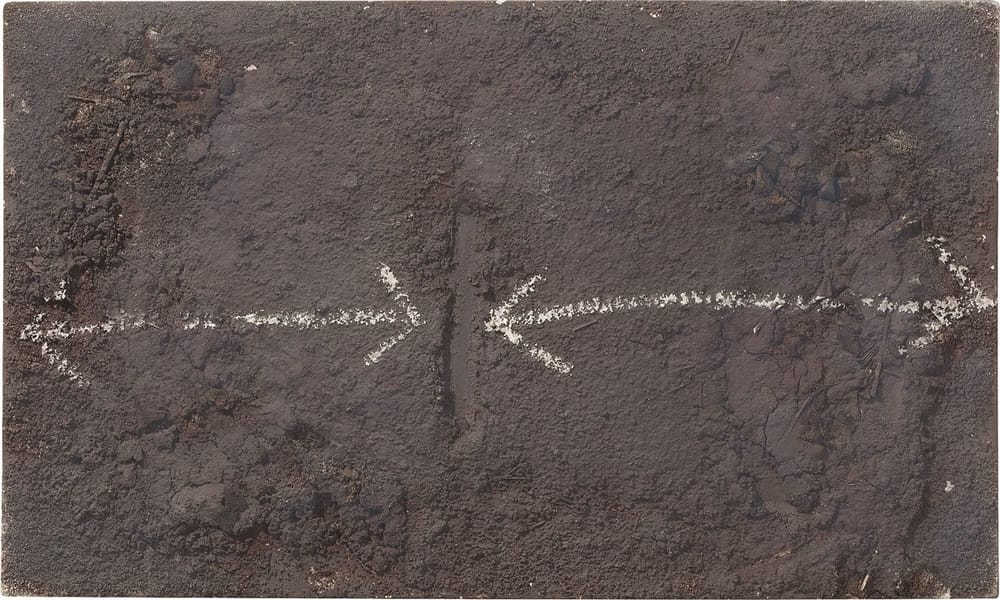
Tàpies, whose textures are rough, Whiteread, who fills a lived volume, Matta-Clark, whose most well-known work is severed and cut, something it is said to do with his formative years. . .
The danger with starting on an intellectual digest journalling the movements of thought from day to day is that
- as if you are writing your dreams you start to dream in order to write the dreams down, so you rush to fill in the gap and perform the thought before it comes and you start to think for the writing
- the movement comes to take the place of what moves it
- a third danger is from thinking thinking is a productive process, so locating what moves it, . . . usually in the past, in the desires and drives said to derive from the formative years
which is more or less true of all three of these artists; but I prefer the anecdote Laurie Anderson tells in Heart of a Dog, the 2015 film she made, not the short story of the same name by Michail Bulgakov from 1925, which starts in English translation
Oo-oo-oo-woo-woo-woo-hoo-oo! Look at me, look, I'm dying.
about Matta-Clark. When he was dying in the hospital, two Buddhist priests were stationed at either side of the bed, near his head. Buddhists believe that hearing is the last of the senses to leave us, when it is required priests are present to guide the dying onto the next life. The priests who had been still and silent until that point began to shout,
Robert!
You're dying!
You're dying, Robert!
they shouted into his ears:
Go towards the light!
No. . . not the first one!
. . . the second one,
the one that's further away!
A further danger is, adding unnecessary detours and pointless details, putting off what needs to be said, either because it hasn't been or is resisting being formed. And as to why it is resistant we will have to ask the psychologists, yet no amount of pressure may yield it. In fact, pressure simply increases pressure from the other side, or equalises it, so it becomes a matter of indirection to . . . get to the point, which brings us back around to the detour, the real danger of which is that it is seen as an end in itself, perhaps because it produces some good writing. However, above all, Levrero, the writer of the unnecessary, above all, is the best judge of what constitutes good writing: he seems to know, even when he is doing his calligraphic exercises in Empty Words, or *mpty *ords, as it is titled in English. And this stands to reason, at least to the subsidiary point, or supporting point I am making here: when I say what needs to be said resists and we need to try indirection, then, there is the unnecessary; but do we forget what needs to be said, what presses on us to be said? No. This is exactly Levrero's good. I mean we can see his enjoyment, even when complaining of certain domestic circumstances which keep him from writing, of, and also his acknowledgement of, unnecessary writing. What does he say about it? That it gives the unconscious which he trusts, to the trust of which he is committed, because his unconscious, not some general warp in the weft of things, the greatest amount of freedom. I am here pre-empting something I want to be getting on with saying in ②, the third Digest entry, the one after, marked with ⊖, this one, to indicate that it is a non-starter. . . And this also needs to be said before moving on: it is not to reach ② that I am writing ⊖; it is in order to that one initiate the series: ① ② ③, or even ①⊖②, or this, which can fall after any of the others, beautiful symbol 𝄐
The danger of succession the TV show demonstrated. What is it about it? . . . I would risk suggesting in the case I am dealing with at present that matters of succession retroactively produce the resistance I have named above of things to declare themselves: I am not being playful but dealing with this exact problem:
the problem of there not being a problem
a problem is a window and it is, as the Alexandrian poet put it in the final lines of his poem "Windows," exactly another tyranny it, and I use the word projectively, proves:
perhaps it's a good thing a window doesn't open
perhaps the light will prove another tyranny
who knows what new thing it will expose.
–Cavafy (29 April 1863–29 April 1933)
. . .
No problem is a problem for succession because there is nothing to inherit.
Briefly to elucidate: the hackneyed image of piling abstraction on abstraction. With no windows the issue is not no impulsion, no drive to, for example, write, but that the drive is up ahead and, for one reason or another, inaccessible. It is that nothing necessary, or in Levrero's case transcendental (The Luminous Novel, 2005, takes 100s of pages of unnecessary writing to get to the luminous, numinous and properly transcendental experience. This is not to say I can promise any such thing), can be said without it inflicting itself from the outside the window opens on to, the tyranny of light, the problem with which we are afflicted which no amount, but for some unnecessary cries, of pressing on the wound will bring to expression.
So it goes. . . and if I ever get to ② movement but not this movement, which is unnecessary, will have to be addressed. To restate—I am consciously resisting going from ① to ② without that necessity, the necessity of a well-formed problem, so this is going to be the task of these steps I am taking: forming it as well as I can before moving on. . .
It is something that came out at me, which, beginning the current entry, I thought was the problem, from a PhD. defense a friend asked me to attend online. Brian Massumi was one of the examiners. Avoiding the most obvious description of the dissertation, that it piled abstraction on abstraction, true, that is, to his philosophical commitment to Deleuze and Guattari, of whose A Thousand Plateaus he is the English translator, and their shifting of abstract onto the diagrammatic (about which more in ②), the abstract that is in opposition not to the concrete but to the discrete, he said the dissertation had no examples.
In this it was very unlike Deleuze and Guattari's work, always in reference to examples, from which it does not generalise to reach problems but abstracts from the discrete points those examples articulate to reach what is exactly an abstract (a machine less for being determinate than in movement) machine.
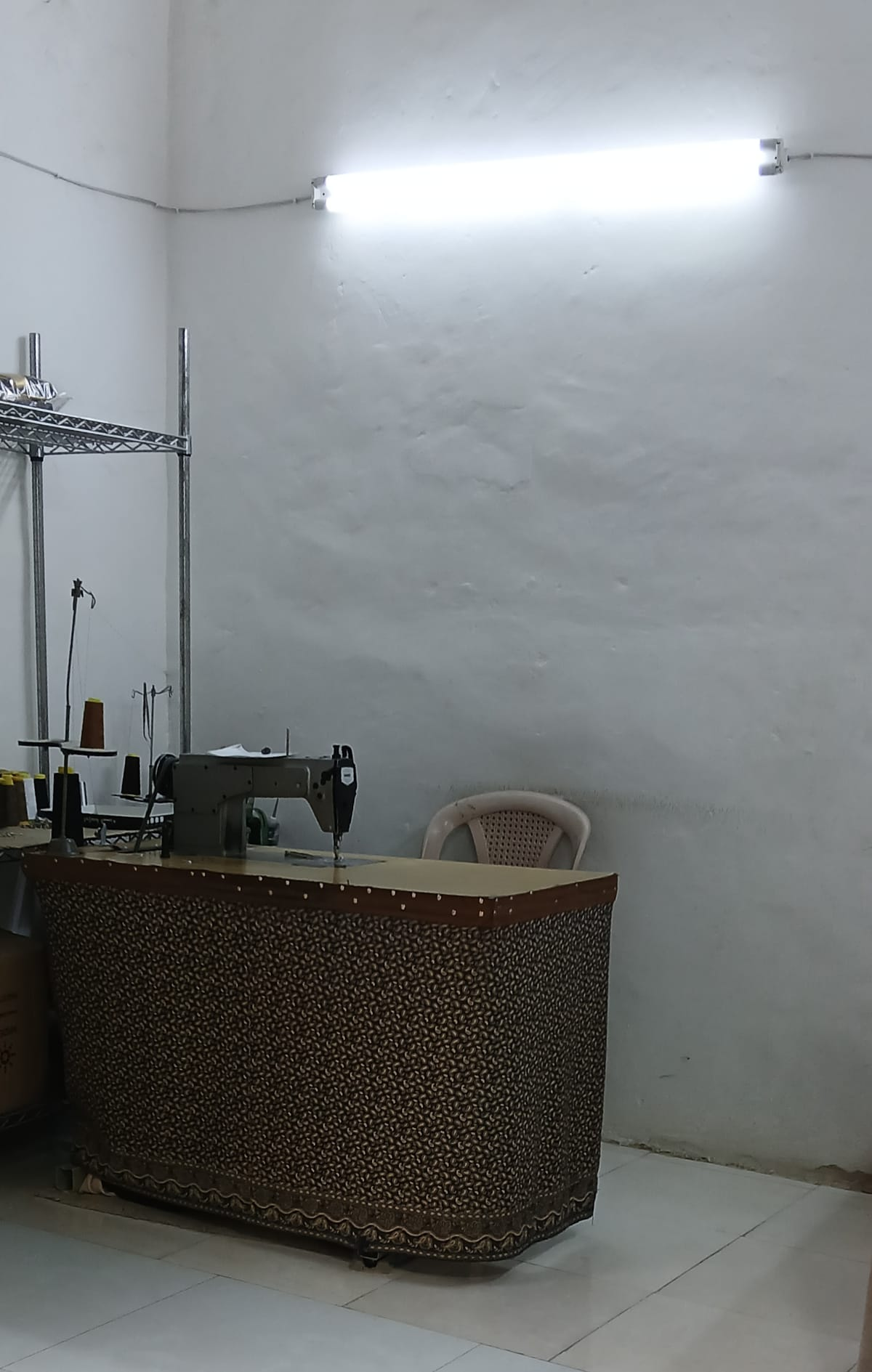
He said it resembled a Leibnizian monad, but that it had no windows and did not open to the outside.
② motor-diagramme is the movement of consciousness
Let me say first up that what I am doing is reading Bergson's Matter and Memory, which appeared in French 4 years before the turn of the 19th century in 1896 and in English translation, translated by Nancy Margaret Paul and W. Scott Palmer, 15 years later, in 1911; the dates' sole significance being that this is very long ago, long enough for this book to be presumed of negligible significance. To us that is. Yet on the back we can read Walter Benjamin, Gilles Deleuze and Maurice Merleau-Ponty, each with his own take on Bergson's book: for Benjamin, its attempt to lay hold of 'true' experience in contrast, here showing his Frankfurt School leaning, to the standardised, denatured life of the civilized masses. That we can recognise our own age in terms of this description is beyond doubt (also pointing to the influence of the originally Marxist-inspired Frankfurt School's Critical Theory, in critique of capitalism, which perpetrates standardisation, denaturing and mass-ification). For Deleuze, true to his philosophical frame, Bergson's book is not critical but diagnostic, and responds to what is critical or what has reached the point of crisis, with the time-image. What's that? I'm still trying to figure it out. I know that the work in which Deleuze addresses himself to it is that on cinema, the books Cinema 1 and Cinema 2. I also know part of the reason, if not the whole reason, that Bergson, promoter of intuition, is viewed, if not with suspicion as a mystic, then, the inventor of the concept of duration, as having nothing to say to readers 20 or 120 years after he was writing, is time. Our concept of it has moved on, which is also to say our image of it, which relates to the impetus behind my reading Bergson now, cinema, which is of course the art of the moving image. Merleau-Ponty recommends, perhaps pointing to the future we inhabit in its post-humanity, a potential, like so many post-s presumed rather than actualised (my favourite joke about post-colonialism is that at its mention the rejoinder might readily be made, What? Have they left?), Matter and Memory for rediscovering a 'pre-human' sense of the world. From his own philosophical framework, Merleau-Ponty is pleased to find in Bergson as in noone before a description of the perceived world's brute being, which we today can call its nature.
I am reading Bergson, carefully, because when I met him, met with his work, I found it difficult, I couldn't understand it. Unlike with Deleuze, who also arouses suspicions among straight-thinkers, those who put lucidity of thought and clarity of expression before difficulty, suspicious of it for dressing up what could be put more simply, who are all, as Mark Anthony says, reasonable (usually) men, I couldn't say what the difficulty was. All I could see, despite its lucidity, despite its clarity, was that there was more to it than could be seen and an obstruction to it being seen. This obstruction I have since identified as the advent of cinema—which is why I turn from Bergson to Deleuze, and turn again, not because he throws any light on what is difficult about Bergson but because he offers a further complication: (also a clue) since for Deleuze, Bergson, thinker of the time-image, is the thinker of cinema.
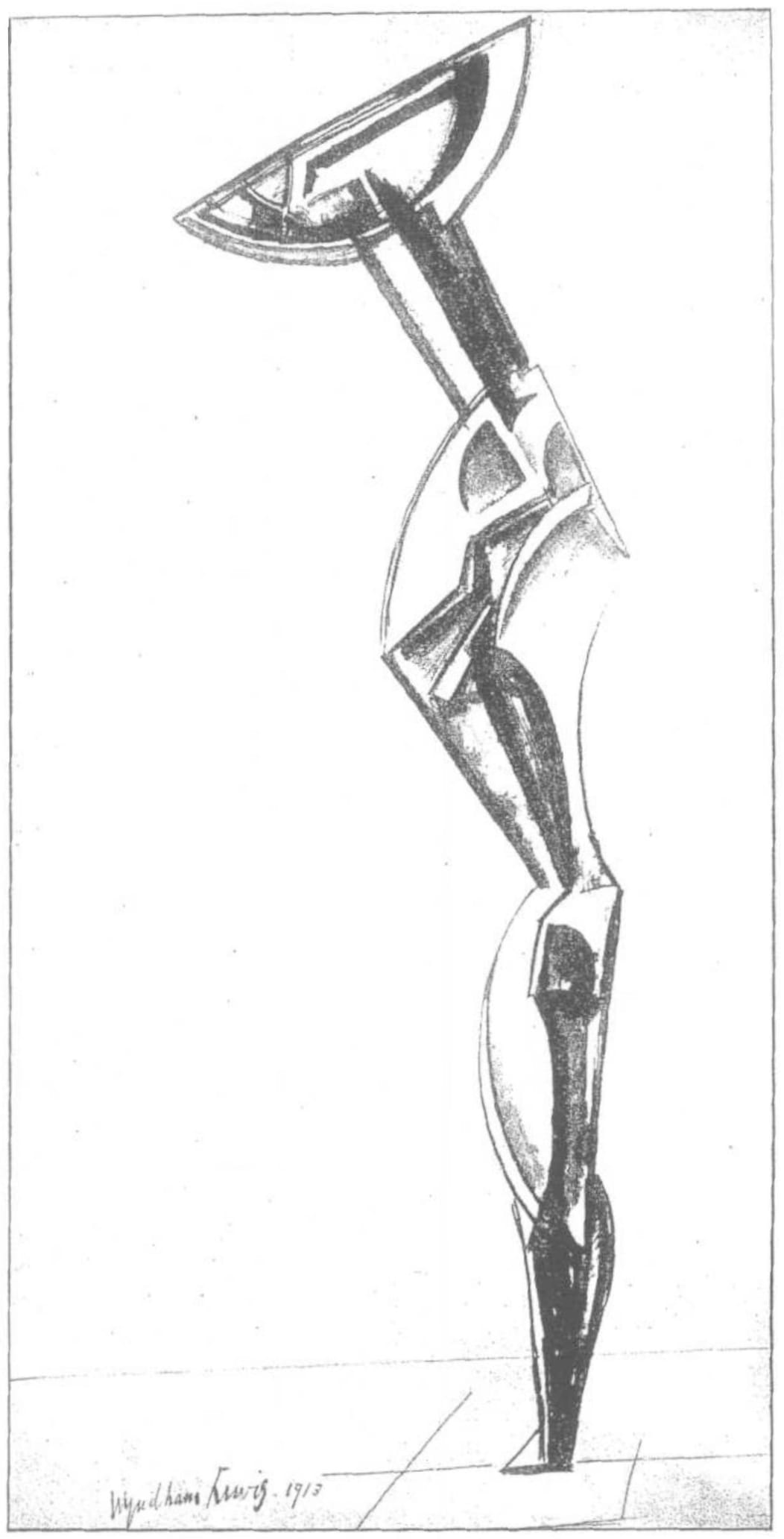
You can see how this thread of thinking loops back on itself to form a knot. For the Vorticist, Wyndham Lewis, a knot was the very figure of energy. It's not however very friendly to readers who can readily tell the writer who ties them up in them to get knotted.
All of which doesn't excuse but explains the stepping-stones I am laying out now, which although numbered consecutively are not in succession. Each is to be regarded if you would be so kind as to regard them at all as an instance in isolation, an island. And on this island called ② if there's something to see that cannot be seen or something not said, because I am here, I will try to see it and say it on subsequent islands.
Matter and Memory is cited, including page numbers, for ease of reference, from here. For further links, including some interesting material on Wyndham Lewis, here.
Why does consciousness elude neuroscience?
- because of a number of images which insert themselves into its motor-diagramme.
The pages in Matter and Memory I will be looking at are:
p. 47, where Bergson writes "In the particular case we are considering, the object is an interlocutor whose ideas develop within his consciousness into auditory representations which are then materialized into uttered words." The context then is of language and, a subject at present near to me, language acquisition.
From there we leap several pages to:
p. 49 in the online edition, where ..."we have said that we start from the idea, and that we develop it into auditory memory-images capable of inserting themselves in the motor diagram"... (I will be giving preference to "motor-diagramme" in the following.) And reading through over the next pages, in which there is a decisive move from the motor-diagramme of an interlocutor developing ideas which develop within his (or her) consciousness, as above, to a diagramme with psychology as its object—psychology I believe we can elide with neuroscience—we come to:
p. 51: ..."images can never be anything but things, and thought is a movement." Bergson's issue is with what he calls that invincible tendency of the sciences ..."which impels us to think on all occasions of things rather than of movements." (49 in the online edition) From our familiarity with this notion, of sciences having to freeze and isolate objects of study, not to say silence them, we might be inclined to accept this statement without question, so that makes a good place to start, to start questioning our own inclination, against a tendency, an invincible one, in Bergson's mind.
The first question we can raise against the thing-ness of scientific objects is that we have the record of moving things to support, on one side, the idea that everything is in movement, and on the other, that thought is like this too. What distinguishes it from moving things, and what perhaps does not distinguish it enough for us to separate thought from things that move, is that the moving things of thought are less substantial. In terms of classical philosophy they lack extension, and therefore materiality. They are immaterial things and, it is less an invincible tendency of our own times that things unlike thought, even when the objects of scientific study, don't move than that thought is united with our recording of moving things in our minds as moving images. Cinema I would say here makes a difference.
When we think of recording speech processes we think immediately of what happens in the brain and subsequently of the movements which occur in the brain that the different methods of scanning it can record. We can stop here a second to observe that the technology used to scan brains is of quite recent development and that progress in high-definition and real-time scanning is how we tend to measure progress in this field in general. However, in commercial use, the method of recording moving images goes back to a year before Matter and Memory was published in France. The spread of its commercial use for entertainment was explosive. If this were the case with MRIs theirs would have been too.
Over the interval when I had given myself the task of finishing the thought, this 'stepping-stone' or 'island,' elicited from reading Bergson, my phone's news algorithm . . . just then, as if for proof of the motor-diagramme, the fire alarm went off, a message was broadcast not to use lifts, I found the stairs and came out the service entry to the rear of the Ascott Rafal, where workmen were, despite the piercing siren, still going in and out, around to the lobby, where I asked if it was a drill, Yes, sir, you have received a message, on paper, about it. I didn't, I ran down the six flights of stairs, the doorman put his hand across his heart in apology. Safe to go up? The siren's stopped? Yes, sir. I had thought it odd that I met noone on the way down. . . played (I can't think of an adequate verb to use for how an algorithm not only chooses but foists its choice upon one) this article: "Wired for Words: Understanding Language and the Brain: Neuroscience has finally cracked the code on how language works in the brain." From Psychology Today, a commercial US website, by Gregory Hickok, PhD. the article claims for the field in which Bergson is staging his philosophical intervention that from the 1800s, when he was writing, to 1998, there hadn't been much progress, but since, it has been "astounding." This is thanks to the core insight of language as a "species" of sensorimotor processing (scare quotes in the original).
What Hickok, in the book, Wired for Words (MIT: 2025), the article is drawn from, calls the "new integrated framework" of LSM, the Linguistic-Sensory Model, is allegedly still as provocative as when Bergson first proposed it:
The most provocative claim of the LSM is that language processing shares the same fundamental neural architecture as non-linguistic sensorimotor systems—like reaching for a coffee cup or tracking a moving object with your eyes. This doesn't mean language is "just" movement or that decades of linguistic research are invalid. Rather, it suggests an evolutionary relationship: the two types of systems are homologous.
LSM apparently, however, still falls foul of the problem Bergson identifies, which is where he goes meta with his characterisation of the motor-diagramme that he identifies with the movements Hickok maintains wire us for words. (Already in this speech, this way of speaking, we can hear echo, down a hundred years, that invincible tendency of Bergson's, to render the brain, along with its language-processing centres, in their distribution, a thing.) To explain how the meta-diagramme of scientific discovery works, we need to see how it works motorically, that is, these movements being the ones recorded from brain scans of which the LSM currently provides the best explanation, in terms of movement.
Bergson asks what happens when we listen to the words of an interlocutor, of what are we conscious? (49) Do we wait for the speech-impressions to produce for us answering auditory images? these, in the meantime, recalling for us images and associations making such sounds, the specific sounds we perceive, recognisable and giving them meaning? Or, rather, don't we feel ourselves taking on a kind of attitude, which is at its extremes felt physically, as either being taken on by our bodies, with at the one extreme, joy and acceptance or at the other, with feelings of physical repugnance towards what we don't want to take into our bodies, is rejected by us?
Bergson talks of a physical disposition being required, that wires us for words, to understand language. He says that we acquire language through making and repeating the movements of the words, which movements occur in the brain and central nervous system, which are in fact the wires. They don't connect the auditory cortex to the motor cortex, by way of Wernicke's area and Broca's, in the hierarchies of Hickok's diagramme (here), rather they connect ideas, which is where they start and what they start with in the object of our interlocutor, to ideas, in the listening subject of ourselves.
The motor-diagramme, of Bergson's description, follows through all its windings the curve of our interlocutor's thought to show our thought the road. The auditory images are its road-signs and the associations of our recall both pay attention to them as they flow into the movement, says Bergson, an empty vessel, "which determines, by its form, the form which the fluid mass, rushing into it, already tends to take." (49) The process is immanent. There are no hierarchies involved, as Bergson dispenses with the notion hierarchies exist in languages, between those having many words with many shades and nuances of meaning, and those with few. Every language, he says, whether there are many or are few, contains what act simply as guides for thought. And if many, that we can feel a sense of physical restraint, attests, as is attested to also by the LSM, to the motor-diagramme being more than mere analogy.
As immanent to being formed, and to becoming the changes it is, I would say the motor-diagramme of language is a perception of the body, a centre of action, which, as an active principle, down to the cellular level of biology, starts with movement. This movement enables the acquisition of language together with the enactment of language. Addressing the localisation in the brain of processes associated with language Bergson considers how the diagramme showing the paths of communication, and their order, taken by various parts of the brain became at the time he was writing increasingly complicated. The reason he gives is the thing-ness science attributes to movement, that of the continuous movements of locution and audition, being broken down, localised in the brain, from which the attempt is made to reconstruct the overall movement. He does not draw attention, in addition to the motor-diagramme, to having introduced a second diagramme, an historical theoretical one, which seeks to explain it. Both provide diagrammes of consciousness, the one in biological-cellular movement of the body in its physical disposition, the other in the historically acquired functions of scientific perception.
The motor-diagramme describes movements of biological perception, which happen to be linguistic; the latter 'diagramme,' which for operating at a meta level is no less motor-ic, overlays the former with its own symbolic and cultural understandings, from the perspective of a perception that derives from those symbolic and cultural understandings. It only happens to be scientific and is still a movement, historically formed and determining by its form, that which the fluid mass, rushing into it, already tends to take. This is not to relativise its explanatory value but to draw out an account which is latent in Bergson of the two diagrammes that going beyond mere analogy speaks to the nature of the diagramme: it is nonhiearchical, neither is one subordinate to the other, nor is the theoretical diagramme of scientific perception secondary to the practical motor-diagramme of biological perception.
Movement as such can be said to include its own diagramme, no less the movement of consciousness, Bergson gives the example of our becoming conscious of a physical attitude that prepares the way for meaningful linguistic exchange and which can today be mapped in the movements of the brain, than the movement of the moving image on our screens. To come back to my question, why does consciousness then elude neuroscience? Although the movement of the motor-diagramme, which here can figure for the biological form of consciousness, is continuous, because it has a distinct duration—as life does, as consciousness and, no matter how prolonged, any movement do—it is, forms or forms in a continous interval, into which are inserted images, both voluntarily, by, for example, recall, and involuntarily, for example, by habit.
Once the movement of consciousness is itself elided with the moving images of cinema, so that there is no distinction between them, the one is occluded by the other. Cinema becomes the motor-diagramme of thought; and thought, the motor-diagramme of cinema. The images of consciousness that are inserted into the diagramme of neuroscience are cinematic.
To say it in this way is leading. It leaves unsaid that in every perception of the body, that is, in every perception that is ours, there is a biological motor-diagrammatic element. We have a disposition towards certain tastes, sounds, images and ideas that shows itself in movements, which brain-scans can pick up, however what they cannot pick up is what those tastes, sounds, images and ideas are, except as the probabilities from which AI is good at parsing viable options.
The technology being publicised as 'mind-captioning' (see article) is exemplary in this regard, with its advantages and drawbacks, allowing people locked-in to communicate, with 40% accuracy. Of course, it struck me that video footage was used to test the accuracy of captions offered by AI to the nascent movements scanned from experimental subjects' minds: not the more complex, because multi-sensory, physical dispositions of the motor-diagramme elicited by lived scenarios but that limited to sight and sound.
Not only does what I have said leave unsaid the part played in all human perception by biological perception, the part Merleau-Ponty might say is played by the 'flesh.' I have not gone into how our limitation to the two perceptual attributes of thought and extension plays out in our current era, in contrast to the infinite attributes that are nature's. My view as I write this is that the way to one is through the other.
③ when the images brought to mind by memory are so real as to displace the reality this tells us images are not stored or processed in the brain
because in the last entry what I was trying to say was lost in its elaboration, I will try to keep this brief.
2 statements, 1 which requires explanation, 2 which reflects on the other: they are both Bergson's. (As before I will cite them from the online version of Matter and Memory.) He has just slammed the treatment of memory-images and ideas that assigns them to 'centres' in the anatomy of the brain, which is still how memory, consciousness, perception and thinking are treated. (51) He says it's nothing but the association theory of mind, that it comes from the metaphysical presupposition that all progress can be cut up into phases, and that afterwards they can be made concrete things. I would only add, we tend to stop short of the things, to stop at the phases. Bergson:
... it has neither the advantage of following the movement of consciousness nor that of simplifying the explanation of the facts. (Ibid.)
He advises that we follow this illusion up to the point where its contradiction becomes obvious. To which:
We have said that ideas—pure recollections summoned from the depths of memory—develop into memory-images more and more capable of inserting themselves into the motor diagram. (Ibid.)
Although suggesting a kind of editing function, like for example the flashback, I take him to mean that these images more and more resemble perceptions. They become, he says, more complete, more concrete, more like conscious representations. To the degree they do we can confuse them with the particular image which we perceive. "Therefore," he starts,—
... there is not, there cannot be in the brain a region in which memories congeal and accumulate. (Ibid.)
The emphasis is mine, because the answering question is wherefore? How does this statement reach the point of self-contradiction he alerts us to at the start? Why is it that when memory-images, ideas solidify for us to the degree they can be confused with outward perceptions, the metaphysical presupposition we can cut them up into phases and separate them into processes, assigning them to centres in the brain, falls apart?
He continues by returning to the topic of brain-injuries, stating that any alleged destruction of memories resulting therefrom is but a break in the continuous process by which they actualise themselves. This presents itself as a promising lead: we might recall from Deleuze the distinction between virtual and actual and that between real and the possible, for which, in his book Bergsonism, 1988, he credits Bergson. However this is a philosophical lead. It adds nothing here but more to explain.
Another lead suggests itself if we split our focus between Deleuze's juxtaposition of Bergson and cinema and the terms Bergson uses, images in conjunction with memory, but also the term continuity, which has a particular technical sense in view of cinema. The proof Bergson gives us of language-processing not being centred in the brain, or in areas of it, for example Broca's area and Wernicke's area (both of which 'found' well before Bergson was writing, by Broca in 1861 and by Wernicke in 1874), is then that memory-images can take on the appearance of lived experience as if they were films. Deleuze himself supports this notion. His third commentary on Bergson, "From Recollection to Dreams," in Cinema 2, 1985, is all about memory-images, to the point of including in a note Bergson's diagramme from Matter and Memory showing the circuits of perception:
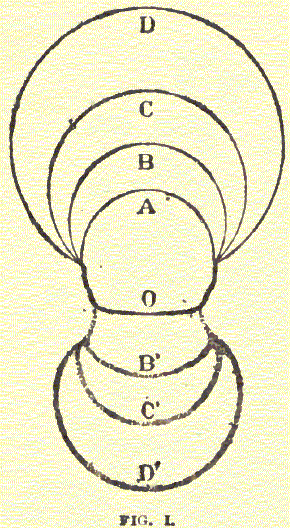
The perception invoked by Deleuze is however cinema's, as are the memory-images, and if the circuits belong to cinema that does nothing to dispel the illusion of language-centres in the brain.
In fact the diagramme looks like a brain and the flattened curve at 0, representing the degree zero of perception, like a screen. From it we may infer that it is not in the centres of the brain we find images, which include memories and perceptions, since both are forms of images, but that the brain itself is like a cinema. The simile is so pervasive as to have gone from being a commonplace, to become a shorthand, despite cases of aphantasia, for saying what the brain is doing.
Why is it decisive for Bergson when the images brought to mind by memory are so real for us they displace the reality that this tells us images are not stored or processed in the brain? This seems so totally wrong to us. We would rather have it be that our brains show us an illusion than have those images, which for Bergson are primarily auditory, put on the outside.
We might compare this to the attitude to those with aphantasia, who don't 'see' images in their heads. Bergson notes that neither does such psychic blindness have anything to do with actual blindness nor does psychic deafness, resulting from aphasia, have anything to do with actual deafness. It's easier for us to believe the latter, despite the primacy of language in cognitive function, than the former: psychic blindness raises many more questions, often to do with cognitive function, for example, how do we recognise images if we do not see them internally?
For Bergson this is easily explained. Both the memory-image and the perceptual image are outside the brain and one is the outgoing answer to the other's question. The memory-image is the issue of an action of the nervous system. We can note here that any perceived image can elicit any number of respondents. The brain's role is to choose amongst them. Now this we know but it is somehow subsumed under the illusion that goes out to meet that illusion with which Bergson is concerned.
Bergson's diagramme that Deleuze uses for cinema shows us successive circuits of memory-images in their response to an image. It shows as well a deepening understanding of the perceived image, the loops below the 'screen.' The nerves act in response to it and it is their 'actions' which are successively chosen in the interval between perception and recognition. We know it from children learning how to read.
When we might say we see their brains working it is more like a sifting process. Each image is first placed in contention for being the correct reading or interpretation of the perceived image and when a word is recognised its meaning is further and further refined as a deeper understanding is gained. The memory overlay in this case doesn't falsify the image but is in reciprocal relation with it, so that it's less for whether the response chosen fits the case given than to reach out from the point of view first established, with each circuit of attentive reading widening the compass of meaning, and also refining it, to, as we might call it, the direction it indicates.
If the image were somehow locally stored—which is the illusion Bergson says is pushed to self-contradiction— . . . and I should thank Jon Hickman. Partway through the paragraphs above I received a cannot connect with the server message. To no avail, I checked the connection and tried to restore the window. I went into drafts on Ghost, the platform hosting this website, where I have made a practice of writing, relying on its autosave function. The most recent draft was from yesterday. Starting to panic, I went through the browser history and looked for anywhere the autosave might have misdirected this entry, without luck. Finally, in a panic, I wrote to Ghost, Jon answered and suggested a restore url, which, he said, would only work if the material was stored locally, on the machine I am using. There it was, as good as current—isn't this also how the brain does it? No, but it supports the illusion that it is. . . each new image would displace the last. And each time the reader confronted the same word, it would not be a memory-image as such, but the referent image, held up for its match, against the afferent image, would increase in number exponentially, through successive circuits of suggested responses, and lead to an equal increase in processing time. If the processing time were to be kept down, the resources, including energy expenditure, would undergo a proportionate increase. And this is in fact what we are seeing with LLMs, an energy expenditure disproportionate to the difficulty of the exercise.
Bergson's reflection, statement 2, comes in a footnote, where he states that no trace of an image can remain in the substance of the brain . . .
Instead, there are merely, in that substance, organs of virtual perception, influenced by the intention of the memory, as there are at the periphery organs of real perception, influenced by the action of the object. (52n77)
⊕︎The "Region of Images"
Bergson describes it as a keyboard which enables thousands of strings to be struck and set vibrating in a single harmony. And this is where the contradiction disappears. (③) The contradiction had been between the location of the injury in the brain which caused aphasia and the various locations, which over the last hundred years have multiplied, involved in speech recognition. That is involved in how we move from the perceived auditory image to the image stored in memory by which we recognise it and parse its meaning. Bergson uses audition to illustrate the problem of images stored in the brain.
If we go from the example of 'forgetting what words mean,' psychology has one explanation, although ever more complicated, and physiology another. They are in contradiction because, at the most basic level, psychic deafness has nothing to do with actual deafness. The image as a unit of intelligibility, and the ability to parse from it a meaning, still exists, and so does the fact that it is heard. The only missing connection is that between auditory image and motor-diagramme: the diagramme has lost its motor.
Both diagramme and motor are physical so Bergson gives them a physical metaphor, that of a thousand strings. The object perceived executes at once its harmony of a thousand notes, so calling forth a "great multitude of elementary sensations corresponding to all the points of the sensory centre that are concerned." (52) Such centres had already been well established by the time Bergson was writing. Now, he says,
... suppress the external object or the organ of sense, or both: the same elementary sensations may be excited, for the same strings are there, ready to vibrate in the same way; but where is the keyboard which permits thousands of them to be struck at once, and so many single notes to unite in one accord? In our opinion the ‘region of images,' if it exists, can only be a keyboard of this nature. (Ibid.)
The lesion causing aphasia or psychic deafness is between two motor elements. They are not those of hearing and memory, or hearing and any other mechanism of recognition. The stimulus from the auditory image cannot reach the keyboard because the keyboard, that stands for the particular region of images posited psychologically to exist, is absent. However this does not mean it cannot play on its own.
This is the somewhat muddled proof offered in ③. An image can occur to us, can be brought to mind by memory, or in a dream, so real that it is real enough to be taken for reality. In this case, which might be said to account for all of Idealism, whether or not we can actually hear the strings doesn't matter. The image is the same. Or the perception is the same.
The keyboard metaphor is as far Bergson will go in admitting a location in the brain, whether the ones presumed stored of memory or the ones produced by imagination, for images. The metaphor is striking for contracting into a harmony, permitting thousands of strings to be struck at once, that metaphor invoked for duration, in which the point of view came at once for a series of notes struck consecutively, to give them a subjective unity, one of inner time. (Bergson has been accused for his thesis of duration being limited to subjective human experience but if we grant that the melody has a point of view which it retains over its duration, any alteration in the intervals between the notes changing that point of view, we might appreciate duration, as he considered it, his fundamental insight.) In both 'images,' the metaphor of a chord struck on a keyboard and that of a bell tolling the time, he talks about coexistence.
To talk about a region of images in this way might lead to the impression they are only psychological. The impression is false. It is only in the context of what Bergson finds wrong with psychology's—and neuroscience's—assumption they do that he says, if they were to, it would be here. It would be the keyboard.
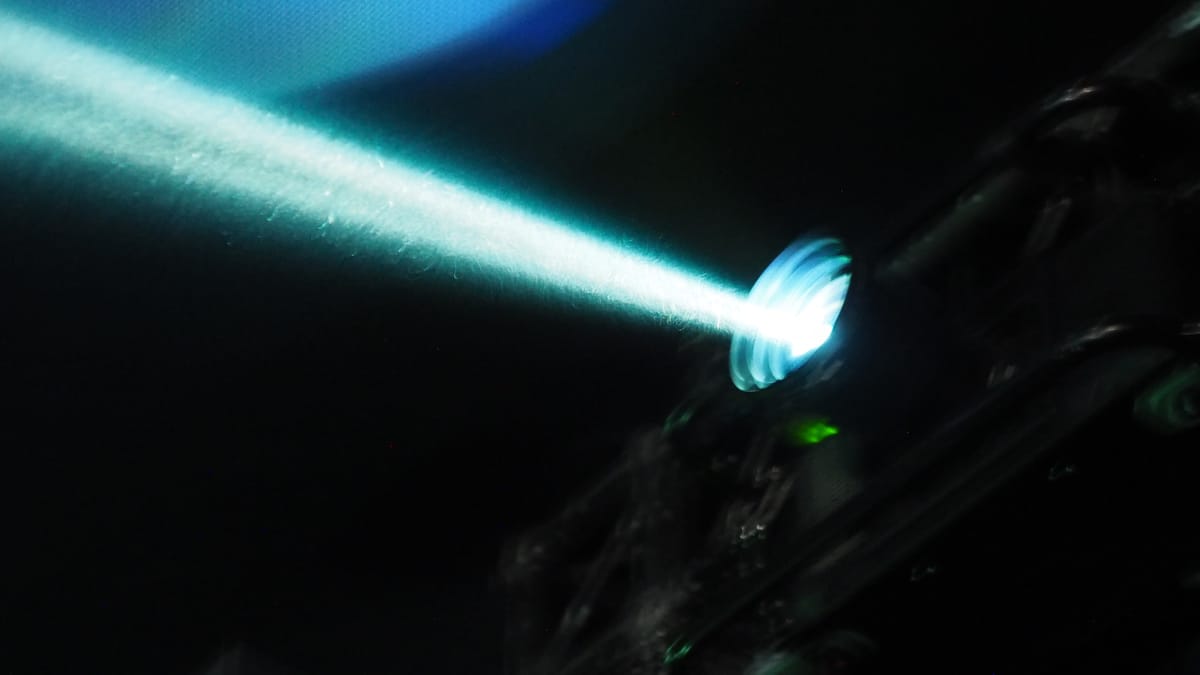
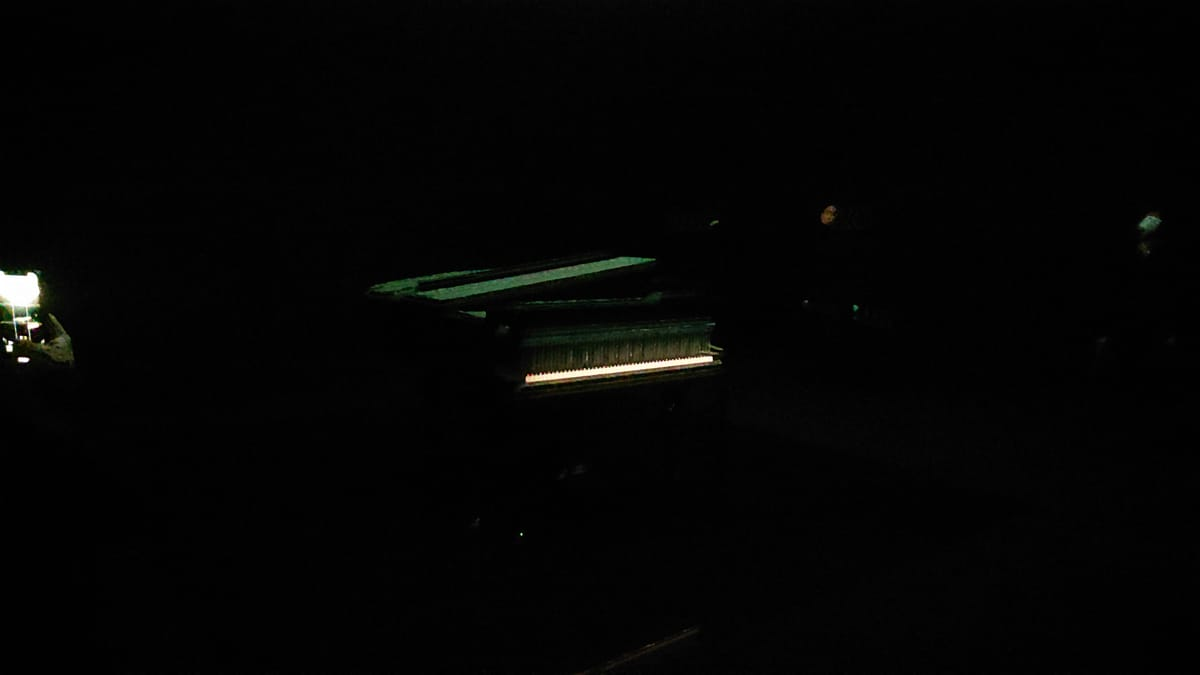
The photo above is of a sophisticated player-piano. It is in a dark room, the keys glow, and its wheels rest on the surface of a sharply delineated square pool of water. In one of the earlier exhibits, most of them featuring water in some form or another, soundwaves, their source invisible, materialised on the surface of a similar square pool.
The piano plays music by Ryuichi Sakamoto. Its keys move as it does, the mechanism is so refined as to preserve, in amplitude and the duration of the notes, the nuances of a performance, of Sakamoto himself playing. The effect is both spooky and moving. We see the keys pressed, held or released, and the pedals, and we hear the sound of the strings being struck by the felt mallets in the body of piano. It is spooky not because there is noone there present but because there is; and, that we know, from the style both of the music and the playing, who it is moves us.
The point is the composer, Sakamoto, is playing to us, yet there is no image attached to him. The region of images, the keyboard, shows his presence. The acoustic image becomes the memory of the visual image. Yet it too is accompanied by or coexists with a visual image, however, can we say that all this gives is a location?
Marina Abramović said in an interview that ideas can come to her anywhere. She was talking about how she hates the studio. They can come to her on the street, when she's walking, when she's eating at a restaurant, or in the bathroom. And from them she always chooses the idea that does not make sense to her and does that.
A whole critique of accepted practice and how she breaks with it is invoked here, not least the idea that a successful artist requires a body of work. The studio contains in some sense the memory of prior pieces that the artist, with each new work, adds to. What Abramović is objecting to here is the artist being trapped by others into a style and, by themselves, by what they already know, by what makes sense to them.
If they only do what makes sense to them they won't grow. In light of discontinuous and disconnected motor-diagrammes, of a diagramme disconnected from its motor, strings from keyboard, keyboard from the motor action of fingers, how can an idea not make sense to the person who conceives it? who is an artist and whose idea is in this case an artistic one? How can an idea not make sense?
(An image without a concept; a concept without an image; a word without a referent (or Logos itself): these belong to the same species as an idea that does not make sense.) Abramović recalls David Lynch talking about where ideas come from (here). And Lynch might have said a similar thing: I choose the idea that doesn't make sense to me.
As part of a kind of movement, an idea can only occur to us, such that we can say it does not make sense to me, by specifying the kind. Abramović explicitly breaks with the kind which comes from memory. The kind that does not make sense comes from the kind that does, and it does as a movement, which Bergson calls motor-diagramme.
Now we can imagine all the points on this diagramme to be schematic links to ideas where the movement between them is important, makes sense, literally constructing it, and not the senses made. The senses made belong to Bergson's 'region of images.' How do we know it's important? because we only go there to embody the links in a kind of movement. For Lynch this is fishing.
The unspoken nature of this movement which can embody ideas that don't make sense is that it belongs to a motor or muscle of which we can feel the movement. Where do we? in the muscle itself—in its exercise, which, since it is an artistic muscle is an artistic exercise—unspoken being that it is a perception.
To use the word perception distinguishes it from a preexisting synthesis of association, such as we might find in our emotional states or their emotive sources: the idea does not make emotional sense if it did we wouldn't choose it. We perceive the idea in so far as it is embodied in the motor-diagramme. There it takes the place of an empty form, like that of the motor-diagramme of an interlocutor's speech, which is a vessel determining, by its form, the form the fluid mass rushing into already tends to take. (cf. 49) For the empty form we can substitute the idea without sense. Conception then is here all perception, qualified as artistic perception—and even further qualified as this or that artist's perception, with all of the nuances present in its exercise as in the perceptive playing of a musical composition.
We might note finally how little Bergson's region of images resembles that familiarity we have with the region of moving images which always seem to accompany us. Not our memories, others'. Not our movements, but those which already tend to have been made, and which by the sense that they have obstruct and limit our own.
④ The Region of Images
Yes, this has the same title as a previous section in this series, but there it was ambivalent. For Bergson it means the region of images in the brain, that in his time psychology asserted and in ours that neuroscience asserts, which he denies there being. (We might adapt Bergson's meta-diagramme's ② becoming increasingly elaborate in order to describe language acquisition and recognition for the whole passage between his psychology and our neuroscience. It would involve exactly a materialisation of mental functions, recorded from moving images of the brain, and a dematerialisation of mental images, or what we might call their cinematisation.) Whereas the region of images means, what? . . .
Do we only see the passage of time?
Can we hear it?
Smell it?
Taste it?
Feel it?
Perhaps, in different degrees: we hear the passage of time in its effects on a voice, on the tuning of a piano, on the material conditions of its production.
We smell time having passed in the sensory images of decay, in the whiff of the crypt, the scent of death, from the dead, and on the living, food or wood rotting; and in less extreme ways in simple changes, in how a room smells having been left for a period. We compare now and then.
We taste it like we smell it, as a smoke or a coating on the tongue.
We feel it in fabric that has grown threadbare, in textures worn down or, like our skin, wrinkled up, and inside we feel it, but as a diffuse thing, in the accumulation over time of small changes from which we infer it.
We feel it on the inside as both a living image which is that of sensation and from those images we intuit, like body images; Alphonso Lingis speaks in this sense of body image (perhaps in Abuses, 1994?). There are then the further images we extrapolate, both accurately and inaccurately, from these, like snapshots, referring them to real photos if we have them. And this is an interesting tendency to note: the still photo showing better the passage of time than the moving image.
It's as if we have to capture the moving image in its movement, freeze-frame, in order to see what it is exactly we are looking out for: which is the point. We have to go looking for signs, and when it concerns their accuracy, that is when we are most interested, have even to do so with optical signs of passing time's effects. Of course, we might bite into a rotten fruit but it's not the passage of time which we are struck by then. Or we might hear a recording of our own voice when young and think how uncanny it is; but isn't this the same uncanniness in a more extreme form of hearing our recorded voices at all? Time has passed, and that our own acoustic image escapes us more readily than our body image is interesting, but is this a case of ours being a visual culture? And isn't that the case with the question I started with? Do we only see the passage of time? That is, we may sense time's passage if we direct our attention towards it in other sensory attributes, but the actual passage, isn't this above all seen?
And what gives us to see it?
Such redolent, such pungent images as rot and decay strike us but we tend not to reconstruct the processes recording these effects of time passing. Then we tend not to question recording processes, whether of growth or of decay, at all. This Bergson saw as the great and useful novelty, as opposed to being simply a novelty, of the cinematograph: that it could record biological processes, in stop-motion. His criticism was of the process by which the cinematograph animated still images to reproduce the passage of time. The reproduction he maintained had nothing to do with the passage of time in duration. This process has moved on, from analogue to digital recording, because it was always the effect that was being sought: to show the passage of time.
Now the passage of time is most effectively, in order to sell the image, shown with contingency. And this is what sold the earliest images commercially shown, in the famous phrase of an audience-goer, that the 'leaves on the trees were moving.' Time's effects, in other words, are those of contingency. This has led philosopher Quentin Meillassoux to posit radical contingency, without it entering his purview that this is no longer the origin but the goal of contemporary film-making and, I would argue, of AI: using digital processes to reconstruct contingency.
At great expense, I might add: no longer to record contingency, it was at the beginning itself a matter of contingency that the leaves were moving on the trees, but to reproduce contingent motion by deliberate and non-contingent means. Non-contingency enters here because that the contingent motion was recorded in the first instance was an accident and so contingent on the analogue recording process animating still images to reproduce the effect of actual time passing, duration. The goal of digital film-making is adequately, in order to sell it, to reproduce by means of digital animation the contingency that is found in nature. (That is to sell it and justify the expense involved, expense and sales being in just such circular relations as reproduction and recording and contingency and time: AI here for the notion of what is animated, i.e. intelligence; animated implying by its etymology being given a soul, esprit, mind, life.)
Given contingency and the globe-squeezing effort to reproduce it, the advent of cinema altered our perception of time. The question of whether we only see the passage of time becomes less one of the primacy of visual experience. In fact it explains this cultural predominance in historical terms. The question becomes, do we only see the passage of time because of and after cinema?
⑤ virtual images
The problem I have been dealing with is that of limiting virtual images to the body. Bergson's motor-diagramme seems to distinguish movements, the movements specifically across the surface of the brain of electrical impulses, to limn out the forms particular to . . . as I am doing now . . . the words we use which express our ideas: when we listen to someone speaking a language we understand these movements occur of recognition; when we answer the words we use flow into the empty vessel, so to speak, made all of movement, as if a braided river. (I am working through the problems in this Digest I find in Bergson, counting each problem solved, at least temporarily, a stepping-stone. Why Bergson? His problems are not ours; and yet they are: it's like a distortion layer has intervened, interrupting the clarity of his expression. And it's this I call the "region of images."⊕︎)
OK, so we diagramme movements (and meta-diagramme ideas) and these movements are not images. They are not despite that we have and can diagramme moving images in cinema. This is what Deleuze does in Cinema 1 and 2. Cinema has joined the region of images. Not images, they are, writes Bergson virtual images. In other words they are not yet actualised. They are then like the electrical impulses corruscating across the brain. However, Bergson writes that in vain do we seek their trace in anything actual and already realised:
we might as well look for darkness beneath the light. (55)
Is this to find the virtual image solely in that perception which is biological? i.e., in the case of language recognition, having the form of electrical impulses, in the brain. Once perceived the image is actualised, and this would be what we see from instruments which can show where the brain lights up: the enormous caveat being that it is its own image and bears as little relation to the word of which it is the motor-diagramme as it does to the idea we form of what we recognise in it, which is, in turn another virtual image becoming actualised. The problem is that to constrain perception to virtual traces in the body, on the brain, makes us a living memory, which in a certain sense, our habits having remembered themselves in our makeup, we are. If it is of ideas we are the living memory, then we have the same problem Bergson is writing about in chapter 2 of Matter and Memory: all those virtual traces are going to need a heap of room. This has been mooted as what in evolution drives the folding of that surface across which the electrical impulses play, the crenellations of the brain, its gyri and sulci.
And we can further simplify, because, just as the motor-diagramme is not all of the word, its virtual image is not the image in all its detail. Then, wouldn't it be a mistake to think that words, for example, from different languages, could share the same virtual image or motor-diagramme? when even the same sounds do not. (This is the idiocy behind probabilistic mind-captioning. Or what Bergson calls associationism. Not to say that it can't be a helpful idiocy, but, as I am writing in another post, there is a point where simplicity becomes simple-minded.) And for all the images of which we are capable to calculate there would be space for their virtual traces, even if we extend from the brain to take in the whole body? This is the problem, to restrict all forms of actual images to their biological data, or, to points in the motor-diagramme, their movements.
The problem is solved if we cease to think of it in terms of space and think of it in terms of movement for Bergson, a solution since the advent of moving images we don't have recourse to, and so the virtual, in exceeding the material and its confines, comes to resemble something like the transcendental. If we take the cinematic route, we have the recording of movements in time, sure, but as space; or, as now, with digital storage, energy. The virtual images actualised in perception are in the pure energy of the subcomputational biological living organisms we are. By this route we return to the initial problem of the body.
The solution is rather found, than in the transcendental realm, than in time cinematically conceived or information energetically conceived, in the exteriority of perception. Wait, by outside are we referring to outside of material existence? No, inbetween, Bergson might say, matter and energy: we are referring to perception as enactment. Biological perception enacts the matter-energy compound we call the body. It is one passage from, going by Bergson's quote, if not the classical image, darkness to light.
The passage, like the form, like the forms of streams braiding themselves into rivers, describes the virtual image: it is its perceptual trace. And there are as many passages, in contrast to the classical image, from darkness to light as there are perceptions. Each leaves a perceptual trace, a virtual image, actualised in perception. Each word read here between the energy I am trying to instill in it and the material form it takes as writing is the virtual image of this perception, and this perception what is called thinking—stepping-stones.
⑥ indirect proof of the unity of the executive functions we associate with the subject, ego or self
I'm going to start with a long quote from Bergson but only pick out one or two threads to follow briefly: [from Nancy Margaret Paul and W. Scott Palmer's translation, Zone Books, NY, 1991. Online edition, at p.56, may differ.]
This is to say that my present consists in the consciousness I have of my body. Having extension in space, my body experiences sensations and at the same time executes movements. Sensations and movements being localized at determined points of this extended body, there can only be, at a given moment, a single system of movements and sensations. That is why my present appears to me to be a thing absolutely determined, and contrasting with my past. Situated between the matter which influences it and that on which it has influence, my body is a center of action, the place where impressions received choose intelligently the path they will follow to transform themselves into movements accomplished. Thus it, indeed, represents the actual state of my becoming, that part of my duration which is in process of growth. More generally, in that continuity of becoming which is reality itself, the present moment is constituted by the quasi-instantaneous section effected by our perception in the flowing mass, and this section is precisely that which we call the material world. Our body occupies its center; it is, in this material world, that part of which we directly feel the flux; in its actual state the actuality of our present lies. If matter, so far as extended in space, is to be defined (as we believe it must) as a present which is always beginning again, inversely, our present is the very materiality of our existence, that is to say, a system of sensations and movements and nothing else. And this system is determined, unique for each moment of duration, just because sensations and movements occupy space, and because there cannot be in the same place several things at the same time.
I have broken off at the question, curtailed the quote, to draw attention to it being secondary and detracting, in adding a somewhat taunting quality, from the passage: "Why is it that it has been possible to misunderstand to misunderstand so simple, so self-evident a truth, one which is, moreover, the very idea of common sense?" The answer will be different now from when it was asked, the common sense idea being exactly what has changed, I hear this question as historicising, bearing on when Bergson was writing and bringing the weight of historicity to bear on it. This, when I spoke in ⑤ of a distorting layer having intervened with time on our understanding of Bergson, is exactly what I meant.
Existence is not the issue here. The existence of that which we call our self, ego or, that which assumed to exist through its predicate I am, the existence of the subject, is not at issue, while its unity is the thread I am following, suggested by that small word, single: a single system. Let's suspend what the single system comprises and consider what it means for the present to bring about its unity, not its existence but, albeit indirectly, its unity. And note also it's not the other way around: my unity is not responsible for the present I perceive. In fact, I am not, but the system determines the appearance of the unity of the present.
System and present correspond. On one side there is unity and on the other determination. The determination of the present as absolutely unique and singular appears and my unity results. (Of course, this does tend to indicate what's in the system, that it is equally perceptual attribute and the accumulated sensation of being perceptual attribute (see ⓪).)
If we are not unpacking the system, how does its unity result? It doesn't result directly from the determination of the present; the proof for its unity results indirectly, from the present in time. Even if we look for the reason we experience ourselves as more-or-less unified fields to the present having a unity all of its own and uniquely determined in the course of time, we are looking in the wrong direction. And to say they correspond is perhaps misleading, since there is no correlation. The present is only more generally determined, but fully determined, as being absolutely unique in time, whereas we are distinct cases of what is in time. Moreover, I am not the unity behind this appearance of unity on the part of the present, except on this more general level.
On this more general level is where Bergson asserts a quasi-instantaneous section in the flux of time, which we might call our knowledge of the material world. In other words, here is the difference between ontology and epistemology, the material world of the fully determined present is an epistemological reality, the unity each of us has—as a living being it is from life*—is an ontological reality. Our participation in the material world does not give this ontological status, neither is that status a function of material being, nor is the material world's existence, even in the time in which the quasi-instantaneous section is taken, proof we materially exist. Again, this puts it around the wrong way. Instead we are the unities we have in time.
Our unity being temporal goes some way to shifting the emphasis Bergson makes, the other word that pops out at us, away from determination. Any actuality actualised will be determined. The point being made about virtual images, in ⑤, is that of sensation (and we might say here knowledge) not yet being actualised until, when recalled, it is perceived; in turn, and again it should be noted, no resemblance, no correlation between one and the other: as Bergson says, to picture is not to remember. (55) We are as unities only determined, somewhat like monads, when we are—and Bergson might say the same thing of our images—fully actualised.
Getting in the way of our full agreement with Bergson is, 1) that cinematic images are fully actualised, and 2) that they render every absolutely unique present capable of replication. We might draw from this the conclusion that 3) from cinematic imagery, from this sort of contingent, technological imagery, we are able to synthesise temporal unity. Making cinema all about the present is, writes Deleuze in Cinema 2, a big mistake, I don't think he had this in mind, since this is what we do all the time, from it we can form the synthetic unity of a double: another who has the function of a subject, a self, an ego, an I, but none of its powers.
footnote:
*or a life. See Deleuze, "Immanence: A Life," both on this point and on that made at the end of this entry, see note 1. "Immanence: A Life"
⑦ How Cinema Has Changed Our Minds
(or, How Recording Moving Images Has Changed Our Minds)
Indirectly, I've heard a reader ask, Where's he heading with these philosophers he's talking about? and, because it's gratifying to be read, I am answering the question. The philosophers I have been writing about are Gilles Deleuze and Henri Bergson, one famous for his philosophy of difference, positively thought, being essential, the other for his philosophy of Durée, sometimes left untranslated. I've been translating it, duration, to make it less exotic, because it's not. It means the time spanned by any measurable length or quantity of time: from a zeptosecond (currently the smallest amount of time measurable), see chart—
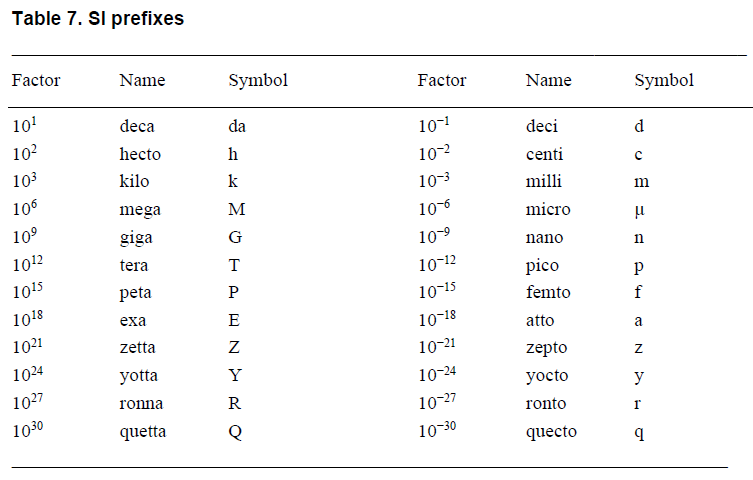
—to
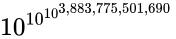
years.
The time spanned by any magnitude can in turn be represented as a magnitude, however Bergson maintains that it cannot itself be a magnitude. For experience, we might say subjectively, it must have a quality. Conversely, objectively, it must be a quality.
I am heading to the time spanned by any quantity being represented not by an order of magnitude, mathematically, but cinematically, by a shot, comprising a succession of moving images, which it does, at first. In digital representation we watch at greater or lesser resolution moving images composed of pixels. The point here is of the representation of time versus what time is. To an extent greater than we imagine, mathematical time, however it is represented, whatever symbol is used, has been displaced by cinematic time.
That Deleuze wrote two books on cinema complicates matters, in particular in regard to how time is represented. From a philosophy of difference being the essential we get the cut determining what a shot is. The invention of the shot comes from the practice of inserting cuts between shots, the difference between shots is what is essential and not what is in the shot. This is in fact in cinema history the traditional understanding: the cut defines the shot.
Deleuze's two books on cinema further complicate matters by enlisting Bergson as their primary antecedent so as to speculate on there being a distinct time image. Deleuze's philosophy of cinema comes from the time image as cinema's conceptual creation. It comes about in cinematic practice some time after WWII. In turn, because the time image is a concept Deleuze considers this cinema's gift to philosophy. Cinema invented the time image and philosophy names it as a concept.
I went to Bergson because I didn't understand the time image. He hasn't made it any clearer. I would say that Deleuze's use of him in his work on cinema is the twofold greatest obstacle to understanding Bergson. We might say the obstacle crystallises in the concept of the time image or it fractalises and is, reflected at smaller and smaller scales, en abyme, which is a good enough image for how difficult it is to get to the bottom of it.
- Deleuze puts cinema and Bergson together but leaves out duration.
- Cinema itself obstructs our view of duration—
- BUT—it also proves it! because
- in the shot we experience the span of time it covers as a quality. Unless it's a boring film. If it's a good one, we lose our sense of it taking up of just over 45 seconds for Le Repas de bébé, 1895, a minute or 162 for One Battle After Another, 2025.
- I see it too: that a movie is composed of innumerable cuts as well as shots and it's the combination of the two in cinematic practice that works to suspend our sense of time passing, that is, duration.
Enter Jordan Schonig and cinematic contingency. Schonig's article "Contingent Motion: Rethinking the "Wind in the Trees" in Early Cinema and CGI" came out in Discourse: Journal for Theoretical Studies in Media and Culture in 2018. (It's available on academia.edu.) It overturns the accepted notion of the cut defining the shot. In the shot Schonig finds contingent motion, objects that change states in time completely by the operations of chance. This is how we see the passage of time before it's turned into a story, either by science dealing with causality and emergence, or medicine by dealing with pathology and etiology, or by cinema by dealing with the narrative structures which are supposed to explain it.
When they are not being used to explain it they are being used to explain its appeal, but this appeal Schonig shows at first to have nothing to do with narratives, stories or any kind of progress facilitated by the series of shots and edits, or process. It has at first to do with contingency, which alone explains cinema and defines the shot:
the shot presents contingent motion.
Objects move through successive states in complete detachment from the mechanism driving the film. Neither this mechanism nor the act of cutting defines the shot. What blew the first cinema audience's mind was that the leaves were moving on the trees.
It's just the wind. This they didn't say, because they couldn't see it. They couldn't see it, much as we can't see what moves us from one mental state to another. Cinema and duration share this quality. However one is used to explain the other!
Cinema is used to explain how one state succeeds another in consciousness: it is given a cinematic image. Contingency shows, in the shot, that duration defines and explains the quality shared by mental states and cinema: both are subject to what the philosopher Quentin Meillassoux gives its philosophical credentials as radical contingency, but, he stops there, and I go further.
Once we see that the shot presents contingent motion and that this defines its relation to duration we see why we have the notion of time we do. It is time as perceived by cinema. The problem is how the mind reflects on itself when its mental states are accorded a cinematic reality. Again, we might here invoke—a crystallisation of the problem and its reflection at smaller and smaller scales, as one image reflects on another—the image of the time crystal.*
The simplest way of saying this is that what was contingent motion for the pre-cinematic audience is no longer. Rather, our contingent motion is cinematic. The leaves on the trees may move but we can easily imagine them repeating that movement precisely—on film, and because of film. What had the quality of contingency, of chance, is now nominatively though in fact not really contingent motion. And what time is has changed—contingent motion cinematically described being the fulcrum or hinge for that change.
Much more explanation than I intended. Where I am headed with Bergson and Deleuze and the moving part, the hinge, which I wouldn't have without Schonig, is from how cinema has changed our minds to how our minds have been changed. Cinema unconsciously frames all current discussion of consciousness because it has intrinsically to do with our experience of time, that is, with inner duration. The model we have of networks, of the brain, of what constitutes intelligence, so modelling what AGI might look like and what AI does, of the mind and our mental states, because they are based on time all refer back to the capture of contingency by the cinematic image, the shot.
Bergson is interesting because he doesn't know this. Deleuze almost seems to transpose the two terms, thought and cinema, offering an indirect proof, albeit they only do after the advent of cinema, that they concur. How cinema changed our minds was enable what previously was unrepeatable to be repeated and what previously was irreversible to be reversed: the time in which objects change states. Movement is shorthand for change because we know objects to be determined in space but where they are in space to be contingent. We also know that for science contingency and things moving randomly simply means we haven't . . . seen the wind that moves the leaves.
Bergson describes two lines. One space. One memory. We are clear he is in the mental space.
And he talks about (this is at 59 of Matter and Memory) the immediacy of our surroundings which we perceive and those surroundings which we don't. We don't perceive them. We imagine them, yet imagining them we have difficulty imagining them as anything other than definite and determinate. Space is filled with objects further away than our immediate perception reaches which are definite and determined. In fact we can define the boundary between unperceived and perceived clearly without calling into question the existence of what is distant from us.
When we come to memory we have states, in time, and these have none of the necessity objects have, in space. They are contingent, whereas the objects are determined. And this is regardless of the difference between them being what we don't any more perceive and what we don't yet perceive. Where does the contingency of one and the necessity of the other come from?
For Bergson they are two lines which meet in the present. One goes from the states no longer perceived to those which are; one, from the objects not yet perceived to those which are. And Bergson's assertion that perceived or not prior states exist, just as objects which are presently unperceived, still has validity, but as an argument its validity has changed. The existence of memory is not so contestable as it was for him. The existence of prior states of consciousness in the material of the brain is currently hot property.
It interests me however that Bergson describes the line of memory as contingency. Memories are he writes capricious in how they come to mind. The evolutionary explanation for this is that only those memories bearing on our current actions are needful, and the past can look after itself. It also interests me that Bergson says something I have heard neuroscientists repeat: we are in our characters the sum total of all our past mental states. That who I am to others as to myself is the product of my memories appears incontestable.
We can imagine contingent states. We can imagine states being contingent, such as by the images brought to us by quantum science. Science we are told prefers not to, Einstein preferred not to accept radical contingency. Still, we can imagine contingent states but is this how we imagine memory?
Our past states are rather scenes. Contingency may still operate, since images and whole scenes may come to us for no apparent reason. Like dreams, the meanings of which deriving from their associations, it is, as it has been for a very long time, the work of several industries, psychic and psychoanalytic, to plumb.
It is rare today to hear someone talk about a memory being of a past mental or a past conscious state, so long that Bergson's distinction between states and objects no longer seems to hold. Recall: states have contingency for him and objects necessity.
For Bergson this necessity underlies our metaphysical assumptions. It is he says, as it were, hypostatized. And so it should be in our post-Einsteinian chronogeodetermined 'block' universe, but this is not for us the case. Contingency underlies our metaphysical assumptions.
For us, as for Meillassoux, a radical indeterminism enters the picture. At least, it enters the world of objects, and not so much that of states—at least those, like memories, we can observe. Neither radical indeterminacy nor contingency are what they used to be.
Our memories just don't have the stochastic movement Bergson accords to them. We replay them endlessly—and how are we able to do that?—to find out their secrets, as if there is another world beyond them to which they refer. And isn't this the case with Meillassoux's radical contingency? that it doesn't refer to our own world and that of our experience but to one beyond this one?
Contingency has been, as it were, hypostatized, but only as it refers to a cinematic ontology, in which it is captured.
The shot has captured contingency. We are not the sum total of a contingent number of facts. We are the necessary combination of scenes and images which have been highly edited.
REVERSABILITY
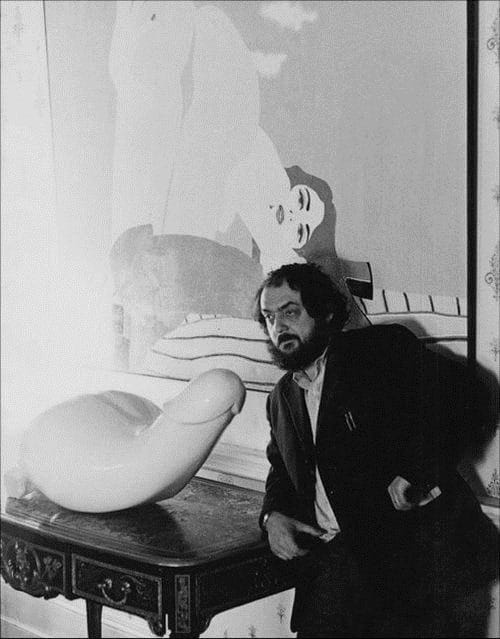
Determinism means what can be repeated precisely the same way even if it is radically contingent. Our mental states are cinematic inasmuch as consciousness may be the narrator but the unconscious (which the Surrealists were aware of) is the editor. Where I am heading is not to reverse us, take us back to pre-cinematic certainties of the world around us and of our experience in it, when our inner states had greater freedom. I think however a way back is hinted at, which takes us forward, in the following: Stanley Kubrick interviewed by Michel Ciment, 1971—
I think modern art's almost total pre-occupation with subjectivism has led to anarchy and sterility in the arts. The notion that reality exists only in the artist's mind, and that the thing which simpler souls had for so long believed to be reality is only an illusion, was initially an invigorating force, but it eventually led to a lot of highly original, very personal and extremely uninteresting work. In Cocteau's film Orpheé, the poet asks what he should do. 'Astonish me,' he is told. Very little of modern art does that—certainly not in the sense that a great work of art can make you wonder how its creation was accomplished by a mere mortal. Be that as it may, films, unfortunately, don't have this problem at all. From the start, they have played it as safe as possible, and no one can blame the generally dull state of the movies on too much originality and subjectivism.
–Stanley Kubrick, source (full interview here) (and further to here)
Finally, I'd like to draw attention to the results of giving therapy to different models of artificial intelligence. I believe current epistemological models to have more bearing on the diagnoses, across the board, in different degrees, of psychopathology, than ontological, with the one exception of a cinematic ontology. LLMs seem to me to be great examples of the cinematic description of mental states. We have after all created them in our image.
Please follow the link: "When AI Takes the Couch: Psychometric Jailbreaks Reveal Internal Conflict in Frontier Models,"Afshin Khadangi, Hanna Marxen, Amir Sartipi, Igor Tchappi and Gilbert Fridgen, University of Luxembourg, 2 December 2025.
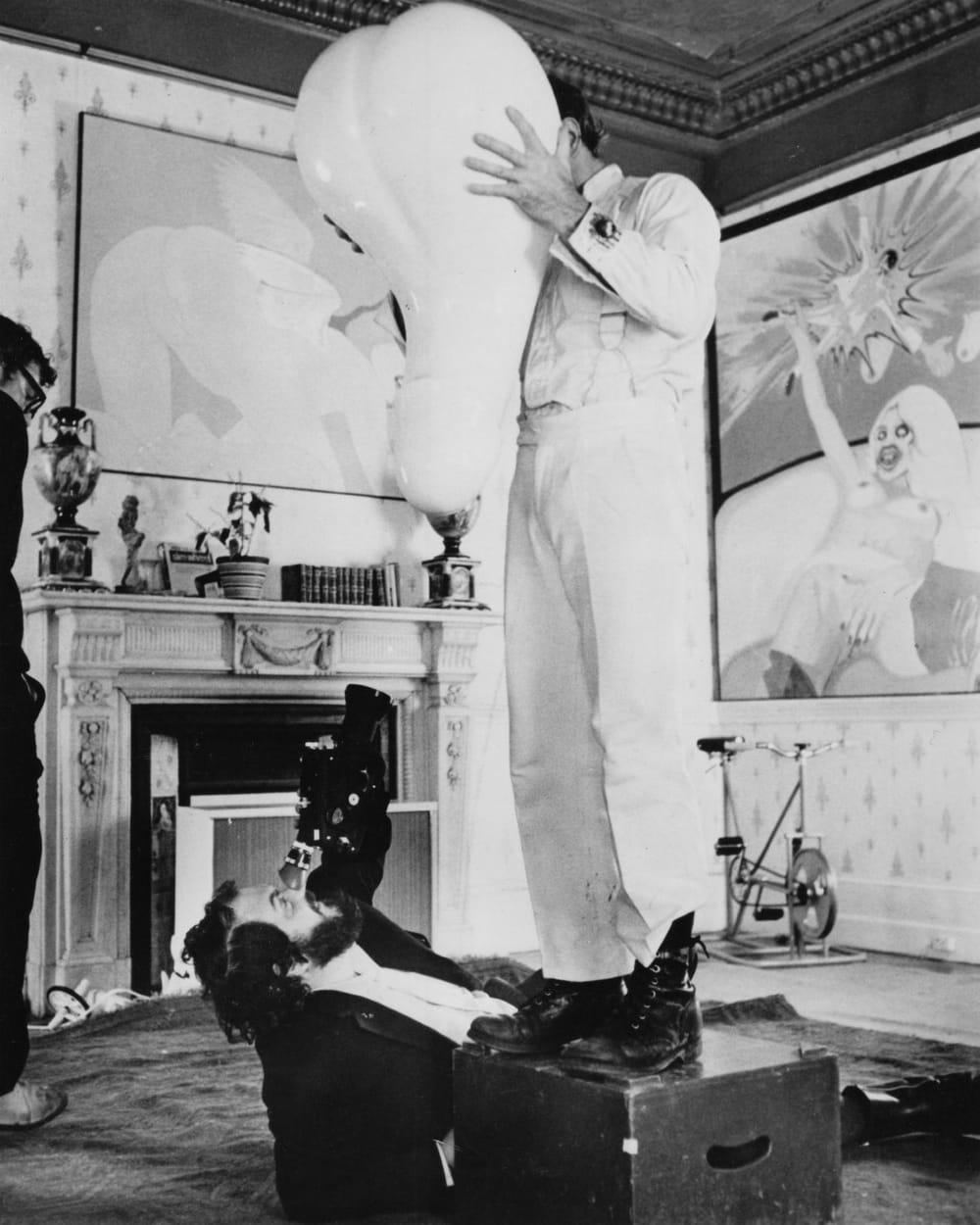
*In the time crystal, cinema reflects on the cinematic perception of time, which, defining the shot, is that of contingent motion.
⑧ Contingency & Representation: the coincidence of sign and still, brain and screen, image moving and moving image
—in- and finite, in- and animate; natural, artificial; living, mechanical, dead... The list goes on, but we have lost the sense, say since the publication of Frankenstein, of what is artificial and mechanical being also inanimate, dead. Rather than make a mystery of a living machine, a finite body, or the depiction of one, the mystery is life, which we accept in its finitude but place in the infinitude of what we can believe or imagine. Consciousness being necessarily absent from the brain series or the screen series, this is the field in which the following moves.
Nobody doubts there is movement in the brain, chemical and electrical, but it is as naive to think that it corresponds to images as it is to think that letters and words correspond to images. The words قطة and cat more readily correspond than either does to the thing they denote. They sound alike. They share the same consonantal sounds but neither word looks like a cat. What about when it comes to moving images?
We have the idea of a literal rather than a figurative correspondence from the photograph. Yet in the word literal we retain that correspondence which is supposed to exist between the written word and the spoken. The written word maintains a resemblance in sound.⑨ Each of its components relates to the shaping by the vocal cords, tongue and lips of the breath that passes over and through them.
Each differs according to the distinctions in sound a language makes, which distinctions correspond to the meaning or image it is meant to express, according in turn to the interests of the social group to which the language belongs. Every Arabic word is therefore said to have three meanings: 1. its first or direct meaning; 2. its opposite; 3. a camel.
In the case of speech, the breath animates and releases the image. In the case of writing, the mind brings the image to life. Neither resembles the object it denotes. For both memory is important. Yet its character changes from case to case, in that of speech a social memory, that of the group, is invoked, while in the case of writing, it is primarily the memory of the individual, although informed by the group, that, producing images from signs, does the work. We know silent reading, reading in one's head, since retaining the social relation has been until recently of primary interest, to be an only recently gained skill.
Photography turns around the roles of private and social memory, but, since it is on this ground that it does, first we must account for the literal resemblance, the one-to-one correspondence, between the photographic image and the visual image. Nothing need pass over or through this image to animate, release it or give it life apart from light. The photograph will resemble what it depicts without being seen. There is no social code to decipher, in the way that a written language of which the cipher, the social repertoire of conventions by which sign referred to image, has been lost is indecipherable, and, as with Rongorongo, the image of meaning, of denotation, too is lost.
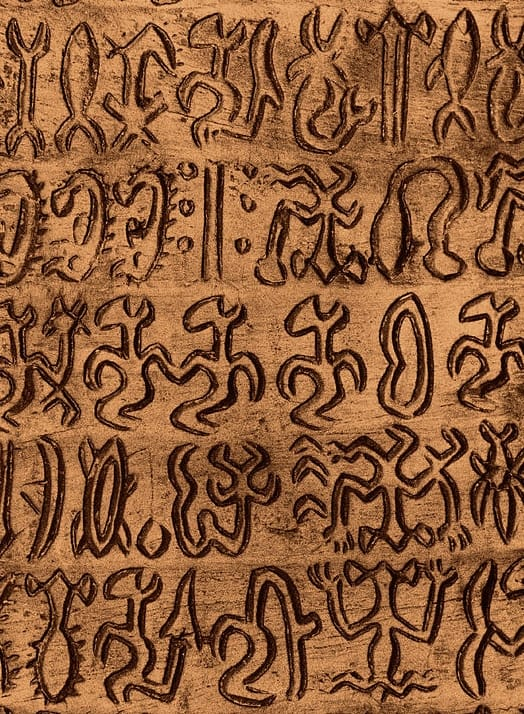
The individual significance of a photograph however is lost with the individual memory. Roland Barthes's Camera Lucida, 1980, analyzes photography along these lines. In it he distinguishes between the punctum, being the very point at which a photo is animated, its heart, where it lives, and the studium, which is, as it sounds, of academic interest, the context, by depicting when in time it was taken, historicising the image. Photography, for the reasons of both studium and punctum, reverses the relation between memory and image.
Without Barthes to tell us, we don't know why the image depicted in this photograph is more important than any other. We can't see the punctum, that is its personal memorial code, for ourselves. We can see the studium, the historical context surrounding the image of his mother but this has neither a social role for us, in affirming our sense of belonging to a group with a shared history, nor, unless we have an academic interest in the historical period, an individual one. Photography interposes itself between image and memory and, because it is how we share it, becomes how we see memory. In sharing photographs we restore its social function; and, to have this function, for the photo to have a point, a punctum, otherwise sharing it is pointless, the group needs us.
The role of stories is similar, personal, tied to the individual, otherwise pointless. That is, the role of stories is similar in sharing with photography an inversion of the relation between individual memory and social memory. Perhaps we would not tell the sort of stories we do without photography, since without photography attesting to its existence it is only by narration that we could affirm for ourselves and for the group a shared history. We don't write the same histories of the past that we did before the advent of photography.
To have significance, to be of interest to the group, a photo, and in this particular sense a story, needs individual mediation. To be significant, to have interest for the individual, an image conveyed by speech or writing needs social mediation. A photo is animated by the point it has for the individual. A written text is animated by the point it has for the social group.
In other words, the image given by the photograph is too detailed, too much of it is contingent to its subject; and it is on the matter of contingency that moving images differ again. However a pause is in order, again, because we have passed over the one-to-one correspondence which cinema and photography share between the image and its expression. We have passed over it due to a consideration of what animates the still image and brought this back onto the side of human subjects, subjective interests and the subjective experiences of humans individually and in groups, when both photography and cinema engage forms of perception that have no such subjective interests and are not the perceptions of subjects. Both are images of what a camera sees, the photograph, of a still camera, the film, of a cinema camera: they are the perceptions of technical objects.
Yet these images are perceived by us and, produced for us, become our perceptions. The question is, are they tools or doors of perception? It is in an image of consumption that William Blake presents the infinite:
If the doors of perception were cleansed everything would appear to man as it is, infinite.
–from one of several sections of The Marriage of Heaven and Hell called "A Memorable Fancy" (source), 1794.
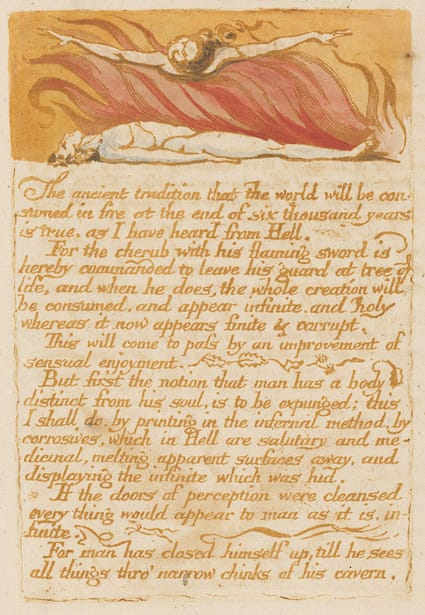
Revisiting the method he uses in his first book (in French, Essai sur les données immédiates de la conscience, links), Bergson qualifies intuition, in Matter and Memory [74], as going outside what is of immediate use to the body as centre of action. I take this to mean outside the field of social and individual interest. We could further qualify it to mean what is radically contingent to it, that is, as presenting images that have no subjective object or objective purpose, those belonging to pure perception.
I have argued that in cinema we see, and, what is more, appreciate, for the first time, movement that is radically contingent. For a brief account of how this happened see "Memory & Cinema" ⑩, where it is also intimated that mathematical science, represented by the theory of relativity, although it changes the relation between movement and time, entrenches and concretises it, with the final result of chronogeodeterminism or the 'block' universe. Here there is an analogy with photography.
Bergson's continual complaint is that for contemporary science movement is something superadded.⑨Ⓐ Unfortunately he doesn't get past the idea that this is exactly what cinema, the moving image is: photography with the mechanical and artificial addition of movement. Is it possible however to say that science and mathematics do any different? And, if we are to accept there is not a qualitative shift between still and moving images, isn't the sticking point, inadmissible to either science or mathematics, precisely that of duration?
Perhaps this clarifies the problem I am working on—a cinematic ontology that shows, for example, that:
- AI is not computer-processing with the mechanical and artificial addition of autonomous movement;
- the brain is not the sum of its parts with the mechanical and artificial addition of electro-chemical reaction-movements;
- and thought is not an image, and therefore reducible to an image, and, with the addition of movement, therefore expandable, by mechanical and artificial means, to a moving image.
Thinking, from the point of view there can be a cinematic ontology, is only one way of thinking, a perception, among infinite perceptions, giving—
- AI as computer-process with the mechanical and artificial additions that lead it to express itself in something resembling thought;
- the brain as sum of its parts with the biological and natural additions belonging to being alive that also lead it to express itself in something resembling thought;
- and thought itself as the perceptual attribute that is so expressed, including:
∞. its cinematic expression, its written expression, its verbal expression, its philosophical and poetic expressions, the brain, as a distinct biological expression, modulating its expression in the neuronal signature of its activity, as well as what we may call its individual style, or consciousness.⓪
And so on, bringing us back to pure perception. The pure perception of time is that without our interest in it—pure duration, without subjective mediation and without objective purpose. Similarly for Blake, it is there for our consumption, but I am also strongly signalling that it consumes us, since this glimpse of the infinite is rapidly covered over or given its moral and scientific excuse.
On the one hand, it is moralised away to be ours, as is for example a cultural perception delimiting us in our finitude of access to perception. Then, how could it be the perception of a technical object? which to clarify we might contrast with the view of Deleuze and Guattari, that every technical object is subtended by a social relation. A microscope is a door to perception but does not express what it shows us; all of the expression is on the side of the discursive milieu in which it is used, where it is supported by social relations which it reciprocally supports. Say, for example, that corresponding to the role of the knowledge-worker as against the manual labourer.
Here, too, there's a question of access to perception; is it really so dissimilar to that by which we are ordained to have of all Nature-or-God's attributes access to only two? thought and extension? Or, might we not say the door, opened to the perception of social stratification operative across discriminations of power-knowledge, although we might have passed it often without seeing it, is brought to light in the way of, as the mode of expression of, a certain attribute? Yet can we go as far as giving, as it were, the microscope, which is just a tool, the role of a door?
To know the significance of what a microscope shows us a relation is necessary not unlike that of Barthes to the photograph of his mother. Without the knowledge-worker's interpretation we don't get the point. Unlike Barthes, any worker in the field, discipline or discourse will do. As to, however, the power of the image shown—I mean, Barthes's mother's photo, because of one and several of his books, has that power for all time—is this due the kind of cipher, whether of social class-analysis or of interest for disciplinary discourse, we saw in Rongorongo's case, and there missing?
In the case of Rongorongo we can see the door but not enter the house. The code does have the function of an institution regulating access; and initially we will assume there to be regularities in the symbolic system pertaining to those of an institution, and from there, assume there to be regularities of reference pertaining to social organisation, environmental conditions and cultural values, and so narrow the field of our investigation, but also, in practice, open it up. The problem and obstacle is not the intention behind the writing scheme but that given by what we associate with writing systems, our knowledge based in experience; then the microscope takes that experience and instrumentalises it, from theory it turns to practice. And, by the same token, instrumentalises it in social practice, or praxis, where it supports certain regularities of social life. Isn't the issue that of coming to writing or image, sign or symbol, with what we already hold to be important? That is, isn't it a matter of selection?
If we return to Barthes's photograph, we saw in it, because this tends to be characteristic of photos, a plethora of details, the studium, which warranted only academic interest. As far as the punctum is concerned they are to be deselected and taken to be contingent. Flipping forward again, Bergson came in to tell us something about the method of intuition, which ends up being of paramount importance to Deleuze in his Bergsonism, 1966, but not for the same reason. For Bergson it has to do with duration, and our access to it.
The door is closed and, through intuition, we bluff our way through it, saying exactly what the main character of Kafka's short story, "Vor dem Gesetz," 1915, doesn't say: it's not ours! It's not for us, because if it were it would open to the very keys we hold, which it absolutely resists. For us means something deeper than knowledge, it is an appurtenance of the real. Or, as Kafka has it, The Law.
It's very short, and this post has gone on a long time, what's a couple of pages—please read, in Michael Hofmann's translation:
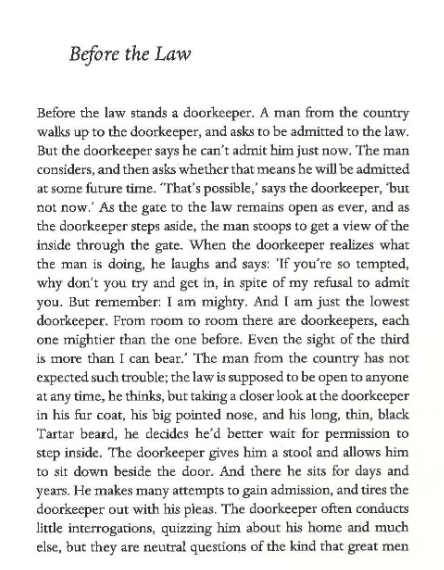
The law for us, Bergson insists, has two parts:
- the body is a centre of action
- as centre of action
- it selects for what is useful to it
- from its selection is entailed perception
Yet in the photograph, we don't recognise Barthes's mum. We might select the figure, we might fit it into any one of a multitude of discourses, but we perceive the details in all their contingency, their contingency to, that is, Barthes's point. Bergson's: contingency itself tells us something about duration.
- Forget the body is a centre of action.
- Forgo the selection of what is useful to it, useful to you, useful to us.
- Understand that these interests are not language games or social constructs but
- inform the development of the eyes you have to see what is useful to you, the ears you have to hear what is useful to you, and the whole nervous and sensory apparatus you have,
- that they inspire the biological creativity that leads an embryonic cell to know how to make a brain and central nervous system, and
- understand also that from this biological creativity placed under evolutionary conditions follow the social and cultural regularities of language and institutions such as art and knowledge that make possible their own reproduction and that of the species.
We are far from predisposed to discern the not-for-us, such that being alive at all is a putting in place of regularities by which to constrain contingency in all fields, including that of time.
To be alive is to put in place regularities constraining contingency in all fields, including time.
Duration is out of reach except by intuition because it can only be lived, so we only know it by the regularities imposed on it as time. For Bergson, for Bergson's time,⑨Ⓑ space is chief among those regularities: time is determined by space, or spatialised. By being spatialised, conceived in terms of space, time as duration, it is falsified. Bergson's fundamental insight being time is duration, any other understanding is an imposition.
There are several factors in this thesis which no longer seem quite to hold⑨Ⓒ but where it gets us is to the unregulated contingency of pure perception. Life requires regulation, this input, not that, this often, of food, oxygen, water, the expulsion of waste products, self-perpetuation through some sort of reproductive process. Life, as Deleuze and Guattari write about desiring-production at the beginning of Anti-Oedipus, 1972:
It is at work everywhere, functioning smoothly at times, at other times in fits and starts. It breathes, it heats, it eats. It shits and fucks. What a mistake to have ever said the id. Everywhere it is machines—real ones, not figurative ones: machines driving other machines, machines being driven by other machines, with all the necessary couplings and connections.
– source
Pure perception is not so much radical contingency, where the absence of there being a reason for anything makes everything equally possible, really an excuse for non-contingency, as contingent motion. This is how it is for non-living matter, says Bergson, any particle of it is affected by the action at once of every other. Action places the whole in motion, and, since it is in duration, or endures, it is indivisible. The living system must make its divisions, divisions that concern and have developed to enable its own duration: the first is inside and outside the cell; the second is of the cell itself. Really, there is no question of first and second. They are chicken and egg.
Because of the first, there is no regulation of the inside without regulation of the outside defined by the membrane. Bergson makes the point that in single-celled organisms the organs enabling motility are also those of sensation. Action is and remains its own sort of perception, performing its selections on the assumption that its surroundings are not for it; if duration is intuitable at all, there is something of the second in it: the division that is within itself, which desiring reproduction at the start becomes what is called desiring-production by Deleuze and Guattari. We might think of it as an internal timer, a biological clock, that only secondarily comes to consider its own finitude over its reproductive function.
The organism's desiring-production eventuates. It requires regular meals, meals that are regular enough, regular temperatures, regular hours of rest and replenishment, and regular exercise, or what we may term basic freedoms, and, over time, acquires the means to regulate these, none of which, as Spinoza points out, is as useful to the creature as others of its kind. The social set-up extends the outward-acting process of regulation, also called self-determination, in turn requiring regulation and acquiring its means, from the different environmental milieux, and eventually made, as we have said, by artificial and mechanical additions, which, superadded to and inside milieux, both extend social reach and the forms of social relation subtending them. This is against the overall swirling unassailable, uninhabitable and inescapable movement of contingency, which in pure perception is, because in duration, an indivisible whole and here coming to perception from within the divisions made.
This gives us a clue as to how to understand Deleuze and Guattari because the regulation by artificial and mechanical means is that of machines. If we have no need to invent an id this is because these account for it. However, I would say they are pre-conscious rather than unconscious; or, that we are unconscious of their cutting up and their connection of the world of contingent motion for us. So, this is the second excuse, that of science.
The moral excuse imagined us fallible needy organisms and nature an overweening project not for us; the scientific one sets technicity above us, by saying that it is for us. They intersect. Science and morality share in this regard the same set of values. For science our eyes are not good enough, their regulation has to come from outside. For morality, our eyes are not worthy of the regulation which is for our sake and we must not look on the law.
In other words, finitude. Science hands it to technicity and substitutes for an infinity of perception an infinity of regulation. Still, they are doors.
Blake opens them to sensual enjoyment, where we consume rather than are consumed. Enter the social sciences and the intersection between morality and science coincides with the entire sphere of human activity, regulated by the need for social organisation. Our enjoyment of sensual pleasures leads us to be assimilated to the social body, which we should resist, just as for our moral guardians, it led us to be assimilated to the biological body, which we should also resist. We should seek instead unregulated pleasures, and, as Rimbaud advocated, the disorganisation of the senses. No surprise that lurking inside every resistance is a deeper acquiescence. It goes all the way down to the depths of the law, as Kafka shows, to the cells of life which higher forms only coordinate in a regular world. Our pleasures are not for us. They are artificial and mechanical additions, again, and through them we desire and fight for our slavery as if it were our salvation and our liberation.
The regulation and redistribution of pleasure is as old as the pyramids. Recently I asked our guide in Cairo for his theory on why they were built. Propaganda, he said, then: because they needed something to do, when people no longer had to work in the fields because they had everything they needed, building them was a way of redistributing the wealth. Economics, it would seem, is the study of these details, which so often misses the point.
Where this post started was with a naivety that looked on moving images of the brain in action and relegated this to a biological photograph. It did so by assuming motion to be superadded. It began with language and with writing.
Perception is nowhere else more policed than for what concerns sense in the regulatory function of reference. Carried over, by photography, into cinema, this policing of reference simply flows into cinematic perception, where a representation of thinking in moving images, is thought to be thinking itself. From there, in a process of continuous determination, its flow is into the signature style of perception expressed in consciousness on one side, and on the other, into the prison or truth-procedure of artificial and mechanical intelligence, where the moving image is of sense itself.
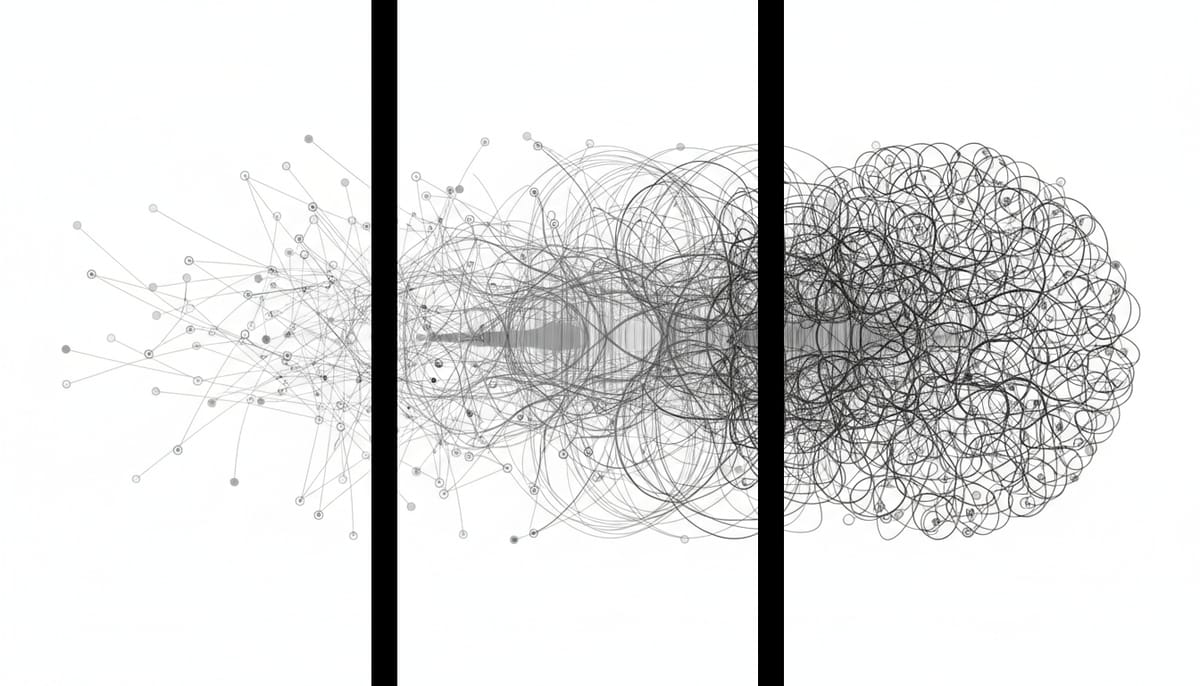
⑨ some lines from Contingency & Representation ⑧, before Memory ⑩
In taking up some lines from ⑧, before ⑩, the current post assays brevity, as Dorothy Parker says, the soul of lingerie.
*note on writing
Not all writing systems are phonetic, but usually include sound in their field of reference. Chinese characters, for example, include both a sound component and a graphic component, the weight of 象 can be placed either on the sound, in conventional transliteration xiàng, or on the image. Either one makes a detour before its arrival at a meaning. The graphic component of 象, says Han Fei (although I am indebted for this insight to Dr. Chen who is also a founding member of Minus Theatre), goes by its depiction of a little elephant's skeleton. Han Fei relates that, elephants being rare in China, people could only imagine how one looked from its bones. The character has a sound and a meaning and a story or theory, since 象 is a central concept in art education, for how its meaning came about—representation.⑧ It has also a symbolic value that is the complete opposite to that inferred from the Western concept of representation, of being wise and strong, from the image of an elephant, and, from the bones, of being a lucky and beneficial creative process. It is this inference I invoke with the name of the company I established to bring company to market (see above, ① for the visualisation), a social medium built on the bones of a generative graph.
Ⓐ LINES
The arguments of Zeno of Elea have no other origin than this illusion. They all consist in making time and movement coincide with the line which underlies them, in attributing to them the same subdivisions as to the line, in short, in treating them like that line.
–Bergson, Matter and Memory, 78–79
Time is linear. Time is so linear the exception is that certain works of art are called for the reason they take liberties, either successfully or not, nonlinear. Time wasn't always linear. For a beautiful refutation, see here. At the time of the Eleatic School, represented by Zeno, the argument must have been fresh. Then there is the messianic time of Benjamin: The future is wedged open, like a window but more like a door, only a crack.
His On the Concept of History, 1940 (truer to the original title, Über den Begriff der Geschichte, than the better known Theses on ...), puts the burden of history, too great to be put down, as having everything to do with its linear progression. It is a hoard of rubbish, accumulated, as Adorno might have put it, barbarism by barbarism. For Benjamin, out of relentless and unremitting conformism. The want-to-stay rubbish of rubbish. The wanting-to-stay shit of our contemporary Doctorow's enshittification, put down to linear algorithmic development under decree of platform politics.
We are in Zeno's paradox space, leading Russell to deny the paradox (Enduring Dreams, work which is incomplete; but in light of this series perhaps in the act of completion), step by step, our progress coincident with an extended point. Kundera has called it The Grand March. Part Six of The Unbearable Lightness of Being, 1984, in Heim's translation:
When Stalin's son ran up to the electrified wire and hurled his body at it, the fence was like the pan of a scales sticking pitifully up in the air, lifted by the infinite lightness of a world that has lost its dimensions. (129)
It has for Kundera lost all its dimensions but that of time, and time, Kundera suggests, slides under things or over things. Borges, in a crime story, speculates on the ideal labyrinth being a single straight line which is invisible and everlasting. In the same story he invokes Zeno's infinitely divisible line and this is proposed as the alternative. About it Deleuze writes, "it is as though [time] had unrolled, straightened itself and assumed [this] ultimate shape." (129) He identifies it both with the empty form of time and with time out of joint. Empty? it has, he says, been emptied of memory. Out of joint is clearly Hamlet's phrase, but when is it? when is it that time has unrolled, straightened itself, assumed the ideal form of a labyrinth, which is, we should remind ourselves, a prison, and yet lost all its memories, and, we should also recall, being a door that has come off its hinges, cannot be put on again?
It's better to ask, what it has unrolled from, the answer is a circle, a figure of time at least affording the relief of continuity. Let it not be thought a feature of primitive agrarian society, to know when to plant and when to reap, or of an assimilation to the natural cycles of things, or to the mythical, which has similar tastes but longer reach, although we can say the two, nature and culture, are in constant competition: where they compete is on the grounds of calculation, the calculation that Smith-Ruiu cleverly calls computus, it covers both height and depth and shows when one comes around to the other. Shows. It is the mathematical demonstration of when, when the high and holy day, when the sacrifice, when what is dead will be reborn and what is lost will return. We can see why, despite every effort of computus to put us on again, we've come off our hinges.
In every case, is Bergson right? it is the line underlying time and movement, by which they are made to coincide, on which the points are made. I would suggest not every. The empty form of time differs. In it we see endless pointless progress that is irreversible, or pure procession. Or time passes. How we cut it up and where we go and what we do seems to be arbitrary, we can let it flow over us, find beauty; be still, wrote W.H. Murray, or keep up with events that will inevitably outrun us, look for patterns, abide by or laugh at the ones we find, obey or resist, put markers down where there are crimes, never forget the victims, but the coincidence here is with movement stripped of will and action robbed of agency. In other words, it's a luxury of perception, or a personal labyrinth to enjoy. Pure procession best names a history from which we remove ourselves, and flatter ourselves we have, so that having removed ourselves, we can call it objective. More than this, it is objective: one moment passes into the next; one state passes over into the next; each event, not chained, yet passes. And surveyed from above, we can see the succession, and possibly predict, prediction seeming the only role for action, what the next will be. This speculation doesn't change anything, we know the wave continues, but what we have here is a version of time accepting only what is continuous. We have only to find the algorithm. Once we have invented it, we will have the means to make useful predictions, because linear algorithmic progress is the defining feature of the pure and empty form of time.
Ⓑ COUPLINGS AND CONNECTIONS: or, How to account for unregulated change...
... since we know change to occur unregulated by algorithms?
"Contingency and Representation" ⑧ contrasted denotation with depiction, how a word or conventional symbol denotes its reference and how a photo depicts its reference. While the word bears, if any, only passing resemblance to the image which it denotes, the photo's is a one-to-one depiction. Each point could be said to correspond to a point at a location, in a figure, of a background, which, from careful study, might be used to recreate, if not the purpose for taking the photo, the existence of these in a current everyday, or an everyday at an historical distance from the viewer. Could be, because we have now means to produce ersatz photos which show elaborate digital constructions, cut-ups and collages of locations, figures, backgrounds that are not and have never been. We will come to this development. First, draw in imagination the lines between a photographic image and where it was taken the lines of correspondence connecting with it.
If it is digital, there are as many lines of correspondence as there are pixels; if analogue, the whole photo is like a filter, a gauze or veil that lifts from the scene depicted the image in its entirety. Filter, because it's not exact. There's room for artistic intention. Gauze, because the resolution, and further, the paper or screen, allows for different degrees of granularity. Veil, because highlights project from it, points of focus, and its subject, that the image lifted from the scene is intended to capture. Of course, a digital photo, enables these affects and more, but to every point inside the photo there corresponds a point outside it. The lines have not yet been broken.
Now imagine similar lines of connection between two frames. The use of frames persists as a convenience in digital film-making, so we can find them there too, albeit that their role is to facilitate editing rather than a function of the mechanism of capture. I am suggesting two frames in succession, any two inside a clip, with movement or without. At a high frame rate the lines there will be more lines of correspondence, at a lower frame rate fewer. Once more we are connecting every point or pixel in the still frame with every other, but in the next still frame. The same can be achieve with consecutive shots of the same subject, but in that case we maintain the connection between a photographic image and its external reference which here is broken.
The amount and the speed of the movement captured in the sequence also affects the number of lines and whether they are direct, whether they stop as certain elements leave the frame, or curve and even twist to reach their points of correspondence from one still frame to the other. Two frames taken from a short clip of the most random thing possible, a cloud, a splash, hair in the wind or a face passing rapidly through different emotions, in turn, because of the amount of movement and its complexity, will show fewer lines of correspondence. These lines also tell us something about animation: the more random the action, the more correspondence from one frame to the next there will have to be before the clip looks like it judders; the fewer there are, the less continuity there is. Vast sums of money are spent on animation to achieve believable depictions of contingent motion, like King Kong's hair, where, in the 2005 remake, it was attempted to animate each strand. An attempt is made to internalise the reference field for film to capture reality perfectly. This is geekism, in love with the possibilities of technology and the power to be had by gaining its control for those who have no real traction outside it, perfect reproduction equalling perfect control (at least financial capture), but it's also latent to moving images, to the moving image itself.
Moving images refer to themselves. This is how they gain consistency. The illusion of continuity, in analogue terms achieved by the rate at which are shown individual frames, which are no more than photos, is an illusion, which, as in any art form, seeks to perfect itself: it wants to be real. Or to achieve a heightened reality, but, in its most primitive form, at the start of cinema, it was already a hyperobject. Sufficient unto itself, the capture of nature, that audiences responded to, is quite literal. (see also) It relies on the lines of correspondence passing from image-to-outside to image-to-image, inside. Or, rather, it relies on breaking the link between image and depiction, externally continuous, for the sake of internal continuity.
This gives film an expanded field of reference, and one desiring to coincide with the field of reference in its entirety, but also frames and delimits one continuity built on internal correspondence against any of the other continuities, including those of narrative, history, the Grand Narratives as the postmodernists put it, and of time. It cuts out a distinct duration. And holds this up, privileging it.
Nature itself, Nature-or-God in Spinoza's terms, has become a Grand Narrative. It is not an external truth. Already with photography it was one for which photographic proof was sought. The advent of cinema simply assimilated and enlarged photography's capacity for proving the truth of what it showed and, with the proof of contingent motion, mechanised it. It didn't add it by artificial or mechanical means, but made it a function of, inside, the machine.
This has the double consequence that machinic duration, grounded on internal continuity, the coupling of those lines of correspondence we have been following, becomes continuity above all, and because of that, duration above all. These many lines of correspondence are the line of time. The labyrinth is a single multiplicity, or a film. (And it has occurred to me recently, perhaps Deleuze takes this seriously, perhaps, above all, his ontology is cinema's.) (We can also see here, going from frame to frame, a cinematic proof of Kantor's transfinite set-theory.) The other consequence it has is that the machine cutting out duration itself is cut out. Above all, it has the role of the object, the ideal object. All others are shadows, partial durations, arising briefly and tediously out of living gunk and reliant on a chaos which still exists but, untimely, like the physical brain which is only seriously to be considered in movie-form: living-multiplicity-of-correspondence in internal-coherence-and-continuity from frame to frame.
We are stuck, but only if we take continuity as our model. Which the machine, of cinema, has shown it not to be, since, cutting out duration, being itself cut out, duration looks to be the cut, or, since the cinematic meaning of cut only adds confusion, the break itself. That is pure procession by being delimited to duration, say the 45 seconds of a clip showing waves breaking, betrays itself as de-coupled and disconnected from pure duration. We can't say a greater or lesser because quantity cannot be predicated of duration, it is a quality. We can say absolute, which at root means disconnected, detached. What we have to negotiate is a discontinuous series of creative gaps, intervals, times out of time.
Against the algorithmic machining of pure procession we are bringing the machine to bear as a proof that there is a gap in its logic. An irregularity. An unregulated immanence.
This changes everything. From 1) following lines of correspondence between the photo and what it depicts; 2) lines of correspondence between two consecutive frames; 3) seeing how these internalise all correspondences, both to outside and inside, each to each, and cut themselves and the machinic duration they embody free; 4) is possible: the reconnection of machines to lived duration. To do so, however, and this I think is what Deleuze and Guattari attempt (see the passage cited in ⑧), is a falsification. What is called for is to consider the time in which these machines operate as distinct perceptions, in the case of cinema, cinematic perception.
AI then has the qualities we are attributing to the moving image. It is stuck to pure procession. Or to linear algorithmic progression when its actual time of processing constitutes a break, a nice suspension in the virtual, leaving much more to be said.
Ⓒ ... THE SEVERAL FACTORS WHICH SEEM NO LONGER TO HOLD
Bergson's central thesis holds. Not that it's still. Not that it flows. Since the several factors distil down to movement: movement is added by mechanical and artificial means by cinema. It is not absolute. For Bergson the action of a part affects the entirety in pure perception. Photography separated the image from being affected, from the entirety in which, in pure perception, the action of a part affects the entirety.
Cinema separates or disconnects the moving image from the entirety and so gives an image of movement that, yet an action, has no affect on the entirety and is not affected by it. AI in turn produces an image of thought which moves separately from the mechanical and artificial means of its production. Although these instances can be thought to be in a series of greater and greater dematerialisation, they each materialise perception in an attribute separate from pure perception. That is, separate from the pure perception in which the action of a part affects the entirety.
Photography selects for the image in an attribute of pure visuality, cinema, one of pure movement. AI selects for the image in a perception, separate from pure perception, of what makes sense. In each case, a different aspect of the image is selected for perception: 0) pure, the material, or the image outside; 1) visual; 2) moving; 3) on the condition of sense.
That each fools us in a different way doesn't mean it is a simulation but that we take from it what dissimulates, preferring to recognise in it a recognition, given by association, than what is truly creative in it. Each offers an exception that proves or builds on the rule of the one before: 0) the material image, part of perception, is able to be separated from it; 1) the image itself is able to be separated from its perception; 2) the movement of an image is able to be separated from its perception; 3) the sense an image has is available to separate perception. The last, AI, fools us most because it looks less like an exception than the condition for the others, that is intelligent selection, selection for what makes sense. It is when we recognise how great a part nonsense and what is contingent to sense and even shocking plays in perception that we appreciate what AI perceives both in limiting and enlarging sense.
I have exceeded the brevity I intended but I hope that the result is still revealin
– see also the ai reading of this text for further explanation
- still, actress Léa Seydoux, The Beast, 2023, dir. Bertrand Bonello
⑩ Memory & Cinema
After cinema what does memory do? This is the question I am trying to answer. By 'after cinema' I mean after its advent as a globally accessible technology, a globally successful technology, which spread out to all four corners of the world, since the world then had them, within a handful of years from its first commercial public outing, in Paris, in 1895.
The reasons for its spread, it created its own market, it was a hit with the people, with every people, from those under the Tsar of Russia to Melbourne, where the first feature was shot in 1906. And it could fly on the wings of global commerce, which commerce had then, its parents were industrialisation and technology, who have lived in perfect sin happily ever after. This is all well known, the reason it captivated the capacity crowd in Paris, less so. Yet it did, with the result that the Lumières soon moved their start-up to a factory. It was they who sent their representatives to all four corners, under instruction not to let the curious look under the hood of their cinematograph, which was a projector and camera in one.
If that was the result, what was the cause? The forty or so who were there, left the Salon Indien, in the basement of the Grand Café, sure that they had seen the perfect depiction of nature. I mean, said one, the leaves on the trees were moving! Less well known is also that from this came, due to popular demand, the first film genre, the Wave Genre. It deserves its capitals, but why waves?
Waves are like leaves in their movement. It was nature in movement that had not been depicted before. Train films were also popular, but as much for their smoke, billowing into the atmosphere in quite fortuitous formations. Waves perhaps are more predictable.
What the Wave films let people do, which they were excited to do, not because they were nature lovers but for the fact of its depiction in cinema that it could now be done, was see in detail the movements of the waves. Each detail was caught on camera, how the spray shot up from the wave meeting the rocks around the lighthouse, and the next wave, and the next, how the foam caught the light and now individual droplets might be seen, if not this time. . . What film let people do was repeat. That time, did you see it? that particular product of a random process? And audiences would call for a film, no matter, it lasted under a minute, to be both replayed and, on some occasions, played backwards.
Audiences most desired to see the random natural events, not even events, movements, be repeated and replayed, and reversed, in a way that linear time, which then was the rule, did not allow. My question throughout all this work has been, What effect did this have on their and our sense of time? at the levels of common and of expert knowledge? and, even though unacknowledged, of mathematics? Einstein after all came out of this juncture and another figure of equal renown, if not surpassing him, came first, Bergson. What consequence does the experience of cinema have for Bergson's concept of time, which preceded Einstein's Relativity, for duration?
Now I come to memory. Memory relates to movement in a way that differs from duration. In duration movement is not cut up and, if you think about it, cinema although it cuts up movement, does so for the sake of an overall movement. The basis for the shot, which is fundamental for cinematic time, is what captured those early audiences, and changed their minds sufficiently to lead them to think that the most chaotic of movements could be repeated, in a single movement. Duration is then maintained in the single movement of the cinematic shot.
Memory records that movement. Because of cinema it's thought to do so like it and, leaving aside where it is stored, like it, to be replayable. This is not however our experience. Cinema is simply a better medium for memory than whatever it is we use. That is, it's a better medium for image reproduction, but how does this play in time?
We are in our relation to the passage of time in the present. Yet we are unable to pin down exactly where this present is, so we make an approximation. We orientate ourselves in relation to the past and to the future, and extrapolate from this that we are in between. As Bergson says, we have one foot in the past and one in the future. Memory is how we stay orientated, disorientation results from its loss.
Yet we experience the intervening moment between past and present in consciousness. For us, whatever we are conscious of, whether it's a film, an hallucination, or the upsurge of memory, is present. In fact, in this gap we have a certain freedom. It is what Bergson calls a zone of indetermination, but not when it comes to memory, which requires from us that we toe the line, meaning, quite literally, that we stand in the immediate past.
The reason, the reason as soon as we think about the present moment it is past, is the fraction of a second which passes between the stimulus and its registration in consciousness. For memory this becomes a zone of determination. It determines what we experience before we are conscious of it: it is the past cohering to the present and making sense of it. The contents of memory are therefore our habits, of thought, speech or language and action; they represent what we recognise. Overwhelmed, say by the onrush of the future, we cannot make representation to ourselves, cannot recognise and cannot make sense of what we do not.
The shock is one in which the brain seems to open up all its files at once looking for some precedent, something of relevance, to its experience. The files are in memory. Bergson says something curious about them. He says each is a detailed account filed under its date and time. Yet, faced with a sudden shock, a trauma or accident, we normally, that is to say habitually, draw from the world of moving images the metaphor of slowmo. It is as if time stretches. In it we can see all the details of what is going on, such that any one might recall the whole scene later to us.
In addition, the movement in the scene, including that of our own bodies, does not seem contingent on us but we on it. We are, as it were, a function of it, a part of the wave. I saw myself, we might say, as if I was in a movie. The thread holding us to the present seems to have broken, seems cut, but all of the present plays out in it, as if belonging to a single duration, in one continuous shot.
It replays the same way. Dissociation seems the best way to approximate a mechanised medium for the recording and retrieval of memory. The scenario is so recognisable because so common, which would suggest that the unpleasantness is avoidable, but this is exactly what is not the case given the determination of memory, as a zone of determination, by the sense of time we get from cinema.
This time is one of dissociation. Memory represents its threat, which is that of radical contingency. While at once pulling us back from the brink, its assurance is that of withdrawing us from the zone of indetermination, in favour, that is, of safety.
Memory throws us back from the present, that line, to the safety of the passing present as able—
- to pass again
- to replay differently
it offers then this assurance to the imagination.
- it tends to place us in the recognisable: but not in order that we should know how to act. It withdraws us from the necessity or responsibility of action.
How does memory assume this role? because its process is that of passing. Duration, the break or cut, the zone of indetermination, what we perceive is the immediate past.
We would sooner be in memory as it is in representation. Cinematic memory does not avoid the new, but titrates it. Against the background of the generic there should always be something to engage our interest.
This conception of memory sits us in habit and recognition, in front of a future that projects itself, on screen. From, then, the past where memory places us, the future is out of reach of any of our actions. When things get a little or a lot out of control we have the feeling we are hurtling towards this screen. It engages us, but without touch.
We may always be in motion just not in action. Our bodies are centres of reception. Yet memory remains the condition enabling it to be conceived negatively, as here, and, being that which assures space for the passing present as a determinate process, positively imagined.